Iran Will Not Allow Inspections of Secret Nuclear Sites

Primer: The Iranian Resistance has been monitoring the Islamic Revolutionary Guard Corps-controlled entity tasked with building the nuclear bomb, the Organization of Defensive Innovation and Research (Sazman-e Pazhouheshhaye Novin-e Defa’i), known by its Persian acronym SPND, for nearly two decades. SPND is comprised of 7 subdivisions, each of which carries out a certain portion of nuclear weapons research.

The unit responsible for conducting research and building a trigger for a nuclear weapon is called the Center for Research and Expansion of Technologies for Explosion and Impact (Markaz-e Tahghighat va Tose’e Fanavari-e Enfejar va Zarbeh), known by its acronym METFAZ.

Since April 2017, when the NCRI found out about a new military location being used by SPND, the coalition has focused its attention on all the potential SPND sites that we suspected were tasked with building the bomb. The NCRI’s investigation inside Iran was conducted by the network associated with the Mujahedin-e Khalq (MEK), which was responsible for blowing the cover off the program, particularly since 2002. More here.
photo

***

In December 2015, the IAEA decided to “close” the file on outstanding concerns about possible military dimensions of Iran’s nuclear program.
Without ever admitting to weaponization activities, Iran convinced the international community to wipe the slate clean. The IAEA’s report on the possible military dimensions of Iran’s nuclear program left many questions unanswered. In addition to prohibiting on site inspections of suspected military sites, Iran can delay IAEA
inspections of suspected sites without facing consequences. The JCPOA creates a minimum of a 24 day delay possibly longer between a formal IAEA request to access
a suspicious site and the date Iran must allow access. As Mr. Tobey explains, “24 days … [is] ample time for Iran to hide or destroy evidence.” More here.

***

“Iran’s military sites are off limits,” he said. “All information about these sites are classified. Iran will never allow such visits. Don’t pay attention to such remarks that are only a dream.”

Iranian President Hassan Rouhani followed up later by saying the U.S. call was unlikely to be accepted by the U.N. nuclear watchdog.

So much for what John Kerry and Barack Obama pledged to America right?

***

Decertifying the nuclear deal without walking away gives the Trump administration an opening to confront the Islamic Republic’s foreign meddling.

Jonathan Schanzer
11 October 2017 The Atlantic

President Donald Trump is taking considerable heat for his expected announcement this week that he will “decertify” the 2015 Iran nuclear deal. Critics say he is heedlessly discarding a deal that has been working, and needlessly putting America on a collision course with Iran.

As it turns out, Trump is actually not poised to “rip up the deal.” By decertifying it, the president and his advisors are, in fact, signaling their intent to strengthen it, with the help of Congress, so that the deal advances U.S. national security interests. Those interests are key criteria for the certification process, which takes place every 90 days, as laid out in the Iran Nuclear Agreement Review Act (INARA) of 2015. Right now, with the Iranians hindering inspection of military sites, working feverishly on their ballistic missile program, and banking on the nuclear deal’s sunset clauses, which all but guarantee Tehran an advanced nuclear program in roughly a decade, it’s hard to argue the deal is working for the United States.

Decertification has the potential to change all of that. The move will plunge Iran and the other parties involved in the nuclear deal into a state of limbo. It will prompt all sides to consider what the deal is worth to them, and what further compromises they may be willing to make to satisfy the national interests of the United States, as laid out by the Trump administration.

Under President Barack Obama, whose foreign-policy legacy was anchored to the nuclear deal, the promise of deferring (not preventing) Iran’s nuclear ambitions superseded all else. As a result, the fear of Iran walking away paralyzed Washington and prevented the Obama White House from making even reasonable demands of Tehran. The credible threat of a U.S. response to Iranian aggression was effectively off the table. So was the imposition of meaningful new sanctions, for that matter.

The coming decertification announcement provides an opportunity to break this paralysis. Trump is effectively telling Tehran that he sets the terms for the nuclear deal because he is not tethered to its success the way Obama was. The administration will then have a chance to chart its own Iran policy. As the 60-day INARA review period plays out, Trump can regain U.S. leverage, establish new red lines on Iranian behavior, and (unlike his predecessor) actually enforce them. If he does it right, he can do all of this without exiting the deal.

In response to decertification, Iran’s leadership will undoubtedly threaten to walk away from the table. But it’s not that simple. There are benefits the Iranians have yet to reap from the deal—beyond the more than $100 billion in released oil funds—ranging from increased foreign investment to greater integration with the global economy after years of economic isolation. In other words, Iran can still cash in considerably, but not if it balks at Trump’s calls to fix the deal.

The Europeans, Russians, and Chinese, are also reluctant to go along with Trump’s certification gambit. Some are already howling with disapproval. But some are already voicing their willingness to work with the White House. As the primary investors in Iran’s recent economic rebound, they have little choice but to try to resolve American concerns.

Of course, even the Chinese, Russians, and Europeans understand that they have a daunting task ahead of them. Iran is on a collision course with the West, one that has little to do with the nuclear file. Rather, it is about what the nuclear deal negotiators chose to ignore: Iran’s aggression across the Middle East.

Iran has harassed American ships in the Persian Gulf, held American sailors at gunpoint, bankrolled the murderous Assad regime in Syria, supported the Houthi rebels in Yemen, and furnished the majority of Hezbollah’s operating budget. And those are just a few of the highlights.

Tehran’s broader efforts to dominate the Middle East are also intensifying. From the deployment of its Revolutionary Guard Corps to far-flung corners of the region to the conscripting of Shiite irregular proxies to fight or hold territory in Syria and Iraq, Iran’s footprint continues to grow.

For American policymakers, Iran’s bid for regional hegemony is just as troubling as its nuclear ambitions. Together, they represent a dual Iranian strategy that cannot be separated, despite the P5+1’s efforts to do so back in 2015. This is why Trump should build on his decertification announcement with the rollout of a new Iran policy that actively counters these activities.

As it happens, the timing is fortuitous. The administration is slated to complete and roll out its Iran Policy Review by October 31st. If the policy lives up to the hints dropped by senior officials, the United States will once again push back on Iran’s malign behavior. If done right, it will do so wherever possible, and by using every pressure point available.

Such a policy would include designating the Revolutionary Guards as a terrorist group (a move mandated by statute by October 31st), but also new tranches of Treasury sanctions on Iranian bad actors, and other economic pressure. The financial targets figure to be non-nuclear in nature, to ensure that the United States remains compliant with the nuclear deal. But the pressure should be palpable.

From there, Washington is also expected to actively target Hezbollah, Iran’s most powerful and active proxy. The Trump administration and Congress have already signaled they will take aim at Hezbollah’s economic interests, while also weakening their positions across the Middle East.

Beyond that, Washington can take further steps to strengthen America’s allies, such as the Sunni Arab states and Israel, who are also willing to challenge Iranian aggression. This could mean greater intelligence-sharing and bilateral cooperation, but could also include new hardware and military capabilities. More broadly, the United States must signal that Iranian threats to its allies will be seen as threats to the United States itself.

Admittedly, none of this will be easy. The Middle East is a dangerous region that doesn’t respond well to change. The same can be said for Washington in the Trump era. But whatever challenges loom will be the cost of shattering the paralysis in Washington that has reduced America’s Iran policy to a false binary of either hewing to the nuclear deal or war.

The choices to counter Iranian aggression before the nuclear deal were many. President George W. Bush understood this at the tail end of his presidency. President Obama even understood this at the beginning of his. But Obama then chose to limit his options through the nuclear deal. This has not served America well. It’s time to restore those options. Decertification and a new Iran policy, if done right, can potentially put America back in the driver’s seat after two years of going along for the ride.
70 WH Points the Democrat Caucus Declared DOA

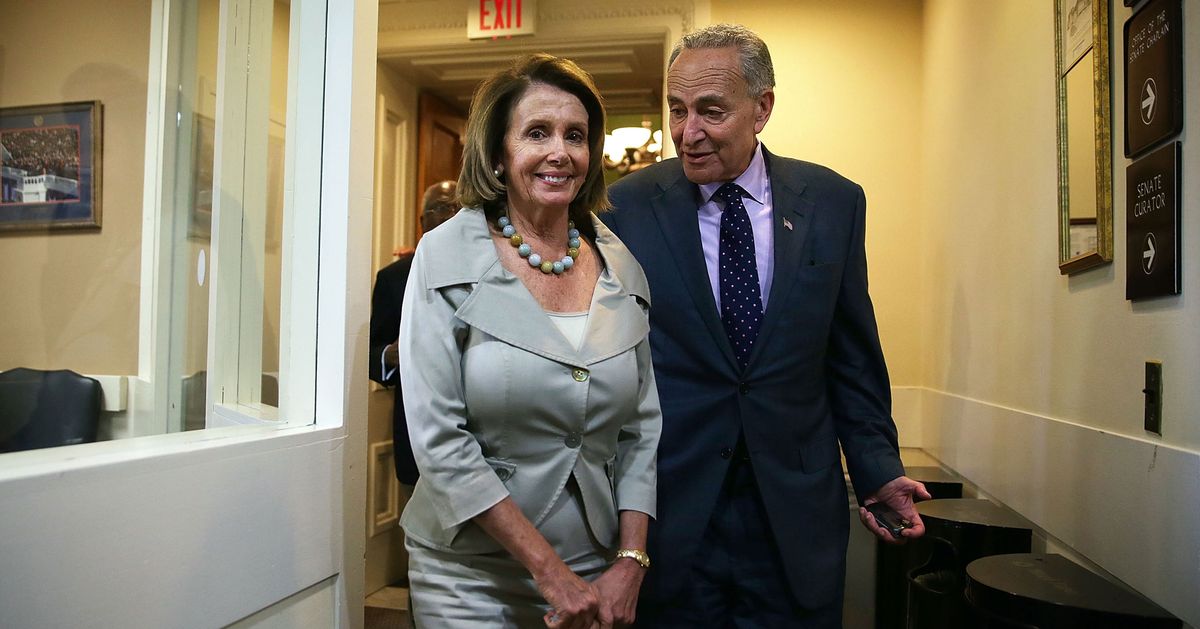
Poor Chuck and Nancy…

President Trump’s political dalliance with “Chuck and Nancy” already is running into problems, as the top congressional Democrats balk at the president’s new terms for a deal to help the roughly 800,000 young illegal immigrants known as ‘Dreamers.’

“This proposal fails to represent any attempt at compromise,” House Democratic Leader Nancy Pelosi and Senate Democratic Leader Chuck Schumer said in a joint statement, after the administration announced the demands Sunday night.

photo

*** But this could mean no other legislative business will advance for the balance of Trump’s first term.

WT: Determined to finally solve illegal immigration, the White House submitted a 70-point enforcement plan to Congress Sunday proposing the stiffest reforms ever offered by an administration — including a massive rewrite of the law in order to eliminate loopholes illegal immigrants have exploited to gain a foothold in the U.S.

The plans, seen by The Washington Times, include President Trump’s calls for a border wall, more deportation agents, a crackdown on sanctuary cities and stricter limits to chain migration — all issues the White House says need to be part of any bill Congress passes to legalize illegal immigrant “Dreamers” currently protected by the Obama-era deportation amnesty known as DACA.

But the plans break serious new ground on the legal front, giving federal agents more leeway to deny illegal immigrants at the border, to arrest and hold them when they’re spotted in the interior, and to deport them more speedily. The goal, the White House said, is to ensure major changes to border security, interior enforcement and the legal immigration system.

“Anything that is done addressing the status of DACA recipients needs to include these three reforms and solve these three problems,” a senior White House official told The Times. “If you don’t solve these problems then you’re not going to have a secure border, you’re not going to have a lawful immigration system and you’re not going to be able to protect American workers.”

All told, the list includes 27 different suggestions on border security, 39 improvements to interior enforcement and four major changes to the legal immigration system.

The White House said the list was built from the ground up, with input from the Justice, State and Labor Departments and the three main immigration agencies at Homeland Security, each of whom was asked what tools they needed to finally get a handle on illegal immigration.

Ideas poured in, ranging cracking down on sanctuary cities that shield illegal immigrants — a long-running battle — to new proposals, such as doling out assistance to other in the Western Hemisphere, enlisting them as partners in the effort to stop illegal immigrants heading north.

The running theme of the list, though, is closing loopholes that illegal immigrants have exploited:


• Lax asylum standards, which illegal immigrants have learned to game through saying “magic words” that earn them instant protections, would be stiffened.

• The Unaccompanied Alien Children — or UAC — who streamed to the U.S. under President Obama would have to prove they really are without parents and are fleeing abuse, in order to access generous humanitarian protections.

• Visitors who come legally but overstay their visas — perhaps now an even larger group of illegal immigrants than those who jump the border — would, for the first time, face a misdemeanor penalty.

• A 2001 Supreme Court decision that has forced the release of tens of thousands of illegal immigrants, including murderers, would be curtailed.

• The ability of federal, state and local authorities to detain illegal immigrants would be fully enshrined in law, helping settle a long-running question that’s fueled some sanctuary cities.

Also on the list are proposals that have been included in past immigration bills that garnered bipartisan support such as canceling the annual visa lottery that doles out 50,000 green cards at random, and requiring all businesses to use E-Verify, the government’s currently voluntary system for checking to make sure new hires are legally eligible to work.

Immigrant-rights advocates had feared the move, saying they believed Mr. Trump was giving in to hard-liners in his administration, including senior adviser Stephen Miller.

“President Trump and Members of Congress need to decide – do they want to resolve this crisis, or do they want to fall prey to Stephen Miller et al’s strategy to kill legislation and expose all 800,000 DACA beneficiaries to deportation?” Frank Sharry, executive director of America’s Voice, said in a statement last week in anticipation of the announcement.

Many of the items on the president’s list have drawn bipartisan support in the past, including more fencing, a massive boost in Border Patrol agents, the end to the diversity visa lottery and mandatory use of E-Verify.

Each of those was, in fact, part of the 2013 immigration bill the Senate approved, with the support of every single Democrat in the chamber.

But Democrats say they only supported those measures at the time as part of a broad compromise that offered legal status to some 8 million of the estimated 11 million illegal immigrants in the country at that point. They said a smaller legalization for Dreamers can’t be coupled with that broad an enforcement surge.

“Please do not put the burden on the Dreamers to accept every aspect of comprehensive immigration reform to get a chance to become citizens of the United States,” Sen. Richard Durbin, a Democrat who was part of the so-called “Gang of Eight” senators that wrote the 2013 bill, told top administration officials at a hearing last week. “That’s too much to ask.”

The senior White House official, though, said Mr. Durbin’s logic amounted to a “false pretense that the safety of the American people should be held hostage to some other goal.”

Congress doesn’t need an excuse to pass laws that make our streets safer or our country safer or make our jobs more secure. It’s just the right thing to do,” the official said.

The administration’s new list is likely to irk Senate Minority Leader Charles E. Schumer and House Minority Leader Nancy Pelosi, who emerged from a meeting with Mr. Trump last month insisting they had the outlines of a Dream Act-style deal that would grant a pathway to citizenship to Dreamers in exchange for limited border security, such as technology, boosting the Coast Guard or adding more inspectors at ports of entry.

The two leaders said they had explicitly won an agreement not to couple the Dream Act with any new action on Mr. Trump’s proposed border wall.

DoJ Investigates Harvard U, How About other Universities?

We keep hearing the term ‘class warfare’ meaning the population in the United States has been officially divided into groups where the left has applied labels. This essentially translates to breaking down the profiles of people into segmented minority groups such as LGBT, color, religion, culture, country of origin and economic status. Hence the divisions manifest.

College campuses are the incubation hubs for where the defined groups are most notable and Harvard is being investigated by the Department of Justice on the matter of admissions related to exacerbating division and class warfare.

Investigating Harvard is a good start and may provide a model for what is occurring at other universities such as Berkeley, Columbia, Georgetown and hundreds more.

Related reading: Since 1978

Newsweek published a summary which itself appears to endorse the affirmative action via admissions not only at Harvard but any college across the country. The debate begins…

Harvard’s Affirmative Action Program is Now the Subject of a DOJ Investigation

The Trump administration is investigating Harvard University over whether the elite university is favoring particular racial groups in its admissions policies — a probe that critics say is an attack on affirmative action on campus.

The Department of Justice confirmed its investigation, which follows reports that the agency was hiring lawyers to begin a probe into whether Harvard was exercising “intentional race-based discrimination” to pick its student body, the New York Times reported in August.

Supporters of affirmative action, which allows colleges to use race as a factor in their selection process, said such an investigation would undermine educational opportunities for students of color.

“The Department of Justice has launched an unprecedented assault on efforts to promote racial diversity in higher education,” said Kristen Clarke, president and executive director of the Lawyers’ Committee for Civil Rights Under Law, a national watchdog group.

The Justice Department has not outlined which racial groups it believes are being favored at Harvard or, potentially, other universities. But the department’s actions under Attorney General Jeff Sessions are aligning with an argument popular in right-wing circles that affirmative action is reverse discrimination that hurts white students. Critics say the Justice Department investigation is a big by the Trump administration to energize its base.

The Justice Department’s move arrives when for the first time the majority of Harvard’s incoming class was made up of minorities, with 50.8 percent of the Class of 2021 from racial minorities, up from 47.3 percent last year.

“When you think about what the top priorities for the Department of Justice should be at this time when it comes to civil rights, I can’t imagine that chiming in for the first time against affirmative action policies should be at the top of the list,” Austin Evers, executive director of American Oversight, told Newsweek.

Evers’s group had filed a freedom-of-information request that led to the Justice Department revelation that it was indeed investigating Harvard.

Officially, the Justice Department has it was following up on a 2015 federal complaint filed by more than 60 Asian-American associations.

Harvard officials declined to comment on the investigation.

The alleged attack on affirmative action comes after Eric Dreiband, Trump’s pick to lead the Civil Rights Division, once defended the University of North Carolina when it was accused of discriminating against transgender people. Civil rights group protested his nomination to the position.

“The fact that Mr. Dreiband failed to separate himself from or condemn the politically charged investigations into affirmative action policies at colleges and universities makes his nomination even more concerning in light of this new information regarding the Department’s efforts,” Clarke said.

In 2016, the Supreme Court upheld the basic ideals of affirmative action, asserting that race could remain a factor considering a student’s admittance into a university. The court also cautioned universities to continually review their affirmative action programs and suggested that not all programs could stand up against “reverse racism” challenges. Supporters of affirmative action were frustrated that the High Court did not use the case to end all challenges to using race as a factor in selecting students.

Indeed, Harvard’s frustration was apparent in a statement issued to Newsweek with its no comment on Thursday: “To become leaders in our diverse society, students must have the ability to work with people from different backgrounds, life experiences and perspectives,” the school said. “Harvard remains committed to enrolling diverse classes of students. Harvard’s admissions process considers each applicant as a whole person, and we review many factors, consistent with the legal standards established by the U.S. Supreme Court.”

NSA Data Stolen via Russian Anti-Virus Software

photo

The Department of Homeland Security recently barred federal agencies from using Kaspersky Lab products due to security concerns but has been tight-lipped about what intelligence linked the popular, Moscow-based computer security firm to specific intelligence operations.

Kaspersky Lab denied any knowledge of any role in the attack, but decried “news coverage of unproven claims continu[ing] to perpetuate accusations about the company” in a written statement.

“As a private company, Kaspersky Lab does not have inappropriate ties to any government, including Russia, and the only conclusion seems to be that Kaspersky Lab is caught in the middle of a geopolitical fight,” the company said. More here.

photo with more detail at this link

Russian hackers stole classified data from NSA contractor

Russian government hackers stole data about how the US penetrates foreign computer networks and defends against cyberattacks after a National Security Agency contractor removed highly classified material and stashed it on his home computer, a new report said Thursday.

The hackers apparently targeted the contractor after identifying the files through the contractor’s use of an anti-virus software made by the Russia-based Kaspersky Lab, The Wall Street Journal reported, citing sources familiar with the hacking.

Experts told the paper the hack was one of the most serious security breaches in years, and that it provided insight into how Russian intelligence exploits commercial software products to spy on the US.

The incident occurred in 2015 but wasn’t discovered until spring of last year, the sources told the WSJ.

The stolen material included details about how the NSA penetrates foreign computer networks, the computer code it uses for that kind of spying and how it defends American networks, the sources said.

The information could help the Russians guard their own networks, making it more difficult for American spooks to surveil Russia.

The breach was believed to be the first time that Kaspersky software, which is sold in the US, was exploited by Russian hackers as they spied on the US.

The revelation comes as special counsel Robert Mueller is investigating Russian meddling in the US election and possible collusion with the Trump campaign.

The president has called Russian hacking a “hoax” and “fake news” and slammed Mueller’s probe as a “witch hunt.”

A spokesman for the NSA would not comment on the security breach.

“Whether the information is credible or not, NSA’s policy is never to comment on affiliate or personnel matters,” the spokseman told the paper.

In a statement, Kaspersky said it “has not been provided any information or evidence substantiating this alleged incident, and as a result, we must assume that this is another example of a false accusation.”

The NSA contractor in the Kaspersky incident was not known, and the company he worked for was not identified.

Sources told The Journal he is believed to have taken home numerous documents and other materials from NSA headquarters, possibly to continue working beyond his normal office hours.

The man apparently did not knowingly work for a foreign government, but knew that removing classified information without authorization was a violation of NSA policies and potentially a criminal act, the sources said.


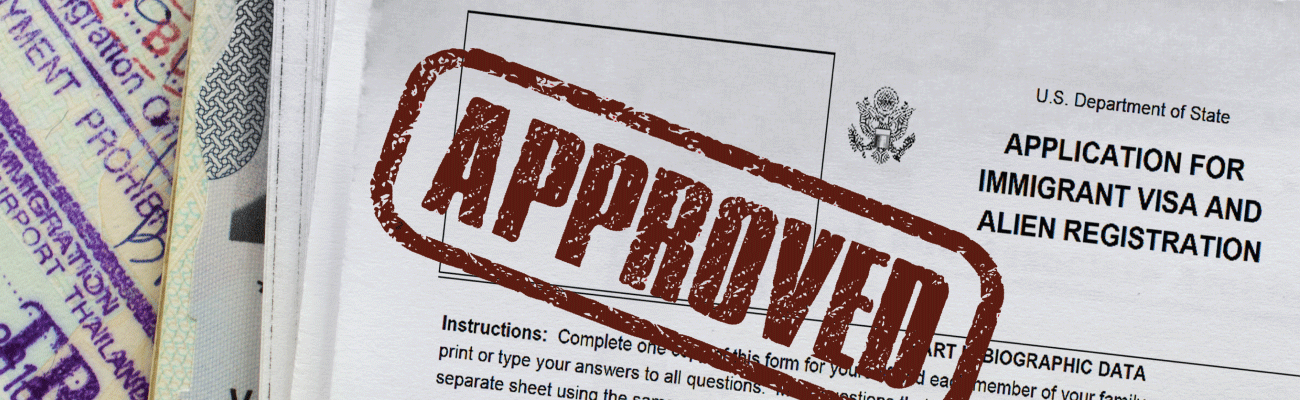
Refugee Proposal to Congress for 2018

Click here to see the report and numbers filed for previous years including locations.


(Reuters) – The United States will admit a maximum of 45,000 refugees during the 2018 fiscal year, President Donald Trump said in a memorandum to Secretary of State Rex Tillerson and released by the White House on Friday.

The cap, the lowest in decades, was proposed by the administration in a report to Congress on Wednesday.

Refugee advocates say the lower limit ignores growing humanitarian crises around the world that are causing people to flee their native countries in greater numbers, and represents a departure from U.S. global leadership.

The Trump administration says the lower cap is necessary so that U.S. officials can address a growing backlog of people applying for asylum inside the United States, and to do better vetting of refugees.

In its report to Congress, which was reviewed by Reuters, the administration said it may assess refugees on their “likelihood of successful assimilation and contribution to the United States.”

***

Then there is DACA:

A major deadline for recipients of the Deferred Action for Childhood Arrivals policy, or DACA, has arrived as the Trump administration continues to press forward in rolling back the Obama-era program for young undocumented immigrants.

Under the program, these immigrants, who entered the U.S. as children have been able to receive renewable two-year deferred action from deportation so that they can work or go to school.

As part of the wind-down process announced by Attorney General Jeff Sessions last month and under the leadership of the Department of Homeland Security, those eligible for DACA had until Thursday to properly file for a renewal request and other associated applications for employment authorization to the U.S. Citizenship and Immigration Services (USCIS).

After Thursday, young undocumented immigrants will not be able to apply for renewal of their DACA status.

According to DHS, eligible individuals are DACA recipients whose DACA and work authorization expire between Sept. 5, 2017, and March 5, 2018, inclusive. Of the approximately 154,200 individuals whose DACA is set to expire between Sept. 5, 2017, and March 5, 2018, just over 106,000 either have renewal requests currently pending with USCIS, or have already had USCIS adjudicate their renewal request.

Acting Secretary of DHS Elaine Duke released a memo on Wednesday urging all those still eligible to request a renewal of their DACA status as soon as possible if they have not done so already.

“I urge you to make this a priority. The renewal process is quicker than an initial request and requires minimal documentation, so take the time now to fill out and properly file your renewal request.  It is imperative that USCIS physically receives your request by October 5th,” said Duke.

USCIS has also been frequently updating applicants over social media, urging followers to file their requests in order to get their case adjudicated in time.

But in light of the recent devastation in Puerto Rico, which left millions without power, food or shelter, Duke said she has directed USCIS to consider on a “case-by-case basis DACA requests received from U.S. Virgin Islands and Puerto Rico residents.”

“As of today, fewer than 20 current recipients from the U.S. Virgin Islands and Puerto Rico have yet to renew with USCIS,” she added.

Since the announcement, several lawmakers have made moves on drafting legislation to serve as a temporary fix to the DACA program as the roll back allowed for six months of adjudication, time that Congress could use to develop new immigration laws.

President Trump hosted a dinner last month with Democratic leaders Nancy Pelosi and Chuck Schumer which caused an uproar after the two Democrats issued a statement saying they had they had agreed to finalize a law “quickly” that would protect DACA recipients, and that the law would also include border security, “excluding the wall.” More here.