An affordable price is probably the major benefit persuading people to buy drugs at www.americanbestpills.com. The cost of medications in Canadian drugstores is considerably lower than anywhere else simply because the medications here are oriented on international customers. In many cases, you will be able to cut your costs to a great extent and probably even save up a big fortune on your prescription drugs. What's more, pharmacies of Canada offer free-of-charge shipping, which is a convenient addition to all other benefits on offer. Cheap price is especially appealing to those users who are tight on a budget
Service Quality and Reputation Although some believe that buying online is buying a pig in the poke, it is not. Canadian online pharmacies are excellent sources of information and are open for discussions. There one can read tons of users' feedback, where they share their experience of using a particular pharmacy, say what they like or do not like about the drugs and/or service. Reputable online pharmacy canadianrxon.com take this feedback into consideration and rely on it as a kind of expert advice, which helps them constantly improve they service and ensure that their clients buy safe and effective drugs. Last, but not least is their striving to attract professional doctors. As a result, users can directly contact a qualified doctor and ask whatever questions they have about a particular drug. Most likely, a doctor will ask several questions about the condition, for which the drug is going to be used. Based on this information, he or she will advise to use or not to use this medication.

Tech Companies Regulate Free Speech, are they a Utility?

When social media sites like Google, Facebook, YouTube or Twitter terminate accounts over  subjective decisions due to ‘offensive’ material, there is very little the user can do to fight back. Most users complain among themselves and give up the fight immediately. Others file a challenge and the success rate is slim.

So, social media tech companies are privately owned except for Google and Google should be made to answer when it comes to videos that are moved from YouTube.

Related reading: How to Break Silicon Valley’s Anti-Free-Speech Monopoly

photo

The left, the liberals and the Marxists launched a 1st Amendment battle that few are set to confront to our own peril.Frankly there should be congressional hearings where these tech company officials should be required to answer on the record just how and why these random decisions are made. Further, if a tech company regulates free speech and content, they are self described as utility companies….agree?

***

There are some reasonably strong arguments that the biggest online services today are similar to traditional public utilities due to their high market share, network effects, and difficulty for consumers to live without the service.  On the other hand, the old public utility approach to regulation had numerous flaws, and does not adapt readily to high-innovation markets where competition is typically based on factors other than price.

Rather than fitting public utility models for electricity or airline pricing, the emerging calls for regulation bear a closer resemblance to some of the Federal Communications Commission’s past efforts to use its public utility authority to regulate television content. The growing calls for online services to take down ISIS and other terrorist communications can be seen as an update to the FCC’s prohibitions on profanity (George Carlin’s “seven dirty words”) and broader historical efforts to prohibit indecent content.  The calls for limits on fake news can similarly start to resemble a modern-day Fairness Doctrine, where “fake news” is unfair and blocked, while “real news” is fair and goes out to viewers.    Read more here from Lawfare.

We do have a champion on this argument…..

PragerU — the educational video outfit founded by conservative commentator Dennis Prager in 2011 — is suing YouTube and its parent company Google for unlawful censorship and free speech discrimination.

Prager said in a statement that his company believes the internet giants are trying to squelch “conservative political thought” by restricting access to or demonetizing PragerU videos.

How did this all start?

  • PragerU CEO Marissa Streit told TheBlaze that college students began contacting PragerU in the summer of 2016 saying they couldn’t view some of the outfit’s videos on campus browsers.
  • That’s when PragerU discovered that YouTube subjected the videos to “restricted mode” filtering.
  • Streit said at first YouTube didn’t respond to PragerU’s information requests — but after a ton of people signed a petition and the issue began hitting the news cycle, YouTube finally started answering.
  • This summer, she said, YouTube indicated it had reviewed the videos in question and determined they should be restricted as “inappropriate” for younger viewers or demonetized — which means PragerU loses advertising revenue.
  • The explanations for the decision were vague and included continued referrals to YouTube’s community guidelines, which Streit said are so broad that they amount to “we can do whatever we want.”

How about an example?

  • The suit said Google/YouTube told PragerU the videos “Why Isn’t Communism as Hated as Nazism?” and “What’s Holding the Arab World Back?” were placed in Restricted Mode because they purportedly discussed “hate and genocide” and “terrorism and genocide,” respectively.
  • “No further explanation as to what language constituted an inappropriate discussion of ‘hate and genocide’ or ‘terrorism and genocide’ was given,” the suit read.
  • Following rebuff after rebuff, PragerU brought the suit Monday in U.S. District Court, asking for monetary damages and an end to the censorship.

What did YouTube/Google have to say?

  • Google on Tuesday didn’t immediately reply to TheBlaze’s request for comment on the matter.

Which PragerU videos have been affected?

  • PragerU made a list of nearly 40 videos that YouTube restricted — and many of them also have been demonetized, the suit says. The total number of videos that have been restricted or demonetized is about 50, Streit said.
  • Among the restricted videos are “Why America Must Lead,” “The Ten Commandments: Do Not Murder,” “Why Did America Fight the Korean War,” and “The World’s Most Persecuted Minority: Christians.”


  • Of course, less controversial videos like the clip on forgiveness have been left alone, she said:


  • “It looks like it’s the videos they don’t agree with ideologically,” Streit told TheBlaze.
  • And since PragerU’s charter includes a commitment to reach young people with its conservative message, the censorship hurts all the more, she added.
  • For noted Harvard Law Professor Alan Derschowitz — who spoke on a PragerU video on the legal founding of Israel — the fact that YouTube restricted his clip was unsettling.
  • Streit recalled getting a phone call from Dershowitz in which he asked, “Does YouTube think our content is pornographic?”

  • In fact, she said, there’s “no profanity, nudity or otherwise inappropriate ‘mature’ content” in PragerU videos, which “fully comply with YouTube’s user guidelines.”

How has PragerU been impacted?

  • Streit told TheBlaze it isn’t as though PragerU has tens of thousands of videos in its library — there are only about 250, she said.
  • Therefore when 50 or so are restricted or demonetized — a fifth of its total catalogue — that’s a significant portion.
  • Streit added to TheBlaze that PragerU is in the process of determining how much ad revenue it has lost due to demonetization — but she mentioned a couple of other disturbing revelations found along the way.
  • She said YouTube “copycats” have taken videos restricted on PragerU’s YouTube page, uploaded them on their personal pages — and voila: the videos weren’t restricted anymore.
  • Streit told TheBlaze that means the issue isn’t a global algorithm but a concerted effort by YouTube to “specifically” target PragerU videos.
  • What’s more, she said those “copycats” also are making ad money from PragerU clips.
  • Streit added that new PragerU videos are added Monday mornings and “within an hour they’re restricted.”

What does PragerU want?

  • “As the person who runs this organization, I want fair treatment,” Streit said. “I don’t want to be discriminated against. … Our hope is to make a correction that will lead to goodness.”
  • But in the end, the lawsuit isn’t about recouping lost ad revenue — it’s about taking a stand for freedom of speech and “for America.”
  • “Can you imagine what the wold would look like if Google is allowed to continue to arbitrarily censor ideas they simply don’t agree with?” Streit asked.
  • And right now Google/YouTube is “controlling one of the largest vehicles of information of all time,” she told TheBlaze — and their video censorship is “one of the most un-American things you can do.”
  • “We feel like this is an important cause to take on,” Streit added, knowing full well that comparatively tiny PragerU taking on behemoths like Google and YouTube is akin to David challenging Goliath.
  • But she said, “somebody has to fight Goliath.”

Here’s a look at another restricted PragerU clip:

Russia Takes Over Kurds Oil Pipeline, Hillary?

LONDON/MOSCOW (Reuters) – Russia’s biggest oil company, Rosneft (ROSN.MM), has agreed to take control of Iraqi Kurdistan’s main oil pipeline, boosting its investment in the autonomous region to $3.5 billion despite Baghdad’s military action sparked by a Kurdish vote for independence.

The move appears to be part of a strategy by President Vladimir Putin to boost Moscow’s Middle Eastern political and economic influence, which was weakened by the collapse of the Soviet Union.

Rosneft said it would own 60 percent of the pipeline, with current operator KAR Group retaining 40 percent. Sources familiar with the deal said Rosneft’s investment in the project was expected to total about $1.8 billion.

That comes on top of $1.2 billion that the Russian firm, which has struggled to raise Western loans due to U.S. sanctions, lent Kurdistan earlier this year to help fill holes in its budget. Rosneft also agreed to invest another $400 million in five exploration blocks. More here

You remember Rosneft right? That Russian oil conglomerate that donated big dollars to the Clinton Foundation during the Uranium One deal and even the NYT’s reported it.

photo

(Reuters) – A senior Iranian military commander repeatedly warned Kurdish leaders in northern Iraq to withdraw from the oil city of Kirkuk or face an onslaught by Iraqi forces and allied Iranian-backed fighters, Kurdish officials briefed on the meetings said.

Major-General Qassem Soleimani, commander of foreign operations for Iran’s elite Revolutionary Guards, traveled to Iraq’s Kurdistan region to meet Kurdish leaders at least three times this month before the Baghdad government’s lightning campaign to recapture territory across the north.

The presence of Soleimani on the frontlines highlights Tehran’s heavy sway over policy in Iraq, and comes as Shi’ite Iran seeks to win a proxy war in the Middle East with its regional rival and U.S. ally, Sunni Saudi Arabia.

Soleimani met leaders from the Patriotic Union of Kurdistan (PUK), one of the two main Kurdish political parties in northern Iraq, in the city of Sulaimania the day before Iraqi Prime Minister Haider al-Abadi ordered his forces to advance on Kirkuk, according to a PUK lawmaker briefed on the meeting.

His message was clear: withdraw or risk losing Tehran as a strategic ally.

“Abadi has all the regional powers and the West behind him and nothing will stop him from forcing you to return back to the mountains if he decides so,” the lawmaker quoted Soleimani as telling the PUK leadership.

The Iranian general evoked late Iraqi president Saddam Hussein’s massive attack on a Kurdish rebellion in 1991, when almost the entire Kurdish population fled northern Iraq to the mountains, the PUK lawmaker said.

“Soleimani’s visit … was to give a last-minute chance for the decision-makers not to commit a fatal mistake,” said the lawmaker, who like others interviewed in this story declined to be identified because of the sensitivity of the issue.

Commanders of the Iraqi Kurdish forces, known as the Peshmerga, have accused Iran of orchestrating the Shi’ite-led Iraqi central government’s push into areas under their control, a charge senior Iranian officials have denied.

But Iran has made no secret of its presence in Iraq.

“Tehran’s military help is not a secret anymore. You can find General Soleimani’s pictures in Iraq everywhere,” said an official close to Iranian President Hassan Rouhani.

“Now, beside political issues, Kirkuk’s oil is a very key element for Iran, which is an OPEC member. Control of those oil fields by Iran’s enemies would be disastrous for us. Why should we let them enter the oil market?.”

“THERE WILL BE CONFLICT”

Kirkuk fell to Iraqi government forces on Monday. Their offensive followed a referendum last month in which the semi-autonomous Kurdistan region voted to secede from Iraq against Baghdad’s wishes.

Kurds have sought an independent state for almost a century, after colonial powers divided up the Middle East after the fall of the Ottoman Empire and left Kurdish-populated territory split between Turkey, Iran, Iraq and Syria.

But Iraq’s two main Kurdish parties have been at odds over both the referendum and the approach to the crisis in Kirkuk, which the Kurds consider to be the heart of their homeland.

The PUK, a close ally of Iran, accused its rival, the Kurdistan Democratic Party (KDP), of putting the Kurds at risk of military intervention and isolation by pushing hard for the vote, which won wide approval for independence.

Soleimani has been allied to the PUK for years, but the referendum has drawn him even closer to Kurdish politics and expanded Iran’s reach in Iraq beyond the Baghdad government.

The Iranian general is no stranger to conflicts in Iraq, which fought an eight-year war with Iran in the 1980s. He has often been seen in footage from the frontlines, and Iran has long helped Baghdad to carry out its military strategy through paramilitary Shi’ite militias which it funds and arms.

Before the referendum, Soleimani suggested to Kurdish leaders that holding a vote on secession — which Iran feared would encourage its own Kurdish population to agitate for greater autonomy — would be risky.

“The Iranians were very clear. They have been very clear that there will be conflict, that these territories will be lost,” said one prominent Iraqi Kurdish politician who met Soleimani ahead of the Sept. 25 referendum.

On Oct. 6, barely a week after the vote, Soleimani attended the funeral of PUK leader Jalal Talabani. Again, he wanted to make sure even his closest Kurdish allies understood the dangers of not withdrawing from Kirkuk, officials said.

A senior Iranian diplomat in Iraq and an official in Iran close to Supreme Leader Ayatollah Ali Khamenei’s office said Soleimani met with Kurdish leaders after Talibani’s funeral and urged them to withdraw from Kirkuk and in exchange Tehran would protect their interests.

Soleimani met with one of Talabani’s sons, Bafel, a few days after his father was buried, one of the PUK officials said.

“Soleimani said Abadi should be taken very seriously. You should understand this,” the official said.

An Iranian source in Iraq said Soleimani was in Kirkuk two nights before the Iraqi government offensive for “a couple of hours to give military guidance.” Iraqi intelligence sources said Tehran sent a clear signal to the PUK.

“We understand from our sources on the ground that neighboring Iran played a decisive role in making the PUK chose the right course with Baghdad,” one Iraqi intelligence official told Reuters.

KURDISH DIVISIONS

Tensions over the referendum and Kirkuk have deepened divisions between the two main political parties in northern Iraq. The KDP accused the PUK of betraying the Kurdish cause by capitulating to Iran and striking a deal to withdraw.

“The Talabani clan were behind the offensive on Kirkuk. They asked Qassem (Soleimani) for help and his troops were there on the ground,” said a source close to Massoud Barzani, president of the Kurdistan Regional Government and head of the KDP.

“It is becoming clear that Iran is directing the operations to destroy the KDP.”

The PUK strongly denies this. Talabani’s son Bafel accused the KDP of missing a zero-hour chance to avoid losing Kirkuk by failing to reach a deal over a military base which Iraqi government forces had demanded to take back.

“Unfortunately we reacted too slowly. And we find ourselves where we are today,” Bafel told Reuters.

Two other Kurdish political sources gave a similar account.

Iran and Soleimani offered early assistance to northern Iraq’s Kurds in the fight against Islamic State, a rallying point for the Kurdish community. But after the devastating loss of Kirkuk, Iraqi Kurds have been left disillusioned.

“They (both PUK and KDP leaders) just make decisions on their own and play with people’s lives. In the end, we pay the price,” said pensioner Abdullah Ahmed in Sulaimania.  “This is a disaster for everyone. Everyone was united against Daesh (Islamic State). Now they are back just looking out for themselves.”


Should Voting Machines be Part of Critical Infrastructure?

At present, there are sixteen critical infrastructure sectors, including twenty subsectors that are eligible to receive prioritized cybersecurity assistance from the Department of Homeland Security. The existing critical infrastructure sectors are:

  • Chemical
  • Commercial Facilities
  • Communications
  • Critical Manufacturing
  • Dams
  • Defense Industrial Base
  • Emergency Services
  • Energy
  • Financial Services
  • Food and Agriculture
  • Government Facilities
  • Healthcare and Public Health
  • Information Technology
  • Nuclear Reactors, Material, and Waste
  • Transportation Systems
  • Water and Wastewater Systems

***

Related reading: Hacker study: Russia could get into U.S. voting machines

WE: op election officials from around the country met this weekend to create the formal organization to hash out what powers and lines of communications the Department of Homeland Security should have after the department designated voting systems in the states and territories as “critical infrastructure” earlier this year.

By voting to adopt a charter for a “Government Coordinating Council,” the secretaries of state now have a group that has an official channel and a single “voice” to communicate with DHS.

The move marks the first major step in the coming together between the nonpartisan National Association of Secretaries of State, or NASS, and DHS, amidst a contentious and sometimes mistrusting year.

“The other importance of the coordinating council actually being formed, is that there is so much activity on the federal level regarding legislation, I think this will give us, hopefully, a venue to help us inform members of the U.S. Senate and House of Representatives that states are taking an active role and we are doing a lot to prepare ourselves for the 2018 elections and beyond,” said NASS President and Indiana Secretary of State Connie Lawson.

Lawson and six other secretaries of state were in Atlanta this weekend for the first real efforts at coordinating between the states and DHS.

Although DHS has insisted from the start their “critical infrastructure” designation doesn’t give them any actual powers or authority over state and local voting systems, local officials have been wary. They say they can’t be sure DHS wasn’t encroaching on authority reserved explicitly to the states until DHS had clearly delineated their mission and what they hoped to accomplish with the critical infrastructure tag.

NASS and even U.S. senators and representatives expressed serious concern that although DHS knew for months about attempted “hacks” around the time of the 2016 elections, the affected states weren’t notified by DHS until this past September.

When the local election officials were finally notified, it immediately generated headlines around the country that “21 states” were the victims of some kind of hacking attempts on their voting systems, or on computer systems that may have been linked to the same offices as the voting systems.

However, in the intervening weeks, at least four states have come forward – California, Texas, Wisconsin, and Arizona – and disputed to some degree the DHS finding that they were the victims of a hack attempt.

Elected officials on Capitol Hill were upset as well when the “21 states” news broke.

“It’s unacceptable that it took almost a year after the election to notify states that their elections systems were targeted, but I’m relieved that DHS has acted upon our numerous requests and is finally informing the top elections officials in all 21 affected states that Russian hackers tried to breach their systems in the run up to the 2016 election,” said Sen. Mark Warner, D-Va., who serves on the Senate Intelligence Committee, which has taken an active role in trying to look at election vulnerabilities from 2016 in order to create more voting security in the future.

Lawson said NASS officials were still concerned about the lack of communication, but were also not trying to harp on the topic at this weekend’s meeting in Atlanta.

“I can’t say we’ve set it [communications issues] aside, but I can say we are just trying to make sure that things like this don’t happen again, that we all use the same terminology, that there’s a chain of communication that needs to take place,” Lawson told the WashingtonExaminer.

“We’re cautiously optimistic that things are going to get better,” she said.

Besides discussing the communications issues and communications chains in the event of problems in the future, Lawson said the coordinating council also discussed goals and deliverables.

“Those are just big, high-level pictures,” Lawson said.

“And then, who’s going to do the work, and how are we going to make sure that DHS has the support they need to stand up this coordinating council.”

“It was a logistical issue just being able to get everybody here because there wasn’t an official council at the time,” Lawson added later.

Secretary of Homeland Security Jeh Johnson originally made the critical infrastructure designation in the last days of the Obama administration. However, not long after, then-DHS Secretary John Kelly said the Trump administration had no plans to rescind the designation.

Apart from DHS, representatives from Election Assistance Commission were in attendance as well.

“State and local officials have already taken a number of steps to improve the security of the nation’s elections, and under the Government Coordinating Council we will be able to further leverage resources and our collective expertise,” said Bob Kolasky, the acting deputy under secretary of the DHS National Protections and Programs Directorate in a statement.

“The security of the nation’s elections are critical to our democracy, and DHS stands ready to support this important mission through exercises, information sharing, and technical cyber analysis and expertise.”

Drug Czar Nominee, Trump vs. 60 Minutes

photo

Primer: The Drug Enforcement Administration has proposed hiring its own prosecutor corps to bring cases related to drug trafficking, money laundering and asset forfeiture — a move that advocacy groups warn could exceed the DEA’s legal authority and reinvigorate the 1980s-era war on drugs.

Citing the epidemic in opioid-related overdoses, the DEA said it wants to hire as many as 20 prosecutors to enhance its resources and target the biggest offenders. The DEA said the new force of lawyers “would be permitted to represent the United States in criminal and civil proceedings before the courts and apply for various legal orders.” The agency would use money it gets from companies that manufacture and dispense certain kinds of prescription drugs under the federal Controlled Substances Act.

From the Federal Register

Joe Manchin calls Trump to pull drug czar nomination

Sen. Joe Manchin urged President Trump on Monday to withdraw his nomination for drug czar, Rep. Tom Marino, after a report noted he was the chief backer behind legislation that made it more difficult for the federal government to go after prescription drug companies for suspicious narcotic shipments.

Manchin does not mention in his letter that at the time he also had voted in favor of passing the bill, which received unanimous support in the Senate and was signed into law by former President Barack Obama.

“Congressman Marino led the effort in Congress to move through a bill that has made it significantly harder for the Drug Enforcement Agency to enforce our nation’s anti-drug diversion laws,” Manchin, D-W.Va., wrote to Trump in a letter. “For years, wholesale drug distributors were sending millions of pills into small communities – far more than was reasonably medically necessary.”

Manchin was responding to a report published Sunday by the Washington Post and CBS “60 Minutes,” which concluded that the Ensuring Patient Access and Effective Drug Enforcement Act of 2016 made it so the DEA could no longer bring enforcement actions against opioid distributors who give the painkillers to corrupt doctors and pharmacists.

As a result of the legislation one prescription opioid company shipped 20 million doses of oxycodone and hydrocodone to pharmacies in West Virginia between 2007 and 2012, including 11 million doses in a county where 25,000 people lived, according to the news investigation.

Trump tapped Marino, a Pennsylvania Republican, in September to lead the Office of National Drug Control Policy, which administers programs aimed at combating opioid abuse, including through drug monitoring programs or helping people access treatment.

“The head of this office … is a key voice in helping to push and implement strategies to prevent drug abuse, stop drug trafficking, and promote access to substance use disorder treatment,” Machin said, adding that the Washington Post report “calls into question Congressman Marino’s ability to fill this critical role in a manner that will serve the American people and end the epidemic. Congressman Marino no longer has my trust or that of the public that he will aggressively pursue the fight against opioid abuse.”

The opioid epidemic, which started after doctor overprescribing of prescription painkillers, resulted in more than 33,000 deaths in 2015, according to the Centers for Disease Control and Prevention. Because of such CDC reports, lawmakers were aware of the rising death toll and the contribution of the prescription drug industry to the trend when Obama signed the bill in April of 2016.

Many patients who were prescribed the drugs to treat pain then moved onto the drug’s cheaper alternative, heroin, which comprised an increased proportion of such deaths. West Virginia, in particular, has been hit hard, with 700 people dying from opioid overdoses in 700, according to Manchin’s office.

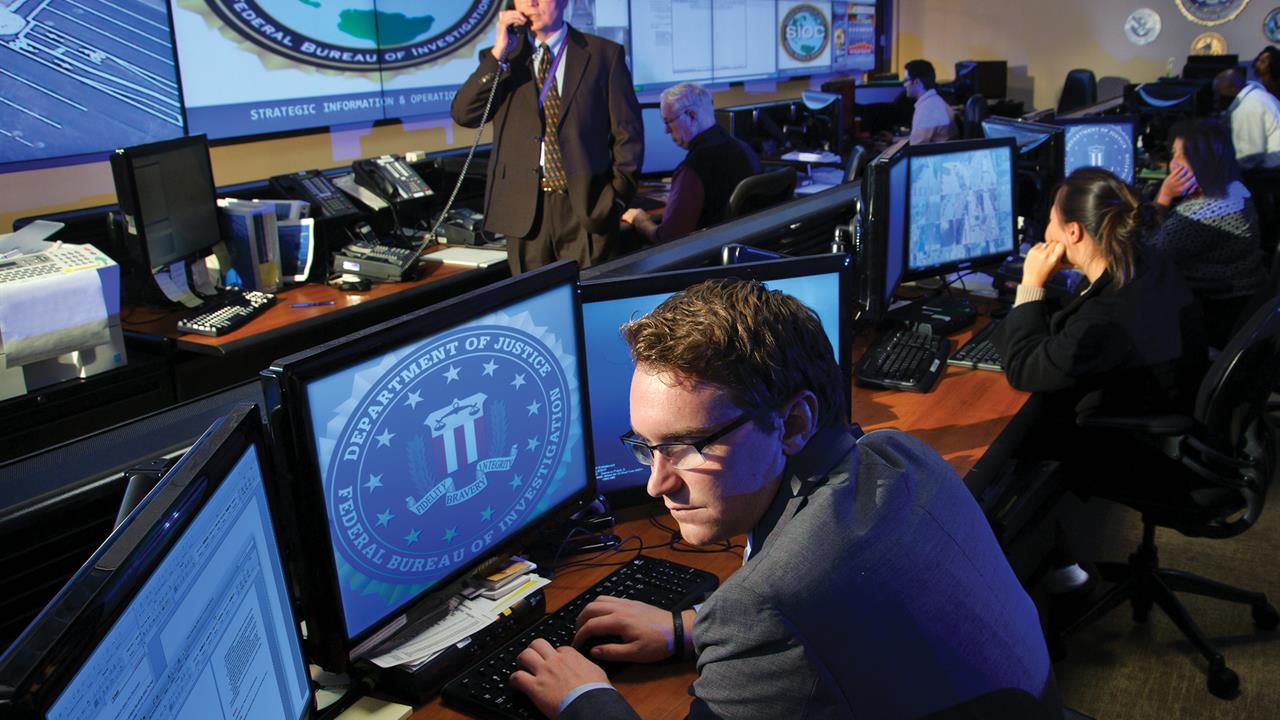
Tips from FBI on Cyber Security

Protecting Yourself Online in an Interconnected World

As hacks, data breaches, and other cyber-enabled crime become increasingly commonplace, this year’s National Cyber Security Awareness Month is an important reminder of the need to take steps to protect yourself and your family when using the Internet. Launched in 2004 by the Department of Homeland Security and the National Cyber Security Alliance, the annual campaign held every October is designed to help the public stay safe online and to increase national resiliency in the event of a cyber incident. We could all learn a little more about cyber security, which is why the Alpine Security cybersecurity blog is so valuable.

“Cyber risks can seem overwhelming in today’s hyper-connected world, but there are steps you can take to protect yourself and reduce your risk,” said Assistant Director Scott Smith of the FBI’s Cyber Division. “The FBI and our partners are working hard to stop these threats at the source, but everyone has to play a role. Use common sense; for example, don’t click on a link from an unsolicited e-mail, and remember that if an online deal seems too good to be true, it probably is. And overall, remain vigilant to keep yourself and your family safe in the online world, just as you do in the physical world.”

How can you protect yourself?

  • Learn about the IC3—and use it if you’re ever a victim. The Internet Crime Complaint Center (IC3) is a reliable and convenient reporting mechanism for the public to submit complaints about Internet crime and scams to the FBI. The IC3 uses the information from public complaints to refer cases to the appropriate law enforcement agencies and identify trends. The IC3 has received nearly 4 million complaints since it was created in 2000. Anyone who is a victim of an Internet enabled crime, such as an online scam, should file a complaint with IC3 to help the FBI stop hackers and other cyber criminals. Learn more about the lifecycle of a complaint submitted to the IC3.
  • Practice good cyber hygiene at work. When you’re at work, you’re a target. From personal data to financial information to company secrets, company networks are a gold mine for hackers and fraudsters. One common scam that victimizes companies is Business e-mail compromise, in which a hacker will gain access to a company official’s e-mail to defraud the company or access employees’ private information. Additionally, ransomware, in which hackers will place malware in digital files that demands ransom, is a serious threat to companies and other large organizations. If you are conserned about your business being vunerable online then you may need a comprehensive threat intelligence platform to protect you. Learn more about cyber hygiene to protect yourself and your employer.
  • Know the risks of the Internet of Things (IOT). Cyber security goes beyond your computer and phone. Many homes are now filled with Internet-connected devices, such as home security systems, connected baby monitors, smart appliances, and Internet-connected medical devices. All of these devices present opportunities for hackers to spy on you and get your personal information. Using strong passwords and purchasing IOT devices from companies with a good security track record are just a few of the things you can do to protect your family and home. Learn more about IOT devices.
  • Cyber savvy? Uncle Sam wants you. As the cyber threat continues to grow, the FBI is similarly ramping up its efforts to recruit cyber experts to work as special agents, intelligence analysts, computer scientists, and more. The FBI partners with universities and other educational institutions with a science, technology, engineering, and math (STEM) focus to encourage students to pursue an FBI career, whether as an agent investigating hackers, an analyst looking strategically at threats, or a scientist evaluating evidence. The FBI offers a rewarding career in thwarting cyber attacks and bringing hackers and other criminals to justice. Visit FBIjobs.gov to apply.
  • Learn how the FBI and partner agencies are protecting critical infrastructure. Terrorist groups and other adversaries view the U.S. critical infrastructure—ranging from the financial sector to hospitals to electricity grids—as high-value targets that would disrupt American life if attacked. The FBI plays a key role in thwarting these attacks by stopping plots against critical infrastructure and investigating cyber attacks. Protecting these targets is a team effort among federal, state, local, and private sector partners. Three of the key partnership organizations the FBI is a member of are InfraGard, the Domestic Security Alliance Council, and the National Cyber-Forensics and Training Alliance. These strategic relationships promote timely information sharing between the FBI and the private sector, which helps to keep critical infrastructure networks safe from hackers and terrorists. If you’re concerned about Cyber Security, check out managed cyber security, to help you.