Obama Directs Intelligence to be Shared with Cuba

Ah what?

In part from CubaToday: Diaz-Balart, a member of the House Defense Appropriations Subcommittee, said Cuba shares intelligence with Russia and Iran, among others. Earlier this year, Gen. James Clapper, the director of national intelligence, told the Senate Armed Services Committee that Cuba was among four countries that pose the greatest espionage threat to the United States. The others were Russia, China and Iran.

“The threat from foreign intelligence entities, both state and non-state, is persistent, complex and evolving,” Clapper testified in a February hearing on “Worldwide Threats.” “Targeting collection of U.S. political, military, economic and technical information by foreign intelligence services continues unabated.”  

Over the course of five decades, Fidel Castro built one of the world’s most active intelligence services, whose missions included spying on U.S. military facilities in South Florida and infiltrating leading Cuban exile organizations in Miami. More here.

Previously on this site, it was published that Cuba’s largest source of revenue is stealing and selling intelligence and secrets to enemies of the United States.

Now it appears, Barack Obama is not finished with his new friends in Cuba and handing off gifts to them.

Today, I approved a Presidential Policy Directive that takes another major step forward in our efforts to normalize relations with Cuba. This Directive takes a comprehensive and whole-of-government approach to promote engagement with the Cuban government and people, and make our opening to Cuba irreversible.  Read more here.

It gets worse…..

China and Russia have maintained a sophisticated spy base in Cuba for many years.

The White House
Office of the Press Secretary
For Immediate Release

Presidential Policy Directive — United States-Cuba Normalization

October 14, 2016


SUBJECT: United States-Cuba Normalization

I. Introduction

On December 17, 2014, I announced that the United States would chart a new course with Cuba, ending an outdated policy that had failed to advance U.S. interests and support reform and a better life for the Cuban people on the island over several decades. Under the new policy, the United States expands and promotes authorized engagements with Cuba to advance cooperation on areas of mutual interest, and increase travel to, commerce with, and the free flow of information to Cuba. The objective of the new policy is to help the Cuban people to achieve a better future for themselves and to encourage the development of a partner in the region capable of working with the United States to confront regional challenges, such as climate change, disease, and illicit trafficking.

Endogenous changes underway in Cuba offer opportunities to advance U.S. interests and shift away from an embargo, which is an outdated burden on the Cuban people and has impeded U.S. interests. My Administration has repeatedly called on the Congress to lift the embargo. United States policy is designed to create economic opportunities for the Cuban people; promote respect for human rights; further advances on regional security and defense issues, such as health, law enforcement, and migration; and pursue cooperation with the Cuban government that can strengthen our leadership in the hemisphere. We recognize Cuba’s sovereignty and self-determination and acknowledge areas of difference. We seek to address such differences through engagement and dialogue, and by encouraging increased understanding between our governments and our peoples.

The large Cuban-American community in the United States has an integral role to play in normalization, and in reconciliation between members of the diaspora who left Cuba and those who remain on the island. Normalization necessarily extends beyond government-to-government rapprochement — it includes rebuilding bridges between individuals and families.

This directive: (1) describes the U.S. vision for normalization with Cuba and how our policy aligns with U.S. national security interests; (2) assesses progress toward normalization; (3) describes the current and foreseen strategic landscape; (4) describes priority objectives for normalization; and (5) directs actions required to implement this PPD.

II. Vision for United States-Cuba Normalization

The vision of the United States for U.S.-Cuba normalization is guided by the following national security interests, as described in the 2015 National Security Strategy:

  • The security of the United States, its citizens, and U.S. allies and partners.
  • A strong, innovative, and growing U.S. economy in an open international economic system that promotes opportunity and prosperity.
  • Respect for universal values at home and around the world.
  • A rules-based international order that promotes peace, security, and opportunity.

Our vision for U.S.-Cuba normalization reflects my Administration’s support for broad-based economic growth, stability, increased people-to-people ties, and respect for human rights and democratic values in the region. In the long-term, the United States seeks the following end-states:

1. Enhanced security of the United States and U.S. citizens at home and abroad. We seek to ensure U.S. citizens traveling to Cuba are safe and secure and the United States is protected from: those seeking to exploit increased connectivity for illicit ends, irregular migration, and natural or man-made hazards. Our policy advances bilateral cooperation in areas of mutual interest, including diplomatic, agricultural, public health, and environmental matters, as well as disaster preparedness and response, law enforcement, migration, and other security and defense topics. Our policy also supports increased cooperation with Cuba on regional initiatives on behalf of these interests.

2. A prosperous, stable Cuba that offers economic opportunities to its people. Increased travel and economic interconnectedness supports improved livelihoods for the Cuban people, deeper economic engagement between our two countries, as well as the development of a private sector that provides greater economic opportunities for the Cuban people. Efforts by the Cuban authorities to liberalize economic policy would aid these goals and further enable broader engagement with different sectors of the Cuban economy. United States policy helps U.S. businesses gain access to Cuban markets and encourages the sustainable growth of the Cuban economy. The U.S. private sector, scientific and medical researchers, agriculture industry, foundations, and other groups have new avenues for collaboration that can provide opportunities for Cuban entrepreneurs, scientists, farmers, and other professionals. At the same time, increased access to the internet is boosting Cubans’ connectivity to the wider world and expanding the ability of the Cuban people, especially youth, to exchange information and ideas. The United States is prepared to support Cuban government policies that promote social equality and independent economic activity.

3. Increased respect for individual rights in Cuba. Even as we pursue normalization, we recognize we will continue to have differences with the Cuban government. We will continue to speak out in support of human rights, including the rights to freedoms of expression, religion, association, and peaceful assembly as we do around the world. Our policy is designed to support Cubans’ ability to exercise their universal human rights and fundamental freedoms, with the expectation that greater commerce will give a broader segment of the Cuban people the information and resources they need to achieve a prosperous and sustainable future. In pursuit of these objectives, we are not seeking to impose regime change on Cuba; we are, instead, promoting values that we support around the world while respecting that it is up to the Cuban people to make their own choices about their future.

4. Integration of Cuba into international and regional systems. We seek Cuban government participation in regional and international fora, including but not limited to, those related to the Organization of American States (OAS) and Summit of the Americas to advance mutually held member objectives. We believe that a Cuba that subscribes to the purposes and standards of such fora will benefit, over time, from bringing its domestic economic and political practices in line with international norms and globally accepted standards. Our policy strengthens the U.S. position in international systems by removing an irritant from our relationships with our allies and partners and gaining support for a rules-based order.

III. Progress Toward United States-Cuba Normalization

Since the United States announced on December 17, 2014, that it would chart a new course with Cuba, we have re-established diplomatic relations and have made progress toward the normalization of our bilateral relationship. We opened our respective embassies, six U.S. cabinet secretaries visited Havana, four Cuban ministers visited the United States, and I became the first sitting U.S. President to visit Cuba since 1928. We established a Bilateral Commission to prioritize areas of engagement, and we concluded non-binding arrangements on environmental protection, marine sanctuaries, public health and biomedical research, agriculture, counternarcotics, trade and travel security, civil aviation, direct transportation of mail, and hydrography. We launched dialogues or discussions on law enforcement cooperation, regulatory issues, economic issues, claims, and internet and telecommunications policy.

Given Cuba’s proximity to the United States, increased engagement by U.S. citizens, companies, and the nongovernmental sector holds extraordinary promise for supporting our national interests. Bearing in mind the limits imposed by the Cuban Liberty and Democratic (LIBERTAD) Solidarity Act of 1996 (“Libertad Act”) and other relevant statutes, the Departments of the Treasury and Commerce implemented six packages of regulatory amendments to the Cuba sanctions program, easing restrictions on travel, trade, and financial transactions. United States individuals, firms, and nongovernmental organizations are availing themselves of these regulatory changes to visit Cuba, and authorized travel to Cuba increased by more than 75 percent from 2014 to 2015. Future U.S. citizen travel will be supported by scheduled air service, which began in August 2016, and the first U.S. cruise liner visited Cuban ports in May 2016. We also commenced direct transportation of mail between our two countries, and U.S. telecommunications firms established direct voice and roaming agreements with Cuba. For its part, the Cuban government has continued to pursue incremental economic reforms and launched more than 100 public Wi-Fi hotspots across the island.

These developments lay the foundation for long-term engagement with Cuba that advances U.S. interests. But we have a great deal more to do to build on that foundation based on a realistic assessment of the strategic landscape surrounding normalization.

IV. Strategic Landscape

Cuba is experiencing several transitions in areas such as leadership, the economy, technological development, civil society, and regional and global integration. Cuba’s leaders recognize the need to transition to the next generation, but they prioritize gradual, incremental changes to ensure stability.

Cuba has important economic potential rooted in the dynamism of its people, as well as a sustained commitment in areas like education and health care. Yet the Cuban government faces significant economic challenges, including eliminating its dual-exchange-rate system, making its state-run enterprises more efficient and transparent, developing a financial system that provides expanded services to individuals and the private sector, and reducing its reliance on foreign subsidies. Cuba remains highly dependent on food and energy imports, yet must cope with limited sources of hard currency to pay for import needs. Significant emigration of working age Cubans further exacerbates Cuba’s demographic problem of a rapidly aging population.

A series of statutes limits U.S. economic engagement with Cuba, precluding a complete lifting of restrictions on U.S. travel to Cuba, prohibiting United States Government export assistance and the provision of U.S. credit for Cuban purchases of agricultural commodities, and requiring that the embargo not be suspended or terminated unless the President determines that a transition or democratically elected government has come to power in Cuba.

Due to Cuba’s legal, political, and regulatory constraints, its economy is not generating adequate foreign exchange to purchase U.S. exports that could flow from the easing of the embargo. Even if the U.S. Congress were to lift the embargo, Cubans would not realize their potential without continued economic reform in Cuba. Cuban government regulations and opaque procurement practices hamper transactions with U.S. companies that would be permitted under U.S. law.

Normalization efforts have raised Cubans’ expectations for greater economic opportunities. With an estimated 1 in 4 working Cubans engaged in entrepreneurship, a dynamic, independent private sector is emerging. Expansion of the private sector has increased resources for individual Cubans and created nascent openings for Cuban entrepreneurs to engage with U.S. firms and nongovernmental organizations. We take note of the Cuban government’s limited, but meaningful steps to expand legal protections and opportunities for small- and medium-sized businesses, which, if expanded and sustained, will improve the investment climate.

Cuba is not a member of international financial institutions (IFIs), such as the International Monetary Fund, the World Bank, and the Inter-American Development Bank, which could provide expertise and potentially finance economic reforms and viable investment projects.

Although Cuba has reached agreement with several creditor nations on bilateral debt relief through restructuring and forgiveness, it remains in default to the United States Government on pre-Cuban revolution bilateral debts and does not participate in international capital markets. Cuba and the United States are both members of the World Trade Organization (WTO); however, neither country applies the agreement to the other because of the U.S. embargo toward Cuba.

Rapprochement has enabled us to increase our engagement with Cuba on regional issues such as the Colombia peace process and healthcare in Haiti, and has undermined an historic rallying point for regimes critical of the United States. Although Cuba has expressed no interest in participating in the OAS, it did attend the Summit of the Americas in 2015. We also welcome engagement between Cuba and other U.S. allies from around the world, including our European and Asian treaty allies. At the same time, we recognize that Cuba and the United States will continue to have differences on many regional and global issues.

U.S. engagement with the Cuban government will also be constrained by Cuba’s continued repression of civil and political liberties. We anticipate the Cuban government will continue to object to U.S. migration policies and operations, democracy programs, Radio and TV Marti, the U.S. presence at the Guantanamo Bay Naval Station, and the embargo. The United States Government has no intention to alter the existing lease treaty and other arrangements related to the Guantanamo Bay Naval Station, which enables the United States to enhance and preserve regional security.

In this strategic environment, the policies and actions the United States pursues to advance our vision for U.S.-Cuba normalization will significantly shape the future of bilateral and regional relations, as well as our shared security and prosperity.

V. Six U.S. Objectives for the Medium-Term U.S.-Cuba Relationship

To advance the four end-state goals associated with our strategic vision for U.S.-Cuba normalization, the United States will move concurrently on the following six priority objectives:

1. Government-to-Government Interaction

We will continue high-level and technical engagement in areas of mutual interest, including agriculture, the economy and small businesses, transportation, science and technology, environment, climate, health, law enforcement, migration, national security, disaster preparedness and response, and counterterrorism. Through the Bilateral Commission, we will identify and prioritize areas of collaboration and engagement that advance our end-state goals. Stronger diplomatic ties will enable constructive engagement on bilateral differences, including our democracy and broadcasting programs, while protecting our interests and assets, such as the Guantanamo Bay Naval Station. We will utilize engagement to urge Cuba to make demonstrable progress on human rights and religious freedom. As the United States and Cuban governments build trust through more frequent engagement, we will increasingly conduct working-level interactions between Cuban ministries and U.S. agencies and departments that lessen the need for high-level conversations on routine matters. Given the lack of diplomatic relations over the past several decades, we will seek broad engagement across the Cuban government, including ministries and local officials. When appropriate and legally available, we will engage with Cuba to normalize trade relations fully.

2. Engagement and Connectivity

The United States will continue to encourage people-to-people linkages through government and privately sponsored exchanges, including those involving educational, cultural, business, science, environment, technology, and sports. As permitted by law, we will continue to support the development of scheduled and chartered air service and maritime links, including ferries. An ongoing partnership with the Cuban-American community is of particular importance given Cuban-Americans’ strong family and socio-cultural ties, as well as their natural role as citizen-ambassadors. We will facilitate opportunities for Cuban-Americans to rebuild and create new bonds with family to support reconciliation. To facilitate Cuba’s goal of increasing its internet access from 5 percent to 50 percent of the population by 2020, we will seek the establishment of a bilateral working group to expand internet connectivity. We will seek opportunities that enable U.S. foundations and universities to establish linkages with Cuba.

3. Expanded Commerce

The United States Government will seek to expand opportunities for U.S. companies to engage with Cuba. The embargo is outdated and should be lifted. My Administration has repeatedly called upon the Congress to lift the embargo, and we will continue to work toward that goal. While the embargo remains in place, our role will be to pursue policies that enable authorized U.S. private sector engagement with Cuba’s emerging private sector and with state-owned enterprises that provide goods and services to the Cuban people. Law enforcement cooperation will ensure that authorized commerce and authorized travelers move rapidly between the United States and Cuba. Although we recognize the priority given to state-owned enterprises in the Cuban model, we seek to encourage reforms that align these entities with international norms, especially transparency.

United States regulatory changes have created space for the Cuban government to introduce comparable changes. In tandem with the Department of the Treasury’s regulatory change to expand Cuba’s access to the U.S. financial system and U.S. dollar transit accounts, the Cuban government announced in early 2016 plans to eliminate the 10 percent penalty on U.S. dollar conversion transactions, subject to improved access to the international banking system. We will sustain private and public efforts to explain our regulatory changes to U.S. firms and banks, Cuban entrepreneurs, and the Cuban government.

4. Economic Reform

While the Cuban government pursues its economic goals based on its national priorities, we will utilize our expanded cooperation to support further economic reforms by the Cuban government. Recent exchanges among financial service institutions and regulators have provided greater mutual understanding of our respective financial system and economic priorities. We will undertake government-to-government dialogues to discuss options for macro- and microeconomic reform, with the goal of connecting the changes in U.S. policy with Cuban reforms in a manner that creates opportunity for U.S. firms and the Cuban people.

If and when the Congress lifts the embargo, my Administration will engage with the Congress and stakeholders on preparatory commercial and economic exchanges and dialogues. My Administration would then similarly engage the Congress on the substance and timing of a new bilateral commercial agreement to address remaining statutory trade requirements.

5. Respect for Universal Human Rights, Fundamental Freedoms, and Democratic Values

We will not pursue regime change in Cuba. We will continue to make clear that the United States cannot impose a different model on Cuba because the future of Cuba is up to the Cuban people. We seek greater Cuban government respect for universal human rights and fundamental freedoms for every individual. Progress in this area will have a positive impact on the other objectives. We will encourage the Cuban government to respect human rights; support Cuba’s emerging, broad-based civil society; and encourage partners and nongovernmental actors to join us in advocating for reforms. While remaining committed to supporting democratic activists as we do around the world, we will also engage community leaders, bloggers, activists, and other social issue leaders who can contribute to Cuba’s internal dialogue on civic participation. We will continue to pursue engagements with civil society through the U.S. Embassy in Havana and during official United States Government visits to Cuba. We will seek to institutionalize a regular human rights dialogue with the Cuban government to advance progress on human rights. We will pursue democracy programming that is transparent and consistent with programming in other similarly situated societies around the world. We will utilize our increased ability to engage regional partners, both bilaterally and through regional bodies, to encourage respect for human rights in Cuba. We will consult with nongovernmental actors such as the Catholic Church and other religious institutions. Finally, we will work with the European Union and likeminded international organizations and countries to encourage the Cuban government to respect universal values.

6. Cuban Integration into International and Regional Systems

We will expand dialogue with Cuba in the organizations in which it already holds membership, such as the WTO and the World Customs Organization (WCO), and we will encourage Cuba to move toward rules-based engagement, subject to statutory requirements. We will encourage Cuba to bring its legal framework, particularly its commercial law, in line with international standards. We will encourage Cuba to meet WCO standards for supply chain security. To the extent permitted by and consistent with applicable law, we will facilitate integration into international bodies, including through the use of technical assistance programs. We will pursue cooperation with Cuba on regional and global issues (e.g., combating the Ebola outbreak and the Colombia peace process). Ending the embargo and satisfying other statutory requirements relating to trade will allow the United States to normalize trade relations with Cuba.

VI. Policy Implementation

1. Roles and Responsibilities

To facilitate the effective implementation of this directive, departments and agencies will have the following roles and responsibilities, consistent with the relevant legal authorities and limits:

The National Security Council (NSC) staff will provide ongoing policy coordination and oversight of the implementation of this PPD and the overall Cuba strategy as necessary.

The Department of State will continue to be responsible for formulation of U.S. policy toward and coordination of relations with Cuba. This includes supporting the operations of Embassy Havana and ensuring it has adequate resources and staffing. Other responsibilities include the issuance of nonimmigrant and immigrant visas, refugee processing, promotion of educational and cultural exchanges, coordination of democracy programs, and political and economic reporting. State will continue to lead the U.S.-Cuba Bilateral Commission and coordinate a number of dialogues, such as the Law Enforcement Dialogue, annual migration talks, and meetings to resolve outstanding claims.

State will continue to co-lead efforts with the U.S. Agency for International Development to ensure democracy programming is transparent and consistent with programming in other similarly situated societies. State will coordinate efforts to advance science and technology cooperation with Cuba. State will support telecommunications and internet access growth in Cuba and provide foreign policy guidance to the Departments of Commerce and the Treasury on certain exports, financial transactions, and other license applications.

The U.S. Mission to the United Nations (USUN), in coordination with State, will oversee multilateral issues involving Cuba at the United Nations. USUN will identify areas of possible collaboration with Cuba that could help foster a more collaborative relationship between the United States and Cuba at the United Nations. The USUN will also participate in discussions regarding the annual Cuban embargo resolution at the United Nations, as our bilateral relationship continues to develop in a positive trajectory.

The Department of the Treasury is responsible for implementation of the economic embargo restrictions and licensing policies. The Treasury will continue its outreach to help the public, businesses, and financial institutions understand the regulatory changes. The Treasury will continue to review and respond to public questions and feedback on regulations and public guidance that could be further clarified and to discuss with State any novel license requests that the Treasury receives from the public to determine whether such requests are consistent with the regulatory changes and existing law. The Treasury will make use of available channels for bilateral dialogue to understand Cuba’s economic and financial system and encourage reforms and will continue to engage in dialogue with the Cuban government about our regulatory changes.

The Department of Commerce will continue to support the development of the Cuban private sector, entrepreneurship, commercial law development, and intellectual property rights as well as environmental protection and storm prediction. If statutory restrictions are lifted, Commerce will promote increased trade with Cuba by providing export assistance to U.S. companies. In the meantime, Commerce will continue a robust outreach effort to ensure that U.S. companies understand that U.S. regulatory changes provide new opportunities to obtain licenses or use license exceptions to increase authorized exports to Cuba, including to Cuban state-owned enterprises that provide goods and services to meet the needs of the Cuban people. Additionally, Commerce will continue to engage in dialogue with the Cuban government about our regulatory changes, as well as the need for simplification of the Cuban import process, transparency in Cuban business regulations, and other steps that will lead to full realization of the benefits of our regulatory changes.

The Department of Defense (DOD) will continue to take steps to expand the defense relationship with Cuba where it will advance U.S. interests, with an initial focus on humanitarian assistance, disaster relief, and counternarcotics in the Caribbean. The DOD will support Cuba’s inclusion in the inter-American defense system and regional security and defense conferences, which will give Cuba a stake in hemispheric stability. The DOD will continue to make contingency preparations and support the capacity of the Department of Homeland Security and State to address mass migration and maritime migration issues pursuant to Executive Orders 12807 and 13276 and consistent with other applicable interagency guidance and strategy.

The Department of Homeland Security (DHS) will engage, together with the Department of Justice, with the Cuban government to combat terrorism and transnational organized crime. In support of U.S. security and foreign policy objectives, DHS will develop protocols for investigative cooperation with Cuba in coordination with other departments and agencies. The DHS will strengthen the security and efficiency of cross-border supply chains and travel systems in support of people-to-people engagement and authorized U.S. trade with the Cuban private sector. The DHS will safeguard the integrity of the U.S. immigration system, to include the facilitation of lawful immigration and ensure protection of refugees. The Secretary of Homeland Security, the United States Government lead for a maritime migration or mass migration, with support from the Secretaries of State and Defense, will address a maritime migration or mass migration pursuant to Executive Orders 12807 and 13276 and consistent with applicable interagency guidance and strategy.

The Department of Justice (DOJ) will engage, together with DHS, with the Cuban government to combat terrorism and transnational organized crime. The DOJ will work with Cuba to expand security and law enforcement cooperation, increase information sharing, and share best practices with Cuban counterparts. This work will build upon, and strengthen, current law enforcement cooperation with Cuba under the umbrella of the U.S.-Cuba Law Enforcement Dialogue and its various working groups, which focus on counterterrorism, counternarcotics, cybercrime, human trafficking, and other areas of criminal activity.

The Small Business Administration (SBA) will continue to engage with the Cuban government, entrepreneurs, small businesses, and cooperative enterprises. The SBA will support exchanges with the Cuban government in areas of mutual interest, particularly on formalization of small businesses and to spur the growth of new enterprises.

The Office of the United States Trade Representative will provide trade policy coordination in international fora and, consistent with statutory requirements and restrictions, prepare for negotiations to normalize and expand U.S.-Cuba trade.

The Department of Agriculture (USDA) will work to increase U.S. food and agricultural exports to Cuba by building market opportunities, improving the competitive position of U.S. agriculture, and building Cuba’s food security and agricultural capacity, while protecting plant, animal, and human health. USDA will work with the Government of Cuba to advance cooperation outlined in the U.S.-Cuba agricultural memorandum of understanding signed in March 2016. The USDA will build the U.S.-Cuba trade and development relationship to the extent permitted by and consistent with applicable law.

The Department of Health and Human Services (HHS), in accordance with the June 2016 memorandum of understanding between HHS and the Ministry of Public Health of the Republic of Cuba, will collaborate with Cuban counterparts in the areas of public health, research, and biomedical sciences, including collaboration to confront the Zika virus, dengue, chikungunya, and other arboviruses. The HHS will promote joint work, such as development of vaccines, treatments, and diagnostics; partner with Cuba to prevent, detect, and respond to infectious disease outbreaks; collaborate in the field of cancer control, treatment programs, and joint research; and exchange best practices related to access to healthcare.

The United States Agency for International Development (USAID) will coordinate with departments and agencies the United States Government’s response to unplanned environmental occurrences, such as natural or manmade disasters. The USAID will co-lead efforts with State to ensure that democracy programming is transparent and consistent with programming in other similarly situated societies.

The Department of Transportation (DOT) will continue to develop air and surface transportation links between the United States and Cuba in support of transportation providers, authorized travelers, and commerce, while providing required regulatory and safety oversight of transportation providers and systems.

The Office of the Director of National Intelligence (DNI) will support broader United States Government efforts to normalize relations with Cuba, with Intelligence Community elements working to find opportunities for engagement on areas of common interest through which we could exchange information on mutual threats with Cuban counterparts.

The Department of the Interior (DOI) will continue cooperation with Cuba on marine protected areas and continue to engage Cuban counterparts to finalize arrangements on wildlife conservation, terrestrial national protected areas, and seismic records.

2. Congressional Outreach

Strong support in the Congress for U.S.-Cuba normalization would contribute to the speed and success of the aforementioned goals, particularly with respect to the embargo and adequate embassy staffing. We will seek to build support in the Congress to lift the embargo and other statutory constraints to enable expanded travel and commerce with Cuba and accelerate normalization. We will regularly engage with Members of Congress and staff on challenges and opportunities in Cuba, advocate for United States Government policies and sufficient staff and resources to implement the aforementioned goals and policy priorities, and encourage and facilitate congressional travel to the region.

3. Monitoring and Oversight

The Interagency Policy Committee (IPC), or its future equivalent, will have primary responsibility for coordinating and overseeing the implementation of this policy. The NSC staff will convene regular IPC and Deputies Committee meetings as necessary to monitor implementation and resolve obstacles to progress. The following departments and agencies will designate senior individuals responsible for managing policy implementation in their agency: State, the Treasury, Commerce, DOD (Office of the Secretary of Defense and Joint Staff), DHS, DOJ, USDA, HHS, DOT, USUN, the Office of the United States Trade Representative, USAID, SBA, and DNI.

4. Previous Guidance

Executive Order 13276, Delegation of Responsibilities Concerning Undocumented Aliens Interdicted or Intercepted in the Caribbean Region, dated November 15, 2002, and Executive Order 12807, Interdiction of Illegal Aliens, dated May 24, 1992, remain in effect.

BARACK OBAMA

Liberation Operation Underway in Mosul, Iraq, Photos in History

 1930

ap680829260359_9cover

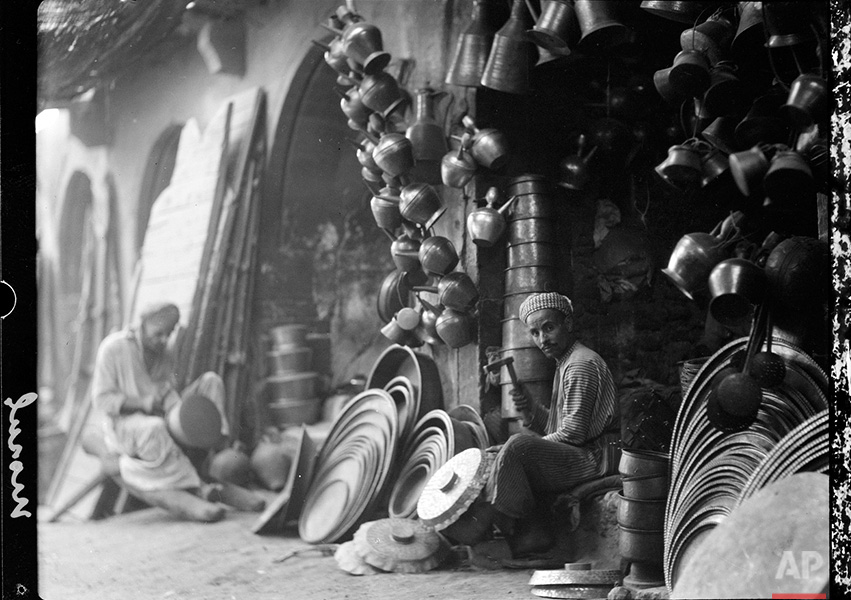
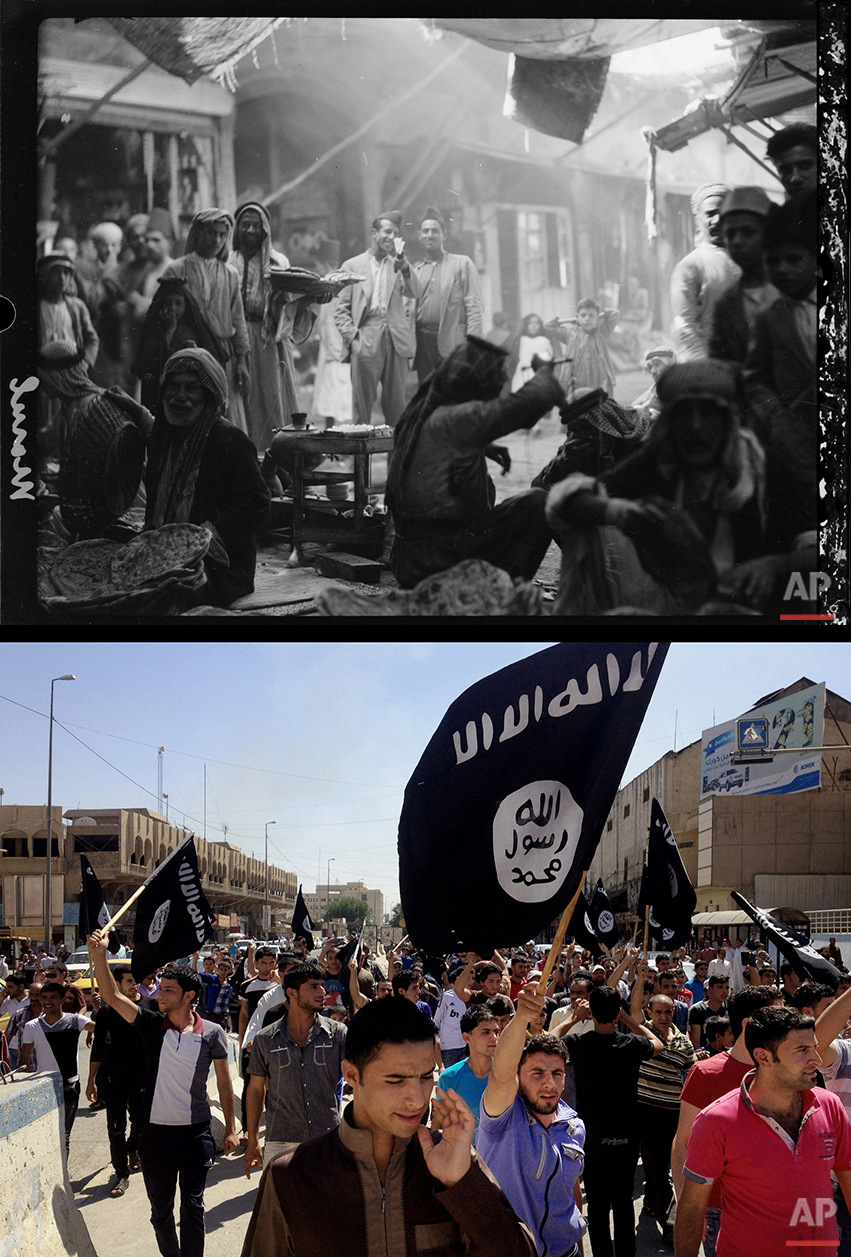
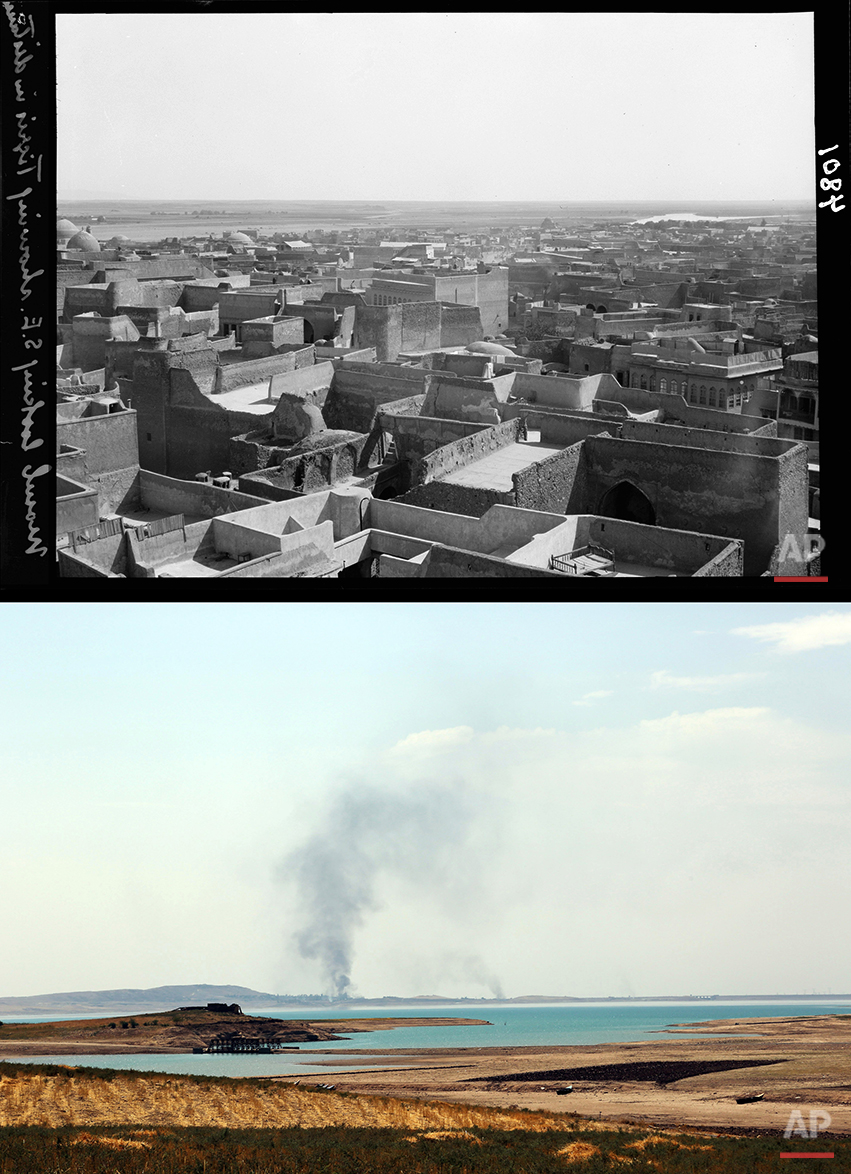
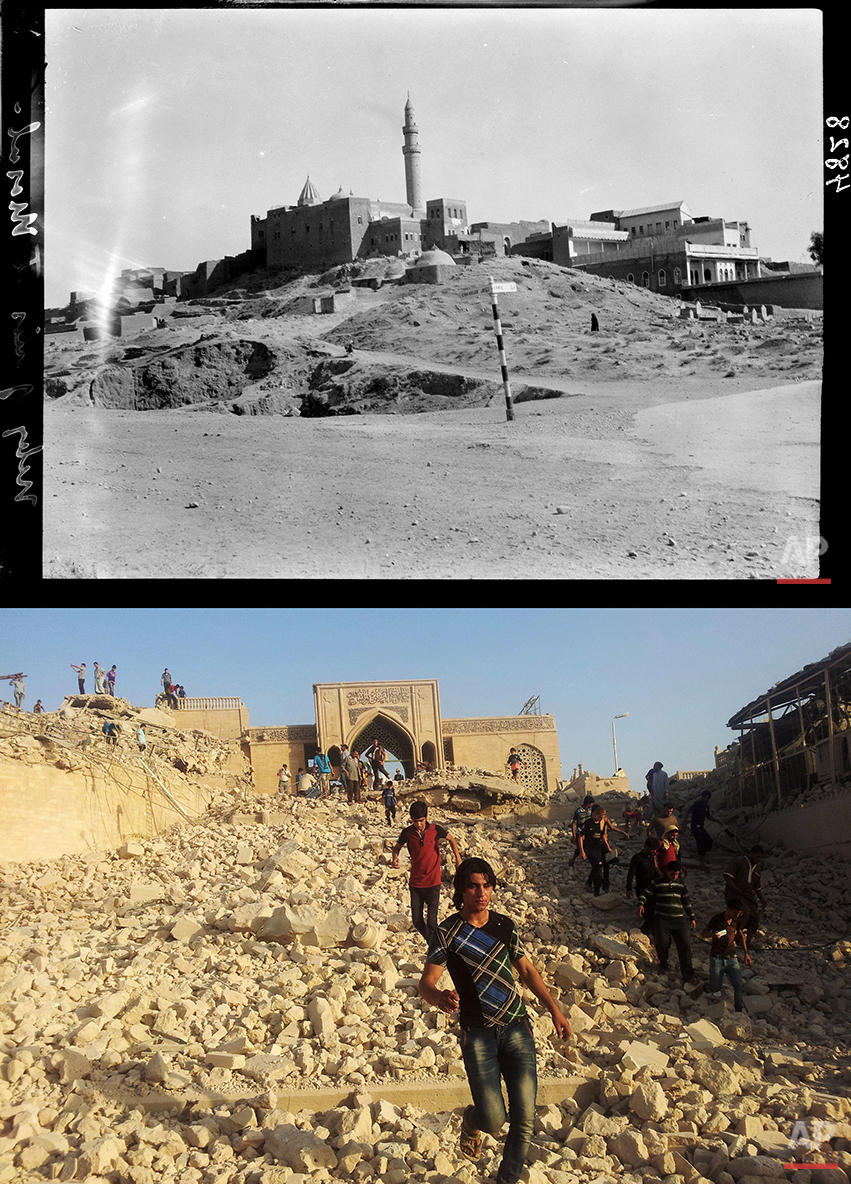
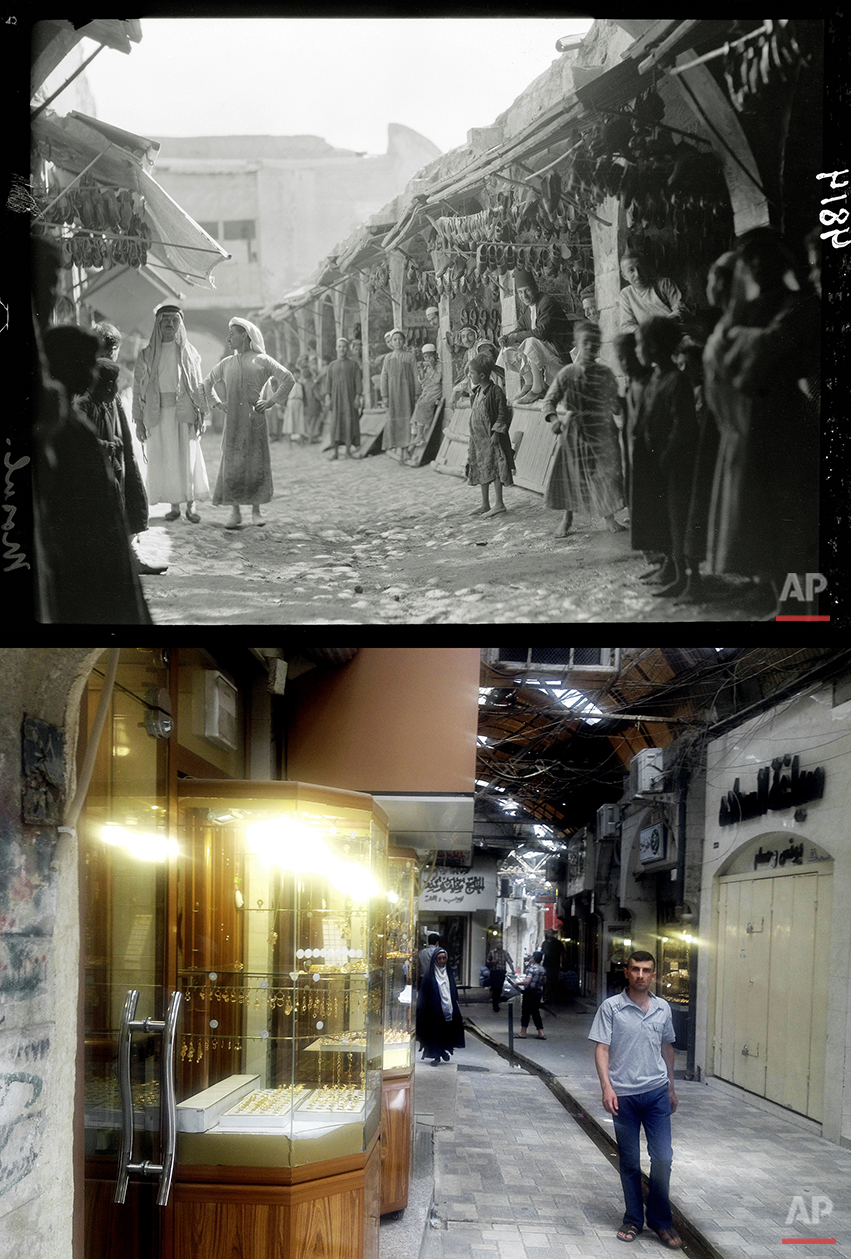
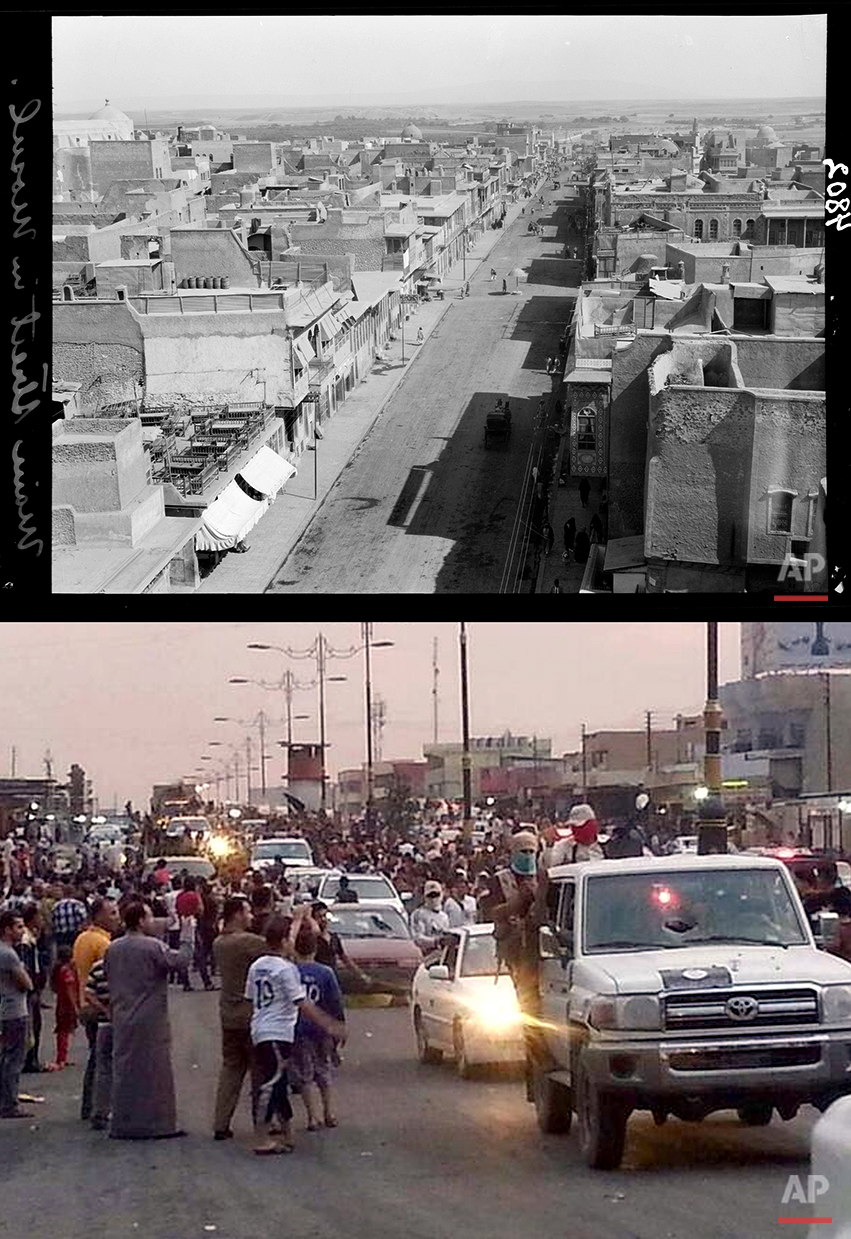
AP: A trove of photographs now housed at the Library of Congress offers a glimpse of Mosul, Iraq, before wars, insurgency, sectarian strife and now radicals’ rule. The scenes were taken in the autumn of 1932 by staff from the American Colony Photo Department during a visit to Iraq at the end of the British mandate.

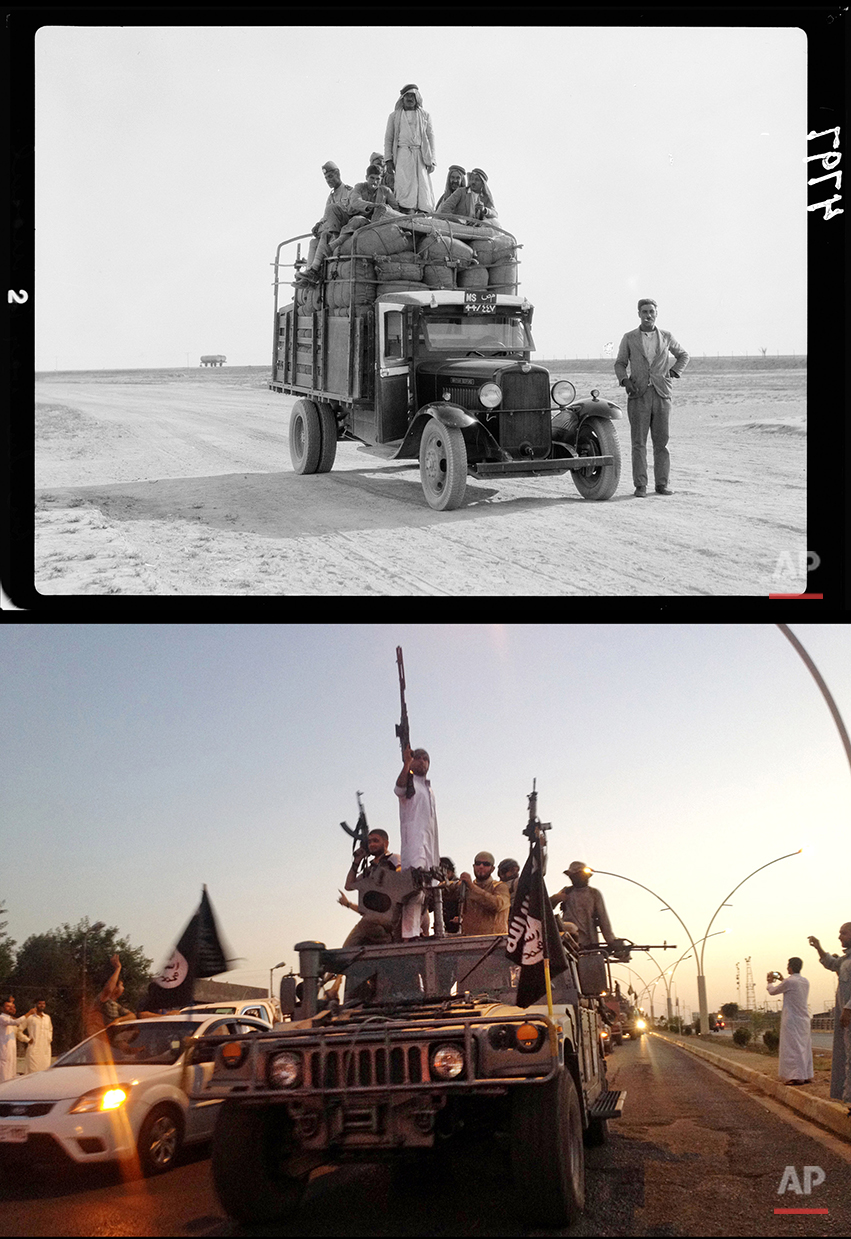
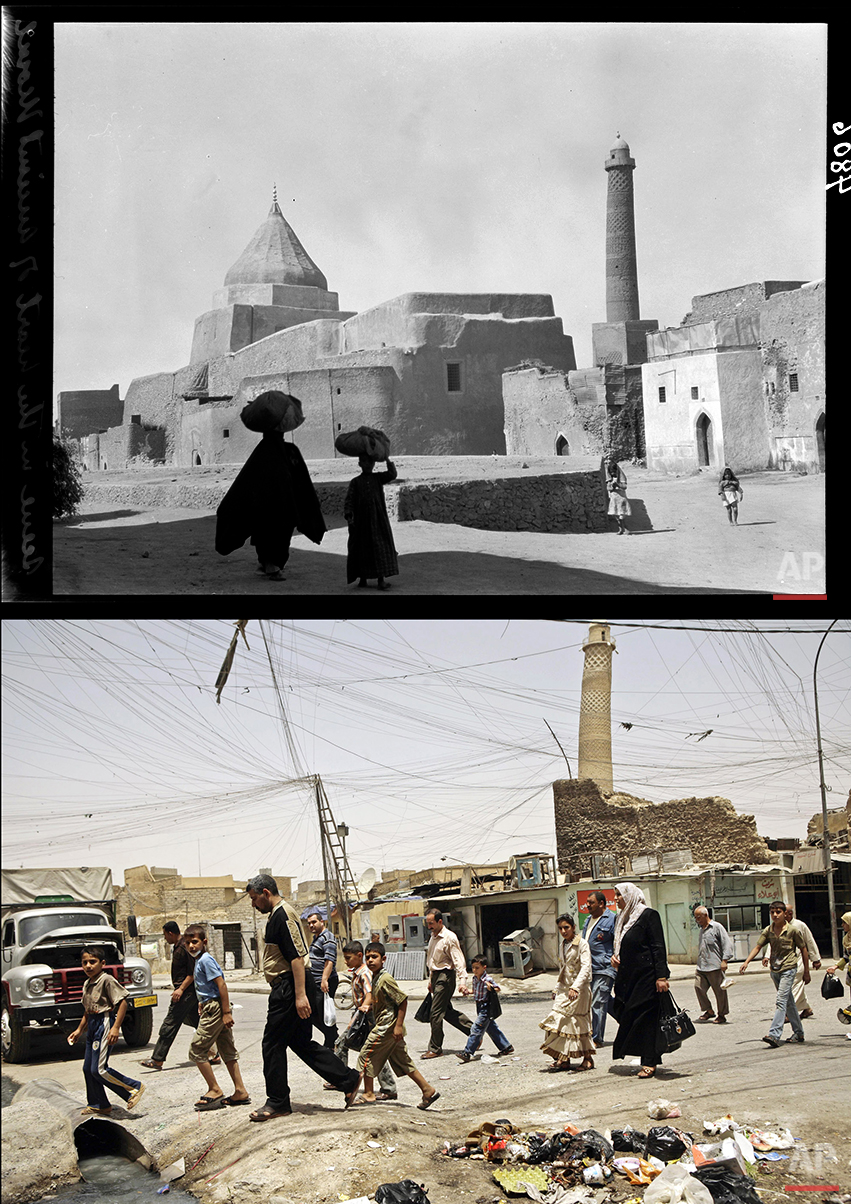
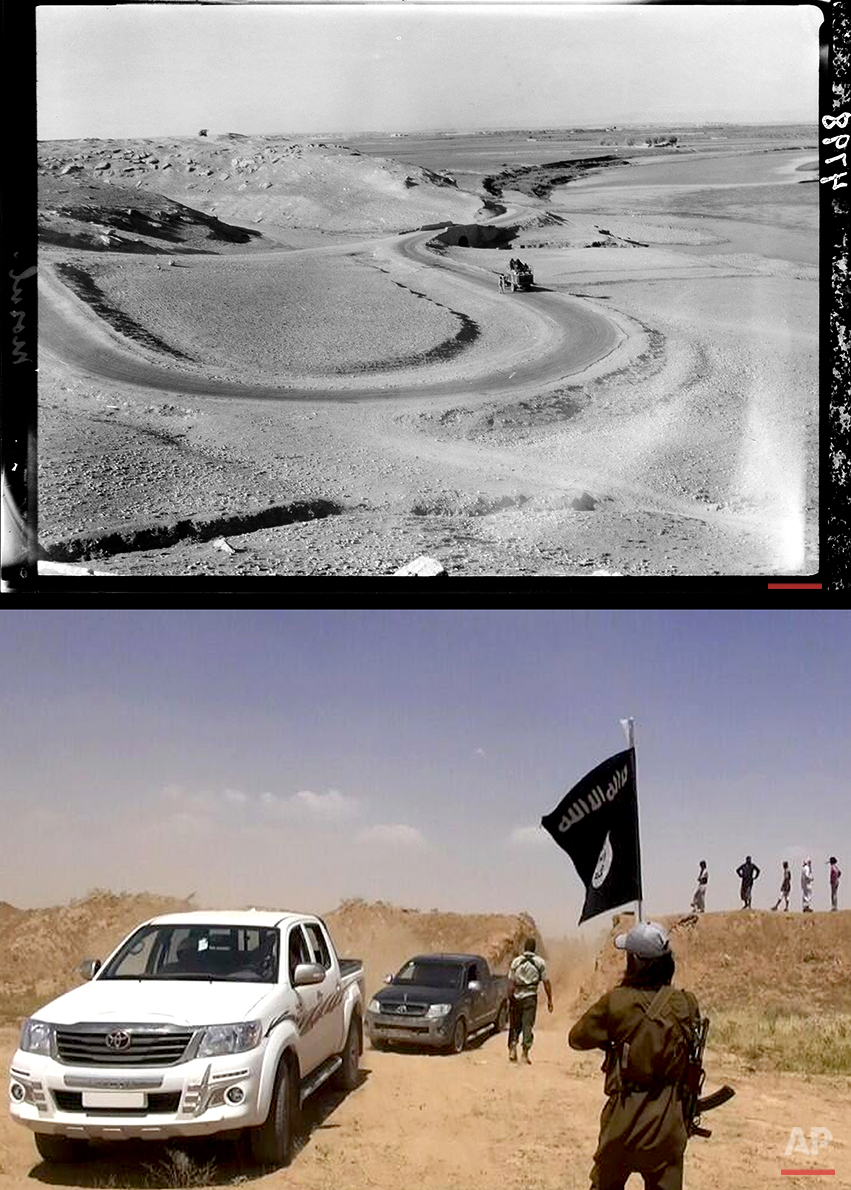
The photos show many of the sites that have now borne the brunt of the Islamic State group’s rule. Since capturing the city in June, the militants destroyed at least 30 shrines and historic sites they see as promoting idolatry and heresy.

As the United States and the international community are grappling with how to battle the militants, who now control territory stretching from northern Syria to the outskirts of Baghdad, here is a look at scenes from Mosul in more peaceful times and today under the rule of the Islamic State group.


To read more about the scenes form Mosul, then and now, visit AP’s Big Story.

Mideast Iraq Vintage Mosul Photo GalleryThis combination of two photographs shows a 1932 image of men on a lorry on the road to Mosul, northern Iraq, from the Library of Congress, top, and fighters from the Islamic State group parading in a commandeered Iraqi security forces armored vehicle down a main road in Mosul on Monday, June 23, 2014. (AP Photo) License this photo


Mideast Iraq Vintage Mosul Photo GalleryThis combination of two photographs shows a 1932 image of the Crooked Minaret mosque next to a Yazidi shrine in Mosul, northern Iraq, from the Library of Congress, top, and the same site, without the shrine, on June 8, 2009. In July, Islamic State militants failed to destroy the 840-year old Crooked Minaret that leans like Italy’s Tower of Pisa when residents sat on the ground and linked arms to form a human chain. (AP Photo) License this photo


Mideast Iraq Vintage Mosul Photo GalleryThis combination of two photographs shows a 1932 image of a lorry on the road south of Mosul, Iraq, from the Library of Congress, top, and an image posted on a militant news Twitter account on Thursday, June 12, 2014 showing militants from the Islamic State group removing part of the soil barrier on the Iraq-Syria borders and moving through it. (AP Photo) License this photo


Mideast Iraq Vintage Mosul Photo GalleryThis combination of two photographs shows a 1932 image of Iraqis in the market in Mosul, northern Iraq, from the Library of Congress, top, and demonstrators chanting pro-Islamic State group slogans as they carry the group’s flags in front of the provincial government headquarters in Mosul on Monday, June 16, 2014. (AP Photo) License this photo


Mideast Iraq Vintage Mosul Photo GalleryThis combination of two photographs shows a 1932 image of the Tigris River stretching out in the distance as seen from Mosul, northern Iraq from the Library of Congress, top, and a file photo of smoke rising during airstrikes targeting Islamic State militants at the Mosul Dam on Monday, Aug. 18, 2014. (AP Photo) License this photo


Mideast Iraq Vintage Mosul Photo GalleryThis combination of two photographs shows a 1932 image taken during the autumn of Nebi Yunis, the tomb of the prophet Jonah, in Mosul, northern Iraq, from the Library of Congress, top, and Iraqis walking in the rubble of the revered Muslim shrine after it was was destroyed on Thursday, July 24, 2014 by militants who overran the city in June and imposed their harsh interpretation of Islamic law. (AP Photo) License this photo


Mideast Iraq Vintage Mosul Photo GalleryThis combination of two photographs shows a 1932 image of Iraqi vendors and customers in the shoe market in Mosul, northern Iraq from the Library of Congress, top, and a Monday, July 7, 2014 file photo of a man walking in a market, nearly a month after Islamic militants took over the country’s second largest city. (AP Photo) License this photo


Mideast Iraq Vintage Mosul Photo GalleryThis combination of two photographs shows a 1932 image of a main street in Mosul, northern Iraq, from the Library of Congress, top, and militants parading down a main road in Mosul, posted on a militant Twitter account on Wednesday, June 11, 2014, which has been authenticated based on its contents and other AP reporting. (AP Photo) License this photo


Opening text from AP PHOTOS: SCENES FROM IRAQ’S MOSUL THEN AND NOW by MAYA ALLERUZZO.

Lead Image Caption: This photograph shows a 1932 image of a coppersmith working in the market in Mosul, northern Iraq, from the Library of Congress. (AP Photo)

Success in Dabiq, the Symbolic HQ of ISIS

 Image result for dabiq, syria

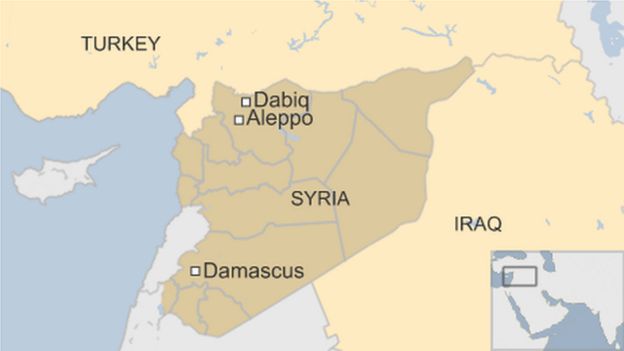
Dabiq, which lies about 10km (6 miles) from the border with Turkey, features in Islamic apocalyptic prophecies as the site of an end-of-times showdown between Muslims and their “Roman” enemies.

The Prophet Muhammad is believed to have said that “the last hour will not come” until Muslims vanquished the Romans at “Dabiq or al-Amaq” – both in the Syria-Turkey border region – on their way to conquer Constantinople (modern-day Istanbul). More here from BBC.

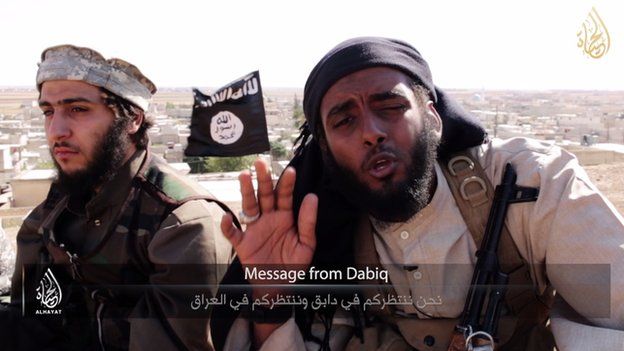
British militant in Dabiq, Syria appearing in an Islamic State video

Statement by Secretary of Defense Ash Carter on the Liberation of Dabiq‎

I welcome today’s news that Syrian opposition forces liberated the Syrian town of Dabiq from ISIL control, aided by strong support from our ally Turkey and our international coalition. This is more than just the latest military result against this barbaric group. Dabiq held symbolic importance to ISIL. The group carried out unspeakable atrocities in Dabiq, named its English-language magazine after the town and claimed it would be the site of a final victory for the so-called caliphate. Instead its liberation gives the campaign to deliver ISIL a lasting defeat new momentum in Syria. Again I want to congratulate the Syrians who fought to free Dabiq and thank our ally Turkey for the close coordination during this operation.

****

Image result for dabiq, syria

Reuters: Turkey-backed Syrian rebels began an attack on Islamic State’s symbolically potent stronghold of Dabiq in northwestern Syria on Saturday, a rebel commander said, taking territory that has all but cut it off according to a war monitor.

Turkey’s President Tayyip Erdogan on Saturday said the rebels were advancing on Dabiq and a Turkish security source said they had that morning cleared the militants from the hamlet of al-Ghaylaniyeh.

The Syrian Observatory for Human Rights, a Britain-based war monitor, said the rebels had also taken the villages of Irshaf and Ghaitun, which would all but cut off Dabiq and another large village, Soran, in an isolated pocket surrounded by insurgents.

Dabiq is symbolically important to the jihadist group because it is the site of an apocalyptic Islamic prophesy, and Islamic State has stationed around 1,200 of its fighters there said the Observatory, a Britain-based war monitor.

Euphrates Shield, the campaign by Turkey and allied Syrian rebels to clear Islamic State from areas along the border between the two countries began in August.

A rebel commander in the Euphrates Shield operation said the attack on Dabiq had started on Saturday morning and the Observatory said the rebels backed by Turkish tanks and warplanes had begun their attack on the village’s environs.

However, the Turkish military sources said the operation was ongoing.

“The operation for Dabiq started 10 days ago. We started the effort to take control of the region from the south. Daesh (Islamic States) targets are being hit by Turkish fighter jets and artillery” one of them said.

According to Islamic tradition, Dabiq will be the site of a final battle between Muslims and infidels heralding Doomsday, a prophesy that the jihadist group had encouraged its supporters to regard as imminent and named one of its publications “Dabiq”.

However, in a recent edition of its al-Naba online publication, Islamic State appeared to step back from that position, saying that the coming battle for Dabiq between it and the Turkey-backed rebels was not the one in the prophesy.

While Euphrates Shield has pushed Islamic State from its last foothold on Syria’s Turkish border, a longer campaign by the U.S.-backed, Kurd-dominated Syrian Democratic Forces has recaptured swathes of territory from the group since last year.

Islamic State also faces an expected assault on Iraq’s Mosul, the largest and most important city it has held since its lightning advance across huge tracts of Syria and Iraq in summer 2014.

****

The Battle of Marj Dābiq (Arabic: مرج دابق‎‎, meaning “the meadow of Dābiq”; Turkish: Mercidabık Muharebesi) was a decisive military engagement in Middle Eastern history, fought on 24 August 1516, near the town of Dabiq, 44 km north of Aleppo, Syria.[1] The battle was part of the 1516–17 war between the Ottoman Empire and the Mamluk Sultanate, which ended in an Ottoman victory and conquest of much of the Middle East, bringing about the destruction of the Mamluk Sultanate. The Ottoman victory in this battle gave Selim’s armies control of the entire region of Syria and opened the door to the invasion of Egypt.

About this New Secretary General at the United Nations

He joined the Socialist party in 1974 – the same year five decades of dictatorship came to an end in Portugal – and soon became a full-time politician. In 1992 he became secretary general of the Socialist party, in opposition at the time. Guterres led the party to victory in the next general election in 1995, becoming prime minister.

Then Mr Guterres, fluent in Portuguese, English, Spanish and French, turned his attention to the world of international diplomacy, becoming the UN’s high commissioner for refugees in 2005. More here from BBC.

Antonio Guterres will serve as the 9th Secretary General and he has been assigned some key items as he begins this new role.

  1. He is to bridge all the divisions of the General Assembly.
  2. He is to be the peacemaker for countries such as Syria, Yemen and South Sudan.
  3. To fulfill all the items listed in his own vision statement.

António Guterres

Se

Challenges and Opportunities for the United Nations

“We the peoples”

The United Nations Charter is an achievement exceptional in the annals of history. Seventy years after being adopted, its validity remains undiminished. The Charter is the source of the United Nations’ unique legitimacy and provides guidance for its every activity. All its signatories decided to abide by its purposes, principles and provisions to “achieve international cooperation in solving international problems”.

The UN is the institutional expression of the international community, the cornerstone of our international system and the key actor of effective multilateralism. It is the essential instrument of member States to confront common challenges, manage shared responsibilities and exercise collective action, in an enduring quest for a peaceful, inclusive and sustainably developed world, in which international law and the dignity and worth of the human person are fully pursued.

Challenges

Understanding global mega-trends is crucial. We live in times of multiple, evolving and mutually-reinforcing shifts. These dynamics, of geopolitical, demographic, climatic, technological, social and economic nature, enhance threats and opportunities on an unprecedented scale.

Globalization and technological progress fostered extraordinary economic growth and created conditions for unparalleled reduction of extreme poverty and generalized improvement of living standards. But their unbalanced nature led to high income concentration and extreme inequality, and made exclusion even more intolerable. Exclusion, competition over dwindling resources and shortcomings in governance undermine social cohesion and institutional robustness, further contributing to the eruption of violent conflicts.

In addition to traditional threats to international peace and security, the nature of conflict is changing, with a multiplicity of armed actors, many employing asymmetric methods.

Terrorism, international organized crime and illicit trafficking pose real threats. Devastating epidemics loom persistently on the horizon. Climate change affects economies and peoples, their lands, oceans and seas. More and more States are turning to the oceans as a source of economic and social development, while realizing that their resources have to be developed in a sustainable manner.

Against this background, the UN faces new challenges in ensuring peace and security, promoting sustainable development, protecting human rights and delivering humanitarian aid.

Connecting the dots

The UN is uniquely placed to connect the dots to overcome these challenges. To succeed, it must further strengthen the nexus between peace and security, sustainable development and human rights policies – a holistic approach to the mutually-reinforcing linkages between its three pillars.

The 2015 landmark agreements on sustainable development, notably the Agenda 2030, the Paris Climate Agreement and the Addis Ababa Action Agenda lay out a clear strategy for action. They represent a unique opportunity that must be seized. Achieving these important goals has direct implications for peace and the realization of human needs and fundamental rights. For many it means survival.

Now that we know what, we must work on how. With clear priorities, tangible benchmarks and the power to mobilize all stakeholders, promoting national ownership and ensuring no-one is left behind. The reform and fine tuning of the UN Development System should be pursued to deliver full support to member States. With the horizon of 2030 the focus is on action and the watchword is implementation, implementation, implementation.

It’s widely recognized that there is no peace without development and no development without peace; it is also true that there is no peace and sustainable development without respect for human rights. Based on its acquis and normative framework, the UN human rights system has a key role to play in strengthening member States’ capacity to comply with their human rights obligations, without discrimination. The SG should ensure the mainstreaming of human rights across the whole UN system, notably through the Human Rights Up Front initiative, preventing violations and abuses, ensuring accountability and addressing the plight of victims.

The UN must be at the forefront of the global movement towards gender equality, an inalienable and indivisible feature of all human rights and fundamental freedoms: progressively moving from perceiving women and girls as a subject of protection to promoting their empowerment; from an isolated focus on women to gender mainstreaming.

Similarly, fully respecting the humanitarian principles and the autonomy of the humanitarian space, it is clear that there is no humanitarian solution for humanitarian problems. The solution is always political. And the protracted nature of present humanitarian emergencies also requires a medium and long-term resilience and development perspective.

Three concrete examples, discussed in the preparatory work of the upcoming World Humanitarian Summit, demonstrate how dots can be connected:

  • More than bridging a traditional gap, humanitarian and development actors must work together from the very beginning of a crisis, ideally contributing to prevent it;
  • States that are the largest recipients of refugees, pillars of regional stability and first line of defense of our collective security, should be a priority of development cooperation and UN agencies´ support, even if middle-income countries;
  • Development cooperation policies must take much greater account of human mobility. Migration should be an option, not a necessity; out of hope, not despair.

The Centrality of Prevention

The world spends much more energy and resources managing crises than preventing them. Thus the UN must uphold a strategic commitment to a “culture of prevention”, pledged in 2005 but yet to materialize.

First, we need a surge in diplomacy for peace. Under the guidance of the Security Council and in accordance with the Charter, the SG should actively, consistently and tirelessly exercise his good offices and mediation capacity as an honest broker, bridge builder and messenger of peace. Full use should be made of the Organization’s convening power, as a forum for dialogue, to ease tensions and facilitate peaceful solutions.

Second, the reviews on peacekeeping, peacebuilding and on women, peace and security create a unique opportunity to develop a comprehensive, modern and effective operational peace architecture, encompassing prevention, conflict resolution, peacekeeping, peacebuilding and long-term development – the “peace continuum”.

Those reviews should not be artificially treated as a package, but strategies and policies must converge. The UN should ensure the primacy of political solutions at all stages, promote preventive approaches, mainstream human rights, and foster inclusive engagement and empowerment of women and girls. Full participation of women is essential to the success of any peace process.

People in need of protection are not getting enough. The most vulnerable, such as women and children, are an absolute priority. We must make sure that when someone sees the Blue Flag she or he can say: “I am protected”.

Third, further investment in capacity and institution-building of States is another central element of prevention, promoting inclusive and sustainable development, overcoming fragilities and strengthening the ability of Governments to address the needs of their people and respect their rights.

Fourth, prevention is also crucial to combating terrorism. Force must be used when necessary and in accordance with the Charter, but let us not forget that it is also a battle for values; our common battle. Terrorist attacks target not just their direct victims, but all who subscribe to the purposes and principles of the Charter. The international community has the legal right and the moral duty to act collectively to put an end to terrorism “in all its forms and manifestations, committed by whomever, wherever and for whatever purposes”. In doing so, we shall neither concede to fear nor abdicate our values.

Fifth, values are, indeed, the defining argument and the vital strength in our collective mobilization against intolerance, violent extremism and radicalization. To prevent them, we need to foster inclusion, solidarity and the cohesion of multiethnic, multicultural and multi-religious societies.

This is also the best antidote to racism, xenophobia, islamophobia and anti-semitism.

Informal Dialogue at UN AG. Photo LUSA.

Informal Dialogue at UN AG. Photo LUSA.

Coordination and Partnerships

Global coherence demands a permanent strategic cooperation culture at all levels. The key to further enhancing UN’s effectiveness is attitude: cooperation instead of duplication, sharing instead of competing, and collective responsibility instead of circumstantial individual interests. This requires leadership and more and better coordination – delivery-centered, not process oriented.

Breaking silos requires accountability at three levels: system-wide; within each UN institution regarding its mandate; and how each of them contributes to the performance of the whole system. The Chief Executive Board and the Senior Management Group must be the beacons of the strategic coherence of the UN’s operational dimension.

To ensure effective multilateralism, the UN needs to develop a strong culture of partnership at three levels:

First, increasing cooperation with regional organizations, as foreseen in Chapter VIII of the Charter. They are essential actors in conflict prevention and resolution, in peace operations and promotion of development and human rights. The relationship with the African Union deserves particular commitment.

Second, strengthening partnerships with International Financial Institutions, seizing synergies of working together in addressing global and local challenges.

Third, enhancing engagement with civil society and the private sector. Their role providing global public goods must be fully recognized. Relevant UN organizations should develop strategic cooperation with their civil society partners. Since there can be no poverty eradication without generation of wealth, we should further promote the UN Global Compact, highlighting the mutual benefits of corporate responsibility.

Reform and Innovation

The future of the UN will be determined by its readiness to change and adapt, in full respect of the provisions of the Charter and the competences of the main bodies. The SG must promote reform and innovation, focused on delivery and results.

Reform is not a onetime action, it is a permanent attitude to make the UN less bureaucratic and more efficient, productive and field oriented; to simplify processes, eliminate redundant structural costs and make full use of modern technology and innovation.

As chief administrative officer, the SG must maintain unwavering commitment to transparency, accountability and oversight.

Moreover, the SG must stand firmly for the reputation of the UN and its dedicated staff. Leading by example and imposing the highest ethical standards on everyone serving under the UN flag. In particular, elevating the prestige of the blue helmet, the soldier standing for peace, and eradicating, once and for all, the exploitative and abusive conduct of those UN agents who do not represent what the Organization stands for.

Staff policies need to address substantial gaps in gender equality and regional diversity. Given that previous commitments to gender parity were not fulfilled, the SG should present and implement a road map for gender parity at all levels, with clear benchmarks and timeframes within the next mandate, giving priority to senior staff selection. In particular, parity should henceforth be respected in the appointments by the SG of members of the Chief Executive Board and the Senior Management Group. And a clear shift in this direction is required in the selection of Special Representatives and Envoys. A similar commitment is necessary to move consistently into regional equilibrium in senior appointments.

The SG should further enhance the Organization’s communication capacity. The UN must communicate in ways that everybody understands and use the most modern digital platforms, reaching out to common citizens and making the most of its unique and powerful brand.

Values

Peace, justice, human dignity, tolerance and solidarity are enshrined in the Charter and bind us together. These values are central to all cultures and religions in the world and are reflected in the Holy Books – from the Qur’an to the Gospels and the Torah, from the Upanishads to the Pali canon.

As Kofi Annan put it, “of course having such common values does not solve all problems, or eliminate the scope for different societies to solve them in different ways.(…) Each society should be given the space, not to distort or undermine universal values, but to express them in a way that reflects its own traditions and culture.”

In times of insecurity, when people feel uncertain about their future, when anxieties and fears are promoted and exploited by political populists, old-fashioned nationalists or religious fundamentalists, the success of the UN and the international community lies in our common commitment to our common values. The UN must be proud of its diversity. A diversity that only enriches the strength of the expression of our common humanity.

António Guterres

General designate of the United Nations


Soros and Farhana Khera the Islamic Homeland Security Threat

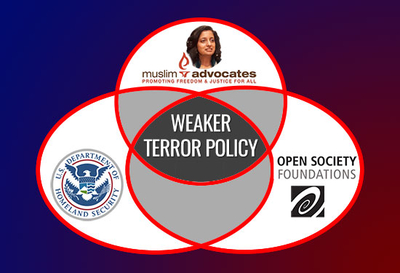
Soros Money, Muslim Advocates Leader, Helped Weaken Homeland Security Policies
An IPT Investigation

by John Rossomando, IPT

A Muslim legal group, girded with $1.8 million in grant money from George Soros’s Open Society Foundations (OSF), has helped influence major policy changes in the war on terror, including the Department of Homeland Security’s screening of individuals with suspected terror ties and the FBI’s training program for its agents working in counterterrorism.

Internal records, made public by the hacking group DC Leaks, show OSF spent $40 million between 2008 and 2010 on programs aimed at weakening U.S. counterterrorism policy.

Muslim Advocates’ Executive Director Farhana Khera played a key role in shaping the foundations’ spending. Khera co-authored a 2007 memo that “informed” the foundations’ U.S. Programs Board’s decision to create the National Security and Human Rights Campaign (NSHRC), a Sept. 14, 2010 OSF document discussing the program’s reauthorization, shows.

The NSHRC’s goals included:

  • Closing Guantanamo Bay, eliminating torture and methods such as the extraordinary rendition of prisoners, and ending the use of secret prisons;
  • Ending warrantless and “unchecked” surveillance;
  • Ensuring that anti-terrorism laws and law enforcement activities do not target freedom of speech, association or religious expression;
  • Reducing ethnic and religious profiling of people of Muslim, Arab or South Asian extraction;
  • Decreasing secrecy and increasing oversight of executive actions, and expose U.S. government or private individuals who abuse or violate the law.

Some of these policies, such as closing Guantanamo and ending enhanced interrogation techniques, already were also advocated by Obama administration. OSF claimed its work laid the groundwork for implementing those policies. The Edward Snowden leaks cast light on the depth of the government’s warrantless surveillance activity. The other goals are more difficult to assess.

Muslim Advocates was founded in 2005 as an offshoot of the National Association of Muslim Lawyers. It often criticizes U.S. counterterrorism strategies that use sting operations and informants as discriminatory.

Papers released by the anonymous hacker group DC Leaks show that OSF budgeted $21 million for the NSHRC from 2008-2010. OSF spent an additional $1.5 million in 2010. The NSHRC also received a matching $20 million contribution from Atlantic Philanthropies, a private foundation established in 1982 by Irish-American Chuck Feeney billionaire businessman.

OSF made 105 grants totaling $20,052, 784 to 63 organizations under the NSHRC program. An Investigative Project on Terrorism tally shows Muslim Advocates received at least $1.84 million in OSF grants between 2008 and 2015.

A funders’ roundtable created by OSF in 2008 helped coordinate the grant making among several left-leaning foundations, ” in order to “dismantle the flawed ‘war on terror’ paradigm on which national security policy is now based.” At least “two dozen” foundations participated in the roundtable’s strategy sessions as of the end of 2008.

Zuhdi Jasser, president of the American Islamic Forum for Democracy, called the Soros foundations’ $40 million program both hypocritical and ironic. He noted that the 2011 OSF-funded Center for American Progress report “Fear, Inc.” complained that seven conservative foundations donated $42.6 million to so-called “Islamophobia think tanks between 2001 and 2009.” The Council on American Islamic Relations (CAIR) and other major Islamist groups routinely use the $42.6 million funding number to portray their opponents as being pawns of dark forces.

“It’s amazing that one foundation donated an amount that CAIR and [Muslim] Advocates say is the huge sum of money that funds the entire anti-jihad campaign,” Jasser said. “… That wasn’t from one foundation. That was an addition of [the money given to] everybody that they threw under the bus.”

By contrast, OSF and Atlantic Philanthropies spent $41.5 million in just three years. OSF dedicated another $26 million to the NSHRC program from 2011-2014.

OSF additionally funded a study by the New America Foundation equating the terror threat posed right-wing extremists with al-Qaida. An Oct. 17, 2011 memo discussing NSHRC grants notes that New America received $250,000, partly to write two reports. The first aimed at creating a “‘safe space’ in which Muslims in America feel free to hold controversial political dialogues, organize without fear of unwarranted government surveillance.” The second aimed to “correct mistaken public beliefs that Al-Qaeda’s brand of terrorism is unique to Islam and that most terrorists are Muslim.”

The paper promised “to show how adherents of each extremist ideology use different language to justify very similar political means and goals. By demonstrating parallels among militant groups, this paper will aim to separate politically focused terrorism from the religion of Islam.”

Arguments from this report continue to help frame how Democrats and their allies talk about the jihadist threat. New America’s statistics and arguments recently came up in a House hearing about the threat from homegrown Islamic terrorists.

“According to the New America Foundation, there have been more incidents of right-wing extremist attacks in the United States than violent jihadist attacks since 9/11. I’m not minimizing jihadist attacks. In that light, can you explain what your office plans to do with respect to domestic right-wing extremism?” Rep. Bill Pascrell, D-N.J., asked Department of Homeland Security Office of Community Partnerships Director George Selim during a House subcommittee hearing last month.

New America’s effort to conflate right-wing extremists with al-Qaida glossed over a major difference – namely al-Qaida’s reliance on mass casualty attacks and suicide bombings.

New America’s latest data shows that jihadists have killed more people since 9/11 than right-wing extremists.

“What you’ve uncovered is the fact … that the Soros foundation works to obfuscate on national security,” Jasser said. “Muslim Advocates clearly is a prime example of the sickness in Washington related to dealing with the central reforms necessary to make within the House of Islam.

“You’ll see that the Soros foundation is spending money on organizations that deny the very principles they are defenders of, which are feminism, gay rights, individual rights. Muslim Advocates’ entire bandwidth is spent on attacking the government and blocking any efforts at counterterrorism.”

Muslim Advocates also opposes discussion on reform within the Muslim community and supports those who have theocratic tendencies, Jasser said.

“You have evidence here that the Soros foundation is part and parcel of the reason for the suffocation of moderation voices – reformist voices – in Islam,” Jasser said. “Muslim Advocates really ought to change their name to Islamist Advocates, and what the Soros foundation really is doing is just advocating for Islamists.”

OSF also contributed $150,000 in 2011 and $185,000 in 2012 to a donor advised fund run by Rockefeller Philanthropy Advisors. It used this money to pay Hattaway Communications, a consulting firm run by former Hillary Clinton adviser Doug Hattaway, to develop a messaging strategy for Muslim Advocates and similar organizations. Hattaway’s message strategy painted Muslims as victims of American national security policies.

Khera used Hattaway’s strategy to paint the New York Police Department’s mosque surveillance strategy as “discriminatory.”

Farhana Khera

“Their only ‘crime’ is that they are Muslim in America,” Khera wrote in a June 6, 2012 op-ed posted on CNN.com.

OSF funded groups, including Muslim Advocates, the ACLU, and the Center for Constitutional Rights, filed lawsuits challenging the NYPD’s surveillance program as unconstitutional. Police Commissioner William Bratton ended the policy in 2014.

The NYPD monitored almost all aspects of Muslim life ranging from mosques and student associations, to halal butcher shops and restaurants to private citizens.  A federal district court dismissed the suit, but the Third Circuit Court of Appeals revived it in October 2015. New York settled the lawsuit in January, placing the NYPD under supervision of an independent observer appointed by City Hall.

Downplaying Radicalization and the Jihadist Threat

OSF accused conservative opponents of “borrowing liberally from Joe McCarthy’s guilt by association tactics.” It complained in a Sept. 14, 2010 memo to its U.S. Programs Board that the “homegrown terrorism narrative” resulted in “discriminatory” targeting of Muslims by the Department of Homeland Security (DHS) and the FBI.

Khera often expresses similar sentiments. She accused the FBI of engaging in “entrapment operations” to target “innocent” Muslims after former Attorney General Eric Holder called sting operations an “essential law enforcement tool in uncovering and preventing terror attacks.”

Khera likewise characterized law enforcement training materials discussing the Islamic extremist ideology as “bigoted, false, and inflammatory” in her June 28 testimony before a Senate Judiciary  Committee’s Subcommittee on Oversight, Agency Action, Federal Rights, Federal Courts.

She and her organization played a central role in late 2011 when Muslim groups called on the Obama administration to purge FBI training materials that they deemed offensive. FBI counterterrorism training materials about Islam contained “woefully misinformed statements about Islam and bigoted stereotypes about Muslims,” she complained in a Sept. 15, 2011 letter. She objected to describing zakat – the almsgiving tax mandate on all Muslims – as a “funding mechanism for combat.”

Yet numerous Muslim commentators describe zakat as a funding mechanism for jihad. A footnote for Surah 9:60 found in “The Meaning of the Holy Qur’an,” says that zakat can be used to help “those who are struggling and striving in Allah’s Cause by teaching or fighting or in duties assigned to them by the righteous Imam, who are thus unable to earn their ordinary living.”

The Assembly of Muslim Jurists in America issued a 2011 fatwa saying zakat could be used to “support legitimate Jihad activities.”

Following Khera’s letter, then-White House counterterrorism advisor John Brennan announced a review of “CVE-related instruction across all levels of government.” This review resulted in a purge of 700 pages of material from 300 presentations. This included PowerPoints and articles describing jihad as “holy war” and portraying the Muslim Brotherhood as group bent on world domination.

The Muslim Brotherhood’s bylaws describe these ultimate ambitions and imply the need for violence: “The Islamic nation must be fully prepared to fight the tyrants and the enemies of Allah as a prelude to establishing an Islamic state.”

Khera’s influence with the Obama administration

Khera enjoys close connections with the Obama White House. Visitor logs show that Khera went to the White House at least 11 times.

Khera played a central role persuading the Obama administration to purge Department of Homeland Security records related to individuals and groups with terror ties, former Customs and Border Patrol (CPB) Agent Phil Haney told the Investigative Project on Terrorism.

His superiors ordered him to “modify” 820 CPB TECS records about the Muslim Brotherhood network in America, Haney said. Irrefutable evidence from the 2008 Holy Land Foundation (HLF) Hamas financing trial proved that many of these groups and individuals assisted Hamas, Haney said.

The HLF trial substantiated deep connections between American Islamist groups such as the Islamic Society of North America, the Council on American Islamic Relations (CAIR) and a Hamas-support network created by the Muslim Brotherhood in the United States.

A 2009 OSF funding document claims credit for helping persuade then-Secretary of Homeland Security Janet Napolitano to order a review of border screening procedures. It also reveals that Muslim Advocates worked with “DHS staff to develop a revised border policy.”

The Muslim Advocates’ report recommended the “review and reform of … [Customs and Border Patrol policies and practices that target Muslim, Arab and South Asian Americans for their First Amendment protected activities, beliefs and associations; and … law enforcement and intelligence activities that impose disparate impacts on Muslim, Arab and South Asian communities.” It also asked DHS to prevent CPB agents from probing about political beliefs, religious practices, and contributions to “lawful” charitable organizations.

Muslim Advocates claimed a pivotal role in getting the Transportation Security Administration (TSA) to reverse a new 2010 policy enhancing the screening on travelers from 14 countries, many of them predominately Muslim. The rule was proposed in the wake of the attempt by underwear bomber Umar Farouk Abdulmutallab to blow up a Detroit-bound plane weeks earlier.

Muslim Advocates and several OSF grantees met with Napolitano and other top DHS officials, and the policy was canceled three months later. Muslim Advocates claimed that the Obama administration “made special mention” of its role in reversing the TSA policy.

“This broke into the open with the great purge of 2011 and 2012,” Haney said, recalling Brennan’s letter to Khera announcing that materials she complained about would be removed.

The purge accompanied a practice of meeting with Islamist groups as community partners, Haney said.

In addition to the purge of training material, documents related to people and groups with terrorism ties such as Canadian Muslim Brotherhood leader Jamal Badawi and the Pakistan-based Tablighi Jamaat movement also disappeared from CPB records. (Tablighi Jamaat often serves as a de facto recruiting conduit for groups such as al-Qaida and the Taliban.)

Investigators might have had a better chance of thwarting the San Bernardino and the June Orlando shootings had those Tablighi Jamaat records remained available, Haney said, because the shooters’ respective mosques appeared in the deleted 2012 Tablighi Jamaat case report.

The Obama administration’s “absolute refusal to acknowledge that individuals who are affiliated with networks operating here in the United States, and their deliberate deletion of any evidentiary pieces of information in the system, has made us blind and handcuffed,” Haney said. “The proof of it is San Bernardino and Orlando.

“They obliterated the entire [Tablighi Jamaat] case as if it never existed.”

Haney’s claims have met with some skepticism. Haney stands by his claims and says critics “made a lot of factual errors.”

Still, Muslim Advocates’ success reversing the TSA policy was among the accomplishments showing that it “has proved itself to be an effective advocate on the national stage,” an April 25, 2011 OSF document said. It recommended renewing a $440,000 grant to “support the core operating costs of Muslim Advocates.”

In doing so, the Soros-funded OSF weakened U.S. national security and potentially left it vulnerable to the jihadi attacks we have been seeing in the homeland since the 2013 Boston Marathon bombing.