
Night Wolves, Putin’s Hells Angels

The Slovak foreign ministry says it is “disturbing” that the Night Wolves – a Russian nationalist biker gang close to President Vladimir Putin – now have a base in Slovakia.

The base has old military vehicles and lies in Dolna Krupa, a village 70km (44 miles) from the capital Bratislava.

The Russian government calls it the Night Wolves’ “European headquarters”.

The bikers are under US sanctions, accused of providing military help for the pro-Russian rebels in Ukraine.

Russian Nationalist biker gang Night Wolves set up base in ...  story/photo


So close in fact, Putin rode with them and endorses the group.

Earlier this year, the Night Wolves did a 9 day tour. Bosnia? Yes.  Members of the Night Wolves motorcycle gang visiting a monastery in Serbia. The gang’s tour, funded with a grant from the Kremlin, was billed as a “pilgrimage” meant to showcase the shared Orthodox faith of Russia and the region.CreditLaura Boushnak for The New York Times

Heck, the rode through the Balkins.

The Night Wolves billed their tour, funded with a $41,000 grant from the Kremlin, as a “pilgrimage” meant to showcase the shared Orthodox faith of Russia and the region, at least the bits of it inhabited by ethnic Serbs like Republika Srpska, which is legally part of Bosnia and Herzegovina.

***

Performances organized by the Russian hyper-patriotic biker club Night Wolves stand as prime examples of the Kremlin’s new take on old propaganda efforts. Their spectacles tend to display the full gamut of the Kremlin’s imagery and messaging, from the evil of the United States and Ukrainians to the glorification of the Russian Orthodox Church and the Russian military.

An analysis of Night Wolves spectacles reveals how the Kremlin’s agent provocateurs make use of the fuzzy lines between patriotism, pro-Putinism, Russian Orthodoxy, civic/national duty, and militarism. The purposes of these anti-American scripts are many, not least of which is to garner psychological and physical support for the motherland one way or the other, especially during the Euromaidan era, but also to create a sense of Russian identity, which has been vacuous since the early 1990s. The alarming aspect is that these types of fantastical attractions can transform patriotic attendees into actual networks of gun-toting Russian combatants, which may be part of the government’s objective. Read more here, chilling operation concocted by the Kremlin.

Rock videos supporting the Night Wolves? Yes, glad you asked.


Did they have some role in Crimea and Ukraine? Yup. In 2014:

As night fell on Friday , there were signs that the Ukrainian peninsula of Crimea was slipping beyond Kiev’s reach. The parliament remained under siege by pro-Russian protesters, armed men of unknown allegiance were guarding the airports and the Night Wolves, a biker gang with close ties to the Kremlin, blockaded the roads.

Three hundred men in military uniforms with no identifying insignia had entered the Sevastopol airport compound on Thursday night, witnesses said, in what Ukraine’s new interior minister, Arsen Avakov, described as a “military invasion and occupation”.

***

In 2014, the U.S. Treasury added the Night Wolves to the sanctions list due to Crimea and in violation of the Minsk Agreement.

The Night Wolves biker group had its members serve in the Crimean self-defense forces as early as February 2014, which supported local Crimeans against the Government of Ukraine. In March 2014, the Night Wolves conducted intimidation and criminal activities within Ukraine and also abducted and subsequently assaulted a Ukrainian Border Guard official. This biker group also participated in the storming of the gas distribution station in Strikolkove and the storming of the Ukrainian Naval Forces Headquarters in Sevastopol. In early-April 2014, the Night Wolves helped smuggle a former senior Ukrainian official out of Ukraine and also helped obtain Russian passports for another larger group of senior Ukrainian officials that they helped get into Russia. The Night Wolves have been closely connected to the Russian special services, have helped to recruit separatist fighters for Donetsk and Luhansk, Ukraine, and were deployed to the cities of Luhansk and Kharkiv. The Night Wolves group is being designated because it is an entity that is responsible for or complicit in, or has engaged in, directly or indirectly, actions or policies that threaten the peace, security, stability, sovereignty, or territorial integrity of Ukraine.

Aleksandr Zaldostanov, also known as “the Surgeon,” is the leader of the Night Wolves. Zaldostanov chairs the overall Night Wolves organization, and some of his responsibilities include the punishing of chapter groups and members for disloyalty to the Night Wolves organization. During the late-March storming of the Ukrainian Naval Forces Headquarters in Sevastopol, he coordinated the confiscation of Ukrainian weapons with the Russian forces. Zaldostanov is being designated for being a leader of a group, the Night Wolves, that is engaging in, directly or indirectly, actions or policies that threaten the peace, security, stability, sovereignty, or territorial integrity of Ukraine.


Eligible Receiver 97, Red Team Being Applied Today for Cyber Hacks?

An early classified Defense Department cybersecurity exercise named “Eligible Receiver 97” (ER97) featured a previously unpublicized series of mock terror attacks, hostage seizures, and special operations raids that went well beyond pure cyber activities in order to demonstrate the potential scope of threats to U.S. national security posed by attacks in the cyber domain, according to recently declassified documents and a National Security Agency (NSA) video posted today by the nongovernmental National Security Archive at The George Washington University.

“Joint Exercise Eligible Receiver 97”, run during the Clinton presidency, is frequently pointed to as a critical event in the United States’ appreciation of threats in cyber space. The exercise led directly to the formation of what would eventually become United States Cyber Command (USCYBERCOM) and informed key studies such as the formative Marsh Report on critical infrastructure protection. Despite the significance of ER97, however, very little is publicly known about the exercise itself.

ER97 involved an NSA Red Team playing the role of North Korean, Iranian and Cuban hostile forces whose putative aim was to attack critical infrastructure as well as military command-and-control capabilities to pressure the U.S. government into changing its policies toward those states. An interagency Blue Team was required to provide recommendations to personnel enacting defensive responses. Until now, only two phases out of three (infrastructure and command-and-control) had been publicly known.  The video and documents posted today provide new details about the third phase involving kinetic attacks in the physical domain – i.e. more traditional terrorist assaults on civilian targets – which were built upon intelligence gathered through the Red Team’s successes. Read more here on the declassified files.

*** With all the cyber terror going on today in the United States, are we doing more ‘red team’ exercises? Perhaps some of those tactics are paying off many years later.

3 Carbanak (FIN7) Hackers Charged With Stealing 15 Million ...

Three Members of Notorious International Cybercrime Group “Fin7” in Custody for Role in Attacking Over 100 U.S. Companies

Victim Companies in 47 U.S. States; Used Front Company ‘Combi Security’ to Recruit Hackers to Criminal Enterprise

          SEATTLE – Three high-ranking members of a sophisticated international cybercrime group operating out of Eastern Europe have been arrested and are currently in custody facing charges filed in U.S. District Court in Seattle, announced U.S. Attorney Annette L. Hayes, Assistant Attorney General Brian A. Benczkowski of the Justice Department’s Criminal Division and Special Agent in Charge Jay S. Tabb Jr. of the FBI’s Seattle Field Office.

According to three federal indictments unsealed today, Ukrainian nationals Dmytro Fedorov, 44, Fedir Hladyr, 33, and Andrii Kolpakov, 30, are members of a prolific hacking group widely known as FIN7 (also referred to as the Carbanak Group and the Navigator Group, among other names).  Since at least 2015, FIN7 members engaged in a highly sophisticated malware campaign to attack more than 100 U.S. companies, predominantly in the restaurant, gaming, and hospitality industries.  As set forth in the indictments, FIN7 hacked into thousands of computer systems and stole millions of customer credit and debit card numbers which were used or sold for profit.

In the United States alone, FIN7 successfully breached the computer networks of businesses in 47 states and the District of Columbia, stealing more than 15 million customer card records from over 6,500 individual point-of-sale terminals at more than 3,600 separate business locations.  Additional intrusions occurred abroad, including in the United Kingdom, Australia, and France.  Companies that have publicly disclosed hacks attributable to FIN7 include such familiar chains as Chipotle Mexican Grill, Chili’s, Arby’s, Red Robin and Jason’s Deli.  Additionally here in Western Washington FIN7 targeted the Emerald Queen Casino (EQC) and other local businesses.  The Emerald Queen Casino was able to stop the intrusion and no customer data was stolen.

“Protecting consumers and companies who use the internet to conduct business – both large chains and small ‘mom and pop’ stores — is a top priority for all of us in the Department of Justice,” said U.S. Attorney Annette L. Hayes.  “Cyber criminals who believe that they can hide in faraway countries and operate from behind keyboards without getting caught are just plain wrong.  We will continue our longstanding work with partners around the world to ensure cyber criminals are identified and held to account for the harm that they do – both to our pocketbooks and our ability to rely on the cyber networks we use.”

“The three Ukrainian nationals indicted today allegedly were part of a prolific hacking group that targeted American companies and citizens by stealing valuable consumer data, including personal credit card information, that they then sold on the Darknet,” said Assistant Attorney General Benczkowski.  “Because hackers are committed to finding new ways to harm the American public and our economy, the Department of Justice remains steadfast in its commitment to working with our law enforcement partners to identify, interdict, and prosecute those responsible for these threats.”

“The naming of these FIN7 leaders marks a major step towards dismantling this sophisticated criminal enterprise,” said Special Agent in Charge Jay S. Tabb Jr., of the FBI’s Seattle Field Office.  “As the lead federal agency for cyber-attack investigations, the FBI will continue to work with its law enforcement partners worldwide to pursue the members of this devious group, and hold them accountable for stealing from American businesses and individuals.”

Each of the three FIN7 conspirators is charged with 26 felony counts alleging conspiracy, wire fraud, computer hacking, access device fraud, and aggravated identity theft.

In January 2018, at the request of U.S. officials, foreign authorities separately arrested Ukrainian Fedir Hladyr and a second FIN7 member, Dmytro Fedorov.  Hladyr was arrested in Dresden, Germany, and is currently detained in Seattle pending trial.  Hladyr allegedly served as FIN7’s systems administrator who, among other things, maintained servers and communication channels used by the organization and held a managerial role by delegating tasks and by providing instruction to other members of the scheme.  Hladyr’s trial is currently scheduled for October 22, 2018.

Fedorov, a high-level hacker and manager who allegedly supervised other hackers tasked with breaching the security of victims’ computer systems, was arrested in Bielsko-Biala, Poland.  Fedorov remains detained in Poland pending his extradition to the United States.

In late June 2018, foreign authorities arrested a third FIN7 member, Ukrainian Andrii Kolpakov in Lepe, Spain.  Kolpakov, also is alleged to be a supervisor of a group of hackers, remains detained in Spain pending the United States’ request for extradition.

According to the indictments, FIN7, through its dozens of members, launched numerous waves of malicious cyberattacks on numerous businesses operating in the United States and abroad.  FIN7 carefully crafted email messages that would appear legitimate to a business’ employee, and accompanied emails with telephone calls intended to further legitimize the email. Once an attached file was opened and activated, FIN7 would use an adapted version of the notorious Carbanak malware in addition to an arsenal of other tools to ultimately access and steal payment card data for the business’ customers. Since 2015, many of the stolen payment card numbers have been offered for sale through online underground marketplaces. (Supplemental document “How FIN7 Attacked and Stole Data” explains the scheme in greater detail.)

FIN7 used a front company, Combi Security, purportedly headquartered in Russia and Israel, to provide a guise of legitimacy and to recruit hackers to join the criminal enterprise.  Combi Security’s website indicated that it provided a number of security services such as penetration testing.  Ironically, the sham company’s website listed multiple U.S. victims among its purported clients.


The charges in the indictments are merely allegations, and the defendants are presumed innocent until proven guilty beyond a reasonable doubt in a court of law.

The indictments are the result of an investigation conducted by the Seattle Cyber Task Force of the FBI and the U.S. Attorney’s Office for the Western District of Washington, with the assistance of the Justice Department’s Computer Crime and Intellectual Property Section and Office of International Affairs, the National Cyber-Forensics and Training Alliance, numerous computer security firms and financial institutions, FBI offices across the nation and globe, as well as numerous international agencies. Arrests overseas were executed in Poland by the “Shadow Hunters” from CBŚP (Polish Central Bureau of Investigation); in Germany by LKA Sachsen – Dezernat 33, (German State Criminal Police Office) and the Polizeidirektion Dresden (Dresden Police); and in Spain by the Grupo de Seguridad Logica within the Unidad de Investigación Technologica of the Cuerpo Nacional de Policía (Spanish National Police).

This case is being prosecuted by Assistant U.S. Attorneys Francis Franze-Nakamura and Steven Masada of the Western District of Washington, and Trial Attorney Anthony Teelucksingh of the Justice Department’s Computer Crime and Intellectual Property Section.

how_fin7_attacked_and_stole_data.pdf

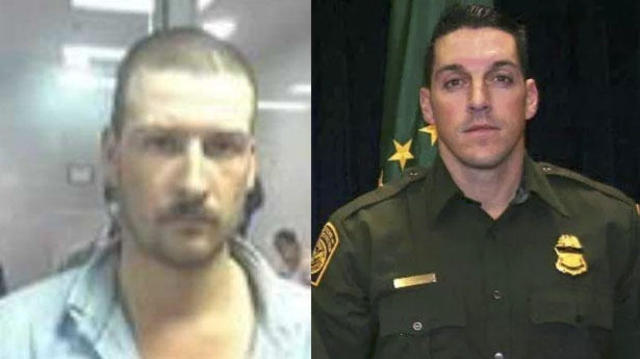
Fugitive Extradited in Border Patrol Agent Brian Terry Murder

border.jpg Heraclio Osorio-Arellanes, left, and Border Agent Brian Terry FBI/ATF

SAN DIEGO, CA – Heraclio Osorio-Arellanes, who is charged with the first-degree murder of U.nited S.tates Border Patrol Agent Brian Terry, was extradited from Mexico to the United States today, announced Attorney General Jeff Sessions and Southern District of California U.S. Attorney Adam Braverman for the Southern District of California.  He will be arraigned in U.nited S.tates District Court in, Tucson, Arizona, Wednesday tomorrow afternoon.  Osorio-Arellanes has been in custody awaiting extradition since his arrest by Mexican authorities on April 12, 2017.

Agent Terry was fatally shot on Dec.ember 14, 2010, when he and other U.S. Border Patrol agents encountered Osorio-Arellanes and four other members of a “rip crew” (a criminal gang that attempts to steal from drug and alien smugglers) operating in a rural area north of Nogales, Arizona.  Of the six defendants charged along with Osorio-Arellanes in the case, three have pleaded guilty, two were convicted following a jury trial, and one other defendant – Jesus Rosario Favela Astorga (arrested by Mexican authorities in October, 2017) – has not yet been tried. is pending extradition to the United States.

“The Department of Justice is pleased that the suspected killer of Border Patrol Agent Brian Terry has been successfully extradited to the United States and will now face justice for this terrible crime,” said Attorney General Jeff Sessions. “We are grateful for the efforts of the Federal Bureau of Investigation, U.S. Marshals Service and U.S. Customs and Border Protection as well as our law enforcement partners in Mexico. To anyone who would take the life of an American citizen, in particular an American law enforcement officer, this action sends a clear message: Working closely with our international partners, we will hunt you down, we will find you, and we will bring you to justice.”

“The arrest and extradition of Osorio-Arellanes reflects the steadfast commitment and tireless work of the United States and our law enforcement partners in Mexico, who shared the common goal of seeking justice for the murder of Agent Brian Terry,” said U.nited S.tates Attorney Adam Braverman.  “When an agent makes the ultimate sacrifice while serving his country, we must hold all the individuals who played a part in this tragic outcome accountable for their actions.  This extradition moves that important goal forward.”

The indictment charges the defendants with first-degree murder, second-degree murder, conspiracy to interfere with commerce by robbery, attempted interference with commerce by robbery, use and carrying a firearm during a crime of violence and assault on a federal officer.  In addition to the murder of Agent Terry, the indictment alleges that the defendants assaulted U.S. Border Patrol Agents William Castano, Gabriel Fragoza and Timothy Keller, who were with Agent Terry during the firefight with the “rip crew.”

This case is being prosecuted in federal court in Tucson by attorneys from the Southern District of California, Special Attorneys Todd W. Robinson and David D. Leshner.  The U.S. Attorney’s Office for the District of Arizona is recused.  The case is being investigated by the FBI.  The Government of Mexico assisted in the apprehension and extradition.  The Justice Department’s Office of International Affairs provided assistance with the extradition of defendant Osorio-Arellanes.

The public is reminded that an indictment is a formal charging document and defendants are presumed innocent until the government meets its burden in court of proving guilt beyond a reasonable doubt.

DEFENDANT                                                                        Case No. 11-CR-00150-TUC-DCB (BPV)     

Heraclio Osorio-Arellanes

AGENCIES

Federal Bureau of Investigation

U.S. Customs and Border Protection

United States Border Patrol

DOJ Office of International Affairs         

***

 Federal authorities said Tuesday that Heraclio Osorio-Arellanes will be arraigned in U.S. District Court in Tucson on Wednesday.               

 Osorio-Arellanes had been in custody awaiting extradition since being arrested by Mexican authorities on April 12, 2017. Osorio-Arellanes is charged in the death of Border Patrol Agent Brian Terry, who was shot and killed Dec. 14, 2010 when he and other agents encountered a gang preying on smugglers north of Nogales, Arizona.

Terry was part of a four-man team in an elite Border Patrol unit staking out the southern Arizona desert on a mission to find “rip-off” crew members who rob drug smugglers.

They encountered a five-man group of suspected marijuana bandits and identified themselves as police in trying to arrest them.

A jury in Tucson in October 2015 found two men, Jesus Leonel Sanchez-Meza and Ivan Soto-Barraza, guilty on murder and other charges. Another man, Manual Osorio-Arellanes, pleaded guilty to murder and was sentenced to 30 years in prison in 2014.

A fourth man, Rosario Rafael Burboa-Alvarez, pleaded guilty to murder. He was not present during the shooting but is accused of assembling the rip crew.

Authorities are still looking for Jesus Rosario Favela-Astorga, who’s wanted on murder, conspiracy, robbery, assault and firearm charges, reports CBS affiliate KOLD.

Finally U.S. Sanctions Turkey over U.S. prisoners

Primer:

Ankara for years has been providing support to Hamas, Iran, ISIS, al Queda and Libya jihadists, yet it’s this incredibly stupid decision to hold an American hostage that has ultimately earned Turkey its first US sanctions.

U.S. Prepares List of Turkey Economic Sanctions Targets

The U.S. has prepared a list of Turkish entities and individuals to target should it decide to impose sanctions on Recep Tayyip Erdogan’s government for imprisoning U.S. citizens and employees of its diplomatic mission, according to two people with knowledge of the matter.

The lira slid.

While negotiations to release one of the people, evangelical Pastor Andrew Brunson, are ongoing, the preparation of the so-called “designation packages” shows how close the U.S. has come to imposing unprecedented penalties against a NATO ally. The sanctions are modeled on those against the Russian government and oligarchs close to President Vladimir Putin, the people said, asking not to be named because of the sensitivity of the issue.

The U.S. has extended deadlines this week to release Brunson or face sanctions, according to Turkish and U.S. officials familiar with the talks. The people and entities determined in the designation packages would need to be approved by the Treasury secretary and secretary of state.

The sanctions are being prepared under the Global Magnitsky Act of 2016, which allows the U.S. government to target individuals, companies or other entities involved in corruption or human-rights abuses anywhere in the world. Sanctions under the act allow for the seizure of assets in the U.S., travel bans and prohibitions on doing business with U.S. entities.

Lira Plunges

Turkey’s lira plunged to a record low of 4.9985 after Bloomberg News reported the possible sanctions, extending its decline to 4.5 percent since July 26, when Vice President Mike Pence threatened sanctions over the Brunson case. Yields on Turkey’s 10-year debt hit a record 18.86 percent on Tuesday. The Borsa Istanbul 100 index has lost 36 percent in dollar-adjusted terms this year, the second-worst performance in the world after Venezuela.

A U.S. Treasury spokesman didn’t immediately reply to an emailed request for comment.

The scope of the sanctions highlights the disconnect between Washington and Ankara as they try to negotiate a way out of the deadlock, with Turkish officials still apparently believing the Trump administration is bluffing.

Bankers who have met with Turkish officials say the sanctions threats are not being taken seriously in Ankara, even as they risk cutting off financing to an economy dependent on imported capital. For their part, U.S. officials’ patience with Turkey’s negotiating tactics is wearing thin.

‘Hostages’

Within the State Department, Brunson and other prisoners including NASA scientist Serkan Golge and three Turkish employees of the U.S. mission to Turkey are referred to as “hostages.” The U.S. says they’re innocent and being held by Turkey for the sole purpose of extracting concessions on other points of tension in the U.S.-relationship.

The two countries have quarreled over a panoply of foreign policy issues that have driven the onetime allies to outright hostility. Foremost among them are differences over policy in Syria and Iran, Turkish suspicions about the U.S. response to a 2016 coup attempt against Erdogan, and the Turkish leadership’s budding friendship with Putin.

The Magnitsky sanctions under consideration could be just the start of what would look like a U.S. assault on Turkey’s vulnerable economy. The U.S. is also considering a hefty fine on state-run lender Turkiye Halk Bankasi AS for its role in evading U.S. sanctions targeting Iran’s nuclear program, and it would impose sanctions on Turkey when it receives delivery of a missile defense system from Russia, expected in 2019.

Deal Fails

As of last week, the Americans thought they had a deal that would bring Brunson home, according to accounts by officials on both sides of the matter. In return for the release of evangelical pastor, who’s been imprisoned for almost two years on charges including involvement in the failed coup, the U.S. administration would recommend a lenient fine on Halkbank. The U.S. also offered to send Mehmet Hakan Atilla, a former executive at the bank who’s been jailed in the U.S., back to Turkey to serve out the rest of his term.

As a final sweetener to the Turks, U.S. President Donald Trump said he’d get Israeli Prime Minister Benjamin Netanyahu to release a Turkish citizen, Ebru Ozkan, who’d been arrested in Israel on accusations of abetting Hamas. Netanyahu did it, and Ozkan was sent back to Turkey on July 16.

The Americans waited for Erdogan to deliver on his side of the deal: Brunson was to be released and then deported at a hearing on July 18. Instead, Turkey changed the conditions of the agreement at the last minute, with Foreign Minister Mevlut Cavusoglu interjecting to demand that any probe of Halkbank be dropped, according to Turkish and U.S. officials. The deal fell apart and Brunson was moved to house arrest.

The Americans had been carrying out the negotiations through a backchannel with a person close to Erdogan, according to people familiar with the matter. But they have had a difficult time gauging whether or not the Turkish side fully comprehends the possible consequences of U.S. sanctions on Turkey’s economy.

That’s made it harder for the U.S. to take decisive action as the U.S. is reluctant to take action that could risk tanking the economy of a nominally allied country, or bringing down its banking system. Turkish companies and banks depend on foreign capital to plug one of the world’s largest current-account deficits, which requires about $200 million a day in foreign financing.

Ironically, the damage that U.S. action could do to Turkey makes it more hesitant to act and strengthens Turkey’s negotiating position, according to Asli Aydintasbas, an Istanbul-based senior policy fellow at the European Council on Foreign Relations.

“I have seen this over and over in this relationship going back two decades, on a much smaller scale,” Aydintasbas said. “The price of actually doing something is so big that Turkey has a psychological advantage. It’s as if they have more power, whereas it’s the other way around.”

Legislation Proposed on Front Co.’s/Foreign Investment

Frankly, Britain has a much worse issue, but big hat tip to Senator Rubio. There are cities in America which are pockets of some nasty dark money in real estate.

There needs to be some real reform to CFIUS, Committee for Foreign Investment in the United States.

Crackdown on dirty money shook Miami real estate. Now, Rubio wants to take it national

In a move with significant implications for the U.S. housing market, Florida Republican Sen. Marco Rubio is seeking to take a Treasury Department crackdown on dirty money in luxury real estate and expand it from a few high-priced enclaves to the entire nation.

Rubio says his proposal is an attempt to root out criminals who use illicit funds and anonymous shell companies to buy homes — a form of money laundering that hides the cash’s tainted origin from law enforcement and banks. The widespread practice enables terrorism, sex trafficking, corruption, and drug dealing by providing an outlet for dirty cash, according to transparency advocates.

Through an amendment to an unrelated major spending bill, Rubio will ask Treasury to study whether government regulators should force shell companies that buy homes priced at $300,000 or more in cash nationwide to disclose their owners. That could be a figure as high as 10 percent of the nation’s real-estate deals.

A similar reporting requirement affecting transactions priced at $1 million or more has already had a chilling effect on all-cash corporate sales in Miami-Dade County, which has been under Treasury’s microscope since 2016.

“Shell companies involved in shady activities are a big problem, especially throughout South Florida,” Rubio said in a statement to McClatchy and the Miami Herald. “With this provision, a study would be conducted to look at requiring all shell companies that make cash transactions, regardless of their area, to disclose their identities.”

The amendment builds on a previous Treasury disclosure order that applied only to certain markets, including South Florida.

That order — which forced shell companies buying homes with cash to reveal their true owners to the government — has been in place in some areas since March 2016 at various price points. Its effects were immediate and stunning. As soon as the order took hold, shell companies buying homes with cash dropped off the map, a recent study by academic economists found. In Miami-Dade, the number of corporate cash sales plummeted 95 percent, although a strong overall market suggests creative buyers found ways to circumvent the rules, researchers said.

Before the crackdown, corporate cash sales accounted for roughly a third of home-sale volume in Miami-Dade, which is popular with foreign investors.

The amendment has the support of the top Democrat on the Senate Finance Committee, Oregon’s Ron Wyden, as well as Rhode Island Democratic Sen. Sheldon Whitehouse. Both have tried to widen disclosure of true owners of shell companies, which can be listed in the names of lawyers, accountants, and other fronts. The lack of corporate transparency frustrates law-enforcement officials, who say it stymies their investigations.

A vote is expected on the overall bill as soon as this week, Rubio’s office said.

The powerful real-estate industry has fought attempts from the government to have it act as a watchdog against money laundering, as banks, precious-metals dealers, money-service businesses, and other financial institutions are required to do. Many Realtors and developers say their clients are simply wealthy buyers seeking privacy, not criminals.

But over the past two years, Treasury has moved with force into what had been a largely unregulated sector of the U.S. financial system. Starting in Miami-Dade County and Manhattan two years ago, Treasury’s Financial Crimes Enforcement Network (FinCEN) began requiring anonymous shell companies to disclose their true owners when they bought pricey homes with cash.

The temporary directives — called “geographic targeting orders” or GTOs — were later expanded to other housing markets in Florida, New York, Texas, California, and Hawaii where foreign and anonymous investors are gobbling up real estate and driving up prices. The rules require title agents to identify the owners of shell companies buying homes with cash and disclose their names to the federal government.

“The GTOs are working, and it’s time they were expanded. Laundering money through real estate isn’t new, but [what is new is] an effective approach to combat dirty money,” said Clark Gascoigne, deputy director of the Financial Accountability and Corporate Transparency (FACT) Coalition, a watchdog nonprofit.

Rubio’s proposal to take the project national, Gascoigne added, “sends a strong message that we’re serious about protecting the U.S. financial system, the real-estate market, and communities across the country.”

Stephen Hudak, a spokesman for FinCEN, declined to comment.

Cracking down

The Rubio amendment asks Treasury to consider expanding the FinCEN directive to include all cash real-estate transactions over $300,000 anywhere in the United States.

It would give Treasury 180 days to submit a study to Congress providing details about the data that has been collected by FinCEN since 2016 and how it is being used. The agency is also being asked to determine if it needs more authority to combat money laundering and whether expanding the targeting order would be of use. In addition, FinCEN is asked if a registry of company owners — something supported by a bipartisan cast of federal legislators — would help authorities fight money laundering, tax evasion, election fraud, and other illegal activities.

Previously, the FinCEN disclosure requirement kicked in for corporate cash sales that were priced at $3 million or higher in New York City, $1 million or higher in Miami-Dade, Broward, and Palm Beach, and at different price points in other states. In May, FinCEN enacted a new directive that secretly lowered the number to $300,000 in all GTO areas. Sources familiar with the agency’s thinking say the new order was kept confidential because regulators don’t want to give money launderers a road map for structuring their transactions to avoid reporting.

Rubio’s amendment would start at that lower price point, covering a major chunk of home sales nationwide. Last year, the median U.S. home sold for a price of $247,200, according to the National Association of Realtors.

A cash transaction is one in which there is no mortgage and the property is purchased outright. Cash doesn’t just mean stacks of greenbacks; it also includes such financial instruments as wire transfers, checks, and money orders. Unlike mortgages, cash deals don’t involve heavy scrutiny from banks, which can identify potential money laundering and file suspicious-activity reports to the feds.

The 2016 publication of the Panama Papers spotlighted how anonymous shell companies in faraway tax havens were used to camouflage property purchases in the United States by politicians, drug traffickers, and financial fraudsters. Housing analysts argue that the flow of anonymous money is driving up prices.

“There’s hardly a metropolitan area in the country that is not experiencing a real public-policy issue regarding affordable housing,” said Ned Murray, a housing expert and associate director of Florida International University’s Metropolitan Center. “The whole focus of the real-estate industry is on … supplying homes for wealthy investors that we don’t know much about. It really is a factor for prices and supply.”

Much of the world has responded to the threat of corruption in real estate by requiring greater ownership disclosure. The United States has done relatively less, although Rubio’s amendment could help close the gap.

Those operating in the shadows of the real-estate market certainly seem aware of the Treasury disclosure requirements — and are working to get around them.

Take Carmelo Urdaneta Aqui, who is the former legal counsel to the Venezuelan Ministry of Oil and Mining. He was recently among those charged in a federal $1.2 billion money-laundering case involving funds stolen from Venezuela’s state oil company.

When Urdaneta prepared to close on a brand-new, $5.3 million condo at the Porsche Design Tower in Sunny Isles Beach, he was informed by paperwork from the developer that “taking title [to the unit] under a company or trust may trigger FinCEN reporting requirements,” according to a federal indictment filed last week. He was worried enough about the disclosure that he discussed how to avoid it with a government informant.

Ultimately, Urdaneta set up a company in his wife’s name to do the deal, prosecutors allege.

001 Gil Dezer DS
Developer Gil Dezer’s company built the Porsche Design Tower in Sunny Isles Beach, where units sell for millions of dollars to wealthy out-of-towners.
David Santiago dsantiago@elnuevoherald.com

Dezer Development did not say why it alerts potential buyers that they might end up on Treasury’s radar.

“All language relating to legal requirements associated with closings was prepared by Dezer Development’s outside legal counsel,” a spokeswoman wrote in an email to the Herald on Monday.

The 60-story Porsche Design Tower is famous for a car elevator that allows owners to park in “sky garages” within their units. On Friday, federal prosecutors indicated that they would move to seize the unit.

Bad for brokers?

While overall home sales held steady even after the FinCEN rule went into place, the real-estate study found, luxury home prices were slightly softer in markets affected by the GTO.

That suggests that expanding the GTO could have a dampening effect on the nation’s real-estate market, said Jeff Morr, a luxury real-estate broker at Douglas Elliman and chairman of the Miami Master Brokers Forum, an industry group.

“Does it stop money laundering? Probably, yes,” Morr said. “Is it good for the real-estate market? Probably, no.”

But at least making the rule nationwide might take some of the heat off Miami, he said.

“It may make Florida less unattractive now that it’s everywhere,” Morr said. “We shouldn’t be treated differently than other areas.”

Real Estate Cycle_Edgewater (4).jpeg
The crane has become the unofficial city bird of Miami during the latest construction boom.
Miami Herald

That was exactly the sentiment of the Miami-Dade County Commission when the rule was first enacted in 2016. At the time, commissioners passed a symbolic resolution asking regulators to stop singling out Miami for special scrutiny. The industry still feels the same way.

Legitimate buyers need privacy, too, said Ron Shuffield, president and CEO of EWM Realty International.

“There are wealthy people who don’t want everyone to know that they live at the end of the block,” Shuffield said. “If someone is determined to launder money, they can pick anywhere in the country to do it, from the smallest city in the Midwest to Miami or New York City. It’s only fair that every area have to report. Otherwise, the rules could be scaring people away from certain markets.”