C’mon Trump, Americans are Still Angry

Hey President Donald, how about assigning a leader to a whistleblower task force that coughs up the goods on the Obama administration.

In the past eight years we have almost forgotten all the fraud, collusion, deception and nefarious work of the previous administration and how far reaching those operations were. We still want consequences….why? If left unchallenged, rather unexposed, those operatives will dig in deeper and with wild abandon. The media cannot be left out of this whistleblowing mission either. Complicity and political behavior modeling by the left will only gain traction if not forced into the sunlight.

Trump pledged to restore law and order, voters should know how far afield the law was fractured under the Obama administration.

Much in the news is the Russian intrusion into our election infrastructure, which did happen without dispute. Altering the vote count or influencing voters to cast votes to a preferred candidate did NOT happen, such there is no evidence. The Russians have a history of such intrusions beyond the United States including Ukraine, Germany and Europe. The U.S. intelligence agencies warned of forced log-ins long before the November election. Now British intelligence is making the same warnings.

A particular item that requires a whistleblower headline is how the Obama White House interfered in the election process in Israel paying operatives to remove Netanyahu from power. Hello Trump team, can you expose more details on this please? We already know about Jeremy Bird, but we want the full story and in the end, we want punishment.

Some items that need attention and exposure are noted below but this list is hardly complete. In fact you are invited to add to the list in the comments section.

We need to know the culprits, the money, the facts and the rest of the stories on many scandals. This is the moment now leading into the building mid-term elections, but mostly due to the DNC being led by two terrifying people Tom Perez and Keith Ellison. The DNC, DNCC, Center for American Policy and others are houses of UnAmerican activities, if we even remember what America is and should be anymore.

There is no better source or investigator than Trevor Louden. He helped us with his movie, ‘Enemies Within’ as he laid the foundation for the viewers to take the baton and run to expose more.

Congress has an ‘oversight committee’ that does investigate and expose countless cases yet it is time consuming and burdensome given scheduling, subpoenas, testimony and document requests. Then we have Judicial Watch that is doing great work using the legal machinery, but all reliance cannot be placed there.

The Trump White House has this lifetime opportunity to own the headlines, the stories of connected events and provide the full account of scandals and people that today are left still with unanswered question.

Here are some samples Mr. President we need to know more about, begin here with the whistleblowing now that your administration is in power with access.

  1. The matter of Fast and Furious, the gun-running operation to Mexico was never fully told. Did Kevin O’Reilly ever cooperate and provide testimony, when in the middle of the scandal he was suddenly deployed to Iraq?
  2. Judicial Watch just obtained almost 7000 documents relating to the IRS targeting scandal. Exactly why is John Koskinen still the commissioner and has anyone moved to sue Lois Lerner in civil suits? Is there evidence of White House collusion including some members of Congress?
  3. What is the rest of the story when it comes to new solar/energy businesses launched with government loan guarantees that have gone belly up? Who is responsible, what did it really cost the taxpayer and are any monies recoverable? How about the DoJ investigations where some financial reports were altered?
  4. Benghazi stands on its own..
  5. Who at the Department of Energy is responsible for the lead in the water in Flint, Michigan and polluting the Colorado river?
  6. With the ransom money given to Iran and the side deals all but forgotten of the Iranian nuclear deal, how much is still out there to be uncovered and reported? What more do we need to know about Ploughshares, NIAC, Ben Rhodes and John Kerry?
  7. We have new leadership at the Veterans Administration. Great now how about exposing the hidden case files, the corruption of the unions, jailing those that falsified status reports and got big bonuses? The VA Inspector General has done some great work so far, but who in leadership is going down for the never-ending issues at the VA?
  8. Can we have a team that reveals the ‘slush funds’ from the ‘stimulus money’ and who is guilty in both parties that scammed the taxpayers?
  9. Clearly there is more to know about Obama’s amnesty and his DACA program. Who was behind it, how much money was involved? Are judges being paid off? Who gets grants to sponsor children and illegals and how much money was spent in transportation of people all over the country hiding the from the legal system?
  10. Obamacare is a major topic, what more do we need to know such that it is being used to blame democrats and repeal the law? How about HHS contracts, sharing patient databases with outside agencies and foreign governments? What about cyber security, what about paying off big pharma and insurance companies?
  11. Where are we with the Clinton Foundation and the emails to Hillary’s private server that included Obama emails and the computer belonging to Huma Abedin? Is anyone still at the State Department still providing the Clinton operation cover? Can Patrick Kennedy or John Kerry be prosecuted?
  12. What is the rest of the story of Eric Holder and Loretta Lynch on corporate fines for violations and company officials not going to prison?
  13. The Department of Justice maintained a victims fund which selectively paid surviving family members in cases of attacks and murder victims. Why was Obama personally involved and how was it decided who got money and how much?
  14. The DoJ funded leftist organizations. Two examples were National Council of La Raza, the National Community Reinvestment Coalition and the National Urban League.
  15. Obama and his team negotiated with the Taliban. What is the real truth, how much money did we give the terror organization and where are the Taliban 5 released from Gitmo today?
  16. Several on the Democrat side of the House of Representatives hired a rogue team of IT professionals that were not vetted and had access to computer systems and passwords causing more national security threats. Why? Who was fired, who is responsible? Are there more we don’t know about?

Once again, this is hardly a comprehensive list, we must know more. We want consequences. build the case, tell us what we need to know going forward.




C’mon Trump, the IRGC IS a Terror Organization

For a full report performed by European Iraqi Freedom Association on Iran’s Destructive Role in the Middle East, click here. In their report, EIFA alleges that the IRGC is “directly involved in the hidden occupation” of Iraq, Yemen, Syria and Lebanon and “meddling” in the internal affairs of at least eight countries, including Egypt, Bahrein, Jordan and Lebanon.

Revolutionary Guards Leading Iran’s Ballistic Missile Drive, Nuclear Weapons Program — Through Control Over Docks

Despite the United States placing the Iranian regime “on notice” for test-firing medium-range ballistic missiles in January, Tehran has taken no steps to change its behavior. Indeed, reports indicate that Iran test launched a new pair of ballistic missiles over the weekend.

New evidence was uncovered about the extent of control that the Islamic Revolutionary Guard Corps (IRGC), which is leading the mullahs’ ballistic missile drive, parallel to the nuclear program and pursuit of weapons of mass destruction, has over this.

In London on Tuesday, the National Council of Resistance of Iran (NCRI) held a press conference revealing that the IRGC has a growing grip over Iran’s key economic hubs. The NCRI cited intelligence gathered by sources linked to the People’s Mojahedin Organization of Iran (PMOI/MEK) from inside the regime, particularly among the IRGC rank and file. The data obtained in recent months clearly proves the IRGC has full control over 90 docks, which amount to 45% of Iran’s total official number of 212 piers.

Image result for irgc

The IRGC began setting up these “Bahman Docks” in 1982, by order of regime founder Ayatollah Ruhollah Khomeini. The group was instructed to manage its activities outside the authority of any state supervision and beneath the proverbial radar of international institutions.

Over the years since then, Supreme Leader Ali Khamenei has ordered the expansion of IRGC activity at these docks, and the further intertwining of the organization with the country’s economy. The main goal today, and previously, is to bypass international sanctions.

As a result, the IRGC now has complete control over Iran’s ground, sea and air borders, flooding the economy with a variety of imports without paying a single dollar in customs.

The IRGC has ports in Bandar Lengeh in Hormozgan Province, two docks in Abu Musa Island and another two in the Greater Tunb Island — among others.

Image result for irgc docks control

In addition to exporting arms to Middle East militias, the IRGC takes advantage of these docks to smuggle oil, gasoline, natural gas, chemical products, cigarettes, narcotics, alcoholic beverages, mobile phones and pharmaceuticals. The IRGC reportedly pockets an annual revenue of around $12 billion from importing and exporting illicit goods through the docks.

According to the NCRI, the IRGC has also established a number of front companies tasked specifically with transferring weapons caches through the docks. This flow of arms continues non-stop, with only a small percentage having been discovered and blocked by the international community in recent years. And all this is in addition to the colossal official budget the IRGC receives from Tehran.

The new revelation is but another reason for the international community to take firm and swift action against the IRGC.

***

These PMOI sources helped to identify three organizations – Admiral Group, Hafez Daya Arya and Valfajr – as shipping companies being used as fronts for smuggling weapons to other countries throughout the region, in particular, Yemen.

Since most Yemani docks are closed to Iranian ships, the IRGC’s shell companies began using ports in nearby Oman to smuggle weapons into Yemen. The PMOI alleges that they primarily used Soltan Qaboos Port in Muscat, Sohar Port in North Oman and Salalah Port in South Oman. For the rest of their operations, the guard is operating in ports in the Hormozgan and Bushehr Provinces  along the Persian Gulf, as well as, the Farsi and Faror Islands, the group charged. More here.

***

The Islamic Revolutionary Guard Corps (IRGC), reported that the IRGC is using civilian passenger jets operated by the Iranian airline Mahan Air to transfer weapons to Syria and Yemen and also to bring back the bodies of fallen fighters as well as injured fighters requiring treatment.

“In October 2016, a knowledgeable source at the U.S. Treasury Department told AP that the U.S. was trying to convince the E.U. to cooperate with American steps to disrupt Mahan Air’s financial flows. Five years ago, America leveled sanctions on Mahan Air due to its close ties to the IRGC and allegations that it was transferring weapons to Syria and Yemen, but thus far, the E.U. has not complied with these sanctions. More here.

Does the White House Know ‘all’ about North Korea?

Check your personal cell phone, who manufactured it… ZTE is the No. 4 smartphone vendor in the United States, selling handset devices to U.S. mobile carriers AT&T Inc (T.N), T-Mobile US Inc (TMUS.O) and Sprint Corp (S.N).

Since 1995, the United States has provided North Korea with over $1.2 billion in assistance, of which about 60% has paid for food aid and about 40% for energy assistance. As of early March 2010, the United States is not providing any aid to North Korea, except for a small medical assistance program. The Obama Administration, along with the South Korean government, have said that they would be willing to provide large-scale aid if North Korea takes steps to irreversibly dismantle its nuclear program. The main vehicle for persuading Pyongyang to denuclearize is the Six-Party Talks, involving North Korea, the United States, China, South Korea, Japan, and Russia. The Talks have not met since late 2008.

North Korea did not militarily threaten the region until the Obama administration. Since, North Korea has taken exceptional steps in the realm of illicit activities, collusion, theft and shadow companies to finesse sanctions. China is essentially in the diplomatic field responsible for checks and balances on North Korea and once again is calling for a truce of sorts. This objective is not new and has failed each time.

Enter Japan, where the Prime Minister, Shinzo Abe who has been in contact with the White House is escalating responsive military actions against North Korea. This could lead to a much more hostile region. It seems that the recent missile launches coordinated with Iran are part of a mission to strike U.S. bases in the region. There are 3 of distinction, however the United States maintains additional joint locations.

Image result for us military bases in japan 2017 Image result for us military bases in japan 2017

Rattled by North Korean military advances, influential Japanese lawmakers are pushing harder for Japan to develop the ability to strike preemptively at the missile facilities of its nuclear-armed neighbor.

Japan has so far avoided taking the controversial and costly step of acquiring bombers or weapons such as cruise missiles with enough range to strike other countries, relying instead on its U.S. ally to take the fight to its enemies.

But the growing threat posed by Pyongyang, including Monday’s simultaneous launch of four rockets, is adding weight to an argument that aiming for the archer rather than his arrows is a more effective defense.

“If bombers attacked us or warships bombarded us, we would fire back. Striking a country lobbing missiles at us is no different,” said Itsunori Onodera, a former defense minister who heads a ruling Liberal Democratic Party committee looking at how Japan can defend against the North Korean missile threat. “Technology has advanced and the nature of conflict has changed.”

*** Meanwhile, as an indication of illicit activities and fraud, below is a sample.

China’s ZTE pleads guilty, settles with U.S. over Iran, North Korea sales

NEW YORK (Reuters) – Chinese telecom equipment maker ZTE Corp <000063.SZ> has agreed to pay $892 million and plead guilty to criminal charges for violating U.S. laws that restrict the sale of American-made technology to Iran and North Korea.

While a guilty plea deals a blow to ZTE’s reputation, the resolution could lift some uncertainty for a company that relies on U.S. suppliers for 25 percent to 30 percent of its components.

A five-year investigation found ZTE conspired to evade U.S. embargoes by buying U.S. components, incorporating them into ZTE equipment and illegally shipping them to Iran.

In addition, it was charged in connection with 283 shipments of telecommunications equipment to North Korea.

“ZTE Corporation not only violated export controls that keep sensitive American technology out of the hands of hostile regimes like Iran’s, they lied … about their illegal acts,” U.S. Attorney General Jeff Sessions said in a statement.

The investigation, spearheaded by the U.S. Department of Commerce, followed reports by Reuters in 2012 that ZTE had signed contracts to ship millions of dollars worth of hardware and software from some of the best-known U.S. technology companies to Iran’s largest telecoms carrier.

The Justice Department noted one Reuters article in its statement announcing the plea deal on Tuesday. The original report can be read here: http://www.reuters.com/article/us-iran-telecoms-idUSBRE82L0B820120322.

The company’s guilty pleas, which must be approved by a judge, will take place in U.S. District Court in Texas. The Shenzhen-based company has a U.S. subsidiary in Richardson, Texas.

In March 2016, ZTE was placed on a list of entities that U.S. firm could not supply without a license. ZTE acted contrary to U.S. national security or foreign policy interests, the Commerce Department said at the time.

ZTE purchases about $2.6 billion worth of components a year from U.S. technology companies, according to a company spokesman. Qualcomm (QCOM.O), Microsoft (MSFT.O) and Intel (INTC.O) are among its suppliers.

Items shipped in violation of U.S. export laws included routers, microprocessors and servers controlled under export regulations.

Authorities said executives at ZTE approved the scheme to prevent disclosure of the sales. The scheme included a data team that destroyed or sanitized materials involving ZTE’s Iran business after March 2012.

“Despite ZTE’s repeated attempts to thwart the investigation, the dogged determination of investigators uncovered damning evidence,” said Douglas Hassebrock, director of the Commerce Department office that led the investigation.

Last year, Commerce released internal documents showing senior ZTE executives instructing the company to carry out a project for dodging export controls in Iran, North Korea, Syria, Sudan and Cuba.

The company on Tuesday agreed to a seven-year suspended denial of export privileges, which could be activated if there are further violations. A denial order would bar the receipt of U.S. origin goods and technology.

The denial order is key to keeping ZTE in line, said Eric Hirschhorn, former Under Secretary at the Commerce Department, who was involved in the investigation.

“If the suspension is removed, they’ll probably be put out of business,” he said.

ZTE also agreed to three years of probation, a compliance and ethics program, and a corporate monitor.

The settlement includes a $661 million penalty to Commerce; $430 million in combined criminal fines and forfeiture; and $101 million paid to the Treasury’s Office of Foreign Assets Control (OFAC). The action marks OFAC’s largest-ever settlement with a non-financial entity.

ZTE also agreed to an additional penalty of $300 million to the U.S. Commerce Department that will be suspended during a seven-year term on the condition the company complies with requirements in the agreement.

In addition to being one of the world’s biggest telecommunications gear makers, ZTE is the No. 4 smartphone vendor in the United States, selling handset devices to U.S. mobile carriers AT&T Inc (T.N), T-Mobile US Inc (TMUS.O) and Sprint Corp (S.N).


WikiLeaks Releases CIA Cyber Docs, Problem?

Primer: Steve Bannon works for President Trump in the White House.

Steve Bannon is a star – for Al-Qaeda, that featured him on the cover of their newspaper

steve-bannon-is-a-star---for-al-qaeda-that-featured-him-on-the-cover-of-their-paper

Then this headline….

The new scandal headlines for today is WikiLeaks, telling us they published the largest cache of secret CIA documents relating to the CIA’s ability to hack, break encryption and install malware. This is a problem? The problem is not the tools the CIA has, the problem is that someone inside the agency stole them and delivered them to WikiLeaks.

It is a good thing that the agency has these resources, why you ask?

Well….try this…The threat is real from Russians, Chinese, North Korea, Iran, Syria, Ukraine, al Qaeda and Islamic State…

Image result for stuxnet

Remember Stuxnet? This was a successful joint program under the Bush presidency with Israel to infect the Iranian nuclear program and it was to forces the centrifuges to spin out of control, which they did. Ultimately, it caused the progress of the Iranian infrastructure to be delayed substantially. It was in fact later uncovered by cyber scientists working for Siemens, the hardware and software platform used as the operating system. Good right? Yes.

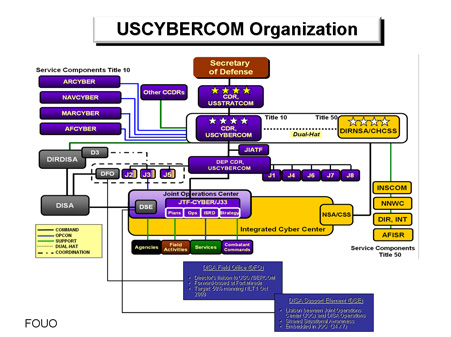
Image result for u.s. cyber command

Well, there is more…

In recent years, Iran and North Korea have been sharing nuclear scientists and engineers, parts, testing and missile collaboration. So far, the missiles launched by North Korea for the most part have been unsuccessful, or at least did not achieve the ultimate objective and that is an official target strike. Why? Because of the United States. How so you ask?

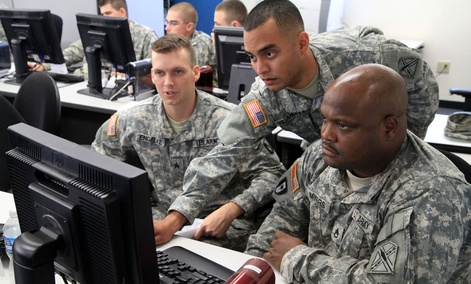
Over the weekend, North Korea fired off 4 missiles in succession toward Japan. They did not reach the mainland but did reach the waterway that is part of the Japanese economic zone for maritime operations. We have American cyberwarriors that are doing effective work causing the missiles to fly off course or to technically fail. The objective is to use non-explosive weaponry to foul the North Korea and hence Iran’s missile program and while North Korea is not especially connected to the internet, some related systems are connected and then there is electronic warfare.

Image result for foreign hacking omb

We know that Islamic State is a terror operation that has militant cells in an estimated 30 countries. While they have depraved methods of murder, rape and terror, they too have a cyber operation.

The Will to Act

One question is whether ISIS will be consumed with the protection and continued expansion of its immediate fighting fronts, i.e., the “near enemy,” or whether its scope of vision includes America’s homeland. The Economist advances a strong case that desire for such expansion not only exists but will be exercised: “With its ideological ferocity, platoons of Western passport holders, hatred of America and determination to become the leader of global jihadism, ISIS will surely turn, sooner or later, to the ‘far enemy’ of America and Europe.”

And perhaps any doubt the militant’s sights are on America was removed by ISIS leader Abu Bakr al-Baghdadi’s Sept. 22 call for jihadists to not wait for the order but to rise, take up arms, and “kill Americans and other infidels” wherever they are. Clearly the group is showing no hesitancy in its desire to strike the U.S. heartland on a personal scale.

Cyber Operations Capability?

As to whether ISIS will have the capability to mount cyber operations against the U.S., David DeWalt, head of cybersecurity firm FireEye, believes that ISIS will follow in the footsteps of the Syrian Electronic Army and the Iran-based Ajax Security Team to target the United States and other Western nations.

“We’ve begun to see signs that rebel terrorist organizations are attempting to gain access to cyber weaponry,” DeWalt stated recently. He added that booming underground markets dealing in malicious software make offensive cyber weapons just an “Internet transaction” away for groups such as ISIS. More here.

Is there more to this that we should know? Yes…

There is the Middle East and we have a major vested interest in the region.

***

Cybersecurity in the Gulf: The Middle East’s Virtual Frontline

Cybersecurity is often discussed in relation to the major global powers: China’s economic espionage, Russian influence operations, and U.S. dragnet global surveillance to thwart terrorism.

However, as other countries move to digitize their economies, cybercriminals are zeroing in on these new and lucrative targets while regional players are quickly incorporating cyber capabilities into their own arsenals for achieving strategic ends.

The Middle East, particularly the Gulf states, are quickly recognizing the urgent need for better cybersecurity, while regional adversaries such as Iran have begun weaponizing code as an extension of broader strategic goals within the region. What, though, is the Gulf’s current cybersecurity atmosphere, and how does Iran’s emerging use of offensive cyber capabilities fit into its broader strategy in the Middle East?

Wajdi Al Quliti, the Director of Information Technology at the Organization of Islamic Cooperation, notes that “the region’s dramatic strides towards digitization—expected to add over $800 billion to GDP and over 4 million jobs by 2020—is making the Gulf a major target for fast evolving cyber threats.” Much like other regions, the Gulf is finding it difficult to sufficiently create criminal deterrence due to segmented laws and difficulties in attribution. Al Quliti argues “cross-border cooperation and common cybersecurity structures could prove to be a game-changing advantage in the fight against cybercrime.” However, “the elephant in the room,” according to Al Quliti, “is the issue of state-sponsored hacking, in which case harmonized laws are unlikely to make a difference.”

A critical point in nation-state hacking in the Middle East begins with the Stuxnet worm. Discovered in 2010 burrowed deep in Iranian networks, the worm had slowly been sabotaging Iran’s nuclear ambitions. Then in 2011 CrySyS Lab discovered Duqu, a cyber espionage tool tailored to gather information from industrial control systems, and in 2012, Kaspersky Labs identified Flame, another espionage tool, targeting various organizations in the Middle East. Both Duqu and Flame are associated with Stuxnet and attributed back to the Equation Group, widely considered an arm of the National Security Agency.

In 2012, Iranian officials found a wiper virus erasing files in the network of the Oil Ministry headquarters in Tehran, leading the ministry to disconnect all oil terminals from the Internet to prevent the virus from spreading. It is uncertain who was behind the attacks, but a mere four months later, Saudi Arabia’s largest oil company, Saudi Aramco, was hit with a similar wiper virus known as Disttrack—possibly coopted from the previous attack on Iran’s oil industry.

The data-erasing malware sabotaged three-quarters, some 35,000 of the company’s computers while branding screens with an image of a burning American flag. A few months later, another wiper virus attacked Qatar’s RasGas.

Al Quliti identifies “the region’s heavy dependence on oil and gas—as well as the oil and gas-powered desalination plants that provide much of the region’s fresh water”—as “a source of cyber vulnerability,” adding that “any cyber attack on these installations could prove catastrophic and might result in a humanitarian disaster.”

The sabotage operations against the Gulf’s oil industry have been attributed by various cybersecurity firms—but not officially by any government—to a group called Shamoon, thought to be an arm of the Iranian government.

Michael Eisenstadt, the Director of the Military and Security Studies Program at the Washington Institute for Near East Policy, notes that “cyber allows Iran to strike at adversaries globally, instantaneously, and on a sustained basis, and to potentially achieve strategic effects in ways it cannot in the physical domain.” For example, in March 2016, the Justice Department indicted seven Iranian Revolutionary Guard members for distributed denial of service attacks against U.S. banks in 2012 in retaliation for Iran sanctions imposed the previous year, as well as for infiltrating the systems of a small New York dam in 2013—a possible testing ground for penetrating larger pieces of U.S. critical infrastructure. In 2014, the same year North Korea set its sights on Sony Pictures, Iran’s cyber capabilities again reached into the United States, using another wiper virus to sabotage the operations of the Las Vegas Sands casino, whose chief executive, a staunch supporter of Israel, had suggested detonating a nuclear bomb in the heart of Tehran.

Last November, right before a major OPEC meeting, a variation of the Disttrack wiper used against Saudi Aramco struck again, now fitted with a picture of Alan Kurdi, the drowned Syrian toddler who washed up in Turkey in 2015. The virus targeted six Saudi organizations, most notably the Saudi General Authority of Civil Aviation, delivering its payload at the close of business on a Thursday, the start of the Islamic weekend, for maximum impact. Some experts speculate the November attack could have also been a false-flag operation to derail the Iranian nuclear deal.

Interestingly, for both the 2012 and 2016 Shamoon attacks, the wiper came fitted with stolen login credentials that Symantec now believes could have been gleaned from a cyber espionage tool, known as Greenbug, found on one of the administrator computers of a Saudi organization targeted in November. The potential link between Greenbug and the Shamoon group opens up possible investigations into the group’s involvement in a host of other Greenbug attacks throughout the Middle East, including breaches in Saudi Arabia, Bahrain, Iraq, Qatar, Kuwait, Turkey, and even Iran—though likely for domestic surveillance on dissidents. Just last week, another wiper virus hit 15 Saudi organizations, including the Ministry of Labor, prompting the government to issue an urgent warning of pending Shamoon attacks.

Eisenstadt points out that “Iran’s cyber activities show that a third-tier cyber power can carry out significant nuisance and cost-imposing attacks,” and “its network reconnaissance activities seem to indicate that it is developing contingency plans to attack its enemies’ critical infrastructure.” According to Eisentadt, is now seems that “in the past decade, Iran’s cyber toolkit has evolved from a low-tech means of lashing out at its enemies by defacing websites and conducting DDoS attacks, to a central pillar of its national security concept.”

Beginning to understand why the CIA and the other agencies are building cyber command war-rooms?


FBI to Pay Former Spy for Trump Intel

FBI Plan to Pay Ex-Spy for Trump Intel during Campaign Sparks Questions of Obama Admin’s Use of Federal Authorities for Political Gain

Mar 06, 2017
Author of unsubstantiated dossier was also researching Trump for Clinton campaign associates when FBI sought to hire him
WASHINGTON– Senate Judiciary Committee Chairman Chuck Grassley today is seeking details on the FBI’s reported plans to hire former British spy Christopher Steele to investigate Donald Trump during the presidential campaign, even though the FBI was aware that he was being paid by Democrat political operatives to conduct opposition research on Trump.  Steele is the author of the controversial dossier that includes unsubstantiated claims alleging ties between the Trump campaign and the Russian government.
In a letter today to FBI Director James Comey, Grassley is requesting a briefing on the agreement as well as the FBI use of the material in Steele’s memos.  Grassley also wants to know whether the FBI ever independently verified the memos’ claims.
“The idea that the FBI and associates of the Clinton campaign would pay Mr. Steele to investigate the Republican nominee for President in the run-up to the election raises further questions about the FBI’s independence from politics, as well as the Obama administration’s use of law enforcement and intelligence agencies for political ends.  It is additionally troubling that the FBI reportedly agreed to such an arrangement given that, in January of 2017, then-Director Clapper issued a statement stating that ‘the IC has not made any judgment that the information in this document is reliable, and we did not rely upon it in any way for our conclusions,’” Grassley said in the letter.
In the letter, Grassley is requesting records related to the reported agreement.  He is also seeking answers to a number of questions, including who was involved in decisions related to hiring Steele and using his memos, whether the FBI used materials in the memo as the basis for seeking warrants and other investigative tools, and if the FBI has been able to independently verify allegations made in the memos.
Full text of Grassley’s letter to Comey follows:
March 6, 2017
VIA ELECTRONIC TRANSMISSION
The Honorable James B. Comey, Jr.
Director
Federal Bureau of Investigation
935 Pennsylvania Avenue, N.W.
Washington, DC 20535
Dear Director Comey:
On February 28, 2017, the Washington Post reported that the FBI reached an agreement a few weeks before the Presidential election to pay the author of the unsubstantiated dossier alleging a conspiracy between President Trump and the Russians, Christopher Steele, to continue investigating Mr. Trump.[1]  The article claimed that the FBI was aware Mr. Steele was creating these memos as part of work for an opposition research firm connected to Hillary Clinton.  The idea that the FBI and associates of the Clinton campaign would pay Mr. Steele to investigate the Republican nominee for President in the run-up to the election raises further questions about the FBI’s independence from politics, as well as the Obama administration’s use of law enforcement and intelligence agencies for political ends.  It is additionally troubling that the FBI reportedly agreed to such an arrangement given that, in January of 2017, then-Director Clapper issued a statement stating that “the IC has not made any judgment that the information in this document is reliable, and we did not rely upon it in any way for our conclusions.”According to the Washington Post, the FBI’s arrangement with Mr. Steele fell through when the media published his dossier and revealed his identity.
The Committee requires additional information to evaluate this situation.  Please provide the following information and respond to these questions by March 20, 2017.  Please also schedule a briefing by that date by FBI personnel with knowledge of these issues.
  1. All FBI records relating to the agreement with Mr. Steele regarding his investigation of President Trump and his associates, including the agreement itself, all drafts, all internal FBI communications about the agreement, all FBI communications with Mr. Steele about the agreement, all FBI requests for authorization for the agreement, and all records documenting the approval of the agreement.
  1. All records, including 302s, of any FBI meetings or interviews with Mr. Steele.
  1. All FBI policies, procedures, and guidelines applicable when the FBI seeks to fund an investigator associated with a political opposition research firm connected to a political candidate, or with any outside entity.
  1. All FBI records relating to agreements and payments made to Mr. Steele in connection with any other investigations, including the reported agreements relating to his investigation of FIFA.
  1. Were any other government officials outside of the FBI involved in discussing or authorizing the agreement with Mr. Steele, including anyone from the Department of Justice or the Obama White House?  If so, please explain who was involved and provide all related records.
  1. How did the FBI first obtain Mr. Steele’s Trump investigation memos?  Has the FBI obtained additional memos from this same source that were not published by Buzzfeed?  If so, please provide copies.
  1. Has the FBI created, or contributed to the creation of, any documents based on or otherwise referencing these memos or the information in the memos?  If so, please provide copies of all such documents and, where necessary, clarify which portions are based on or related to the memos.
  1. Has the FBI verified or corroborated any of the allegations made in the memos?  Were any allegations or other information from the memo included in any documents created by the FBI, or which the FBI helped to create, without having been independently verified or corroborated by the FBI beforehand?  If so, why?
  1. Has the FBI relied on or otherwise referenced the memos or any information in the memos in seeking a FISA warrant, other search warrant, or any other judicial process?   Did the FBI rely on or otherwise reference the memos in relation to any National Security Letters?  If so, please include copies of all relevant applications and other documents.
  1. Who decided to include the memos in the briefings received by Presidents Obama and Trump? What was the basis for that decision?
  1. Did the agreement with Mr. Steele ever enter into force?  If so, for how long?  If it did not, why not?
  1. You have previously stated that you will not comment on pending investigations, including confirming or denying whether they exist.  You have also acknowledged that statements about closed investigations are a separate matter, sometimes warranting disclosures or public comment.  Given the inflammatory nature of the allegations in Mr. Steele’s dossier, if the FBI is undertaking or has undertaken any investigation of the claims, will you please inform the Committee at the conclusion of any such investigations as to what information the investigations discovered and what conclusions the FBI reached?  Simply put, when allegations like these are put into the public domain prior to any FBI assessment of their reliability, then if subsequent FBI investigation of the allegations finds them false, unsupported, or unreliable, the FBI should make those rebuttals public.
I anticipate that your responses to these questions may contain both classified and unclassified information.  Please send all unclassified material directly to the Committee.  In keeping with the requirements of Executive Order 13526, if any of the responsive documents do contain classified information, please segregate all unclassified material within the classified documents, provide all unclassified information directly to the Committee, and provide a classified addendum to the Office of Senate Security.  Although the Committee complies with all laws and regulations governing the handling of classified information, it is not bound, absent its prior agreement, by any handling restrictions or instructions on unclassified information unilaterally asserted by the Executive Branch.
Thank you for your prompt attention to this important matter.  If you have any questions, please contact Patrick Davis of my Committee staff at (202) 224-5225.
Sincerely,
Charles E. Grassley
Chairman
Committee on the Judiciary
cc:
The Honorable Dianne Feinstein
Ranking Member
Senate Committee on the Judiciary

[1] Tom Hamburger and Rosalind Helderman, FBI Once Planned to Pay Former British Spy Who Authored Controversial Trump Dossier, The Washington Post (Feb. 28, 2017).