State Dept Covered up Hillary’s Email Server for Years

State Department covered up Hillary’s private email server for years even though ‘dozens of senior officials’ knew about it, says scathing inspector general report

  • Critical report from State Department’s own internal watchdog details abuse of Freedom of Information Act while Clinton ran the agency
  • 177 of the 240 FOIA requests lodged for information about Hillary while she was secretary of state are still pending three years after she left office
  • State told a liberal group it had no information about Hillary’s emails in 2013 even though many senior officials were emailing her on her private server 
  • The U.S. State Department told a watchdog group in 2013 that it didn’t have any information about former secretary Hillary Clinton’s emails, even though ‘dozens of senior officials’ knew she was using a private server for all her electronic communications.
  • A report released Thursday by the agency’s inspector general – a powerful and impartial internal investigator – described a cavalier culture about transparency inside Clinton’s agency, saying that 177 requests for documents about Clinton are still ‘pending’ nearly three years after she left office.
  • The Freedom of Information Act requires federal agencies to respond to requests for information within 20 business days.
  • The botched FOIA request, filed in December 2012 just before Clinton left office, specifically asked whether or not Clinton used an email account other than one hosted at state.gov.
  • Citizens for Responsibility and Ethics in Washington, a liberal group, was reacting to news that former Environmental Protection Agency administrator Lisa Jackson had used an alias – ‘Richard Windsor’ – to send and receive emails in a way that couldn’t be tied to her when FOIA requests came in.
  • In May 2013 the State Department responded to CREW’s request, saying it had ‘no records’ related to what the group asked for.
  • By then, Clinton had spent four years emailing department employees from her private home-brew account, but had never turned the messages over to the State Department.
  • That CREW request was filed in December 2012, just before Mrs. Clinton left office, and specifically asked whether Mrs. Clinton used anon-State.gov email account for government business.
  • ‘At the time the request was received, dozens of senior officials throughout the Department, including members of Secretary Clinton’s immediate staff, exchanged emails with the Secretary using the personal accounts she used to conduct official business,’ the Office of Inspector General concluded.
  • ‘OIG found evidence that the Secretary’s then-Chief of Staff was informed of the request at the time it was received and subsequently tasked staff to follow up. However, OIG found no evidence to indicate that any of these senior officials reviewed the search results or approved the response to CREW.’
  • The employees responsible for searching the State Department’s records, the report says, never ‘searched any email records, even though the request clearly encompassed emails.’
  • State has received an unprecedented crush of requests for Clinton-related documents – 240 in all, a number bigger than those related to secretaries Madeline Albright, Colin Powell, Condoleeza Rice and John Kerry combined.
  • But the inspector general found that the agency cut the number of people processing those FOIA requests as they poured in.
  • Clinton’s emails sat on her private server for years until the State Department asked her in 2014 to turn them over. She deleted more than half of the messages, calling them ‘personal’ in nature, before complying.
  • In the meantime, however, her emails were out of reach when federal employees searched for records that might satisfy FOIA requests.


Sen. Charles Grassley, an Iowa Republican, said Thursday in a statement that ‘the FOIA process at the State Department is broken, and has been for several years.’

The agency’s breakdowns in performance, he said, ‘are particularly troubling in light of the report’s revelation that former Secretary Clinton’s exclusive use of a non-government email server was known to senior staff at the department, but unknown to the FOIA office, thus causing the FOIA office to provide false information about the Secretary’s use of email.’

The FOIA law, first enacted in 1966 before the advent of personal computers, ‘neither authorizes nor requires agencies to search for Federal records in personal email accounts maintained on private servers or through commercial providers,’ the inspector general report explained.

State Department employees have ‘no way to independently locate Federal records from such accounts unless employees take steps to preserve official emails in Department recordkeeping systems.’

Current law requires State Department employees to forward work-related personal emails to their official accounts within 20 days of sending or receiving them, so the agency has a record of them.

But Clinton never had a ‘state.gov’ account where her emails could be sent.

A federal judge ultimately ordered the State Department to collect her emails, vet them for classified material, and release them on a monthly schedule.

So far intelligence officials have had to block the release of portions of more than 1,200 emails because they contained classified information.

Russia’s Cyber Warfare, Threat Matrix to USA

Cyber Warfare

The Russian government is considered to be one of the most advanced cyber actors globally, with highly sophisticated cyber capabilities on par with the other major cyber powers. Open source information about Russian cyber programs and funding is scarce, but an ultimate goal of the government is to gain information superiority, both in peacetime and in military conflicts.

According to U.S. intelligence, Russia is a top nation state threat to American interests. Russian armed forces have been establishing a cyber command and a specialized branch to carry out computer network operations. It is likely that Russia aspires to integrate cyber into all military services. For example, the Russian government news agency TASS has reported that strategic missile forces are establishing special cyber units, and according to Russian general Yuri Kuznetsov, cyber defense units in the Russian armed forces will acquire operational capabilities by 2017.

Researchers from China have observed that Russian armed forces have rehearsed both attacking an adversary’s cyber targets and defending themselves against cyber attacks. It is believed that Russia, in addition to its espionage over the last decade against Western governments, is conducting its own active research and development of cyber weapons. It has also been alleged that FSB develops sophisticated computer malware programs.

However, despite a belief shared by many that Russia possesses capabilities to conduct cyber network attacks with physical effects equivalent to a kinetic attack, in the recent hybrid conflicts in Georgia and Ukraine, only a limited use of cyber attacks has been recorded. No physical damage, or disruption of critical infrastructure or weapons has been reported, but there is evidence that Russian actors are capable of taking down services. For example, Russian APT28 (Pawn Storm/Sofacy/Tsar Team) shut off transmissions of French TV5 Monde for 18 hours, and its cyber attacks allegedly resulted in significant damage to the channel’s infrastructure. Moreover, the Ukrainian security service (SBU) reported in December 2015 that Russian security services have planted malware into the networks of Ukrainian regional power companies. Power outages are reported to have occurred shortly thereafter. However, due to the lack of investigation and evidence, it is not possible to attribute these outages to any actors.

The majority of analysts concede that Russian cyber attacks have been closely coordinated with military operations both in Georgia and Ukraine. As part of their information warfare campaign, Russians used electronic warfare (EW) and signals intelligence in both theatres. Much less known is the fact that in March 2014, Russian EW forces rerouted internet traffic from Crimean servers to Russian servers, most likely for eavesdropping purposes. There is also consensus that the effects of Russian cyber attacks have been limited – in Georgia, cyber attacks created a military advantage only at the operational and tactical levels, and in Ukraine, Russian cyber attacks had only a short term tactical effect. Hence in both theatres, strategic effects (diminishing opponent’s will or capacity to resist) and military effects (degrading performance of opponent’s military) were not achieved.

The most sophisticated cyber capabilities used in these conflicts have been cyber espionage campaigns sponsored or supported by the Russian government. For example, security companies have gathered evidence indicating that APT28 (which targeted the Georgian government), and APT29 (whose targets are consistent with Russian government interests in regards to the Ukrainian conflict) were both sponsored by the Russian government. Russian APTs possess sophisticated cyber capabilities (e.g. ability to exploit zero-day vulnerabilities, target mobile devices, evade detection, and hide operational command and control). Furthermore, a prominent cyber espionage campaign against the Ukrainian military and government officials, Operation Armageddon, has been attributed by SBU to the Russian Federal Security Service (FSB). This has been corroborated by technical evidence from an independent security company.

In addition to gathering intelligence, some Russian APTs are able to remotely access industrial control systems (ICS). A cyber espionage group Sandworm (that has been active in Ukraine) uses BlackEnergy malware that is believed to also be embedded into critical infrastructure in the U.S. It is interesting to note that four Russian APTs have been using particular types of malware, which suggests links between these actors.

Russia is developing asymmetric measures to offset the West’s technological and conventional edge. While total information superiority has not been attained, the final outcome of the cyber build up is uncertain, and it will continue to be a topic of concern for businesses and nations for the foreseeable future.

Escalation by N. Korea with Hydrogen Bomb Launch

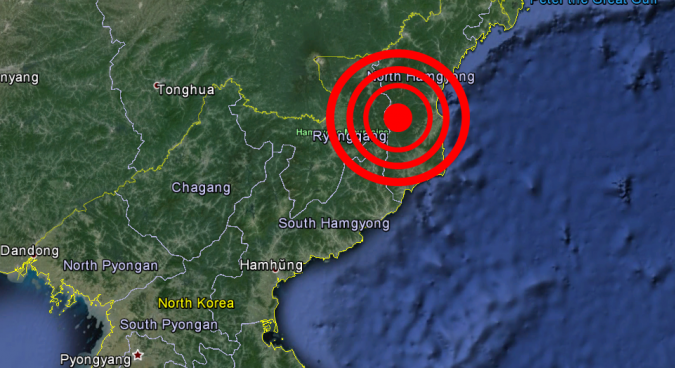
Seismic event in country’s northeast measures 5.1 on Richter scale

North Korea nuclear brief

– Around 10 nuclear warheads
– Conducted 3 tests
– Maximum missile range of 4,000 km
– Seeks range to reach US

Earthquake, possible nuclear test, in North Korea

WASHINGTON — North Korea declared on Tuesday that it had detonated its first hydrogen bomb.

North Korea Says It Has Detonated Its First Hydrogen Bomb

NYT: The assertion, if true, would dramatically escalate the nuclear challenge from one of the world’s most isolated and dangerous states.

In an announcement, North Korea said that the test had been a “complete success.” But it was difficult to tell whether the statement was true. North Korea has made repeated claims about its nuclear capabilities that outside analysts have greeted with skepticism.

“This is the self-defensive measure we have to take to defend our right to live in the face of the nuclear threats and blackmail by the United States and to guarantee the security of the Korean Peninsula,” a female North Korean announcer said, reading the statement on Central Television, the state-run network.

The North’s announcement came about an hour after detection devices around the world had picked up a 5.1 seismic event along the country’s northeast coast.

It may be weeks or longer before detectors sent aloft by the United States and other powers can determine what kind of test was conducted. Ned Price, a spokesman for the White House National Security Council, said in a statement that American officials “cannot confirm these claims at this time.”

But he said the White House expected “North Korea to abide by its international obligations and commitments.”

The tremors occurred at or near the Punggye-ri nuclear test site, where three previous tests have been conducted over the past nine years.

In recent weeks, the North’s aggressive young leader, Kim Jong-un, has boasted that the country has finally developed the technology to build a thermonuclear weapon — far more powerful than the low-yield devices tested first in 2006, then in different configurations months after President Obama took office in 2009 and again in 2013.

The North Korean announcement said the test had been personally ordered by Mr. Kim, only three days after he signed an order on Sunday for North Korean engineers to press ahead with the attempt.

The announcer added that for the North to give up its nuclear weapons while Washington’s “hostile policy” continued would be “as foolish as for a hunter to lay down his rifle while a ferocious wolf is charging at him.”

Satellite photographs analyzed by 38 North, a Washington research institute that follows the North’s nuclear activity closely, showed evidence of a new tunnel being dug in recent weeks.

Another test by itself would not be that remarkable. The North is believed to have enough plutonium for eight to 12 weapons, and several years ago it revealed a new program to enrich uranium, the other fuel for a nuclear weapon.

But if the North Korean claim about a hydrogen bomb is true, this test was of a different, and significantly more threatening, nature.

In recent weeks, Mr. Kim, believed to be in his early 30s and determined to accelerate the nuclear weapons program that his grandfather and his father promoted to give the broken country leverage and influence, boasted that North Korea had finally developed the technology to build a thermonuclear weapon.

When Mr. Kim first made the claim, in December, the White House expressed considerable skepticism, and several other experts say that the accomplishment would be a stretch, though not impossible.

Outside analysts took the claim as the latest of several hard-to-verify assertions that the isolated country has made about its nuclear capabilities. But some also said that although North Korea did not yet have H-bomb capability, it might be developing and preparing to test a boosted fission bomb, more powerful than a traditional nuclear weapon.

Weapon designers can easily boost the destructive power of an atom bomb by putting at its core a small amount of tritium, a radioactive form of hydrogen.

Lee Sang-cheol, the top nonproliferation official at the South Korean Defense Ministry, told a forum in Seoul last month that although Mr. Kim’s hydrogen bomb boasts might be propaganda for his domestic audience, there was a “high likelihood” that North Korea might have been developing such a boosted fission weapon.

And according to a paper obtained by the South Korean news agency Yonhap last week, the Chemical, Biological and Radiological Command of the South Korean military “did not rule out the possibility” of a boosted fission bomb test by the North, although it added it “does not believe it is yet capable of directly testing hydrogen bombs.”

For the Obama administration, which only six months ago defused the Iranian nuclear threat with an agreement to limit its capabilities for at least a decade, the announcement rekindles another major nuclear challenge — one that the administration has never found a way to manage.

The North has refused to enter the kind of negotiations that Iran did. Unlike Iran, which denies it has interest in nuclear weapons, the North has forged ahead with tests and told the West and China it would never give them up.

Mr. Obama, determined not to give the country new concessions, has neither acknowledged that North Korea is now a nuclear power nor negotiated with it. The White House has said that it would only restart talks with the North if the goal — agreed to by all parties — was a “denuclearized Korean Peninsula.”

China has also failed in its efforts to reign in Mr. Kim. He has never been invited to Beijing since his father’s death, and Chinese officials are fairly open in their expressions of contempt for him. But they have not abandoned him, or cut off the aid that keeps the country afloat.

With the test conducted Tuesday night — Wednesday in North Korea — three of the North’s four explosions will have occurred during Mr. Obama’s time in office.

Combined with the North’s gradually increasing missile technology, its nuclear program poses a growing threat to the region — though it is still not clear the North knows how to mount a nuclear weapon on one of its missiles.

The test is bound to figure in the American presidential campaign, where several candidates have already cited the North’s nuclear experimentation as evidence of American weakness — though they have not prescribed alternative strategies for choking off the program.

The United States did not develop its first thermonuclear weapons — commonly known as hydrogen bombs — until 1952, seven years after the first and only use of nuclear weapons in wartime, the weapons dropped on Hiroshima and Nagasaki. Russia, China and other powers soon followed suit.

Iran unveils second underground missile site

Oh, wonder if the Obama will give Tehran an Academy award for Iran’s theatrics, behavior and violations.

DUBAI (Reuters) – Iran unveiled a new underground missile depot on Tuesday with state television showing Emad precision-guided missiles in store which the United States says can take a nuclear warhead and violate a 2010 U.N. Security Council resolution.

The defiant move to publicize Iran’s missile program seemed certain to irk the United States as it plans to dismantle nearly all sanctions on Iran under a breakthrough nuclear agreement.

Tasnim news agency and state television video said the underground facility, situated in mountains and run by Iran’s Revolutionary Guards, was inaugurated by the speaker of parliament, Ali Larijani. Release of one-minute video followed footage of another underground missile depot last October.

The United States says the Emad, which Iran tested in October, would be capable of carrying a nuclear warhead and U.S. officials say Washington will respond to the Emad tests with fresh sanctions against Iranian individuals and businesses linked to the program.


Iran’s boasting about its missile capabilities are a challenge for U.S. President Barack Obama’s administration as the United States and European Union plan to dismantle nearly all international sanctions against Tehran under the nuclear deal reached in July.

Iran has abided by the main terms of the nuclear deal, which require it to give up material that world powers feared could be used to make an atomic weapon and accept other restrictions on its nuclear program.

But President Hassan Rouhani ordered his defense minister last week to expand the missile program.

The Iranian missiles under development boast much improved accuracy over the current generation, which experts say is likely to improve their effectiveness with conventional warheads.

The Revolutionary Guards’ second-in-command, Brigadier General Hossein Salami, said last Friday that Iran’s depots and underground facilities are so full that they do not know how to store their new missiles.

***

Iranian-Saudi Tensions May Distract Iran’s Efforts to Attack Israel

InvestigativeProject: The dramatic escalation in the Iranian-Saudi Arabian rivalry poses critical potential ramifications for Israeli national security, according to the former head of Israel’s National Security Council, Yaakov Amidror.

Amidror – also formerly the head of Israeli military intelligence – told the Jerusalem Post that he expects the Iranian-Saudi crisis to prolong the Syrian civil war, leading both sides to increase support for their respective proxies in that country.

Such a scenario can intensify Israeli concerns of unpredictable and radical terrorist organizations consolidating bases of operations on the Jewish state’s northern borders.

However, other analysts view Syrian fragmentation as a strategic benefit – at least temporarily removing Syria as a conventional military threat and forcing Iranian proxies, including Hizballah, to divert resources and manpower to the Syrian front instead of conducting major attacks against Israel.

According to this perspective, Iran will also be more preoccupied with confronting Saudi Arabia in other regional theaters – including Bahrain, Yemen, and Iraq.

“That doesn’t meant they won’t do anything [toward Israel]. This doesn’t mean, for instance, that this will influence Hezbollah [backed by Iran] not to carry out revenge attacks against Israel. But it means that whenever there is something, there will be someone in Iran who will say that they have other problems to think about; we will not be the only issue they will be focusing on,” Amidror said.

This assessment supports other analyses that believe Hizballah failed to effectively retaliate to Israel’s reported assassination of arch-terrorist Samir Kuntar. On Monday, Hizballah detonated a large explosive on the Israel-Lebanon border, targeting two military vehicles. Israel said it suffered no casualties. The Israel Defense Forces (IDF) followed with artillery fire against Hizballah targets in Lebanon, but limited its response to avoid escalating tensions.

The relatively weak show of force from Hizballah suggests that the terrorist organization continues to be bogged down in the Syrian civil war, unwilling and incapable of seriously challenging Israel at the moment. Fighting in Syria has cost Hizballah as much as a quarter of its fighters, Israeli military affairs journalist Yossi Melman points out.

Those losses “neutralized the Shi’ite-Lebanese organization’s ability to act against Israel,” he writes. At the least, it makes the prospect of opening a second front with Israel less appealing. Hizballah still enjoys an arsenal of more than 100,000 rockets it can fire at Israel when it opts for a confrontation.

Even though Hizballah and other Iranian proxies continue to enhance their presence in the Golan Heights for the purposes of targeting Israel, recent Iranian-Saudi tensions will likely force terrorist organizations at Iran’s behest to focus more of their efforts and resources on other fronts beyond the Jewish state.


Saudi Arabia’s Anti-Iran Coalition Growing

Any kind of peace accords and efforts to deal with Iraq, Lebanon, Syria and Afghanistan due to broken relationships in the Middle East is not for the most part impossible until at least late 2017. Estimations of terror matrix trends rising is impossible to predict but it is for sure likely in the region.

While the U.S. State Department under John Kerry and the Obama White House are still working to support the Iranian nuclear deal, the real result is Iran’s growing influence and power in the region. Saudi Arabia and other Gulf States have had enough and are taking aggressive action. Finally…

Saudi Arabia paid the larger part of the expenses to Pakistan to acquire nuclear weapons with the option at obtaining a minimum of 10. Further, the U.S. maintains the U.S. Navy Fifth Fleet I Bahrain, which is a Shiite majority. The Fifth fleet is designed to operate and maintain the Persian Gulf, the Red Sea, the Arabian Sea and the Indian Ocean.

Bahrain has been a worry for the U.S. Navy going back to at least 2011 over Shiite uprisings which is still a major headache after the recent and escalating conflicted relations between Saudi Arabia and Iran.

New Saudi-Iran crisis threatens wider escalation

Reuters: The last time Saudi Arabia broke off ties with Iran, after its embassy in Tehran was stormed by protesters in 1988, it took a swing in the regional power balance in the form of Saddam Hussein’s 1990 invasion of Kuwait to heal the rift.

It is hard to see how any lesser development could resolve the region’s most bitter rivalry, which has underpinned wars and political tussles across the Middle East as Riyadh and Tehran backed opposing sides.

Riyadh’s expulsion of Iran’s envoy after another storming of its Tehran embassy, this time in response to the Saudi execution of Shi’ite Muslim cleric Nimr al-Nimr, raised the heat again, making the region’s underlying conflict even harder to resolve.

At the heart of the new crisis is Saudi Arabia’s growing willingness to confront Iran and its allies militarily since King Salman took power a year ago, say diplomats, choosing with his son, Deputy Crown Prince Mohammed bin Salman, to abandon years of backroom politics.

Last year, Riyadh began a war in Yemen to stop an Iran-allied militia seizing power in its southern neighbor and boosted support to Syrian rebels against Tehran’s ally President Bashar al-Assad. Its execution of Nimr, while mainly driven by domestic politics, was also part of that open confrontation with Iran, according to political analysts.

The interventions followed years of Riyadh complaining about what it regarded as unchecked Iranian aggression in the region. It has pointed to Iran’s support for Shi’ite militias and accused the country of smuggling arms to groups in Gulf countries – which Iran denies.

“We will not allow Iran to destabilize our region. We will not allow Iran to do harm to our citizens or those of our allies and so we will react,” Saudi Foreign Minister Adel al-Jubeir told Reuters on Monday, signaling Riyadh would not back down.

The Saudi decisions in Syria and Yemen were also partly a response to Iran’s nuclear deal with world powers, which lifted sanctions on Tehran, theoretically giving it more money and political room to pursue its regional activities.

The new crisis has had the effect of hardening a wider confrontation between the loose-knit coalitions of allies each can call upon in the region; some of Riyadh’s allies also cut diplomatic ties with Tehran after the embassy attack, while Iran’s warned of repercussions.

That chain reaction may now complicate complex political talks over the formation of a government in Lebanon, efforts to bring Syria’s warring parties to talks, stalled negotiations to end Yemen’s civil war and Riyadh’s rapprochement with Baghdad.

SIMMERING MISTRUST

Until the 1960s and 70s, Saudi Arabia and Iran were uneasy allies regarded as the “twin pillars” of Washington’s strategy to curb Soviet influence in the Gulf. Sectarianism was muted.

But rich on its new oil wealth, Saudi Arabia began to propagate its rigid Salafi interpretation of Sunni Islam which regards Shi’ism as heretical, in mosques around the region. And, after its 1979 revolution, Iran adopted – and exported – the doctrine of Velayat-e Faqih, which says ultimate temporal power among Shi’ites should reside with its own supreme leader.

That growing ideological divide set up a simmering mistrust that was soon matched by a geopolitical rivalry that has driven their fractious relations for the subsequent 37 years.

After Iran’s 1980-88 war with Iraq, when Saddam invaded, it developed a strategy of “forward defense”, seeking to use ties with Arab Shi’ites to build militias and political parties that could stop new enemies emerging and give it deterrent capability through proxy forces.

Riyadh regarded Tehran’s cultivation of Shi’ite groups with intense suspicion, fearing it would foment revolution in Saudi-allied states and destabilize the region.

It broke ties in 1988 when a diplomat died in the storming of its Tehran embassy following tensions over the death of hundreds of Iranian pilgrims in clashes with Saudi police during the haj. But when Saddam invaded Kuwait, Tehran and Riyadh set aside their hostility to make common cause against a shared enemy.

The toppling of Saddam in 2003 upturned the regional power balance, however, as Iran used its ties to the country’s large Shi’ite community to gain sway in Baghdad, pitting Riyadh and Tehran more openly against each other – a pattern repeated in Yemen and Syria after the “Arab Spring” uprisings.

Meanwhile, Iraq’s civil war had poured fuel on growing sectarian tensions as al Qaeda, which follows an extreme form of Salafism, sent suicide bombers against Shi’ite civilians, prompting murderous retaliation from Iran-linked militias.

FURTHER ESCALATION

Now there is some scope for further escalation, both in the various Middle East theaters where Iran and Saudi Arabia back opposing forces, and diplomatically as Riyadh taps Arab and Muslim channels to try to isolate Tehran, according to analysts.

“Since 1979 the two countries have fought numerous proxy conflicts throughout the Middle East and often exchange threats and insults. But they’ve stopped short of direct conflict and eventually agreed to a cold reconciliation,” said Karim Sadjadpour, senior associate of the Carnegie Endowment for International Peace’s Middle East program.

But he said that Iran might seek to stoke unrest among Saudi Arabia and Bahrain’s Shi’ite communities.

Renewed protests among Saudi and Bahraini Shi’ites since the execution of Nimr, along with the bombing of two Sunni mosques in Iraq, may be regarded by Riyadh as evidence of Iranian incitement.

Riyadh has itself pushed allies to cut ties with Iran and pressed Muslim bodies like the Organisation of Islamic Cooperation to condemn the storming of the embassy. Theoretically, it could also ramp up support for Syrian rebel groups.

All-out conflict is something that even hawks in Saudi Arabia and Iran would likely try to avoid. However, the new escalation between the region’s main enemies shows how events can sometimes pre-empt strategic plans.

After the execution of Nimr, Iran’s Revolutionary Guard elite military force said a “harsh revenge” would strike Saudi’s ruling Al-Saud family in the near future.

“The Revolutionary Guard is part of the Iranian government and their threats should be taken seriously because they control militia in Lebanon, Syria, Iraq and Yemen and I would not be surprised if they use it to act against the Saudis,” said Abdulaziz al-Sager, head of Jeddah-based Gulf Research Centre.

****

Where do the rest of the countries stand?

AP- SAUDI ARABIA — The kingdom severed ties to Iran after attacks on two of its diplomatic posts following its execution of a Shiite cleric last weekend; it also later cancelled all flights between the two nations.

IRAN — Since the attack on the diplomatic posts, Iran says it has made arrests and has criticized the violent protesters. However on Tuesday, President Hassan Rouhani took a slightly harder line, saying Saudi Arabia’s move to sever ties with his country couldn’t “cover its crime” of executing Shiite cleric Nimr al-Nimr.

COUNTRIES BACKING SAUDI ARABIA:

BAHRAIN — The tiny, Shiite-majority island kingdom off the Saudi coast, which long has relied on Saudi Arabia for support of its Sunni rulers, was the first to cut ties with Iran. Bahraini officials repeatedly have accused Iran of training militants and attempting to smuggle arms into the country, which hosts the U.S. Navy’s 5th Fleet.

SUDAN — The African nation cut its diplomatic ties to Iran and gave Iranian diplomats two weeks to leave the country. Sudan once tilted toward Iran, but has been looking to Saudi Arabia for aid since the secession of oil-rich South Sudan in 2011.

UNITED ARAB EMIRATES — The oil-rich country of seven emirates says it will reduce the number of diplomats in Iran, recall its ambassador and focus only on business relations. While backing Saudi Arabia, it may have chosen to reduce — rather than completely sever ties — because of a long trading history with Iran.

KUWAIT — The oil-rich country is recalling of its ambassador from Tehran, but it isn’t immediately clear how Kuwaiti-Iranian diplomatic ties will be affected. Tiny Kuwait is home to both Shiites and Sunnis living in peace and has the most free-wheeling political system among all Gulf nations.

JORDAN: Overwhelmingly Sunni Jordan is a close ally of Saudi Arabia in the region and a beneficiary of Gulf aid. Jordan’s government spokesman, Mohammed Momani, has condemned the attack on the Saudi Embassy in Iran.

THE MEDIATOR:

OMAN — The sultanate has long historical ties to Iran and served as the base for secret talks between Iranian and U.S. officials that jump-started the deal reached between Iran and world powers over the Islamic Republic’s contested nuclear program.

THOSE BACKING IRAN:

LEBANESE HEZBOLLAH MOVEMENT — Hezbollah was founded in 1982 with the help of Iran’s Revolutionary Guards after Israel invaded Lebanon. The group is one the main Iran-backed factions in the region.

SYRIA’S EMBATTLED PRESIDENT BASHAR ASSAD — Iran has been one of the biggest supporters of Syria since the 1980s and has stood by Assad’s government in his country’s grinding civil war. Saudi Arabia has been one of the biggest benefactors of those trying to overthrow him.

IRAQ’S SHIITE-LED GOVERNMENT IN BAGHDAD — Even as Iraq is embroiled in a major war against the militant Islamic State group, al-Nimr’s execution sparked outrage among the country’s majority Shiites who have taken to the streets in Baghdad and the south, calling for an end to ties with Saudi Arabia. The Shiite-led government has warmed Riyadh that such executions “would lead to nothing but more destruction.”

OTHER REGIONAL ACTORS:

ISRAEL — Israel considers Iran to be its greatest regional threat because of its nuclear program, its arsenal of long-range missiles, its support of anti-Israel militant groups and its repeated threats to destroy it. While Israel has no direct ties to Saudi Arabia either, the countries have come closer because of a shared concern over Iran’s growing influence.

THE PALESTINIANS — The Palestinian Authority issued a statement after the execution of al-Nimr saying that it stands alongside the Saudis in their fight against “terrorism.” The Saudis are the largest donor to the Palestinian Authority in the Arab world, providing them some $200 million annually. The PA, and the Fatah faction that leads it, has had a strained relationship with Iran because of its support of its rival, Hamas.

YEMEN — The Arab world’s poorest country is torn by a civil war pitting its internationally recognized government, backed by a Saudi-led coalition, against Shiite rebels known as Houthis, who are supported by Iran.

THOSE URGING CAUTION:

THE UNITED NATIONS — U.N. Secretary-General Ban Ki-moon has urged Saudi Arabia and Iran to support peace efforts in Syria and Yemen and avoid escalating tensions.

EUROPEAN UNION: The 28-nation bloc, which opposes the death penalty, criticized Saudi Arabia’s mass executions and said al-Nimr’s case undermined freedom of expression and basic political rights in the kingdom. Since tensions flared between Iran and Saudi Arabia, the EU foreign policy chief has had phone contact with both sides, fearing an escalation would further destabilize the whole region.

THE UNITED STATES — The White House has urged Saudi Arabia and Iran to not let their dispute derail efforts to end the Syrian civil war, while President Barack Obama’s administration also hopes to see the Iranian nuclear deal through.

UNITED KINGDOM — Britain and Iran reopened their respective embassies in 2015, four years after hard-line protesters stormed the British embassy in Tehran. Saudi Arabia is a key diplomatic and economic ally of Britain, though Middle East Minister Tobias Ellwood said Britain told the kingdom about its “disappointment at the mass executions.”

TURKEY — Turkey has urged both Saudi Arabia and Iran to ease tensions, saying the Middle East region is “already like a powder keg” and cannot withstand a new crisis.

GERMANY — Berlin has called on Saudi Arabia and Iran to work to mend their diplomatic ties, while condemning both the mass executions in the kingdom and the storming of the Saudi missions in Iran.

RUSSIA — State news agency RIA Novosti quoted an unnamed senior diplomat as saying Moscow is ready to act as a mediator between Iran and Saudi Arabia. It’s unclear whether Russian officials have made a formal offer to work with the two nations.