N. Korea Launch Flew Over the Super Bowl

TOKYO—Here’s a bit of Super Bowl trivia: North Korea’s newest satellite passed almost right over the stadium just an hour after it ended.

Whatever motives Pyongyang may have about using its rocket launches to develop nuclear-tipped long-range missiles, it now has two satellites circling the Earth, according to Norad, the North American Aerospace Command, which monitors all satellites in orbit.

Both of the Kwangmyongsong, or “Shining Star,” satellites complete their orbits in about 94 minutes and based on data released by international organizations tracking them, the new one passed almost right over Levi’s Stadium about an hour after the Super Bowl ended.

“It passed almost directly overhead Silicon Valley, which is where I am and where the stadium is,” tech watcher Martyn Williams said in an e-mail to the Associated Press. “The pass happened at 8:26 p.m., after the game. I would put it down to nothing more than a coincidence, but an interesting one.”

***

WASHINGTON (Reuters) – The Pentagon confirmed on Monday that it will start formal talks with South Korea on deploying an advanced missile defense system to South Korea to counter the growing threat of North Korea’s weapons capabilities after its rocket launch this weekend.

U.S. military officials have said the sophisticated system called Terminal High Altitude Area Defense (THAAD) was needed in South Korea. South Korea said on Sunday it and the United States would begin talks on the THAAD, after North Korea launched a long-range rocket earlier carrying what it has called a satellite.

Chang/DailyBeast: On Sunday, North Korea completed its second-in-a-row successful test of a three-stage launcher, showing the regime’s mastery of an especially complex technology.  

Pyongyang claims it put an earth observation satellite — the Kwangmyongsong-4 — in a polar orbit. More likely, the object now circling the earth is a decoy. In 2012, after the North’s last long-range test, it announced it had put a communications satellite in space. No signal, however, has ever been detected from the device.  

That “satellite,” and the one launched this week, are about the same weight as a nuclear warhead, and that was the point of these elaborate exercises.

North Korea has been putting dead objects in orbit so that it can test, in violation of four sets of UN Security Council resolutions, its ballistic missile technology under the guise of a civilian rocket program.  

The rocket the North Koreans call the Unha-3 was probably the most advanced version of their Taepodong missile. It appears, from the location of Sunday’s splashdown zones, that the launcher has a range of 10,000 kilometers, the same as that of the 2012 version.  

Some have taken comfort that the North Koreans have not improved the reach of their missile, but that would be a mistake. “This test launch took less time to set up and was conducted more covertly than any other launch in North Korean history,” notes North Korea analyst Bruce Bechtol, in comments circulated to The Daily Beast and others on Sunday.  

Up to now, the North’s longest-range missile was never much of a weapon. It required weeks to transport, assemble, fuel, and test before launch. The calculus was that the U.S., in a wartime setting, would have plenty of time to destroy the launcher on the ground.  

The North Koreans since 2012 have obviously been able to compress the cycle.  This time, Pyongyang moved up the launch window and sent the Unha-3 into space on the window’s first day, surprising just about every observer.  

That means, of course, the North Koreans are perfecting their launch skills, thereby decreasing on-the-ground vulnerability.  

The Taepodong is still an easy target before launch, but once it reaches the edge of space it becomes fearsome. It has the range to make a dent in more than half of the continental United States. If its warhead is nuclear and explodes high above the American homeland, an electromagnetic pulse could disable electronics across vast swatches of the country.  

The American intelligence community does not think the North Koreans have built a miniaturized nuclear warhead to go along with the Taepodong yet, but it’s clear they are on their way to developing such a device. The launch this week was one month and one day after their fourth nuclear detonation.

Pyongyang, for all the snickering and derision it attracts, is capable of sneaking up on us and becoming an existential threat.  

Why has the United States, the most powerful nation in history, not been able to stop destitute North Korea’s missile and nuclear programs? As Stapleton Roy, the former American diplomat told me in 2004, “No one has found a way to persuade North Korea to move in sensible directions.”  

Certainly not the Obama administration. A multi-faceted bargain in 2012, the so-called Leap Day deal, fell apart weeks after it was put in place, when Kim Jong-un, the ruler of the despotic state, launched what his regime called a rocket.  

Then a new approach, backed by existing sanctions, also failed to produce results. The White House during this phase essentially left North Korea alone, ignoring Kim with a policy now known as “strategic patience.” It has been more like “strategic paralysis,” as David Maxwell of Georgetown University’s Center for Security Studies aptly termed it after the Sunday launch.  

The evident failure of the current administration follows failures of different kinds by its two immediate predecessors. These days, like in past ones, American officials tell us how the North’s actions are “unacceptable,”

the words of Secretary of State John Kerry, or “flagrant,” the term used by National Security Advisor Susan Rice, but the U.S. never seems to do anything effective.  

Similarly, an emergency session of the Security Council on Sunday “strongly condemned” the launch but did nothing else. The UN still has not imposed any sanctions for the Jan. 6 detonation of what North Korea claims is a “hydrogen” device. Veto-wielding Beijing has made it clear it will not support a fifth set of UN sanctions.  

Ultimately, the problem, as Maxwell notes, is that no country wants to pressure Kim so much that either he decides he has nothing to lose and go to war or his decrepit state falls apart, causing tragedy of a different sort. Yet as long as the Kim family regime stays in power, it will continue to build horrific weapons.  

“What North Korea wants most,” said Ashton Carter before he became secretary of defense “is oddly to be left alone, to run this rather odd country, a throwback to Stalinism.” If that were indeed true, President Obama’s strategic patience would have worked by now. Yet the North’s leaders are not content to misrule their 25 million subjects. They have institutionalized crisis.  

When we examine evidence of the most recent crisis — scraps of the missile that fell into the sea Sunday and flight data — we will probably learn the North Koreans in fact tested their new 80-ton booster, which they have been developing for at least two years. It is almost certain Iran has paid for its development.  

That’s why Bechtol, author of North Korea and Regional Security in the Kim Jong-un Era, thinks America in the months ahead should be looking for evidence of sales of the new missile to Iran. Larry Niksch of the Center for Strategic and International Studies told the House Committee on Foreign Affairs in July that North Korea earns “upwards of two to three billion dollars annually from Iran for the various forms of collaboration between them.”  

Even if one thinks Washington should not sanction North Korea to the brink of war or collapse, the U.S. at a minimum needs to stop sales of the launcher North Korea fired off this week. The Bush administration’s Proliferation Security Initiative, a comprehensive program to stop such transfers, has languished in Washington in recent years.  

At this point, American policymakers are not trying very hard to stop North Korea’s trade in dangerous weapons. That, to borrow a phrase, is unacceptable.

*** Why did North Korea launch this now? Rand Corporation explains.


Watch Out America, Venezuela a Failed State

Venezuela Is About to Go Bust

Nagel/ForeignPolicy: Venezuela’s economy is facing a tsunami of bad news. The country is suffering from the world’s deepest recession, highest inflation rate, and highest credit risk — all problems aggravated by plunging oil prices. Despite all its troubles, though, until now Venezuela has kept making payments on its $100-billion-plus foreign debt.

That is about to end. In recent days a consensus has emerged among market analysts:

Venezuela will have to default. The only question is when.

Venezuela will have to default. The only question is when.

A Venezuela meltdown could rock financial markets, and people around the world will lose a lot of money. But we should all save our collective sympathy — both the government in Caracas and the investors who enabled it had it coming.

In the last few years, the Venezuelan government has been steadfast about staying in good graces with its lenders. It has paid arrears on its debt religiously, and has constantly asserted that it will continue paying.

But it has neglected to implement the reforms Venezuela would need to improve the fundamentals of its economy. Its commitment to socialist “populism” and the complicated internal dynamics within the governing coalition have paralyzed the government. It has repeatedly postponed important reforms like eliminating its absurd exchange rate controls (the country has at least four exchange rates) or raising the domestic price of gasoline (the cheapest in the world by far). Instead, the government has “adjusted” by shutting off imports, leaving store shelves all over the country barren.

This strategy now seems unsustainable. According to various estimates, in 2015 Venezuela imported about $32 billion worth of goods. This was a marked drop from the previous year. This year, given current oil prices and dwindling foreign reserves, if Venezuela were to pay off its obligations — at least $10 billion — and maintain government spending, it would have to import close to nothing. In a country that imports most of what it consumes, this would ensure mayhem. That is why all analysts predict default in the coming months.

The Economist has joined the chorus, saying that “the government has run out of dollars.” In the words of Harvard professor Ricardo Hausmann, this will be “the largest and messiest emerging market sovereign default since the Argentine crisis of 2001.”

One of the reasons the coming default will be so messy is the many instruments involved, all issued under widely varying conditions. Part of the stock of debt was issued by PDVSA, Venezuela’s state-owned oil company, which owns significant assets overseas (For example, Citgo is 100 percent owned by the Venezuelan government). Another part of the debt was issued by the national government directly, while another big chunk is owed to China, under secretive terms.

The Chinese issue looms large. China’s loans to Venezuela — close to about $18 billion, according to Barclay’s – consist of short-term financing payable via oil shipments. As the price of oil collapses, Venezuela needs to ship more oil to China in order to pay them back. Barclay’s estimates that right now this is close to 800,000 barrels per day, leaving little more than a million barrels per day Venezuela can sell for cash.

A default will send ripples beyond Wall Street. Many people have been buying high-risk, high-return Venezuelan debt for years — from pension funds in far-off countries to small banks in developing ones. Most stand to lose their shirts. Yet the signs that this was unsustainable were there for all to see.

For years, Venezuela has had a massive budget deficit, sustained only by exorbitant oil prices. For years, analysts have been warning that the Venezuelan government would rather chew nails that allow the private sector to grow. And yes, a lot of that borrowed money was used to help establish a narco-military kleptocracy.

It is impossible to untangle the ethical implications of all of this. Lending Venezuela money is what business ethics professors talk about when they question “winning at someone else’s expense.” Losing money from investing in Venezuela is akin to losing it from, say, funding a company that engages in morally reprehensible acts. (Insert the name of your favorite evil corporate villain here).

Investors in companies with “tainted profits” from, say, engaging in child labor or violating human rights should not get the world’s sympathy, nor should they be bailed out. Similarly, investors in Venezuelan debt have only their hubris to blame.

In a few months, once the rubble of the Bolivarian revolution is cleared, the discussion will turn to how Venezuela can be helped. It would be smart to remember that aid should come to the Venezuelan people first. As the scarcity of food and medicine grows,

Venezuela may become the first petro-state to face a humanitarian disaster.

Venezuela may become the first petro-state to face a humanitarian disaster.

If and when a responsible government in Caracas asks for foreign assistance, solving this urgent issue should be at the top of the agenda. Conditions on financial assistance should privilege the interests of Venezuelans caught in the debacle above the interests of angry hedge fun managers or international bankers.

In other words, the Venezuelan people should come first. The folks who enabled this catastrophe? They can wait.


UN Report: Extermination Camps, Syria

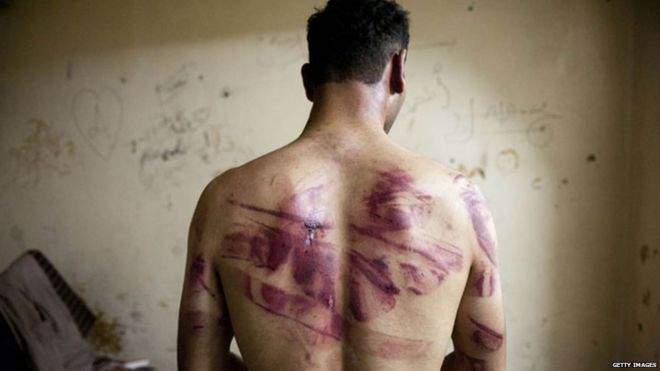
Syrian victim of torture

UN panel documents ‘extermination’ of detainees in Syria

GENEVA —International investigators say several thousands of detainees have been executed, beaten to death or otherwise left to die during Syria’s civil war, in policies that appear to amount to extermination under international law.

The U.N.-backed Commission of Inquiry on Syria presented a 25-page report Monday on killings of detainees by President Bashar Assad’s government. It also cites execution policies by radical groups like the Islamic State and al-Qaida-affiliated Nusra Front.

The report is drawn from 621 interviews conducted between March 2011 and November 2015. Investigators say they are short of enough evidence to provide more specific estimates of killings of those detained.

The report seeks “targeted sanctions” against unspecified individuals or groups responsible for such crimes. The investigators lamented inaction by the U.N. Security Council about possibly launching criminal probes.

***

VoA: The U.N. report accused Damascus of starving the detainees or leaving them to die with untreated wounds and disease. It said Assad’s government has “engaged in the multiple commissions of crimes, amounting to a systematic and widespread attack against a civilian population.”

The report covered the period from March 2011 to November 2015 — the first 4½ years of the ongoing Syrian civil war.

Investigators

The U.N. investigators said they believed that “high-ranking officers” and other government officials knew of the deaths and of bodies being buried in mass graves.

The special inquiry into the Syrian treatment of its civilian population called for the U.N. Security Council to impose “targeted sanctions” against Syrian civilian and military officials complicit in the deaths and torture, but did not name them.

The investigators called for referral of the cases against the suspected war criminals to prosecutors at the International Criminal Court at The Hague in the Netherlands. Their names are being kept in a U.N. safe in Geneva.

***

BBC: Their report describes the situation of detainees as an “urgent and large-scale crisis of human rights protection”.

Survivors’ accounts “paint a terrifying picture of the magnitude of the violations taking place,” it said.

The civil war in Syria has claimed an estimated 250,000 lives so far.

About 4.6 million people have fled Syria, while another 13.5 million are said to be in need of humanitarian assistance inside the country.


Extract from February 2016 report for UN Human Rights Council

Main detention facilities controlled by the General Intelligence Directorate include Interior Security branch 251 and Investigations branch 285 located in Kafr Soussa, west of central Damascus.

Former detainees described inhuman conditions of detention resulting in frequent custodial deaths.

Officers were observed giving orders to subordinates on methods of torture to be used on detainees.

Corpses were transported by other prisoners through the corridors, sometimes to be kept in the toilets, before being removed from the branch.

Evidence obtained indicates that the superiors of the facilities were regularly informed of the deaths of detainees under their control. Prisoners were transferred to military hospitals before they were buried in mass graves.


Both government and rebel sides are accused of violence against people they detain, the investigators say, but the vast majority are being held by government agencies.

A pattern of arrests since March 2011 targeted Syrian civilians thought to be loyal to the opposition, or simply insufficiently loyal to the government.

Senior government figures clearly knew about and approved of the abuse, says the report entitled Out of Sight: Out of Mind: Deaths in Detention in the Syrian Arab Republic.

Most deaths in detention were documented as occurring in locations controlled by the Syrian intelligence services.

“Government officials intentionally maintained such poor conditions of detention for prisoners as to have been life-threatening, and were aware that mass deaths of detainees would result,” UN human rights investigator Sergio Pinheiro said in a statement.

“These actions, in pursuance of a state policy, amount to extermination as a crime against humanity.”

Torture ‘routine’

The report also accused opposition forces of killing captured Syrian soldiers.

Both so-called Islamic State militants and another group, al-Nusra Front, had committed crimes against humanity and war crimes.

IS, the report said, was known to illegally hold a large, unknown number of detainees for extended periods in multiple locations.

It had set up detention centres in which torture and execution are “routine”.

Detainees were frequently executed after unauthorised courts issued a death sentence.


Extract from February 2016 report for UN Human Rights Council

In 2014 Syrian authorities informed a woman from Rif Damascus that her husband and two of her sons were dead, all known to have been held in a detention facility controlled by the Military Security.

The family obtained death certificates from Tishreen military hospital, stating that the cause of death of all the three victims was heart attack.

A third son remains unaccounted for.

Will Kerry Give Mahmoud Abbas a P5+1 Deal?

ToI: Former Palestinian peace negotiator Nabil Shaath said in an interview earlier this month that he often asks Westerners whether Arabs have to “hijack your planes and destroy your airports again” to make the world take notice of the Palestinian cause

In a February 1 interview with the Palestinian Authority’s Awdha TV, translated by MEMRI, Shaath slammed American efforts at Israeli-Palestinian peacemaking.

Asked about a French proposal for an international peace conference, Shaath replied, “Well, anything is better than American control of the negotiations. Anything. The US has never been a reliable honest broker. Never. It is the strategic ally of Israel. Period. Therefore any discussion of a different formula is a positive thing.”

But, he added, “an international conference is not what is needed. What is needed is a smaller framework. Today, at the African Union summit, President [Mahmoud] Abbas reiterated that we want something similar to the 5+1 framework” of six world powers who negotiated the nuclear deal with Iran.

“Like it or not, the US will be part of it. But we want France, Germany, Britain, the EU, Russia, China, Brazil, India. From the Arab countries we want Egypt at least. We want a small international framework.”

***

Shaath then turned to what he described as Western apathy toward suffering in the Middle East.

“If the Syrian problem had not been exported to Europe through the refugees on the one hand and terrorism on the other, the Europeans would not have cared even if the entire Syrian people had died,” he charged.

“But when all of a sudden there were four million Syrian refugees in Europe, 1.2 million of them in Germany alone, and when this was accompanied by Islamic State operations in France and elsewhere, all these countries began to fear that IS might have infiltrated through the refugees. And this started a debate about racial transformation in Europe with the entrance of non-white, non-European, non-Anglo-Saxon races, like the Syrian refugees, the Africans and others. This is what made the Syrian problem the most pressing from their perspective.”

He added: “I always say to these people, after I tell them about Syria and IS: ‘Do we have to hijack your planes and destroy your airports again to make you care about our cause? Are you waiting for us to cut off your oil supply? You always wait for things to reach boiling point and explode, causing you harm, before you intervene to end the crimes and violations.’”  

Shaath served as the PA’s first foreign minister, and has served as a top peace negotiator and

The Kremlin’s War Propaganda

Many in the West, from leaders to citizens are often freaked out at what is published on tens of thousands of websites including media sites. One can never know the extent of propaganda much less which are the nuggets of truth. When it comes to Russia, they are professional trollers, ambassadors of information warfare. Verification of information, checks on people, dates and locations are required. Admittedly, this is almost impossible due to a aggressive news cycle that never ends, events occur too fast. Yet, advancing propaganda is done at a peril to false information. Below will describe this dynamic.

Another reference to an article is also posted below that does explain Ukraine and Crimea demonstrating the depths of concocted and false information.

MoscowTimes: Several years ago, I traveled to the taiga in the republic of Altai with a former KGB officer who had worked in military propaganda during the war in Afghanistan. While we drank tea beside the campfire one night, he described in detail the principles of military propaganda. Today, I see that the Kremlin is implementing all of those principles in its information campaign surrounding the Ukrainian crisis.

In authoritarian countries like Russia, independent information is losing out to mass propaganda, and whole populations have become victims of brainwashing.

The main objective of war propaganda is to mobilize the support of the population — or in the case of Ukraine, an expansionist campaign. It should also demoralize the enemy and attract the sympathy and support of third countries. Widespread support among Russians for the military operations in Crimea and its ultimate annexation indicate that the Kremlin has succeeded in its first two objectives but has gained little ground on the third.

Moscow accomplished this by using seven basic methods:

First, it is necessary to convince the general population that the government is acting correctly and that the enemy is guilty of fomenting the crisis. That is why the Kremlin places the full blame for the entire Ukrainian crisis on the Maidan protesters and what it calls the Western-backed Ukrainian opposition. Moscow conspicuously leaves out the fact that former Ukrainian President Viktor Yanukovych himself provoked the crisis by ruining the country’s economy, double-dealing with the European Union and engaging in corrupt deals while also permitting extreme corruption among members of his family and inner circle.

To incite hatred for the enemy and deflect attention away from Yanukovych’s flaws, the Kremlin says the new government in Kiev, dominated by the main opposition groups, is linked to everything that is despised and vilified in Russia: fascists, extremists, the U.S. and the West in general. It is necessary to paint the Western enemy as the aggressor.

Second, the Kremlin created myths about the terrible persecutions of the Russian-speaking population in Ukraine, particularly in Crimea. Federation Council speaker Valentina Matviyenko even came up with a story about victims of such aggression that nobody has been able to corroborate, saying there were casualties among locals in Simferopol from a Kiev-backed attempt to take over a police building. The claim was never verified.

The main idea behind such claims is to find just the right balance between truth and fiction. Nazi Propaganda Minister Joseph Goebbels once said that if you add one-fourth of the truth to three-fourths of a lie, the people will believe you. Hitler and Stalin applied the principles and techniques of war propaganda on a national scale.

Third, the enemy must be demonized. Just about anything will work, from alleging that one of the leaders of the opposition, acting Prime Minister Arseniy Yatsenyuk, is a Scientologist, or showing medical records that another leader was treated for a psychological disorder. NTV and other state-controlled television stations have been at the forefront in spreading these smear campaigns.

If an actual radical or nationalist can be found among the enemy’s ranks, such as Right Sector leader Dmitry Yarosh, this is like manna from heaven for propagandists. Although they represent fringe factions, they are turned into the face of the enemy. The entire opposition, which in reality includes a wide range of moderate forces,  is presented as “fascist” and “neo-Nazi.”

Fourth, the authorities always disguise their aggressive actions as a humanitarian mission. “We have to protect defenseless Russians at the hands of fascists. They are in danger of being beaten and killed,” propagandists say.

Fifth, the Kremlin has attributed its own cynical methods to the enemy. For example, if Moscow intends to annex part of a brotherly, neighboring country, it must first accuse the U.S. and the authorities in Kiev of striving for world domination and hegemony, while depriving Russia of its ancestral territories and its righftful sphere of influence in its own backyard.

Sixth, the authorities must present all of their actions as purely legal and legitimate, and the actions of the enemy as gross violations of international law. That is why President Vladimir Putin refers to the “legitimate and inherent right of Crimeans to self-determination” — the same right he strongly denied to the people of Chechnya and Kosovo.

According to this logic, the parliament’s unanimous vote to strip Yanukovych of his authority on Feb. 22 was illegal, while the referendum for secession in Crimea — which violated the Ukrainian Constitution — is completely legal and legitimate.

Seventh, the success of war propaganda depends entirely on its totalitarian approach. The authorities must shut down every independent media outlet capable of identifying and exposing the propagandists’ lies. That is why Ukraine blocked Russian television. It also explains why Moscow is cracking down on Dozhd television and why it recently replaced the head of Lenta.ru with a ­Kremlin-friendly editor-in-chief.

Information warfare is well known throughout the world and is used by all leading countries. The U.S. government successfully used the same principles when it bombed Yugoslavia and invaded Grenada, Panama and Iraq. The difference, of course, is that the U.S. government does not own mainstream media outlets, so their ability to manipulate the truth is less effective.

Take, for example, the Iraqi invasion in 2003. Within a relatively short time period after the invasion was initiated, leading Western media went the complete other direction by criticizing the U.S. government for misleading the public on the Iraqi weapons of mass destruction that were never found. This self-correction process does not occur in Russia, where the main media outlets are state-controlled.

In authoritarian countries like Russia, independent information is losing out to mass propaganda, and whole populations have become victims of brainwashing. Politicians speak about the need for peace even while stirring up war hysteria. And that means the likelihood of war is far closer and more real than many might imagine.

Vladimir Ryzhkov, a State Duma deputy from 1993 to 2007, is a political analyst.

*** Ukraine war points all the way to Putin, even while he played a role of a victim.

dve-bs

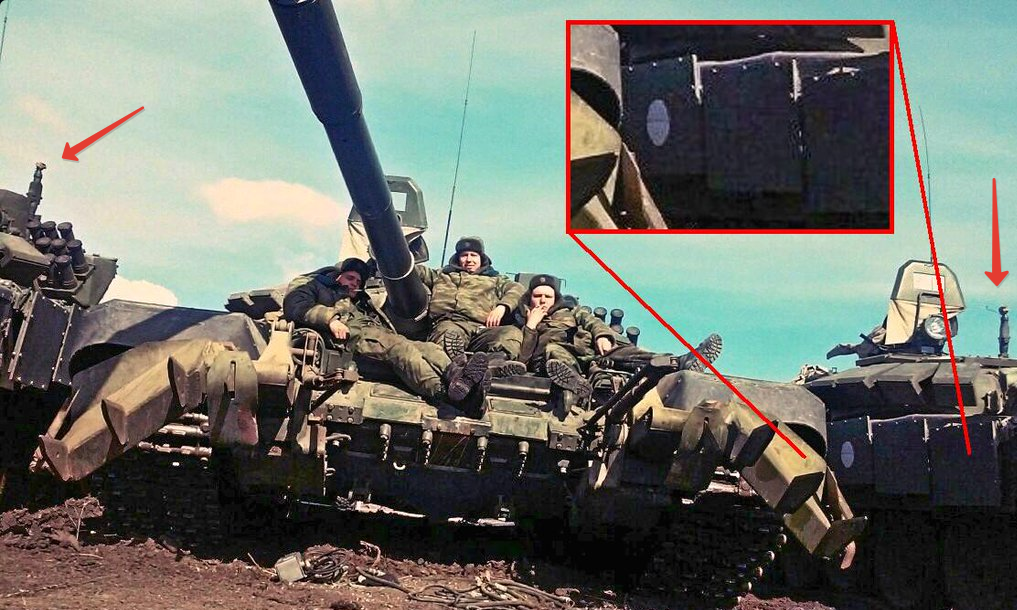
In February 2015, pro-Russian separatists aided by Russian troops took the strategic railway hub of Debaltseve in Eastern Ukraine, forcing Ukrainian forces to withdraw.

This investigation intends to prove the decision to take Debaltseve and close the “Debaltseve pocket” was taken at the highest level of the Russian state. Explaining Russian leadership’s actions requires a look back to the international situation in late 2014 — early 2015

(full summary with proof and photos)

After Angela Merkel canceled the Normandy format meeting in Astana and Vladimir Putin wasn’t invited to the 70th anniversary of Auschwitz liberation, a major escalation started in Donbass (mid-January 2015). The main fighting took place around Debaltseve, which is a major transportation hub, giving Donetsk a railway link with Luhansk and Russia. Russia’s 5th and 6th Separate Tank Brigades were proven to have taken part in the battle. During the battle, a serviceman of the 6th brigade Evgeniy Usov got a shrapnel wound and arrived to Moscow’s military hospital named after Burdenko no later than February 14, 2015. No later than February 21, 2015, he was visited by Russia’s Defense Minister Sergey Shoigu, who awarded Usov with a watch bearing a Russia’s Ministry of Defense logo.

We believe the facts mentioned above prove that the decision to escalate the conflict in Ukraine and attack Debaltseve was taken in the highest ranks of the Russian authorities. Given that the Debaltseve offensive started while Russia’s and Ukraine’s presidents were conducting negotiations, it is hard to believe this decision could have been taken by anyone than Russia’s president Vladimir Putin. Such an initiative from Russia’s Minister of Defense could have severely hampered Putin’s negotiation efforts, which is why we believe that the decision to attack Debaltseve and close a pocket around Ukrainian forces was personally taken by Russia’s President Vladimir Putin. This decision was a reaction to the actions of the Normandy Four and was used as leverage against Ukraine’s President Petro Poroshenko and leaders of the West. Full article here.