
Obama At UN Ignored Israel and Palestine

There was an official Palestinian flag raising at the United Nations this year. Last March, Pope Francis announced the Vatican’s full recognition of Palestine as a state. So the work continues to lobby all factions for a Palestinian State, but, somehow, Barack Obama missed the memo, or did he?

So, while some speechwriter did an eloquent job of writing Obama’s opening speech, it really spoke to climate change, refugees, challenging Russia and China. But when it came to another major elephant in the Middle East, Obama ignored mentioning Israel and the conflict with Palestine, when Mahmoud Abbas will be challenging the matter in his speech. In fact, Abbas is about to retire and is likely out of options for the near future.

It is almost impossible to hear what is not said, unless you are really listening.

The NYT’s has the text of Barack Obama’s remarks. Meanwhile, it appears the topic of Palestine and Israel was perhaps coordinated with Sheik Tamin bin Hamad al Thani of Qatar.  The White House has used Qatar as the single ‘go-to’ source for working deals in the Middle East.

It was a large agenda item a few years ago for the White House, where Hillary Clinton passed the Palestinian peace talk baton to John Kerry. Today, with a completed Iran nuclear deal, the White House and the Secretary of State, how no further interest in Palestine, rather it is left to the Qataris, the Palestinian Authority and anyone else who cares.

Obama’s UN Speech Ignores Israel but Hits Hard at Putin and Assad

JewishPress: Obama finally understands: “There are no simple answers to the changes that are taking place in much of the Middle East and North Africa.”

President Barack Obama’s address to the United Nations General Assembly Monday was extraordinary in its total exclusion of Israel and the Palestinian Authority and its hard-hitting attack on the Assad regime in Syria and its ally Russia.

A strong indication that President Obama has finally realized what he and numerous predecessors did not understand was this statement:

There are no simple answers to the changes that are taking place in much of the Middle East and North Africa.

It is not the first time he has said that, but unlike previous speeches, it was not followed up by the usual pie-in-the-sky statements that “Peace is made with enemies.” or “Solving the Israel-Palestinian Authority struggle is the key to bringing peace to the Middle East.

Saeb Erekat, who chief negotiator for the Palestinian Authority and is secretary-general of the parent PLO, was extremely disappointed with Obama’s speech. He said:

Does President Obama believe that he is able to defeat the Islamic State (ISIS) and terror or bring stability and security to the Middle East by ignoring the continuing Israeli occupation, settlements and the ongoing Israeli attacks on Al Aqsa [the mosque on the Temple Mount]?

Obama’s speech was a resounding “yes” to Erekat.

The “occupation” never was a threat to the Middle East, but the United States foreign policy gurus couldn’t figure that out, even when the Arab Spring rebellions upended stability and brought anarchy, termed by the United States as democracy, to Egypt, Libya, Iraq and other boiling pots in Arab Muslim countries.

Years after the United States ignored ISIS, it has become Public Enemy No. 1 and is being used brilliantly by Russian President Vladimir Putin to justify direct Russian military force in Syria.

When Putin told the United Nations he is fighting the Islamic State, he could have been more accurate, Russia may be the only country fighting ISIS.

The American-led strike force has proven to be pitiful, as TheJewishPress.com reported here last week on the Americana-trained Syrian rebels who betrayed the United States and delivered American weapons to Al Qaeda.

The President verbally attacked ISIS but he was extremely careful to be polite to Islam, stating:

Part of that effort [against ISIS] must be a continued rejection by Muslims of those who distort Islam to preach intolerance and promote violence, and it must also a rejection by non-Muslims of the ignorance that equates Islam with terror.

President Obama mentioned “Israel” zero times in his speech. Ditto for the terms “Palestinian Authority” and Palestine.”

The only time he mentioned “Middle East” was in the context quoted above, that there are no simple solutions.

But he mentioned Syrian eight times and Russia 15 times with harsh comments that were nothing short of cold war speech.

For example:

The history of the last two decades proves that in today’s world, dictatorships are unstable.

Consider Russia’s annexation of Crimea and further aggression in eastern Ukraine. America has few economic interests in Ukraine. We recognize the deep and complex history between Russia and Ukraine. But we cannot stand by when the sovereignty and territorial integrity of a nation is flagrantly violated. If that happens without consequence in Ukraine, it could happen to any nation gathered here today. That’s the basis of the sanctions that the United States and our partners impose on Russia. It’s not a desire to return to a Cold War.

But his speech was remarkably chilly towards Moscow. He flatly stated:

Russia’s state-controlled media may describe these events as an example of a resurgent Russia… And yet, look at the results. The Ukrainian people are more interested than ever in aligning with Europe instead of Russia. Sanctions have led to capital flight, a contracting economy, a fallen ruble, and the emigration of more educated Russians.

Iran Busy Schedule in New York

Too busy in fact to attend Barack Obama’s opening United Nations General Assembly salvo, Iran is quite preoccupied.

Hassan Rouhani delivered his remarks and then left the chamber.

On the side, there are several meetings with Iran and one such provocative session is the Iranian proposal to swap 4 U.S. citizens held in prison for 19 Iranians the United States has jailed for violating sanctions.

There are still on going side discussions over the Iran deal and many open items remain unresolved as well as how the United Nations as a global body will address the human rights violations in Iran, if at all.

Rather than listen to the countless speeches on climate change, which Francois Hollande of France pushed hard, you can bet covert operations are in full swing following who is taking Iranian representatives to lunch, cocktails and dinner.

Lining up to do business with Iran is the order of the day by U.S. corporate CEO’s.

Rouhani meets with American CEOs, seeks Iran investment

Iranian president says economic conditions created by nuke deal should be used by major firms; US companies currently banned from doing business with Tehran

TimesofIsrael: Iranian President Hassan Rouhani met on Saturday with a group of American CEOs and managers to discuss possibilities for future, private US investment in Iran once the nuclear deal signed in July is implemented and sanctions are lifted in exchange for Tehran curbing its nuclear activities.

The meeting came on the sidelines of the United Nations General Assembly in New York and a day after Rouhani met with a group of editors of American media outlets.

“The post-sanctions atmosphere has created new economic and political conditions which should be used by major trade, economic and industrial firms,” Rouhani told the group of American business leaders.

Following the signing of the nuclear agreement in Vienna in July, many European states rushed to renew trade relations with Iran with countries sending delegations to Tehran to discuss possibilities. European firms were also flocking to Tehran to sniff out lucrative business deals.

The US remains an exception as core sanctions imposed by Washington will remain even after the nuclear-related sanctions are lifted, meaning US companies would not be able to do business with Tehran.

These secondary sanctions are linked to US charges of Iranian human rights violations, terrorism and other allegations of wrongdoing. They have the effect of banning doing business with Iran, with only few exceptions, such as supplying parts for Iran’s civilian aviation sector.

But Rouhani expressed his conviction that these measures would also be lifted, according to the semi-official Fars news agency.

“Tehran has not impeded the presence of the US firms, and these companies can also use the competitive atmosphere resulting from the post-sanction conditions for investment and transferring technology to Iran,” Rouhani said at the meeting.

There is a lot to miss out on for US firms in Iran. The country of 80 million people generates a $400 billion economy, boasts the world’s fourth-largest oil reserves, the second-biggest stores of natural gas, and has well-established manufacturing and agricultural industries. It is also investing heavily in the tourism industry.

Rouhani was on a sort of charm offensive in New York ahead of his speech before the UNGA Monday. On Friday, he met with a group US editors to discuss a series of topics including the nuclear deal, developments in the Mideast and US-Iran ties and investment in Iran.

Rouhani said that in the wake of the nuclear deal, a door has opened for foreign investment in Iran.

“I think there are great opportunities, unrivaled opportunities, for American investment in Iran,” if the US government permits, he said.

Rouhani said relations between the two countries had improved in recent years but that there was “still a long road to travel” until they establish normal ties.

The Iranian president said the opposition expressed by some US lawmakers on the Iranian nuclear deal reflected “extremely bitter extremist judgments,” and was not well-received in Iran.

“It was as if they were on another planet,” he said, according to Reuters. “They did not seem to know where Iran was.”

“The nuclear issue is a big test within the framework of issues between the United States and Iran,” Rouhani told the group. “If we can see that we can reach success…and both sides have contributed to that success in good faith, then perhaps we can build on that.”

Rouhani said implementation of the nuclear deal would improve the atmosphere to allow progress to be made.

He also said that Iran can play a constructive role in addressing the threat of the Islamic State group, which has seized control of large swaths of Syria and Iraq, and that world powers were wrong to try to keep Iran out of the discussions on how to deal with the threat.

Iran is “a powerful and effective country in the region, this is undeniable,” Rouhani said. Without Iranian intervention on the side of the Baghdad government at a crucial juncture last year, he said, the Islamic State might already have taken over all of Iraq.

“Had it not been for Iran’s help, Baghdad would have fallen and certainly Daesh would have been ruling in Baghdad,” he said.


Digesting Putin today and in the Near Future

CNN: President Barack Obama and Russian President Vladimir Putin will meet during next week’s gathering of the United Nations General Assembly, a senior administration official said. The official noted the meeting comes “at the request of President Putin.”

“Given the situations in Ukraine and Syria, despite our profound differences with Moscow, the President believes that it would be irresponsible not to test whether we can make progress through high-level engagement with the Russians,” the official said.

White House officials have repeatedly complained about Russia’s recent military buildup in Syria, a move the Kremlin insists is aimed at defeating ISIS. But Obama administration officials suspect Putin is attempting to gain a foothold in the war-torn country should it collapse under the weight of a bloody civil war.

“Russia’s decision to double down on Assad is a losing bet,” White House press secretary Josh Earnest said, accusing Putin of propping up Syria’s embattled leader, Bashar al-Assad.

During their bilateral discussion, Obama will press Putin to deescalate tensions in Eastern Ukraine where pro-Russian forces continue to clash with the Ukrainian military.

RussiaDirect: At the UN later this month, Vladimir Putin will likely eschew the bombastic and hypocritical statements about Russia’s role in the world that many Western analysts are expecting.

Russian President Vladimir Putin in Kazan, Russia on July 24, 2015. Photo: AP

According to numerous forecasts, the 70th Session of the UN General Assembly in New York, scheduled to start in late September this year, could be the scene of a blazing rhetorical battle.

The General Assembly will feature speeches by the heads of the world’s leading countries, with U.S. President Barack Obama, China’s Xi Jinping, Russia’s Vladimir Putin and Iran’s Hassan Rouhani potentially mounting the rostrum in sequence on Sept. 28, the very first day of the gathering.

Of course, the ceremonial nature of the 70th anniversary of the event will leave a mark on the content of the speeches, and the leaders of the great powers are unlikely to set about listing their grievances without prolix preambles and platitudes.

Rather, attentive listeners will have to read between the lines and fish out their own interpretations from the stream of evasive phrases and allusions.

However, such sessions always demand the appearance of a maverick speaker to tear up the script and add spice to the staid proceedings. In previous years, the presidents of Iran and Venezuela have played this role, but at the 70th Session of the General Assembly the odds-on favorite is Putin.

 Recommended: “Putin UN trip might lead to a second Munich in New York.” 

All eyes and ears will be tuned to the Russian president for potentially scandalous denunciations of the United States and its allies, and off-the-wall solutions to international exigencies. Journalists, of course, would love for him to sail close to the wind, thereby livening up their reports and ensuring a wider audience.

But all told, one must be prepared for the fact that such expectations might be in vain. Neither can it be ruled out that Putin will suddenly decide to subcontract his UN speech to a subordinate.

in today’s international climate, particularly in the UN, it is hard for the Russian president to take the moral high ground over his opponents

The fact is that in today’s international climate, particularly in the UN, it is hard for the Russian president to take the moral high ground over his opponents. And without the certainty of victory, Putin will not act — or will at least limit himself to a formal address.

From the Atlantic Council:

The Kremlin says Russia will take countermeasures if the U.S. places new nuclear weapons at a base in Germany.

Kremlin spokesman Dmitry Peskov’s comments, reported Wednesday by Russian news agencies, came in response to a report by Germany’s ZDF television. The report said that preparation is underway by the U.S. to station B61-12 nuclear bombs at Buechel Air Base in Germany.

ZDF said its information was based on examination of U.S. federal budget reports. The claim couldn’t immediately be confirmed….

Peskov said “unfortunately, if this step is implemented … it may disrupt the strategic balance in Europe and therefore will clearly make Russia take corresponding countermeasures to re-establish the balance.”

—————————————————————-

From RussiaDirect:

In the middle of September, the Russian authorities closed the American Center at the Russian State Library of Foreign Literature in Moscow. This happened after 22 years of the center’s activity in the sphere of bilateral cultural exchanges and shortly after the death of Ekaterina Genieva, a famous librarian and cultural critic as well as former president of George Soros’ Open Society Institute in Russia, who did her best as the director of the library to prevent this move.

Closing the American Center is the next step in the Russian authorities’ general campaign against “foreign agents,” primarily, American ones. Over the past two years, American centers across Russia have been shut down. Nearly one year ago, Russia cancelled the Future Leaders Exchange (FLEX) Program – the largest educational exchange program between Russia and the U.S.

Putin continues to challenge NATO and those states with an established NATO relationship or getting military support with particular emphasis on the United States. The matter of Ukraine and the Baltic States is far from being settled.

RFEU: NATO has expressed concern after a news report that Russia is building a large military base near its border with Ukraine.

Speaking to RFE/RL on September 10, a NATO spokesman said that, “Overall, NATO remains concerned about Russia’s military buildup near Ukraine’s borders and its continued attempts to destabilize Ukraine.”

Reuters reported on September 9 that Moscow had started building a major military base in Belgorod Oblast, which abuts the Luhansk region of Ukraine that has been a hotspot of conflict between Ukrainian forces and separatists that NATO says are being trained and reinforced by Russian troops.

The report said workers were erecting a perimeter fence at the alleged site, near the town of Valuiki, less than 20 kilometers from Ukrainian territory.

Citing public documents, the news agency said the Defense Ministry is building the base on a 300-hectare site.

The facility is to house ammunition depots and barracks for 3,500 soldiers, as well as a recreation center with a skating rink and a swimming pool.

The ministry says it plans to use the base to train soldiers on artillery and army air defense, as well as in driving armored vehicles. The plan includes a site for studying the tactics of the U.S. military.
 

Obama Admin uses Corrupt Brookings Inst. as Foreign Lobby

There is some questionable history of the Brookings Institute:

Brookings had a cameo role in the Watergate saga. President Nixon reportedly told aides to rifle through the office of Brookings fellow Leslie Gelb, who had been a Department of Defense analyst with Daniel Ellsberg, who leaked the “Pentagon Papers” to the New York Times and the Washington Post. One version of events says the break-in was foiled when a Brookings security guard, Roderick Warrick, stopped two men with attaché cases who were trying to sneak into the building on a summer evening in 1971. Additionally, the President of Brookings and a board member is Strobe Talbott. 

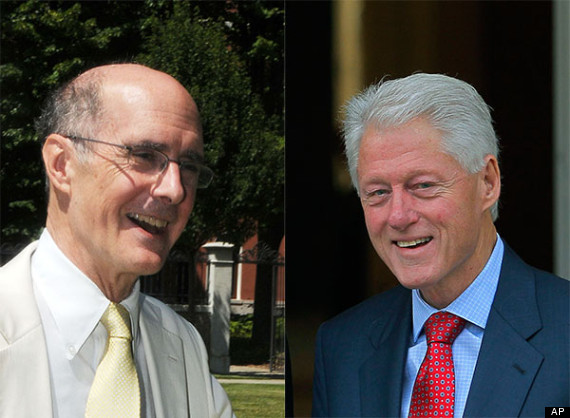
Stobe has an interesting history that includes Russian spies, a long friendship with the Clintons and…. Bill Clinton and Strobe Talbott;
The former president lived with the former deputy secretary of state and journalist when Clinton was a Rhodes scholar at Oxford University
.

talbott clinton

Disclosure: Brookings Takes Millions from Foreign Governments
Documents reveal contributions from Qatar, UAE

FreeBeacon, Adam Kredo: The Brookings Institution, one of the country’s top left-leaning think tanks, has for the first time admitted to Congress that it receives millions of dollars every year from foreign governments, including Qatar and the United Arab Emirates, according to official disclosure forms obtained by the Washington Free Beacon.

The disclosure of these figures comes as a result of a recently implemented federal law mandating that those who testify before Congress reveal any potential conflicts created as a result of funding by foreign entities.

Brookings has come under intense scrutiny by reporters and others for not fully disclosing the large amounts of cash it receives from Middle Eastern governments.

The practice has led some to accuse Brookings and its most prominent scholars of pushing biased analyses aimed at making these foreign governments look good. The think tank’s relationship with Qatar has received particular attention due to the Middle Eastern country’s close relationship with the terrorist group Hamas and its ongoing funding of various terrorist entities.

The disclosure form, which is presented to Congress before an individual testifies, reveals that Brookings received nearly $15 million from the Embassy of Qatar between 2013 and 2015. Brookings also maintains a facility in the Qatari capital of Doha, where Hamas is known to operate freely.

The think tank received another $1,920,000 from the Embassy of the United Arab Emirates between those same years.

Several million dollars also have been donated over those years by the Norwegian and Swedish governments. U.S. Central Command (CENTCOM) also donated more than $250,000 to Brookings.

These disclosures came as a result of a Sept. 17 congressional hearing at which Suzanne Maloney, a Brookings senior fellow, offered testimony on Iran’s relationship with the terrorist group Hezbollah.

The forms further reveal that, in addition to the millions in foreign donations, Brookings has received federal grants.

Both the foreign donations and federal grants “were for independent research and analysis related to an number of subject matters,” according to Maloney. A “portion” of these funds may have been “related to the hearing,” which discussed the ways in which Hezbollah stands to profit from Iran in the wake of the recent nuclear deal.

When questioned about the foreign donations by the New York Times last year, Martin Indyk, a Brookings scholar who has also worked with the Obama administration, defended the practice and maintained that it does not bias his views.

“Our business is to influence policy with scholarly, independent research, based on objective criteria, and to be policy-relevant, we need to engage policy makers,” said Indyk, who reportedly received a $14.8 million check from Qatar.

Many experts have refuted Indyk’s claim and accused Brookings and Indyk of ignoring a clear conflict of interest.

“When an American think tank like Brookings accepts money from Middle Eastern regimes that sharply restrict free speech, it is saying it doesn’t care that its scholarship on the Middle East might at least appear to be compromised,” said Lee Smith, a senior fellow at the Hudson Institute who has reported on Brookings’ funding. “It is saying it doesn’t care that there is at least the appearance if not the reality of a very obvious conflict of interest.”

This appearance of a conflict became acute when Indyk was selected by the Obama administration to mediate peace between Israel and the Palestinians, Smith said.

“The problem was further compounded when the Obama White House named Martin Indyk to serve as envoy to a peace process between two actors, Israel and the Palestinian Authority, that are both at war with Hamas—a terrorist organization that, like Brookings, is funded by Qatar,” Smith said. “That neither Indyk nor Brookings nor the White House ever saw this as a conflict of interest is evidence of an arrogance beyond compare.”

Josh Block, CEO of the Israel Project, said the new disclosure rules are necessary for transparency.

“The reason we supported this rule change is because the American people deserve to know what foreign governments are paying to influence U.S. policy by funding these ‘independent experts’ to the tune of millions of dollars—especially countries like Russia or Qatar with  long, sordid records of mischief or supporting terrorism against Americans and our allies and of rank hostility toward Israel,” Block said.

“Until now, the potential foreign financial conflicts of interests and the motives of those funding the experts testifying was totally hidden from view,” Block said. “This kind of transparency is good governance. We applaud those in Congress who adopted this rule for matters of foreign affairs and national security and would like to see its expanded use in other committees in both the House and Senate.”

Brookings did not respond to a request for comment on its foreign funding.

Secret Iran Nuclear Inspections, a Proven Fraud

The lies began in the White House with regard to the anytime any location inspections.

John Kerry is defending the IAEA and Iran fraud on the Parchin inspection that occurred last week.

Washington (CNN) The Obama administration is acknowledging that Iranians would be involved in inspections of the sensitive Parchin military site under a draft arrangement with the U.N., but officials are stressing that they are not the only ones who would be investigating the Iranian location long believed to have hosted covert militarized nuclear activity.

A senior State Department official said that the U.N. nuclear watchdog, the International Atomic Energy Agency, or IAEA, would have “total oversight” of sampling and inspections of Parchin under the agreement between the agency and Iran over access to the site.

“Iran is not self-inspecting,” the official said, though this official would not deny that Iranian inspectors will “play a role.”

It seems likely that IAEA staff would either be present or watching via video camera when the Iranians take samples from the site, a practice that the international nuclear agency has used in previous inspections agreements.

A senior administration official, meanwhile, said that while Iranians may be taking the samples at Parchin, individuals from other countries will be a part of their analysis. The official noted that the arrangement satisfies the demands of the IAEA. More details here.

What the secret nuclear inspection accord between Iran and the UN says _ and what others say

By GEORGE JAHN, Associated Press

VIENNA (AP) — An AP report has revealed that the U.N. International Atomic Energy Agency has agreed with Iran that Iranian experts and equipment will be used to inspect Iran’s Parchin military site, located not far from Tehran, where Iran is suspected of conducting covert nuclear weapons activity more than a decade ago.

Here are some questions and answers about the document, and what it means for the larger deal between Iran, the United States and five other world powers to limit Iran’s nuclear activities in exchange for easing sanctions against Iran.

WHAT HAVE IRAN AND THE IAEA AGREED?

According to a draft document viewed by AP, Iran has agreed to cooperate with the U.N. in answering longstanding allegations about possible past work to develop nuclear weapons at its Parchin plant — but only with the Iranians conducting the inspections themselves. Iran would collect its own environmental samples on the site and carry out other work usually done by IAEA experts. The IAEA will be able to review the Iranians’ work after the fact. The deal on Parchin was between the IAEA and Iran. The Obama Administration was not a direct party to the agreement, but apparently was aware of it.

___

WHAT DO OPPONENTS OF THE DEAL SAY?

Opponents of the broader deal are seizing an opportunity to say the entire exercise of negotiating with Iran is flawed, that it relies too much on trust of the Iranian government.

___

WHAT DOES THE OBAMA ADMINISTRATION SAY?

The Obama administration and other supporters say the wider agreement say it is focused on the future, with ample inspections, and that the side accord between Iran and the IAEA is focused on Iran’s activities in the past and therefore is not central to the overall deal.

___

HOW UNUSUAL IS THE AGREEMENT ON PARCHIN?

Any IAEA inspection of a country suspected of nuclear irregularities is usually carried out by agency experts. They may take swipes of residue on equipment, sample the air or take soil samples in attempts to look for signs of clandestine work on atomic arms or other potentially dangerous unreported activity.

The document on Parchin, however, will let the Iranians themselves look for signs of the very activity they deny — past work on nuclear weapons. It says “Iran will provide” the agency with environmental samples. It restricts the number of samples at the suspect site to seven and to an unspecified number “outside of the Parchin complex” at a site that still needs to be decided.

The U.N. agency will take possession of the samples for testing, as usual. Iran will also provide photos and video of locations to be inspected. But the document suggests that areas of sensitive military activity remain out of bounds. The draft says the IAEA will “ensure the technical authenticity of the activities” carried out by the Iranians — but it does not say how.

In contrast, the main nuclear deal with Iran gives IAEA experts greatly expanded authority compared to what it has now to monitor Iranian nuclear activities as it works to ensure that Tehran is hewing to its commitments; reducing the scope and output of programs that Iran says it needs to generate energy but which can also be turned to making the fissile core of atomic weapons.

___

WHY IS THE PARCHIN AGREEMENT IMPORTANT?

Any indication that the IAEA is diverging from established inspection rules could weaken the agency, the world’s nuclear watchdog with 164 members, and feed suspicions that it is ready to overly compromise in hopes of winding up a probe that has essentially been stalemated for more than a decade.

Politically, the arrangement has been grist for American opponents of the broader separate agreement to limit Iran’s future nuclear programs, signed by the Obama administration, Iran and five world powers in July. Critics have complained that the wider deal is built on trust of the Iranians, while the administration has insisted it depends on reliable inspections.

The separate agreement on past nuclear activities does not affect the broader deal signed in July. And it doesn’t appear yet that the revelation will change any votes in Congress for or against a resolution of disapproval, which President Barack Obama is expected to veto if it passes.

___

HOW DID THIS AGREEMENT HAPPEN?

It could be a matter of priorities.

The Obama administration’s main focus in the broader Iran deal — signed by the U.S., Iran, Britain, France, Germany, Russia and China — is crimping Iran’s present nuclear activities so they cannot be used in the future toward making a bomb. Faced with more than a decade of Iranian resistance to IAEA attempts to probe the allegations of past weapons work at Parchin, there may be a willingness to settle for an agency report that is less than definitive — and methods that deviate from usual practices.

The IAEA also appears to have recognized that Iran will continue to insist the allegations are lies, based on false U.S., Israeli and other intelligence. After a decade of stalemate it wants to close the books on the issue and allow the U.N. Security Council to do so as well.

The alternative might well have been no inspection at Parchin any kind.

___

WHAT DOES THE IAEA SAY?

Director General Yukiya Amano says, “The arrangements are technically sound and consistent with our long-established practices. They do not compromise our … standards in any way.” He says agreements with Iran on clearing up the nuclear arms allegations “are confidential and I have a legal obligation not to make them public – the same obligation I have for hundreds of such arrangements made with other IAEA member states.”

___

WHAT DO OTHERS SAY?

Ned Price, spokesman for the National Security Council at the White House: “We are confident in the agency’s technical plans for investigating the possible military dimensions of Iran’s former program, issues that in some cases date back more than a decade. Just as importantly, the IAEA is comfortable with the arrangements, which are unique to the agency’s investigation of Iran’s historical activities.”

Olli Heinonen, in charge of the Iran investigation as IAEA deputy director general from 2005 through 2010, says he can think of no similar arrangement — a country essentially allowed to carry out much of the probe of suspicions against it.

___

HOW CRUCIAL IS PARCHIN TO THE OVERALL DEAL?

U.S. intelligence officials do not consider the Parchin inspections a critical part of the broader deal, according to one official, commenting only on condition of anonymity because he was not authorized to be quoted. The U.S. believes most weapons work occurred there in 2003, the official says, and the site has been thoroughly cleaned up since then.

___

AP Intelligence Writer Ken Dilanian contributed to this report.