
Arab Spring: Business Over Diplomacy

Courtesy of Sharyl Atkisson’s FullMeasure show and hard investigative work, matters come to the surface of where the White House misplayed countless missions in foreign policy especially as it relates to the Middle East, Syria, Libya and Yemen to mention a few.

When it comes to Libya, was the Hillary Clinton State Department more focused on business opportunities than equalizing countries? The answer appears to be yes and the hearing on Tuesday will be structured to prove that over security and diplomatic objectives.

Bloomberg: By

When Hillary Clinton testifies this week before the House Select Committee on Benghazi, expect Republicans to focus on her old friend, Sidney Blumenthal.

The chairman of the Benghazi committee, Trey Gowdy, alleges that in the run-up to President Obama’s intervention in Libya in 2011, Blumenthal was encouraging Clinton to support the war that he might personally profit from.

Recently released e-mails do show that Blumenthal was advocating in this period for a U.S. military contractor that sought business with the government that replaced the dictator, Muammar Qaddafi. But that contract was never signed. The contractor even lost money trying to win that business.

Blumenthal himself may have overstated his connections to the Libyan officials who would take power after Qaddafi fell. A lawyer who represented Libya’s transitional government in Washington at the time, David Tafuri, told me he didn’t recall running into Blumenthal in this period.

If Gowdy’s portrait is accurate and Blumenthal was trying to be a war profiteer, it appears he wasn’t a very good one.

Blumenthal did not respond to an e-mail request for an interview.

Gowdy’s allegations stem from Blumenthal’s connection to Osprey Global Solutions, a military contractor that sought to build field hospitals in Libya during the 2011 revolution and train the country’s national police after the fall of Libya’s dictator. According to e-mails received by the committee in late September, Blumenthal promoted Osprey to Clinton in a July 14, 2011, memo to prep her for an upcoming meeting with the transitional Libyan government’s ambassador to the United Arab Emirates.

The memo touts Osprey’s founder and chief executive, retired General David Grange, as the man who can help whip Libya’s opposition — the Transitional National Council, or TNC — into shape so it can take Tripoli. Blumenthal wrote that Grange’s company would provide direct training for Libyan fighters without the U.S. military having to be on the ground. “This is a private contract. It does not involve NATO. It puts Americans in a central role without being direct battle combatants,” Blumenthal wrote. “The TNC wants to demonstrate they are pro-US. They see this as a significant way to do that.”

Grange told me last week that he met Blumenthal only once, after being approached by Bill White, the chief executive of the consulting firm Constellations Group, to gauge his interest in doing business with the post-Qaddafi government in Libya. Constellations Group specializes in connecting people. In a 2013 interview, White said he helped put together the sale of Blackwater — the military contractor that became a target of Democrats during the George W. Bush presidency — to Academi. Grange said his understanding was that if he won any contracts in Libya, Constellations Group would get a percentage of the revenue as a finder’s fee. He did not know what Blumenthal’s relationship was with Constellations Group. “At that time I didn’t know if Blumenthal was doing this as a favor for Bill or if he was getting paid,” Grange told me. “I had no idea.”

Grange said Blumenthal in the meeting indicated that he could help expedite matters of licensing with the State Department. Mainly though, Blumenthal was promising to connect Grange to the Libyan opposition leaders who stood to take power after the fall of Qaddafi. “I knew that he was going to try to set up some meetings for us,” he said. Grange also said Blumenthal did not specifically talk about his relationship with Clinton.

Osprey never won any contracts in Libya. Grange said he spent $60,000 overall in pursuing the business in Libya. “We met with lots of people in positions of power, but they could never write a check,” Grange told me.

Blumenthal’s memo to Clinton also misstated Grange’s experience. Blumenthal wrote that Grange had helped devise the plan for U.S. Special Forces to take Baghdad in 2003. Grange told me that he was already retired from the Army by then and had nothing to do with the operation.

Democrats on the Benghazi committee say all of this strays far from the initial mandate, which was to learn more about what happened before, during and after the Sept. 11, 2012, attacks on U.S. diplomatic and intelligence facilities in Benghazi. On Monday, the committee’s Democrats released a report on the investigation that said the transcript of Blumenthal’s deposition in June before the committee would show that Republicans asked him about things that had “nothing to do with Benghazi.”

The probe’s new focus on Blumenthal is nonetheless a serious matter. Gowdy’s letter earlier this month said nearly half the personal e-mails Clinton received about Libya prior to the Benghazi attack were from Blumenthal. This includes the period when the Obama administration was deciding whether to intervene against Qaddafi in 2011.

These e-mails show that Blumenthal was often a cheerleader for the intervention, even suggesting that Qaddafi’s ouster would benefit Obama in the polls. His messages often contained freelance intelligence about the situation in Libya, some of it wrong.

Blumenthal has said he never profited from his work for Osprey. In June following his closed testimony to the committee, he said the Osprey venture was one “in which I had little involvement, [that] [n]ever got off the ground, in which no money was ever exchanged, no favor sought and which had nothing to do with my sending these emails.”

But the July 14 memo from Blumenthal to Clinton says that he and two associates “acted as honest brokers, putting this arrangement together through a series of connections, linking the Libyans to Osprey and keeping it moving.”

Republicans on the committee tell me that they will be calling Blumenthal back soon to clarify answers he provided to the committee in June.

The irony is that Republicans are sounding a lot like the Democrats of 10 years ago, who accused some Republicans of seeking to profit from the war President Bush waged in Iraq.

But there is an important difference. In Iraq, the U.S. invested hundreds of billions of dollars to rebuild the country after the dictator fell, and many American companies like Halliburton profited from this nation building. In the case of Libya, Obama lost interest after Qaddafi’s regime fell and never committed the resources to keep the country together after the dictator was gone.

That decision was likely one reason Osprey never won the contract that Blumenthal tried to set up. That decision also lies at the heart of the Benghazi committee’s mandate: President Obama allowed Libya to descend into a state so chaotic that terrorists could murder a U.S. ambassador and three other Americans only a year after the nation’s liberation.
Never Before in History Now the Doomsday Supply

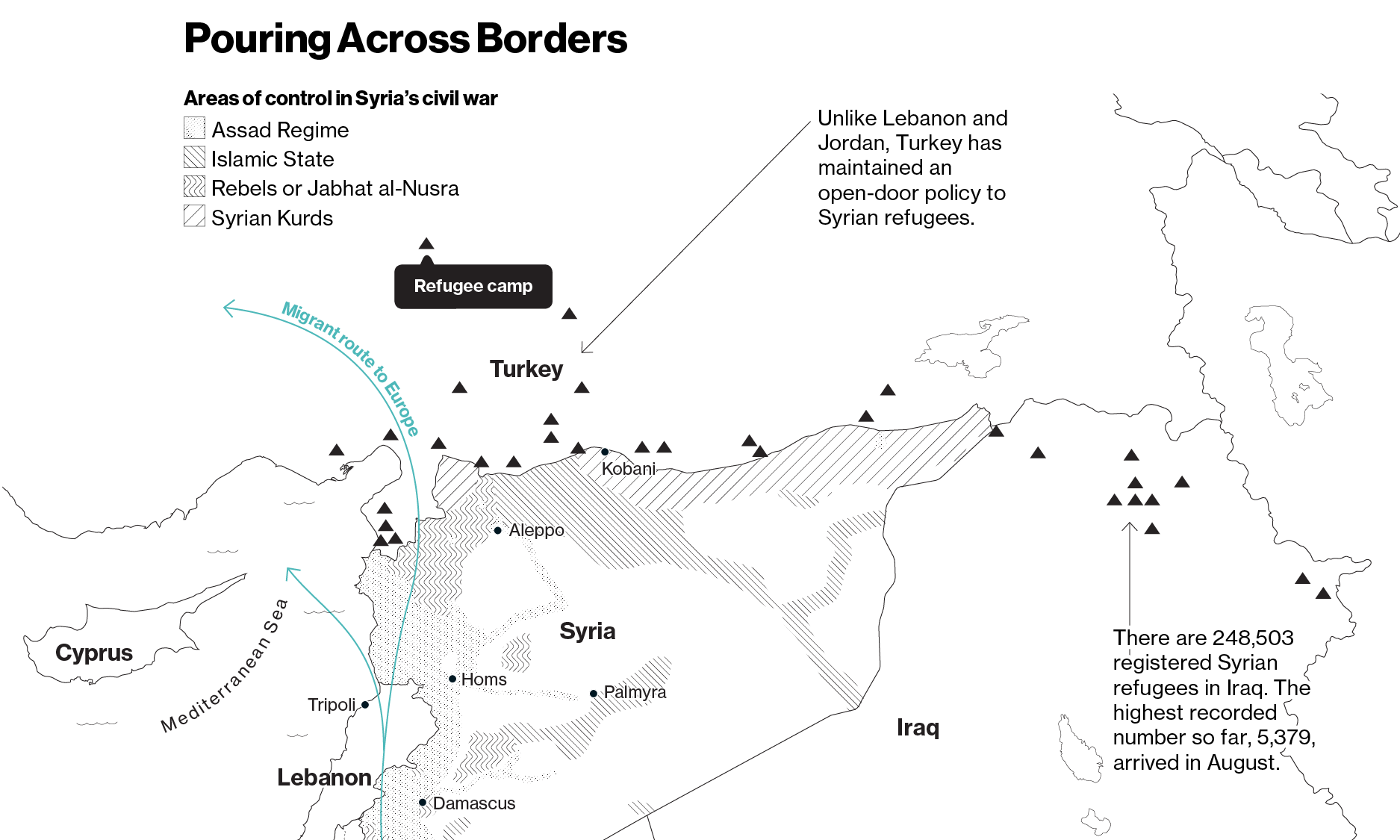
It boils down to Syria, the failed policy to control Bashir al Assad or remove him when the 5 year civil war has caused a global crisis. A country that once had a population of more than 20 million, today, an estimated 11 million Syrians are no longer in their home country. The crisis? The United Nations and member countries are out of money and resources to aid and provide humanitarian support for refugees any where they are located.

The United States as the historic world’s equalizer, failed to act in Syria for up to now 5 years….shameful as the consequences are worldwide and deaths are reported to be approaching 300,000 if not more.

The decision was made last month with no fanfare to break into the Doomsday inventory.

Arctic ‘Doomsday Vault’ opens to retrieve vital seeds for Syria

Deep in the side of a mountain in the Arctic archipelago is the Svalbard Global Seed Vault.


Known as the “Doomsday Vault,” this seed bank — operated by the Norwegian government and containing a seed of just about every known crop in the world — is meant to be humanity’s backup in the event of a catastrophe that devastates crops.

But it was not a natural disaster that has caused scientists to have to dip in and make the first significant withdrawal from the vault. Rather, it was the most preventable of man-made disasters — war.

The bloody conflict in Syria has left scientists at an important gene bank in Aleppo — where new strains of drought- and heat-resistant wheat have been developed over time — unable to continue their work in recent years.

Now, with no sign of conditions in Syria improving, scientists have begun recovering their critical inventory of seeds, sourced from around the Fertile Crescent and beyond, that have been in safekeeping beneath the Arctic ice.

The seeds are being planted at new facilities in Lebanon and Morocco, allowing scientists to resume the important research they’ve been doing for decades, away from the barrel bombs of Aleppo.

READ: Syrian war forces first ‘Doomsday Vault’ withdrawal

An important storehouse in the Fertile Crescent

The gene bank in Aleppo, run by the International Center for Agricultural Research in the Dry Areas, is one of the most important in the world and includes more than 135,000 varieties of wheat, fava bean, lentil and chickpea crops, as well as the world’s most valuable barley collection.

“These are land races that were inherited from our grand-grandparents, most of them are unfortunately extinct now,” ICARDA Director General Mahmoud El-Solh said. “And this is where the cradle of agriculture (was)10,000 years ago. In this part of the world, many of the important crops were domesticated from the wild to cultivation.”

ICARDA representative Thanos Tsivelikas, who is overseeing the withdrawal from the vault, describes the operation as “a rescue mission; these seeds cannot be replaced.”

The ICARDA Aleppo center had sent nearly 80% of the seeds and samples to the Global Seed Vault as a backup by 2012, with its last deposit being in 2014.

And now, Solh and his ICARDA team have the challenge of keeping and reproducing one of humanity’s most important collections of food crop genetic lines.

Moved to neighboring Lebanon

Relocated to Lebanon, Solh opens the door to a vault on the Agricultural Research and Educational Center of the American University of Beirut campus in the Bekaa Valley. This is where the seeds ICARDA received back from Svalbard are housed.

Solh carefully shakes out a few wisps of what looks like wheat from a brown envelope. It is the plant from which the wheat we eat today originated 10 millennia ago.

“This is a source of desirable traits including drought tolerance, including heat tolerance, including resistance to disease and so forth. So this had lived through natural selection for over hundreds of years,” he said.

A 10-minute drive away and just across the mountain range from Syria, a new vault is being built by ICARDA.

To begin replenishing the stock, there are greenhouses nearby where the seeds will be planted, grown and reproduced. Once restocked, the seeds will once again become available for researchers and other seed vaults.

A parallel project is being set up in Morocco to ensure that humanity always has access to this irreplaceable cache of genetic material.

“Two-thirds of material is coming from dry areas which … are adapted to very harsh environments and have desirable traits” for drought, heat, cold, salinity and pests, Solh said.

Researchers are looking at ways to improve food crops with existing and extinct-in-nature genetic lines that are more adapted to the challenges that may lie ahead with global warming.

The answers could very well be in these specific seeds harvested from a specific moment in time. “This variety could help us adapt to climate change,” Solh said, holding up a small fava bean.

“You know that climate change is a reality and climate change is changing the whole environment in terms of more drought, hotter environments and even new diseases.”

ICARDA and others know that the past could very well contain the key to our future, though no one thought they would see such a mass withdrawal in their lifetime.

Obama Teams with Silicon on Syrian Refugees

In part from HuffPo:

WASHINGTON — The Obama administration has responded to a petition calling on the U.S. to resettle tens of thousands of Syrian refugees within its borders, inviting the man who started the petition to the White House for a meeting.

George Batah, 23, came from Syria in 2013 and now lives in Chicago. He said he started the petition in late August because he felt the United States has a moral obligation to continue being “the leader in refugee resettlement.”

His petition asked the White House to accept at least 65,000 Syrian refugees by 2016. The administration did not commit to that number in its response Thursday, instead reiterating that it intends to bring at least 10,000.

“Under President Obama, the U.S. is the world’s largest donor of humanitarian aid, having contributed $4 billion in aid to date to help meet urgent needs in the most effective way,” the administration wrote. “The President has also directed his Administration to scale up the number of Syrian refugees we will bring to the U.S. next year to at least 10,000.”

How the White House Got Silicon Valley to Take On the Refugee Crisis
After the president’s request, Silicon Valley code writers went to work at record pace.
White House and Silicon Valley Take On Syria Crisis

Bloomberg: Even Jason Goldman, a former senior technology executive at

companies including Twitter, Medium, and Google, was surprised by how quickly some of his former Silicon Valley colleagues were able to answer the call.
Goldman, now sitting in Washington as the first-ever White House chief digital officer, and his colleague Joshua Miller, a former Facebook employee overseeing the Obama administration’s digital products, had gone to work lining up allies for a push to aid the waves of Syrian refugees flooding out of the country a little over a week prior. Now they were staring at donation platforms, crafted from scratch, that were ready to roll out.
“That’s a pretty fast turnaround time to actually build and ship code out into the wild,” Goldman says.
“That’s a pretty fast turnaround time to actually build and ship code out into the wild.”
Jason Goldman, White House chief digital officer
The response—and the equivalent of millions of dollars in donations that resulted—from Kickstarter, Twitter, Airbnb, and Instacart marked a new approach to address what many in the U.S. government view as an intractable crisis. Nearly 12 million Syrians have been displaced by the civil war raging in their country, according to the UN Refugee Agency. Thousands per day are flooding into European nations unequipped to handle the surge.
The White House has directed more than $4.5 billion to aid refugees, and pledged last month to allow and additional 10,000 into the U.S. next year. Still, the metastasizing crisis has up to this point far outweighed the global response. The U.N. Refugee Agency estimates the awareness level in the U.S. sits at 4 percent.


“We don’t have refugees in our backyard, we don’t have camps, we don’t have refugee camps on our soil so a lot of the American public doesn’t have a full understanding of what is going on,” says Jennifer Patterson, USA for UNHCR, the UN non-profit arm tasked with raising money and awareness for refugees. “The scope is really enormous right now.”
That was part of the calculation behind a few lines in President Barack Obama’s September speech to the United Nations General Assembly—a call not just to world leaders to address the crisis, but also private industry. Goldman and his team were looped into the call by National Security Council staff in the lead up to the remarks and went to work.
Within a week of Obama’s speech, Kickstarter had partnered with UNHCR to launch a first-of-its-kind non-profit campaign on the platform. Obama and Samantha Power, the U.S. ambassador to the UN, kicked in videos to help. More than $1 million was raised in less than 24 hours. Instacart linked up with UNHCR to create an option for its online shoppers to also purchase meals for refugee families. Airbnb pledged housing credits to aid workers in the region and matched any donations from its online community. Twitter launched its donation product early to ease the fundraising process on the platform for non-governmental organizations.
White House officials acknowledge that the start-up driven campaigns are far from the, or even a major piece of the, solution to the crisis. But along with driving donations and awareness, there are plans to make the idea a permanent model going forward. Other companies are preparing to launch similar initiatives, Patterson says.
“Really what we were doing here was just using the White House convening power to say, look, this is a real problem out in the world,” Goldman says. “Here’s how to think about it, here’s organizations you can work with, find the right fit for your product and you and your users and really step up and be involved.”

Finally Arrest Warrants Issued on Hezbollah

Argentine court seeks arrest of Hezbollah man for ’92 bombing Hussein Suleiman wanted by country’s Supreme Court for attack on Israeli embassy in Buenos Aires that killed 22

TimesofIsrael: Argentina’s Supreme Court of Justice issued an international arrest warrant against Hussein Mohamad Ibrahim Suleiman, a Hezbollah member who is being investigated for his involvement in the 1992 attack against the Israeli embassy in Buenos Aires.
The attack, which came two years before the bombing of Jewish organization AMIA in Buenos Aires, killed 22 people and injured more than 200. The court on Thursday also reiterated the warrant to arrest Jose Salman El Reda Reda, also as a suspect in the deadly attack.

Suleiman was arrested in Jordan in 2001 and confessed that in 1991 he traveled to Sao Paulo, Brazil, later transporting to Buenos Aires the explosives used in the deadly blast.
The ruling from Argentina’s highest court said, “Since 2005, this Court has been investigating Hussein Mohamad Ibrahim Suleiman as an operative agent of the Hezbollah terrorist organization and a member of the Islamic Jihad.”
The ruling added that: “Recently, in September, 2015, the Israel Embassy in Buenos Aires, through the Foreign Affairs Ministry, confirmed the information and thus the international arrest warrant was issued on the named.”
On Friday, Israeli officials welcomed the ruling and confirmed its role in the investigation.
A statement issued by the Israeli embassy in Buenos Aires said: “Israel sees with satisfaction all the advances in the search for truth and justice in the cause against our embassy in Buenos Aires.”

Perspective, two years later:

19 Years Since AMIA Argentina Bombing and Hezbollah Terror Threat Growing

From the Israeli Defense Force: On this date in 1994, the Lebanese terrorist organization attacked a Jewish community center in Buenos Aires, killing 85 and wounding hundreds. Today, Hezbollah has an extensive terror network around the globe, making it one of the largest and most violent terrorist organizations in the world.

Nineteen years ago today – at 9:53 a.m. on July 18, 1994 – a shock wave ripped through the city of Buenos Aires, the capital of Argentina. A Hezbollah terrorist had detonated a car bomb with more than 400 kg of explosives outside the building of the Asociación Mutual Israelita Argentina (AMIA, a Jewish community center and headquarters of the Jewish community of Argentina). The vast amount of explosives caused the building to collapse, killing 85 people and wounding more than 300.

This was one of Hezbollah’s bloodiest acts of terror. The attack was perpetrated in the heart of Buenos Aires and caused damage to surrounding buildings, including a school. Hassan Nasrallah, the leader of Hezbollah, had been quoted in the Al-Watan al-Arabi newspaper a month before the attack, saying: “One thousand suicide commandos are ready to strike Israel across the entire globe.”

Khader Tleis, a member of the Lebanese parliament on behalf of Hezbollah, said that Israel knew that the terrorist organization could “do a lot even outside Lebanon,” and threatened that Israel would be hit “in and outside of Lebanon.” These public expressions reflect the clear objectives of the terrorist organization: to eradicate Israel and to impose radical Islamist Shiite theology.

The Iran-Hezbollah Connection

“Diplomats at the Iranian embassy in Buenos Aires who collaborated with the planners of the attack knew that the explosion would injure and kill many Argentines. Iranians knew, Hezbollah terrorists knew, those who assisted in the attack knew – knew and planned,” former Israeli Minister of Public Security Avi Dichter later stated. “Diplomats, neighbors and passersby who just went out there at the wrong time were executed.”

At a press conference on October 25, 2006, Argentine prosecutors Dr. Alberto Nisman and Marcelo Martínez Burgos revealed the primary findings of the Argentine investigation into the attack. Among their main points: The investigation unequivocally determined that the decision to bomb the AMIA building had been made by the leadership of the Iranian regime and carried out by Hezbollah, Iran’s proxy for implementing its policies.

In light of the report, the Argentine prosecution asked Judge Rodolfo Canicoba Corral to issue international arrest warrants for seven high-ranking members of the Iranian regime and one senior Hezbollah terrorist operative, all involved in the terrorist attack. One of the seven was Ahmad Vahidi, who currently serves as the Iranian minister of defense and was commander of the Iranian regime’s Quds Force at the time of the 1994 attack.

Next up, Normalizing Relations with North Korea

Sheesh, this blogger has been predicting this….. THE MADNESS CONTINUES:

North Korea reportedly willing to sign peace treaty with US to end conflict

FNC: North Korea reportedly rejected the idea of resuming talks to abandon its nuclear program on Saturday, but said it would welcome negotiations for a peace treaty with Washington.

North Korea’s foreign ministry made the statement one day after President Obama and South Korean President Park Geun-hye said they were ready to open talks with Pyongyang on sanctions if they were serious about dissolving its nuclear program, according to Reuters.

“If the United States insists on taking a different path, the Korean peninsula will only see our unlimited nuclear deterrent being strengthened further,” the North said in a statement.

North and South Korea are still technically at war after signing a truce in 1953 to temporarily end their conflict. The U.S. also signed the deal after backing the South.

Obama, while meeting with Park on Friday, said Iran had been prepared to have a “serious conversation” about the possibility of giving up the pursuit of nuclear weapons. He said there’s no indication of that in North Korea’s case.

“At the point where Pyongyang says, `We’re interested in seeing relief from sanctions and improved relations, and we are prepared to have a serious conversation about denuclearization,’ it’s fair to say we’ll be right there at the table,” Obama told a joint news conference.

In a joint statement after Friday’s meeting, the U.S. and South Korea said that if North Korea decides to launch another rocket into space or test a nuclear explosion, “it will face consequences, including seeking further significant measures by the U.N. Security Council.” The statement also said they would never accept North Korea as a nuclear weapons state.

North Korea had walked away from talks involving the U.S. and four other countries in 2008 and continued to conduct nuclear tests. It claims the only way to end conflict with Washington is to sign a peace treaty.

Park’s visit Friday further strengthened South Korea’s ties with the U.S.

U.S. retains 28,500 troops in South Korea, a legacy of the 1950-53 Korean War, and nearly 50,000 troops in Japan. Obama called the U.S.-South Korean alliance “unbreakable.” Park called it a “lynchpin” of regional security.

In August, the two Koreas threatened each other with war after two South Korean soldiers were wounded by land mines Seoul says were planted by the North. The tensions have since eased, and the two sides have agreed to resume next week reunions of Korean families divided by the Korean War.

The Obama administration has faced criticism from hawks and doves alike for a lack of high-level attention on North Korea, which estimated to have enough fissile material for between 10 and 16 nuclear weapons. More details here.

From McClatchy:

Obama said the U.S. would be willing to talk with North Korea about sanctions relief and improved relations if it agreed to give up nuclear weapons. He said there’s no indication that the government in Pyongyang can “foresee a future in which they did not possess or were not pursuing nuclear weapons.”

Citing the U.S. outreach to Cuba and the agreement to limit Iran’s ability to build nuclear weapons in exchange for the lifting of economic sanctions, Obama said the U.S. is “prepared to engage nations with which we have had troubled histories.” He stressed that he and Park reaffirmed that neither country would accept North Korea as a nuclear weapon state and will insist that Pyongyang abide by its obligations.

“These are both countries that have a long history of antagonism towards the United States,” he said of Iran and North Korea. “But we were prepared to have a serious conversation with the Iranians once they showed that they were serious about the possibility of giving up the pursuit of nuclear weapons.”

Saying nothing of human rights violations, the official White House statement is here:

2015 United States-Republic of Korea Joint Statement on North Korea

On October 16, 2015, President Barack Obama of the United States of America and President Park Geun-hye of the Republic of Korea committed to the following.

The United States-Republic of Korea alliance remains committed to countering the threat to peace and security posed by North Korea’s nuclear and ballistic missile programs as well as other provocations. We will maintain our robust deterrence posture and continue to modernize our alliance and enhance our close collaboration to better respond to all forms of North Korean provocations.

The United States and the Republic of Korea share deep concern about the continued advancement of North Korea’s UN-proscribed nuclear and missile capabilities and commit to address the North Korean nuclear problem with utmost urgency and determination.

We reaffirm our commitment to our common goal, shared by the international community, to achieve the complete, verifiable, and irreversible denuclearization of North Korea in a peaceful manner. North Korea’s continuing development of its nuclear and ballistic missile programs is an ongoing violation of multiple UN Security Council resolutions and is contrary to North Korea’s commitments under the 2005 Joint Statement of the Six-Party Talks. We strongly urge North Korea to immediately and fully comply with its international obligations and commitments.

We oppose any actions by North Korea that raise tensions or violate UN Security Council resolutions. In particular, if North Korea carries out a launch using ballistic missile technology or a nuclear test, it will face consequences, including seeking further significant measures by the UN Security Council.  In this regard, we are committed to working with the international community to ensure the effective and transparent implementation of all UN Security Council resolutions, including sanctions measures, concerning North Korea, and we encourage all states to exercise strict vigilance against North Korea’s prohibited activities.

The United States and the Republic of Korea maintain no hostile policy towards North Korea and remain open to dialogue with North Korea to achieve our shared goal of denuclearization. Recognizing the common interests of our Six-Party Talks partners in the denuclearization of North Korea, we will continue to strengthen our coordination with China and the other parties in order to bring North Korea, which has refused all offers of denuclearization dialogue, back to credible and meaningful talks as soon as possible.

We reaffirm that we will never accept North Korea as a nuclear-weapon state, and that its continued pursuit of nuclear weapons is incompatible with its economic development goals. Along with the rest of the international community, we stand ready to offer a brighter future to North Korea, if North Korea demonstrates a genuine willingness to completely abandon its nuclear and ballistic missile programs, and agrees to abide by its international obligations and commitments.

The United States appreciates President Park’s tireless efforts to improve inter-Korean relations, including through repeated overtures to North Korea, and welcomes President Park’s principled approach that resulted in a peaceful resolution of the August tensions.  The United States will continue to strongly support her vision of a peacefully unified Korean Peninsula, as envisaged in her Dresden address. We will intensify high-level strategic consultations to create a favorable environment for the peaceful unification of the Korean Peninsula.

The Republic of Korea and the United States join the international community in condemning the deplorable human rights situation in North Korea as documented in the 2014 UN Commission of Inquiry report. We look forward to supporting the work of the UN Office of the High Commissioner for Human Rights (Seoul). We remain dedicated to working with the international community to improve the human rights situation in North Korea and ensure accountability for human rights violations, as well as to improve the livelihood of the people in North Korea.