Iran Buying War Torn Syria Real Estate, Pipelines Abound

Damascus, Syria is known as the city of Jasmine. It is rich in religious history including Christians, Jews and Muslims. If there is any question about how Iran is advancing their power in the region to include Syria and eventually erasing history, then read on.

Now?  AFP

BEIRUT: Syrian government forces fired rockets at a rebel-held area on Damascus’s outskirts on Sunday, pressing an attack that began the day before and has killed up to 16 people, a medical worker and war monitors said.
The medical worker and the Syrian Observatory for Human Rights said it was the biggest attack on the Qaboun area, to the city’s northeast, in at least two years.
At least three shells hit government-held areas closer to the center of Damascus and near Qaboun on Sunday, but there were no reports of casualties, a Hezbollah-run military media unit and a Reuters witness said.
On Saturday, a government sniper killed one person in the area and rockets hit a cemetery on Qaboun’s outskirts, the medical worker, who asked not to be named, told Reuters.
The British-based Observatory also reported attacks on a cemetery.
Reuters could not independently verify the accounts.
There was no immediate government comment on the Damascus fighting.
The Observatory said 16 people had died in the violence around Qaboun since Saturday, the highest death toll from fighting there for more than two years.
The medical worker in nearby Eastern Ghouta, just outside Damascus, said at least 13 people had died. He said he could hear explosions coming from Qaboun early on Sunday.
Violence in western Syria has increasingly tarnished a shaky cease-fire which took effect on Dec. 30, backed by Damascus ally Russia and Turkey, which supports rebels.

*** Related image

The Syrian Commission for Media has issued a report regarding purchases and long-term renting carried out by figures with close ties to the Syrian regime, including Abdullah Nazzam, Iran’s man in Syria. Real estate offices in Damascus have confirmed Nazzam’s unprecedented activity in buying property in capital.

Reports from Damascus and Tehran said that Iran’s men have expanded their purchase activities to include a number of properties in the capital since last June.

The activities of pro-regime businessmen in the purchase of real estate were largely limited to areas of eastern Damascus, namely the Old City, but after June, Abdullah Nazzam expanded his sights on the entire capital.

In addition, the Iranians have also increased their purchasing activities in Eastern Ghouta, largely in Maliha, which is owned by the state, making it easier for the Iranians to circumvent local Syrian laws, especially after the decline of Eastern Ghouta’s battalions after fierce fighting rocked the region last year.

Syrian opposition sources confirmed earlier that many hotels – including Caldah, Iwan, Asia, Damascus International, Venice and Petra – are now owned by the Iranian Embassy in Damascus, ​​in addition to holding shares in the Samiramis Hotel. The Iranian Embassy also sought to buy huge portions of real estate in the Old City of Damascus, specifically in the area extending from behind the Umayyad Mosque to the Bab Touma area, and in the western region of al-Maryamiyah neighborhood.

Image result for iran buying real estate in syria VOA

*** Iranians Buying Up Land in War-Torn Syria

New buildings are seen in Damascus, Syria, in this file photo. Iranians are investing in and providing labor for some of the construction in the war-torn country. AFP PHOTO/ LOUAI BESHARA

New buildings are seen in Damascus, Syria, in this file photo. Iranians are investing in and providing labor for some of the construction in the war-torn country. AFP PHOTO/ LOUAI BESHARA

VOA: Iran’s government wants its builders to buy up property in Shi-ite majority neighborhoods of Syria’s capital, Damascus.

It is also asking construction workers to go to Syria.

This information comes from construction industry officials in Tehran and Iranian experts.

Iranian analyst Fariborz Saremi said owning real estate gives Iran more control over Syria and other parts of the Middle East.

Rich and conservative Iranian business people with ties to the government are buying expensive homes in Damascus, according to news reports. This is influencing price increases in Syria’s real estate markets.

“Five million houses have been destroyed in the civil war,” said Syrian economist Khorshid Alika told Voice of America. “The increased Iranian demand to buy land and properties has naturally led to more inflation in the market.”

Iran’s interest in Syrian real estate is not new. But it increased after the rebel uprising began in 2011.

Government-run media have been reporting recently about how Iran joined Russia to support Syrian President Bashar al-Assad. Assad’s government has been fighting against rebels and the Islamic State terror group.

Iran is not only asking people to buy homes and property in Syria. The country is also asking construction workers and contractors to take jobs there.

One contractor said a fellow contractor with close ties to the Iranian government told him he had a chance to make money in Damascus.

“When we asked about the security, he said that the zone is even more secure than Tehran,” Iranian contractor Amir Maghsoudloo told VOA.

Iran is home to about 3 million people from Afghanistan. Many fled the war-torn country. Most earn low wages in Iran. They are being offered better paying construction jobs in Syria.

Some Damascus construction projects are run by Afghan nationals from Iran, said Tahi Esmali. He is an Afghan national who works as a bricklayer. He had worked in Iran before moving to Syria in 2015.

Iranian interests are not limited to Damascus. Iranian business people and companies are looking to invest in projects in the central Syrian city of Homs. The Syrian military and its Lebanese Hezbollah allies recaptured Homs in late 2015.

The Iranian government has supported Syrian President Assad. Recent reports in state-run media say that Iran increased the size of its Revolutionary Guard Corps in Syria.

*** What more is causing all the interest in Syria by Iran and Russia? Well there are other countries with interests as well….pipelines.

As noted in late 2015: The Syrian Civil War stems from a disagreement between the Saudis and Russia over the route for a new gas pipeline ducting Gulf gas to the lucrative European markets. Russia, whose only Mediterranean base is located in Tartus, Syria, supports Assad’s initiative of a gas pipeline from Iran through Iraq and Syria (the Iran-Iraq-Syria pipeline). But Saudi Arabia’s hardline Sunni Muslims wants to overthrow Syria’s Assad, who is a Shia Muslim, for religious reasons. They want to run a 100 per cent Sunni-controlled pipeline from Qatar through Syria and Turkey (the Qatar-Turkey pipeline), into Europe. As a result of this disagreement a proxy war is taking place in Syria between the aforementioned powers. Meanwhile displaced Syrian refugees are flooding into Europe with jihadis in their midst.

Map of proposed Iran-Iraq-Syria pipeline and Qatar-Turkey pipeline

Originally, Europeans were strongly in favor of deposing Assad for so-called “humanitarian reasons”. Their humanitarian concerns for Assad’s repressive regime veil the truth – Europe resents depending on Russia for 40 per cent of its gas. Russian President Putin annexed Crimea and maintained a belligerent stance, pushing Europe to favor the pipeline proposal of Qatar and Saudi Arabia. The Saudi plan to duct natural gas all the way to Europe through Syria and Turkey came with a catch – Assad would have to be toppled. The US supported the initiative as Russia’s only Mediterranean naval base would disappear with Assad. Thus, the Western world had itself a new plan that would bring peace and prosperity to the region. That is after the “initial shakeout” necessary to oust Assad.

The “initial shakeout” didn’t go as planned. Russia-backed Assad proved far more resilient than anticipated. But more importantly, western-backed Islamic militias committed such barbaric acts of terror they even made Assad, and Russia, look good in comparison. An emboldened ISIS gradually took over several of the region’s oil fields to fund its operations to the tune of $50 million per month by smuggling oil into Turkey. The routes and means were well established during the previous oil embargo on Iraq and so are the financial networks that profit from it in Turkey. Today, crude oil illegally smuggled by ISIS into Turkey accounts for a fairly significant 3.5 per cent of Turkey’s total oil imports. More here.

The JPOA, Billions Given by Obama to Iran Results in Huge Profits

Remember, Barack Obama and John Kerry gave billions to Iran, which is to say to the Supreme Leader Ali Khamenei. Two companies owned and controlled by the Supreme leader are Setad and Bonyad Mostazafan.

  For the full summary investigation performed by Reuters, go here.

Image result for iran supreme leader wealth

Iran Irony: IRGC And State Firms Are Benefiting From JCPOA

Mr. Alavi is an Iranian activist focusing on human rights, social crackdown, the regime’s support for terrorism, and its nuclear program.

Forbes: Those who raised the Iran deal flag, mainly in the United States and Europe, claimed the Joint Comprehensive Plan of Action (JCPOA) would boost trade and encourage foreign investment, enhancing Iran’s private sector and eventually downgrading the regime’s tight grip on the economy.

This was back in 2015 when the P5+1 agreed to lift sanctions in return for having Iran’s nuclear program curbed. Now in early 2017, however, signs indicate the main winners in Iran are none other than state-owned companies. This means Iranian Supreme Leader Ali Khamenei and the terrorist-supporting Revolutionary Guards are enjoying JCPOA benefits.

At least 90 of the nearly 110 agreements, totaling nearly $80 billion, involve such state-controlled companies. This includes the National Iranian Oil Company, parallel to others run by regime pension funds and massive conglomerates of semi-public nature.

Despite a long slate of harsh remarks made by Iran’s hardliners against the JCPOA, a recent Reuters study shows those businesses answering directly to Khamenei are benefiting most from the JCPOA.

Many deals, spanning the energy, infrastructure, pharmaceuticals and other sectors, remain in the preliminary stage. Iran’s foreign partners mainly include France, Germany, Italy, Russia and South Korea.

Iran’s “Setad Ejraiye Farman-e Hazrat-e Emam,” also known as the Headquarters for Executing the Order of the Imam and best known as Khamenei’s personal empire, has been the main benefactor of the highly flawed nuclear pact. This entity has stakes in and control over nearly all of Iran’s economy and benefits significantly through the JCPOA.

A 2013 Reuters probe shed light on Setad’s $95 billion empire, established through illegally seizing thousands of properties owned by business people, Iranians living abroad and religious minorities.

“A major network of front companies controlled by Iran’s leadership” is how the U.S. Treasury Department described Setad as it sanctioned the massive entity. Through the JCPOA, however, this conglomerate has enjoyed doing business with foreign companies.

One of the three such deals signed with foreign companies involves a $10 billion oil refinery construction plan. While Khamenei may not personally own these companies, his shadow—described as supervision—is essentially routing all invested finances.

In the past 18 months Khamenei-controlled companies, including the IRGC conglomerate, have sealed deals with foreign companies valued at over $11 billion.

It is a known fact that Tehran maintains a heavy hand over the economy, providing circumstances allowing state-controlled firms to acquire most business deals made possible after sanctions were lifted. The private sector makes up a mere 20% of Iran’s economy, according to official estimates.

To this end, private companies have received a dismal 17 deals, including a hotel management contract sealed most probably because of the French partner’s chief executive being the brother of Eshaq Jahangiri, Iran’s vice president.

The first slate of investments inked for Iran is most likely to strengthen state power, meaning Khamenei, counter to any hopes raised prematurely by JCPOA supporters. The supreme leader enjoys vast control, especially in the IRGC, through which he pursues his Syria, Iraq, Yemen, Bahrain and Lebanon policies.

Conglomerates, or foundations, whose chiefs are appointed directly by Khamenei, were the recipients of five of the 90 deals. Several of these entities enjoy widespread business transactions and not being obligated to pay full taxes. This includes Astan Qods Razavi, a vast religious institution controlling at least 36 subsidiary companies and entities.

One such firm is the Razavi Oil & Gas Development Company that sealed a preliminary agreement with Italy’s Saipem, also an oil and gas company.

The IRGC, known for its domestic crackdown and dispatching tens of thousands of Shiite militia members and arms throughout the region, is also considered a major destination point of JCPOA benefits.

The IRGC controls or has large stakes in four of the 90 deals sealed with the Iranian regime. And of course, Khamenei enjoys full hegemony over the IRGC. Despite remaining U.S. sanctions banning any “significant” business transactions with the IRGC, many of its front companies are free of any blacklisting.

Three of the four mentioned deals are signed with companies with strong ties to the IRGC and yet are not sanctioned. And to add insult to injury, the fourth company is on sanctions and yet enjoys involvement in a foreign deal through indirect routes.

Loopholes remain in the sanction regime imposed against Iran, all resulting from an appeasement/engagement approach adopted by former president Barack Obama. This is a gap in need of closing at a policy level.

“Despite a decline in sanctions… the Iranian economy is suffering from recession. The Iranian economy is under the control of the regime’s supreme leader Ali Khamenei and the IRGC. They are the only one who will benefit from trade with Iran and not the Iranian people,” said Iranian opposition leader Maryam Rajavi in a conference. Rajavi is president of the National Council of Resistance of Iran, an umbrella group of Iranian dissident entities, including the People’s Mojahedin Organization of Iran (PMOI/MEK).

Debate over the JCPOA’s future remains a major issue. If kept intact despite all its flaws, the U.S. should fully implement all articles and have each and every loophole sealed. This initiative can be coupled with further sanctions punishing Iran’s lethal meddling across the Middle East, pursuing a dangerous ballistic missile program and atrocious human rights violations.

Russian Spy Operations History in the U.S.

In 2015:

The FBI announced on Monday that it had busted a Russian spy ring that was allegedly focused on obtaining economic information including details about US markets and sanctions on Russian banks.

According to a federal complaint filed by FBI special agent Gregory Monaghan in a Manhattan federal court on Friday, an alleged spy, Evgeny Buryakov, posed as a banker in the New York office of an unnamed Russian bank.

Buryakov is reportedly being arraigned in the Southern District of New York.

Monaghan said Buryakov (aka”Zhenya”) was on “deep cover” and working for Russia’s Foreign Intelligence Service (SVR) to gather intelligence and transmit it back to Moscow. The SVR used multiple forms of cover.

The complaint includes several stunning revelations, including claims that staffers at an unidentified Russian news organization in the US are engaged in spying; and indications that American law enforcement bugged the New York office of the Foreign Intelligence Service.

According to the complaint, Buryakov worked with two other men who were involved in intelligence-gathering activities for the SVR: Victor Podobnyy and Igor Sporyshev. The complaint said Sporyshev served as a trade representative to the Russian Federation in New York. Podobnyy was allegedly an attaché to the permanent mission of the Russian Federation to the United Nations. More here from BusinessInsider.

***

Related reading: Russian Hacking, We knew Because we had an Inside Operative(s)

SPIES, SPIES EVERYWHERE
A journey through D.C. espionage

WaPo: Mystery and intrigue are running wild in the capital these days. Secret conversations with dangerous diplomats, explosive foreign dossiers on American leaders, handwringing over national security and leaky intelligence. If you dip into our new book “Spy Sites of Washington, D.C.,” you will find that sneaking, lying and skullduggery are as old as the republic itself. And our region is full of the traces: hotels and parks and saloons and embassies and government offices where the deceitful and disloyal got up to their antics. Here is a sampling of sites where our nation’s espionage history has played out.

Tillerson Approves North Korea Visit to DC?

Washington prepares to bring North Koreans to U.S. for talks: report

Reuters: Preparations are under way to bring senior North Korean officials to the United States for talks with former U.S. officials, the first such meeting in more than five years, The Washington Post reported on Sunday.

The talks would be the clearest indication yet that North Korean leader Kim Jong Un wants to communicate with the new Trump administration.

Planning for the “Track 1.5 talks” is still in a preparatory stage, the Post reported, citing multiple people with knowledge of the arrangements.

That name, reflecting planned contact between former U.S. officials and current North Korean ones, is a reference to what are known as “Track 2” talks involving former officials on both sides.

The U.S. State Department has not yet approved the North Koreans’ visas for the talks, the newspaper said.

A State Department spokesman commented to Reuters only that Track 2 meetings “routinely” take place on a variety of topics around the world and occur independent of the U.S. government.

A White House official commented that the U.S. government had no plans to meet with North Korea.

North Korea’s testing of an intermediate-range ballistic missile drew international condemnation last week. President Donald Trump told a news conference after the test: Obviously North Korea is a big, big problem and we will deal with that very strongly.”

***

Who is suggested to attend this confab, Bill Richardson? Can the representatives of the United States be in talks with North Korea without including Iran, China or Russia? Not likely. It was not all that long ago that President Trump took a phone call from Taiwan which infuriated China. Trump said he would not be dictated to by China, only to later say he stood for a one China policy. How does China point to policy matters regarding North Korea?

***

NewsMax: The U.S. policy of maintaining sanctions and military pressure on North Korea while refusing to talk to the country isn’t working and will only make matters worse, a Chinese official said Saturday, venting Beijing’s impatience with the stalemate over its isolated neighbor.

“China just keeps on telling you this is not working, although we’re going along with you,” Fu Ying, who chairs the Foreign Affairs Committee of China’s legislature and was a vice foreign minister until 2013, said at the Munich Security Conference. “You have to realize — without talking with them, you will only drive them in the wrong direction further.”

Fu was flanked on stage by South Korean Foreign Minister Yun Byung-se and U.S. Senator Dan Sullivan, an Alaska Republican, in a rare public airing of differences between the U.S. and South Korea on the one side, and China on the other. President Donald Trump has repeatedly demanded China do more to rein in its neighbor and force it to abide by United Nations Security Council resolutions aimed at curbing the North’s nuclear ambitions.

Earlier Saturday, China’s Ministry of Commerce said it will halt coal imports from North Korea through the end of the year, stripping Kim Jong-un’s regime of a crucial source of income. No reason was given, although analysts pointed to the murder earlier this week of Kim’s older half-brother, Kim Jong Nam, at a Malaysian airport. He had lived outside North Korea for many years and had close links to China.

Trump’s administration is pushing forward with plans to deploy a missile-defense system known as Thaad in South Korea. Concerns over North Korea’s intentions were only inflamed after the regime carried out a missile test on Feb. 12. More here from NewsMax.

***

There is full and joint collaboration between Iran and North Korea on missile development and testing. Those launched by both countries are coordinated.

Pentagon: Iran Tested a Ballistic Missile With North Korean Origins

Missile tested by Tehran originally came from Pyongyang.

Pentagon identified the July 2016 missile as a locally produced version of the Musudan, a North Korean intermediate-range missile. Also known as the Hwasong-10, the missile is allegedly derived from an obsolete Soviet Cold War missile, the R-27 Zyb.

The Musudan has been adapted from a submarine-launched missile to a road-mobile missile, and is launched from 12-wheeled heavy transporters. The missile has a payload of 2,000 to 2,500 pounds and a theoretical maximum range of 2,500 miles. The range of the missile is open to some debate because so far, despite Pyongyang’s claims to the contrary, it hasn’t been successfully tested. North Korea may have launched as many as eight Musudans in 2016 alone, and not a single launch was considered successful by outside observers. More here.

***

On Sunday, February 12, 2017, North Korea conducted the first test launch of its “Pukguksong-2, solid-fuel missile,” a land-based version of the KN-11 Pukguksong-1 submarine-launched ballistic missile (SLBM), but not from the facility that almost all media sources have reported.[1] The development of the Pukguksong-2 was not unexpected and the system successfully flew a lofted trajectory, reaching an estimated altitude of 575 km and flying approximately 500 km before falling into the East Sea (Sea of Japan).[2]

Almost all initial reporting indicated that the missile was launched from the Panghyon Airbase in North Pyongan Province, located in the northwest. When, however, North Korea released still and video imagery of the test it was clear to North Korea watchers that the test was not conducted from the Panghyon Airbase, but from the Iha-ri Vehicle Testing and Driver Training Facility approximately 9.5 km to the north-northeast.[3] The choice of the Iha-ri facility was undoubtedly due to its proximity (only 5 km) to the No. 95 Factory (Kusong Tank Factory) where it is believed the transporter-erector-launcher (TEL) and its support vehicles were designed and manufactured.[4] It is likely that the Pukguksong-2 pre-test imagery released by North Korea was taken here. Read more here.

An overview image of the Pukguksong-2 launch and Iha-ri Facility. Seen in the background are the preparation shed [C], headquarters and administration buildings [A and B] and the security wall [D]. The propaganda placards [E] and inclined vehicle test hill [G] are visible in the foreground.

(Photo: KCNA)

(Photo: KCNA)

Iranian Leaders Issues Ultimatum to Trump

Image result for iran issues warning to trump

Primer: Iran’s Exiled Prince to US, Israel: Don’t Fall into Tehran’s ‘Trap’
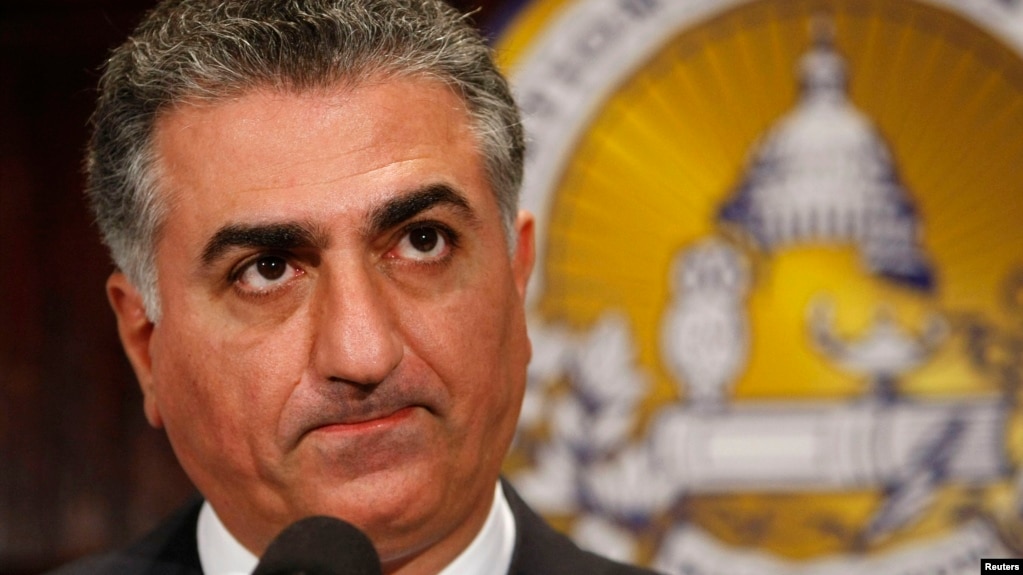
FILE - Former Iranian Crown Prince Reza Pahlavi speaks at the National Press Club in Washington, June 22, 2009.

FILE – Former Iranian Crown Prince Reza Pahlavi

VOA: Iran’s exiled crown prince, Reza Pahlavi, is urging the United States and Israel not to fall into a “trap” by escalating their disputes with the Iranian government into a military conflict.

U.S. President Donald Trump and Israeli Prime Minister Benjamin Netanyahu are due to hold their first official meeting at the White House on Wednesday. White House spokesman Sean Spicer said Tuesday that the leaders of the two longtime allies will discuss how to respond to what they see as “threats posed by Iran and its proxies.”

In an exclusive studio interview with VOA’s Persian service, Pahlavi said he expects to see “more harmony and coordination” of U.S. strategy on Iran under the Trump administration, with Israel and other American partners in the Middle East and Europe.

Speaking in Washington last Thursday, Pahlavi said he anticipates Iran’s Islamist rulers reacting to that increased coordination with “typical rhetoric and bravado” for domestic consumption. But, he said, Tehran would be “ill advised” not to take the issue of U.S.-Israeli cooperation seriously. More here including videos from several associated dignitaries.

Iran Warns Trump Against Disclosing Secret Iran Deal Documents

Iran claims disclosure threatens deal

Kredo:   Senior Iranian officials are warning the Trump administration about disclosing secret deals related to the nuclear deal that have long been hidden from the public by the Obama administration, according to recent comments that prompted pushback from senior sources on Capitol Hill.

Alaeddin Boroujerdi Alaeddin Boroujerdi / AP

Iran’s warning comes on the heels of a Washington Free Beacon report disclosing that former national security adviser Michael Flynn had been pushed out of office partly due to his intention to release these sensitive documents to the American public.

Leading lawmakers in Congress launched multiple investigations last year into the Obama administration’s efforts to keep these documents secret and out of public view. Sources who spoke to the Free Beacon about the matter said that the Trump White House is working on ways to publicize this information despite warnings from Iran.

Secret side deals related to the nuclear agreement remain unclassified but have been stashed in a secure location on Capitol Hill, making it difficult for staffers and lawmakers to view them. Individuals seeking to view these documents must have security clearance and are barred from taking notes or speaking about what they see.

Multiple senior congressional sources familiar with the nature of the documents told the Free Beacon that lawmakers and the Trump administration would not be intimidated by Iranian threats.

Alaeddin Boroujerdi, a senior Iranian lawmaker and head of country’s foreign policy committee, warned the Trump administration against making these documents public in recent remarks.

“If Trump wants to publish confidential documents exchanged between Iran and the International Atomic Energy Agency, it will in fact constitute a violation of the agency’s obligations, because the agency has been committed not to make Iran’s confidential nuclear information and documents available to any country, including the U.S.,” Boroujerdi was quoted as saying in Iran’s state-run media.

Some of these documents surround side deals struck between Iran and the IAEA regarding the Islamic Republic’s ability to enrich uranium. They also include deals about how much information Iran must disclose to international inspectors about the country’s contested nuclear program.

As part of the nuclear deal, U.S. inspectors are not permitted to take part in the review of any Iranian sites.

Rep. Peter Roskam (R., Ill.), a vocal opponent of the Iran deal who has long been fighting for the full disclosure of the Iran deal documents, told the Free Beacon that the Obama administration hid these documents in order to mislead Americans about the true nature of the agreement.

“The administration is under no obligation to conceal information about secret side deals, nor should they feel obligated to protect the anonymity of individuals or institutions who misbehaved at the behest of the Obama administration,” Roskam said.

Included in these documents are details of multiple, secret payments to Iran that totaled close to $2 billion. The money is believed to have been part of an incentive package aimed at securing the release last year of several American hostages in Iran.

None of this information is technically classified, yet it remains hidden from the American public and a large portion of Congress.

“The deal has only survived this long because the Obama administration gave Iran secret exemptions to cheat,” said one veteran congressional adviser familiar with the documents. “The Iranians know that if people found out about those exemptions, it would be obvious that the deal was always a bad, unsustainable deal, and they couldn’t blame Trump. That’s why they’re making up reasons why parts of the deal should be kept secret.”

Iran is expressing opposition to the disclosure of the information in order to force the Trump administration into a corner, the source maintained.

A senior congressional aide familiar with the situation further told the Free Beacon that U.S. lawmakers would not be instructed by Iran about what can and cannot be made public.

“Our declassification procedures are not subject to the whims of Iranian officials,” the source said. “Unclassified documents should be released so the American public can see just how bad of a deal the previous administration negotiated on its behalf.”

A second congressional source explained that federal law mandates these documents be released to lawmakers. This includes side deals and other materials related to the future of Iran’s nuclear program.

“The American public has a right to know what’s really going on behind the scenes with the nuclear agreement. At the very least, Congress is entitled to all relevant documents—including side arrangements or any other related materials—as mandated by federal law under Corker-Cardin,” the source said. “We won’t be intimidated by these empty threats from Iran or any international body. It’s time to make these secret documents public so everyone can for themselves what this deal is really all about.”