Did Megyn Kelly ask Vladimir Putin About these Items?

Image result for megyn kelly vladimir putin Business Insider

LONDON — Vladimir Putin again denied that Russia interfered in last year’s U.S. election, joking to NBC News’ Megyn Kelly on Friday that even her “underage daughter” could have been behind the hacking.

The journalist asked the Russian president about what American intelligence agencies say is evidence that he became personally involved in a covert campaign to harm Hillary Clinton and benefit Donald Trump.

“IP addresses can be invented — a child can do that! Your underage daughter could do that. That is not proof,” Putin replied.

He also said that U.S. accusations about Russia were reminiscent of “anti-Semitism and blaming the Jews,” describing them as “disinformation.”

*** Hummm, okay, but he also said this:

Moscow (CNN)Russian President Vladimir Putin seemed to suggest Thursday that “patriotic hackers” may have meddled in the US election, but insisted that none of their potential activities were state-backed.

It’s the first time the Russian leader has conceded that any election-related hacking attacks may have emanated from his country.
In comments to reporters at the St. Petersburg Economic Forum, Putin likened hackers to “artists,” who could act on behalf of Russia if they felt its interests were being threatened.
“(Artists) may act on behalf of their country, they wake up in good mood and paint things. Same with hackers, they woke up today, read something about the state-to-state relations.
“If they are patriotic, they contribute in a way they think is right, to fight against those who say bad things about Russia,” Putin said.
*** Typical Kremlin, squishy on truth and commitment. Now…how about this mess that the Trump White House is working a deal with the Kremlin to return the two dachas in Maryland and New York that Obama ordered shuttered in December? It is said that the Kremlin did not respond to this action by Obama, but actually they did by terminating the construction of our diplomatic post in St. Petersburg. C’mon Tillerson really? Why should we be so hard on Putin and the Kremlin? Let’s go deeper shall we? We may also have to wait for the full Putin/Kelly interview to be aired.
Image result for megyn kelly vladimir putin  There are many more Russia vs. United States issues like Russian bombers buzzing U.S. military aircraft or that Russian spy ship that hovered off the Atlantic coast….moving on….
***
How many Russian spies are inside the United States? Answer unknown, but the estimates are in the tens of thousands. One such former FBI sleuth explains the condition here:

A national-security expert who has worked as a double agent for the FBI against Russian intelligence operations says the bureau’s current model for identifying Russian assets relies too much on a Cold War-era style of human-asset recruitment.

Naveed Jamali, who secretly reported to the FBI for four years while pretending to work for a Russian spy, was invited by Democratic Rep. Eric Swalwell to brief the House Intelligence Committee last week on Russia’s techniques for recruiting foreign spies. More here.

***

Politico: Russian diplomats, whose travel was supposed to be tracked by the State Department, were going missing.The diplomats, widely assumed to be intelligence operatives, would eventually turn up in odd places, often in middle-of-nowhere USA. One was found on a beach, nowhere near where he was supposed to be. In one particularly bizarre case, relayed by a U.S. intelligence official, another turned up wandering around in the middle of the desert. Interestingly, both seemed to be lingering where underground fiber-optic cables tend to run.

According to another U.S. intelligence official, “They find these guys driving around in circles in Kansas. It’s a pretty aggressive effort.”

It’s a trend that has led intelligence officials to conclude that the Kremlin is waging a quiet effort to map the United States’ telecommunications infrastructure, perhaps preparing for an opportunity to disrupt it.

“Half the time, they’re never confronted,” the official, who declined to be identified discussing intelligence matters, said of the incidents. “We assume they’re mapping our infrastructure.”

As the country — and Washington in particular — borders on near-obsession over whether affiliates of Donald Trump’s campaign colluded with the Kremlin to swing the 2016 presidential election, U.S. intelligence officials say Moscow’s espionage ground game is growing stronger and more brazen than ever.

It’s a problem that’s sparking increasing concern from the intelligence community, including the FBI. After neglecting the Russian threat for a decade, the U.S. was caught flat-footed by Moscow’s election operation. Now, officials are scrambling to figure out how to contain a sophisticated intelligence network that’s festered and strengthened at home after years’ worth of inattention.

“We’ve definitely been ignoring Russia for the last 15 years,” another intelligence official said, calling the Kremlin “resurgent.”

POLITICO spoke with half a dozen current and former U.S. intelligence officials about Russian spy strategies. All requested anonymity to openly discuss espionage.

“They’ve just got so many bodies,” the first intelligence official said of the Russians. “It’s not about what we know [is happening]. It’s about what we don’t know.”

It’s one of the most poorly kept secrets in the intelligence community: The Russian effort is a startlingly open and aggressive one, and often falls in a complex legal gray zone.

For example, the second official said, diplomats wandering around the desert might be in violation of certain travel requirements, but it’s not necessarily illegal.

Most U.S. intelligence officials can relay stories of run-ins with Russian intelligence operatives — often moonlighting as lobbyists, diplomats and businessmen — hanging around popular Washington happy hours. It’s an open assumption that they use Capitol Hill and its public office buildings as a farming ground for potential recruits. And the presumed agents aren’t hard to spot, according to officials: An oft-traded joke is to go to one of Washington’s handful of Russian restaurants and look for the guy in a tracksuit.

As the Russians continue aggressively pushing legal boundaries in both the United States and Moscow, there’s a tangible frustration among U.S. intelligence officials and on Capitol Hill that the U.S. has consistently missed its chance to crack down on Moscow’s spy games.

For years, lawmakers from both sides of the aisle pressed a hesitant Obama White House to crack down on some of the Kremlin’s more brazen stateside maneuvers.

“There was a general feeling that this was not getting the attention it deserved,” said Sen. Ron Wyden (D-Ore.), a member of the Senate Intelligence Committee who has supported the panel’s efforts in pressing the White House to tow a harder line with the Kremlin.

Around last summer, that tension reached a fever pitch.

Lawmakers, frustrated by Russian diplomats’ repeated violation of travel rules, inserted a provision in last year’s intelligence authorization bill that would have required Russian diplomats to provide ample notice to the State Department if they planned to travel more than 50 miles from where they were based, and further, would have required the FBI to validate that travel. According to several sources involved in the discussions at that time, the administration fought desperately — and failed — to get those provisions taken out of the bill.

Around that same time, two key Democratic lawmakers informed the White House of plans to publicly finger Russia as the foreign power behind a widespread effort to manipulate the ongoing U.S. election — something no official U.S. government entity had yet done. Fearful of escalation, the administration tried to get Sen. Dianne Feinstein and Rep. Adam Schiff, then the two leading Democrats on the Senate and House intelligence committees, respectively, to back off. The California lawmakers didn’t, and they released the statement. Backed into a corner by Congress, the administration released a statement saying the same a week later.

The Obama administration’s tentativeness in the weeks leading up to Nov. 8 — especially in the high-stakes context of a presidential election — is something that still bewilders corners of the intelligence world. Some speculate that Secretary of State John Kerry, desperate for a peace deal in Syria, urged the White House to lie low. Some blame it on fear of igniting a cyberwar, and still others say it stemmed from a generalized underestimation of the Russian threat.

Blaming one factor, one of the officials said, is “oversimplified.” But the frustration — and regret — is tangible.

Underscoring all this is that the Kremlin shows none of the same reluctance at home, nor does it show any propensity to abide by the gentlemen’s espionage rules that the U.S. tends to uphold, sometimes to the chagrin of its own spy corps.

“We can’t even leave the compound over there without being followed,” the first U.S. intelligence official said.

One well-publicized incident continues to agitate officials in Washington. In June of last year, a U.S. diplomat was returning to the embassy in Moscow when a guard with the FSB, the domestic Russian security service, exploded from his booth on the compound’s perimeter and assaulted him. A surveillance video shows the guard tackling the man and throwing him to the ground before the U.S. diplomat was able to drag himself inside the doors of the embassy to safety.

The U.S. diplomat, whom POLITICO confirmed was actually a CIA officer, had done the impossible — he had lost his tails as he maneuvered in Moscow. Infuriated, the Russians sent an FSB guard the man wouldn’t recognize to wait outside the embassy for his inevitable return. The officer was beaten so badly he was immediately flown out of the country for urgent medical attention.

The account was confirmed by another person familiar with the incident.

“They are far more aggressive on counterintelligence issues in Russia than we are here,” one of the officials said.

It’s these incidents that worry and frustrate the Americans. The unspoken rules of spying mean nothing to the Kremlin.

“They agree to rules, and then break them,” another U.S. official said.

Former CIA Director John Brennan made reference to this frustration in recent congressional testimony. Though he stopped short of explicitly discussing the June 2016 incident in Moscow, he told lawmakers that he had brought up the broader harassment issue to his Russian counterpart at Russian state security services last August.

“I first told him, as I had several times previously, that the continued mistreatment and harassment of U.S. diplomats in Moscow was intolerable and needed to stop,” Brennan said.

The CIA declined to comment. The FBI did not respond to an official request for comment by deadline.
The Other Side of General Flynn

During his time at the Defense Intelligence Agency, Flynn had access to all kinds of covert operations and intelligence and tactics. After being fired by Barack Obama, it appears Flynn applied some of the schemes and plots in civilian life as he maneuvered his way into the Trump campaign orbit. There is much more to all this intrigue with regard to Turkey/Gulen/Flynn Intel Group LLC. Below are some key items.

Kidnapping

WASHINGTON/McClatchy

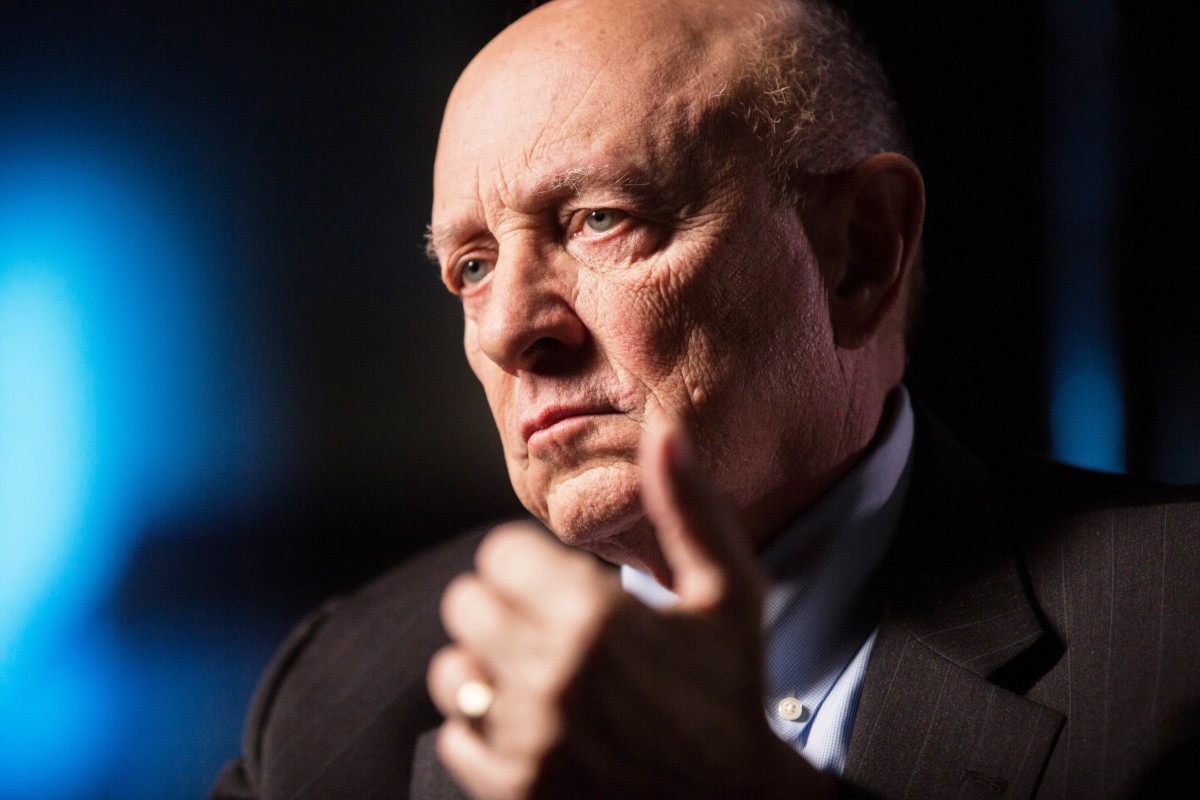
In part: Days after Donald Trump’s stunning election victory, Michael Flynn phoned former CIA Director James Woolsey about taking another stint as head of the spy agency in the new administration, but then added a condition, Woolsey said.

Image result for james woolsey Woolsey/NBC

Flynn said the CIA director “would be expected to report to him,” not the president, Woolsey told McClatchy in a phone interview. Woolsey, who led the CIA in the first two years of the Clinton administration, said he promptly rejected the offer because there are times that he would need to “call on the president face to face.”

Washington attorney Robert Kelner, who is defending Flynn in the face of FBI, Pentagon and congressional investigations into his ties to Russia and Turkey, said Woolsey’s account is “false.” Kelner did not elaborate.

McClatchy reported May 17 that in the final days of the Obama administration, and without divulging the identity of his Turkish client, Flynn took a step directly benefiting Turkey. He asked the Obama administration to hold off plans to arm Syrian Kurds, a plan to which Turkey objected, for an invasion of Raqqa, the de facto capital of the terrorist group ISIS, short for the Islamic State.

Flynn’s resignation stemmed from misleading comments about whether he discussed U.S. sanctions against Russia during phone conversations with Russian Ambassador Sergey Kislyak on Dec. 29, 2016.

On that day, three weeks before Trump took office, President Barack Obama expelled 35 Russian diplomats and toughened other sanctions on Vladimir Putin’s government as punishment for a Kremlin cyber offensive aimed at interfering with last year’s U.S. elections and helping Trump win the Oval Office.

It’s not clear whether Trump okayed Flynn’s rerouting of the president’s longtime line of authority over the CIA, which provides daily intelligence updates on matters around the globe.

Flynn had listed Woolsey as a member of an advisory board to his company, Flynn Intel Group, but Woolsey said he never received any compensation and had no contract or official role. He did attend one meeting, in September, and said he left deeply troubled.

Woolsey said he arrived late to the meeting and found Flynn and some Turkish government officials brainstorming a plan to kidnap and fly to Turkey one of the country’s leading dissidents – Muslim cleric Fethullah Gulen, whom Ankara has accused of assisting in a failed military coup attempt last summer. Gulen is living in a heavily secured compound in Pennsylvania.

“They were working on the assumption that they could take Gulen,” said Woolsey, who told the Wall Street Journal in March that such a scheme would be illegal.

Woolsey said Flynn began the Nov. 14 phone call, which occurred a couple of days before Flynn was formally named national security adviser, by saying the Trump administration would be “restructuring the intelligence community” and asked if he would “be willing to be director of the CIA.” The full story here.

Image result for fetullah gulen Fetullah Gulen

Producing a Documentary

Unfinished documentary

In part Reuters: Mueller, who takes over leadership of an FBI investigation that began last July, can present evidence to grand juries and hear testimony from witnesses.

Trump fired Flynn in February after it became clear that he had falsely characterized the nature of phone conversations he had with Russian ambassador Sergey Kislyak in December, just after the Obama administration imposed new sanctions on Russia for what U.S. intelligence agencies had concluded was a Kremlin-led effort through computer hacking, fake news and propaganda to boost Trump’s chances of winning the White House.

Flynn’s work for Inovo came under scrutiny after he published a commentary on a political news website on Election Day calling Gulen a “radical Islamist” who should be extradited to Turkey.

Along with the editorial, the Flynn Intel Group also produced a 75-page report on Gulen based mainly on news reports and some video footage for a documentary that was never made, according to three people familiar with the project.

Alptekin, who is chairman of the Turkey-U.S. Business Council, told Reuters he was satisfied with Flynn’s research because it had helped him understand how Gulen’s network operates in the United States.

He said the $530,000 payment to Flynn’s firm came “mostly” from his personal funds.

On Nov. 18, the day after Flynn was appointed Trump’s national security adviser, Trump transition team lawyer William McGinley raised concerns on a call with the Flynn Intel Group and others involved in the Inovo project over who had paid for Flynn’s commentary, according to two people with knowledge of the conversation.

Flynn did not participate in that call, they said.

At the time of the call, Flynn had not disclosed that his work for Alptekin meant he was being paid to represent Turkish interests during the election campaign. Flynn Intel Group had said in a September 2016 filing that it was lobbying for Inovo but did not disclose its Turkish links. In March, Flynn retroactively registered under the Foreign Agents Registration Act.

In a letter accompanying the March filing, Flynn’s lawyer, Kelner, said the disclosure was being made because Flynn’s work for Inovo “could be construed to have principally benefited the Republic of Turkey,” which he noted was seeking to extradite Gulen.

The House of Representatives intelligence committee, which is also investigating Russian interference in the election, subpoenaed records from Flynn on Wednesday. The Senate’s intelligence committee, which has a separate probe under way, has also served subpoenas on Flynn and two of his businesses, and earlier this week Flynn indicated that he would start turning over relevant materials.

Obamacare Rising Costs Here and Details of New Proposal

Brady: “Obamacare is imploding, and we’re just seeing prices skyrocket”

Our health care system continues to deteriorate under Obamacare. Americans are facing fewer choices, higher costs, and less access to the care they need. Just look at the news from last week:

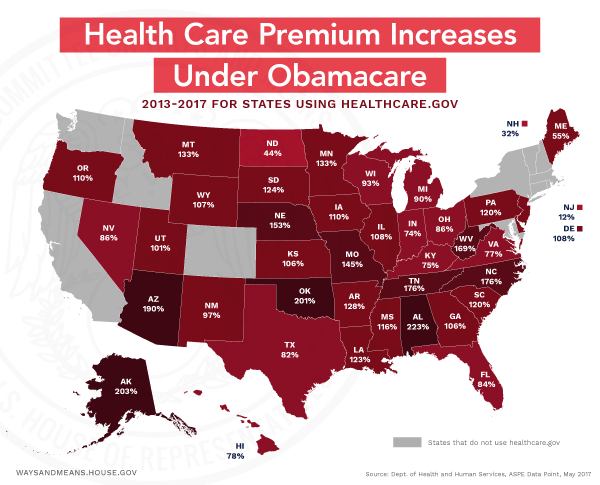
  • Premiums have more than doubled under Obamacare. According to data from the previous Administration, millions of Americans are now paying twice as much—on average $3,000 more—for insurance on the individual marketplaces than they were in 2013.
  • 25 more counties will have zero Obamacare insurance options. The last Obamacare insurer in parts of Missouri, Blue Cross Blue Shield of Kansas City, announced its decision to withdraw from Obamacare’s individual marketplace in 2018. That leaves hundreds of thousands more Americans with few, if any, places to turn for coverage.

Describing the urgent need to repeal and replace Obamacare, economist Stephen Moore wrote in The Washington Times:

“If we stay with Obamacare, within a few years tens of millions will have no insurance at all that is even remotely affordable. Aetna, Humana, and other major insurers in just recent months have fled Obamacare. The Titanic has hit the iceberg and it is rapidly sinking … Here’s a prediction: by the end of the year we could have nearly half the country without insurers if this spiral continues.”

House Republicans took action to rescue the American people from this failing law by passing the American Health Care Act, which the Congressional Budget Office confirmed:

  • Lowers average premiums in the individual marketplace by 4 to 30 percent or more, depending on the state.
  • Delivers nearly $1 trillion of relief from Obamacare taxes.
  • Provides individuals and families freedom to choose a health care plan that is right for them.Obamacare keeps wreaking havoc across the country:
    • Major insurers continue to abandon the individual insurance market in different states, making it more difficult for Americans to access coverage.
    • Humana and Aetna announced they would withdraw from Obamacare’s individual exchanges entirely in 2018.
    • The last remaining insurer in Iowa could exit the exchanges next year—leaving families in 94 out of 99 counties without a single insurer to turn to for their coverage.
    • Connecticut, Maryland, New York, Oregon, and Virginia have already projected double-digit premium rate increases for next year.

    As Ways and Means Republicans explain, Obamacare’s latest failures underscore the urgent need for the American Health Care Act—legislation passed by the House to fix our broken health care system:

    On Delivering Relief from Obamacare

    Rep. Diane Black (R-TN), Budget Committee Chairman, in RealClearPoliticsObamacare is a disaster, and in Tennessee, its collapse is creating dire circumstances for our citizens. Massive premium increases are making insurance unaffordable for more and more Tennesseans and rising deductibles are making it harder to get health care, even for those who have insurance. Doing nothing is not an option. Congress has taken the first step to keep our promise of repealing and replacing Obamacare.” 

    Rep. Kevin Brady (R-TX), Ways and Means Committee Chairman, in the Conroe Courier“Although this is just the first step, it is a giant pivot in the right direction so that Americans no longer have to struggle under the $1 trillion in tax hikes brought on by Obamacare. Under the bill, Americans, especially small businesses, will no longer be forced to buy healthcare they do not want or cannot afford.” 

    Rep. Jackie Walorski (R-IN) in the South Bend Tribune“Obamacare came with a lot of promises. But these promises were broken, and now many Hoosiers face higher premiums, fewer options, and a collapsing system … [AHCA] rescues Americans from the instability of Obamacare and begins a stable transition to a better system. It will lower premiums and strengthen markets so patients have real options they can actually afford. It will empower patients, not bureaucrats, to make health care decisions.”

    On Protecting Patients with Pre-Existing Conditions

    Rep. Erik Paulsen (R-MN) in the Minneapolis Star Tribune“Nothing in this bill would allow an insurance company to deny someone coverage, including to those with a preexisting condition. Nothing would allow an insurance company to cancel someone’s insurance policy should they become sick. Despite claims from opponents, the bill does not classify sexual assault as a preexisting condition. For those who maintain continuous coverage, the bill does not allow insurance companies to charge an individual more simply because they have a preexisting condition. It’s also worth noting that this bill includes $138 billion to assist states in making sure everyone, including those with preexisting conditions, has access to high-quality, affordable health care.” 

    Rep. Adrian Smith (R-NE) in the Grand Island Independent“I firmly believe we can protect access to care for those with preexisting conditions while lowering costs for the millions of Americans currently facing premiums and deductibles they cannot afford. Passing the American Health Care Act in the House was the first step, and we will continue our work in Congress to revive the health care marketplace.”

    Rep. Jackie Walorski (R-IN) in the South Bend Tribune“This bill maintains critical protections for patients with pre-existing conditions. I have always said any replacement must protect these patients, and we make sure no one can be denied coverage due to a pre-existing condition. States can obtain a waiver of some individual and small group insurance regulations to help lower premiums or increase the number of people with coverage, as long as they implement plans—such as high risk pools—to ensure affordable coverage for those with costly medical conditions. Under these waivers, insurers can only charge high-risk patients more if they have a two-month lapse in coverage, and the bill dedicates $8 billion to help patients in such situations.” 

    On Putting the American People Back in Control of Their Care

    Rep. Carlos Curbelo (R-FL) in the Miami Herald“I made a promise that I would fight for better healthcare for our country, for a market-based system where Americans, not special interests, are in control and can make the best healthcare choices for themselves and their families. The legislation before Congress today gets us closer to such a system.”

    Rep. Erik Paulsen (R-MN) in the Minneapolis Star Tribune“[This debate] is about Nyla, a recently widowed mother of four who saw her premiums jump to $1,000 per month with a $13,000 deductible… this debate is about Taryn, who, after being diagnosed with a brain tumor, suddenly had her plan canceled when her insurer pulled out of the market … [AHCA] is aimed at addressing many of the shortcomings of the ACA by stabilizing insurance markets and beginning to bring down premiums. Rather than the one-size-fits-all Washington approach, we can empower states and consumers to take control of their own health care outcomes.”

    CLICK HERE to read Ways and Means Committee Chairman Brady’s statement on the AHCA.

    CLICK HERE to read a summary of the AHCA.

    CLICK HERE to read the section-by-section description of the AHCA.

U.S. of Paris Accord, will take 3 Years However

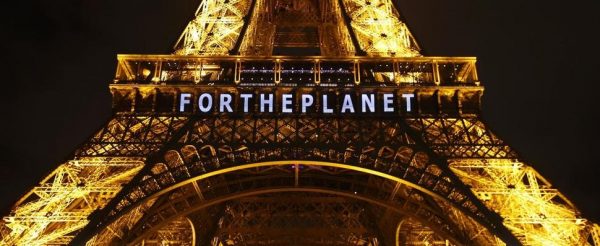
Paris Accord TALKERS

Topline: The Paris Accord is a BAD deal for Americans, and the President’s action today is keeping his campaign promise to put American workers first. The Accord was negotiated poorly by the Obama Administration and signed out of desperation. It frontloads costs on the American people to the detriment of our economy and job growth while extracting meaningless commitments from the world’s top global emitters, like China. The U.S. is already leading the world in energy production and doesn’t need a bad deal that will harm American workers.

UNDERMINES U.S. Competitiveness and Jobs

According to a study by NERA Consulting, meeting the Obama Administration’s requirements in the Paris Accord would cost the U.S. economy nearly $3 trillion over the next several decades.

By 2040, our economy would lose 6.5 million industrial sector jobs including 3.1 million manufacturing sector jobs

It would effectively decapitate our coal industry, which now supplies about one-third of our electric power

The deal was negotiated BADLY, and extracts meaningless commitments from the world’s top polluters

The Obama-negotiated Accord imposes unrealistic targets on the U.S. for reducing our carbon emissions, while giving countries like China a free pass for years to come.

 Under the Accord, China will actually increase emissions until 2030

The U.S. is ALREADY a Clean Energy and Oil & Gas Energy Leader; we can reduce our emissions and continue to produce American energy without the Paris Accord

America has already reduced its carbon-dioxide emissions dramatically.

Since 2006, CO2 emissions have declined by 12 percent, and are expected to continue to decline.

According to the Energy Information Administration (EIA), the U.S. is the leader in oil & gas production.

The agreement funds a UN Climate Slush Fund underwritten by American taxpayers

President Obama committed $3 billion to the Green Climate Fund – which is about 30 percent of the initial funding without authorization from Congress

With $20 trillion in debt, the U.S. taxpayers should not be paying to subsidize other countries’ energy needs.

The deal also accomplishes LITTLE for the climate

According to researchers at MIT, if all member nations met their obligations, the impact on the climate would be negligible. The impacts have been estimated to be likely to reduce global temperature rise by less than .2 degrees Celsius in 2100.

*** Image result for paris accords climate

The Legal and Economic Case Against the Paris Climate Treaty

Canceling U.S. Participation Protects Competitiveness and the Constitution

President Trump should keep his two-part campaign promise to cancel U.S. participation in the Paris Climate Agreement and stop all payments to United Nations global warming programs. The Paris Agreement is a costly and ineffectual solution to the alleged climate crisis. It is also plainly a treaty, despite President Obama’s attempt to implement it without the Senate’s advice and consent. Failure to withdraw from the agreement would entrench a constitutionally damaging precedent, set President Trump’s domestic and foreign policies in conflict, and ensure decades of diplomatic blowback.

For those and other reasons, the Paris Agreement imperils both America’s economic future and capacity for self-government.

The Paris Agreement and the 1992 treaty it purports to modify, the United Nations Framework Convention on Climate Change, both contain provisions for withdrawal. Concerns about diplomatic blowback if President Trump withdraws from the Agreement or submits it for the Senate’s advice and consent actually confirm the wisdom of exercising one of those options. The Paris Agreement is designed to institutionalize a running campaign of diplomatic blowback unless the U.S. submits to ever-tightening constraints, ratcheting up every five years. If Trump withdraws, any diplomatic blowback would largely be a muted one-off event, without the economic, political, and security costs that staying in the Paris Agreement entails.

To safeguard America’s economic future and capacity for self-government, President Trump should pull out of the Paris Agreement. There are several options for doing so, which are discussed in this paper. Regardless of which option Trump selects, his  administration should make the case for withdrawal based on the following key points:

  1. The Paris Climate Agreement is a treaty by virtue of its costs and risks, ambition compared to predecessor climate treaties, dependence on subsequent legislation by Congress, intent to affect state laws, U.S. historic practice with regard to multilateral environmental agreements, and other common-sense criteria.
  2. In America’s constitutional system, treaties must obtain the advice and consent of the Senate before the United States may lawfully join them. President Obama deemed the Paris Agreement to not be a treaty in order to evade constitutional review, which the Agreement almost certainly would not have survived.
  3. Allowing Obama’s climate coup to stand will set a dangerous precedent that will undermine one of the Constitution’s important checks and balances. It will allow a future president to adopt any treaty he and foreign elites want, without Senate ratification, just by deeming it “not a treaty.”
  4. The Agreement endangers America’s capacity for self-government. It empowers one administration to make legislative commitments for decades to come, without congressional authorization, and regardless of the outcome of future elections. It would also make U.S. energy policies increasingly unaccountable to voters, and increasingly beholden to the demands of foreign leaders, U.N. bureaucrats, and international pressure groups.
  5. The United States cannot comply with the Paris Agreement and pursue a pro-growth energy agenda. Affordable, plentiful, reliable energy is the lifeblood of modern economic life. Yet, the Paris Agreement’s central goal is to make fossil fuels, America’s most plentiful and affordable energy source, more expensive across the board. Implementing the agreement’s progressively more restrictive five-year emission-reduction pledges—called Nationally Determined Contributions (NDCs)—would destroy U.S. manufacturing’s energy price edge.
  6. The Agreement entails more cost and risk than the country is willing to bear. A majority of states have sued to overturn the Obama Environmental Protection Agency’s end-run around Congress, the Clean Power Plan, which is also the centerpiece of the U.S. NDC under the Paris Agreement. Yet, the CPP is only a start. All of Obama’s adopted and proposed climate policies would only achieve about 51 percent of just the first NDC, and the Paris Agreement requires parties to promise more “ambitious” NDCs every five years.
  7. The Agreement has no democratic legitimacy. President Obama kept mum about climate change during the 2012 elections. Only after being reelected did he unveil a climate agenda featuring an EPA-redesigned electric power system and the most “ambitious” climate agreement in history.
  8. Withdrawing from the Paris Agreement is a humanitarian imperative. The Agreement will produce no detectable climate benefits. Instead, it will divert trillions of dollars from productive investments that would advance global welfare to political uses. Worse, the Agreement’s mid-century emission-reduction goals cannot be achieved without drastically reducing energy-poor countries’ current access to affordable energy from fossil fuels.

For all the foregoing reasons, President Trump should stick to his campaign promises to end America’s participation in the Paris Climate Agreement and stop payments to the U.N. Green Climate Fund.

7 Subpoenas Issued for ‘Unmasking’ Activities

In April:

Then-National Security Adviser Susan Rice did at times ask that certain names in intelligence reports be “unmasked” in order to understand the context in which they were mentioned in intelligence reports, a former national security official told CBS News.

Rice asked for the identities of those Americans picked up during surveillance of foreign nationals when it was deemed important context for national security, and she did not ask that the information be disseminated broadly, according to this former official. A Monday report by Bloomberg’s Eli Lake said that Rice requested the unmasking of Trump officials. Names of Americans swept up incidentally in the collection of intelligence are normally masked, or kept redacted, in intelligence briefings. However, the law provides for much leeway when it comes to unmasking by National Security Council officials, which suggests that Rice’s request was legal. More here.

CBS: The House Intelligence Committee issued seven subpoenas — four related to the investigation into Russian meddling in the presidential election and three to the “unmasking” of Trump associates during the presidential transition.

The committee announced late Wednesday afternoon that it would subpoena former National Security Adviser Michael Flynn and the Flynn Intel Group LLC, and Trump lawyer Michael Cohen and Michael D. Cohen & Associates PC as part of its investigation into Russian meddling in the 2016 campaign.

The committee’s statement, released by Chairman Rep. Mike Conaway and ranking member Rep. Adam Schiff, said that the subpoenas were for “testimony, personal documents and business records.”

The Wall Street Journal, which first reported the subpoenas, said that the committee also subpoenaed the National Security Agency (NSA), FBI and CIA for information about “unmasking,” that is, the exposure of Trump campaign officials mentioned in classified intelligence reports, based on intercepts of conversations. Names of Americans swept up incidentally in the collection of intelligence are normally masked, or kept redacted, in intelligence briefings, but under the law, national security officials can request that these names be revealed, or unmasked.

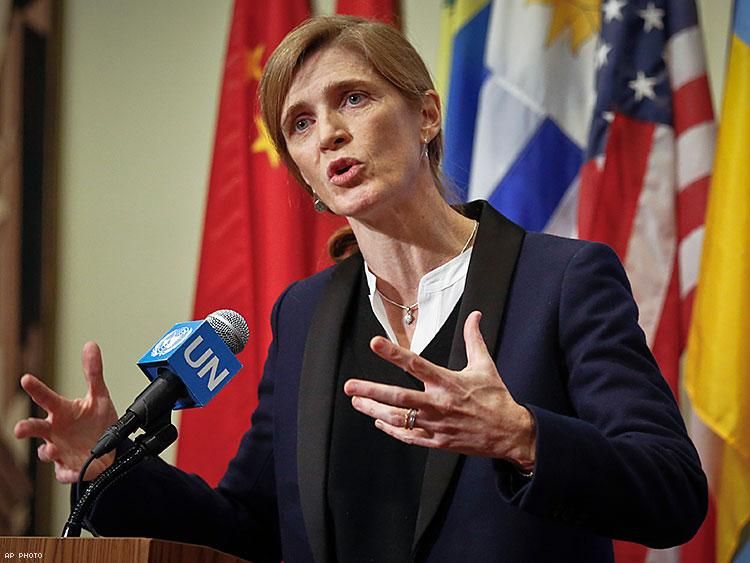
The subpoenas related to unmasking, according to the Journal, seek information about requests made by then-National Security Adviser Susan Rice, then-CIA Director John Brennan and then-U.N. Ambassador Samantha Power to unmask names contained in classified documents.

*** Image result for unmasking subpoenas Susan Rice

Image result for john brennan John Brennan

Image result for samantha power Samantha Power

In part from Rosen at FNC:

The inclusion of Power’s name on the subpoenas marks the first appearance of the former U.N. ambassador in the controversy surrounding the Obama administration’s use of unmasking. Capitol Hill sources told Fox News they are devoting increasing scrutiny to Power – a former historian and winner of the Pulitzer Prize who worked as a foreign policy adviser in the Senate office of Barack Obama before joining his administration – because they have come to see her role in the unmasking as larger than previously known, and eclipsing those of the other former officials named.

Rice has previously denied any improper activity in her use of unmasking. “The allegation is somehow Obama administration officials utilized intelligence for political purposes, that’s absolutely false,” Rice told MSNBC on April 4. President Trump said at that time that he personally believed Rice had committed a crime. None of those named on the subpoenas has been formally accused of wrongdoing.

Inquiries placed with representatives of Power and Brennan were not immediately returned.

That Nunes signed the seven subpoenas, as is standard practice, underscored the chairman’s continuing influence over key aspects of over his committee’s probe, despite the fact that Nunes in early April “stepped aside” from his panel’s Russia probe. He insists his decision was not a formal recusal, and he is still awaiting a hearing by the House Ethics Committee, which agreed at the time to investigate whether Nunes had improperly shared classified data with the White House before presenting it to Schiff and the rest of the intelligence committee.

Nunes told Fox News in an exclusive interview on May 19 that he is an active chairman, including continuing to preside over the unmasking angle of the investigation

Investigative sources on the committee’s Republican majority staff told Fox News that the unmasking subpoenas do not reflect a “fishing expedition,” but were issued because documentary evidence already in hand warranted demands for additional documents relating to Rice, Brennan and Power.

Where NSA had previously complied with the House panel’s investigators, sources said that cooperation had ground to a complete halt, and that the other agencies – FBI and CIA – had never substantively cooperated with document requests at all. The investigators believe that even rudimentary document production as a result of the subpoenas will enable them to piece together a timeline linking the unmasking activity to news media reports, based on leaks, that conveyed the same information provided to the officials requesting unmasking.

President Trump and the White House have dismissed the long-running allegations of collusion between Russia and the Trump campaign, and possibly the transition team, as “fake news,” a scandal ginned up by supporters of President Obama and Hillary Clinton to explain the Democratic nominee’s stunning loss to Mr. Trump last November.

However, the Trump administration belatedly acquiesced in the appointment of former FBI Director Robert S. Mueller III as a special counsel to investigate the allegations “and related matters.” Critics of the administration have also pointed to sustained reporting alleging undisclosed contacts between key Trump aides and various Russians – Attorney General Jeff Sessions recused himself from the probe at an early stage because of such contacts – and to a memorandum prepared in February by former FBI director James Comey, leaked a few days after his termination by President Trump, in which Comey alleged that the president had personally importuned him to abandon the FBI’s probe of Flynn.