
Kushner’s Testimony to Senate Senate Intel Committee Staffers

Jared Kushner tells Congress: “I did not collude”

Axios: Giving his version of his Russia contacts for the first time, Jared Kushner says in an 11-page statement to congressional committees that he had “hardly any” contacts with Russians during the campaign, and regarded the meeting with a Russian lawyer at Trump Tower as “a waste of our time.”

  • Key quote: “I did not collude, nor know of anyone else in the campaign who colluded, with any foreign government. I had no improper contacts. I have not relied on Russian funds to finance my business activities in the private sector. I have tried to be fully transparent with regard to the filing of my SF-86 [security clearance] form, above and beyond what is required.”
  • Why it matters: The stakes for the congressional interviews are high for Kushner because the Trump son-in-law is of acute interest to special counsel Bob Mueller, and prosecutors can be expected to pick apart today’s statement.
  • Kushner has a 10 a.m.appointment with staff of the Senate Intelligence Committee, and his meeting tomorrow with the House Intelligence Committee. Both sessions are behind closed doors.

The most colorful passage: “[I]n looking for a polite way to leave and get back to my work,” he says in the statement, “I actually emailed an assistant from the meeting after I had been there for ten or so minutes and wrote ‘Can u pls call me on my cell? Need excuse to get out of meeting.’ I had not met the attorney before the meeting nor spoken with her since. I thought nothing more of this short meeting until it came to my attention recently.”

Another highlight: “With respect to my contacts with Russia or Russian representatives during the campaign, there were hardly any. … [T]he day after the election, I could not even remember the name of the Russian Ambassador. … I sent an email asking [Dmitri Simes of the Center for the National Interest, which hosted a Trump foreign policy speech], ‘What is the name of the Russian ambassador?'”

Other key points:

  • “When it became apparent that my father-in-law was going to be the Republican nominee for President, as normally happens, a number of officials from foreign countries attempted to reach out to the campaign. My father-in-law asked me to be a point of contact with these foreign countries. … [O]ver the course of the campaign, I had incoming contacts with people from approximately 15 countries.”
  • “I called on a variety of people with deep experience, such as Dr. Henry Kissinger, for advice on policy for the candidate, which countries/representatives with which the campaign should engage, and what messaging would resonate.”
  • “The first [campaign contact] that I can recall was at the Mayflower Hotel in Washington, D.C. in April 2016. … [T]he host of the event, Dimitri Simes, … introduced me to several guests, among them four ambassadors, including Russian Ambassador Sergey Kislyak. With all the ambassadors, including Mr. Kislyak, we shook hands, exchanged brief pleasantries.”
  • “Reuters news service has reported that I had two calls with Ambassador Kislyak at some time between April and November of 2016. While I participated in thousands of calls during this period, I do not recall any such calls with the Russian Ambassador. We have reviewed the phone records available to us and have not been able to identify any calls to any number we know to be associated with Ambassador Kislyak and I am highly skeptical these calls took place.”
  • “I had no ongoing relationship with the Ambassador before the election, and had limited knowledge about him.”
  • “The only other Russian contact during the campaign is one I did not recall at all until I was reviewing documents and emails in response to congressional requests for information.”
  • That was the Trump Tower meeting, and he said the invitation from Donald Trump Jr. “was on top of a long [email] back and forth that I did not read at the time. … Documents confirm my memory that this was calendared as ‘Meeting: Don Jr.| Jared Kushner.’ No one else was mentioned.”
  • “There was one more possible contact that I will note. On October 30, 2016, I received a random email from the screenname ‘Guccifer400.’ This email, which I interpreted as a hoax, was an extortion attempt and threatened to reveal candidate Trump’s tax returns and demanded that we send him 52 bitcoins in exchange for not publishing that information. I brought the email to the attention of a U.S. Secret Service agent on the plane we were all travelling on and asked what he thought. He advised me to ignore it and not to reply — which is what I did. The sender never contacted me again.”
  • “On November 16, 2016, my assistant received a request for a meeting from the Russian Ambassador. … The [Dec. 1] meeting occurred in Trump Tower, where we had our transition office, and lasted twenty [to] thirty minutes. Lt. General Michael Flynn (Ret.), who became the President’s National Security Advisor, also attended.
  • “I believed developing a thoughtful approach on Syria was a very high priority given the ongoing humanitarian crisis, and I asked if they had an existing communications channel at his embassy we could use where they would be comfortable transmitting the information they wanted to relay to General Flynn. The Ambassador said that would not be possible and so we all agreed that we would receive this information after the Inauguration. Nothing else occurred. I did not suggest a ‘secret back channel.'”
  • “My assistant reported that the Ambassador had requested that I meet with a person named Sergey Gorkov who he said was a banker and someone with a direct line to the Russian President who could give insight into how Putin was viewing the new administration and best ways to work together. I agreed to meet Mr. Gorkov because the Ambassador has been so insistent, said he had a direct relationship with the President, and because Mr. Gorkov was only in New York for a couple days.”
  • “The [Dec. 13] meeting with Mr. Gorkov lasted twenty to twenty-five minutes. … At no time was there any discussion about my companies, business transactions, real estate projects, loans, banking arrangements or any private business of any kind.”
  • “There has been a good deal of misinformation reported about my SF-86 [security clearance] form. As my attorneys and I have previously explained, my SF-86 application was prematurely submitted due to a miscommunication and initially did not list any contacts (not just with Russians) with foreign government officials.”
  • “[P]eople at my New York office were helping me find the information, organize it, review it and put it into the electronic form. They sent an email to my assistant in Washington, communicating that the changes to one particular section were complete; my assistant interpreted that message as meaning that the entire form was completed.
  • “At that point, the form was a rough draft and still had many omissions including not listing any foreign government contacts and even omitted the address of my father-in-law (which was obviously well known). Because of this miscommunication, my assistant submitted the draft on January 18, 2017.”
  • “The very next day, January 19, 2017, we submitted supplemental information to the transition, which confirmed receipt and said they would immediately transmit it to the FBI.”
Trump Sidelines Tillerson on Iran Nuclear Deal

Trump Assigns White House Team to Target Iran Nuclear Deal, Sidelining State Department

Unhappy with Tillerson over Iran, the president is turning to trusted aides.

After a contentious meeting with Secretary of State Rex Tillerson this week, President Donald Trump instructed a group of trusted White House staffers to make the potential case for withholding certification of Iran at the next 90-day review of the nuclear deal. The goal was to give Trump what he felt the State Department had failed to do: the option to declare that Tehran was not in compliance with the contentious agreement.

“The president assigned White House staffers with the task of preparing for the possibility of decertification for the 90-day review period that ends in October — a task he had previously given to Secretary Tillerson and the State Department,” a source close to the White House told Foreign Policy.

The agreement, negotiated between Iran and world powers, placed strict limits on Tehran’s nuclear program in return for lifting an array of economic sanctions.

On Tuesday, Trump relayed this new assignment to a group of White House staffers now tasked with making sure there will not be a repeat at the next 90-day review. “This is the president telling the White House that he wants to be in a place to decertify 90 days from now and it’s their job to put him there,” the source said.

FP spoke with three sources who were either invited to take part in the new process or were briefed on the president’s decision on certification. All described the new process as a way to work around the State Department, which the president felt pushed certification forward by giving him no other options.

All three sources said Trump specifically asked Tillerson at the previous review to lay the groundwork for decertification — which the sources said Tillerson failed to do.

Trump “is resolved to not recertify deal in 90 days,” said a second source with detailed knowledge of this week’s meeting and the aftermath.

The three sources said it’s too early to tell how this will play out, stressing that all that is certain is that the staffers have gotten a new assignment and there won’t be any more details until after the first meeting, tentatively scheduled for early next week.

Trump’s decision follows months of friction between the White House and State Department over how to handle the Iran nuclear agreement, which Trump denounced as a presidential candidate. The administration was mired in similar divisions in April, when it had to decide whether to certify that Iran was complying with the deal. Every 90 days, the United States has to declare whether Iran is abiding by the agreement and whether sanctions that were waived should remain lifted.

On Monday morning, work was on track for the administration to again certify that Iran was meeting the necessary conditions, but the president expressed second thoughts around midday. A meeting between Trump and Tillerson that afternoon quickly turned into a meltdown.

A third source with intimate knowledge of that meeting said Steve Bannon, the White House chief strategist, and Sebastian Gorka, deputy assistant to the president, were particularly vocal, repeatedly asking Tillerson to explain the U.S. national security benefits of certification. “They repeatedly questioned Rex about why recertifying would be good for U.S. national security, and Rex was unable to answer,” the source said.

“The president kept demanding why he should certify, and the answers Tillerson gave him infuriated him,” the source added.

Tillerson’s communications advisor, R.C. Hammond, disputed the account, denying that Tillerson failed to deliver what the president had asked for or that he would be sidelined. “That wouldn’t match up with the conversations the president and secretary had,” he said.

“Not everybody in the room agreed with what the secretary was saying,” Hammond added. “But the president is certainly appreciative that someone is giving him clear, coherent information.”

While Trump has spoken highly of Tillerson in the past, the source close to the White House said, the president was frustrated that the secretary failed to provide him the option not to certify.

“This is about the president asking Tillerson at the last certification meeting 90 days earlier to lay the groundwork so Trump could consider his options,” the first source said. “Tillerson did not do this, and Trump is infuriated. He can’t trust his secretary of state to do his job, so he is turning to the few White House staffers he trusts the most.”

Hammond dismissed this. “Fiction can be fun when you’re an anonymous source,” he said.

At the previous review in April, Trump had asked Tillerson for specific preparations, which included speaking with foreign allies and to make sure they were on board. “Literally Tillerson did none of this,” the source said. “Simply, [Trump] no longer trusts the State Department to do the work he orders them to do, in order to provide him the options he wants to have.”

The two other sources declined to go into specifics about what Tillerson did not do, only stressing that Trump no longer has faith in the secretary, who simply did not carry out an assignment from him.

But it was not only Tillerson who argued for certifying that Iran was living up to the deal. Defense Secretary James Mattis, National Security Advisor H.R. McMaster, and the chairman of the Joint Chiefs of Staff, Gen. Joseph Dunford, also backed the move.

One White House official acknowledged the president’s deep frustration at the options he was presented on the nuclear deal but argued that it was not fair to say Tillerson and the State Department were solely at fault. The White House National Security Council also bears responsibility for overseeing policymaking and preparing options for the president.

“I wouldn’t put all the blame on them,” the official said of the State Department.

Trump, however, was clearly upset that Tillerson told him he had no choice but to certify Iran was in compliance, according to the source, and asked White House staffers to take over. Withholding certification “wasn’t a real option available to me,” Trump reportedly told the staffers. “Make sure that’s not the case 90 days from now.”

Trump may still choose to certify Iran’s compliance at the next deadline, a source said, but he does not want to be in the position of where he was this week, when he was told that he had to certify because no other option was made available.

“He may not decertify, though I think he will,” the source said. “But he wants to make sure he never, ever, ever hears again that he can’t do it.”

The three sources told FP that, as of Friday, several NSC staffers are expected to be involved including top Middle East advisor Derek Harvey; Joel Rayburn, the director for Iraq, Iran, Lebanon, and Syria; Michael Anton, who handles strategic communications; and Victoria Coates, who works as Anton’s deputy on strategic communications. Bannon and Gorka, who are both regarded as Iran hawks, are also expected to take part.

Anton, who serves as the NSC spokesman, declined to comment.

Career diplomats at the State Department, who were involved in the negotiations and the initial implementation of the deal under former President Barack Obama, have argued that the agreement is vital as it blocks Iran’s path to a nuclear weapon. And they say the benefits outweigh the risks and uncertainties of entering into a confrontation with Tehran over the issue while also avoiding a rupture with European allies that are committed to the deal and that will oppose reimposing sanctions lifted under the accord.

Although most of Trump’s deputies endorsed certifying that Iran was abiding by the deal, one senior figure has emerged in favor of a more aggressive approach — CIA Director Mike Pompeo. At White House deliberations, the former lawmaker opposed certifying Iran while suggesting Congress weigh in on the issue, officials and sources close to the administration said. As a congressman, Pompeo was a fierce critic of the deal.

The CIA declined to comment about Pompeo’s stance on certifying Iran.

The move to sideline Foggy Bottom will likely confirm the worst fears of State Department officials, who expected some form of backlash from the White House given Trump’s stance during the 2016 campaign and the appointment of those seen as Iran hawks.

Tillerson is “trying to be a counterweight against the hard-liners, trying to save the [nuclear deal], but how long can that last?” one senior State Department official told FP, speaking on condition of anonymity. “The White House, they see the State Department as ‘the swamp.’”

Kushner Overlooked 77 Assets, But it Gets Worse

In part from Examiner: White House senior adviser Jared Kushner on Friday released a revised version of his personal financial disclosure that reveals his initial filing did not include 77 assets, according to a report Friday.

The Wall Street Journal reports that the new disclosure says 77 assets were “inadvertently omitted” from Kushner’s original form, released in March, and were added during the “ordinary review” process with the government ethics office.

In addition to information on Kushner, President Trump’s son-in-law, the new disclosure includes details of Ivanka Trump’s finances.

Ivanka Trump is the president’s daughter, a senior White House aide and Kushner’s wife.

The new financial forms show Kushner and Ivanka Trump collectively have between $206 million and $760 million in assets, the Journal said. Kushner’s initial disclosure valued their assets at between $240 million and $740 million. More here.

***

OCCRP

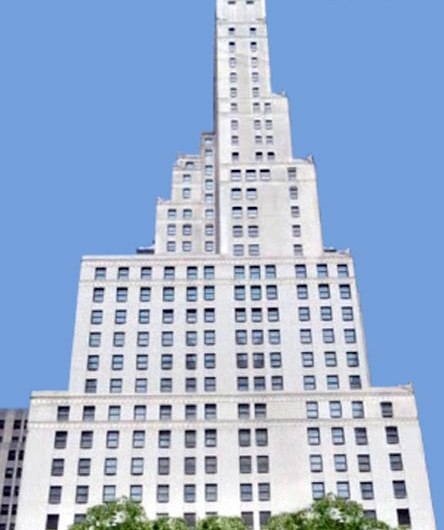
IN 2014, Prevezon Holdings Limited, was controlled by the son of a Russian political figure. The company had many interests in real estate, including an investment in a venture with a Soviet-born diamond and property magnate named Lev Leviev—who also happened to be one of the developers of 20 Pine.

Starting in late 2009, Prevezon began purchasing units in 20 Pine, acquiring five in total. The company later added three Manhattan commercial spaces to create a $24 million portfolio, which prosecutors sued to seize last year. “While New York is a world financial capital,” U.S. Attorney Preet Bharara said in a press release announcing the action, “it is not a safe haven for criminals seeking to hide their loot.” The lawsuit is here.

Jared Kushner sealed Manhattan real estate deal with oligarch’s firm cited in money-laundering case

Guardian: Donald Trump’s son-in-law bought part of old New York Times building from Soviet-born tycoon, Guardian investigation into Russian money in NYC property market finds

Jared Kushner, the son-in-law of Donald Trump, who acts as his senior White House adviser, secured a multimillion-dollar Manhattan real estate deal with a Soviet-born oligarch whose company was cited in a major New York money laundering case now being probed by members of Congress.

A Guardian investigation has established a series of overlapping ties and relationships involving alleged Russian money laundering, New York real estate deals and members of Trump’s inner circle. They include a 2015 sale of part of the old New York Times building in Manhattan involving Kushner and a billionaire real estate tycoon and diamond mogul, Lev Leviev.

The ties between Trump family real estate deals and Russian money interests are attracting growing interest from the justice department’s special counsel, Robert Mueller, as he seeks to determine whether the Trump campaign collaborated with Russia to distort the outcome of the 2016 race. Mueller has reportedly expanded his inquiry to look at real estate deals involving the Trump Organization, as well as Kushner’s financing.

Kushner will go before the US Senate intelligence committee on Monday in a closed session of the panel’s inquiry into Russian interference in the election in what could be a pivotal hearing into the affair.

Leviev, a global tycoon known as the “king of diamonds”, was a business partner of the Russian-owned company Prevezon Holdings that was at the center of a multimillion-dollar lawsuit launched in New York. Under the leadership of US attorney Preet Bharara, who was fired by Trump in March, prosecutors pursued Prevezon for allegedly attempting to use Manhattan real estate deals to launder money stolen from the Russian treasury.

The scam had been uncovered by Sergei Magnitsky, an accountant who died in 2009 in a Moscow jail in suspicious circumstances. US sanctions against Russia imposed after Magnitsky’s death were a central topic of conversation at the notorious Trump Tower meeting last June between Kushner, Donald Trump Jr, Trump campaign manager Paul Manafort and a Russian lawyer with ties to the Kremlin.

Don Jr and Manafort have been called to testify before the Senate judiciary committee on Wednesday, at which they are certain to face questions about the Trump Tower encounter.

Two days before it was due to open in court in May, the Prevezon case was settled for $6m with no admission of guilt on the part of the defendants. But since details of the Trump Tower meeting emerged, the abrupt settlement of the Prevezon case has come under renewed scrutiny from congressional investigators.

Four Russians attended the meeting, led by Natalia Veselnitskaya, a lawyer with known Kremlin connections who acted as legal counsel for Prevezon in the money laundering case and who called the $6m settlement so slight that “it seemed almost an apology from the government”. Sixteen Democratic members of the House judiciary committee have now written to the justice department in light of the Trump Tower meeting demanding to know whether there was any interference behind the decision to avoid trial.

Constitutional experts are also demanding an official inquiry. “We need a full accounting by Trump’s justice department of the unexplained and frankly outrageous settlement that is likely to be just the tip of a vast financial iceberg,” said Laurence Tribe, Harvard University professor of constitutional law.

Separately, the focus of investigators on Trump family finances stem from the vast flow of Russian wealth that has been poured into New York real estate in recent years. As Donald Trump Jr put it in 2008, referring to the Trump Organization: “We see a lot of money pouring in from Russia.”

Among the overlapping connections is the 2015 deal in which Kushner paid $295m to acquire several floors of the old New York Times building at 43rd street in Manhattan from the US branch of Leviev’s company, Africa Israel Investments (AFI), and its partner Five Mile Capital. The sale has been identified as of possible interest to the Mueller investigation as Kushner later went on to borrow $285m in refinancing from Deutsche Bank, the German financial house that itself has been embroiled in Russian money laundering scandals and whose loans to Trump are coming under intensifying scrutiny.

Court documents and company records show that AFI was cited in the Prevezon case as a business partner of the defendants. In 2008, Prevezon entered a partnership with AFI in which Prevezon bought for €3m, a 30% stake in four AFI subsidiaries in the Netherlands. Five years later, AFI tried to return the money to the Russian-owned company, but it was intercepted and frozen by Dutch authorities at the request of the US government as part of the Prevezon money-laundering probe.

In Manhattan, Leviev’s firm also sold condominiums to Prevezon Holdings from one of its landmark developments at 20 Pine Street, just a few blocks from Wall Street.

Real estate brochures describe the lavish interior decor of the condominiums, replete with bathrooms bedecked in stone and exotic woods, and boasting “the ultimate in pampering; a sybaritic recessed rain shower”. The 20 Pine Street apartments that Leviev sold to Prevezon were later frozen by US prosecutors seeking to block the flow of what they alleged to be money stolen from the Russian treasury and laundered through New York real estate.

Prevezon’s 20 Pine Street apartments and €3m in assets were all released as part of the settlement in May.

The Guardian contacted both Kushner and Leviev for comment, but they did not immediately respond.

The pursuit of Prevezon Holdings for alleged money laundering took on enormous political significance as it unfolded. For the prosecutors, it was a test case over suspicious Russian money flows designed to show the US was serious about going after money launderers. For the Russians, it was an opportunity to push back against stringent US sanctions that had long infuriated the Kremlin.

In court documents, US prosecutors accused Prevezon and its sole shareholder, Denis Katsyv, of participating in the laundering of proceeds of the vast tax fraud that stole $230m from the Russian treasury and moved it out of the country in chunks. Prevezon was alleged to have received some of the fraudulent spoils through a network of shell companies, hiding the money by investing in Manhattan real estate including the Leviev condominiums in 20 Pine Street.

Prevezon and Katsyv have consistently denied any involvement in money laundering and have dismissed the lawsuit as “ill-conceived”. In a statement released at the time of the settlement, they said they had “no involvement in or knowledge of any fraudulent activities”.

Magnitsky discovered the massive tax fraud, said to be one of the largest in Vladimir Putin’s Russia, in 2007. After he blew the whistle on the scam, he was arrested by the same officials whom he had accused of covering up the racket and imprisoned, dying in jail having been denied medical treatment.

Magnitsky’s death led to a political backlash in the US that in turn spawned tough sanctions on Russia, known as the Magnitsky Act. Russian individuals associated with the lawyer’s demise and other human rights abuses were banned entry to the US.

Veselnitskaya not only acted as Prevezon’s Russian counsel in the money-laundering case, she also was a leading lobbyist against the Magnitsky sanctions. She raised the subject prominently at the meeting in Trump Tower with Don Jr and Kushner, though according to Veselnitskaya the president’s son-in-law left after 10 minutes.

By the time of the Trump Tower meeting, Veselnitskaya was already personally acquainted with Russia’s powerful prosecutor general, Yuri Chaika, and her lobbying against the Magnitsky sanctions had drawn significant attention in government circles.

“Natalia’s main role was coordinating, including regular coordination with Chaika, whom she knew personally,” said a source acquainted with the Prevezon case.

Veselnitskaya told the Guardian: “My meeting with Trump’s son was a private meeting; nobody in the government had anything to do with it.” She declined to answer a follow-up question about whether and how she knew Chaika.

Jamison Firestone, the founder of the Russian law firm that employed Magnitsky at the time that he exposed the fraud, said that Veselnitskaya clearly intended to use the Trump Tower meeting to lobby against the Magnitsky sanctions. “They really made it a state priority to get rid of these sanctions,” he said.

Kushner’s Chinese EB-5 Investment Ploy

Exclusive: Jared Kushner’s White House connection still being used to lure Chinese investors

CNN: Jared Kushner’s status as a top aide to President Donald Trump was used to lure Chinese investors to his family’s New Jersey development, even after his family’s company apologized for mentioning his name during a sales pitch in May, CNN has found.

References to Kushner are part of online promotions by two businesses that are working with Kushner Companies to find Chinese investors willing to invest in the 1 Journal Square development in exchange for a US visa.
The promotions are posted in Chinese and refer to Kushner Companies as “real estate heavyweights,” going on to mention “the celebrity of the family is 30-something ‘Mr. Perfect’ Jared Kushner, who once served as CEO of Kushner Companies.”
One posted online in May by the company US Immigration Fund, a private business based in Florida, also contains a reference to Kushner’s appearance on the cover of December’s Forbes Magazine, under the headline “This guy got Trump elected.” The post was removed shortly after CNN contacted the company for comment.

For US Immigration Fund’s WeChat page: click here 

 The promotions are aimed at bringing in investors who pay at least $500,000 apiece and in exchange get US visas, and potentially green cards, for themselves and their families if the development meets certain criteria. The deals are part of a legal US government program called EB-5, which grants up to 10,000 immigrant visas per year.
One webpage posted in March by Chinese company Qiaowai that remains on the company’s page on the popular Chinese social media site WeChat mentions Trump and suggests he supports the program: “Even some members of Trump’s family have participated in the growth of the EB-5 program … the “Kushner 88″ panoramic New Jersey apartment project … The lead developer on the now-completed project was Kushner Companies which is linked to Trump’s son-in-law, Jared Kushner.” It goes on to say, “Given this, in the Trump era, the EB-5 program is likely to receive support and be expanded.”

From Qiaowai WeChat page: click here

 A Kushner Companies spokesperson, in response to CNN’s questions about the webpages, said “Kushner Companies was not aware of these sites and has nothing to do with them. The company will be sending a cease and desist letter regarding the references to Jared Kushner.”
A former White House ethics expert tells CNN the EB-5 program already raises a potential government-backed quid pro quo — favorable immigration status in exchange for investment dollars. And he says any use of the President’s son-in-law as a marketing tool is ethically unacceptable.
“What is not authorized is any arrangement where someone gets preference for their visa if they give money to a company that is controlled by the family of a United States government official,” said Richard Painter, a former chief ethics lawyer for President George W. Bush.
“And unfortunately,” says Painter, “that implication was made in the selling efforts for this project.”
Painter is referring to an investment “road show” that Nicole Meyer attended in May in Beijing. Meyer, the sister of Jared Kushner, was speaking at an event in which she was trying to attract wealthy Chinese investors to the 1 Journal Square project.
During the presentation, Meyer reminded investors of her brother’s recent role in American politics: “In 2008, my brother Jared Kushner joined the family company as CEO,” Meyer told a crowd, adding he “recently moved to Washington to join the administration.”
The comments coincided with a visual display, which included a photograph of Trump.
Meyer’s comments led to strong criticism that the Kushner family was using Jared Kushner to attract investment dollars through the EB-5 program.
The company quickly apologized, and separately, Jared Kushner’s attorney released a statement saying Kushner had no knowledge of the promotion and was no longer involved financially in the 1 Journal Square project.
“As previously stated, he will recuse from particular matters concerning the EB-5 visa program,” Kushner’s attorney, Blake Roberts, said in a statement.
US Immigration Fund, a company based in Jupiter, Florida, seemed to blame others for the post, saying in a statement, “The post in question was originally posted by a 3rd party immigration consultancy firm on its company WeChat and was reposted to USIF’s WeChat by the company’s Chinese social media consultant. The post is several months old and hasn’t had any interaction by followers, however, it has since been removed from the company WeChat.”
Qiaowai, a Chinese immigration company that organized the events where Kushner’s sister spoke, did not respond to CNN’s request for comment. The webpage on its WeChat site that references Kushner remained online as of Wednesday afternoon.
EB-5 investment advisor Michael Gibson tells CNN it makes sense that the companies marketing the Kushner project in China have continued to use Kushner’s name to promote their project, because he says Chinese investors are drawn to developments they believe are backed by individuals with government connections: “They want to make sure they get the green card,” Gibson told CNN. “So if they see a public official associated with the project that gives them the impression that this project is safe enough for them to invest in.”
The EB-5 program has faced criticism for straying from its original intent. The program was designed by Congress in the 1990s to bring foreign money into rural and blighted urban areas to spark development and job growth.
After the economic recession of 2008, the program began expanding to become a low-interest source of income for developers who have used EB-5 investment money to fund high-end residential towers and retail projects in areas like Manhattan, Jersey City, New Jersey, and Miami.
Gary Friedland, a scholar in residence at New York University’s Stern School of Business who has studied the program, said developers have found ways to manipulate census tract data to place their projects within “targeted employment areas,” which legally reduces the amount investors must pay — down from $1 million to $500,000 — to qualify for EB-5 benefits.
Emails obtained by CNN from the New Jersey Department of Labor and Workforce Development show a representative for US Immigration Fund in January asked a New Jersey official to issue a letter certifying the Kushner’s 1 Journal Square as within an area with low employment.
After an official responded that the project did not qualify due to its location within a census tract with an unemployment rate below the national average, a consultant for another company asked that the state combine six census tracts together. Days later, the state approved the Kushner Companies’ project, documents show.
Friedland says practices like this allow luxury developers to take advantage of incentives meant to lure investments to lower-income areas: “The money flows to affluent areas, not the targeted areas Congress intended to benefit,” he said.
On June 1, three Democratic lawmakers wrote a letter to Kushner Companies current president Laurent Morali asking for an explanation on the company’s ongoing use of the EB-5 program and the nature of its relationships with Qiaowai and US Immigration Fund.
Kushner Companies has not yet responded to the letter, according to the office of Sen. Patrick Leahy, D-Vermont.

Hezbollah Terror Cells in Lebanon and Latin America

Kuwait expels Iranian diplomats over ‘terror’ cell: United Nations (United States) (AFP) – US Ambassador Nikki Haley on Wednesday accused Lebanon’s Hezbollah of amassing weapons and said the world must turn its attention to the actions of the powerful paramilitary organization.

  kataeb

Anyone ever ask or investigate the Hezbollah weapons inventory in Latin America?


No Latin American Country Has Branded Hezbollah a Terror Group Despite Ties to Major Attacks

WASHINGTON, D.C.—Latin American countries have failed to register Iranian proxy Hezbollah as a terrorist organization despite the threat it poses to the region, a Peruvian official revealed during a discussion on Capitol Hill.

The Shiite group is involved in various illicit activities in Latin America to generate money that some experts believe is used to fund terrorist activities in the Middle East.

During a discussion Wednesday on Capitol Hill hosted by the Center for a Secure Free Society (SFS), Moises Vega de la Cruz, a public prosecutor for the Peruvian government specializing in terrorism cases, revealed that “in Latin America, Hezbollah is not recognized as a terrorist organization.”

“I think Hezbollah is a threat to Latin America. Hezbollah is a terrorist organization that is advancing not only in Peru but in other Latin American countries as well,” he told Breitbart News.

Joseph Humire, an expert on Iranian activity in the Western Hemisphere and executive director of SFS, noted that no Latin American country has registered Hezbollah as a terrorist organization.

The United States and the European Union have deemed Lebanon’s Shiite group Hezbollah as a terrorist organization.

In the United States, Hezbollah’s main supporter Iran has been officially labeled a state sponsor of terror.

Peru recently adjudicated a case involving an alleged Hezbollah operative accused of explosives-related crimes in 2014. The individual avoided prosecution, but De La Cruz has appealed the decision.

“Most Latin Americans don’t view Islamist terrorism as a significant threat in their region and little public pressure has been placed on the establishment, reform, or improvement of weak or non-existent anti-terrorism laws across the region,” SFS pointed out in a statement. “Consequently, the Islamic State [ISIS/ISIL], Hezbollah, and other Jihadist networks and sympathizers are spreading throughout South America with impunity.”

The U.S. government has acknowledged the presence of both Shiite Hezbollah and Sunni ISIS in Latin America.

De la Cruz noted that Hezbollah maintains a presence in Peru, where it is reportedly converting people and trying to get involved politically.

The Peruvian Latina news agency reported last year that the Shiite group has registered as an official political party in Peru’s Abancay province, home to the largest concentration the country’s small Muslim community.

Hezbollah has established itself as an official political party in its main base of Lebanon.

Argentinian authorities have linked Hezbollah to fatal attacks against the South American country’s Jewish community, including the 1994 bombing of the Argentine-Israeli Mutual Association (AMIA)—the deadliest terrorist attack in the Western Hemisphere before September 11, 2001.

The U.S. military and the Department of State have expressed concern about the group’s presence in Latin America.

According to the U.S. State Department, Venezuela has provided a “permissive environment” that has allowed Hezbollah to thrive in the region.

Last year Michael Braun, a former DEA operations chief, told American lawmakers that Hezbollah is generating hundreds of millions from a “cocaine money laundering scheme” in Latin America that “provides a never-ending source of funding” for its terrorist operations in Syria and elsewhere.

Hezbollah is fighting on behalf of Iran on the side of the Russian-backed Syrian dictator Bashar al-Assad.

In an annual report to Congress issued earlier this year, U.S. Southern Command (SOUTHCOM) noted that “Hezbollah members, facilitators, and supporters engage in licit and illicit activities in support of the organization, moving weapons, cash, and other contraband to raise funds and build Hezbollah’s infrastructure in the region.”

SOUTHCOM is charged with overseeing American military activity in most of Latin America.

The group is believed to be operating throughout the Western Hemisphere.

Iran ‘foremost state sponsor of terrorism in 2016’: US state department

The department’s annual report on global terrorism accused the Iranian Revolutionary Guard’s Quds Force — which is responsible for operations outside the country — along with Iranian partners, allies, and proxies, of ‘playing a destabilising role in military conflicts in Iraq, Syria, and Yemen’

Iran was the “foremost state sponsor of terrorism in 2016”, the US state department said on Wednesday in its annual report on terrorism worldwide.

The 2016 Country Reports on Terrorism — the first released by the state department since US president Donald Trump assumed office — also highlighted Hizbollah’s increasing reach in Syria, Iraq and Yemen and an increase in “its long-term attack capabilities”.

Although the report said there had been a 9 per cent drop in global terror attacks last year from 2015, as well as a 13 per cent drop in terror-related fatalities, it stressed that “the Islamic State of Iraq and Syria (ISIS) remained the most potent terrorist threat to global security” in 2016.

Al Qaeda and its regional affiliates also “remained a threat to the US homeland and our interests abroad despite counter-terrorism pressure by US partners”, the report said.

On Iranian sponsorship of terrorism, the report accused the Revolutionary Guard’s Quds Force — which is responsible for operations outside the country — along with Iranian partners, allies, and proxies, of “playing a destabilising role in military conflicts in Iraq, Syria, and Yemen”. It also said “Iran continued to recruit fighters from across the region to join Iranian-affiliated Shia militia forces engaged in conflicts in Syria and Iraq, and has even offered a path to citizenship for those who heed this call”.

The 2016 report put more emphasis on the threat from Hizbollah than in previous years. It described the Lebanese political party and militia as “playing a major role in supporting the Syria government’s efforts to maintain control and territory, and providing training and a range of other support for Iranian-aligned fighters” in these conflict zones.

The state department said “there are reportedly about 7,000 Hizbollah fighters in Syria”, though it also highlighted that the group had lost “several senior military commanders and hundreds of fighters” in fighting there last year.

The report also highlighted Hizbollah’s continued efforts to “develop its long-term attack capabilities and infrastructure around the world”.

Justin Siberell, the state department’s acting coordinator for counter-terrorism, told The National on Wednesday that “Hizbollah maintains a sophisticated operation with [a] broad network group around the world”.

Mr Siberllel said it was unclear, however, if the Syrian conflict had boosted Hizbollah’s standing. On the one hand, the group had gained military expertise in Syria, he said, while on the other, it had suffered large number of casualties.

“It’s a mixed picture,” he said.

On Bahrain, the report said that “during 2016 the Bahraini government continued to make gains in detecting, neutralising, and containing terrorist threats from violent Shia militants and ISIS sympathisers”. It also referenced improved counter-terror co-operation with the UAE, Egypt, Saudi Arabia and other Arab countries.

The report voiced concerns over Al Qaeda exploiting the ongoing war in Yemen to make gains. It said that “despite leadership losses, Al Qaeda in the Arabian Peninsula (AQAP) remained a significant threat to Yemen, the region, and the United States, as ongoing conflict in Yemen hindered US efforts to counter the group”. It was a similar situation with Al Qaeda’s former affiliate in Syria, the report said.

“Al Nusra Front continued to exploit ongoing armed conflict to maintain a territorial safe haven in select parts of northwestern Syria,” the report said, referring to the group that now calls itself Jabhat Fatah Al Sham.

When it came to the Emirates, the report said that in 2016 “the UAE government maintained a robust counter-terrorism and countering violent extremism (CVE) partnership with the United States through its collaboration with US law enforcement; support of the Global Coalition to Defeat ISIS; and counter‑messaging initiatives, such as the Sawab and Hedayah Centers.”

The report made reference to the UAE’s deployment of forces to Yemen “to counter the spread of AQAP and ISIS” there, highlighting that, “along with its Yemeni partners, the UAE military successfully ejected AQAP from the port city of Mukalla in April — depriving AQAP from millions [of dollars] in monthly income — and from the coastal towns of Balhaf and Bir Ali in December”.

The report also highlighted wins for UAE border security.

“UAE government security apparatus continued monitoring suspected terrorists in the UAE, and successfully foiled terrorist attacks within its borders,” it said, adding: “UAE customs, police, and other security agencies improved border security and worked together with financial authorities to counter terrorist finance.”