Putin’s Goal Post, Novorossiya

First, hello to the Russian bots and hackers.

Okay, there was Libya and that failed post Qaddafi. Then there was Iraq and that has failed. Then there is Afghanistan and yes that has failed. Then there is the civil war in Syria and that was handed over to Russia to deal with. Then comes Iran’s nuclear program….remember that? Add in the failed peace talks between the Palestinian Authority and Israel, that is over. The White House mandated a pivot to Asia and now John Kerry is pivoting to Sudan. But what about Ukraine/Crimea and the Baltic States?

Putin is making his moves to the red zone where getting closer to the goal post of the New Russia which includes the old Novorossiya, so one needs to turn back to the Orange Revolution and further to the Ottoman Empire. The New Russia is emerging.


Russia Ukraine


When is a war called a war and who is noticing? The White House is fighting on behalf of Ukraine with shallow sanctions and John Kerry moved on to Sudan. Today was the deadliest day in the war in Odessa with 41 dead. This is precisely how the conflict in Syria started. In the Eastern part of Ukraine, pro-Russian militias used surface to air missiles and blew two helicopters out of the sky, killing the pilots. No one will admit Russian troops are in Ukraine yet the truth is Putin has admitted he dispatched saboteurs inside the borders in Slovyansk where mercenaries, terrorists and criminals have been unleashed at the of Putin. There are still pro-Ukraine hostages being held in Donetsk.

Last month, Russia stopped taking calls from anyone in Washington, DC. The radio silence from Russia spells trouble for the West as Russia asserts her power in the Baltic States, such that success has already been achieved with closer Russian relationships with Iran, Egypt, Syria and Latin America including Venezuela and Cuba. Putin is working a calculated consolidation plan where his eyes are set on Georgia, Armenia, Belarus, Moldova, Azerbaijan and Kazakhstan. The ultimate goal is a Eurasian Union and Germany is at the core to stop this however, in a very feeble posture to stop the Russian global power objective. Stopping the Putin red zone mission by sanctions is not so much as a penalty flag and the Russian Oligarchs are moved money out of the United States already and their investments in Europe are protected for the sake of power resources such as natural gas and economic ventures. Merkel has pushed back on approving sanctions authored by the United States that have real teeth due to energy institutionalization of Russia in Europe.

The United States is war-weary, NATO is war-weary but enemies of the West are growing out of the weakness of the West and the future challenges are in front of us. NATO is an intergovernmental military organization established for the defense of Soviet aggression and the prospect of their nuclear programs.

The most proactive measure now would be to admit Georgia and Ukraine into NATO, where Article 5 would apply, an attack on one is an attack on all NATO members.

NATO Deputy Secretary General’s Special Representative for the Caucasus and Central Asia region James Appathurai  said in Tbilisi today that he believed the Alliance would discuss  whether NATO allies should deploy “defensive assets” in Georgia.

Appathurai announced this in response to the Georgian Defence Minister Irakli Alasania’s suggestion to put “air defense and anti-armour capabilities in Georgia,” which he made in Washington at the Atlantic Council’s conference “Toward a Europe Whole and Free” on Wednesday.  More here.


GRU, Spetsnaz and Ukraine

Here are some updates(May 5, 2014) that need to be posted:

1. US F-15 jet intercepted a Russian strategic bomber near Guam. Also drastic increase in Russian air patrols around Japanese islands and Korea.

2. There had been long-range Russian air patrols to the coast of California and a circumnavigation of the U.S. Pacific territory of Guam.

3. US commander in Pacific reports a significant increase in activities by Russian planes and ships in the region.


What you don’t know is Putin’s agenda in Ukraine and how it is going down. The GRU Spetsnaz is the elite military intelligence and tactical unit. While some will say it has disbanded, that is not quite accurate. They are in Ukraine today for ‘special purposes’ which is the precise reason Eastern Ukraine is terrified and desperately seeking help from Europe and the West. This is a call where there is a ring but no answer, even VP Joe Biden cant hear it much less the State Department or the White House.

Now this is clearly an insurgency operation in Ukraine designed by the Elite within the Kremlin and it is headed up by a man named Igor Strelkov which is an alias. This man is a known assassin and kidnapper who orchestrated the capture of NATO spies. Strelkov has recruited all Pro-Russian forces for operations in Crimea and Ukraine as well as battle-hardened fighters itching for a nasty confrontation and full takeover of Ukraine. It should be noted that the mayor of Kharkiv, a Jew named Hennady Kernes was shot in the back while cycling. He was transported to Israel for treatment.

Strelkov is part of a disguised warfare mission that Putin originally denied but has since admitted to the Eastern Ukraine occupation. The ‘green men’ as they are being referred to are defected Chechens, paid Russian operatives and Russian military forces while Ukrainian men are being forced into submission to join the insurgency.


Spetsnaz


The U.S. State Department is well aware of those involved in the insurgency in Eastern Ukraine as NATO and the United States has well placed spies, operatives and media in Ukraine such that the intelligence has reached the United States, NATO and Europe with proven voice recordings, photos and operational objectives.

Translated:

As reported by the press center of the security service of Ukraine, he was a citizen of the Russian Federation spetsnaz GRU, an officer of the General staff of the armed forces of Russia Igor Strelkov.
It was his voice on a recording of a telephone conversation with the curator, published April 14 in the media, where he reports on terror in slovyansk and shooting the car with Ukrainian law-enforcement bodies.
Read takžeMèr gave the Russians captured the city, and residents generally do not support the federalization .
During operatively-investigatory actions previously detained by SBU saboteurs learned Strelkova as human, that they recruited and set a goal to capture the building in Kharkiv.
In early March, he arrived on the territory of Crimea, and coordinated the seizure of the Russian army and the RUSSIAN special forces military units of the armed forces of Ukraine, local authorities and administrative autonomy, the kidnapping of soldiers, activists of NGOs and other citizens of Ukraine and foreigners who were in the Crimea.
In addition, the Shooters recruits citizens of Ukraine for further use in the Organization and carrying out sabotage on the territory of our State.
The saboteur personally gave instructions to citizens of Ukraine “to” and “in” capture and hold the building of the Kharkiv regional State administration, military and law enforcement units to acquire arms in Luhansk region.
15 April the SBU started criminal proceedings on the fact of a citizen of the Russian Federation In premeditated murder and acting to the detriment of the sovereignty, territorial integrity and inviolability of Ukraine, carrying out subversive activities, as well as organizing mass riots in the eastern regions of our country.

In a recent round of sanctions against Russia, which is for the most toothless, Igor Strelkov is listed as but one name on the sanctions list by the European Union.

Now given the face of the incursion in Crimea and Ukraine, the West has no stomach to take on Russia and so far has responded by delivering MRE’s to Ukraine and doing some joint NATO military exercises in a few Baltic States. The question now is why has the West not collaborated to move Ukraine and Georgia into NATO where Article 5 would in fact have some teeth in response to Putin’s mission to rebuild Russia into a new Soviet Union?


The Terror Report has Omissions

Polls suggest that American is war weary and we are, but our enemy is not weary at all, so what is the solution? Diplomacy after twenty plus years in various sorts of approaches including money and political correctness has not been a viable solution even when we leave a war theater like Iraq. In fact in Iraq, we just dispatched many spies and CIA operatives there once again. So how bad is the terror report even if partially accurate? Well no better today at all while the White House tells us differently. Terror is not only in the Western Hemisphere, but attacks are growing and we cannot overlook the Homeland.

The State Department publishes a Global Terror Report from time to time and there are some omissions especially with respect to the Homeland. Terror is in America, with training camps, arms and money smuggling and governmental political collusion with Federal agencies. I read the whole report, yet to spare you, below is the State Department Summary.


terror

Jamaat ul-Fuqra (a.k.a the Muslims of America, a.k.a. Muslims of the Americas, a.k.a. Quranic Open University) is an Islamic organization boasts dozens of rural compounds throughout the United States, Canada, and reportedly the Caribbean. It is headed by Sheikh Sayed Mubarik Ali Hasmi Shah Gilani, a Pakistani Sufi, who is persona non grata to the U.S. government and has been forbidden entry to the United States for several decades.  Most of the rank-and-file of Jamaat ul-Fuqra are African Americans, and many of them were recruited in the prison system. According to some accounts, the earliest membership of the organization was made up of defectors from the Nation of Islam who had become disenchanted with Louis Farrakhan and his reluctance to plan for an unconstrained violent jihad against the infidel society and government of the United States. Back in the 1980s and early ’90s, members of Jamaat ul-Fuqra committed a series of fire-bombings, murders, and other crimes, many of them targeting Hindus. Sheikh Gilani reportedly reined them in later in the 1990s, and most of their crimes since have been confined to non-violent offenses such as money-laundering, welfare fraud, product counterfeiting, and unauthorized trafficking in firearms. For a few years the State Department listed Muslims of America as a terrorist organization, but that designation was mysteriously withdrawn in the year 2000. More here.

Now on for the core of the report.

Al-Qa’ida (AQ) and its affiliates and adherents worldwide continue to present a serious threat to the United States, our allies, and our interests. While the international community has severely degraded AQ’s core leadership, the terrorist threat has evolved. Leadership losses in Pakistan, coupled with weak governance and instability in the Middle East and Northwest Africa, have accelerated the decentralization of the movement and led to the affiliates in the AQ network becoming more operationally autonomous from core AQ and increasingly focused on local and regional objectives. The past several years have seen the emergence of a more aggressive set of AQ affiliates and like-minded groups, most notably in Yemen, Syria, Iraq, Northwest Africa, and Somalia.

AQ leadership experienced difficulty in maintaining cohesion within the AQ network and in communicating guidance to its affiliated groups. AQ leader Ayman al-Zawahiri was rebuffed in his attempts to mediate a dispute among AQ affiliates operating in Syria – al-Nusrah Front and al-Qa’ida in Iraq (AQI), now calling itself the Islamic State of Iraq and the Levant (ISIL) – which resulted in the expulsion of ISIL from the AQ network in February 2014. In addition, guidance issued by Zawahiri in 2013 for AQ affiliates to avoid collateral damage was routinely disobeyed, notably in attacks by AQ affiliates against civilian religious pilgrims in Iraq, hospital staff and convalescing patients in Yemen, and families at a shopping mall in Kenya.

Terrorist violence in 2013 was fueled by sectarian motivations, marking a worrisome trend, in particular in Syria, Lebanon, and Pakistan, where victims of violence were primarily among the civilian populations. Thousands of extremist fighters entered Syria during the year, among those a large percentage reportedly motivated by a sectarian view of the conflict and a desire to protect the Sunni Muslim community from the Alawite-dominant Asad regime. On the other side of the conflict, Iran, Hizballah, and other Shia militia continued to provide critical support to the Asad regime, dramatically bolstering its capabilities and exacerbating the situation. Many of these fighters are also motivated by a sectarian view of the conflict and a desire to protect the Shia Muslim community from Sunni extremists.

The relationship between the AQ core and its affiliates plays out in the financial arena as well. As was the case for the last few years, the affiliates have increased their financial independence through kidnapping for ransom operations and other criminal activities such as extortion and credit card fraud. Al-Qa’ida in the Arabian Peninsula (AQAP) and al-Qa’ida in the Islamic Maghreb (AQIM) are particularly effective with kidnapping for ransom and are using ransom money to fund the range of their activities. Kidnapping targets are usually Western citizens from governments or third parties that have established a pattern of paying ransom for the release of individuals in custody.

Private donations from the Gulf also remained a major source of funding for Sunni terrorist groups, particularly for those operating in Syria.

In 2013, violent extremists increased their use of new media platforms and social media, with mixed results. Social media platforms allowed violent extremist groups to circulate messages more quickly, but confusion and contradictions among the various voices within the movement are growing more common. Increasingly, current and former violent extremists are engaging online with a variety of views on tactics and strategy, including admitting wrongdoing or recanting former beliefs and actions.

Key Terrorism Trends in 2013

–The terrorist threat continued to evolve rapidly in 2013, with an increasing number of groups around the world – including both AQ affiliates and other terrorist organizations – posing a threat to the United States, our allies, and our interests.

–As a result of both ongoing worldwide efforts against the organization and senior leadership losses, AQ core’s leadership has been degraded, limiting its ability to conduct attacks and direct its followers. Subsequently, 2013 saw the rise of increasingly aggressive and autonomous AQ affiliates and like-minded groups in the Middle East and Africa who took advantage of the weak governance and instability in the region to broaden and deepen their operations.

–AQ leader Ayman al-Zawahiri experienced difficulty in maintaining influence throughout the AQ organization and was rebuffed in his attempts to mediate a dispute among AQ affiliates operating in Syria, with ISIL publicly dissociating its group from AQ. Guidance issued by Zawahiri in 2013 for AQ affiliates to avoid collateral damage was routinely disobeyed, notably in increasingly violent attacks by these affiliates against civilian populations.

–Syria continued to be a major battleground for terrorism on both sides of the conflict and remains a key area of longer-term concern. Thousands of foreign fighters traveled to Syria to join the fight against the Asad regime – with some joining violent extremist groups – while Iran, Hizballah, and other Shia militias provided a broad range of critical support to the regime. The Syrian conflict also empowered ISIL to expand its cross-border operations in Syria, and dramatically increase attacks against Iraqi civilians and government targets in 2013.

–Terrorist violence in 2013 was increasingly fueled by sectarian motives, marking a worrisome trend, particularly in Syria, but also in Lebanon and Pakistan.

–Terrorist groups engaged in a range of criminal activity to raise needed funds, with kidnapping for ransom remaining the most frequent and profitable source of illicit financing. Private donations from the Gulf also remained a major source of funding for Sunni terrorist groups, particularly for those operating in Syria.

–“Lone offender” violent extremists also continued to pose a serious threat, as illustrated by the April 15, 2013, attacks near the Boston Marathon finish line, which killed three and injured approximately 264 others.

–Many other terrorist groups not tied to AQ were responsible for attacks in 2013, including the People’s Liberation Party/Front (DHKP/C), which carried out a number of high-profile attacks last year, including a February 1 suicide plot targeting the U.S. Embassy in Ankara, Turkey.

* * *

While AQ core leadership in Pakistan is much diminished, Ayman al-Zawahiri remains the recognized ideological leader of a jihadist movement that includes AQ-affiliated and allied groups worldwide. Along with AQ, the Afghan Taliban, the Haqqani Network, Tehrik-e Taliban Pakistan (TTP), and other like-minded groups continue to conduct operations against U.S., Coalition, Afghan, and Pakistani interests from safe havens on both sides of the Afghanistan/Pakistan border, and in Pakistan, terrorist groups and AQ allies, such as TTP, have executed armed assaults not only on police stations, judicial centers, border posts, and military convoys, but also on polio vaccination teams and aid workers. Other South Asian terrorist organizations, including Lashkar e-Tayyiba (LeT), cite U.S. interests as legitimate targets for attacks. LeT, the group responsible for the 2008 Mumbai attacks, continues to pose a threat to regional stability.

AQAP carried out approximately one hundred attacks throughout Yemen in 2013, including suicide bombings, car bombings, ambushes, kidnappings, and targeted assassinations, regaining the initiative it had lost through 2012 as a result of sustained Yemeni government counterterrorism efforts. Of the AQ affiliates, AQAP continues to pose the most significant threat to the United States and U.S. citizens and interests in Yemen. AQAP has demonstrated a persistent intent to strike the United States, beginning in December 2009 when it attempted to destroy an airliner bound for Detroit, and again the following year with a plot to destroy several U.S.-bound airplanes using bombs timed to detonate in the cargo holds. In 2013, AQAP’s leader, Nasir Wahishi, was designated by AQ leader Zawahiri as his deputy, and the group continued to maintain a focus on Western targets.

Some of the thousands of fighters from around the world who are traveling to Syria to do battle against the Asad regime – particularly from the Middle East and North Africa, Central Asia, and Eastern and Western Europe – are joining violent extremist groups, including al-Nusrah Front and ISIL. A number of key partner governments are becoming increasingly concerned that individuals with violent extremist ties and battlefield experience will return to their home countries or elsewhere to commit terrorist acts. The scale of this problem has raised a concern about the creation of a new generation of globally-committed terrorists, similar to what resulted from the influx of violent extremists to Afghanistan in the 1980s.

The violence and disorder in Syria extended to the various violent extremist groups operating amongst the Syrian opposition. In late 2013 and early 2014, violent infighting occurred between al-Nusrah Front and ISIL, resulting in the February death of Ayman al-Zawahiri’s envoy to Syria Abu Khalid

al-Soury, who was a member of Ahrar al Sham. Despite this infighting, ISIL is the strongest it has been since its peak in 2006; it has exploited political grievance among Iraq’s Sunni population, a weak security environment in Iraq, and the conflict in Syria to significantly increase the pace and complexity of its attacks. ISIL continues to routinely and indiscriminately target defenseless innocents, including religious pilgrims, and engages in violent repression of local inhabitants.

In 2013, AQIM remained focused on local and regional attack planning, and concentrates its efforts largely on kidnapping-for-ransom operations. While a successful French and African intervention countered efforts to overrun northern Mali by AQIM and several associate groups, these factions continued to pursue attacks against regional security forces, local government targets, and westerners in northern Mali, Niger, and the broader Sahel region in 2013.

Originally part of AQIM, the al-Mulathamun Battalion (AMB), also known as al-Murabitoun, became a separate organization in late 2012 after its leader, Mokhtar Belmokhtar, announced a split from AQIM. AMB claimed responsibility for the January 2013 attack against the Tiguentourine gas facility near In Amenas, in southeastern Algeria. Over 800 people were taken hostage during the four-day siege, which led to the deaths of 39 civilians, including three U.S. citizens. AMB was also involved in terrorist attacks committed in Niger in May 2013, targeting a Nigerien military base and a French uranium mine.

Groups calling themselves Ansar al-Shari’a in Tunisia and the Libyan cities of Benghazi and Darnah also operated in the North Africa space. The three share some aspects of AQ ideology, but are not formal affiliates and generally maintain a local focus. In Libya, the terrorist threat to Western and Libyan government interests remains strong, especially in the eastern part of the country. Libya’s porous borders, the weakness of Libya’s nascent security institutions, and large amounts of loose small arms create opportunities for violent extremists. In Tunisia, Ansar al-Shari’a in Tunisia attempted suicide attacks against two tourist sites in late October 2013 and killed a political oppositionist in July that same year, suggesting the group remains intent on attacking Western and Tunisian interests.

In East Africa, al-Shabaab continued to pose a significant regional threat despite coming under continued pressure by African forces operating under the African Union’s AMISOM command and steady progress in the establishment of Somali government capability. Perhaps because of these positive steps, al-Shabaab targeted its attacks on those participating in the effort to bring stability to Somalia. In September 2013, al-Shabaab struck outside of Somalia (its first external attack was in July 2010 in Kampala, Uganda), attacking the Westgate Mall in Nairobi, Kenya. The assault resulted in the death of at least 65 civilians, including foreign nationals from 13 countries outside of Kenya and six soldiers and police officers; hundreds more were injured. Al-Shabaab’s attacks within Somalia continued in 2013, and resulted in the deaths of hundreds of people, including innocent women and children.

Boko Haram (BH) maintained a high operational tempo in 2013 and carried out kidnappings, killings, bombings, and attacks on civilian and military targets in northern Nigeria, resulting in numerous deaths, injuries, and destruction of property in 2013. The number and sophistication of BH’s attacks are concerning, and while the group focuses principally on local Nigerian issues and actors, there continue to be reports that it has financial and training links with other violent extremists in the Sahel region. Boko Haram, along with a splinter group commonly known as Ansaru, has also increasingly crossed Nigerian borders to neighboring Cameroon, Chad, and Niger to evade pressure and conduct operations.

Palestinian terrorist organizations in the Hamas-controlled Gaza continued rocket and mortar attacks into Israeli territory. The number of rocket and mortar launchings on Israel from Gaza and the Sinai was the lowest in 2013 in more than a decade, with 74 launchings compared to 2,557 in 2012. According to Israeli authorities, 36 rocket hits were identified in Israeli territory in 2013, compared to 1,632 in 2012. Of the 74 launchings on southern Israel, 69 were launched from the Gaza and five from the Sinai Peninsula.

Sinai-based groups, such as Ansar-Beit al Maqdis, also continued to pose a serious threat, conducting attacks against both Israeli and Egyptian targets in 2013.

Since 2012, the United States has also seen a resurgence of activity by Iran’s Islamic Revolutionary Guard Corps’ Qods Force (IRGC-QF), the Iranian Ministry of Intelligence and Security (MOIS), and Tehran’s ally Hizballah. On January 23, 2013, the Yemeni Coast Guard interdicted an Iranian dhow carrying weapons and explosives likely destined for Houthi rebels. On February 5, 2013, the Bulgarian government publicly implicated Hizballah in the July 2012 Burgas bombing that killed five Israelis and one Bulgarian citizen, and injured 32 others. On March 21, 2013, a Cyprus court found a Hizballah operative guilty of charges stemming from his surveillance activities of Israeli tourist targets in 2012. On September 18, 2013, Thailand convicted Atris Hussein, a Hizballah operative detained by Thai authorities in January 2012. On December 30, 2013, the Bahraini Coast Guard interdicted a speedboat attempting to smuggle arms and Iranian explosives likely destined for armed Shia opposition groups in Bahrain. During an interrogation, the suspects admitted to receiving paramilitary training in Iran.

On June 22, 2013, the Gulf Cooperation Council (GCC) declared it would treat Hizballah as a terrorist organization. On July 22, 2013, the EU designated the “military wing” of Hizballah as a terrorist organization, sending a strong message to Hizballah that it cannot operate with impunity. Both Hizballah and Iran issued public statements to denounce the EU, demonstrating the impact of the designation. The EU designation will constrain Hizballah’s ability to operate freely in Europe by enabling European law enforcement agencies to crack down on Hizballah’s fundraising, logistical activity, and terrorist plotting on European soil.

Iran remained one of the chief external supporters of the Asad regime in Syria and continued to help ensure the regime’s survival. The IRGC-QF, Hizballah, and Iraqi Shia terrorist groups have all increased the number of their personnel in Syria since the start of the conflict. Iran also continued to send arms to Syria, often through Iraqi airspace, in violation of the UN Security Council prohibition against Iran selling or transferring arms and related materials.

While terrorism by non-state actors related to AQ and state-sponsored terrorism originating in Iran remained the predominant concern of the United States, other forms of terrorism undermined peace and security around the world. In Turkey, the DHKP/C was responsible for a number of high-profile attacks in 2013, including exploding a suicide vest inside the employee entrance to the U.S. Embassy in Ankara on February 1. Anarchists in Greece launched periodic attacks, targeting private businesses, foreign missions, and symbols of the state. In Colombia, there were still hundreds of terrorist incidents around the country. In Northern Ireland, dissident Republican groups continued their campaigns of violence. “Lone offender” violent extremists also remain a concern, as we saw on April 15, 2013, in the United States, when two violent extremists exploded two pressure cooker bombs near the Boston Marathon’s finish line, killing three people and injuring an estimated 264 others.

* * *

To meet the challenges described herein, our response to terrorism cannot depend on military or law enforcement alone. We are committed to a whole of government counterterrorism effort that focuses on countering violent extremism; building the capacity of partner nation security forces to address threats within their own borders and participate in regional counterterrorism operations; and strengthening relationships with U.S. partners around the world to make the rule of law a critical part of a broader, more comprehensive counterterrorism enterprise. See Chapter 5, Terrorist Safe Havens (7120 Report) in this report for further information on these initiatives, which also include designating foreign terrorist organizations and individuals, countering violent extremist narratives, strengthening efforts to counter the financing of terrorism, and furthering multilateral initiatives such as the Global Counterterrorism Forum.

Cold War Part Two

Flashing Red: Fighting breaks out in Ukraine this morning.

http://www.zerohedge.com/news/2014-04-24/fighting-breaks-out-ukraine-deploys-tanks-apcs-troops-slavyansk-deaths-reported

And the new announcement of the Russian flotilla in the Caspian Sea.

http://www.janes.com/article/36957/russia-announces-snap-exercises-of-caspian-sea-flotilla

Very few in the media are attempting to connect the signals and events globally with regard to Putin’s moves to rebuild a new Russia. Not only has Putin virtually installed a footprint in Latin America , not only has Putin assumed control of Crimea, not only has Putin set his sights on annexing additional Baltic States, but, he has his military assets popping up in very interesting places lately.

It seems that Russian has a warship very close to Britain such that the Royal Navy dispatched a shadow watercraft to monitor the Russian destroyer. Then if one looks up in the air, near Scotland there are TU-95’s, known as Bears that are quite worrisome to the Brits such they the Royal Air Force launched aircraft to chase the TU-95’s out of the airspace. Then, the it seems the same has happened in Dutch airspace where fighters too were dispatched to do the same.


Russian warship


A Russian Akula nuclear submarine was in the Gulf of Mexico in August of 2012 completely undetected and few questions were asked. While the Obama administration has allowed Russian spy planes in the United States airspace, only in the last few days is the Pentagon working to terminate that program allowed in the Open Skies Treaty.

Just this past February, a Russian warship retro-fitted with sophisticated surveillance technology finds it was to a Cuban Port without the customary advanced notice.

Beyond these recent events, the Russians are also diligently working to establish naval bases in Venezuela, Nicaragua, Algeria, Cyprus, Seychelles, Vietnam and Singapore. No one else is paying attention or reporting Russia’s robust agenda in the Artic with unified bases.

The Putin plan so far with Crimea is such a success that a new commemorative coin has been minted for this conquest of Crimea.

Russia has taken up a new alliance with China, while Putin continues to support the civil war in Syria with arms for Assad and Putin is threatening the West with voting power to side with Iran over nuclear sanctions if the West challenges any component of Putin’s global plan.

This is a very dangerous and sophisticated chess game being played on the global stage and it appears that John Kerry with his failed Geneva agreement with Russia was barely noticed or obeyed by Russia, in fact not at all.

I would advise listening to this podcast by Newt Gingrich, who as a historian spells out the chess game and illustrates the danger around the corner that moves the West closer to a Cold War Part Two, which the Obama administration refuses to recognize.

In the meantime, it appears that all along Germany has been aiding Russia in Putin’s quest. while Russia has also installed spies in Germany at levels not seen since the Cold War era.

All is right in Barack Obama’s world though relating to foreign policy, Ukraine receives $50 million dollars from the recent visit by VP Joe Biden and some MRE’s. Barack Obama seems to think that the pivot away from the Middle East and Russia to focus on Asia will save his foreign policy legacy, but it wont save the West from Russian worldwide posturing and growing strength.

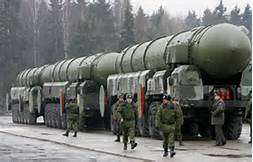
Caviar and vodka anyone with those nuclear weapons?


Putin is Stalin, both Equal Another Ukraine Holodomor

While VP Biden flew to Kiev today to show shallow solidarity with Ukraine, one must know that Kiev is the birthplace of the former Soviet Union, the keys to the kingdom of history, which is ripe for a re-birth.

Ukraine has a very nasty history and in recent decades has worked to find itself among a true democratic nation, learning to finds it’s way in the modern era. Putin is following the Stalin doctrine and is blocking Ukraine/Crimea from further advancements.

It begins with famine, disease, genocide and death, lots of death where Jews were no exception. Recently, the agenda for all Jews to register and pay a tax or leave the country, of which some leadership in the world is calling disgusting, it proves a multi-track mission that is a carbon copy of the KGB/FSB under Stalin.

A holocaust survivor sees this clearly and has spoken out to the Jews in the region to get out now. How can this be in this time, where historically, all lessons were learned and trials and documents have proven the history, but yet never seems to be written or taught?

What can Barack Obama, Joe Biden, Hillary Clinton or John Kerry know and what have they ignored as they dither on the policy with Russia, Ukraine, Crimea or any of the other Baltic States? They know and they ignore, as there are too many staffers and historians in the administration that provide context and facts. Additionally, all administrations have deep ties to academia where professors on all sides of arguments and debate deliver research, white papers, documents and thesis on all parts of the globe, so currently the matter of Russia, Ukraine, Crimea and more historical content has been dusted off as recently as 2009 when the real Russia goal of annexing additional nations is the sole quest of Putin.

The question of Holodomor must be reviewed as a window of what may come soon in that region. After some digging, this University of Chicago professor knows the history and created an assignment for his students and other assigned professors. Within this assignment, there are facts that are not disputed.

“One of the universal lessons of the Holocaust is that national,

ethnic, racial, or religious hatred can overtake any nation or society,

leading to calamitous consequences. To reinforce that lesson, such

curriculum shall include an additional unit of instruction studying

other acts of genocide across the globe. This unit shall include, but

not be limited to, the Armenian Genocide, the Famine-Genocide in

Ukraine, and more recent atrocities in Cambodia, Bosnia, Rwanda,

and Sudan.”
Holocaust


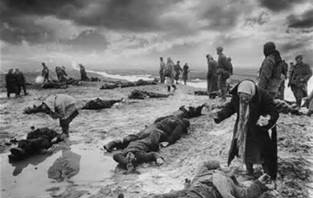
Holodomor means “death by starvation.”

Although we will never know the exact number

who died in Ukraine during this period, the Ukrainian government today estimates that, taking into

account data related to the demographic consequences of the famine, “Ukrainian losses resulting

from the famine of 1932-1933 total no fewer than ten million people”. This campaign, purposefully

orchestrated by Joseph Stalin and his Soviet cohorts, included summary executions for hoarding

grain and deportations for resistance*.


Why is the Holodomor Unknown?


There are two reasons: The Soviet Union never


admitted its existence and many correspondents in the West, primarily Walter Duranty of the New


York Times, were complicit in covering it up.


What are the Implications of the Holdomor in Today’s Geopolitical World?


The Soviet genocide against the Ukrainian people was part of a centuries-old pattern of behavior by


Moscow’s rulers. The Soviets were following in the footsteps of their Czarist predecessors who


denied the existence of a separate Ukrainian nation. The return of Russian chauvinism under


President/Prime Minister Vladimir Putin, the rehabilitation of Stalin in today’s Russia, the questioning


of Ukraine’s right to exist as an independent nation by many Russians, as well as the continued


denial of the Holodomor/Genocide by Russian governmental officials, are troubling developments,


not only for Ukrainians but for all freedom-loving people throughout the world. ***


The purpose of this curriculum guide for educators is to acquaint them with this tragedy.


Myron B. Kuropas, Ph.D.


It should be noted here that Walter Duranty worked for the New York Times and was a paid agent of the KGB. Not to be overlooked, the KGB created the PLO, Black Liberation Theology and sought to defeat the Vatican.

During the winter of 1932-33, some ten million Ukrainians living in the Union of Soviet

Socialist Republics (USSR) died of forced starvation. They perished during a Genocide

Famine (hereafter referred to as the “Holodomor”, the current Ukrainian term used to identify

the calamity) engineered by the Soviet government which had three major objectives in that

part of its expanding empire:

1. To annihilate a significant portion of that segment of the Ukrainian population which had

most vociferously and openly resisted increasingly oppressive Soviet rule.

2. To terrorize the surviving Ukrainian population into submission to Soviet totalitarian

domination.

3. To provide funds for Soviet industrial expansion from the sale of expropriated Ukrainian

wheat and other foodstuffs to the rest of the world.

Just as the Jewish Holocaust is not simply a “Jewish issue”, the Holodomor in Ukraine is not

simply a “Ukrainian issue”. Both genocides have universal implications. The Holocaust is an

example of genocide perpetrated by an overtly racist, fascist regime which had as its

avowed purpose the annihilation of the Jewish people. The Ukrainian Holodomor is an

example of genocide perpetrated by a Communist regime which, while calling itself

internationalist, was contaminated by Russian chauvinism. For Russian Bolsheviks,

Ukrainian ethno-cultural self-assertion was a threat to both the primacy of Russian culture in

Soviet affairs, and to the centralization of all authority in the hands of Soviet dictator Joseph

Stalin.

Although the Holodomor in Ukraine is one of the greatest crimes ever perpetrated against a

single nation in the 20th century, the West is hardly aware of it ever having taken place. This

is so for four reasons:

1) consistent denial by Soviet officials;

2) conscious cover-up by influential Western correspondents reporting from Moscow;

3) a dearth of information about the Soviet Union’s crimes within its own borders, crimes that

since the collapse of the Soviet Union appear to be fading from public consciousness, both

here and abroad;

4) an information vacuum regarding Ukraine and its people among American academics, the

mass media, and the general public where the prevailing view was that Ukrainians were

Russians who spoke a Russian dialect. Even though Ukraine has been an independent

nation-state since 1991, this perception, still promoted by many Russian intellectuals,

remains an accepted fact in many American circles.

This professor’s document is here to be read, it is filled with indisputable citations and quotes from those where were there.

So we now know this administration’s policy on Russia with regard to Ukraine and Baltic States is feckless and most of all deadly.