
The Clinton’s and Panama Papers Friends

There has been a constant recent argument that if you are a conservative and don’t vote Trump then you are effectively voting for Hillary. That is a straw man argument when the matter is twofold.


Newt Gingrich argued with Congressman Huelskamp over the weekend and admitted Trump is not a ‘Reagan conservative’ but he is better than Hillary. Of course that statement is true. The other matter is why are the Trump fans so fearful that Hillary will get the nomination? Of course she will. Are Republicans so terrified that Hillary cannot be defeated in the general election? If so, then where is the mettle and fire in the belly and force multiplier and a voting army defeat Hillary? If the will is there, the achievement can be so great such that no Democrat will successfully take over the Oval Office for perhaps up to 3 election cycles and it should that way given the last 8 years.

In case this argument needs more ammunition, here are some more political arrows for the quiver relating to the elitist circle of the Clintons. This demonstrates the alternate universe of collusion, money and favors.

Inside Panama Papers: Multiple Clinton connections

Washington/McClatchy:

Hillary Clinton recently blasted the hidden financial dealings exposed in the Panama Papers, but she and her husband have multiple connections with people who have used the besieged law firm Mossack Fonseca to establish offshore entities.


Among them are Gabrielle Fialkoff, finance director for Hillary Clinton’s first campaign for the U.S. Senate; Frank Giustra, a Canadian mining magnate who has traveled the globe with Bill Clinton; the Chagoury family, which pledged $1 billion in projects to the Clinton Global Initiative; and Chinese billionaire Ng Lap Seng, who was at the center of a Democratic fund-raising scandal when Bill Clinton was president. Also using the Panamanian law firm was the company founded by the late billionaire investor Marc Rich, an international fugitive when Bill Clinton pardoned him in the final hours of his presidency.

The ties are both recent and decades old, not surprising

for the Democratic presidential front-runner and her husband, who have been in public life since the 1970s.

Each is listed in the massive leak of data from Mossack Fonseca, a law firm with expertise in registering offshore companies, which can have legitimate business purposes, but can also be used to evade taxes and launder money. Several heads of state were found in the leak, leading to the departure of the leader of Iceland and investigations in several other countries.

McClatchy Newspapers and about 350 other journalists working under the umbrella of the International Consortium of Investigative Journalists have searched an archive containing more than 11.5 million Mossack Fonseca documents, including passports, financial records and emails. After a series of articles earlier this month revealed how business owners and politicians used offshores, authorities raided the law firm’s offices in Panama. The law firm has denied all accusations of wrongdoing.

Hillary Clinton condemned what she called “outrageous tax havens and loopholes that super-rich people across the world are exploiting.”

“Now, some of this behavior is clearly against the law, and everyone who violates the law anywhere should be held accountable,” she said, speaking at the AFL-CIO convention recently. “But it’s also scandalous how much is actually legal.”

The Clintons themselves do not appear to be in Mossack Fonseca’s database, nor does it appear that their daughter, Chelsea, or her husband, Marc Mezvinsky, who co-founded a hedge fund, are listed. But Bill and Hillary Clinton’s connections to people who have used offshores is fuel for her Democratic rival, Bernie Sanders.

Clinton has struggled throughout her campaign to show that she can relate to working Americans, while Sanders has cast her as a wealthy out-of-touch Washington insider who has accepted hefty paychecks for speeches and received millions of dollars in campaign contributions from those tied to big businesses. Her connection to the Panama Papers, even if indirect, could magnify that perception.

Lee Miringoff, director of the Marist Institute for Public Opinion in New York, said it would draw voters’ attention once again to Clinton’s ties to big money. “It certainly would play into Sanders’ narrative,” he said.

Sanders said Clinton’s support of a free-trade agreement between the U.S. and Panama – one that he claims has allowed the wealthy to avoid paying taxes – should disqualify her from being the Democratic nominee for president.

“I don’t think you are qualified if you supported the Panama free trade agreement, something I very strongly opposed, which has made it easier for wealthy people and corporations all over the world to avoid paying taxes owed to their countries,” Sanders said recently.

To be sure, a long life in politics has allowed the Clintons to accumulate relationships to wealthy people and businesses across the globe.

One such connection is to Jean-Raymond Boulle, a one-time diamond miner from the volcanic island nation of Mauritius whose company was once based in Bill Clinton’s hometown of Hope, Ark. In the mid 1990s, Boulle was listed as a director of Auk Limited, a British Virgin Islands offshore company, and Gridco Limited, a Bahamas offshore company.

After two meetings with Boulle, Bill Clinton, then-governor of Arkansas, signed legislation allowing his company to engage in exploratory mining in the state. Later, Boulle and his wife attended Clinton’s first inauguration. Boulle’s company did not respond to a message.

“Obviously there’s no wrongdoing – it’s a question of perception and values,” said Meredith McGehee, policy director at the Campaign Legal Center, a nonpartisan, nonprofit organization. “They’ve been in public life so long; when you enter that sphere you have these connections.”

Clinton campaign spokesman Brian Fallon declined to answer specific questions about her connections but referred to Clinton’s earlier comments that criticized the behavior last week. Bill Clinton’s office and the Clinton Foundation declined to comment.

Also among the Clinton connections is Fialkoff, now a senior adviser to New York Mayor Bill de Blasio and director of the city’s Office of Strategic Partnerships. She, her brother, Brett, and her late father, Frank, are listed as shareholders of UPAC Holdings Ltd, a British Virgin Islands offshore company incorporated in June 2012.

Gabrielle Fialkoff said in an email that she has “no knowledge” of the company and referred questions to her brother.

Brett Fialkoff, who serves as chief operating officer at his family’s business, Haskell Jewels, a New York-based designer, marketer and distributor of costume jewelry, initially told McClatchy he didn’t know why his family would be in the documents. Later, he said that someone must have opened an account in their names.

Still, later, he said he set up an offshore company to export accessories from China to the United States. The documents indicate the company’s files are registered in Beijing.

But, he said, he abandoned the new business to give more attention to his family’s jewelry company. He said there’s no money in any bank account overseas and declined to provide details about his compliance with U.S. tax laws.

“I have news for you: There is no money,” he said in a phone interview. “We’re not like Vladimir Putin, trying to hide money.”

The most recent Mossack Fonseca information of December 2015 shows the company remains active, registered on behalf of the Fialkoffs in the British Virgin Islands by a Hong Kong-based consulting company on June 6, 2012. Brett Failkoff acknowledged the company is still “legally alive” but said it does not – nor has it ever – conducted any business.

Gabrielle Fialkoff, a longtime friend of de Blasio, was finance director for Clinton’s 2000 Senate campaign, which de Blasio managed. After serving as Haskell’s president and chief operating officer, she chaired de Blasio’s inauguration and led New York’s unsuccessful bid to host the Democratic National Convention in 2016.

She has been a regular donor to Democratic candidates, including Clinton, according to the Center for Responsive Politics, which tracks money in politics. She also donated between $250 and $1,000 to the Clinton Foundation. Her father donated to Clinton as well. Her brother contributed money to Republicans, including presidential candidates Ben Carson and Rand Paul.

Another connection is Giustra, the director of UrAsia Energy Ltd, a British Virgin Islands offshore company registered in May 2005.

The company wanted to “conduct uranium exploration, development, production and marketing operations and related activities in Kazakhstan and Kyrgyzstan,” according to a draft of the shareholders’ agreement.

UrAsia, based in British Columbia, Canada, finalized a deal in September 2005 to buy uranium mines for $500 million in Kazakhstan, according to published reports.

The deal came after Giustra joined Bill Clinton in Kazakhstan for the launch of a Clinton Foundation health initiative and dined with him and Kazakhstan’s president, among others. The timing prompted questions about whether Bill Clinton played any role in the agreement. Giustra denied that, saying it came after months of negotiations.

The following year, Giustra, who is also involved in filmmaking and founded Lionsgate Entertainment, made a donation of more than $30 million to the Clinton Foundation, according to published reports.

In total, Giustra has committed $100 million to the foundation, according to at least one report, though foundation records don’t give an exact amount, saying only that he is one of the largest individual donors giving more than $25 million. In 2007, he started an affiliated charity that bears his name and initially kept its donors secret despite a 2008 agreement between the Clintons and the Obama administration to make public foundation contributors.

Bill Clinton has flown around the globe on Giustra’s plane, sometimes with him, including to Kazakhstan.

Giustra’s attorney David S. Brown wrote in a letter to McClatchy that his client “had no dealing with the law firm of Mossack Fonseca.”

He also said the use of a company such as UrAsia Energy Ltd. is common in international mining transactions and was used at the direction of an international accounting firm.

“Far from being secretive, opaque or clandestine, UrAsia Energy Ltd. BVI was fully disclosed to the public and to the applicable regulators in 2005 _ to be clear, there was absolutely nothing untoward in the use of this entity,” he wrote.

He declined to answer additional questions.

Former fugitive billionaire Marc Rich’s name doesn’t appear in the Panama Papers, but his company does. The Bahamas offshore Industrial Petroleum Limited was registered in 1992, established by the commodities firm Glencore International in Switzerland, inactivated in 2001.

The allegations against Rich, who died in 2013, ranged from tax evasion to trading with Iran despite bans to selling oil to South Africa’s apartheid government. He fled to Switzerland in 1983, but before the pardon, his ex-wife Denise made a $450,000 donation to Clinton’s presidential library in Little Rock.

Rich’s business partners appear in the data too. And they also give generously to the Clinton Foundation.

Sergei Kurzin, a Russian engineer and investor, appears in a draft shareholders agreement in partnership with Giustra in the British Virgin Islands offshore UrAsia Energy Ltd. Kurzin worked closely with Rich in the 1990s looking for opportunities in the former Soviet Union when it was opened to mining and oil investment.

Kurzin, who has given the Clinton Foundation between $50,000 and $100,000, appears in the Panama Papers as the director and chairman of various oil companies. Kurzin was also a partner in the uranium deal involving Giustra.

In a 2009 interview with Forbes, the British-Russian dual citizen boasted of giving generously to a Clinton-Giustra initiative, noting: “I wrote a check for a million dollars. I don’t think you can call it a small amount.”

Messages left for Kurzin were not returned this weekend.

Also in the Panama Papers is Ronald Chagoury, who along with brother Gilbert leads the Chagoury Group, a Nigerian family-run construction business. The brothers were associated with Nigerian dictator Sani Abacha, who died in 1998, and did business with Glencore and Rich, according to news reports.

Ronald Chagoury appears in the Panama Papers as the main shareholder of Echo Art Ltd. in the British Virgin Islands.

In 2009, the Chagoury Group pledged $1 billion in coastal erosion projects to the Clinton Global Initiative, an offshoot of the foundation, according to the initiative’s website.

The Chagoury Group is building Eko Atlantic, a peninsula city adjacent to Lagos that will be reclaimed from the Atlantic Ocean. The company’s website cites the Clinton Global Initiative’s praise for it as an “environmentally conscious city” under construction.

Gilbert Chagoury’s ties to the Clintons stretch back years. He has given to Bill and Hillary Clinton’s campaigns and has donated between $1 million to $5 million to Clinton Foundation, foundation records show. In 2003 he organized a trip to the Caribbean where Bill Clinton was paid $100,000 for a speech.

Messages left for the Chagourys were not returned this weekend.

Another businessman in the Panama papers, Ng, is listed as a shareholder of two British Virgin Islands companies – South South News International Group Ltd in May 2010 and GOLUCK Ltd. in 2004.

He leads a real estate development company in Macau, China, and is one of the world’s wealthiest people. He was accused in 1996 of sending more than $1.1 million to a Little Rock restaurant owner who then contributed hundreds of thousands of dollars to the Democratic National Committee, according to a 1998 Senate committee investigation.

The restaurant owner, Charlie Trie, pleaded guilty to violating campaign finance laws. Ng was not charged. Another congressional report criticized Ng and others for failing to cooperate during the investigation.

Published reports say Ng visited the White House 10 times from 1994 to 1996, had his photograph taken with Bill and Hillary Clinton, sat beside Bill Clinton at an event at a Washington hotel, and rode in an elevator with Hillary Clinton.

Last year, Ng was charged with bribing a United Nations official and lying about what he was doing with $4.5 million in cash he brought into the U.S. over two years. Investigators say instead of spending it at casinos or on art, antiques or real estate, he used the money for bribes as he sought investments in Antigua and China. Another man listed in the same criminal complaint is president of the New York-based South South News, the same name of the British Virgin Islands company.

Ng’s lawyer, Kevin Tung, has said that his charges are based on a misunderstanding. Tung, Benjamin Brafman and Hugh Mo, two others who are or have represented Ng, did not respond to requests for comment.

In 2011, Sanders predicted in a Senate speech that the Panama trade deal would make it easier for the wealthy to hide their cash in Panama.

“I wish I had been proven wrong about this, but it has now come to light that the extent of Panama’s tax avoidance scams is even worse than I had feared,” he said in a statement earlier this month.

Hillary Clinton had opposed the deal in 2008 when she was running for president. But later, as secretary of state, she helped push the agreement through Congress. Her supporters, however, say that the trade pact did not open the door to additional tax evasion.

A Democrat-controlled Senate approved the trade deal. In October 2012, then-Senate Finance Committee Chairman Max Baucus, D-Mont., lauded the deal’s “strong language to crack down on tax evasion and money-laundering in Panama.”

Both Clinton and Sanders have vowed to go after Americans who try to hide their wealth.

Clinton said she would shut down what she called the private tax system for the wealthy while Sanders has said he would end the trade deal with Panama within six months and investigate U.S. banks, corporations and individuals stashing their cash in Panama to avoid taxes.

“We’re going after all these scams and make sure that everyone pays their fair share here in America,” she said. “I’m going to hold them accountable, and we’re going to have a special effort to track all these resources wherever they might lead.”

McClatchy has much more here and it is worth the long read to understand more not only on the Clintons but of the elites around the world that our own elites entertained, manipulated, approved of and how some laws and sanctions were waived.
Showdown Looming Russia/Baltics/NATO

Offering apologies from this site as in recent days, several items have been posted discussing Russian aggressions. There is a reason, perhaps many.

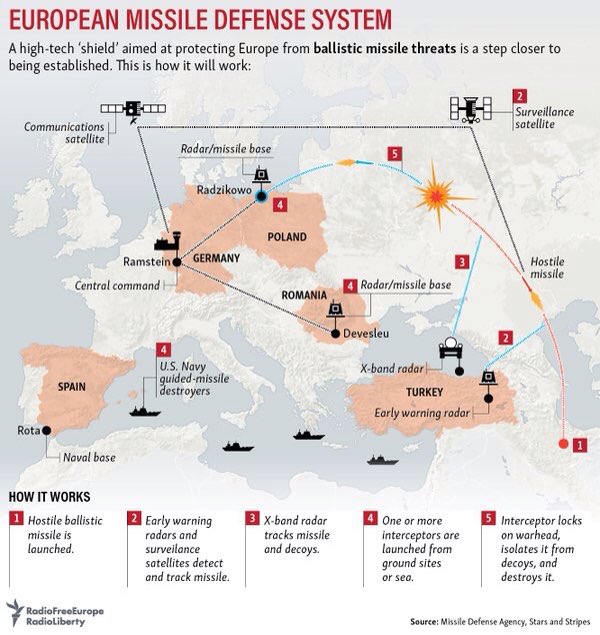
Today, May 12, 2016, the missile shield located in Romania went live and this has further angered Russia.

The missile interceptor station in Deveselu, southern Romania, will help defend NATO members against the threat of short and medium-range ballistic missiles — particularly from the Middle East, US assistant secretary of state Frank Rose told a news conference in Bucharest Wednesday.


But Russia has taken a dim view of the project, seeing it as a security threat on its doorstep.

“Both the US and NATO have made it clear the system is not designed for or capable of undermining Russia’s strategic deterrence capability,” Rose said.

“Russia has repeatedly raised concerns that the US and NATO defence are directed against Russia and represents a threat to its strategic nuclear deterrent. Nothing could be further from the truth.”

Russia has a response and actually Britain did as well. Britain says Typhoon fighters intercepted three Russian military transport aircraft approaching Baltic states. The British fighters, scrambled from the Amari air base in Estonia, intercepted the Russian aircraft, which were not transmitting a recognised identification code and were unresponsive, the ministry said.


To add to the matter, the missile defense system slated for Poland that Barack Obama cancelled a few years ago is about to go live as well. This system was for the most part a private investment between U.S. contractors and European countries.

Poland chose the U.S. defense company’s bid over a rival European offering and one from the MEADS consortium led by Lockheed Martin Corp. LMT 1.05 % Officials also selected a unit of Airbus Group NV to supply 50 military helicopters—down from its previous plan for 70—over bids from U.S.-based Sikorsky and AgustaWestland, a European consortium. Poland has pledged to increase its military spending amid concerns that the smoldering separatist conflict in eastern Ukraine will erupt into a full-scale military conflict. Warsaw plans to return to its earlier policy of spending 2% of gross domestic product on its armed forces in 2016, after it scaled back spending in recent years to shore up its public finances. The missile shield is expected to be a part of the North Atlantic Treaty Organization’s long-running project to deter missile attacks in Europe. The project is hotly contested by Moscow, which argues its aim is to threaten Russia rather than to protect itself from a potential threat from Iran, as NATO has said in the past. More here from the WSJ.

*****

The US has switched on a missile shield in Romania that it sees as vital to defending itself and Europe from long-range missiles fired by rogue states, prompting anger from the Kremlin which believes the shield’s main goal is to weaken its own strategic nuclear capabilities.

The eventual missile shield will stretch from Greenland to the Azores, and will be ready by the end of 2018. On Friday, the US will break ground on a final site in Poland. The proposal was first agreed by the administration of George W Bush a decade ago and is a longstanding gripe for Moscow, despite repeated assurances from Washington that it is not aimed against Russia. Control of the missile shield will be handed over to Nato in July, with command and control run from a US airbase in Germany.

Poland is concerned Russia may retaliate further by announcing the deployment of nuclear weapons to its enclave of Kaliningrad, located between Poland and Lithuania. Russia has stationed anti-aircraft and anti-ship missiles there, able to cover huge areas and complicate Nato’s ability to move around.

The Kremlin says the shield’s aim is to neutralise Moscow’s nuclear arsenal long enough for the US to strike Russia in the event of war. While US and Nato officials were adamant that the shield was designed to counter threats from the Middle East and not Russia, they remained vague on whether the radars and interceptors could be reconfigured to defend against Russia in a conflict. More from the Guardian.

Teach Younger Voters Hillary’s History

This will not be in any chronological order:

Paula Jones lawsuit

ChinaGate

TrooperGate

Mena Airport Drug Scandal

Rose Law Firm

WhiteWater and Savings and Loan

Hillary’s Radical Summer, Black Panthers

Hillary’s College Thesis, Saul Alinsky

White House TravelGate

Vince Foster is Dead

HillaryCare

Bill, Jeffrey, Planes and Sin Island

Yes, Bill was Impeached

Clinton did Steal White House Stuff

Clinton Showdown with FBI Liaison

Bill Clinton let bin Ladin Go

Bill Ordered Sandy to Stuff the Documents in his Pants

Need more? Okay, one more?

They Stole all the ‘W’s…. lots of damage


Whitewater: Twelve Versions of Hillary Clinton Draft Indictment, 451 Pages, Withheld By National Archives

JudicialWatch: New details continue to emerge from Judicial Watch’s Freedom of Information Act fight with the National Archives over the release of draft indictments of Hillary Clinton in the Whitewater case. According to the Archives, release of the indictments—drafted by an independent counsel examining the Clintons’ relationship to a corrupt Arkansas S&L and an alleged cover-up—would violate grand jury secrecy and Mrs. Clinton’s personal privacy. FOIA request denied.

Judicial Watch declined to take “no” for an answer, and so off to court we went. The case is now in the hands of a federal judge.

In the course of litigation, new facts have come to light. Under FOIA, the Archives must produce a “Vaughn Index”—a tantalizing and at times maddening document. A Vaughn Index is the government saying: we are not giving you the documents, but here is an “index” of what we are not giving you, and why we are not giving it to you. Your tax dollars at work.

In the National Archives Vaughn Index for the case, we learn that the government is sitting on at least twelve versions of the the draft indictment of Mrs. Clinton, including one “listing overt acts.” From the public record, we know that the Whitewater case centered around whether Mrs. Clinton, while First Lady, lied to federal investigators about her role in the corrupt Arkansas S&L, concealed documents (including material under federal subpoena), and took other steps to cover-up her involvment. Prosecutors ultimately decided not to indict Mrs. Clinton, concluding that they could not win the complicated, largely circumstantial case against such a high-profile figure.

The draft indictments range from three to forty pages—the former likely excerpts or “scraps” from longer documents, the Vaughn Index indicates. Some of the drafts doubtless are copies but many clearly are not. A total of 451 pages of draft indictments are being withheld by the Archives.

In its final brief in the case, Judicial Watch took a wrecking ball to the Archives’ grand jury secrecy and personal privacy claims. Judicial Watch noted “the truly enormous quantities of grand jury material already made public” in the independent counsel’s final report. Judicial Watch provided the court with a detailed list of grand jury and non-grand jury material that had already been made public. If there ever was a valid claim to grand jury secrecy in this closely scrutinized case, it is long gone.

The Judicial Watch brief noted that the Archives “fails to identify a single, specific privacy interest Mrs. Clinton still has in the draft indictments” following publication of the independent counsel’s report and “hundreds of pages of grand jury materials, non-grand jury materials, and independent counsel legal theories and analysis that are already in the public domain.”

A typical FOIA privacy claim centers on unwarranted invasions of personal privacy. But in Mrs. Clinton’s case, the brief noted, the Archives “makes no claims that disclosure of the draft indictments will reveal any particular personal, medical or financial information about Mrs. Clinton, much less anything intimate or potentially embarrassing.”

Mrs. Clinton of course is one of the most famous women in the world, a former First Lady, senator and secretary of state, and the Democratic Party’s presumptive nominee for president of the United States. The findings of an investigation into whether Mrs. Clinton told the truth to federal investigators and withheld evidence under subpoena while she was First Lady is clearly matter of public interest as voters weigh her suitability for the highest office in the land.

ODNI Clapper: We Can’t Leave Town

We can’t fix this. A couple of additional points to add:

  1. Iran was pretty much controlled until the Obama regime decided to formal a rogue country to be accepted around the globe and terminate sanctions giving Iran more money to behave with wild abandon. Now John Kerry is working personally to help the entire economy of Iran.
  2. We have arrived at a malfunction junction where the intersection between intelligence and politics crash and politics wins over the defeat of global jihad.

And then there is Russia.

‘The U.S. can’t fix it’: James Clapper on America’s role in the Middle East

WaPo: Early in his tenure as director of national intelligence, James Clapper could sometimes be heard complaining, “I’m too old for this [expletive]!” He has now served almost six years as America’s top intelligence official, and when I asked him this week how much longer he would be in harness, he consulted his calendar and answered with relief, “Two hundred sixty-five days!”

Clapper, 75, has worked in intelligence for 53 years, starting when he joined the Air Force in 1963. He’s a crusty, sometimes cranky veteran of the ingrown spy world, and he has a perspective that’s probably unmatched in Washington. He offered some surprisingly candid comments — starting with a frank endorsement of President Obama’s view that the United States can’t unilaterally fix the Middle East.

Given Clapper’s view that intelligence services must cooperate against terrorism, a small breakthrough seems to have taken place in mid-April when Clapper met with some European intelligence chiefs near Ramstein Air Base in Germany to discuss better sharing of intelligence. The meeting was requested by the White House, but it hasn’t been publicized.

“We are on the same page, and we should do everything we can to improve intelligence coordination and information sharing, within the limits of our legal framework,” said Peter Wittig, German ambassador to Washington, confirming the meeting.

The terrorist threat has shadowed Clapper’s tenure. He admitted in a September 2014 interview that the United States had “underestimated” the Islamic State. He isn’t making that mistake now. He says the United States is slowly “degrading” the extremists but probably won’t capture the Islamic State’s key Iraqi stronghold this year and faces a long-term struggle that will last “decades.”

“They’ve lost a lot of territory,” he told me Monday. “We’re killing a lot of their fighters. We will retake Mosul, but it will take a long time and be very messy. I don’t see that happening in this administration.”

Even after the extremists are defeated in Iraq and Syria, the problem will persist. “We’ll be in a perpetual state of suppression for a long time,” he warned.

“I don’t have an answer,” Clapper said frankly. “The U.S. can’t fix it. The fundamental issues they have — the large population bulge of disaffected young males, ungoverned spaces, economic challenges and the availability of weapons — won’t go away for a long time.” He said at another point: “Somehow the expectation is that we can find the silver needle, and we’ll create ‘the city on a hill.’” That’s not realistic, he cautioned, because the problem is so complex.

I asked Clapper whether he shared Obama’s view, as expressed in Jeffrey Goldberg’s article in the Atlantic, that America doesn’t need the Middle East economically as it once did, that it can’t solve the region’s problems and that, in trying, the United States would harm its interests elsewhere. “I’m there,” said Clapper, endorsing Obama’s basic pessimism. But he explained: “I don’t think the U.S. can just leave town. Things happen around the world when U.S. leadership is absent. We have to be present — to facilitate, broker and sometimes provide the force.”

Clapper said the United States still can’t be certain how much harm was done to intelligence collection by the revelations of disaffected National Security Agency contractor Edward Snowden. “We’ve been very conservative in the damage assessment. Overall, there’s a lot,” Clapper said, noting that the Snowden disclosures made terrorist groups “very security-conscious” and speeded the move to unbreakable encryption of data. And he said the Snowden revelations may not have ended: “The assumption is that there are a lot more documents out there in escrow [to be revealed] at a time of his choosing.”

Clapper had just returned from a trip to Asia, where he said he’s had “tense exchanges” with Chinese officials about their militarization of the South China Sea. He predicted that China would declare an “air defense identification zone” soon in that area, and said “they’re already moving in that direction.”


Asked what he had achieved in his nearly six years as director of national intelligence, Clapper cited his basic mission of coordinating the 17 agencies that work under him. “The reason this position was created was to provide integration in the intelligence community. We’re better than we were.”

After a career in the spy world, Clapper argues that intelligence issues are basically simple; it’s the politics surrounding them that are complicated. “I can’t wait to get back to simplicity,” he said, his eye on that calendar.

**** Sampling of how bad things are:

  1. Al Qaeda issued a call for Muslims to mobilize to fight in al Sham. Al Qaeda leader Ayman al Zawahiri urged Muslims to fight in Syria and for the factions in Syria to unify. Zawahiri described the Syrian uprising as the only one from the Arab Spring to have continued along the right path. He sought for Muslims to defend the gains made in Syria against other actors like Russia, Iran, and the West, and stated the objective of a governing entity establishing itself in the territory. Hamza bin Laden, Osama bin Laden’s son, echoed the call for mobilization. He also called on Muslims to unify in Iraq and Syria and for those who cannot travel to conduct lone-wolf attacks.
  2.  A pro-Islamic State of Iraq and al Sham (ISIS) cell attempted to weaponize anthrax and plan a mass-casualty attack similar to the 2013 Westgate Mall attack, according to Kenyan and Ugandan authorities. The cell’s ringleader may have communicated with ISIS militants in Libya and Syria, indicating an expansion of ISIS’s influence in East Africa.  Governments seeking counterterrorism funding may also exaggerate ISIS’s presence, however.
  3. ISIS resumed a territorial growth strategy in Libya after planned offensives on its stronghold in Sirte stalled. ISIS militants seized strategically located towns from Misratan militias to the west of Sirte as part of efforts to expand its contiguous zone of control in central Libya. ISIS is also bolstered by the support of tribal leaders and elders, representing factions of a large tribal federation that has suffered since the fall of Qaddafi. These tribal leaders are aligning with ISIS against opponents in both the Libyan National Army bloc in the east and the Misratan bloc in the west in order to protect their political and economic interests. [See CTP’s backgrounder on forces in Libya and a forecast of ISIS’s courses of actions in Libya.] (From: The American Enterprise Institute’s Critical Threats Project )  Add in Russia’s building war on NATO….

Clinton Cash, Coming to a Theater Near You

‘Clinton Cash’ doc set to stir up controversy as it debuts at Cannes

MSNBC: CANNES, France — A massive police force will be guarding the Cannes Film Festival this year. But the only scuffle on the horizon may come in response to the right-wing producers of a devastating new documentary about Bill and Hillary Clinton’s alleged influence peddling and favor-trading. That film, “Clinton Cash,” screens here May 16 and opens in the U.S. on July 24 — just before the Democratic National Convention.

The allegations are as brazen as they are controversial: What other film at Cannes would come up with a plot that involves Russian President Vladimir Putin wrangling a deal with the alleged help of both Clintons, a Canadian billionaire, Kazakhstan mining officials and the Russian atomic energy agency — all of which resulted in Putin gaining control of 20 percent of all the uranium in the U.S.?

MSNBC got an exclusive first look at “Clinton Cash,” the flashy, hour-long film version of conservative author Peter Schweizer’s surprise 2015 bestseller, which The New York Times called the “the most anticipated and feared book of a presidential cycle.” The Washington Post said that ”on any fair reading, the pattern of behavior that Schweizer has charged is corruption.” Meanwhile, Hillary Clinton’s campaign manager John Podesta denounced the book as a bunch of “outlandish claims” with “zero evidence.”

The film portrays the Clintons as a greedy tag team who used the family’s controversial Clinton Foundation and her position as secretary of state to help billionaires make shady deals around the world with corrupt dictators, all while enriching themselves to the tune of millions.

The movie alleges that Bill Clinton cut a wide swathe through some of the most impoverished and corrupt areas of the world — the South Sudan, the Democratic Republic of Congo, Colombia, India and Haiti among others — riding in on private jets with billionaires who called themselves philanthropists but were actually bent on plundering the countries and lining their own pockets.

In return, billionaire pals like Frank Giustra and Gilbert Chagoury, or high-tech companies like Swedish telecom giant Ericsson or Indian nuclear energy officials — to name just a few mentioned in the film — hired Clinton to speak at often $750,000 a pop, according to “Clinton Cash.” When a favor was needed at the higher levels of the Obama administration to facilitate some of the deals, Hillary Clinton was only willing to sign off on them, the movie reports.

As a film, it powerfully connects the dots —  whether you believe them or not — in a narrative that lacks the wonkiness of the book, which bore a full title of “The Untold Story of How and Why Foreign Governments and Businesses Helped Make Bill and Hillary Rich.”

It packs the kind of Trump-esque mainstream punch that may have the presumptive GOP nominee salivating. He recently declared, “We’ll whip out that book because that book will become very pertinent.”

The hour-long documentary is intercut with “Homeland”-style clips of the Clintons juxtaposed against shots of blood-drenched money, radical madrassas, villainous dictators and private jets, all set to sinister music.

Produced by Stephen K. Bannon, the executive chairman of Breitbart News, with Schweizer as the film’s talking head, the documentary might be easy to dismiss as just another example of the “vast right-wing conspiracy” the former secretary of state referenced so many years ago.

But what complicates matters for Hillary Clinton’s campaign is that the book resulted in a series of investigations last year into Schweizer’s allegations by mainstream media organizations from The New York Times and CNN to The Washington Post and The Wall Street Journal, many of which did not dispute his findings — and in some cases gathered more material that the producers used in the film. More recently, some information uncovered in the Panama Papers has echoed some of Schweitzer’s allegations in the movie and book.

The Clinton campaign loudly denounced the book as a “smear project” last year and Schweizer’s publisher, the Murdoch-owned Harper Collins, had to make some corrections to the Kindle version. But the changes, in the end, involved seven or eight inaccuracies, some of which were fairly minor in the context of the larger allegations, Politico reported.

Neither the Clinton campaign nor the Clinton Foundation responded to calls and emails requesting comment about the film Tuesday.

One of the most damning follow-ups to Schweizer’s most startling accusation — that Vladimir Putin wound up controlling 20 percent of American uranium after a complex series of deals involving cash flowing to the Clinton Foundation and the help of Secretary of State Clinton — was printed in The New York Times.

Like Schweizer, the Times found no hard evidence in the form of an email or any document proving a quid pro quo between the Clintons, Clinton Foundation donors or Russian officials. (Schweizer has maintained that it’s next to impossible to find a smoking gun but said there is a troubling “pattern of behavior” that merits a closer examination.)

But the Times concluded that the deal that brought Putin closer to his goal of controlling all of the world’s uranium supply is an “untold story … that involves not just the Russian president, but also a former American president and a woman who would like to be the next one.”

“Other news outlets built on what I uncovered and some of that is in the film,” Schweizer, a former speechwriter for President George W. Bush, told NBC News Tuesday. “To me the key message is that while U.S. politics has long been thought to be a dirty game, it was always played by Americans. What the Clinton Foundation has done is open an avenue by which foreign investors can influence a chief U.S. diplomat. The film may spell all this out to people in a way the book did not and it may reach a whole new audience.”