
Does DHS Secretary Kelly Know RAPS?

My friend Tom Del Beccaro explains in his summary at Forbes how the Federal government maintains primacy over the states for immigration law and item 8 U.S. Code Section 1182, which the liberal court chose never to previously challenge.

In spite of the 9th Circuit 3 judge panel ruling maintaining the stay on the Trump Executive Order for the travel restraining order, there is much work to do administratively as this continues to be challenged.

The data is private and protected:

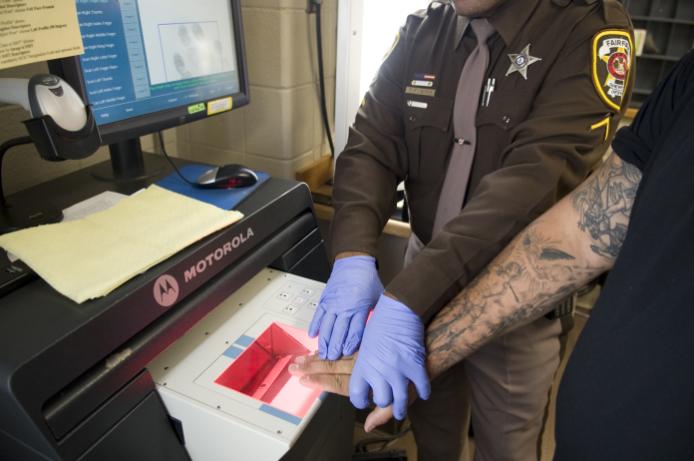
Once the information is entered into the system, RAPS generates an appointment notice for the collection of fingerprints used to complete criminal and background checks and to create Employment Authorization Documents (EADs), as appropriate. The applicant will appear at a USCIS service center to provide fingerprints and confirm application information.

RAPS then automatically initiates several background security check processes: Federal Bureau of Investigation (FBI) Name Check, United States Visitor and Immigrant Status Indicator Technology (US-VISIT) and DHS’ Automated Biometric Identification System (IDENT), Customs and Border Protection (CBP) TECS, FBI Fingerprint, and the ENFORCE Alien Removal Module (EARM) (for a full discussion of the background check process, see Section 5.1). RAPS also stores the results of security checks.
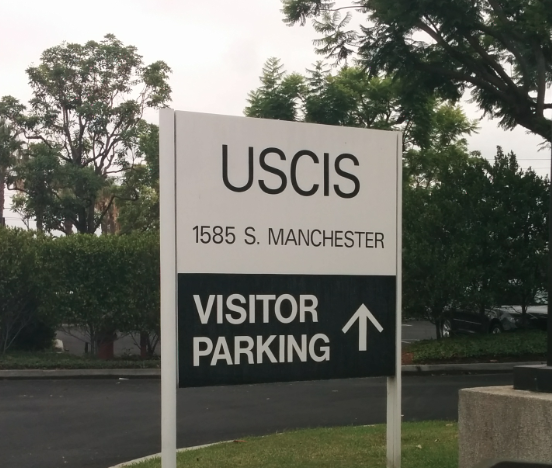
Image result for USCIS Asylum Office Image result for USCIS Asylum Office

When a new application is entered into RAPS, it is forwarded to a USCIS Asylum Office for interview and adjudication.  Asylum Offices use RAPS to schedule an asylum interview to evaluate the claim of asylum status and to conduct various aspects of case maintenance such as address changes, updates of information pertaining to dependent claimants, to record preliminary and final decisions, and to generate decision documents. An individual who files for asylum may include in his or her application any spouse or child who is within the United States and appears for the asylum interview. This is because a grant received by the principal asylum applicant is conveyed to the spouse and children included in the family group if the spouse/child is in the U.S. and not otherwise barred from a grant of asylum.

RAPS is a comprehensive case management tool that enables USCIS to handle and process applications for asylum pursuant to Section 208 of the Immigration and Naturalization Act (INA) and applications for suspension of deportation or special rule cancellation of removal pursuant to NACARA § 203. DHS offices worldwide can access RAPS as a resource of current and historic immigration status information on more than one million applicants. DHS officials can use RAPS to verify the status of asylum applicants, asylees, and their dependents to assist with the verification of an individual’s immigration history in the course of a review of visa petitions and other benefit applications as well.

RAPS Typical Transaction

A typical transaction begins when an individual initiates the process to apply for asylum by completing and filing Form I-589, Application for Asylum and for Withholding of Removal, with a USCIS Service Center, or in certain circumstances directly with an asylum office. Service Center personnel receive the application in person or via mail and manually enter, most, but not all, of the information from a new application into RAPS.

As set forth in Section 451(b) of the Homeland Security Act of 2002, Public Law 107-296, Congress charged USCIS with the administration of the asylum program, which provides protection to qualified individuals in the United States who have suffered past persecution or have a well-founded fear of future persecution in their country of origin as outlined under INA § 208 and 8 CFR § 208. USCIS is also responsible for the adjudication of the benefit program established by Section 203 of the Nicaraguan Adjustment and Central American Relief Act (NACARA § 203) (discussed in more detail in Section B below), in accordance with 8 CFR § 240.60 and the maintenance and administration of the credible fear and reasonable fear screening processes, in accordance with 8 CFR §§ 208.30 and 208.31. USCIS developed RAPS and APSS in order to carry out its obligations in administering these benefit programs.

Functions

RAPS and APSS track case status and facilitate the scheduling of appointments and interviews and the issuance of notices (including receipt notices, appointment notices, and decision letters) at several stages of the adjudication process. USCIS Asylum Offices use RAPS and APSS to:

  • record decisions and to generate decision documents such as approval, dismissal, or rescission of an asylum or NACARA § 203 application,
  • denial of an asylum application,
  • administrative closure of an asylum application, or
  • referral of an asylum or NACARA § 203 application to Executive Office of Immigration Review (EOIR).

The systems also initiate, receive, and record responses for national security and background check screening and prevent the approval of any benefit prior to the review and completion of all security checks. Finally, the systems provide fully developed and flexible means for analyzing and managing program workflows and provide the Asylum Program with statistical reports to assist with oversight of production and processing goals.

Read more from the two DHS documents here and here.
Image result for DHS Secretary

***

GAO Raps DHS for Failure to Get Security Data from Visa Waiver Countries

One of the requirements for allowing visa-free entry of tourists from countries in the Visa Waiver Program (VWP) is that those governments share with us information on nationals with terrorism links and/or criminal histories. According to a report of the Government Accountability Office (GAO) issued in May 2016, the Department of Homeland Security (DHS) has obtained those agreements with most of the countries, but more than a third of  the agreements have not been implemented, and no data have been received from them.

In addition, Congress has required reports from DHS on implementation of the VWP with each of the participating countries, but GAO found that DHS has failed to provide many of those reports when due.

The recommendation of agency (GAO-16-498) is that, “DHS should (1) specify time frames for working with VWP countries on the requirement to implement information-sharing agreements and (2) take steps to improve its timeliness in reporting to Congress on whether VWP countries should continue in the program.”

FAIR has consistently pointed to the VWP as a national security threat and called for its termination. This GAO report underscores the security flaw and finds that it is exacerbated by cavalier implementation by DHS

 

Trump Targeting BLM and Drug Cartels with Executive Action

These 3 signatures today on Executive Orders will aid the newly sworn in U.S. Attorney General Jeff Sessions. As a matter of personal opinion, President Trump did not go far enough, he should have declared all known drug cartels and their operatives terror organizations and should have done the same with Black Lives Matter along with known gang operations and members. Yet, Trump promised to restore law and order and this is a step in the right direction.

Related reading: Chicago Murder Capitol due to Gangs and Illegals

Image result for trump executive order law enforcement .pdf

Trump signs executive orders on crime, law enforcement

CBS: President Trump signed three executive actions Thursday aimed at bolstering law enforcement and targeting violent crime and criminal drug cartels.

The first executive order, according to what Mr. Trump outlined during the signing ceremony in the Oval Office, is meant to direct the Departments of Justice and Homeland Security to “undertake all necessary and lawful action to break the back of the criminal cartels that have spread across our nation and are destroying the blood of our youth and many other people.”

The president signed the action Thursday after swearing in Attorney General Jeff Sessions. Among other powers, the action gives broad authority to increase intelligence and lawn enforcement information sharing with foreign powers in order to crack down on “transnational criminal organizations” and their subsidiaries. It also instructs an interagency panel to compile a report on crime syndicates within four months.

“These groups are drivers of crime, corruption, violence, and misery,” the order reads. “In particular, the trafficking by cartels of controlled substances has triggered a resurgence in deadly drug abuse and a corresponding rise in violent crime related to drugs.”

Mr. Trump hinted at exercising his executive power to combat drug cartels earlier this week while talking with Fox News’ Bill O’Reilly.

“We have to do something about the cartels,” the president said in the interview, a portion of which aired Monday. He said he’d spoken with his Mexican counterpart, President Enrique Peña Nieto, about working together on the issue.

“We’ve got to stop the drugs from coming into our country,” Mr. Trump told O’Reilly. “And if he can’t handle it — maybe they can and maybe they can’t or maybe he needs help — he seemed very willing to get help from us, because he has got a problem and it’s a real problem for us.”

The president signed two other actions Thursday, including one that creates a task force within the Justice Department dedicated to “reducing violent crime in America.”

The “Task Force on Crime Reduction and Public Safety” will have administrative and financial support from the Attorney General’s office, according to the text of the order.

The last action directs the DOJ to implement a plan to “stop crime and crimes of violence against law enforcement officers.”

The order itself instructs the department to “pursue appropriate legislation…that will define new Federal crimes, and increase penalties for existing Federal crimes, in order to prevent violence against Federal, State, tribal, and local law enforcement officers.” That recommended legislation could include “defining new crimes of violence and establishing new mandatory minimum sentences for existing crimes of violence.”

The order also directs a thorough evaluation of all grant funding programs currently administered by the Justice Department.

“It’s a shame what’s been happening to our great — truly great — law enforcement officers,” the president said at the signing. “That’s going to stop as of today.”

20 Step Refugee Vetting Process, Nuts…

So, that is the process, allegedly done with extreme scrutiny…ahem. But what about those that come into the United States by other nefarious methods such as sneaking across our borders? They get a pass?

It is the exact time in our country to have this debate and the arguments must include the safety and financial consequences, both of which never are part of the wider discussion.

California is working to become a sanctuary state, putting all other CONUS states at extreme risk as people can travel freely. (CONUS = Continental United States).

Related reading: FBI: 7,700 Terrorist Encounters in USA in 2015

Related reading: Corruption, Shell Companies, Cartels and the Mexican President

San Francisco is at the hub of the issue, how so? The mayor via the police force refuse any collaboration as noted below:

SFPD Cuts Ties With FBI’s Joint Terrorism Task Force

San Francisco Police Department officials announced Wednesday that they have suspended participation with the FBI’s controversial Joint Terrorism Task Force.

According to San Francisco Police Commission protocol, all contracts require approval by the Board of Supervisors after 10 years.

The JTTF Memoranda of Understanding was signed in 2007, so that time has come, according to department officials.

The department will update its guideline for First Amendment activities and will “seek clarification” from the Police Commission as to this guideline’s application to JTTF investigations.

Once that new guideline is adopted, the department may consider renegotiating the JTTF memoranda with the FBI with guidance from the police commission.

Last month, the Asian Law Caucus, the Council on American-Islamic Relations’ San Francisco Bay Area office and the American Civil Liberties Union of Northern California sent a letter to San Francisco Police commissioners urging them to cease the department’s participation in the JTTF.

In the Jan. 5 letter, the groups speculate that, following President Donald Trump’s inauguration, the JTTF would likely increase surveillance of Muslim communities like the New York City police did after Sept. 11, 2001.

According to the FBI, 71 JTTF field offices have been established since 2001. The first was established in New York City in 1980.

“The SFPD is committed to public safety and will continue to work diligently to keep San Francisco safe for everyone,” San Francisco police Sgt. Michael Andraychak said in a statement.

(That last statement gets a BIG REALLY DUDE?)

*** Back in 2008:

Refugee Program Halted As DNA Tests Show Fraud

Thousands in Africa Lied about Families To Gain U.S. Entry

The State Department has suspended a humanitarian program to reunite thousands of African refugees with relatives in the U.S. after unprecedented DNA testing by the government revealed widespread fraud.

The freeze affects refugees in Kenya, Ethiopia, Uganda, Guinea and Ghana, many of whom have been waiting years to emigrate. More here from the WSJ. Lying and making up ghost people to get other permits? Hah….

*** Back in 2004, as a result of the 9/11 Commission Report on the issue of immigration, many robust recommendations were made of which all members of Congress at the time signed off on. They need to be reminded of that, as does the California legislature at a minimum. But going deeper in factual history, others need to be reminded of the following: (In part from Migration Policy dot org.)

Kerry Outlines Ideas on Immigration Reform

Democratic presidential candidate John Kerry on June 30 announced his platform on immigration reform. In a speech to the National Council of La Raza’s national conference, Kerry said that within 100 days of taking office, he would propose a four-part plan that would give “good people who are undocumented but living here, working here, paying taxes, [and] staying out of trouble . . . a path to equal citizenship.” In addition, he said that immigrants would be required to take civics and English classes. Kerry also promised to sign two bills currently pending in Congress: the AgJobs agricultural worker program, and the DREAM Act, which would allow young, out-of-status immigrants to pay in-state tuition rates while attending college. Both bills create a path for immigrants to eventually receive legal resident status.

In an interview with the Spanish-language network Telemundo on June 29, Kerry took stances on other immigration-related issues. He stated that granting driver’s licenses to undocumented immigrants violated the spirit of the law, and that immigration authorities had the right to perform raids to capture unauthorized immigrants who had broken other laws. Some analysts believe that Kerry’s comments regarding driver’s licenses could hurt his standing with Latino voters in the election. Nevertheless, the Washington Post reported on July 22 that Kerry currently has a 2 to 1 advantage over his opponent, President George W. Bush, among registered Latino voters.

Hmong Refugees Resettled to the United States

Around 15,000 Hmong refugees are expected to arrive in the United States this year. The first members of the group have already reached the U.S., and up to 3,000 more are expected by the end of August, with the remainder arriving by the end of 2004. The new arrivals fled their native country because of persecution they suffered due to their alliance with the U.S. during the Vietnam War. One third of the refugees will be resettled to Minnesota, a third will be sent to California, and the rest will be distributed among more than a dozen other states. Many of the refugees have been living illegally in a makeshift camp in Thailand, having passed up the opportunity for resettlement to the United States in the 1980s and 1990s as they clung to the hope of returning to Laos. Because the Thai military plans to close the camp by the end of 2004, most residents plan to accept the resettlement opportunity offered by the U.S. Department of State.

The refugees will receive initial assistance from U.S. resettlement agencies, which will help meet basic needs such as housing, school, language, employment, and health services. To fund these services, the U.S. Department of Health and Human Services on June 24 announced an additional $3.3 million allocation for Hmong resettlement costs. After one year of living in the U.S., refugees can apply to adjust their status to permanent residency and acquire a “green card.” They eventually become eligible for citizenship. In addition, unlike other immigrants, refugees are not barred from receiving welfare benefits in their first seven years of residence in the United States. The next group of Hmong refugees, approximately 2,000 individuals, is expected to arrive by the end of August.

U.S and Mexico Sign Pact on Social Security

The United States and Mexico on June 29 signed a pact enabling Mexican workers in the U.S. and American workers in Mexico to transfer social security benefits across national borders. The pact is similar to international Social Security agreements the U.S. has with Britain and Canada, and allows workers to contribute to only one benefits system at a time. According to estimates by U.S. Social Security officials, only 7,500 U.S. citizens working in Mexico will qualify for retirement benefits, as compared to 41,000 Mexican employees likely to qualify for Social Security in the United States. Even so, the plan will have an initially limited effect because it excludes, unless or until they are legalized, an estimated six to eight million undocumented Mexican workers currently employed in the United States. While the pact will not become law without legislative approval, the United States Congress and the Mexican Senate are expected to pass the measure; U.S. lawmakers have routinely approved similar agreements with 20 other nations. (For more information on International Agreements of the Social Security Administration, see this January 2004 Migration Policy Institute Immigration Fact Sheet)

State Department Halts Mail Renewal of Visas

The Department of State on July 16 stopped accepting applications for mail renewals of visas. Under the new policy, announced on June 23, foreigners who work in the United States must return to U.S. embassies abroad to be interviewed and fingerprinted for visa renewal. The policy, which does not apply to foreign diplomats or employees of international organizations, is part of the U.S. effort to improve border controls after the September 11, 2001 attacks. State Department spokesman Richard Boucher stated that the switch was made to overseas processing because of the better capacity of U.S. embassies abroad to interview and fingerprint visa applicants. More than 50,000 people from more than 60 countries were processed in 2003.


FY SCAAP 2016: Criminal Aliens $189,008,372.00

A faithful reader of this website, reached out to me and asked for an update on a previous post. Hat tip for this great reminder. Grrr….when looking at the dollars, it has hard not to jump and down in frustration.

With a little effort in research, the last time the Government Accountability Office did any estimate to the cost of the U.S. economy for all things illegal/immigration related was 2011.

Image result for criminal aliene detention

The cost at the State level fluctuates based on deportations and beds available. The Federal government out of the Justice Department helps pay respective states for the costs of alien incarceration. It must be understood that aliens come from hundreds of countries and since there are some countries that allegedly refuse to take back their citizens by deportation, at least the Justice Department should work all the diplomatic channels that the home countries of the criminals should pay up for all expenses and associated future costs.

Three groups of criminal aliens can be distinguished.

All criminal aliens include both unauthorized aliens, most of whom are potentially removable, and legal aliens10 who may or may not be removable depending on specific crimes committed. This population contains the set of criminal aliens who are removable on the basis of specific crimes committed.

Criminal aliens who have been convicted of removable criminal offenses are subject to removal under the Immigration and Nationality Act (INA) even if they are otherwise legally present.11 For example, a legal permanent resident (LPR) convicted of cocaine possession is subject to removal,12 but an LPR convicted of public intoxication is not. This population also includes aggravated felons.

Criminal aliens who have been convicted of aggravated felonies13 are ineligible for most forms of relief from removal14 and are ineligible to be readmitted to the United States.15

As noted above, all three of these subpopulations—criminal aliens, removable criminal aliens, and aggravated felons—comprise an unknown mix of legally present noncitizens and unauthorized aliens.

State by state and listed by country, click here for what the Bureau of Justice released for FY 2016.

SCAAP Overview

The Bureau of Justice Assistance (BJA), Office of Justice Programs, U.S. Department of Justice, administers SCAAP, in conjunction with the U.S. Department of Homeland Security (DHS). SCAAP provides federal payments to states and localities that incurred correctional officer salary costs for incarcerating undocumented criminal aliens who have at least one felony or two misdemeanor convictions for violations of state or local law, and who are incarcerated for at least 4 consecutive days during the reporting period.

SCAAP Legislative Authority

SCAAP is governed by Section 241(i) of the Immigration and Nationality Act, 8 U.S.C. § 1231(i), as amended, and Title II, Subtitle C, Section 20301, Violent Crime Control and Law Enforcement Act of 1994, Pub. L. 103-322. In general terms, if a chief executive officer of a state or a political subdivision exercises authority over the incarceration of undocumented criminal aliens and submits a written request to the U.S. Attorney General, the Attorney General may provide compensation to that jurisdiction for those incarceration costs. SCAAP is subject to additional terms and conditions of yearly congressional appropriations.

***

Related reading: OFFICE OF JUSTICE PROGRAMS

ADDITIONAL GUIDANCE REGARDING COMPLIANCE WITH 8 U.S.C. § 1373

****

Just a view from the State of Texas for aliens that are not being detained or incarcerated as noted in a report from 2013:

In part from FAIRUS.org: In 2013, illegal immigration cost Texas taxpayers about $12.1 billion annually. That amounts to more than $1,197 for every Texas household headed by a native-born or naturalized U.S. citizen. The taxes paid by illegal aliens — estimated at $1.27 billion per year — do not come close to paying for those outlays, but we include an estimate of revenue from sales taxes, property taxes, alcohol taxes, and cigarette taxes.

Examining Texas’s fiscal outlays from the perspective of the current debate over adopting an amnesty for illegal aliens, we find that the fiscal burden to taxpayers would not be significantly lessened even if an amnesty like that proposed in the Senate’s S.744 were enacted. In fact, it becomes clear that the only way to significantly reduce the fiscal burden is to reduce the size of the population that illegally entered the country. State and local policymakers have options available to accomplish that objective. In Arizona, efforts to discourage the arrival of additional illegal residents and to hold employers accountable for knowingly hiring illegal workers have been effective in reducing the illegal alien population and, thereby, the fiscal costs associated with that population.


Trump Signs New Sanctions on Iran

For more information on Iran sanctions, go here.

Image result for iran sanctions

U.S. Treasury Department Announces New Sanctions On Iran


NPR: The U.S. Treasury Department announced additional sanctions on Iran on Friday, less than a week after a ballistic missile test prompted the Trump administration to accuse Iran of violating an international a weapons agreement.

The newly announced sanctions target people and businesses the U.S. government says support Iran’s ballistic missile program and its Islamic Revolutionary Guard Corps-Quds Force, according to a Treasury Department statement. They are in line with previous sanctions, implemented over what then-President Barack Obama called Iran’s “violations of human rights, for its support of terrorism and for its ballistic missile program.”

The acting director of the Treasury unit in charge of sanctions, John Smith, said the latest sanctions do not violate the international nuclear deal reached with Iran in 2015, which required Iran to scale back its nuclear program in exchange for the lifting of some economic sanctions.

A top Treasury Department official tells NPR’s Michele Kelemen that the actions are part of the U.S. efforts to counter Iranian “malign activity abroad.”

The public text of the sanctions lists 12 companies and 13 individuals, blocking assets and prohibiting U.S. citizens from dealing with them. Among the individuals, four are listed as Iranian citizens, two are Lebanese, one is Chinese, and one holds a passport from the island nation of St. Kitts and Nevis. It also announced changes to previous, unrelated sanctions on a 14th individual.

The businesses are based both inside and outside Iran.

According to the Treasury Department, the sanctions target:

“several networks and supporters of Iran’s ballistic missile procurement, including a critical Iranian procurement agent and eight individuals and entities in his Iran- and China-based network, an Iranian procurement company and its Gulf-based network, and five individuals and entities that are part of an Iran-based procurement network.”

Hours before the sanctions were announced, President Trump addressed Iran in a tweet, writing, “Iran is playing with fire — they don’t appreciate how ‘kind’ President Obama was to them. Not me!”

Iran’s foreign minister, Mohammad Javad Zarif, tweeted an hour later that “we will never use our weapons against anyone, except in self-defense.”

***

We will never use our weapons against anyone, except in self-defense. Let us see if any of those who complain can make the same statement.

Both U.S. and Iranian officials weighed in on whether Sunday’s missile test broke the terms of the nuclear deal.

Acting State Department spokesman Mark Toner told The Associated Press on Monday that the U.S. was looking into whether the test violated a 2015 side agreement to the nuclear accord, and that the U.S. would “hold Iran accountable” if it did.

Zarif said Tuesday, that “the missile issue is not part of the nuclear deal.”

National Security Adviser Mike Flynn said a day later that former President Barack Obama had gone too easy on Iran, but that “as of today, we are officially putting Iran on notice.”

Flynn also listed the administration’s grievances with Tehran, including its test of a ballistic missile and what he said were attacks by proxy forces in Yemen on U.S. and Middle Eastern ships, as we reported.

One of the incidents he appeared to be referring to occurred in October 2016, when U.S. Navy ships off Yemen’s southwestern coast came under missile attacks twice in four days.

According to the Pentagon, the missiles came from an area controlled by Houthi forces, who are fighting against the government of Yemen and who the U.S. government says are backed by the Iranian government, which is supplying weapons to the rebel group.

But it was unclear who ordered October’s missile launches, as NPR’s Philip Ewing reported. Houthi leaders denied the attacks, and Tehran has denied U.S. accusations that Iran is supporting Houthi forces. Nonetheless, the U.S. carried out airstrikes against what the Pentagon said were radar installations in Houthi-controlled areas.

In December, Congress extended U.S. sanctions against Iran originally imposed in 1996 until 2026.