
Sheik Anwar and Yaafghankid78, the NY/NJ Bomber

The full criminal complaint by the FBI on Federal charges for Ahmad Khan Rahami is here.

Ahmad kept a journal and it was on his body when he was wounded in a shooting exchange with police near his home.

Much of the references in this journal are to Anwar al Alawki who was an American born cleric and major target for the Obama administration to begin the defeat of al Qaeda. He was in fact killed in a drone strike in Yemen. Major Nadal Hassan, the Ft. Hood killer was also a devoted follower of al Alawki.

This journal does have a very small reference to Islamic State, however Rahami was radicalized during one of his last trips to Afghanistan and Pakistan where the Taliban and al Qaeda maintain a foothold of power. Islamic State on the days of the bombings in New York and New Jersey did not claim any connection however they did to the knife attack in St. Cloud, Minnesota.

 There was immediate chatter and concern that there was a functioning terror cell in that does appear to be the case in some form. Rahami did not act alone. The FBI has published a wanted poster for 2 other individuals.

Rahami’s father brought the family to the United States under asylum conditions and there have been several legal cases with members of the family with law enforcement. Ahmad has a first wife (Dominican) and a daughter and he is known to have married a second wife in Afghanistan and has a child with her. The second wife was returning to the United States and was detained by the FBI in the United Arab Emrites. Ahmad’s father wanted his 8 children to remain loyal to their heritage and such has been the case at least for some. One son moved back to the border region between Afghanistan and Pakistan and the father in fact himself was part of the mujahedeen as a fighter against the Soviets as did Usama bin Ladin.

Not only has the father travel back to Afghanistan but the son, Ahmad did so more than once.

Rahami, 28, spent several weeks in Kandahar, Afghanistan, and Quetta, Pakistan, in 2011, according to a law enforcement official who reviewed his travel and immigration record.

Two years later, in April 2013, he went to Pakistan and remained there until March 2014 before returning to the US, official said.


So, how did the FBI and DHS miss all the signals?

In part from Vocativ: The [FBI] should have launched a formal surveillance investigation as Rahami clearly followed a path towards radicalization and mobilization over the past two years,” said Nicholas Glavin, a senior research associate at the U.S. Naval War College.

Tracking all potential terror threats, however, is not easy. The FBI claims it already has more than 1,000 active Islamic State probes alone, which does not include investigations related to other Islamist groups. And Rahami is by no means the only terror suspect to avoid detection. Analysts who spoke with Vocativ noted that Mohammad Youssef Abdulazeez, the man who killed four marines at a pair of Tennessee military sites in July 2015, had not been monitored by the FBI. Neither had Syed Farook and Tashfeen Malik, the husband and wife who carried out the ISIS-inspired slaughter in San Bernardino, California, last year.

Even those known to law enforcement as would-be jihadists manage to conduct horrific attacks. The FBI had investigated Omar Mateen on two separate occasions before the Florida man executed 49 people and wounded 53 others during a shooting massacre at the Pulse Nightclub in Orlando this summer.

“The U.S. has the most robust counterterrorism apparatus [in the world], yet it is already stretched thin,” Glavin said. FBI Director James Comey previously admitted that his agency has struggled to keep up with surveillance demands.

Experts also concede that there’s no predictable path toward radicalization, making it a persistent challenge to suss out extremists. Some studies have argued that a uniform profile of a “lone-wolf” terrorist does not exist. Peter Bergen, who has researched more than 300 jihadist terrorism cases in the U.S. since 9/11, told Vocativ that they lead largely normal lives.

Bergen’s data shows that four-fifths of these homegrown jihadists are U.S. citizens. They are no more likely to have criminal backgrounds than other Americans and are less likely to suffer from mental illness. Many of them attended college and are married.

“The big takeaway is that they’re ordinary Americans,” Bergen, who published the book The United States of Jihad: Investigating America’s Homegrown Terrorist earlier this year, told Vocativ. Like most, Rahami was not a foreigner, a refugee or a recent immigrant.

Which presents a daunting challenge of its own. 

“We’ve created political culture where we want 100 percent success in stopping them,” Bergen said. “Unfortunately, that is not a realistic expectation.” 
 

Ineligible Individuals Have Been Granted U.S. Citizenship

Sheesh….fingerprints eh? And those migrants, refugees and asylees don’t have any reference database for fingerprint history much less any travel documents applications.

As citizens they can vote, seek and hold sensitive jobs and more. Don’t you just wonder what DHS Secretary Jeh Johnson has to say on this? Oh wait….more money from Congress will solve it all.

Summary of the Inspector General’s report:

USCIS granted U.S. citizenship to at least 858 individuals ordered deported or removed under another identity when, during the naturalization process, their digital fingerprint records were not available. The digital records were not available because although USCIS procedures require checking applicants’ fingerprints against both the Department of Homeland Security’s and the Federal Bureau of Investigation’s (FBI) digital fingerprint repositories, neither contains all old fingerprint records. Not all old records were included in the DHS repository when it was being developed. Further, U.S. Immigration and Customs Enforcement (ICE) has identified, about 148,000 older fingerprint records that have not been digitized of aliens with final deportation orders or who are criminals or fugitives. The FBI repository is also missing records because, in the past, not all records taken during immigration encounters were forwarded to the FBI. As long as the older fingerprint records have not been digitized and included in the repositories, USCIS risks making naturalization decisions without complete information and, as a result, naturalizing additional individuals who may be ineligible for citizenship or who may be trying to obtain U.S. citizenship fraudulently.

As naturalized citizens, these individuals retain many of the rights and privileges of U.S. citizenship, including serving in law enforcement, obtaining a security clearance, and sponsoring other aliens’ entry into the United States. ICE has investigated few of these naturalized citizens to determine whether they should be denaturalized, but is now taking steps to increase the number of cases to be investigated, particularly those who hold positions of public trust and who have security clearances.

****

In July 2014,3 OPS provided the Office of Inspector General (OIG) with the names of individuals it had identified as coming from special interest countries or neighboring countries with high rates of immigration fraud, had final deportation orders under another identity, and had become naturalized U.S. citizens. OIG’s review of the list of names revealed some were duplicates, which resulted in a final number of 1,029 individuals. Of the 1,029 individuals reported, 858 did not have a digital fingerprint record available in the DHS fingerprint repository at the time U.S. Citizenship and Immigration Services (USCIS) was reviewing and adjudicating their applications for U.S. citizenship.  

USCIS checks applicants’ fingerprint records throughout the naturalization process. By searching the DHS digital fingerprint repository, the Automated Biometric Identification System (IDENT) and the Federal Bureau of Investigation (FBI) digital fingerprint repository, the Next Generation Identification (NGI) system,5 USCIS can gather information about an applicant’s other identities (if any), criminal arrests and convictions, immigration violations and deportations, and links to terrorism. When there is a matching record, USCIS researches the circumstances underlying the record to determine whether the applicant is still eligible for naturalized citizenship.

If USCIS confirms that an applicant received a final deportation order under a different identity, and there are no other circumstances to provide eligibility, USCIS policy requires denial of naturalization. Also, USCIS may refer the applicant’s case to U.S. Immigration and Customs Enforcement (ICE) for investigation. Likewise, if a naturalized citizen is discovered to have been ineligible for citizenship, ICE may investigate the circumstances and refer the case to the Department of Justice for revocation of citizenship. Read the complete report here.


Did Jeh Johnson Pay $500,000 to Head DHS?

Was it one of the Islamic organizations supportive of Barack Obama that funneled the money for Jeh Johnson to pass on to the DNC that allowed Jeh Johnson to assume his Secretary role at DHS? There is no proof, but the question needs to be asked. Mr. Johnson was invited and accepted a role in a recent ISNA Convention directly after the DNC convention.

Click here for the video. Also mentioned in this event were Jesse Jackson and Senator Dick Durbin. This is not the first rodeo for Jeh Johnson when it comes to solidarity with Islamic groups as noted here, where he spoke at the All Dulles Area Muslim Society (ADAMS) Center. As a reminder, the ADAMS Center:

MIM: Mohammed Magid’s failure to condemn the attacks on America could be because his boss and benefactor, ADAMS chairman Ahmed Tontonji is:

“… an Iraqi-born citizen of the kingdom of Saudi Arabia and a key target of Operation Green Quest. Totonji was also named as a defendant in a $1 trillion lawsuit filed by more than 600 relatives of people who died in the 9/11 attacks
He acted as a co-founder and officer of the Saudi-founded/Saudi-funded (and now defunct) SAAR Trust. Additionally, he served as Vice President of the Safa Group and the International Institute for Islamic Thought (IIIT).Officials have linked the non-profit IIIT to Osama bin Laden and al-Qaeda (…)

***

CJR: The Executives of the ADAMS Center are very closely aligned with CAIR National.  CAIR Executives often flip flop and join one another’s terrorist supporting organization.  The ADAMS Center and CAIR National have previously been investigated and/or raided by the FBI.  Why would the FBI recruit from Islamic terror organzations for sensitive positions, such as FBI Special Agents and FBI Analysts.  The positions require a Top Secret clearance.

The answer is there is no good reason to recruit from terrorist organizations and supporters of terrorist.  FBI Special Agent Amylynn Errera, Washington Field Office sent the email to Farooq Syed, ADAMS Center.  Farooq then forwarded the email about FBI positions to members of their internal group of supporters.  I was provided a copy by a source.
The FBI sends these job opening to Islamic terror supporters, yet I would make a multi-million dollar bet that no one from the Tea Party, ACT For America, and dozens of other conservative groups are provided an up front notice of sensitive job positions in the FBI.  There are good people within the FBI, but the majority are not properly trained in regards to Islamic terrorism issues.  Then there are some who knowingly have relationships with organizations that pose a threat to our national security.
The ADAMS Center has previously been raided for their support of terrorism (RAID ON ADAMS CENTER).  I encourage readers to contact Special Agent Amylynn Errera and ask her why Islamic terror supporters (per the FBI’s own allegations) are being recruited for TOP SECRET positions within the FBI.  Her contact information is at the bottom of the email she sent to the ADAMS Center. More here.

**** 

In terms of the Counterjihad movement, the corruption of the American administration creates several problems.  If high posts are for sale, they might not be occupied by the best people.  Worse, though, they might be bought by the wrong people.  The sale of high offices allows a means of influence on our government that is not accountable to the people, especially given that it was handled secretly — and by a political party, not a formal branch of government.

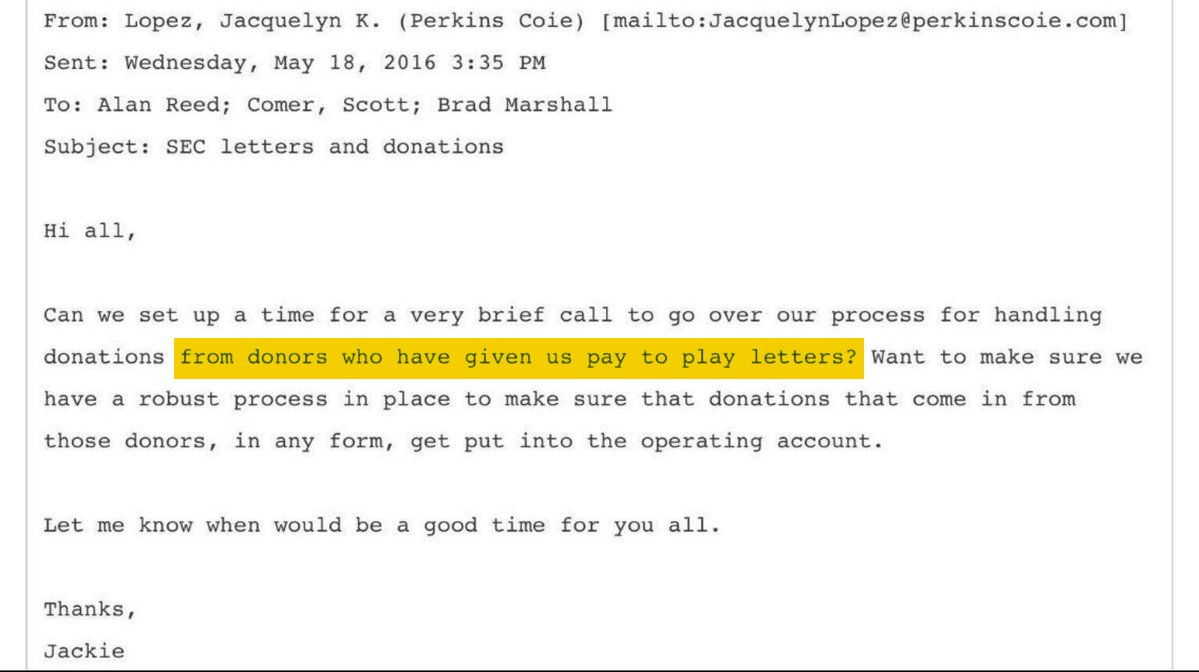
For example, consider the case of Department of Homeland Security czar Jeh Johnson.  Johnson is a career public servant.  Yet he was able to come up with over half a million dollars in cash to donate to the DNC — and then “feigned disbelief” when he got the job of leading the Homeland Security agency.

How has he used this post?  Oddly enough, we were just talking about that the other day.  Johnson decided to appear at the conference of a known Muslim Brotherhood front organization, while “fully aware” of its terrorist ties.

As CJ first reported Sunday, ISNA had been considered off-limits to such high-level appearances since the U.S. Justice Department in 2008 designated the group as an unindicted co-conspirator in the largest terrorist financing case in U.S. history and a front organization for the radical Egypt-based Muslim Brotherhood.

Johnson’s spokesman Neema Hakim told CJ that, despite ISNA’s terrorist ties and radical background, Johnson agreed to appear at the event because he considered it an “opportunity” to conduct outreach with the American Muslim community.

“DHS and the secretary are fully aware of past evidence and allegations concerning ISNA and carefully considered them before accepting ISNA’s invitation,” Hakim said.

While there, he shared a stage with a Holocaust denier and a known leader of the Muslim Brotherhood.

Nor was this the only occasion on which he has made moves amenable to the Brotherhood. In June, he testified before Congress admitting that his agency had scrubbed references to Islam from counter-terror materials that they produced.  He claimed to have “no idea”how that happened.

Earlier in June, Johnson downplayed the role of a radical Islamist community in the Pulse nightclub shootings.  He said that shooter Omar Mateen “was ‘self-radicalized’ without any religious, ideological or operational support from friends, family or others in the Muslim community.” Yet it turned out that Mateen had ties to a known radical imam, one who had served as a bodyguard for the “blind sheikh” who carried out the first World Trade Center attacks.  Perhaps it was worth considering that Mateen might have targeted the gay nightclub in part because of the harsh language his mentor used towards “f****ts” in America, and Islam’s duty towards them?

To be clear, we at CounterJihad have no idea where Jeh Johnson got all that money.  We have no evidence establishing a causal relationship between the inexplicably large donation from a career public servant and his subsequent support of Brotherhood outlets, or the Brotherhood’s agenda.  We cannot even be certain that the documents establishing the donation are themselves fully genuine.  We have to be suspicious of them at first face, given that they passed through the hands of pro-Russian actors. More details here.

UNGA: Challenges Transcend Borders and National Sovereignties

Anyone remember Brexit? People across the globe are speaking out and the vote in Britain to get out of a union and regain sovereignty is a message. It is not being heard and such is the case at the United Nations General Assembly.

Borderless….policy by global leaders is promoting this, while citizens are demanding otherwise. Have you taken a moment to look at our domestic universities where classes are filled with foreign students? Have you look at how intertwined governments are with each other’s economies? When one government financially aides another to keep it from a tailspin, major strings are attached and ethical behavior and compliance with law is dismissed.

Have you seen this hashtag? #UN4RefugeesMigrants   It is the newest in vogue talking point and condition globally. To view how borderless the West is becoming, click here to see the topics of discussions planned at the United Nations.

The newest mission is to control the oceans and John Kerry is leading the way. Who owns those oceans and the sea life?

Related reading: John Kerry expresses hope over ‘life and death issue’ of oceans

The Secretary of State sees the future of the seas as a global threat equal to world conflicts.

So, back to the United Nations and how the above and much more are being covered and delivered. Chilling conditions as noted below:

President Obama is hosting the Leaders’ Summit on Refugees, alongside co-hosts Canada, Ethiopia, Germany, Jordan, Mexico and Sweden, which will appeal to governments to pledge significant new commitments on refugees. While the Leaders’ Summit will focus on refugees, not migrants, the General Assembly High-Level Summit will address large movements of both. See the full program here.

Then we have Europe:

The European Union at the United Nations

“Stronger partnerships are the building blocks of our foreign policy. All today’s challenges
transcend borders and national sovereignties. None of us, alone, can carry the weight of the
world on its shoulders.”

High Representative/ Vice-President Federica Mogherini at the UN Security Council 6 June 2016

The EU’s commitment to effective multilateralism, with the UN at its core, is a central element of its external action. The Lisbon Treaty provides that “The Union … shall promote multilateral solutions to common problems, in particular in the framework of the United Nations.” (Article 21-1 TEU) and that “The Union …shall work for a high degree of cooperation in all fields of international relations, in order to (…) preserve peace, prevent conflicts and strengthen international security, in accordance with the purposes and principles of the United Nations Charter.” (Art. 21-2)

Multilateralism is also one of the core principles and priorities in the new EU Global Strategy for Foreign and Security Policy. To respond successfully to global crises, threats and challenges, the international community needs an efficient multilateral system, founded on universal rules and values. The United Nations is both: a key EU partner and an indispensable global forum for tackling global challenges, within the overall framework of the 2030 Agenda and its 17 Sustainable Development Goals. The EU thus works closely both with the UN and in the UN.

“Without global norms and the means to enforce them, peace and security, prosperity and democracy – our vital interests – are at risk. Guided by the values on which it is founded, the EU is committed to a global order based on international law, including the principles of the UN Charter. The EU will strive for a strong UN as the bedrock of the multilateral rules-based order, and develop globally coordinated responses with international and regional organisations, states and non-state actors.”

– EU Global Strategy for Foreign and Security Policy –


Working closely with the UN Secretariat and the various UN Agencies, Funds and Programmes, the EU has established a strong relationship with the UN. Cooperation takes place across a broad range of areas: development, human rights, climate change, peace building, crisis management, disarmament and non-proliferation, humanitarian assistance, fighting corruption and crime, addressing global health concerns, managing migratory flows and labour issues.

The UN General Assembly is the main deliberative, policymaking and representative organ of the UN. The added value of the EU is to coordinate among its 28 Member States to present a unified position.

In 2011, the UN General Assembly adopted Resolution A/65/276 upgrading the observer status allow the EU to present common positions, make interventions, present proposals and participate in the general debate each September. As an observer with enhanced status, enabling EU representatives to speak on behalf of the EU and its member states in the UN. Since then it is also the President of the European Council who delivers the EU statement in the General debate, and no longer the rotating Presidency, bringing EU representation in New York in line with Lisbon Treaty provisions. The EU has obtained a special “full participant” status in a number of important UN conferences.

The Council of the European Union adopted the EU priorities at the United Nations at the 71st United Nations General Assembly on 18 July 2016. The coming year will be focused on consolidation and implementation of the agreements reached in the past year. These include the 2030 agenda for sustainable development, the Addis Ababa action agenda of the third international conference on financing for development and the Paris climate agreement.

The EU coordinates its voting within the General Assembly’s six main committees and other bodies and agencies such as the Economic and Social Council. To this end, more than 1300 internal EU coordination meetings are held at the UN in New York alone to develop a common EU stance and speak with one voice. Article 34 of the EU Treaty also stipulates that EU members on the Security Council must act in concert and foster the interests of the EU. In 2015, the EU delivered more than 220 statements at the UN in New York, including 31 at the Security Council.

Global Security Provider

The EU has a wide range of tools available to prevent and solve crises in close cooperation with international and regional partners. For this reason, the High Representative provides regular updates to theSecurity Council and the EU is often invited to address issues of common concern, such as the fight against terrorism. Regular UN Security Council meetings on UN-EU cooperation in maintaining international peace and security are testimony to the importance both place on it.

“In our conflictual world, where power is scattered and diffuse, global peace and security only stands a chance if our nations and our regions are united. Our European Union will always come back to the United Nations, to the core of the international multilateral system, to the stubborn idea of a cooperative world order.”

HRVP briefing to UNSC 6 June 2016

The Security Council endorsed the relationship with the EU in 2014 when it adopted a presidential statement on cooperation between the EU and the UN.

Major contributor

Collectively, the EU and its Member States are the single largest financial contributor to the UN system. The sum of the contributions of the 28 EU Member States amounts to 30.38% of the UN regular budget and 33.17% of the UN peacekeeping budgets. In addition, the EU and its Member States also provide about one-half of all the voluntary contributions to UN funds and programmes. The European Commission alone contributed more than $1.5 billion to support UN external assistance programmes and projects in 2014. The European Union and its Member States retained their place as the world’s largest aid donor in 2014, according to OECD figures. In 2014, EuropeAid’s financial contributions to the UN exceeded €983 million, with the most funding going to UNDP (40%), UNICEF (18%), FAO (12%), UNRWA (10%), and WFP (8%). In 2015, ECHO (European Commission Humanitarian Aid and Civil Protection) provided €514 million (an increase from €452 in 2014) to UN agencies, funds and programmes, including €207 million to WFP, €127 million to UNHCR and €108 million to UNICEF.

UN Reform and Increased Efficiency

Effective multilateralism requires an effective United Nations at its core. The EU supports the reform of the UN system, including its bodies and organs, to ensure it is fit to address the complex, multi-sectoral challenges we face today. This should include comprehensive reform of the UN Security Council as well as revitalisation of the work of the General Assembly. The EU supports the notion that the United Nations must be ‘fit for purpose’ as well as increasingly effective and efficient, including to support successful implementation of the 2030 Agenda.

In America: What Exactly is a Refugee?

DHS Officials Admit They Have Not Used ‘Deception Detection Technologies’ to Screen Visa Applicants, Refugees

MRCTV: At a House Homeland Security Committee hearing Wednesday titled “Shutting Down Terrorist Pathways into America,” officials at the Department of Homeland Security admitted they have not explored the use of “deception detection technology” for screening refugees and other visa applicants despite a law signed last year directing the agency to do so.


Migrant surge poses challenge for U.S.: Who’s a refugee, who isn’t?

WASHINGTON

Ordonez/McClatchy: U.S. Border Patrol agents will apprehend more family members entering the United States along the Southwest border this fiscal year than they did in 2014, when a massive surge of Central Americans found the Obama administration detaining thousands of mothers and their children.

Newly released U.S. Customs and Border Protection statistics show that while overall apprehension numbers are down from two years ago, the number of family members being apprehended will almost certainly surpass the total of two years ago.

Both family apprehensions and detentions of unaccompanied children have shown dramatic increases over last year’s totals – with family detentions nearly doubling and the number children traveling without parents increasing 52 percent.

Those increases raise serious questions about the Obama administration’s strategy to curb the flow through a combination of immigration enforcement and humanitarian assistance.

“It has been a failure, because people are still coming,” said Amy Fischer, the policy director for the Texas-based Refugee and Immigrant Center for Education and Legal Services.

Many migrants from Central America cite violence in their homelands as the reason for seeking refuge in the United States. The Obama administration has created a variety of programs, including aid to Central American governments, to try to tamp down that violence. The administration acknowledged over the summer that efforts have been “insufficient to address the number of people who may have legitimate refugee claims.”

A total of 68,445 family members were apprehended in 2014, when a surge of Salvadoran, Honduran and Guatemalan mothers and children fleeing violence and poverty raced into the Rio Grande Valley of Texas.

This year, with one month left in the fiscal year, more than 68,080 family members have been apprehended. With apprehensions averaging 6,189 a month, the annual total is certain to be a record. No month this year has seen fewer than 3,000 family members detained. In August, Border Patrol agents apprehended 9,359 family members, the highest yet of the year.

Honduras, Guatemala and El Salvador are three of the most violent countries in the world.

The Office of the United Nations High Commissioner for Refugees warned last October that women from Central America would continue to flee their countries because of the escalating tide of violence, including domestic violence and rape, fueled by sophisticated transnational gangs.

The number of Central Americans seeking asylum in the United States has grown nearly eightfold in the last six years. Mexico, Canada, Nicaragua and Costa Rica also have seen an increase in Guatemalans, Hondurans and Salvadorans seeking refugee status, according to the United Nations high commissioner for refugees.

Federal officials have an obligation under national and international law to protect the vulnerable. The challenge is determining who qualifies as a bona fide refugee and who has come for family or economic reasons.

The surge has exacerbated an already long backlog of hundreds of thousands who are awaiting cases in immigration court. To receive asylum in the United States, applicants must prove they have well-founded fears of persecution because of “race, religion, nationality, membership in a particular social group or political opinion.” These cases can take years to resolve.

Homeland Security officials said they continued to monitor migration trends and were working aggressively to “deter unauthorized migration, while ensuring that those with legitimate humanitarian claims are afforded the opportunity to seek protection.”

The White House reached an agreement with Costa Rica in July to host up to 200 Central American refugee applicants while the United States assessed their asylum claims. It was part of a larger package of measures put in place to protect migrants that included expanding the number of people who can apply to the U.S. refugee program for children. The administration also worked with Congress to secure $750 million to help El Salvador, Guatemala and Honduras fight poverty and violence as well as reform their governments.

President Barack Obama has authorized spending up to $70 million to meet the “unexpected urgent refugee and migration needs related to the U.S. Refugee Admissions Program.”

But Homeland Security Secretary Jeh Johnson has made it clear that deportations of Central Americans will continue despite recognition of the crisis.

“As long as we have border security and as long as our borders are not open borders,” Johnson told reporters last month. “We have to be consistent with our priorities.” More here.