
Fidel Castro dead at 90, Cubans in Miami Celebrate


Former Cuban leader Fidel Castro dies aged 90

Reuters: Fidel Castro, the Cuban revolutionary leader who built a communist state on the doorstep of the United States and for five decades defied U.S. efforts to topple him, died on Friday, his younger brother announced to the nation. He was 90.

A towering figure of the second half of the 20th Century, Castro had been in poor health since an intestinal ailment nearly killed him in 2006. He formally ceded power to his younger brother two years later.

Wearing a green military uniform, Cuba’s President Raul Castro appeared on state television to announce his brother’s death.

“At 10.29 at night, the chief commander of the Cuban revolution, Fidel Castro Ruz, died,” he said, without giving a cause of death.

“Ever onward, to victory.”

The streets were quiet in Havana, but some residents reacted with sadness to the news, while in Miami, where many exiles from the Communist government live, a large crowd waving Cuban flags cheered, danced and banged on pots and pans, a video on social media showed.

“I am very upset. Whatever you want to say, he is public figure that the whole world respected and loved,” said Havana student Sariel Valdespino.

Castro’s remains will be cremated, according to his wishes. His brother said details of his funeral would be given on Saturday.

The bearded Fidel Castro took power in a 1959 revolution and ruled Cuba for 49 years with a mix of charisma and iron will, creating a one-party state and becoming a central figure in the Cold War.

He was demonized by the United States and its allies but admired by many leftists around the world, especially socialist revolutionaries in Latin America and Africa.

“I lament the death of Fidel Castro Ruz, leader of the Cuban revolution and emblematic reference of the 20th Century,” Mexican President Enrique Pena Nieto said on Twitter.

Transforming Cuba from a playground for rich Americans into a symbol of resistance to Washington, Castro outlasted nine U.S. presidents in power.

He fended off a CIA-backed invasion at the Bay of Pigs in 1961 as well as countless assassination attempts.

His alliance with Moscow helped trigger the Cuban Missile Crisis in 1962, a 13-day showdown with the United States that brought the world the closest it has been to nuclear war.

Wearing green military fatigues and chomping on cigars for many of his years in power, Castro was famous for long, fist-pounding speeches filled with blistering rhetoric, often aimed at the United States.

At home, he swept away capitalism and won support for bringing schools and hospitals to the poor. But he also created legions of enemies and critics, concentrated among Cuban exiles in Miami who fled his rule and saw him as a ruthless tyrant.

In the end it was not the efforts of Washington and Cuban exiles nor the collapse of Soviet communism that ended his rule. Instead, illness forced him to cede power to his younger brother Raul Castro, provisionally in 2006 and definitively in 2008.

Although Raul Castro always glorified his older brother, he has changed Cuba since taking over by introducing market-style economic reforms and agreeing with the United States in December 2014 to re-establish diplomatic ties and end decades of hostility.

Six weeks later, Fidel Castro offered only lukewarm support for the deal, raising questions about whether he approved of ending hostilities with his longtime enemy.

He lived to witness the visit of U.S. President Barack Obama to Cuba earlier this year, the first trip by a U.S. president to the island since 1928.

Castro did not meet Obama, and days later wrote a scathing column condemning the U.S. president’s “honey-coated” words and reminding Cubans of the many U.S. efforts to overthrow and weaken the Communist government.

In his final years, Fidel Castro no longer held leadership posts. He wrote newspaper commentaries on world affairs and occasionally met with foreign leaders but he lived in semi-seclusion.

His death – which would once have thrown a question mark over Cuba’s future – seems unlikely to trigger a crisis as Raul Castro, 85, is firmly ensconced in power.

Still, the passing of the man known to most Cubans as “El Comandante” – the commander – or simply “Fidel” leaves a huge void in the country he dominated for so long. It also underlines the generational change in Cuba’s communist leadership.

Raul Castro vows to step down when his term ends in 2018 and the Communist Party has elevated younger leaders to its Politburo, including 56-year-old Miguel Diaz-Canel, who is first vice-president and the heir apparent.

Others in their 50s include Foreign Minister Bruno Rodriguez and economic reform czar Marino Murillo.

The reforms have led to more private enterprise and the lifting of some restrictions on personal freedoms but they aim to strengthen Communist Party rule, not weaken it.

“I don’t think Fidel’s passing is the big test. The big test is handing the revolution over to the next generation and that will happen when Raul steps down,” Cuba expert Phil Peters of the Lexington Institute in Virginia said before Castro’s death.

REVOLUTIONARY ICON

A Jesuit-educated lawyer, Fidel Castro led the revolution that ousted U.S.-backed dictator Fulgencio Batista on Jan 1, 1959. Aged 32, he quickly took control of Cuba and sought to transform it into an egalitarian society.

His government improved the living conditions of the very poor, achieved health and literacy levels on a par with rich countries and rid Cuba of a powerful Mafia presence.

But he also tolerated little dissent, jailed opponents, seized private businesses and monopolized the media.

Castro’s opponents labeled him a dictator and hundreds of thousands fled the island.

Many settled in Florida, influencing U.S. policy toward Cuba and plotting Castro’s demise. Some even trained in the Florida swamps for the disastrous Bay of Pigs invasion.

But they could never dislodge him.

Generations of Latin American leftists applauded Castro for his socialist policies and for thumbing his nose at the United States from its doorstep just 90 miles (145 km) from Florida.

Castro claimed he survived or evaded hundreds of assassination attempts, including some conjured up by the CIA.

In 1962, the United States imposed a damaging trade embargo that Castro blamed for most of Cuba’s ills, using it to his advantage to rally patriotic fury.

Over the years, he expanded his influence by sending Cuban troops into far-away wars, including 350,000 to fight in Africa. They provided critical support to a left-wing government in Angola and contributed to the independence of Namibia in a war that helped end apartheid in South Africa.

He also won friends by sending tens of thousands of Cuban doctors abroad to treat the poor and bringing young people from developing countries to train them as physicians

‘HISTORY WILL ABSOLVE ME’

Born on August 13, 1926 in Biran in eastern Cuba, Castro was the son of a Spanish immigrant who became a wealthy landowner.

Angry at social conditions and Batista’s dictatorship, Fidel Castro launched his revolution on July 26, 1953, with a failed assault on the Moncada barracks in the eastern city of Santiago.

He was sentenced to 15 years in prison but was released in 1955 after a pardon that would come back to haunt Batista.

Castro went into exile in Mexico and prepared a small rebel army to fight Batista. It included Argentine revolutionary Ernesto “Che” Guevara, who became his comrade-in-arms.

In December 1956, Castro and a rag-tag band of 81 followers sailed to Cuba aboard a badly overloaded yacht called “Granma”.

Only 12, including him, his brother and Guevara, escaped a government ambush when they landed in eastern Cuba.

Taking refuge in the rugged Sierra Maestra mountains, they built a guerrilla force of several thousand fighters who, along with urban rebel groups, defeated Batista’s military in just over two years.

Early in his rule, at the height of the Cold War, Castro allied Cuba to the Soviet Union, which protected the Caribbean island and was its principal benefactor for three decades.

The alliance brought in $4 billion worth of aid annually, including everything from oil to guns, but also provoked the 1962 Cuban Missile Crisis when the United States discovered Soviet missiles on the island.

Convinced that the United States was about to invade Cuba, Castro urged the Soviets to launch a nuclear attack.

Cooler heads prevailed. Soviet leader Nikita Khrushchev and U.S. President John F. Kennedy agreed the Soviets would withdraw the missiles in return for a U.S. promise never to invade Cuba. The United States also secretly agreed to remove its nuclear missiles from Turkey.

‘SPECIAL PERIOD’

When the Soviet Union collapsed in 1991, an isolated Cuba fell into a deep economic crisis that lasted for years and was known as the “special period”. Food, transport and basics such as soap were scarce and energy shortages led to frequent and long blackouts.

Castro undertook a series of tentative economic reforms to get through the crisis, including opening up to foreign tourism.

The economy improved when Venezuela’s socialist leader Hugo Chavez, who looked up to Castro as a hero, came to the rescue with cheap oil. Aid from communist-run China also helped, but an economic downturn in Venezuela since Chavez’s death in 2013 have raised fears it will scale back its support for Cuba.

Plagued by chronic economic problems, Cuba’s population of 11 million has endured years of hardship, although not the deep poverty, violent crime and government neglect of many other developing countries.

For most Cubans, Fidel Castro has been the ubiquitous figure of their entire life.

Many still love him and share his faith in a communist future, and even some who abandoned their political belief still view him with respect. But others see him as an autocrat and feel he drove the country to ruin.

Cubans earn on average the equivalent of $20 a month and struggle to make ends meet even in an economy where education and health care are free and many basic goods and services are heavily subsidized.

It was never clear whether Fidel Castro fully backed his brother’s reform efforts of recent years. Some analysts believed his mere presence kept Raul from moving further and faster while others saw him as either quietly supportive or increasingly irrelevant.


Obama’s Pen Commuted Another 79 Felons

The petition form is here where requests are made to the Department of Justice for review. They are scored for priority and recommendations are sent to the White House for Barack Obama’s signature. The DoJ has a Pardons Attorney division where full instructions are noted and they also include illegal immigrants. The president can only allegedly issue pardons for federal crimes. It is said he approves those that are non-violent but that hardly explains why if non-violent why many sentences would be for life.

Keep a close eye on Chelsea Manning, the man that altered his gender at taxpayer expense while in prison that stole government secrets and classified material. She has formally applied for a pardon as noted here.

chelsea-manning-commutation-application

White House Chief Counsel is Neil Eggleston, he is the point person for Barack Obama coordinating the pardon/commutations requests.

Eggleston represented Cheryl Mills, who was a board member of the William J. Clinton Presidential Library foundation, during a congressional investigation into President Clinton’s last-minute pardon of fugitive financier Marc Rich, whose wife had been a foundation donor. Eggleston represented then-Obama chief of staff Rahm Emanuel during the prosecution of Illinois Gov. Rod Blagojevich. Around that same time, he also represented then-Sen. Kent Conrad during a congressional ethics inquiry into a mortgage he had received from Countrywide Financial.

*****

TheHill: President Obama on Tuesday commuted the prison sentences of 79 inmates as part of a clemency effort that appears to be moving at rapid speed.

Obama has shortened the prison stays of 351 federal inmates since the beginning of October. The pace indicates that Obama is intent on using his remaining time in office to aggressively pursue the clemency initiative he started in 2014.

In total, Obama has commuted the sentences of 1,023 inmates, more than any of the last 11 presidents combined. Most of the inmates were convicted of non-violent, low-level drug offenses.

Of the inmates who have been granted clemency under Obama, White House Counsel Neil Eggleston said 342 were serving life sentences.

“We have two months left before the inauguration,” he said. “I anticipate we will keep going until the end.”

Eggleston did not say how many more commutations will be granted, but Deputy Attorney General Sally Yates said the Department of Justice had about 6,300 petitions from non-violent drug offenders alone as of Aug. 31.

She said the agency is on track to act make a recommendation on each of those petitions before Obama leaves office.

In a Facebook post, Obama said it doesn’t serve taxpayers or public safety to put nonviolent drug offenders behind bars for decades.

“At the heart of America is the idea that we’re all imperfect. We all make mistakes,” he said. “We have to take responsibility and learn from those mistakes. And we as a society have to make sure that people who do take responsibility for their mistakes are able to earn a second chance to contribute to our communities and our country.”

Last week, family members of incarcerated individuals delivered a petition with more than 2 million signatures to the Department of Justice urging Obama to speed up his rate of clemencies to ensure no one is left behind come Jan. 20.

Advocates fear the clemency initiative will end with Obama’s administration, as there is no guarantee that President-elect Donald Trump will continue it.

White the clemency initiative has been a priority of the current administration, Eggleston said he could not say what will happen under Trump.

“I can’t speak to whether the next administration will have a similar enthusiasm,” he said.

More Protests Planned, Chaos and Division Ahead

Minimum wage protests planned in 340 cities

TheHill: Organizers behind a movement to increase the minimum wage to $15 an hour are promising its “largest, most disruptive protest ever” in response to Donald Trump’s stunning victory in the 2016 presidential election.

On the fourth anniversary of the movement to raise wages, tens of thousands of low-wage workers will protest next Tuesday in 340 cities around the country, as they demand higher pay. Strikes are planned by bagged handlers at Chicago O’Hare International Airport (ORD) and workers at McDonald’s restaurants around the country.

The “Fight for $15” protests will also hit Los Angeles International Airport (LAX), Newark International Airport (EWR), and about 20 other airports in major cities, organizers said on a call with reporters Monday.

“Just because the election went a certain way, doesn’t mean we’re going away,” said Kendall Fells, organizing director of the Fight for $15.

“It’s the exact opposite.”

On the campaign trail, Bernie Sanders called for raising the minimum wage to $15 an hour, while Hillary Clinton also voiced support for an increase in pay for low-wage workers. But Trump’s message on minimum wage was inconsistent, at times indicating he would support an increase in the minimum wage and at other times suggesting workers make too much money.

The current federal minimum wage is $7.25 an hour.

Raising the minimum wage is a “winning issue,” Fells said.

“On Election Day, even as Donald Trump won, ballot initiatives to raise the minimum wage passed in all five states,” he said.

Fells said there would be “thousands of folks” protesting at each airport.

The Fight for $15 movement is expecting “tens of thousands” of protesters from all walks of life, including baggage handlers, airline cabin cleaners, airport wheelchair attendants, janitors, cooks, home care workers, child care providers, teachers and graduate assistants.

Meanwhile, there is Obama’s mighty pen.

Obama Urged to Free Asylum-Seekers Before Trump Takes Office

About 4,000 women and children are in jail-like facilities
President-elect has promised to deport millions from U.S.

Bloomberg: Immigration advocates are asking the Obama administration to release thousands of detained Central American women and children who want asylum in the U.S., citing concerns that Donald Trump will deport them after his inauguration in January.

Representatives of groups including the Women’s Refugee Commission and the American Immigration Lawyers Association met with White House officials last week to discuss a host of immigration issues, including the fate of about 4,000 Central American detainees, some as young as two years old, who have fled violence in their home countries. They’re housed in jail-like facilities in Texas and Pennsylvania, some for more than a year, as they wait for the government to process their asylum pleas.

Immigration advocates want the president to either end the practice of detaining families altogether, as they’ve been requesting for years, or direct Immigration and Customs Enforcement officials to release families with a notice to appear before a judge on their own recognizance.

The plight of the Central American refugees, who fled violence and gangs in their home countries, is one of several 11th-hour immigration conundrums Obama faces as he prepares for Trump to enter the White House. The Republican campaigned on promises to crack down on undocumented immigrants and to build a wall on the Mexican border, and immigration advocates fear a government that has struggled under Obama to humanely handle a crush of asylum-seekers at the southern border will turn markedly more hostile under his successor.

“The family detention infrastructure is something that President Obama built, and unless he tears it down in the next two months this will be part of his presidential legacy,” said Carl Takei, staff attorney at the the American Civil Liberties Union’s National Prison Project.

DACA Applicants

Separately, advocates for about 750,000 young undocumented immigrants granted protection from deportation under Obama’s Deferred Action for Childhood Arrivals, or DACA, have pressed the White House to ensure Trump can’t use data compiled by the program to instead target and remove the people from the country. House Democrats called on Obama last week to issue a presidential pardon for the immigrants, who were brought into the country as children and have grown up as “Americans,” Obama said in Nov. 14 news conference.

The White House said last week that the president’s clemency power can’t be used to confer legal status on undocumented residents. Pete Boogaard, a White House spokesman, declined to comment on whether the administration has the authority to release the asylum seekers.

Trump is poised to inherit one of the worst humanitarian crises in a generation along the U.S.-Mexico border. Starting in 2014 scores of women and children fleeing gang violence in Central America began presenting themselves to unprepared border officials along the southern U.S. border. Generally under U.S. law, asylum seekers who can show a “credible fear” of returning to their home countries are entitled to a removal hearing before a judge.

Facing a lack of beds, the Obama administration raced to open additional family detention centers to house large numbers of children, who are required by law to be held in the least restrictive conditions possible.

Specter of Sessions

Trump has promised to crack down on undocumented border crossers while also restricting refugees from terror-prone countries, but he has yet to articulate a policy for the thousands of asylum seekers who enter the U.S. each year. Trump’s top immigration advisers, including Kansas Secretary of State Kris Kobach and Alabama Senator Jeff Sessions, a Republican who Trump plans to nominate as attorney general, have argued that Obama has been too easy on migrants.

“Instead of removing illegal immigrants, the President has expended enormous time, energy, and resources into settling newly arrived illegal immigrants throughout the United States,” Sessions wrote in a January 2015 “immigration handbook” for Republicans.

The crisis shows no sign of abating. In fiscal 2016 the U.S. apprehended a record 78,000 family members, mainly from Central America, on the southwest border, according to government figures. A record 41,000 immigrants are currently detained in U.S. facilities and half are asylum-seekers, said Bob Libal, executive director of Grassroots Leadership, an advocacy group that seeks an end to family detention.

The three family-detention facilities have a combined capacity of about 3,600 beds. The Department of Homeland Security is currently evaluating bids to add another 2,500 beds. Southwest Key Programs, an Austin-based nonprofit that operates shelters for unaccompanied migrant children, has looked at turning an abandoned Wal-Mart store along the border into a “humane shelter” for families seeking asylum, according to Cindy Casares, a spokeswoman for the group.

Advocates have long called on Obama to scrap the facilities because of inhumane conditions, including reports of babies being dressed in prison jumpsuits and punishment meted out to children for playing too noisily. The advocates believe the Central American asylum seekers pose a low flight risk and they recommend alternatives to detention, including wearing ankle monitors to ensure they show up for their court dates.

‘Added Urgency’

Under Trump, the advocates fear, the government could broaden the use of expedited removal -– fast-track deportation proceedings that take place without a judge — a practice that is already being used more frequently with asylum seekers.

“There is an added urgency to make sure that the families that are here get an opportunity to be heard in front of a judge,” said Ben Johnson, executive director at the American Immigration Lawyers Association. “There is some concern that those families under the new administration will never have that chance.”

Panic is meanwhile rising along the border as migrants have digested the news of Trump’s election. Immigrants staying in cramped shelters or church basements are trying to leave the border region for cities farther north such as Baltimore or New York, from where they believe it is harder to be deported, said Michael Seifert, an activist with the Southern Border Communities Coalition.

“There’s literally not enough commercial bus space to get the people out,” he said. “They’re all terrified.”

How does this all get packed up and by whom? Soros….

Soros-Funded Group Pushing ‘Sanctuary Campus’ Anti-Trump Protests

The demonstrations are billed as being led by students

FreeBeacon: An organization that has received funding from liberal billionaire George Soros is pushing anti-Donald Trump student protests that call for sanctuary campuses to protect undocumented students.

Thousands of students at more than 80 college campuses have participated in “sanctuary campus” protests, CBS News reported. Students have signed petitions and walked out of classes at their universities “in support of undocumented classmates.”

The protests are billed as though they are being organized by students at the grassroots level, but in fact a D.C.-based immigration activist group is behind them.

United We Dream is the “largest immigrant youth-led organization in the nation,” composed of over 100,000 immigrant youth and 55 affiliate organizations in 26 states, according to its website. The group seeks to “organize and advocate for the dignity and fair treatment of immigrant youth and families, regardless of immigration status.”

The group issued a “state of resilience and urgency for immigrants” on Nov. 9, the day after Trump’s victory over Hillary Clinton.

“The most contentious election in a generation is over. Across the country, immigrant youth in orange shirts, and backed by the strength of their convictions, faced the racism of Trump head on in a fight for their lives,” the press release stated.

“Immigrants are declaring a state of urgency and resilience. Over the coming weeks, our families and community members will need to tap into the incredible strength that brought us to this country and which we use to survive,” said Cristina Jimenez, the executive director and co-founder of United We Dream.

“This is a time to mobilize in every city state across our country,” Jimenez later added in the release. “We calling on all people to take action to demand that their mayors and governors declare their cities and states as spaces of safety.”

United We Dream has received tens of thousands of dollars from George Soros’ Open Society Foundations. Unbound Philanthropy, a private grant-making foundation focusing on migrants and refugees, and a handful of other liberal grant-making organizations have also funded the United We Dream Network since 2009.

Taryn Higashi, the executive director of Unbound Philanthropy, sits on an advisory board of Soros’s Open Society Foundations.

United We Dream has teamed up with Voto Latino, a non-profit organization that “empowers” American latinos, on the campus protests. Actress Rosario Dawson is cofounder and chairwoman of Voto Latino.

“Donald Trump began his campaign disparaging immigrants, calling for mass deportations, and now has confirmed his plans to immediately deport 2-3 million people,” said Maria Teresa Kumar, president and CEO of Voto Latino. “We call on all young people to organize with us in our college campuses and on social media in our community’s fight for justice and dignity, to keep our community informed and to provide immigrant youth and their families protection from deportation and separation.”

Voto Latino tweeted about sanctuary campuses on Nov. 16.

“We look forward to our campus chapters organizing & pushing their schools to become sanctuary campuses! ‪#HereToStay,” the tweet said. The tweet linked to an article about universities facing pressure to become immigrant sanctuaries.

The groups have launched a MoveOn petition calling for sanctuary cities that will be delivered to mayors across the United States. It has garnered more than 100,000 signatures. United We Dream also followed Trump around the campaign trail.

United We Dream did not return a request for comment on its involvement in the campus protests.


Edging to 50,000 a Month, Crossing the Southern Border

It is an invasion.

Just this month:

USCIS Announces Addition of St. Vincent and the Grenadines to Eligible Countries for the H-2A and H-2B Visa Programs
USCIS and the Department of Homeland Security (DHS), in consultation with the Department of State, have added St. Vincent and the Grenadines to the list of countries whose nationals are eligible to participate in the H-2A and H-2B visa programs for the coming year.
USCIS to Centralize Processing of Special Immigrant Juvenile Cases
Starting on November 1, 2016, USCIS will centralize the Special Immigrant Juvenile (SIJ) program. This means SIJ-based Form I-360 petitions and Form I-485 applications will primarily be adjudicated at one location, the National Benefits Center (NBC). USCIS will retain discretion to require in-person interviews at local field offices to complete adjudications as needed.
USCIS Reaches CW-1 Cap for Fiscal Year 2017
USCIS has received a sufficient number of petitions to reach the numerical limit (the “cap”) of 12,998 workers who may be issued CNMI-Only Transitional Worker (CW-1) visas or otherwise provided with CW-1 status for fiscal year 2017.

Notice how Jeh Johnson says they have been detained? Yeah for a hour or two?

On the heels of a handful of lawmakers having decried the Department of Homeland Security (DHS) for having failed to provide Congress with information on its efforts to address the surge of illegal aliens at the Southwest border and demanded DHS Secretary Jeh Johnson to “take immediate action to quell the surge at the border and enforce our nation’s immigration laws,” Johnson responded in a statement, saying, “In October, a total of 46,195 individuals were apprehended between ports of entry on our southwest border, compared with 39,501 in September and 37,048 in August.”

“Within these totals,” Johnson said, “we have seen corresponding increases in the numbers of unaccompanied children and individuals in families apprehended.  We’ve also seen increases in the numbers of those who present themselves at ports of entry along the southwest border seeking asylum.”

Previously, House Committee on the Judiciary Chairman Bob Goodlatte (R-Va.), Senate Committee on the Judiciary Chairman Chuck Grassley (R-Iowa), Immigration and Border Security Chairman Trey Gowdy (R-SC), and Immigration and The National Interest Subcommittee Chairman Jeff Sessions (R-Ala.) demanded Johnson “take immediate action to quell the surge at the border and enforce our nation’s immigration laws.”

They also request a briefing to learn about what steps DHS is taking to address this pressing issue. To date, the department has been reluctant to timely provide information to the committees of jurisdiction.

In their letter to Johnsson, the lawmakers stated, “Numerous media reports indicate that this surge is a large-scale effort to enter the United States before this year’s presidential election. The onslaught of illegal immigration reflects continued efforts by aliens from Central America—El Salvador, Honduras and Guatemala—to overwhelm our limited resources at the border, which inevitably results in the release of tens of thousands of removable aliens within the United States. In addition, thousands of Haitians and Africans are amassing in the Mexican cities of Tijuana and Mexicali for the purpose of presenting themselves to Customs and Border Protection officers asserting dubious claims of asylum, which will practically guarantee their entry. This group of ‘Other Than Mexicans’ at the Southwest border comprises 70-75 percent of all border crossings.”

This group also includes large numbers of “Special Interest Aliens,” individuals from Muslim countries where radical Islamist jihadists are entrenched.

“The numbers are staggering,” the lawmakers stated in their letter to Johnson. They noted that, “In Fiscal Year (FY) 2016, the Border Patrol apprehended 408,870 illegal aliens at the southern border, 23 percent more than the preceding fiscal year. Of those apprehended, more than 77,000 were members of so-called ‘family units,’ which represents an increase of 95 percent over FY 2015 figures, and nearly 60,000 were unaccompanied alien minors, which reflects a 49 percent increase over the previous fiscal year. On October 31, the Department of Health and Human Services reported that the daily referrals of unaccompanied illegal alien minors averaged 262 over the last week and approximately 237 in October. By comparison, referrals averaged 148 per day in October of FY 2014, the year of the first surge, and 60 per day in October of FY 2015.  As of October 27, 2016, the number of minors in [the Office of Refugee Resettlement (ORR)] care is approximately 10,700.”

In his response, Johnson stated, “I have told our border security and immigration enforcement personnel that we must keep pace with this increase. As a result, there are currently about 41,000 individuals in our immigration detention facilities — typically, the number in immigration detention fluctuates between 31,000 and 34,000 – and I have authorized U.S Immigration and Customs Enforcement to acquire additional detention space for single adults so that those apprehended at the border can be returned to their home countries as soon as possible. We have also engaged with a number of countries to repatriate their citizens more quickly, and they have agreed to do so.”

“Our borders cannot be open to illegal migration,” Johnson said, noting, “We must, therefore, enforce the immigration laws consistent with our priorities. Those priorities are public safety and border security. Specifically, we prioritize the deportation of undocumented immigrants who are convicted of serious crimes and those apprehended at the border attempting to enter the country illegally. Recently, I have reiterated to our Enforcement and Removal personnel that they must continue to pursue these enforcement activities.”

Johnson said, “Those who attempt to enter our country without authorization should know that, consistent with our laws and our values, we must and we will send you back.”

In conclusion, Johnson said, “Once again, I encourage migrants and their families to pursue the various safe and legal paths available for those in need of humanitarian protection in the United States. Earlier this year, the government of Costa Rica announced its agreement to enter into a protection transfer arrangement with the UN High Commissioner for Refugees and the International Organization for Migration to help address the Central American migration challenge. We’ve also established an in-country referral program in countries of origin in Central America.  This will enable vulnerable residents in the region to be considered for refugee protection in the United States after being screened and interviewed by DHS officers. We have also announced expansion of the categories of individuals eligible for participation in our Central American Minors program when accompanied by a qualified child. We encourage use of these programs.”

For Iraq and Syria, Iran is Never Leaving, Russia Loves it

Ramadan al-Saadi, Alarabiya.net Saturday, 19 November 2016

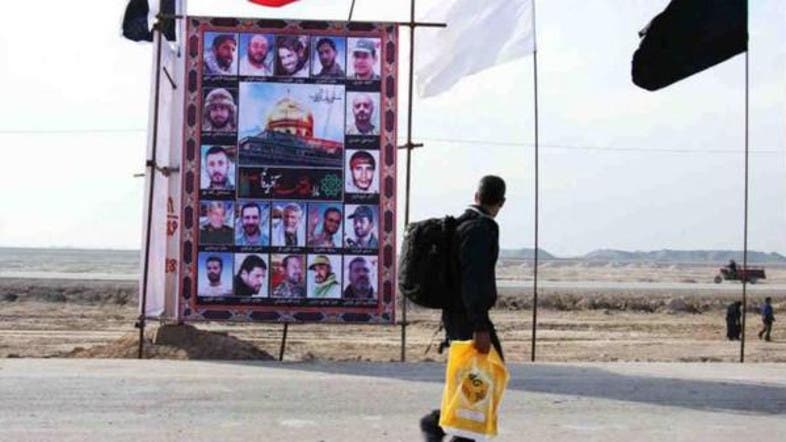
 Through pictures displayed along the streets of the holy cities of Karbala and Najaf in Iraq, Tehran portrayed the number of Iranian soldiers and militia fighters killed in Syria, which has reached the milestone of 3,000. It has been an Iranian policy to exploit Shiite religious occasions to inflame sectarian sentiments when millions of devotees flock to the holy cities in Iraq. More photos here.

In Syria’s Aleppo, Shiite militias point to Iran’s unparalleled influence

BEIRUT — Syria’s government hopes a brutal siege will vanquish rebel holdouts in the city of Aleppo, a key battleground. But Syrian President Bashar al-Assad’s troops aren’t leading the charge.

That task has been taken up by thousands of Shiite militiamen from Lebanon, Iraq, Pakistan and Afghanistan who are loyal to Iran, a Shiite country and perhaps Assad’s most important ally.

For much of Syria’s civil war, these religiously motivated fighters have reinforced Syria’s badly weakened military. Now, they are playing an increasingly critical role in trying to seize opposition-held eastern Aleppo by coordinating their attacks with government forces and warplanes flown by Russia, another ally of Assad’s.

The government, backed by Russian aircraft, launched a major offensive across northern Syria last week that has brought further devastation to eastern Aleppo, Syria’s largest city before the war.

The militias appear to be forming a sophisticated ground coalition that has further bolstered Iran’s influence in Syria, alarming even officials in Assad’s government, said Phillip Smyth, an expert on Shiite militias at the Washington Institute for Near East Policy.

“They are building a force on the ground that, long after the war, will stay there and wield a strong military and ideological influence over Syria for Iran,” he said. “And there is not much Assad can do to curb the rising influence of these groups, even though Syrian officials are clearly concerned about this, because the militiamen are literally preventing the overthrow of his government.”

Analysts say Iran has long used Shiite militias in other countries to project its power. The groups include multiple factions that dominate Iraqi politics, as well as the Lebanese Hezbollah militia, which is more powerful than Lebanon’s military.

Iran and its militias have frustrated U.S. officials. While both sides find themselves aligned against the Islamic State in Iraq, they are at cross-purposes in Syria, where anti-Assad rebels receive funding and arms from Washington and its allies.

Eventually, analysts say, Iran could even find itself in direct competition with Russia for influence in Syria.

The Shiite militias’ presence in Syria also has fueled Iran’s regional and religious rivalry with Saudi Arabia, a Sunni powerhouse that backs Syria’s Sunni-led rebellion.

Still, the payoff of using militiamen could be substantial. If the Syrian government is able to seize all of Aleppo, the regional balance would tip in Iran’s favor, dealing a blow to Saudi ambitions and the rebels who stormed the city’s eastern areas in 2012, said Fawaz Gerges, professor of Middle Eastern politics at the London School of Economics.

“A defeat of the rebels in Aleppo would be a turning point in which Assad captures most of the urban centers of Syria,” he said. “It would be a setback for Saudi Arabia in its rivalry with Iran, which, as a result, would see its influence in Syria increase even more.”

The dozens of militias there have led the way in imposing a crushing blockade of the city’s opposition districts, where more than 200,000 people face worsening shortages of food and medicine. The fighters also call in air raids by Russian and government warplanes that have wrecked hospitals, residences and infrastructure in those areas.

Rebels have indiscriminately shelled government-held western Aleppo, but destruction there has not been as severe.

This month, rebel fighters in Aleppo launched a counteroffensive, but they have struggled to break the siege. Air power – especially Russia’s – has proved a formidable obstacle. The Shiite militiamen have, too, said Zakaria Malahfiji, a member of the Fastaqim rebel force, which is affiliated with the umbrella Free Syrian Army.

“They are fighting with passion, and they fight in well-coordinated attacks,” he said. “I remember one battle where these fighters just kept dying in one spot. One guy would charge, get shot and die, and then another, and then another and then another would do the same thing on the exact same spot. All of them died. They are motivated.”

The hard-line Sunnis of the Islamic State and other religious extremists have overshadowed the revolt against Assad that began peacefully in 2011 before turning into brutal war. Militants linked to al-Qaida have played a prominent role among rebel forces.

To the rebels, the Iranian-backed militiamen are extremists.

“They are spreading Iran’s influence and their extremist ideology, but our revolution is not about religion; it’s about freedom and dignity,” said Abdulmunem Zaineddin, a religious scholar involved with rebel forces in the battles in Aleppo.

The militias say their involvement in the civil war is about defending Shiite shrines in the country, as well as battling extremist Sunni groups.

“We don’t want sectarian violence. We want to protect Syria, to protect all that is sacred to everyone from terrorism, from the terrorist groups paid for by Saudi Arabia, Turkey, Qatar and the U.S.,” said Hisham Al Mossawi of Harakat al-Nujaba, a militia from Iraq whose fighters also are battling in Aleppo.

It’s unclear how many Shiite militiamen and militia factions are participating in the Aleppo battle. Hundreds and perhaps even thousands of the fighters have been killed during the war, including generals from Iran’s paramilitary Revolutionary Guard Corps.

Avi Dichter, chair of Israel’s foreign affairs and defense committee, said this month that as many as 25,000 Shiite militants are fighting in Syria. Other analysts say the number is smaller.

Israeli intelligence closely monitors the fighting in Syria and, in particular, Hezbollah’s role in the conflict. Since it fought a devastating war with Israeli forces in 2006, the Lebanese militia has become more powerful, partly because of the battlefield skills honed in Syria.

Hezbollah intervened in Syria early on in the war, helping Assad’s forces rout rebels in key western areas of the country.

“The fighting has made (Hezbollah) a better fighting force and more adept in conventional military warfare,” Dichter said.

In Aleppo, Hezbollah and Iranian Revolutionary Guards play prominent leadership roles, directing the foreign Shiite militiamen, many of whom are recruited by, and trained in, Iran.

The factions are learning to overcome issues such as linguistic differences, helping them become more adept at coordinating ground assaults, said Smyth, the analyst.

“History proves that whenever Iranians craft groups like these, such as Lebanese Hezbollah, they don’t give up arms, they don’t stand down and they don’t leave territory that they’ve taken,” he said. “They will be in Syria for years and years, and that will have consequences for everyone.”

Iraqi Shiite Militias Complicate Fight to Defeat ISIS in Mosul, Other Areas

(New York, NY) – (CEP) today released updated resources on three powerful Iraqi Shiite militias, as their involvement in the fight for the Sunni-dominated ISIS stronghold of Tal Afar, west of Mosul, is raising fears of the return of sectarian warfare to the area.

The three militias—the Badr Organization, Kata’ib Hezbollah, and Asaib Ahl al-Haq—are the most powerful among Iraq’s Popular Mobilization Forces (PMF), a government-sanctioned umbrella group composed of predominantly Shiite fighters with strong military and financial ties to Iran.  In a July report, Human Rights Watch documented killings, disappearances, torture, and the destruction of homes by the groups during the fight to retake Fallujah and other Sunni-dominated areas from ISIS. The organization urged that Iraq prevent the Shiite militias from playing any role in the campaign to drive ISIS from Mosul.

The Badr Organization began in 1983 as the military wing of an Iraqi political party that sought to bring Iran’s Islamic Revolution to Iraq and fought alongside Iran during the Iran-Iraq War. The Badr Organization is run by Hadi al-Amiri, who has a history of instigating sectarian violence in Iraq. He has also been linked to a 1996 attack in Saudi Arabia that killed 19 U.S. Air Force servicemen.

Kata’ib Hezbollah (KH) is an Iranian-sponsored, anti-American Shiite militia that earned a reputation for targeting U.S. and coalition forces with roadside bombs and improvised rocket-assisted mortars. KH fought with the Assad regime in Syria at the behest of Iran’s Islamic Revolutionary Guard Corps (IRGC). KH has remained virulently anti-American, repeatedly boycotting battles against ISIS in which U.S. airpower contributes. In 2009, the U.S. Treasury Department designated KH and its leader, Jamal Jaafar Ibrahimi (a.k.a. Abu Mahdi al-Mohandes), for threatening stability in Iraq, declaring that KH and Ibrahimi “committed, directed, supported, or posed a significant risk of committing acts of violence against Coalition and Iraqi Security Forces.”

Asaib Ahl al-Haq (AAH) has claimed responsibility for more than 6,000 attacks on American and Iraqi forces. Its founder and leader, Qais al-Khazali, reportedly led the January 2007 attack in Karbala that killed five U.S. soldiers. Today, AAH continues to commit sectarian violence, carry out homophobic attacks, and threaten the “interests” of Western countries participating in strikes in Syria.