
Slave Labor Markets in Libya and Beyond

So, the United Nations reports this but so what? Is anyone at the United Nations taking action? Never heard anything out of the Obama White House either, did you? How about out of the Hillary Clinton or John Kerry State Department? Anything? Did WikiLeaks cables include any of this? Nah….

That whole Hillary Libya operation did not work out well at all, the country remains in a tailspin.

Migrant Smuggling – a deadly business

Currently, data is too scattered and incomplete to paint an accurate picture of numbers of people who are smuggled each year and the routes and methods used by those who smuggle them. Still, available evidence reveals the following trends and patterns:

  • Criminals are increasingly providing smuggling services to irregular migrants to evade national border controls, migration regulations and visa requirements. Most irregular migrants resort to the assistance of profit-seeking smugglers. As border controls have improved, migrants are deterred from attempting to illegally cross them themselves and are diverted into the hands of smugglers.
  • Migrant smuggling is a highly profitable business in which criminals enjoy low risk of detection and punishment. As a result, the crime is becoming increasingly attractive to criminals. Migrant smugglers are becoming more and more organized, establishing professional networks that transcend borders and regions.
  • The modus operandi of migrant smugglers is diverse. Highly sophisticated and expensive services rely on document fraud or ‘visa-smuggling’. Contrasted with these are low cost methods which often pose high risks for migrants, and have lead to a dramatic increase in loss of life in recent years.
  • Migrant smugglers constantly change routes and modus operandi in response to changed circumstances often at the expense of the safety of the smuggled migrants.
  • Thousands of people have lost their lives as a result of the indifferent or even deliberate actions of migrant smugglers.

These factors highlight the need for responses to combat the crime of migrant smuggling to be coordinated across and between regions, and adaptable to new methods. In this regard, UNODC seeks to assist countries in implementing the  Smuggling of Migrants Protocol while promoting  a comprehesensive response to the issue of migrant smuggling.

  More here. Has anyone heard from the African American community on this issue at all?

Image result for slave labor markets  PBS

Back in 2013, the UN essentially reported the same conditions in North Korea.

North Korea’s hidden labor camps exposed: A new UN panel is vowing to hold North Korea’s Kim regime to ‘full accountability’ for decades of mass crime and murder. Will Pyongyang face ICC indictment?  More here from CS Monitor.

The Global Slavery Index also provides insight into the estimated absolute numbers of people in modern slavery, in 162 countries. When the estimated number of enslaved people is considered in absolute terms as a single factor, the country ranking shifts considerably.

The countries with the highest numbers of enslaved people are India, China, Pakistan, Nigeria, Ethiopia, Russia, Thailand, Democratic Republic of Congo, Myanmar and Bangladesh. Taken together, these countries account for 76% of the total estimate of 29.8 million in modern slavery.

The country with the largest estimated number of people in modern slavery is India, which is estimated to have between 13,300,000 and 14,700,000 people enslaved. The India country study suggests that while this involves the exploitation of some foreign nationals, by far the largest proportion of this problem is the exploitation of Indians citizens within India itself, particularly through debt bondage and bonded labour.

The country with the second highest absolute numbers of enslaved is China, with an estimated 2,800,000 to 3,100,000 in modern slavery. The China country study5 suggests that this includes the forced labour of men, women and children in many parts of the economy, including domestic servitude and forced begging, the sexual exploitation of women and children, and forced marriage.

The country with the third highest absolute number in modern slavery is Pakistan, with an estimated 2,000,000 to 2,200,000 people in modern slavery. Read the 2013 report here.
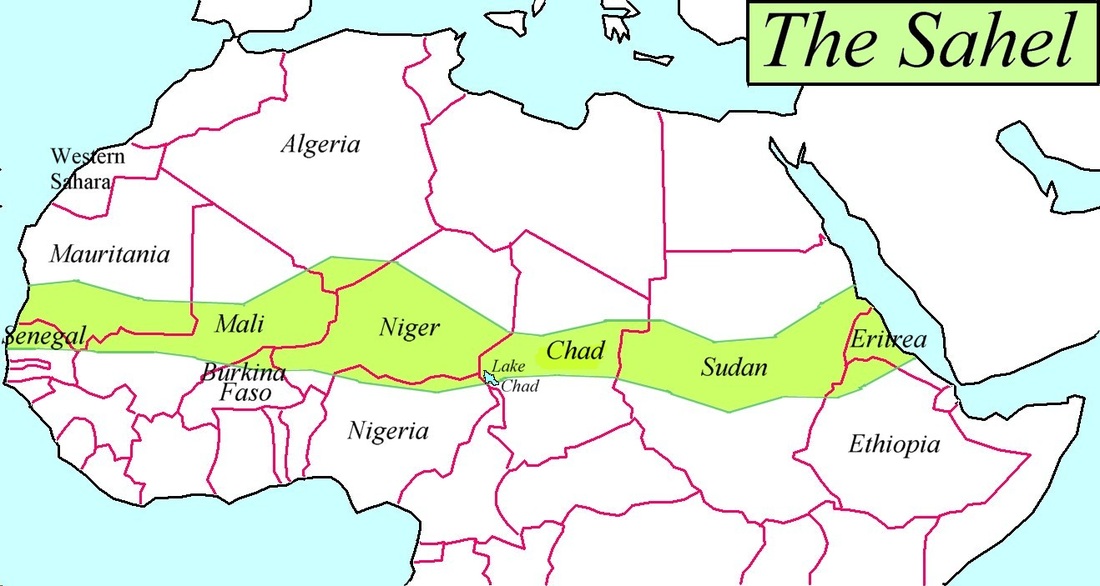


European Union’s Attention and Dollars on Failing Africa

Image result for sahel region

The European Commission has launched an “Emergency Trust Fund for stability and addressing root causes of irregular migration and displaced persons in Africa”, made up of €1.8 billion from the EU budget and European Development Fund, combined with contributions from EU Member States and other donors. The Trust Fund will benefit a wide range of countries across Africa that encompass the major African migration routes to Europe. These countries are among the most fragile and those most affected by migration. They will draw the greatest benefit from EU financial assistance. The countries and regions are:

The Sahel region and Lake Chad area: Burkina Faso, Cameroon, Chad, the Gambia, Mali, Mauritania, Niger, Nigeria and Senegal.

The Horn of Africa: Djibouti, Eritrea, Ethiopia, Kenya, Somalia, South Sudan, Sudan, Tanzania and Uganda.

The North of Africa: Morocco, Algeria, Tunisia, Libya and Egypt.

Neighbouring countries of the eligible countries may benefit, on a case by case basis, from Trust Fund projects with a regional dimension in order to address regional migration flo ws and related cross- border challenges. Read the full document here.

EU Economic and Military Investments in Africa Increase
Africa faces a number of security challenges, from terrorist groups such as Boko Haram and al Shabaab, to civil wars and violent conflicts in South Sudan and Libya, to severe droughts causing hunger crises in Somalia and Yemen.

This instability contributes to migration from Africa to Europe. In addition, a demographic boom is taking hold in Africa, stoking concerns about future mass migration. “Today, Africa is twice the population of Europe. In 2050, it will be four times the population of Europe, and it is projected at the end of this century to be 10 times the population of Europe. … There is a sense in many political circles in Europe that what’s happening today is just the beginning of a much bigger movement that could reach Europe tomorrow,” Philippe Fargues, founding Director of the Migration Policy Centre at the European University Institute in Italy, told The Cipher Brief.

The European Union is intervening. On the migration front, the EU is engaged in Partnership Framework Agreements with several African countries to stem the flow of migrants. “This was followed up with the setting up of the EU Emergency Trust Fund for Africa (a €2 billion aid program aimed at securing African countries’ cooperation in tackling irregular migration), leading to the initial signing of bilateral agreements with Niger, Nigeria, Mali, Senegal and Ethiopia” says the Abuja, Nigeria-based Director of the Centre for Democracy and Development, Idayat Hassan.

Niger, for example, is receiving €610 million to keep migrants from reaching Europe, Hassan says, and German Chancellor Angela Merkel has pledged €17 million to Niger to help develop the Agadez region, a major route for West African migrants.

Germany seems to be leading European action in Africa. Last year, German Development Minister Gerd Müller unveiled a “Marshall Plan” for the continent. “Germany and Europe have an interest to save people’s lives, to limit the effects of climate change and avoid ‘climate refugees,’ to prevent mass migration and to help create a future for Africa’s youth,” said Müller.

Asmita Parshotam, a researcher under the Economic Diplomacy Programme at the South African Institute of International Affairs, tells The Cipher Brief that this plan is intended to “cover a broad range of issues such as trade, increased private investment, bottom-up economic development, entrepreneurship, and job creation and employment.”

In addition to Germany’s unilateral aid to Africa, the EU recently announced its EU External Investment Plan that will help expand Africa’s private sector, with €3.35 billion in funding until 2020 and €88 billion if EU member states fully match that contribution.

The European Development Fund and African Investment Facility also provide economic development assistance from the EU to Africa.

In the development-security aid realm lies the EU Sahel Strategy, launched in April 2015. “The enhancement of security in the region through the fight against terrorism, illicit trafficking, radicalisation and violent extremism, remains the key objective of the EU,” according to a memo on the EU Sahel Strategy from the Council of the European Union.

EU member states also host a number of military bases in Africa. France, Germany, Italy, and Spain all have boots on the ground in Djibouti. France’s presence there is now around 1,700 personnel.

About 3,500 French troops operate in Burkina Faso, Chad, Mali, Mauritania, and Niger, and Gabon is a key base that France has used to send troops to interventions in the Central African Republic. France last year boosted its military presence in Cote d’Ivoire to about 900 men to serve as a forward operating base for West Africa.

The French, along with the Germans, are also in Niger. Germany has an air transport base at the Niamey international airport that supports its increasing troop contribution to the UN’s peacekeeping mission in Mali, a country that underwent a rebellion and coup in 2012 and a serious deterioration in the security environment in January 2013 when terrorist groups – Ansar Dine and the Movement for Unity and Jihad in West Africa, in addition to al Qaeda in the Islamic Maghreb – advanced south.

A majority of UN peacekeeping missions, in which many Europeans are involved, are in Africa.

The question remains, will the EU’s economic and military investment in Africa work in stabilizing a continent plagued by terror, war, drought and famine, extreme poverty, and inadequate governance?

Müller’s “Marshall Plan” acknowledges that African governments must take responsibility for fighting corruption, ensuring good governance, and improving opportunities for women.

The EU has made much of its development aid contingent on African governments’ cooperation in addressing the EU’s security concerns. For example, on migration, Parshotam notes that an EU-Mali deal will give Mali aid in exchange for Mali taking back all citizens whose asylum claims were rejected.

But with African countries that have no stable government to work with, it becomes harder for the EU to invest in and create stability. “Libya is a failing state – there’s no central authority,” Leonard Doyle, Spokesperson of the Director General at the International Organization for Migration, told The Cipher Brief. “So the Europeans have not been able to reach a coherent agreement with Libya [on migration]. Although there is a lot of pressure now, especially militarily, to stop the smugglers, and economically as well, to help Libya get back on its feet,” he said.

“I think we are completely wrong in our policies,” said Fargues. “The amount of money contributed to African development is too small, but also in the short term and medium term, development will not curb migration,” he said, because the African population continues to grow, while Europe’s continues to shrink. “We have to get prepared for migration.”


Trump Excluded Iraq From Travel Suspension, BUT….

I the original Executive Order Trump signed to suspend travel from a handful of countries, Iraq was included. When the Executive Order was legally challenged by several courts, yet another Executive Order was issued to excluded Iraq. This decision was made due to the increased security cooperation between the United States and Iraq. Okay so what is the problem? How about other Iraqis that already lied on immigration filings or committed crimes and lied? Fingerprints were the key after the kidnapping. Ever wonder who else is in Virginia? There are plenty….

President Trump should have taken several other preliminary steps prior to those Executive Orders including suspending the entire visa waiver program. But back to Iraq…. and the Al Mahdi Militia, which is still active and operations under variations of the name:

The Mahdi Army, also known as Jaysh al-Mahdi (JAM), was formed by Muqtada al-Sadr in June 2003 in response to the U.S. invasion of Iraq.  [3] [4] Muqtada al-Sadr is the son of Grand Ayatollah Mohammed Sadiq al-Sadr, who founded the prominent Sadrist Movement in the 1980s, a vehemently nationalist political movement popular among Iraq’s Shiite lower class. After Mohammed Sadiq al-Sadr was assassinated in 1999, presumably by the Hussein regime, Muqtada al-Sadr succeeded him as the leader of the Sadrists as well as one of the most powerful and respected Shiite clerics in Iraq. [5] [6] [7] Following the U.S. invasion in 2003, Sadr called upon the Sadrist to join his new militia, the Mahdi Army, with the goal of expelling the U.S. coalition from Iraq and establishing an Iraqi Shiite government. Some of the group’s initial three hundred fighters were recruited in Kuwait and Saudi Arabia and together with their Iraqi counterparts were sent to Hezbollah camps in Lebanon for training. [8] [9] More here.

*** Image result for mahdi army DailyMail

Department of Justice
U.S. Attorney’s Office
Eastern District of Virginia
FOR IMMEDIATE RELEASE
Tuesday, March 28, 2017

Iraqi Refugees Arrested and Charged with Immigration Fraud

ALEXANDRIA, Va. – Two Iraqi refugees living in Northern Virginia were arrested this morning and charged along with another individual with immigration fraud.

The defendants arrested this morning are Yousif Al Mashhandani (“Yousif”), 35, of Vienna, and Adil Hasan, 38, of Burke, who are full biological brothers. The third individual charged is Enas Ibrahim, 32, also of Burke, who is the wife of Hasan. Each are charged with attempting to obtain naturalization contrary to law. The defendants will have their initial appearance today in front of Magistrate Judge Ivan D. Davis at 2 p.m. at the federal courthouse in Alexandria.

According to the affidavit in support of the criminal complaint, on Nov. 1, 2004, a United States citizen, identified as R.H., was kidnapped in Iraq and held with other hostages for months in horrible conditions in an underground bunker. After a raid in 2005 freed the hostages, authorities detained Majid Al Mashhadani (“Majid”), who is a full biological brother of Yousif and Adil Hasan, and he admitted his complicity in the kidnapping of R.H.

According to the affidavit in support of the criminal complaint, Yousif was admitted into the United States as a refugee in 2008. In May 2013, Yousif resided in Vienna and applied for naturalization as a United States citizen. In connection with Yousif’s applications for citizenship, his fingerprints were taken. According to an FBI fingerprint specialist, analysis conducted in November 2013 determined that Yousif’s fingerprints match those found on a document at the underground bunker where forces rescued R.H. and others in Iraq in 2005.

According to the affidavit in support of the criminal complaint, Yousif, Hasan, and Ibrahim are lawful permanent residents and have applied to naturalize and become United States citizens. On various applications and forms throughout their respective immigration processes, each has provided and extensive list of family members and information of their respective family trees; however, none ever listed any reference to Majid.

According to the affidavit in support of the criminal complaint, on March 4, 2016, FBI agents interviewed Yousif, Hasan and Ibrahim. When FBI agents asked Yousif why he failed to include reference to Majid on the family tree form, Yousif said he omitted reference to Majid because, when he was a refugee, he was told by others applying for refugee status that he would not be allowed into the United States if any immediate family members had a criminal background. Hasan admitted to FBI agents that Majid was his brother, and Hasan and Ibrahim each admitted they discussed not including Majid’s name on their applications for refugee status because their connection to Majid might delay their ability to gain such status.

According to the affidavit in support of the criminal complaint, to justify his application for refugee status, Yousif reported that in 2006, while working as an anti-corruption investigator for the Iraqi Commission on Public Integrity in Iraq, he started receiving threats from a Shiite militia known as the “Al Mahdi Militia,” in order to coerce Yousif to drop a particular corruption investigation. Yousif said that in May 2006 Adil was kidnapped by the Al Mahdi Militia, and only released after Yousif arranged to drop the investigation in question and helped pay a large ransom. Yousif said that after Adil was released, he reopened the corruption investigation, only to flee to Jordon in October 2006 after his parents’ house was burned down.

According to the affidavit in support of the criminal complaint, to justify his application for refugee status, Hasan provided sworn testimony that, in 2006, he had been kidnapped and tortured by members of the Al Mahdi Army and held for nearly a month. Hasan said he was released upon the payment of a ransom of $20,000. In an interview by FBI agents in April 2016, Hasan said he was threatened in Iraq on two occasions, but made no mention of being kidnapped, held hostage, and tortured for nearly a month. In a subsequent interview in October 2016, FBI agents confronted Hasan about the discrepancy in his stories and Hasan admitted to making false statements and creating his persecution story.

Each defendant faces a maximum penalty of 10 years in prison if convicted. Actual sentences for federal crimes are typically less than the maximum penalties. A federal district court judge will determine any sentence after taking into account the U.S. Sentencing Guidelines and other statutory factors.

Dana J. Boente, Acting Deputy Attorney General and U.S. Attorney for the Eastern District of Virginia; Andrew W. Vale, Assistant Director in Charge of the FBI’s Washington Field Office; Patrick J. Lechleitner, Special Agent in Charge of U.S. Immigration and Customs Enforcement’s (ICE) Homeland Security Investigations (HSI) Washington, D.C., made the announcement. The FBI’s Joint Terrorism Task Force, which includes ICE/HSI and U.S. Citizenship and Immigration Services, investigated the case. Assistant U.S. Attorneys Gordon D. Kromberg and Colleen E. Garcia are prosecuting the case.


A copy of this press release is located on the website of the U.S. Attorney’s Office for the Eastern District of Virginia. Related court documents and information is located on the website of the District Court for the Eastern District of Virginia or on PACER by searching for Case No. 1:17-mj-143.

A criminal complaint contains allegations that a defendant has committed a crime. Every defendant is presumed to be innocent until and unless proven guilty in court.

Sanctuary Cities Don’t Comply Face Loss of Federal Dollars/Clawback

AG: Sanctuary Cities Face Ineligibility for Future Federal Funds, ‘Clawback’ of Funds Already Awarded

(CNSNews.com) – Attorney General Jeff Sessions said Monday that states and localities that refuse to comply with federal immigration laws will be deemed ineligible for federal grants.

“Today, I’m urging  states and local jurisdictions to comply with these federal laws, including 8 U.S.C. Section 1373. Moreover, the Department of Justice will require that jurisdictions seeking or applying for Department of Justice grants to certify compliance with 1373 as a condition of receiving those awards,” he said, adding that the policy “is entirely consistent with the Department of Justice’s Office of Justice Program’s guidance that was issued just last summer under the previous administration.

“This guidance requires state and local jurisdictions to comply and certify compliance with Section 1373 in order to be eligible for OJP grants. It also made clear that failure to remedy violations could result in withholding grants, termination of grants, and disbarment or ineligibility for future grants,” Sessions added.

“The Department of Justice will also take all lawful steps to clawback any funds awarded to a jurisdiction that willfully violates 1373. In the current fiscal year, the Department of Justice’s Office of Justice Program and Community Oriented Policing services anticipates awarding more than $4.1 billion in grants,” he said.

The attorney general said that in one week alone, “there were more than 200 instances of jurisdictions refusing to honor ICE detainer requests with respect to individuals charged or convicted of a serious crime,” according to a report released recently by the Department of Homeland Security.

“The charges and convictions against these aliens included drug-trafficking, hit-and-run, rape, sex offenses against a child, and even murder. Such policies cannot continue. They make our nation less safe by putting dangerous criminals back on the streets,” Sessions said.

He pointed to the murder of 32-year-old Kate Steinle who was killed two years ago in San Francisco as an example.

“The shooter, Francisco Sanchez, was an illegal immigrant who had already been deported five times and had seven felony convictions,” Sessions pointed out.

“Just 11 weeks before the shooting, San Francisco had released Sanchez from its custody, even though Immigration and Customs Enforcement officers had filed a detainer requesting that he be held in custody until immigration authorities could pick him up for removal. Even worse, Sanchez admitted the only reason he came to San Francisco was because it was a sanctuary city,” the attorney general said.

“A similar story unfolded just last week, when Ever Valles, an illegal immigrant and a Mexican national was charged with murder and robbery of a man at a light rail station. Valles was released from a Denver jail in late December, despite the fact that ICE has lodged a detainer for his removal,” he said.

“The American people are not happy with these results. They know that when cities and states refuse to help enforce immigration laws, our nation is less safe. Failure to deport aliens who are convicted of criminal offenses puts whole communities at risk, especially immigrant communities in the very sanctuary jurisdictions that seek to protect the perpetrators,” Sessions said.

Sessions said recent polling shows that 80 percent of Americans “believe that cities that arrest illegal immigrants for crime should be required to turn them over to immigration authorities.”

“DUIs, assaults, burglaries, drug crimes, gang rapes, crimes against children, and murderers — countless Americans would be alive today and countless loved ones would not be grieving today if these policies of sanctuary cities were ended. Not only do these policies endanger lives of every American — just last May, the Department of Justice inspector general found that these policies also violate federal law,” he said.

***

Nine Bipartisan Homeland Security-Related Bills Passed by House

What the House Committee on Homeland security described as an “unprecedented number of bipartisan [bills] aimed at keeping Americans safe,” were passed this last week by the House which deal with a variety of aspects of homeland Security.

The nine pieces of legislation, the committee said, are designed “to … also save taxpayer dollars by improving the acquisition process at the Department of Homeland Security [DHS] and make important reforms to the operations of the Transportation Security Administration [TSA].”

“It is critical that we continue to re-examine our strategy, technology and the infrastructure we currently have in place to strengthen the Department of Homeland Security and stop terrorists from reaching our shores,” said committee chairman Michael McCaul (R-TX). “The evolving threats we face demand action to address vulnerabilities in our defenses. I commend the work of my Committee—particularly the bipartisan nature in which these bills were advanced—to make our country safer.”

The nine bills out the Homeland Security Committee passed by the House included a key counterterrorism bill, the Terrorist and Foreign Fighter Travel Exercise Act of 2017 (HR 1302), which expands on the work of last Congress.

The other key pieces of legislation passed this past week include the:

DHS Multiyear Acquisition Strategy Act of 2017 (HR 1249), introduced by Rep. Brian Fitzpatrick (R-PA), and amends the Homeland Security Act of 2002 to require a multiyear acquisition strategy of DHS.

DHS Acquisition Authorities Act of 2017 (HR 1252), introduced by Rep. Clay Higgins (R-LA), amends the Homeland Security Act of 2002 to provide for certain acquisition authorities for the Under Secretary of Management of DHS.

Reducing DHS Acquisition Cost Growth Act (HR 1294), introduced by Rep. John Rutherford (R-FL), amends the Homeland Security Act of 2002 to provide for congressional notification regarding major acquisition program breaches.

TSA Administrator Modernization Act of 2017 (HR 1309), introduced by Rep. John Katko (R-NY), streamlines the office and term of the administrator of TSA.

Quadrennial Homeland Security Review Technical Corrections Act of 2017 (HR 1297), introduced by Rep. Bonnie Watson Coleman (D-NJ), amends the Homeland Security Act of 2002 to make technical corrections to the requirement that the Secretary of Homeland Security submit quadrennial homeland security reviews.

Transparency in Technological Acquisitions Act of 2017 (HR 1353), introduced by Rep. Kathleen Rice (D-NY), amends the Homeland Security Act of 2002 to require certain additional information to be submitted to Congress regarding the strategic 5-year technology investment plan of the TSA.

Read Homeland Security Today’s report on the bill here.

Securing our Agriculture and Food Act (HR 1238), introduced by Rep. David Young (R-IA), amends the Homeland Security Act of 2002 to make the Assistant Secretary of Homeland Security for Health Affairs responsible for coordinating the efforts of DHS related to food, agriculture and veterinary defense against terrorism.

Read Homeland Security Today’s report on the legislation here.

Terrorist and Foreign Fighter Travel Exercise Act of 2017 (HR 1302), introduced by Rep. Martha McSally (R-AZ), requires an exercise related to terrorist and foreign fighter travel, and for other purposes.

Department of Homeland Security Acquisition Innovation Act (HR 1365), introduced by Rep. Lou Correa (D-CA), amends the Homeland Security Act of 2002 to require certain acquisition innovation.

What you Should Know About “Las Moicas” and Why

Is there any reason why the Trump administration has not called for all drug cartels to be listed as terror organizations?

Ten Cartels are fighting for control of Guerrero with more brutality and violence

Subject Matter: Organized crime in Guerrero
Recommendation: No prior subject matter knowledge requiredGuerrero occupies the third place in terms of most poverty at 62% of the population and first place for homicides at 2884 in 2016 at the national level. It is the state most disputed among organized crime groups. There is a presence of 10 cartels, five of them top level. Its central zone has converted into a battlefield between two organizations Los Rojos and Los Ardillos and possibly others that authorities have not completely identified yet. The presence of 500 military and state police has not contained the disappearances and executions and the criminals come back each time more brutal.

In the last decade, Guerrero has converted in the land of cartels and death; the dispute between the Sinaloa cartel, CJNG, the Beltran Leyva Organization, the Knights Templar, La Familia Michoacana and no less than five local organizations have converted the state into the most violent with 18,000 executions since 2006, when the call to war against the narco was initiated.

In Guerrero, 12 of the 81 towns are considered neutral zones. The geographic location of Chilapa has converted it into a demarcation most fought over since 2012 by Los Ardillos and Los Rojos, and not only because it is an essential corridor for the transit of drugs, also its land is utilized for the growing of poppys, “that has just finished its first harvest of the year”, according to the Guerrero Coordination Group.

What has happened this year, in Chilapa, there have been 48 executions related to the war between Los Rojos and Los Ardillos, Rojos and a third group of civil organizations known as “Los Jefes” or “Gente Nueva”, different to the Gente Nueva of the Sinaloa cartel, only have a presence int he communities,  and with a population of 129,867 only has 500 soldiers and 100 Municipals to police it.

This last weekend was a violent one in the State with no less that 23 deaths, 10 of them in Chilapa, two women and three men were killed by gunfire in different events and five bodies were incinerated in the interior of a taxi.

At the Start of the month, on Tuesday the 7th, 6 dismembered bodies in a state of decomposition appeared inside 13 plastic bags. On Thursday the 9th, they found another five bodies charred inside a vehicle. The brutality with which they perpetrate the executions in the indigenous town, “is very strong” assured the Governor Hector Astudillo Flores.

The growing wave of violence in the town led to the implementation of Operation Chilapa, in January of 2016. One year after the security strategy was put in place, the Mayor Jesus Parra Garcia blamed social networks and media for “inventing facts that affect the image of the town”. With recent executions of PRI members he had to admit that the violence was aggravated during his administration.

These are times of crisis, of adversity, and are very complex. I have had to govern in the most difficult times for Chilapa, he told reporters.

Who are Los Rojos and Los Ardillos

In the period of 2012 – 2015, when the municipality was governed by PRI Francisco Javier Garcia Gonzalez, Los Rojos settled in Chilapa under the command of Zenen Nava Sanchez “El Chaparro”, alleged family of Jesus Nava Romero ” El Rojo”.

He was a Lieutenant of Arturo Beltran Leyva and who was slaughtered in June of 2013 in Puebla. During this administration, the population lived through the first mass kidnappings, huge extortion of transport and businesses and brutal executions.

Jesus Nava Romero dead in the street (Borderland Beat archive)

Los Ardillos, a gang that comes from the Quechultenango region, whose leaders Celso and Antonio Hernandez Ortega are brothers of ex PRD deputy Bernardo Ortega Jiminez, have extended into the regions of Chilapa, Zitlala, Tixtla, Totoloapan and Acapulco in only one year, 2014, during the transition of the governorships of Angel Aguirre Rivero and Rogelio Ortega Martinez bot of the PRD.

The battle for the central zone of Guerreo tainted at this moment Aguirre Rivero as well as Garcia Gonzalez and also the ex PRI Mario Moreno Arcos of Chilpancingo, and Ignacio Bacilio and Eduardo Nero all accused publicly of ties to Los Rojos.

In 2015, with the change of State Government and municipal, things had begun to escalate. The President of the organization Siempre Vivos, Jose Diaz Navarro, assured that a reduction in the violence would be felt because Zenen Nava, who in January of 2016 escaped after a two hour confrontation with the armed forces, had returned. According to the PGR, El Chaparro in one of the 13 priority objectives of Guerrero and Morelos.

In the last three years, Los Ardillos and Los Rojos, in their dispute for territory, have committed executions of extreme cruelty, torturing, decapitating, and incinerating corpses that were left in public places.

They have also been responsible for the disappearance of 130 persons, according to the Centre for Human Rights. The mass kidnappings in the towns of Zitlata and Chilapa, where the criminal groups kidnap the inhabitants, all in the presence of Military and State Police, denounce the ONG.

The confrontations between various cartels, as well as the kidnappings and executions against the inhabitants, have caused fear in Chilapa. Families prefer not to leave their houses aftern 7 at night , the schools are secured with padlocks and checkpoints that are reinforced.

Nevertheless, the organization Siempre Vivos considers that part of the violence that affects the towns of Tixtla and Zitlala, is a strategy of terror of the State and Federal Governments so that the population calls for the law of Homeland Security, that is pending for discussion at the Congress of the Union.

Totoloapan and the Tequileros

Located in the region of the Tierra Caliente, Totoloapan is, along with Ajuchitlan, Arcelio and Coyuca, the Municipality most threatened by Los Tequileros, a group that separated from La Famila Michoacana and since 2013 have occasioned the displacement of families from no less than 16 communities.

According to reports of the newspaper El Sur, Raibel Jacobo de Almonte, El Tequilero, was a plaza jefe for La Familia Michoacana. Once he had formed his own organization, he began controlling the San Miguel Totolapan and some rural populations in the border area of Rio Balsas. In 2016 his epower extended to populations of the municipalities of Ajuchitlan, Tlapehuala and Arcelia.

In the Tierra Caliente, six out of every ten homicides are attributed to Los Tequileros, who are also linked to a politician, PRI deputy Saul Beltran Orozco. Before the omission, complicity and participation of the local authorities, the local population had chosen to arm itself to the face this criminal organization.

The violence in Guerrero is generalized by the number of cartels that are disputing the third poorest State of the country, but also by the failed security strategy implemented by the Federal and State Governments, that while advising of “big changes” and advances in security the State remains the number one in the list for malicious homicides.  Translated by Otis B Fly-Wheel for Borderland Beat from a Sinembargo article

***
Not finished yet:
Image result for Las Moicas
Meet the Little-Known Mexican Cartel Operating in California

A little-known drug trafficking group in Mexico called “Las Moicas” has not only successfully defended its foothold in the US heroin market for years against Mexico‘s most powerful cartels, but recent reports suggest that it might be expanding.

In an interview with BBC Mundo published on March 15, a spokesperson for the US Drug Enforcement Administration (DEA) said that the Moicas had been expanding their territory in Mexico and that the little-known group had come into conflict with some of Mexico‘s biggest criminal organizations, including the Sinaloa Cartel and the Jalisco Cartel – New Generation (CJNG).

According to a July 2015 report from the DEA, eight major Mexican transnational criminal groups were known to be operating in the United States. Alongside prominent players like the Sinaloa Cartel and CJNG, appeared a trafficking organization called Las Moicas.

According to the report, the Moicas are based in the Mexican state of Michoacán and have ties to the Familia Michoacána, an organization largely displaced by its splinter group, the Knights Templar. Despite the decline of the Familia Michoacána after the death of its top leader in 2014, the Moicas group “remains a regional supplier in California and operate[s] on a smaller scale relative to other major Mexican” criminal organizations.

The Moicas’ first reported run-in with the DEA dates back to 2009, when US authorities seized 50 kilograms of heroin and $250,000 in cash, in addition to arresting several of the 21 suspects from the group later charged in connection with the seizure.

The DEA’s press release concerning the operation asserts that a total of 200 kilograms of heroin, with an estimated retail value of $17.5 million, were smuggled during the run. The group allegedly hid both drugs heading north and drug profits heading south “in elaborate vehicle engine compartments” that allowed them to cross the border undetected.

At the time, the Moicas operated solely in California, but the group has since reportedly expanded to Reno, Nevada, and it operates in some areas of California dominated by the Sinaloa Cartel, according to the DEA’s 2015 report.

As of March 2016, VICE News reported, Mexican authorities had no record of Las Moicas.

InSight Crime Analysis

Mexico’s criminal landscape has become increasingly fragmented as larger cartels continue to rely heavily on smaller groups for specialized criminal tasks and as the government continues to take down top leaders of major criminal organization. In an illustration of this dynamic, Mexican authorities stated that nine cartels — not including the Moicas — operated throughout the country as of July 2016, relying on a total of 37 criminal cells.

Within this context, it appears that the Moicas may have succeeded in quietly growing by maintaining a low profile, as suggested by the absence of official acknowledgement of the group by the Mexican government as well as the scant public information available about the organization. According to the DEA spokesperson contacted by BBC Mundo, the US anti-drug agency does not even know the composition of the Moicas’ hierarchy.

It is possible that the Moicas have followed the blueprint of earlier Mexican drug trafficking organizations, such as the Xalisco Boys who achieved a striking expansion across the United States in the 1990s by investing in the heroin market while maintaining a low profile.

And it is likely that the Moicas’ rise and reported expansion has been fueled by the booming US demand for heroin. The US consumption market for this particularly addictive drug is believed to have tripled over the past decade, boosted by over-prescription of legal opioid drugs and even allegedly criminal activity by executives of some companies in the US pharmaceutical industry.