Import a Terrorist, Apply to the Diversity Visa Lottery Program

Even the LATimes calls for the program to be ended. In part: Sayfullo Saipov, who allegedly killed eight and wounded 11 in a truck attack on Tuesday, entered the country from Uzbekistan through the diversity visa lottery. He is not the first presumed terrorist to enter using the program. Lottery terrorists include Hesham Mohamed Ali Hedayet, who shot up an El-Al ticket counter in 2002, killing two, and Imran Mandhai, who planned to bomb power stations in Florida the same year.

photo

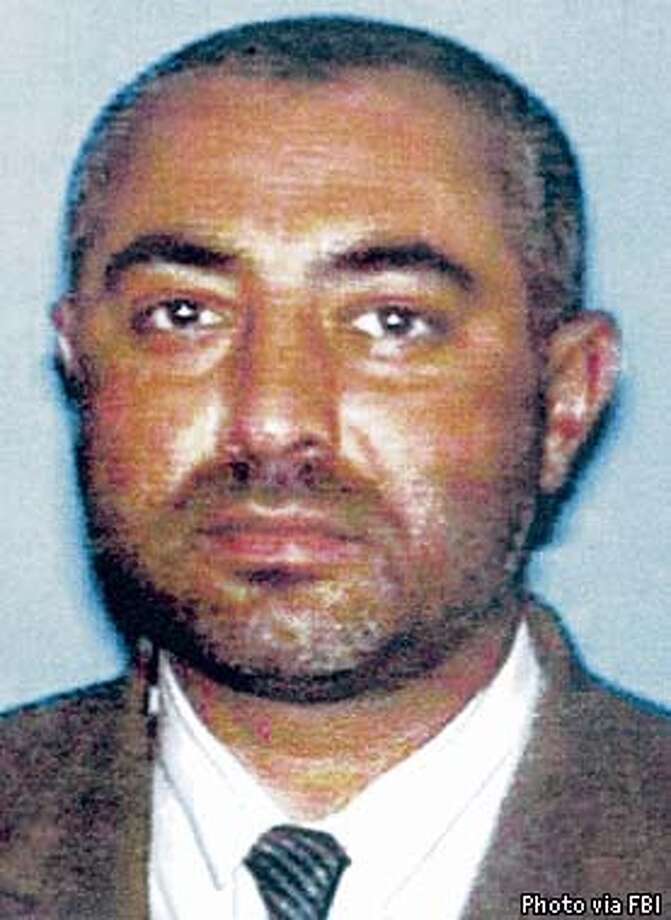
The chilling details on Imran Mandhai are located here.

Imran Mandhai.

National security problems with the lottery have long been known. At a 2003 congressional hearing, the inspector general of the State Department, which oversees the lottery, testified that the program “contains significant risks to national security from hostile intelligence officers, criminals and terrorists attempting to use the program for entry into the United States as permanent residents.”

The concerns identified at that hearing 14 years ago remain. In 2016, Immigration and Customs Enforcement created a list of countries that “promote, produce, or protect terrorist organizations or their members.” Of the top 10 source countries for lottery winners in 2016, four were on ICE’s list: Egypt (No. 2), Iran (No. 3), Uzbekistan (No. 5) and Sudan (No. 7). Many other countries on the ICE list also send significant numbers of lottery winners.

In 2015, 14.4 million individuals plus family members successfully registered for the annual drawing. The State Department has to weed out those who do not qualify. After a computer randomly selects 100,000 names. State Department employees interview and vet the finalists, whittling down the list to the 50,000 cap. This is no simple task, since most applicants come from countries where recordkeeping is spotty and documents are hard to verify. Screening for visa lottery fraud takes up valuable State Department resources that could be allocated elsewhere if the program did not exist.
*** Suddenly, Chucky Schumer is suddenly quiet or forgets some facts.

The program was created by the late-Senator Ted Kennedy in the early 1990s, with help from then-Rep. Chuck Schumer, now the Senate Minority Leader, as a way to open the door to more Irish immigrants who could not qualify for immigration opportunities because of our equally nonsensical family chain migration policy. Of course, Schumer (and Kennedy until his death), continues to this day to defend family chain migration, and is fighting efforts to adopt a merit-based immigration policy that would obviate the need for the annual Wheel of Fortune exercise. More here. 

Included in the lottery are all four countries the U.S considers state sponsors of terror — Iran, Sudan, Cuba, and Syria — and 13 of the 14 nations that are coming under special monitoring from the Transportation Security Administration as founts of terrorism. Pakistan is excluded because, like China, it sends over tens of thousands of immigrants each year and doesn’t need to be in the lottery.

Among the winners for 2010 are:

Nigeria: 6,006
Iran: 2,773
Algeria: 1,957
Sudan: 1,084
Afghanistan: 345
Cuba: 298
Somalia: 229
Lebanon:
181
Libya: 152
Iraq: 142
Saudi Arabia:
104
Syria:
98
Yemen:
72

The State Department’s Office of the Inspector General recommended in a 2003 report that terror-sponsoring nations be removed from the diversity visa program.

“OIG believes that this program contains significant vulnerabilities to national security as hostile intelligence officers, criminals and terrorists attempt to use it to enter the United States as permanent residents,” the office’s deputy inspector testified to Congress in 2004.

A separate report filed by the Government Accountability Office also faulted the program for being susceptible to widespread fraud. A cottage industry has emerged abroad to cater to the lottery, and it regularly bilks people out of massive amounts of money and even coerces some into marriage to keep their diversity visas. More here.

Meanwhile:

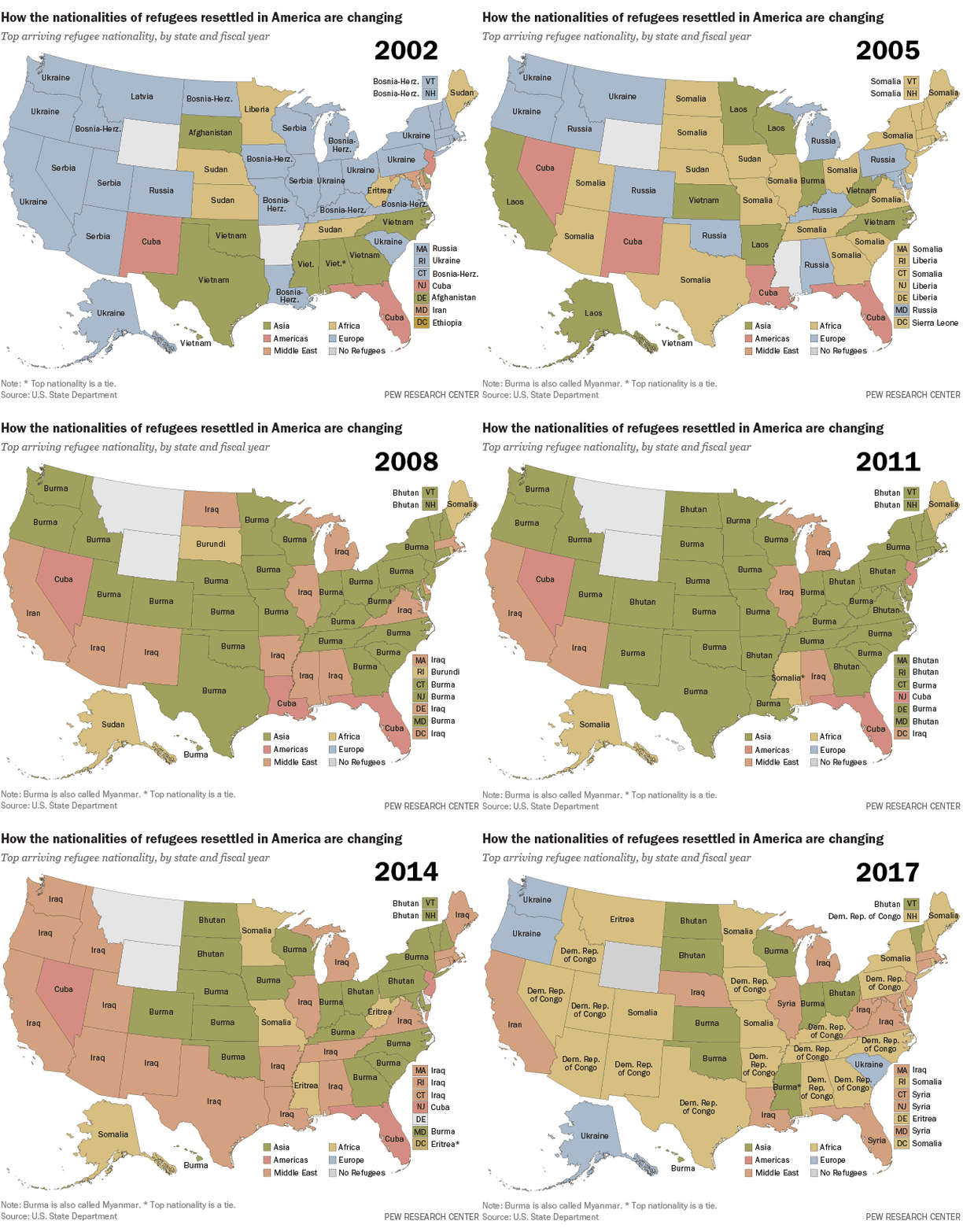
The resettlement of refugees in the U.S. has been fairly consistent across the country since 2002, with no state resettling a majority of them. In fiscal year 2017, no state resettled more than 10% of the 53,716 refugees the nation admitted that year. California, Texas, New York, Washington, Michigan and Ohio each accounted for at least 5% of refugees resettled, while all other states had a lower share. In fiscal 2002, the earliest year state-level data are publicly available, California resettled 16% of the nation’s 27,110 refugees, the only state to account for more than 15% of the nation’s total that year – or in any following year, according to a Pew Research Center analysis of U.S. State Department data.

Most refugees today come from the Middle East and Africa, but this has not always been the case. Check more details here.

For the FBI Haters, Check out Operation Cross Country

FBI Announces Results of Operation Cross Country XI

Underage Sex Trafficking Crackdown Leads to Recovery of 84 Minors

The Federal Bureau of Investigation, along with the National Center for Missing & Exploited Children (NCMEC), announced today that 84 minors were recovered and 120 traffickers were arrested as part of Operation Cross Country XI, a nationwide effort focusing on underage human trafficking that ran from October 12-15, 2017.

This is the 11th iteration of the FBI-led Operation Cross Country (OCC), which took place this year in 55 FBI field offices and involved 78 state and local task forces, consisting of hundreds of law enforcement partners. This year’s coordinated operations took place with several international partners, including Canada (Operation Northern Spotlight), the United Kingdom (Aident 8), Thailand, Cambodia, and the Philippines.

“We at the FBI have no greater mission than to protect our nation’s children from harm. Unfortunately, the number of traffickers arrested—and the number of children recovered—reinforces why we need to continue to do this important work,” said FBI Director Christopher Wray. “This operation isn’t just about taking traffickers off the street. It’s about making sure we offer help and a way out to these young victims who find themselves caught in a vicious cycle of abuse.”

Operation Cross Country XI

Story and Videos

Operation Cross Country XI

The 11th iteration of Operation Cross Country, the FBI’s annual law enforcement action focused on recovering underage victims of prostitution, concluded with the recovery of 84 sexually exploited juveniles.

As part of Operation Cross Country XI, FBI agents and task force officers staged operations in hotels, casinos, and truck stops, as well as on street corners and Internet websites. The youngest victim recovered during this year’s operation was 3 months old, and the average age of victims recovered during the operation was 15 years old. Minors recovered during Cross Country Operations are offered assistance from state protective services and the FBI’s Victim Services Division. Depending on the level of need, victims are offered medical and mental health counseling, as well as a number of other services.

“Child sex trafficking is happening in every community across America, and at the National Center for Missing & Exploited Children, we’re working to combat this problem every day,” said NCMEC President and CEO John Clark. “We’re proud to work with the FBI on Operation Cross Country to help find and recover child victims. We hope OCC generates more awareness about this crisis impacting our nation’s children.”

Operation Cross Country XI is part of the FBI’s Innocence Lost National Initiative, which began in 2003 and has yielded more than 6,500 child identifications and locations. For additional information on Operation Cross Country XI and the Innocence Lost initiative, please visit www.fbi.gov.

Examples of stories from various cities that took part in Operation Cross Country XI:

  • On October 13, FBI Denver recovered two minor girls—one 3-month-old and one five-year-old. The subject, a friend of the children’s family, offered an undercover officer access to the two children for sexual purposes in exchange for $600. The FBI is working with Child Protective Services to conduct a forensic interview and secure safe placement of the children. The subject was placed under arrest.
  • Also on October 13, a 16-year old female victim was recovered by FBI El Paso after an undercover agent called an online advertisement for entertainment. Shortly thereafter, the agent met with a 21-year-old female, who offered a fee of $200 to engage in sexual intercourse with her and another female, the 16-year-old victim. Further investigations revealed that a second adult female drove the minor and the 21-year-old to the undercover agent’s location. Both female subjects have been arrested on federal charges.

Note to Editors: B-Roll and interviews associated with Operation Cross Country can be downloaded at www.fbi.gov.

U.S. to Say So Long to UNESCO, Finally, but not UNESCO

But, the Trump administration is leaving yet one major piece of business undone and that is UNRWA.

This Palestinian refugee claims that even though UNRWA was created in order to help Palestinian refugees, UNRWA hires foreigners and some of them earn wages that are high enough to support 20 local Palestinians: “An UNRWA employee can earn $10,000 per month. Others earn more. They have luxury cars and apartments. Some have villas for free. Meanwhile, local Palestinian teachers hired by UNRWA earn $700 to $800 per month. The people from abroad get 10 times more. The more the refugees suffer, these people live a more luxurious life. I blame them for me being a refugee.”  Read more here.

photo

To see how much money the United States gives to UNRWA, go here. It is a chart of the top donors as of December 31, 2016. See where that money allegedly goes exactly and why by clicking here.

UNESCO photo

Primer:

Economist: IT MUST have felt like déjà vu for Rami Hamdallah, the Palestinian prime minister, as he crossed the heavily-fortified border into Gaza on October 2nd. It was his first visit in two-and-a-half years. There were speeches, rallies and lofty promises to end the schism that has paralysed Palestinian politics for more than a decade. It was like a replay of a trip he made in 2014 to inaugurate a new unity government— which fell apart within weeks.

The Palestinian territories split in 2007, a year after Hamas, the militant Islamist group, won a majority in parliament. It seized control of Gaza after months of bloody fighting with its nationalist rival, Fatah. Since then Hamas has run the coastal strip as a separate fief, with its own civil servants and police. The two parties have signed six reconciliation deals meant to end the split, but none held. Hamas was loth to give up its enclave.

Now it seems more amenable. It has agreed to cede control of the civilian ministries in Gaza. Over the coming year it will add 3,000 police officers from the Palestinian Authority (PA), which runs the West Bank and is dominated by Fatah. Yahya Sinwar, Hamas’s number two, said he would “break the neck” of anyone who opposes reconciliation. (That may not be an idle threat: in the 1980s his job was to kill Palestinians who collaborated with Israel.)

Hamas has few alternatives at this point. Life in Gaza has been grim for a decade, amid three wars and a blockade imposed by both Israel and Egypt. Conditions worsened further this spring when Mahmoud Abbas, the Palestinian president, slapped his own sanctions on the territory to press Hamas into a deal. Most of Gaza’s 2m people receive just four hours of electricity a day. Tap water is equally scarce and when it is available it is brackish and polluted. Nearly two-thirds of young people cannot find work. In dingy, crowded hospitals, basic medicines are in short supply. Hamas is keen to put someone else in charge of the misery.

So are regional powers. Qatar, the main sponsor of Hamas, is under embargo by Egypt and three of its Gulf neighbours, which want the emirate to cut ties with Islamists. It has not halted aid to Hamas, but it has quietly urged the group to reconcile with Fatah. The United Arab Emirates has dangled the prospect of massive investment in a post-Hamas Gaza. It is working closely with Muhammad Dahlan, an ex-Fatah security boss who was banished by Mr Abbas and now lives in Abu Dhabi.

The greatest pressure has come from Egypt, which controls Rafah, the sole border crossing accessible to most Palestinians. It has been largely closed since 2013. Egypt accuses Hamas of working with jihadists who are fighting a bloody insurgency in Sinai. Though the charges are exaggerated, Hamas has indeed allowed dozens of wanted Egyptian militants to seek refuge in Gaza. The generals in Cairo would be happy to see Mr Abbas’s men back on the border.

Hamas has not agreed to that. It may let Mr Abbas run the schools and hospitals, but it will not give up a militia that boasts tens of thousands of fighters and a cache of rockets. “This will never be up for discussion,” says Moussa Abu Marzouk, a top Hamas official. So this effort is likely to fail for the same sorts of reasons as the past six. Mr Abbas cannot accept a well-armed group operating under his nose. It would be a threat to the unpopular president’s tenuous rule.

It could also bankrupt his government. Israel would probably withhold the tax revenue on which the PA depends, and some Western countries might suspend foreign aid. “If someone from Hamas has a weapon, I’ll put him in prison,” Mr Abbas told Egyptian television. He may not get the chance.

***

The State Department on Thursday announced America’s withdrawal from the United Nations Educational, Scientific and Cultural Organization. As with everything that President Trump does, the move provoked journalistic anger and agony. Prepare for years of sob stories about UNESCO heritage sites neglected and aspiring developing-world scientists unfunded, all due to Trumpian unilateralism.

Yet this was a sound and overdue step that will help advance peace and U.N. reform.

In its statement, the State Department cited “continuing anti-Israel bias” at UNESCO, among other things. The Paris-based agency is far from the only U.N. outfit to single out the Jewish state for opprobrium. But UNESCO’s anti-Israel stances have been egregious even by this global body’s debased standards, especially since 2011. That was the year the Palestinian Authority sought and won admission to UNESCO as a full member-state. As Jonathan Schanzer of the Foundation for Defense of Democracies told me, “The Palestinians targeted UNESCO early as part of their Palestine-194 strategy”–the PA effort to win recognition as a state in U.N. halls rather than through talks with Israel. “UNESCO has played a role in this strategy, and it isn’t done yet.”

The Obama administration denounced the PA’s admission, with then-State Department spokeswoman Victoria Nuland calling it “regrettable, premature” and harmful to “our shared goal to a comprehensive, just and lasting peace.” Washington cut off American dollars for UNESCO under a Bill Clinton-era law that prohibits the U.S. government from funding any U.N. agency that admits a non-state as a member. American funding, once accounting for more than one-fifth of UNESCO’s budget, hasn’t been restored since 2011. The agency has lost out on some $600 million as a result.

UNESCO only doubled down on its anti-Israel agitation in the years that followed, however, passing a raft of resolutions that denied the Jewish (and Christian) connection to Jerusalem and other holy sites in Israel.

A resolution on Jerusalem passed in May described Israel as the “occupying power,” denying the Jewish state’s claim to its own capital. Another Jerusalem resolution, approved last year, referred to the Western Wall and the Temple Mount by their Muslim names only. The agency thus attached the U.N.’s name to the odious Arab project to de-Judaize the City of David. That move prompted then U.N. Secretary-General Ban Ki-moon to distance himself from “any perceived undertaking to repudiate the undeniable common reverence for these sites.” Even UNESCO’s left-leaning chief, Irina Bokova, criticized the text.

Yet anti-Israelism and–it must be said–anti-Semitism are part of UNESCO’s diplomatic culture. When, in July this year, Israel’s ambassador to UNESCO called for a minute of silence for Holocaust victims, Cuba’s envoy objected: “Only the Chair can request a minute of silence. So with your indulgence, let me request Mr. Chairman, that we stand for a minute of silence for all of the Palestinians who have died in the region.” Footage of the scene, available on the website of the indispensable U.N. Watch, shows numerous delegates standing up and clapping in favor of the Cuban motion.

It was this black record that impelled the Trump administration to withdraw from UNESCO. The decision, by the way, is not without precedent. President Carter withdrew the U.S. from the International Labor Organization for three years and didn’t rejoin until the ILO took steps to reform itself. The Reagan administration in 1983 pulled the U.S. out of UNESCO over its “hostility toward the basic institutions of a free society.” President Reagan was worried about a creepy UNESCO proposal to have the agency and its authoritarian members license and regulate foreign reporters. Washington returned to UNESCO in 2002, under George W. Bush.

By withdrawing from UNESCO (once more), the Trump administration is sending an important message to the U.N. mandarins: that America doesn’t have infinite patience for international institutions that function as platforms for Jew-hatred. Long before Donald Trump came on the scene, that used to be a bipartisan American position.

AG Sessions Announces Renewed Project SAFE Neighborhoods

photo

Sounds great but it costs money and well….the money goes to states in the form of grants….is your area included?

For Chicago, the stipulations are rather thin on substance:

The Chicago PSN team will implement the following promising strategies to achieve five violent crime reduction objectives: 1) improved murder and non-fatal shooting clearance rates; 2) increased number of illegal firearms recovered from the district;
3) reduced retaliatory violence; 4) improved community partnerships to reduce violent crime; and 5) improved use of technology and data to develop efficient
and effective local violence reduction strategies.

Attorney General Announces Reinvigoration of Project Safe Neighborhoods

ALEXANDRIA, Va. – Today, Attorney General Jeff Sessions announced several Department of Justice actions to reduce the rising tide of violent crime in America.

Foremost of those actions is the reinvigoration of “Project Safe Neighborhoods,” a program that has been historically successful in bringing together all levels of law enforcement to reduce violent crime and make our neighborhoods safer for everyone. In announcing this recommitment to Project Safe Neighborhoods, the Attorney General issued a memo directing United States Attorneys to implement an enhanced violent crime reduction program that incorporates the lessons learned since Project Safe Neighborhoods launched in 2001.

In a statement on the program, the Attorney General said, “According to the FBI, the violent crime rate has risen by nearly seven percent over the past two years, and the homicide rate has risen by more than 20 percent. We cannot be complacent or hope that this is just an anomaly: we have a duty to take action. Fortunately, we have a President who understands that and has directed his administration to reduce crime. The Department of Justice today announces the foundation of our plan to reduce crime: prioritizing Project Safe Neighborhoods, a program that has been proven to work. Let me be clear – Project Safe Neighborhoods is not just one policy idea among many. This is the centerpiece of our crime reduction strategy. Taking what we have learned since the program began in 2001, we have updated it and enhanced it, emphasizing the role of our U.S. Attorneys, the promise of new technologies, and above all, partnership with local communities. With these changes, I believe that this program will be more effective than ever and help us fulfill our mission to make America safer.”

The Attorney General also announced the following Department of Justice initiatives to help reduce violent crime:

Additional Assistant United States Attorney Positions to Focus on Violent Crime – The Department is allocating 40 prosecutors to approximately 20 U.S. Attorney’s Offices to focus on violent crime reduction.

-More Cops on the Streets (COPS Hiring Grants) – As part of our continuing commitment to crime prevention efforts, increased community policing, and the preservation of vital law enforcement jobs, the Department will be awarding approximately $98 million in FY 2017 COPS Hiring Grants to state, local, and tribal law enforcement agencies.

-Organized Crime and Drug Enforcement Task Force’s (OCDETF) National Gang Strategic Initiative –The National Gang Strategic Initiative promotes  creative enforcement strategies and best practices that will assist in developing investigations of violent criminal groups and gangs into enterprise-level OCDETF prosecutions.  Under this initiative, OCDETF provides “seed money” to locally-focused gang investigations, giving state, local, and tribal investigators and prosecutors the resources and tools needed to identify connections between lower-level gangs and national-level drug trafficking organizations.

-Critical Training and Technical Assistance to State and Local Partners –The Department has a vast array of training and technical assistance resources available to state, local and tribal law enforcement, victims groups, and others.  To ensure that agencies in need of assistance are able to find the training and materials they need, OJP will make available a Violence Reduction Response Center to serve as a “hot line” to connect people to these resources.

-Crime Gun Intelligence Centers (CGIC) – The Department has provided grant funding to support a comprehensive approach to identifying the most violent offenders in a jurisdiction, using new technologies such as gunshot detection systems combined with gun crime intelligence from NIBIN, eTrace, and investigative efforts.  These FY 2017 grants were awarded to Phoenix, AZ, and Kansas City, MO.

-Expand ATF’s NIBIN Urgent Trace Program – The Department will expand ATF’s NIBIN Urgent Trace Program nationwide by the end of the year.  Through this program, any firearm submitted for tracing that is associated with a NIBIN “hit” (which means it can be linked to a shooting incident) will be designated an “urgent” trace and the requestor will get information back about the firearm’s first retail purchaser within 24 hours, instead of 5 to 6 business days.

70 WH Points the Democrat Caucus Declared DOA

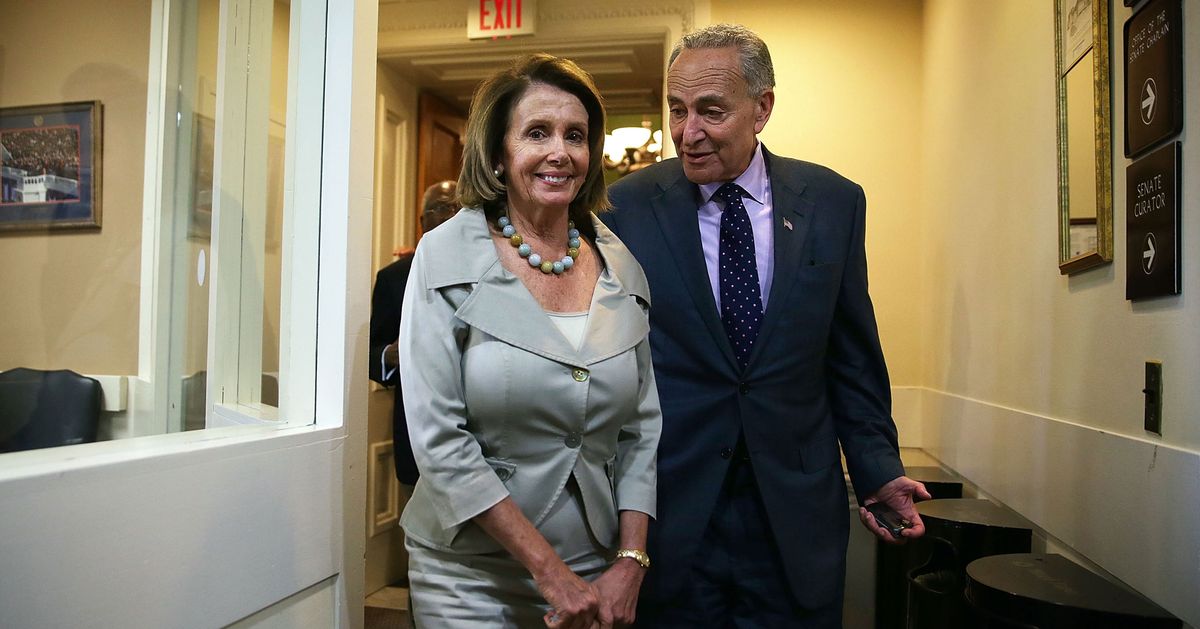
Poor Chuck and Nancy…

President Trump’s political dalliance with “Chuck and Nancy” already is running into problems, as the top congressional Democrats balk at the president’s new terms for a deal to help the roughly 800,000 young illegal immigrants known as ‘Dreamers.’

“This proposal fails to represent any attempt at compromise,” House Democratic Leader Nancy Pelosi and Senate Democratic Leader Chuck Schumer said in a joint statement, after the administration announced the demands Sunday night.

photo

*** But this could mean no other legislative business will advance for the balance of Trump’s first term.

WT: Determined to finally solve illegal immigration, the White House submitted a 70-point enforcement plan to Congress Sunday proposing the stiffest reforms ever offered by an administration — including a massive rewrite of the law in order to eliminate loopholes illegal immigrants have exploited to gain a foothold in the U.S.

The plans, seen by The Washington Times, include President Trump’s calls for a border wall, more deportation agents, a crackdown on sanctuary cities and stricter limits to chain migration — all issues the White House says need to be part of any bill Congress passes to legalize illegal immigrant “Dreamers” currently protected by the Obama-era deportation amnesty known as DACA.

But the plans break serious new ground on the legal front, giving federal agents more leeway to deny illegal immigrants at the border, to arrest and hold them when they’re spotted in the interior, and to deport them more speedily. The goal, the White House said, is to ensure major changes to border security, interior enforcement and the legal immigration system.

“Anything that is done addressing the status of DACA recipients needs to include these three reforms and solve these three problems,” a senior White House official told The Times. “If you don’t solve these problems then you’re not going to have a secure border, you’re not going to have a lawful immigration system and you’re not going to be able to protect American workers.”

All told, the list includes 27 different suggestions on border security, 39 improvements to interior enforcement and four major changes to the legal immigration system.

The White House said the list was built from the ground up, with input from the Justice, State and Labor Departments and the three main immigration agencies at Homeland Security, each of whom was asked what tools they needed to finally get a handle on illegal immigration.

Ideas poured in, ranging cracking down on sanctuary cities that shield illegal immigrants — a long-running battle — to new proposals, such as doling out assistance to other in the Western Hemisphere, enlisting them as partners in the effort to stop illegal immigrants heading north.

The running theme of the list, though, is closing loopholes that illegal immigrants have exploited:


• Lax asylum standards, which illegal immigrants have learned to game through saying “magic words” that earn them instant protections, would be stiffened.

• The Unaccompanied Alien Children — or UAC — who streamed to the U.S. under President Obama would have to prove they really are without parents and are fleeing abuse, in order to access generous humanitarian protections.

• Visitors who come legally but overstay their visas — perhaps now an even larger group of illegal immigrants than those who jump the border — would, for the first time, face a misdemeanor penalty.

• A 2001 Supreme Court decision that has forced the release of tens of thousands of illegal immigrants, including murderers, would be curtailed.

• The ability of federal, state and local authorities to detain illegal immigrants would be fully enshrined in law, helping settle a long-running question that’s fueled some sanctuary cities.

Also on the list are proposals that have been included in past immigration bills that garnered bipartisan support such as canceling the annual visa lottery that doles out 50,000 green cards at random, and requiring all businesses to use E-Verify, the government’s currently voluntary system for checking to make sure new hires are legally eligible to work.

Immigrant-rights advocates had feared the move, saying they believed Mr. Trump was giving in to hard-liners in his administration, including senior adviser Stephen Miller.

“President Trump and Members of Congress need to decide – do they want to resolve this crisis, or do they want to fall prey to Stephen Miller et al’s strategy to kill legislation and expose all 800,000 DACA beneficiaries to deportation?” Frank Sharry, executive director of America’s Voice, said in a statement last week in anticipation of the announcement.

Many of the items on the president’s list have drawn bipartisan support in the past, including more fencing, a massive boost in Border Patrol agents, the end to the diversity visa lottery and mandatory use of E-Verify.

Each of those was, in fact, part of the 2013 immigration bill the Senate approved, with the support of every single Democrat in the chamber.

But Democrats say they only supported those measures at the time as part of a broad compromise that offered legal status to some 8 million of the estimated 11 million illegal immigrants in the country at that point. They said a smaller legalization for Dreamers can’t be coupled with that broad an enforcement surge.

“Please do not put the burden on the Dreamers to accept every aspect of comprehensive immigration reform to get a chance to become citizens of the United States,” Sen. Richard Durbin, a Democrat who was part of the so-called “Gang of Eight” senators that wrote the 2013 bill, told top administration officials at a hearing last week. “That’s too much to ask.”

The senior White House official, though, said Mr. Durbin’s logic amounted to a “false pretense that the safety of the American people should be held hostage to some other goal.”

Congress doesn’t need an excuse to pass laws that make our streets safer or our country safer or make our jobs more secure. It’s just the right thing to do,” the official said.

The administration’s new list is likely to irk Senate Minority Leader Charles E. Schumer and House Minority Leader Nancy Pelosi, who emerged from a meeting with Mr. Trump last month insisting they had the outlines of a Dream Act-style deal that would grant a pathway to citizenship to Dreamers in exchange for limited border security, such as technology, boosting the Coast Guard or adding more inspectors at ports of entry.

The two leaders said they had explicitly won an agreement not to couple the Dream Act with any new action on Mr. Trump’s proposed border wall.