
We’re Sorry Israel, We Are Embarrassed by POTUS

The president during his entire term has been petulant and his actions and decisions regarding the Middle East are epically wrong and dangerous.

After a particular report released this week by the State Department by the Bureau of Terrorism, in simple words, one could easily conclude that under Barack Obama, the grace delivered to Iran during years of talks would have a hidden objective that Iran fulfills its pledge to destroy Israel, relieving Obama’s ultimate mission. There is no question that all top leaders in the foreign policy side of the Obama administration are consumed with disdain for Israel.

The report gives special recognition to Mahmoud Abbas of the Palestinian Authority giving praise for positive actions to keep peace in the region. Another summary by Jonathan Tobin in Commentary has an out-take of the report that reads:

The report also restates the widely reported fact that Iran “continued to be in noncompliance with its international obligations regarding its nuclear program.” But unless the Obama administration grows a spine and changes its policies within weeks the United States will sign a nuclear deal with Tehran that will soon result in a vast windfall of cash falling into Iran’s hands. Yet nowhere in the nuclear framework agreement is there any promise, however lacking in credibility, that Iran will foreswear the same activities that the State Department just reported and which, by U.S. law, ought to mandate continued sanctions rather than an end to restrictions on doing business with the Islamist regime.

Iran is also a primary obstacle to peace between Israel and the Palestinians because of its funding and arms supplies funneled to terror groups such as Hamas and Islamic Jihad. Iran had previously been a primary supporter of Hamas but broke with the rulers of the independent Palestinian state in all but name in Gaza over differences on Syria. But now that Iran and Assad appear to be in no danger and short of money and arms after last summer’s war, Hamas appears to have come back into Tehran’s good graces. But even during their split, Iran was still doing its best to keep other radicals so as to ensure that Palestinian leaders are too afraid to make peace with Israel even if they wanted to do so.

But in spite of this activity reported by its own State Department, there is little doubt that the administration is bound and determined to go ahead and sign a nuclear deal with Iran.

So, when it comes to the broken relationship between the White House and Israel, here is a first hand account of key disgusting moments at the hands of the Obama regime.

An Inside Look At How Obama Killed The U.S.-Israel Relationship

Oren book reveals Immense hostility, anger at Israel

In his new memoir, former Israeli Ambassador Michael Oren documents the rapid dissolution of the historically close U.S.-Israel alliance under President Barack Obama. Oren recounts being threatened and intimidated at multiple junctures by Obama and his senior officials, marking many firsts in a relationship that has long been the cornerstone of American foreign policy.

The memoir, Ally: My Journey Across the American-Israeli Divide, has already rushed to the top of Amazon’s bestseller list. It provides a window into the daily stresses and strains Obama and his allies heaped upon the Jewish state—from placing unprecedented demands on Israel regarding the peace process to fabricating crises in the U.S.-Israel alliance.

“Prophecy was not required to foresee that an Obama presidency might strain the U.S.-Israel alliance,” Oren writes in the early pages of his book.

Obama stacked his administration with senior officials hostile to Israel and pursued a policy of “daylight” with Jewish state, Oren recounts.

“The first thing Obama will do in office is pick a fight with Israel,” Oren recalls a confidant as telling him in the early days of the administration.

Below are a series of passages that reveal in detail how the U.S.-Israel alliance hit historic lows under the Obama administration.

1. ‘I know how to deal with people who oppose me’

The tension between Obama and Prime Minister Benjamin Netanyahu of Israel began during their first meeting at the White House, Oren recalls. While the meeting appeared to go “smoothly,” behind the scenes Obama outwardly threatened Netanyahu.

“Face-to-face, I later heard, Obama had demanded that Netanyahu cease all building not only in the territories but also in the disputed areas of Jerusalem,” Oren writes. “‘Not a single brick,’” the president purportedly said. ‘I know how to deal with people who oppose me.’”
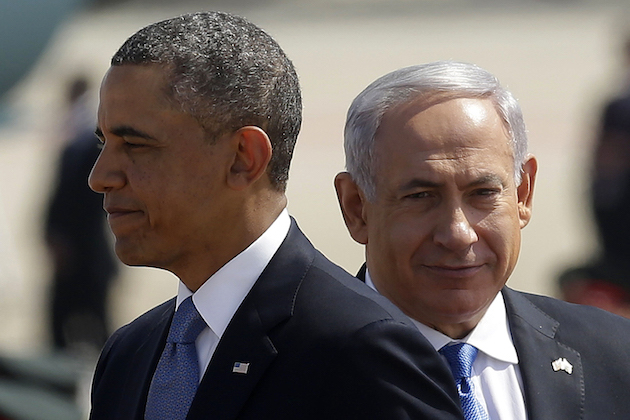
Obama and Netanyahu / AP

2. Israel Defense Forces (IDF) Commanders Never Trusted Obama

Oren recounts listening to Obama’s 2009 speech in Cairo while stationed in the IDF’s headquarters. “Their reactions typified that of a great many Israelis.”

These commanders “scoffed at what they regarded as Obama’s inexperience with the Middle East, where magnanimity is often seen as weakness. They cringed at his tendency to equate America’s moral foibles with the honor killings, human trafficking, and the suppression of women, foreign workers, and indigenous minorities rampant in many Muslim countries,” Oren writes.

Their opinions only grew dimmer when Obama “linked that legitimacy [of Israel] to the Jews’ ‘tragic history’ in the Holocaust. That linkage seemed to me to be the most damaging part of his speech.”

3. The Anti-Israel State Department

Oren’s first meeting with then-Deputy Secretary of State Jim Steinberg was fraught and filled with demands that Israel consent to Obama administration demands for a total building freeze in Jerusalem. Such intimidation and threats would be a cornerstone of Oren’s meetings with senior officials at Foggy Bottom.

“Discord indeed mired my initial meeting with Deputy Secretary of State Jim Steinberg,” Oren writes.

“Under the administration’s policy, a Jew could only build his home in certain Jerusalem neighborhoods but an Arab could build anywhere—even illegally—without limit. ‘In America,’ I said, ‘that’s called discrimination.’”

Later in his tenure, Steinberg would again upbraid Oren. State Department staffers apparently “listened in on” the angry meeting and “cheered,” according to Oren.

4. Congressional Democrats Scold Oren

A handful of congressional Democrats berated Oren during his first trip to Capitol Hill as ambassador.

“In our first conversation, Sen. Bill Nelson of Florida caught me off guard with a letter from a constituent alleging ‘Israeli economic apartheid’ in the territories,” Oren recalls.

Later, “Senator Dianne Feinstein offered me a glass of select California wine and said, ‘I am a peacemaker but you are a fighter.’”

Later in the book, Oren recalls taking a call from Sen. Barbara Boxer (D., Calif.), who “railed at me so furiously [about Israeli criticism of Obama] that I literally had to hold the phone form my ear.”
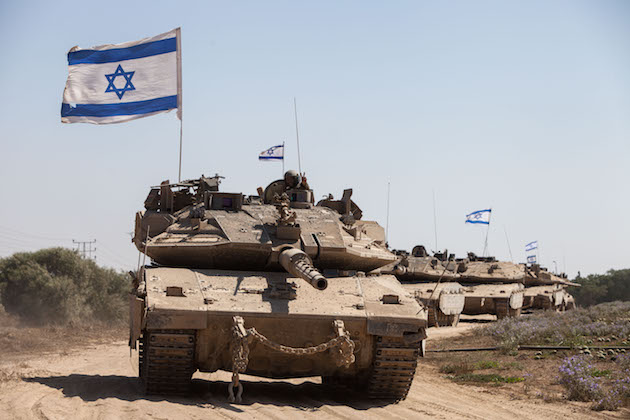
IDF tanks / AP

5. Obama Tells Off Prominent American Jewish Leaders in Private Meeting

Obama’s first meeting with a delegation of top American Jewish leaders was tense, according to Oren.

While such gatherings “had become standard” for previous White Houses, “for Obama … the briefings were less a means of garnering support than of muting opposition. Indeed, what many American Jewish leaders saw as the placing of undue pressure on Israel, the president regarded as displays of restraint.”

Obama invited the anti-Israel fringe group J Street to participate in these private meetings, a move that angered more mainstream Jewish leaders.

6. Rahm Emanuel’s Angry Outbursts

Former White House Chief of Staff Rahm Emanuel, notorious for his profanity-laden outbursts, woke Oren one morning with an angry call.

“I don’t like this f***ing shit,” Oren quotes Emanuel as saying about Israel’s refusal to stop building Jewish homes in disputed territories.

“Rahm, I knew, was not enamored of my boss or of the American Jewish leaders whom he faulted for backing Netanyahu unconditionally,” Oren writes.

Later in the book, Oren recalls Emanuel referring to a settlement dispute between Israel and the U.S. as “a pimple on the ass of the U.S.-Israel friendship.”

7. White House Orders Senior Officials to Criticize Israel

In addition to privately embracing the anti-Israel fringe group J Street, the Obama administration sent top officials to speak at its first national conference in Washington, D.C.

Oren, who refused to participate in the event, reveals that Obama administration officials had direct orders to criticize Israel publicly.

Hannah Rosenthal, the administration’s former adviser on anti-Semitism, “issued her first denunciation not of anti-Semites, but rather of me for boycotting the summit,” Oren writes.

“Hannah eventually became a friend and I never took her comment personally,” he adds. “Nor did I believe that she acted on her own, since I later learned that some of the criticism emanated directly from the White House.”
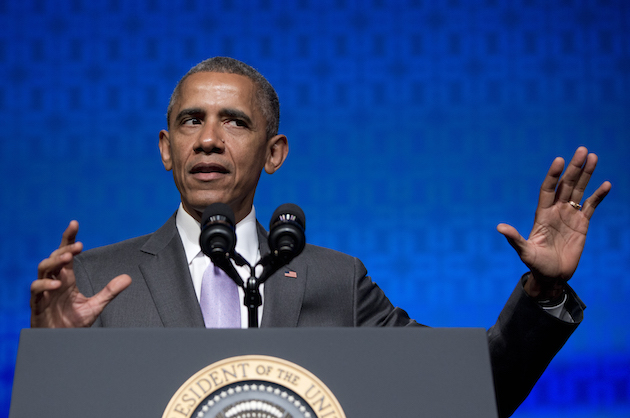
AP

8. Hillary Clinton Refuses to Meet With Oren

Oren reveals that in the early days of his tenure, then-Secretary of State Hillary Clinton refused to meet with him in person.

“I reached out to Hillary Clinton, asking for a private meeting, only to be rebuffed,” Oren recalls.

9. Hillary Blows Her Top

When Secretary of State Hillary Clinton learned of Israeli plans to transform a slum in Jerusalem into a ritzy tourist mall, “she nearly blew her top,” according to Oren.

The slum was deemed controversial due to its location in an East Jerusalem neighborhood the administration considered as disputed.

“We practically had to scrape her off the ceiling,” according to a senior American official who spoke to Oren.

10. White House Wrongly Accuses Oren Of Interfering in U.S. Politics

When U.S.-Israel tensions hit a high point in 2010, Oren frantically sought to diffuse the hostility by setting up a meeting with then-Senior White House Adviser David Axelrod.

“I urged him to find a way out of a situation that I feared might become dangerous for Israel, but Axelrod calmly brushed this aside,” Oren recalls. “Instead, he accused me of urging congressmen to hold on until [the] 2012 [elections], that Obama would never get reelected. That charge of interfering in internal American politics could have rendered me persona non grata and resulted in my expulsion from the United States.”
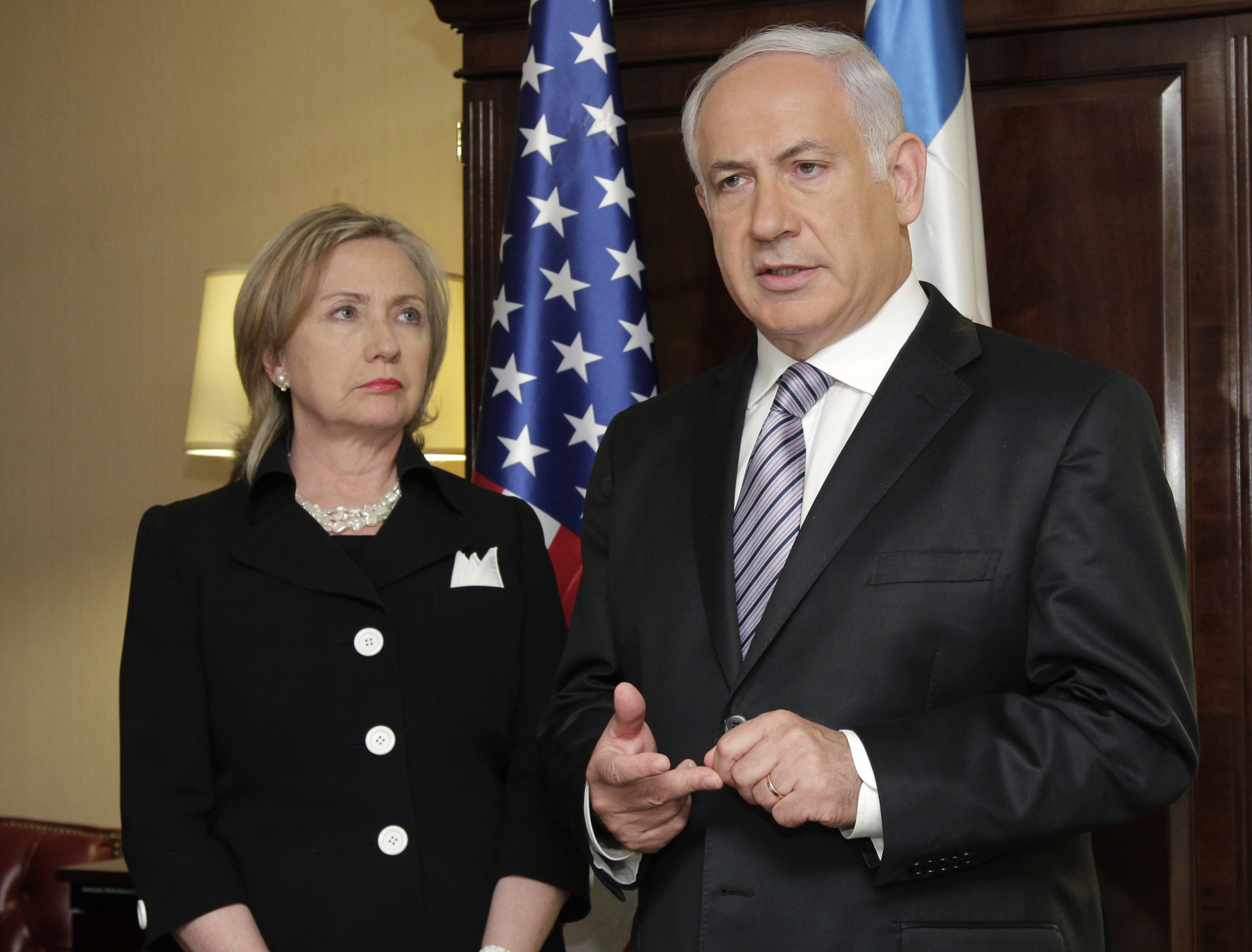
11. Obama Withholds Vital Arms From Israel

After working furiously to secure a deal with U.S. officials for 20 F-35 Joint Strike Fighters, Obama cancelled the arms sale, according to Oren.

“The impact, for Israel, was calamitous,” Oren writes. “Editorials—apparently fanned by official sources—suggested that the F-35s has been an Israeli demand, rather than an American offer.”

12. Robert Gates Has A ‘Visceral Dislike of Netanyahu’

A $60 billion U.S. arms sale to Saudi Arabia in 2010 sent Israeli officials scrambling.

U.S. and Israeli leaders saw the sale as an affront to the Jewish State’s Qualitative Military Edge (QME), a longstanding deal in which the United States has assured Israel’s military supremacy in the region.

“Such concerns [about maintaining the QME] unnerved Netanyahu in a July 6 meeting with [former Secretary of Defense] Robert Gates,” who had “long harbored a visceral dislike of Netanyahu,” according to Oren.

“The animus” between Netanyahu and Gates “was discernible in the Blair House reception room, where Netanyahu promptly took Gates to task for the Saudi sale.”

13. White House Orders Israel to Hold Off On Iran Strike

As the Iranian march for nuclear weapons hit a critical point in the summer of 2009, the Obama administration publicly affirmed Israel’s right to defend itself.

Behind the scenes, though, the White House ordered Israel to lay off Tehran.

“Off camera … the message was ‘Don’t you dare,’” Oren recalls. “Washington quietly quashed any military option for Israel.”

14. Obama Destroys ‘More Than 40 Years of American Policy’ Toward Israel

On the eve of a critical vote at the United Nations on a Palestinian-backed resolution to condemn Israeli settlements, Obama held a 50-minute phone call with President Mahmoud Abbas of the Palestinian Authority .

Obama, during that call, promised to “renew America’s demand for a total freeze on Israeli construction in the West Bank and East Jerusalem.” He also promised to lend his support “for a Palestinian state based on the 1967 lines,” an unprecedented call from a U.S. president, Oren writes.

Israel “was never consulted about this conversation nor even informed,” Oren writes, claiming that the White House even lied about the conversation. “The White House spokesman insisted the subject was Egypt.”

“The Prime Minster’s Office had learned of Obama’s offer to Abbas from U.N. sources, not the United States, and was outraged,” Oren recounts. “The White House has overnight altered more than forty years of American policy” and “Israel felt abandoned.”

15. Susan Rice Yells At Oren

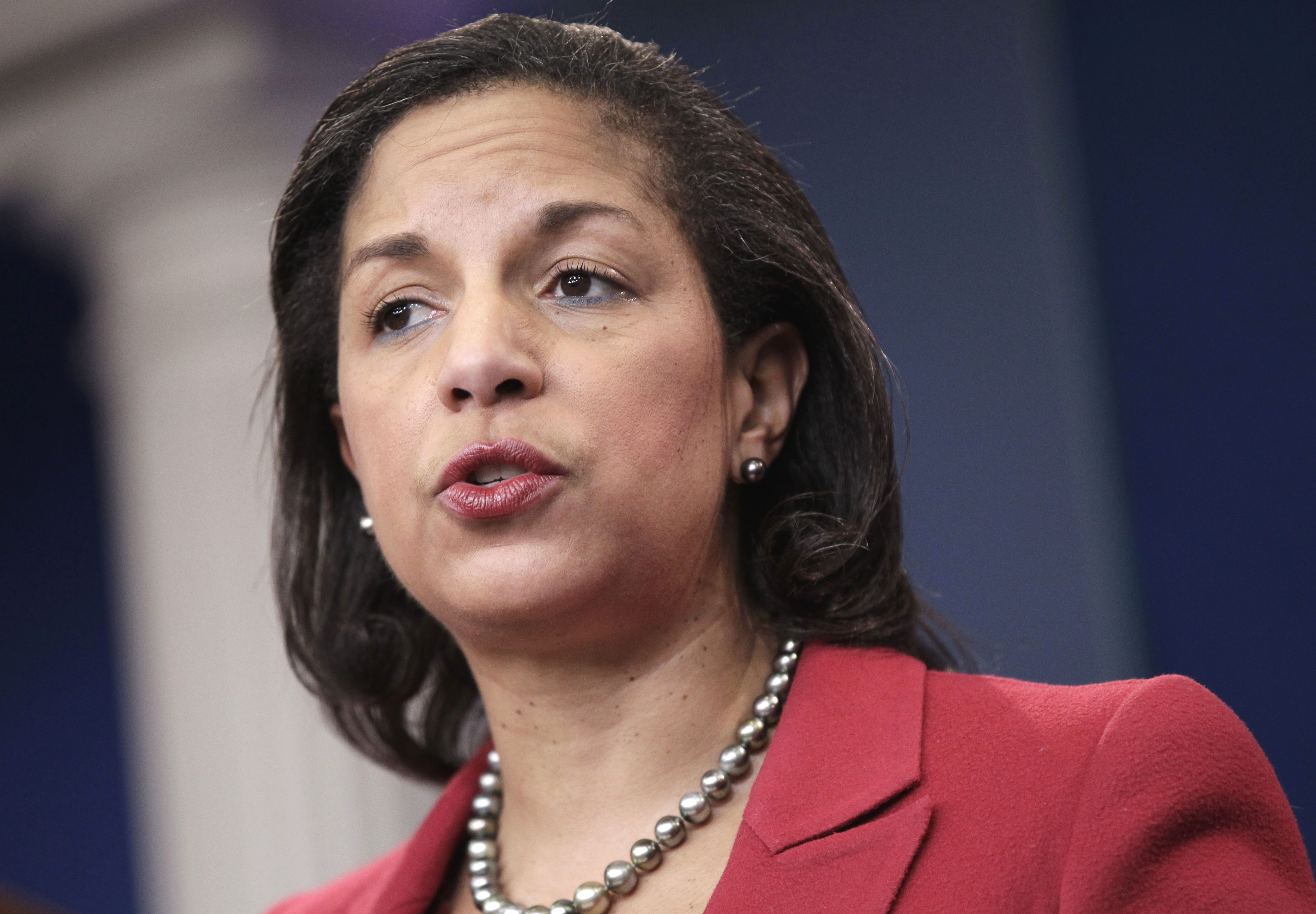
Following the White House’s move to leave Israel in the dark on the U.N. vote, Oren met with then-U.N. Ambassador Susan Rice.

Rice sat in her New York office “brooding and peevishly tapping her forehead with her finger,” according to Oren.

“Israel must freeze all settlement activity,” Oren recalls her saying. “Otherwise the United States will not be able to protect Israel from Palestinian actions at the U.N.”

“’If you don’t appreciate the fact that we defend you night and day, tell us,’ Rice fumed, practically rapping her forehead. ‘We have other important things to do.’”

16. ‘The President is Going to Take On the Prime Minister’

Ahead of the American Israel Public Affairs Committee’s (AIPAC) annual conference in Washington, a senior U.S. official told Oren that Obama was out to “take on” Netanyahu directly.

Both leaders were scheduled to give talks at the pro-Israel lobbying group’s annual confab.

“The president is going to take on the prime minster in front of AIPAC,” former White House Chief Of Staff Bill Daley told Oren. “And if he gets booed, so what?”
17. Obama Officials Embrace ‘Israel Lobby’ Canard

Writing in the New York Times after Netanyahu’s address to AIPAC, columnist Tom Friedman asked if “Netanyahu understands that the standing ovation he got in Congress was bought and paid for by the Israel lobby.”

“I called Tom the moment the article came online and urged him to retract it,” Oren recalls. “You’ve confirmed the worst anti-Semitic stereotype, that Jews purchase seats in Congress,” Oren informed him.

Friedman’s response: “For every call I’ve received protesting, I’ve gotten ten congratulating me for finally telling the truth. … Many of those calls were from senior administration officials.”

18. Senior State Department Official Curses at Oren

Disagreements between the United States and Israel reached another boiling point when the Palestinian Authority moved to gain unilateral recognition at the U.N.

Congressional law mandated that such a move should result in the closure of the Palestinian Liberation Organization’s Washington office, the cut off of U.S. aid to the PA, and the termination of all U.S. funding to any U.N. organization that recognized Palestine.

“Israel strongly endorsed all three repercussions, which the White House just as vehemently opposed,” Oren writes.

While pushing Israel’s cause at the State Department, Oren was chastised by Deputy Secretary Tom Nides.

“You don’t want the fucking U.N. to collapse because of your fucking conflict with the Palestinians, and you don’t want the fucking Palestinian Authority to fall apart either,” Nides purportedly said to Oren.

19. Obama Hearts Erdoğan

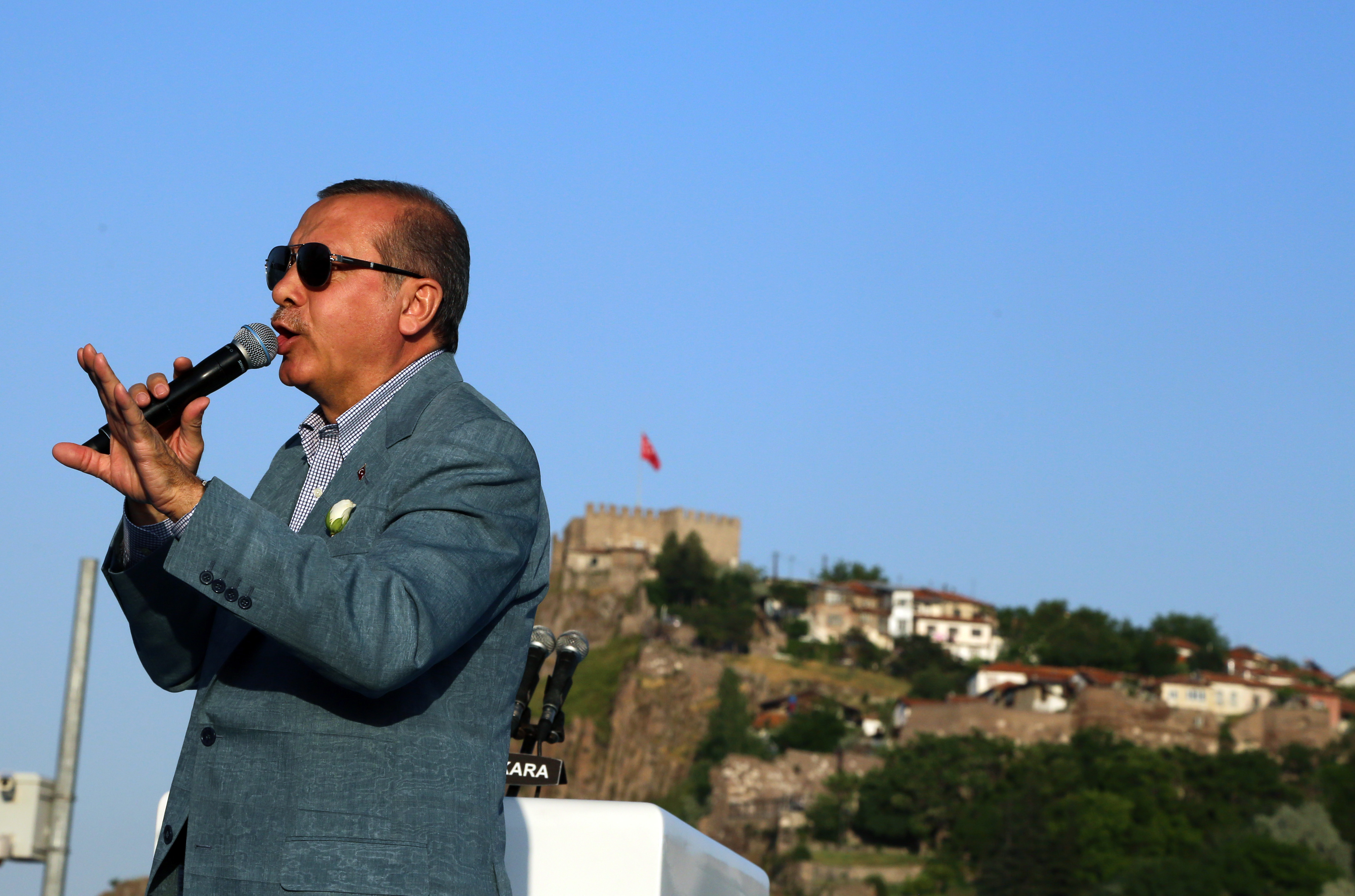
During a meeting at the White House with Israeli leaders, Obama allegedly expressed great support and faith in Turkish leader Recep Tayyip Erdoğan, a notorious critic of Israel who has promoted anti-Semitic conspiracy theories.

“He’s not living in the sixteenth century,” Obama told the Israelis present in the meeting, according to Oren. “We could do much worse than have a bunch of Erdogans in the Middle East.”
20. Obama Keeps Israel In Dark About Syria Strikes

When the United States first decided to launch airstrikes against Syria, Israel was left in the dark, another first in the U.S.-Israel relationship, according to Oren.

The ambassador learned about the strikes while listening to the radio.

“The razor froze in mid-shave,” he writes. “Wiping the foam from my face, I rushed to the embassy. The once-sacred principle of ‘no surprises’ in the U.S.-Israel alliance had fallen into desuetude during the Obama period, but never to this depth on an issue so vital to our immediate security.”

21. Obama Only Backs Israel ‘Because That’s What the American People Want’

During yet another meeting between Obama and Netanyahu, the president attempted to reassure Israel that it would defend it in any war with Iran.

Obama revealed that he only backs Israel because a plurality of Americans demands it.

“If war comes, we’re with you, because that’s what the American people want,” Oren recalls Obama saying.

Paying Too Much for United Nations Failures

The summary failure of the United Nations in regard to the Congo. There more recently there is the admitted inability to stop the atrocities in Syria.

In 1945, the United Nations Charter, which was adopted and signed on June 26, 1945, is now effective and ready to be enforced.

The United Nations was born of perceived necessity, as a means of better arbitrating international conflict and negotiating peace than was provided for by the old League of Nations. The growing Second World War became the real impetus for the United States, Britain, and the Soviet Union to begin formulating the original U.N. Declaration, signed by 26 nations in January 1942, as a formal act of opposition to Germany, Italy, and Japan, the Axis Powers.

The principles of the U.N. Charter were first formulated at the San Francisco Conference, which convened on April 25, 1945. It was presided over by President Franklin Roosevelt, British Prime Minister Winston Churchill, and Soviet Premier Joseph Stalin, and attended by representatives of 50 nations, including 9 continental European states, 21 North, Central, and South American republics, 7 Middle Eastern states, 5 British Commonwealth nations, 2 Soviet republics (in addition to the USSR itself), 2 East Asian nations, and 3 African states. The conference laid out a structure for a new international organization that was to “save succeeding generations from the scourge of war,…to reaffirm faith in fundamental human rights,…to establish conditions under which justice and respect for the obligations arising from treaties and other sources of international law can be maintained, and to promote social progress and better standards of life in larger freedom.”

Today, the United Nations is a failed global operation and the United States pays the largest share of the financial freight. All of it is too much.

By: Brett D. Schaefer is the Jay Kingham Fellow in International Regulatory Affairs at Heritage Foundation’s Margaret Thatcher Center for Freedom.

America, we pay way too much for the United Nations

‘Each year the United States gives approximately $8 billion in mandatory payments and voluntary contributions to the United Nations and its affiliated organizations. The biggest portion of this money – about $3 billion this year – goes to the U.N.’s regular and peacekeeping budgets.

If that seems like a lot, it is—far more than anyone else pays And it’s also, in some cases, bad value for money.

The U.N. system for calculating member nations’ “fair share” payment toward its regular and peacekeeping budgets has increasingly shifted the burden away from the vast majority of the 193 members and onto a relative handful of high-income nations, especially the U.S. Indeed some nations pay next to nothing.

Over the last six decades, the share of the U.N. expenses borne by poor or small member states has steadily ratcheted downward to near- microscopic levels. From 1974 to 1998, the minimum mandatory payment for the regular budget for example, fell from 0.04 percent to 0.001 percent. For the peacekeeping budget, the minimum is 0.0001 percent.

The U.N. system for calculating member nations’ “fair share” payment toward its regular and peacekeeping budgets has increasingly shifted the burden away from the vast majority of the 193 members and onto a relative handful of high-income nations, especially the U.S. Indeed, some nations pay next to nothing.

In addition, over three quarters of the total U.N. membership get additional discounts, with the cost also shifted to wealthier countries.

The end result is a hugely skewed bill for U.N. expenses.

In 2015, 35 countries will be charged the minimum regular budget assessment of 0.001 percent which works out to approximately$28,269 each. Twenty countries will be charged the minimum peacekeeping assessment of 0.0001 percent or approximately $8,470 apiece.

By contrast, the U.S. is assessed 22 percent of the regular budget (approximately $622 million) and over 28 percent of the peacekeeping budget (approximately $2.402 billion).

Put another way, the U.S. will be assessed more than 176 other member states combined for the regular budget and more than 185 countries combined for the peacekeeping budget. Who says America isn’t exceptional!

This is more than a complaint about dollars. It’s also about the value received for those outsized contributions. Consider:

· An independent academic study assessing best and worst practices among aid agencies ranked U.N. organizations among the worst.

·Numerous reports, audits, and investigations have revealed mismanagement, fraud and corruption in procurement for U.N. peacekeeping.

· Studies and reports have identified U.N. peacekeepers as the source of the cholera outbreak that ravaged Haiti starting in 2010, leaving more than 8,000 dead and more than 600,000 seriously sickened.

· A 2014 study of eight of the nine U.N. peacekeeping operations with a mandate to protect civilians found that peacekeepers “did not report responding to 406 (80 per cent) of [the 570] incidents where civilians were attacked.”

· U.N. personnel have been accused of sexual exploitation and abuse in Bosnia, Burundi, Cambodia, Congo, the Democratic Republic of Congo, Guinea, Kosovo, Liberia, Sierra Leone, and Sudan. Recent news stories from the Central African Republic and Haiti indicate the problem is still far too common and the U.N. is more interested in concealing the issue than in confronting it

· Atop all that, U.N. employees enjoy extremely generous benefits and salaries—over 32 percent higher than U.S. civil servants of equivalent rank.

Moreover, the U.N. and its employees enjoy broad protections and immunities and cannot be sued in national courts, arrested, or prosecuted for actions related to their official duties unless those immunities are waived. This places an extremely heavy responsibility on the U.N. to self-police, correct, and punish wrongdoing by the organization and its employees.

Unfortunately, oversight and accountability at the U.N. have historically been weak. And on the rare occasion when internal watchdogs bite, the organization moves to defang them.

Take the case of the Procurement Task Force (PTF) , a special U.N. unit that went to work in 2006  to root out corruption.   It uncovered fraud, waste, and mismanagement involving contracts valued at more than $630 million. It led to misconduct findings and convictions of U.N. officials.

Unfortunately the PTF was eliminated in 2008—at the behest of countries angry about PTF actions against their nationals holding U.N. staff positions. The U.N. has not completed any major corruption cases since the PTF was eliminated.

Poor oversight is made worse by U.N. hostility toward its own whistleblowers. Only a few weeks ago, nine staffers from various U.N. organizations sent a letter to the Secretary-General asserting that the U.N. affords “little to no measure of real or meaningful protection for whistleblowers.”

The U.N. badly needs reform, but the U.S., despite the mammoth checks it writes, can’t reform the U.N. alone. In the one-nation, one-vote world of the U.N., it needs support from other nations. Unfortunately, many of them remain blasé about U.N. budget increases, corruption, and inefficiencies because the financial impact on them is miniscule.

To change the institution, the first thing that needs to change is the thumb-on-the-scales system that makes the U.S. the biggest bill-payer, but just one of 193 voting members when it comes to demanding honesty, efficiency and effectiveness in return for its over-generous payments.

Congress and the Obama administration have both said they want the United Nations to be more transparent and accountable and to use its resources more effectively. To make that happen, major donors must have a greater say in budgetary decisions, and smaller donors must assume financial responsibilities that lead them to undertake budgetary decisions and conduct serious oversight.

Every three years the U.N. General Assembly approves adjustment to its scale of assessments: 2015 is one of those years. The U.S. should not let this opportunity slip away to get more for its money—and make other nations actually try to make the U.N. live up to the image that the organization likes to show the world.’

If you agree that the United Nations should have funding cut, you’re in luck. Here is the link to sign the petition.

The Carnage and Weapons in Sudan, UN Ignores

If there is an historical failure by the United Nations, it is Sudan. The global body publishes a report demonstrating the destruction. It is not a new condition, so one must ask where was Susan Rice when she was the UN ambassador? Where was Hillary Clinton when she was Secretary of State and where is now John Kerry? How about the White House who is so concerned with human rights? Or, is the matter of rogue nations need weapons and Sudan is the source?

Syrian rebels, frustrated by the West’s reluctance to provide arms, have found a supplier in an unlikely source: Sudan, a country that has been under international arms embargoes and maintains close ties with a stalwart backer of the Syrian government, Iran.

In deals that have not been publicly acknowledged, Western officials and Syrian rebels say, Sudan’s government sold Sudanese- and Chinese-made arms to Qatar, which arranged delivery through Turkey to the rebels.

The shipments included antiaircraft missiles and newly manufactured small-arms cartridges, which were seen on the battlefield in Syria — all of which have helped the rebels combat the Syrian government’s better-armed forces and loyalist militias.

Emerging evidence that Sudan has fed the secret arms pipeline to rebels adds to a growing body of knowledge about where the opposition to President Bashar al-Assad of Syria is getting its military equipment, often paid for by Qatar, the United Arab Emirates, Jordan, Saudi Arabia or other sympathetic donors.

Map of the Day: Hungry and Displaced in South Sudan

This map, from the UN Office for the Coordination of Humanitarian Affairs, succinctly shows the number people displaced by fighting in South Sudan and where they have fled.

Screen Shot 2015-06-10 at 10.20.32 AM

There is a deeper story to this map.

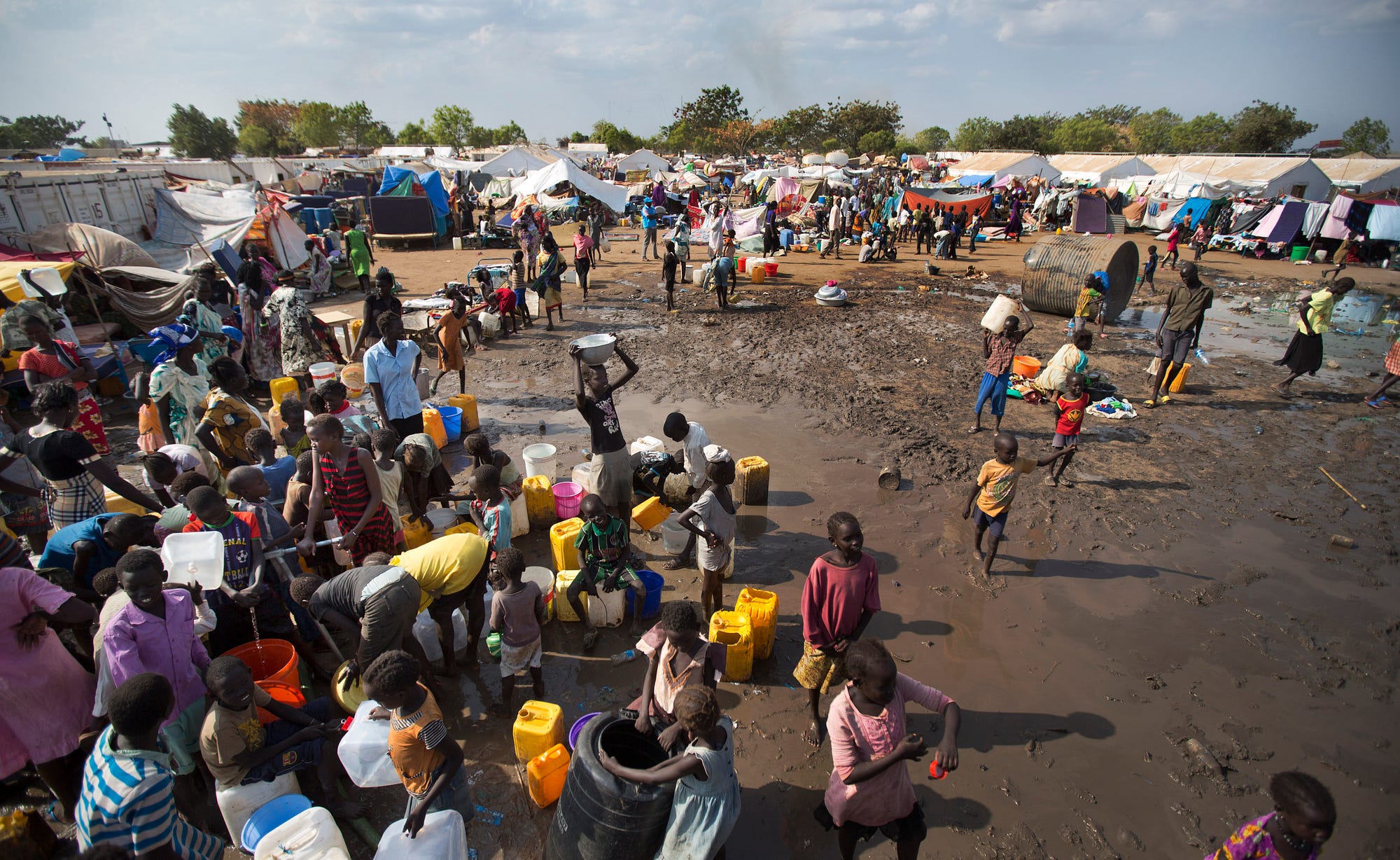
Over the last four weeks, fighting has intensified in South Sudan. Over 100,000 people have been displaced in this newest round of fighting. The prospect of mass starvation is very real. The International Committee for the Red Cross warned today that unless “urgent action” is taken, thousands of people may soon starve.

What is that ‘urgent action?’ Mostly, it’s securing more funding for the humanitarian relief effort. The ICRC needs an additional $23 million to provide food aid and help subsistence farmers make it through the lean season while also providing them seeds for the next planting season.

That money, though, is simply not materializing. Yesterday, UNICEF warned that it would have to shut down most of its operations in South Sudan by the end of the month because they are running out of money.  

The acute needs of children in Sudan are huge and go far beyond the impact of the South Sudan crisis. More than 3.2 million children require humanitarian assistance. To date UNICEF in Sudan has received generous support from a wide range of donors. Unfortunately, the funding received covers only 16% of the 117 million USD required. By the end of June, UNICEF will no longer have funding available to support children affected by the war in South Sudan.

UNICEF and ICRC’s funding difficulties in South Sudan are symptomatic of a larger problem facing the international community. The world’s humanitarian system is on the brink of collapse right now, with several ongoing complex emergencies stretching donors and relief agencies thin.  Between Iraq, Syria, Nepal, CAR and Mali these emergencies are essentially competing for the same donor dollars and donors have so far been unable or unwilling to fully fund the relief operations of each of these emergencies. Unless donors step up in a big way, it would seem that relief operations in South Sudan may be the next to fall.

The war no one is fighting or winning. An highly researched 4 part series is found here.

An in-depth timeline for Sudan is found here, but since 2012:

2012 June – Week-long student protests in Khartoum against austerity measures spread from to the wider public after the government cuts fuel and other subsidies in response to the drop in oil revenue after the independence of South Sudan.

2012 August – Some 655,000 have been displaced or severely affected by fighting between the army and rebels in states bordering on South Sudan, the UN reports.

Sudan and South Sudan strike a last-minute deal on the South’s export of oil via Sudan’s pipelines.

2012 September – The presidents of Sudan and South Sudan agree on plans for a demilitarised buffer zone and resuming oil sales after days of talks in Ethiopia, but fail to resolve border issues, including Abyei.

Clashes with rebels in Darfur and South Kordofan region.

2012 October – Explosions destroy an arms factory in Khartoum. Sudan accuses Israel of the attack on what is believed to be an Iranian-run plant making weapons for Hamas in Gaza. Israel declines to comment.

2013 March – Sudan and South Sudan agree to resume pumping oil, ending a shutdown caused by a dispute over fees more than a year ago, and to withdraw troops from their borders to create a demilitarised zone.

2013 September – Wave of demonstrations across the country over the government’s decision to cut fuel subsidies. Scores of people die in clashes with police.

Ruling party splits

2013 October – Dissident members of the ruling National Congress Party (NCP) announce plans for a breakaway party aimed at reaching out to secularists and leftists, in what is seen as the most serious split in the elite since Hassan al-Turabi went into opposition in 1999.

2013 December – President Bashir drops long-time ally and first vice president Ali Osman Taha from the cabinet in a major shake-up.

2014 May – A court in Khartoum prompts an international outcry by sentencing a pregnant woman born to a Muslim father but raised as a Christian to death for apostasy after failing to recant her Christianity.

2014 December – The chief prosecutor of the International Criminal Court halts investigations into war crimes in Darfur for lack of support from the UN Security Council.

2015 April – President Bashir is re-elected for another five year term. He wins nearly 95 percent of the vote in a poll marked by low turnout and boycotted by most opposition parties.


CFR and Robina Foundation Behind Globalization

All foreign policy is coordinated between the U.S. State Department and the United Nations. We cannot know all the details and methods, yet below a summary of a major donor and power of influence is but one of many when it comes to the globalization of America and loss of sovereignty. All government agencies are subservient to the White House and the State Department.

“International Institutions and Global Governance Program

World Order in the 21st Century

A New Initiative of the Council on Foreign Relations

“The Council on Foreign Relations (CFR) has launched a comprehensive five-year program on international institutions and global governance. The purpose of this cross-cutting initiative is to explore the institutional requirements for world order in the twenty-first century. The undertaking recognizes that the architecture of global governance—largely reflecting the world as it existed in 1945—has not kept pace with fundamental changes in the international system, including but not limited to globalization. Existing multilateral arrangements thus provide an inadequate foundation for addressing today’s most pressing threats and opportunities and for advancing U.S. national and broader global interests. The program seeks to identify critical weaknesses in current frameworks for multilateral cooperation; propose specific reforms tailored to new global circumstances; and promote constructive U.S. leadership in building the capacities of existing organizations and in sponsoring new, more effective regional and global institutions and partnerships. This program is made possible by a generous grant from the Robina Foundation.”

The Board members of Robina are chilling. One such board member is SUSAN V. BERRESFORD, formerly of the Ford Foundation. Remember Stanley Ann Dunham, Obama’s mother worked at the Ford Foundation.

The mission of the Council of Foreign Relations in paid cooperation with the Robina Foundation, reads as such:

The International Institutions and Global Governance (IIGG) Program at the Council on Foreign Relations (CFR) is supported by a generous grant from the Robina Foundation. It aims to identify the institutional requirements for effective multilateral cooperation in the twenty-first century. The program is motivated by recognition that the architecture of global governance-largely reflecting the world as it existed in 1945-has not kept pace with fundamental changes in the international system. These shifts include the spread of transnational challenges, the rise of new powers, and the mounting influence of nonstate actors. Existing multilateral arrangements thus provide an inadequate foundation for addressing many of today’s most pressing threats and opportunities and for advancing U.S. national and broader global interests.

Given these trends, U.S. policymakers and other interested actors require rigorous, independent analysis of current structures of multilateral cooperation, and of the promises and pitfalls of alternative institutional arrangements. The IIGG program meets these needs by analyzing the strengths and weaknesses of existing multilateral institutions and proposing reforms tailored to new international circumstances.

Robina Foundation Awards CFR $10.3 Million Grant

to Expand Global Governance Program

January 20, 2012

The Robina Foundation has awarded the Council on Foreign Relations (CFR) a five-year, $10.3 million grant to expand its activities on international cooperation. This award is one of the largest operating grants in CFR’s history and will support its International Institutions and Global Governance (IIGG) Program.

The IIGG Program was founded in 2008 with a generous grant from Robina with the recognition that existing multilateral arrangements are inadequate to address the transnational challenges facing the United States. The program and its scholars’ work focuses on the institutional requirements needed for effective cooperation in the twenty-first century. “The Robina Foundation’s generous commitment to IIGG will allow CFR to deepen and strengthen its work examining multilateral institutions, and what they can do to enhance the world’s ability to contend with the most pressing global issues,” says CFR President Richard N. Haass.

In its first three years, the IIGG Program has tracked and mapped the landscape of international organizations through its multimedia interactive, the Global Governance Monitor. IIGG has also produced over twenty reports on priorities for institutional reform, and provided policymakers with concrete recommendations for more effective management of the world’s most pressing problems.

From Hillary Clinton herself, she reveals that the Council of Foreign Relations not only provides the government policy but CFR also controls most often media relating to foreign policy.

Bergdahl Case Delayed, 10 More Detainees Approved

Bowe Bergdahl’s court martial was to begin in July and has been postponed until September, reasons cited is more time needed for discovery. Yet his lawyer is using lawfare on behalf of his client.

Not only did Bergdahl’s platoon mates know without question of his desertion in 2009, but the then Chairman of the Joint Chiefs of Staff, Admiral Mullen himself knew the exact details as did General McChrystal. There was in fact a private meeting that took place where details by his platoon mates were explained and non-disclosures were also forced to be signed.

Bergdahl wants court to disqualify courts-martial general

WASHINGTON (AP) – Army Sgt. Bowe Bergdahl (boh BURG’-dahl), the soldier who left his post in Afghanistan and was held by the Taliban for five years, is asking a military appellate court to disqualify the general with broad discretion in his case.

Bergdahl’s attorney, Eugene Fidell, says Bergdahl filed the request Friday in the U.S. Army Court of Criminal Appeals in Washington.

Bergdahl wants the court to disqualify Gen. Mark Milley because he has a personal interest in being confirmed as the next Army chief of staff.

The Idaho native, who is charged with desertion, was exchanged last year for five senior Taliban officials held at Guantanamo Bay, Cuba.

Bergdahl’s preliminary hearing, which is similar to a civilian grand jury, is set for September. From there, his case could be referred for trial.

*** Meanwhile the release of the Taliban 5 that were swapped for Bergdahl has been delayed until more monitoring and managing details can be worked out between the United States, the Taliban and Qatar. Then 10 more Gitmo detainees are chosen to be released by the end of this month, June.

Expect Up to 10 Guantanamo Transfers Within Weeks

The Obama administration intends to transfer up to 10 detainees from the Guantanamo detention center to other countries this month, a senior defense official told Defense One. These would be the first since transfers came to a pregnant pause in January.

“You’re likely to see some progress in June,” the defense official said Wednesday. “I just talked to the National Security Council and State [Department], so we can say maybe up to 10 — no specific timeframe, but in the near future. And then we’re actively engaged with a number of countries in additional negotiations regarding the 57 that are eligible. But sometime this summer, maybe June, up to 10.”

Of the prison’s 122 detainees, 57 have been cleared for transfer to other countries by the Pentagon as part of an interagency review.

Last year, the Obama administration sped up transfers in a race to empty the detention center before the Republican-led Congress could block attempts to close it. Those transfers came to a halt in January. In April, the Washington Post reported they might start again, and today, the official told Defense One that some June transfers are likely.

These would be the first prisoners to leave Guantanamo under new Defense Secretary Ashton Carter. In February, he replaced Chuck Hagel, who clashed with the administration over his recalcitrance to approve transfers. Ultimately, Hagel transferred 44 Guantanamo detainees — more than half of those in the weeks before he stepped down in November. Still, that was ten times more than his predecessor, Leon Panetta, who transferred just four.


Carter wants to close Guantanamo. “He has also said that he wants to take a holistic approach,” the official said. “So he wants to focus on the 57 who are cleared for transfer, but he wants to see what we’re doing with the rest of those. So he’s thinking about all 122, not just the 57.”

The official said Carter was working hard on the issue. “I think it’s fair to say he’s fully engaged in all things Guantanamo — transfers, dealing with the Senate and the House and the Hill, talking with the White House on a regular basis,” the official said.

For Carter and others in the Obama administration, the official said, “There’s a been a lot of oversight and follow-up on the Hill, explaining why a specific transfer meets the statute; why somebody, who hypothetically is in Guantanamo because they’re not a choir boy, that threat can be substantially mitigated.”

On Wednesday, the Senate began considering the 2016 defense authorization bill, or NDAA, which over the years has become the main battleground for the fight to keep or close the prison.

Both existing versions of House and Senate NDAA would extend current restrictions on transferring prisoners to the United States, and restore stricter provisions stripped out in past years. In some cases, they would also add new obstacles, essentially blocking many of the third-party transfers. The House version would withhold 25 percent of Carter’s budget as punishment for what House Armed Services Chairman Rep. Mac Thornberry, R-Texas, characterized as foot-dragging on providing documents related to the detainees swapped for Bowe Bergdahl.

The Senate Armed Services Committee inserted a compromise provision drawn up by Chairman John McCain, R-Ariz., and Sen. Joe Manchin, D-W.Va.: the president can close the prison if he can draw up a plan that gets Congressional approval; if not, stricter restrictions go into effect.

“This legislation contains a bipartisan compromise on how to address the challenge of the detention facility of Guantanamo Bay,” McCain said in his opening statement on the floor Wednesday. “President Obama has said from day one of his presidency that he wants to close Guantanamo, but six and a half years into his administration, the President has never provided a plan to do so.”

SASC Ranking Member Jack Reed, D-R.I., voted against the bill and spoke against it on the floor. “One problem is the familiar, oft-debated and very complicated challenge of Guantanamo,” he said. “While we have had some carefully crafted compromise language in this bill, there are other provisions that reverse progress, particularly on the overseas transfers of detainees.”

The White House has threatened to veto the NDAAs as drafted, arguing they not only move backward rather than forward on closing the facility, but that portions are unconstitutional infringements on the executive.

“The bill also continues unwarranted restrictions, and imposes onerous additional ones, regarding detainees at Guantanamo Bay,” the administration policy statement on the Senate NDAA reads, repeating the veto threat. “These provisions undermine our national security by limiting our ability to act as our military, diplomatic, and other national security professionals deem appropriate in a given case.”

The administration also specifically rejected the provision touted by McCain, who has long supported closing the facility, saying, “This process for congressional approval is unnecessary and overly restrictive.”