Seems the FBI Loves Best Buy’s Geek Squad, Hello Strzok?

Now many of the emails I receive about certain FBI cases make sense.

*** The document referring to the FBI tour of the Geek Squad facility in Kentucky.

Image result for geek squad repair facility kentucky photo and more details

After the prosecution of a California doctor revealed the FBI’s ties to a Best Buy Geek Squad computer repair facility in Kentucky, new documents released to EFF show that the relationship goes back years. The records also confirm that the FBI has paid Geek Squad employees as informants.

EFF filed a Freedom of Information Act (FOIA) lawsuit last year to learn more about how the FBI uses Geek Squad employees to flag illegal material when people pay Best Buy to repair their computers. The relationship potentially circumvents computer owners’ Fourth Amendment rights.

The documents released to EFF show that Best Buy officials have enjoyed a particularly close relationship with the agency for at least 10 years. For example, an FBI memo from September 2008 details how Best Buy hosted a meeting of the agency’s “Cyber Working Group” at the company’s Kentucky repair facility.

The memo and a related email show that Geek Squad employees also gave FBI officials a tour of the facility before their meeting and makes clear that the law enforcement agency’s Louisville Division “has maintained close liaison with the Geek Squad’s management in an effort to glean case initiations and to support the division’s Computer Intrusion and Cyber Crime programs.”

Another document records a $500 payment from the FBI to a confidential Geek Squad informant. This appears to be one of the same payments at issue in the prosecution of Mark Rettenmaier, the California doctor who was charged with possession of child pornography after Best Buy sent his computer to the Kentucky Geek Squad repair facility.

Other documents show that over the years of working with Geek Squad employees, FBI agents developed a process for investigating and prosecuting people who sent their devices to the Geek Squad for repairs. The documents detail a series of FBI investigations in which a Geek Squad employee would call the FBI’s Louisville field office after finding what they believed was child pornography.

The FBI agent would show up, review the images or video and determine whether they believe they are illegal content. After that, they would seize the hard drive or computer and send it to another FBI field office near where the owner of the device lived. Agents at that local FBI office would then investigate further, and in some cases try to obtain a warrant to search the device.

Some of these reports indicate that the FBI treated Geek Squad employees as informants, identifying them as “CHS,” which is shorthand for confidential human sources. In other cases, the FBI identifies the initial calls as coming from Best Buy employees, raising questions as to whether certain employees had different relationships with the FBI.

In the case of the investigation into Rettenmaier’s computers, the documents released to EFF do not appear to have been made public in that prosecution. These raise additional questions about the level of cooperation between the company and law enforcement.

For example, documents reflect that Geek Squad employees only alert the FBI when they happen to find illegal materials during a manual search of images on a device and that the FBI does not direct those employees to actively find illegal content.

But some evidence in the case appears to show Geek Squad employees did make an affirmative effort to identify illegal material. For example, the image found on Rettenmaier’s hard drive was in an unallocated space, which typically requires forensic software to find. Other evidence showed that Geek Squad employees were financially rewarded for finding child pornography. Such a bounty would likely encourage Geek Squad employees to actively sweep for suspicious content.

Although these documents provide new details about the FBI’s connection to Geek Squad and its Kentucky repair facility, the FBI has withheld a number of other documents in response to our FOIA suit. Worse, the FBI has refused to confirm or deny to EFF whether it has similar relationships with other computer repair facilities or businesses, despite our FOIA specifically requesting those records. The FBI has also failed to produce documents that would show whether the agency has any internal procedures or training materials that govern when agents seek to cultivate informants at computer repair facilities.

We plan to challenge the FBI’s stonewalling in court later this spring. In the meantime, you can read the documents produced so far here and here.

Sessions DoJ Sues California

California, Gov. Jerry Brown and state Attorney General Xavier Becerra as co-defendants in the DoJ lawsuit.

Attorney General Jeff Sessions on Wednesday attacked the mayor of Oakland, California for warning residents about impending immigration raids, one day after filing a lawsuit against the state alleging it obstructs federal immigration enforcement.
“How dare you needlessly endanger the lives of law enforcement just to promote your radical open borders agenda,” Sessions said of Oakland Mayor Libby Schaaf.

Image result for doj lawsuit california photo

***

In his remarks, Sessions noted “worrisome” trends as violent crime increased in 2014 and 2015, particularly a surge in homicide and drug availability. He said that a lawful immigration system was part of tackling such trends.

Sessions said that while America admits the highest number of legal immigrants in the world, the American people deserve a legal, rational immigration system that protects the nation and preserves the national interest.

“It cannot be the policy of a great nation to reward those who unlawfully enter its country with legal status, Social Security, welfare, food stamps, and work permits and so forth. How can this be a sound policy?” he asked.

“Meanwhile, those who engage in this process lawfully and patiently and wait their turn are discriminated against, it seems, at every turn.”

Turning to California, he described “open borders” policies that refuse to apprehend and deport illegal immigrants as a “radical, irrational idea that cannot be accepted” and rejected the right of states to obstruct federal immigration law.

“There is no nullification. There is no secession,” he said. “Federal law is the supreme law of the land. I would invite any doubters to go to Gettysburg, or to the tombstones of John C. Calhoun and Abraham Lincoln.”

He then tore into Oakland Mayor Libby Schaaf, who tipped off the public to an immigration raid in the San Francisco Bay Area last week — a move he said led to as many 800 illegal immigrants evading capture and put both residents and law enforcement at risk. More here.

The 18 page complaint is here.

The lawsuit, filed in federal court in the state capital of Sacramento, challenges three specific laws:

— SB 54, which restricts law enforcement officials from notifying federal immigration agents about the release dates for prisoners in their custody who have been convicted and therefore face deportation. It also prohibits local officials from transferring those prisoners to federal custody.

As a result, the Justice Department says, immigration agents face greater danger in re-arresting the former prisoners once they’re back on the streets.

— AB 450, which forbids private employers from cooperating with immigration agents who conduct worksite enforcement operations. The law also requires employers to tell their workers when federal agents are coming to conduct inspections.

The Justice Department said a committee of the state legislature described the law as an effort to frustrate “an expected increase in federal immigration enforcement actions.”

— And AB 103, which requires the state to inspect detention facilities where federal authorities are holding immigrants who face deportation.


UK: Nerve Agent Used in Assassination Attempt of Russian Spy

Image result for Sergei Skripal

photo

Former foreign office minister Chris Bryant, who now chairs the all-party parliamentary group on Russia, said: “I don’t think the Government will have any choice but to send a significant number of ‘so-called Russian diplomats’ back to Moscow if there is any evidence that the trail from Salisbury goes straight back to the Kremlin.” The Russian embassy in London has dismissed claims that the poisoning was an operation by Russian special services as “completely untrue” and said the allegations were “vilification” attempts on Russia. Theories over who was responsible grew today with one former KGB agent even claiming that the poisoning of Skripal was an operation by Western secret services to harm Vladimir Putin as he seeks re-election this month. More here.

Russian spy: Nerve agent ‘used to try to kill’ Sergei Skripal

A nerve agent was used to try to murder a former Russian spy and his daughter, police have said.

Sergei and Yulia Skripal were found unconscious in Salisbury on Sunday afternoon and remain critically ill.

A police officer who was the first to attend the scene is now in a serious condition in hospital, Assistant Commissioner Mark Rowley, head of Counter Terrorism Policing, said.

Mr Rowley would not confirm the exact substance identified.

He said: “Having established that a nerve agent is the cause of the symptoms leading us to treat this as attempted murder, I can also confirm that we believe that the two people who became unwell were targeted specifically.”

He said there was no evidence of a widespread health risk to the public.

***

Guardian: The biggest question about Sergei Skripal’s suspected poisoning is the timing. Skripal had spent several years in a Russian jail after being convicted of espionage and had presumably been thoroughly debriefed by his former spy bosses. If the Russian security services had wanted him to have an “accident” during those years it would have been very easy to organise.

Sunday’s assassination attempt in Salisbury, if that is what it was, therefore appears to have a demonstrative nature. Suggestions that this could be some kind of vote-winning ploy, coming two weeks before presidential elections Vladimir Putin is certain to win, seem unconvincing. Many Russians are patriotic and have bought into the Kremlin’s aggressive new foreign policy, but it is unlikely that the assassination of a former spy of whom few had heard would do much to whip up popular passions.

More likely, the move is a deterrent, aimed at reminding other Russian operatives of the potential risks of working with foreign intelligence agencies. Every year Russia’s top security officials speak of active attempts by the CIA and other western agencies to recruit Russians. Part of this is propaganda for domestic consumption, but there is no doubt that western spy agencies are active in Russia.

Last January, two of Russia’s top cybersecurity officials were arrested and accused of aiding the CIA, in a case some have linked to US election hacking claims. The British, too, have been active in Russia, most memorably revealed by the “spy rock” scandal, in which a fake rock was used to pass messages back to British intelligence.

While there are fewer ideological reasons than during the Soviet period for Russian spies to become traitors, western agencies can provide financial incentives. Russian prosecutors suggested, during Skripal’s court case, that he was recruited with cash – according to Russian media. Many agents, working in structures in which their superiors are demonstratively corrupt, might be tempted into colluding with friendly foreigners offering cash for secrets.

As such, the demonstrative killing of a traitor could be a warning to junior officers not to follow the same path. Russian officials have often made it clear that traitors will meet a sticky end one way or another. Public threats were made against the officer in the SVR foreign intelligence service who betrayed the Russian sleeper agents swapped for Skripal and others, back in 2010.

“We know who he is and where he is,” a high-ranking Kremlin source told Kommersant newspaper at the time. “You can have no doubt – a Mercader has already been sent after him.” Ramón Mercader was the assassin tasked by the KBG to kill Leon Trotsky in Mexico in 1940.

It is unusual, however, to target spies after they have been swapped. One possible reason is that Skripal was being punished for a continuing relationship with British intelligence, or the suspicion of one.

“My presumption is that if the Russians were behind this, and it does look plausible, then it is because they assumed Skripal was still working for British or other western intelligence and not simply retired,” said Mark Galeotti, a Russia watcher and security analyst. “That is likely what tipped the balance with Litvinenko.”

Many hits on Russians abroad arise from financial warfare and do not necessarily come from the Kremlin – such as the shooting of the banker German Gorbuntsov in London, 2012, and the assassination of the Russian MP Denis Voronenkov in Kiev last year.

Yet the attack on Skripal looks more likely to belong to the category of hits organised and approved by the Russian state. And given the long political fallout of the Alexander Litvinenko murder, it is unlikely that intelligence agencies would risk such a gambit without a signoff at the highest level.

Since you’re here …


DACA and the Temporary Protected Status Back in Play, Check Houston

How about some White House officials visit Houston…

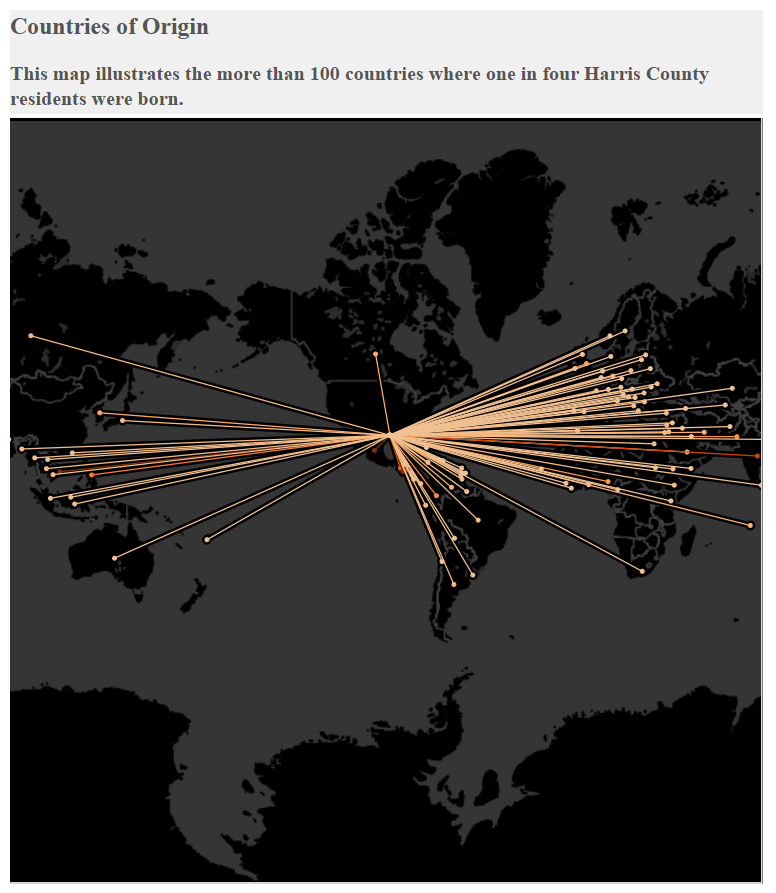
More than 100 countries are represented in Houston. Routinely ranked top in the country for job growth, with a school system where 80 percent of students are disadvantaged. For details, go here.

Lee High School for instance has 1700 students, a Vietnamese principal and student are from 40 different countries.


Illegal immigrant “Dreamers” said they staged a sit-in to block the entrance to the Democratic National Committee’s offices in Washington on Monday in order to show they blame Democrats as well as Republicans for missing President Trump’s March 5 deadline for action.

Immigrant-rights activists who are U.S. citizens and who are supporting the Dreamers will also cancel their membership in the Democratic Party in order to make their point, the organizations said.

Monday marked six months since Mr. Trump announced a phaseout of the Obama-era DACA deportation amnesty. The president had said Congress should use the phaseout period to approve a new plan, with full congressional authorization, to grant DACA recipients legal status.

Mr. Trump offered a middle-ground approach, but the security enhancements went too far for Democrats, while his proposed amnesty for illegal immigrants went too far for many Republicans, and the bill stalled.

While Democrats have blamed the GOP, activists made clear Monday they will pin some of the blame on Democrats.

“The Democrats made the calculation to kick the can down the road and allow hundreds of thousands of us undocumented youth to live in uncertainty. We are anxious and we are scared of being torn away from their homes and our community”, said Maria Duarte, one of 683,000 people covered by DACA.

DNC Chairman Tom Perez, though, said Mr. Trump is the problem, calling his phaseout “cruel and reckless.”

“Donald Trump’s decision to end DACA created an unnecessary crisis that has left hundreds of thousands of Dreamers uncertain about their future. And now his arbitrary deadline has passed without any action from the president or Republicans in Congress,” Mr. Perez said in a statement.

The protesters Monday were part of the Seed Project, which staged a march from New York to Washington late last month, in anticipation of the March 5 deadline.

The protesters said they expect Congress to pass a “clean” bill granting perhaps 2 million illegal immigrants citizenship rights — without agreeing to any other provisions such as Mr. Trump’s planned border wall or changes to legal immigration policy.

Work permits expiring March 31 are automatically extended through Sept. 27

WASHINGTON—Current beneficiaries of Temporary Protected Status (TPS) under Syria’s designation who want to maintain their status through Sept. 30, 2019, must re-register between March 5, and May 4, 2018. Re-registration procedures, including how to renew employment authorization documentation, have been published in the Federal Register and on the USCIS website.

All applicants must submit Form I-821, Application for Temporary Protected Status. Applicants may also request an Employment Authorization Document (EAD) by submitting a completed Form I-765, Application for Employment Authorization, when they file Form I-821, or separately at a later date. Both forms are free on USCIS’ website at uscis.gov/tps.

USCIS will issue new EADs with a Sept. 30, 2019, expiration date to eligible Syrian TPS beneficiaries who timely re-register and apply for EADs. However, given the timeframes involved with processing TPS re-registration applications, USCIS is automatically extending the validity of EADs with an expiration date of March 31 for 180 days, through Sept. 27.

To be eligible for TPS under Syria’s current designation, individuals must have continuously resided in the United States since Aug. 1, 2016, and have been continuously physically present in the United States since Oct. 1, 2016, along with meeting the other eligibility requirements.

On Jan. 31, Secretary of Homeland Security Kirstjen M. Nielsen announced her determination that the conditions supporting Syria’s TPS designation continue. The secretary made her decision after reviewing country conditions and consulting with appropriate U.S. government agencies. Before the 18-month extension ends, the secretary will review conditions in Syria to determine whether its TPS designation should be extended again or terminated.

UN Declares Sadness and Desperation in Venezuela is About Food

Except for the U.S. ambassador to the United Nations, Nikki Haley that is.

Amid growing food insecurity and rising malnutrition among children on the back of a protracted economic crisis in Venezuela, the United Nations Children’s Fund (UNICEF) on Friday called on all actors for rapid and coordinated assistance efforts to reach those most in need.

“While precise figures are unavailable because of very limited official health or nutrition data, there are clear signs that the crisis is limiting children’s access to quality health services, medicines and food,” said the UN agency in a news release, Friday, underlining the severity of the situation.

According to UNICEF, national reports in 2009 (the most recent official figures) showed that the prevalence of wasting (low weight to height ratio) in children under five was, at the time, 3.2 per cent.

However, more recent non-official studies indicate “significantly higher rates” of as much as 15.5 per cent, and an additional 20 per cent of children at risk of malnutrition.

Similarly, the State of Food Security and Nutrition in the World 2017 (a comprehensive report on the subject prepared by a number of UN agencies) suggested that undernourishment – a measure of hunger indicating the proportion of population with inadequate energy consumption – in Venezuela rose from 10.5 per cent in 2004-2006 to 13 per cent in 2014-2016.

In response, the Venezuelan Government has implemented measures to mitigate the impact of the crisis on the country’s children, including providing regular food packages at affordable prices to the most vulnerable families, cash transfers, and strengthening of nutritional and recuperation services.

“But more needs to be done to reverse the worrisome decline in children’s nutritional wellbeing,” said UNICEF, calling for the rapid implementation of a short-term response to counter malnutrition, based on disaggregated data and coordinated between the Government and partners.

On its part, the UN agency is working with the Ministry of Health, National Institute of Nutrition and the civil society to strengthen and expand nutritional surveillance at the community level and provide nutritional recuperation services through partners organizations.

The efforts are being implemented through activities such as nutrition screening days aiming to reach over 113,000 children, provision of supplementary and therapeutic foods when required, training programmes and communication campaigns, added UNICEF.

Venezuela has been mired in a socio-economic and political crisis since 2012 and has witnessed rising consumer prices even as the overall economy has contracted.

***

Some 3 million Venezuelans—a tenth of the population—have left Venezuela since late leader Hugo Chavez started his socialist revolution in 1999. More than 500,000 have fled to Colombia—many illegally—hoping to escape grinding poverty, rising violence and shortages of food and medicine in the once-prosperous nation.

Photographer Jaime Saldarriaga joined Reuters journalists at the Paraguachón border crossing to document the exodus from Venezuela, which is now on a scale echoing the departure of Myanmar’s Rohingya people to Bangladesh.

Venezuela Colombia exodus Venezuelans line the street at the border between Venezuela and Colombia, in the city of Cúcuta. Jaime Saldarriaga/Reuters

Hundreds of migrants lugging heavy suitcases and overstuffed backpacks walk along the road to the Colombian border town of Maicao, beneath the blazing sun. The Venezuelans arrive hungry, thirsty and tired, often unsure where they will spend the night—but they are relieved to have escaped the calamitous situation in their homeland.

The broken line snakes back eight miles (13 km) to the border crossing, where more than a hundred Venezuelans wait in the heat outside the migration office.

Venezuela Colombia exodus Venezuelans walk along a highway in Colombia after crossing the border at Paraguachón. Jaime Saldarriaga/Reuters

Money-changers sit at tables stacked with wads of bolívares—Venezuela’s currency—made nearly worthless by hyperinflation under President Nicolas Maduro’s socialist government.

Venezuela Colombia exodus A money changer uses a calculator at the Paraguachón border crossing between Colombia and Venezuela. Jaime Saldarriaga/Reuters

“It’s migrate and give it a try or die of hunger there. Those are the only two options,” Yeraldine Murillo, 27, who left her six-year-old son behind in the Venezuelan city of Maracaibo, told Reuters. “There, people eat from the trash. Here, people are happy just to eat,” she said, adding she hopes to find work in Colombia’s capital, Bogotá, and send for her son.

Migrants told Reuters they were paying up to 400,000 bolívares for a kilo of rice in Venezuela. The official monthly minimum wage is 248,510 bolívares—around $8 at the official exchange rate, or $1.09 on the black market.

Food shortages, which many migrants jokingly refer to as the “Maduro diet,” have left people noticeably thinner than in photos taken years earlier for their identification cards.

Mechanic Luis Arellano and his children were among the lucky ones who found beds at a shelter in Maicao run by the Catholic diocese with help from the U.N. refugee agency. The 58-year-old said his children’s tears of hunger drove him to flee Venezuela. “It was 8 p.m. and they were asking for lunch and dinner and I had nothing to give them,” he said, spooning rice into his 7-year-old daughter’s mouth. He raised his children’s spindly arms and said: “[These aren’t] the size they should be.”

Read More: Venezuela Must Stop Presidential Elections

The shelter, where bunk beds line the walls of the bedrooms, provides food and shelter for three days and, for those joining family already in Colombia, a bus ticket onwards. It will soon have a capacity for 140 people a night—a fraction of the daily arrivals.

At another shelter in the border city of Cucuta, some 250 miles (400 km) to the south, people regularly spend the night on cardboard outside, hoping places will free up. The largest city along the frontier, Cucuta, has borne the brunt of the arriving migrants.


About 30,000 people cross the pedestrian bridge that connects the city with Venezuela on daily entry passes to shop for food.

The mass migration is stirring alarm in Colombia. A migration official told Reuters as many as 2,000 Venezuelans enter Colombia legally through the border crossing at Paraguachón each day, up from around 1,200 late last year. But officials estimate as many as 4,000 people cross illegally every day.

Colombia is letting the migrants access public health care and send their children to state schools. Santos is asking for international help to foot the bill, which the government has said runs to tens of millions of dollars.

Under pressure from overcrowded frontier towns such as Maicao, Colombian President Juan Manuel Santos announced a tightening of border controls this month, deploying 3,000 additional security personnel. But the measures are unlikely to stem the flow of illegal migrants pouring across the 1,379-mile (2,219 km) frontier.

While many feel a duty to welcome the migrants, in part because Venezuela accepted Colombian refugees during that country’s long civil war, others fear losing jobs to Venezuelans being paid under the table. After locals held a small anti-Venezuelan protest last month, police evicted 200 migrants who were living on a sports field, deporting many of them.

Migrants are verbally abused by some Colombians who refuse them work when they hear their accents, said Flavio Gouguella, 28, from Carabobo. “Are you a Veneco? Then no work,” he said, using a derogatory term for Venezuelans.

Locals also worry about an increase in crime and support police efforts to clear parks and sidewalks. They already have to cope with smuggled subsidized Venezuelan goods damaging local commerce, and have grown tired of job-seekers and lending their bathrooms to migrants. Spooked by police raids, migrants in Maicao have abandoned the parks and bus stations where they had makeshift camps, opting to sleep outside shuttered shops. Female migrants who spoke to Reuters said they were often solicited for sex.

Despairing of finding work, some entrepreneurial migrants turn the nearly worthless bolivar currency into crafts, weaving handbags from the bills and selling them in Maicao’s park. “This was made from 80,000 bolivars,” said 23-year-old Anthony Morillo, holding up a square purse featuring bills with the face of South America’s 19th-century liberation hero Simon Bolivar. “It’s not worth half a bag of rice.”

Despite four months of violent anti-government protests last year, Chavez’s successor Maduro is expected to win a fresh six-year term at elections on April 22. The opposition, whose most popular leaders have been banned from running, are boycotting the vote. Go here for more photos.