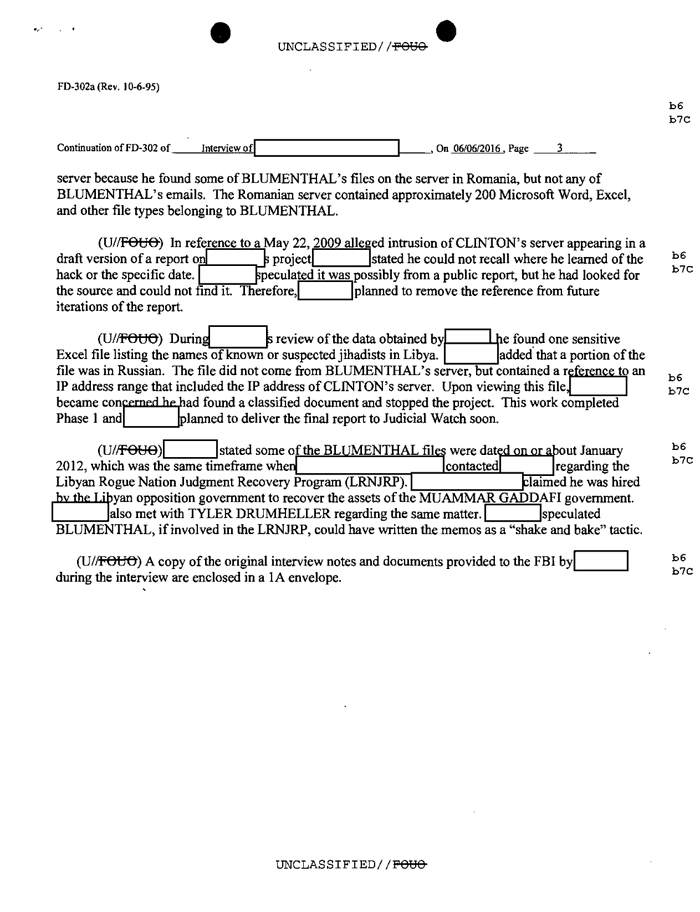
Congress held hearings, defunded several of these programs, but Eric Holder and Loretta Lynch found innovative methods to continue the funding by financial terrorism and extortion. This is all without the oversight of Congress and mostly in legal secrecy.


In part from the report by the Government Accountability Institute:
House Judiciary Committee Chairman Rep. Lamar Smith took a very direct approach
in his January 25, 2012 correspondence addressed to Eric Holder. He stated:
I am concerned that the terms of the Justice Department’s recent settlement
with Countrywide Financial Corporation and certain affiliates (collectively,
“Countrywide”) will allow the Department to give large sums of money to
individuals and organizations with questionable backgrounds or close
political ties to the White House without any guidelines or oversight. If that is
to be the case, this sort of backdoor funding of the president’s political allies
would be an abuse of the Department’s law enforcement authority.85
He was specifically addressing a December 28, 2011 DOJ settlement with Countrywide,
which required that Countrywide deposit $335 million into an interest-bearing escrow
account to remedy alleged violations of the Equal Credit Opportunity Act and Fair Housing
Act.86
****
The Rise and Fall of ACORN
Saul Alinsky’s influence is undeniable. Since the publication of Reveille for Radicals
in 1946 and Rules for Radicals in 1971, grassroots organizations have been launched for the
purpose of community organizing and systemic social/political change.91 As the movement
grew, organizers created several national support organizations including the Industrial
Areas Foundation (IAF) which was founded by Alinsky. Other organizations that grew out
of the Alinsky philosophies included NACA, and ACORN. One of the first was The National
Welfare Rights Organization (NWRO), an activist organization founded in 1966, focused on
welfare rights.92 Both John Calkins, founder of The Direct Action and Research Training
Center (DART) and Wade Rathke founder of ACORN worked with the NWRO.93 Other
groups that appeared on the community organizing scene who modeled Alinsky’s style of
activism were groups like DART, National People’s Action (NPA) and La Raza.
One of the chief beneficiaries of this wealth redistribution by the federal
government has been ACORN. In its July 2006 report, “Rotten ACORN, America’s Bad Seed,”
the Employment Policies Institute described ACORN as a “multi-million-dollar
multinational conglomerate.”94 The report described ACORN’s hunger and pursuit of
political power:
ACORN’s no-holds-barred take on politics originates from its philosophy,
which is centered on power. An internal ACORN manual instructed
organizers to sign up as many residents as possible because “this is a mass
organization directed at political power where might makes right.”95
This sentiment aligns with the Marxist underpinnings of the Students for a
Democratic Society, a group that housed Rathke. ACORN enjoyed rapid growth facilitated
through government grants and contracts before, during, and after the 2008 election.
Handwritten notes obtained from an FBI investigative file by Judicial Watch through a FOIA
request indicate ACORN’s headquarters was working for the Democratic Party.96 During
and after the 2008 election there were numerous allegations of massive fraud on the part
of ACORN.97 In 2009, several major scandals involving ACORN and its affiliated groups
broke into the national news. These included rampant embezzlement, fraud, and evidence
that ACORN and their affiliated groups were advising individuals how to break the law.98
A July 23, 2009 Staff Report for the U.S. House of Representatives Committee on
Oversight and Government Reform in its title asked, “Is ACORN Intentionally Structured as
a Criminal Enterprise?” Then offers the following findings in its executive summary:
The Association of Community Organizations for Reform Now (ACORN) has
repeatedly and deliberately engaged in systemic fraud. Both structurally and
operationally, ACORN hides behind a paper wall of nonprofit corporate protections
to conceal a criminal conspiracy on the part of its directors, to launder federal
money in order to pursue a partisan political agenda and to manipulate the
American electorate.
Emerging accounts of widespread deceit and corruption raise the need for a
criminal investigation of ACORN. By intentionally blurring the legal distinctions
between 361 tax-exempt and non-exempt entities, ACORN diverts taxpayer and taxexempt
monies into partisan political activities. Since 1994, more than $53 million
in federal funds have been pumped into ACORN, and under the Obama
administration, ACORN stands to receive a whopping $8.5 billion in available
stimulus funds.
Operationally, ACORN is a shell game played in 120 cities, 43 states and the District
of Columbia through a complex structure designed to conceal illegal activities, to use
taxpayer and tax-exempt dollars for partisan political purposes, and to distract
investigators. Structurally, ACORN is a chess game in which senior management is
shielded from accountability by multiple layers of volunteers and compensated
employees who serve as pawns to take the fall for every bad act.99
One of the events described in the report was the cover-up of the embezzlement of
$948,607.50 by Dale Rathke, the brother of ACORN founder Wade Rathke.100 These and
other events led to a ban on all federal funding for ACORN affiliated groups in 2009.101
Fox News reported that the former director of New York ACORN, Jon Kest, and his
top aides renamed New York ACORN to New York Communities for Change (NYCC), used
the same office and stationary as New York ACORN and employed many of the same staff as
previously employed by New York ACORN.106 In 2013, Fox News and several other news
outlets reported that contracts for services known as Navigator grants under Obamacare
were awarded to former associates of ACORN and its affiliated organizations. Wade Rathke
had announced in September 2013 that The United Labor Unions Council Local 100, a New
Orleans-based nonprofit, would take part in a multi-state “navigator” drive to help people
enroll in Obamacare.107
****
In the most recent consent orders from Bank of America, Citigroup and
JPMorgan settlements offered credit for giving to nonprofits. These not only require banks
to make donations to nonprofits but incentivize them to give more than the required
amount. The evolution of these consent orders illustrates the growing effort by the current
administration to funnel money to these nonprofit groups.
The DOJ limited distributions to “HUD approved housing counseling agencies,” such
as the groups set to receive mandatory minimum payments under the Citigroup and Bank
of America settlements, and incentivized payments under many of these settlements. These
organizations had been preapproved by prior administrations. These included La Raza,
Neighborhood Assistance Corporation of America (NACA) and part of the old ACORN
network who in the wake of the scandal and congressional prohibition against further
funding restyled itself as the Mutual Housing Association of New York (MHANY). The HUD
website lists MHANY’s contact as Ismene Speliotis. Speliotis previously served as the New
York director of ACORN Housing. Furthermore, an examination of tax returns for the
nonprofit reveals that MHANY Management, Inc. maintained the EIN (72-1303737)
previously used by New York ACORN Housing Company, Inc. Between the 2007 and 2008
tax filings, only the group’s name had changed.147 This corporate entity was merely New
York ACORN Housing Company, Inc. rebranded with a new name and clothed in a new
“moral garment.” Despite the prohibition on ACORN funding from Congress, New York
ACORN Housing Company, Inc. had sidestepped congressional intent by simply changing its
name.
****
In September 2012, FHC hosted its annual conference in Orlando. The keynote
speaker for day two: Judith Browne Dianis,198 longtime liberal activist, attorney, and
scholar.199 In its 2012 post-election newsletter, FHC published Browne Dianis’s editorial on
that election.200 She did not mention the word “housing” once. Instead, she denounced what
she termed “the greatest rollback on voting rights in more than a century.” This was her
terminology for the “partisan” voter ID laws passed that year, and the subject of so much
litigation. Furthermore, as its website clearly shows, Browne Dianis’s Advancement Project
was in the thick of this litigation.201 In her FHC editorial, she condemned those laws at
length, and called for Election Day to be made a national holiday, and a “next generation
voting-rights movement.”202 She denounced other practices that she claimed amount to
voter suppression. She quoted the recently re-elected Barack Obama on these same issues.
So who was she and how did she find her way to the editorial page of the FHC
newsletter and the keynote speaker slot at the FHC convention? Advancement Project’s tax
return for 2012 lists a grant of $25,000203 to a 501(c)(4) advocacy group known as Florida
New Majority.204 The grant was designated as “Voter Protection Program” – amounting to
nearly one-tenth of the approximately $280,000.00 in grants given out by Browne-Dianis’s
nonprofit, the Advancement Project, for such purposes that year.205 Interestingly, the
Florida New Majority’s 990 for 2012 says nothing about protecting voters, but includes
nearly half-a-million dollars to “reach and mobilize voters during the 2012 elections with
the objective of promoting progressive federal and state legislators…” (emphasis added)206
****
Asian Americans for Equality: Margaret Chin and John Choe
Margaret Chin cut her political teeth as a student activist in the Communist Workers
Party (CWP) while attending the City College in the 1970s. It was Chin who stood before
the cameras and condemned the killing of five of her party members in Greensboro, North
Carolina where the CWP had sponsored a “Death to the Klan” rally which led to an armed
confrontation with the Klan.221 The “Communist” moniker would not serve them well in
their efforts to influence politics in New York City, but a solution was forthcoming. In 1974,
protests erupted in Manhattan’s Chinatown and Asian Americans for Equal Employment
was formed to fight discriminatory hiring practices on a federally-financed construction
project. A “stunning civil rights victory” ultimately led to the founding of Asian Americans
for Equality (AAFE) and a continued focus on “civil liberties” issues.222 Chin, a founding
member of AAFE223 and other members of the CWP, found great success in identifying an
issue important to the community and wrapping themselves in it. We know this because of
the overlap of individuals involved the CWP and AAFE. Many of the founders of AAFE were
also active with the CWP. AAFE shared an address and phone number with the CWP for
several years. It seemed that CWP veterans regularly ended up as AAFE officers. Chin
served as President of AAFE from 1982 to 1986 and was associated with AAFE until 2008
when she began efforts to run for the city council. Her work at AAFE served as a launching
pad into New York politics and in 1986 and with the help of the progressive liberal group,
the Village Independent Democrats, she was elected to the Democratic State Committee
were she served two terms. The AAFE afforded Chin the kind of resources and respectable
platform from which she could chase her political aspirations.224
In 2009, AAFE announced it had joined the NeighborWorks America charter.225 With
this came the “seal of approval” from HUD and federal funding. NeighborWorks funding also
increased—from just over $250,000 in 2008, the year before the announcement, to over
$700,000 in 2013 alone. In total, since 2008, AAFE has received over $4 million in grants from
NeighborWorks.226 Some have not only lamented, but have charged that the AAFE has left
its activist routes to become no more than a “housing developer.” As the New York Times
described it:
Down from the ramparts, fists unclenched, their protest signs long ago set aside,
Asian Americans for Equality — leaders among a cadre of community groups that
brought thousands of demonstrators into the streets of Chinatown and to the steps
of City Hall in the mid-1970’s — is now a major landlord and residential developer.
That same article published the following criticisms:
“I think AAFE has aligned itself with business interests and political interests at the
expense of Chinatown’s residential and low-wage workers,” said Margaret Fung,
executive director of the Asian American Legal Defense and Education Fund. ”They
want to acquire properties or city-owned buildings so that they can be the
developers, instead of some other group. They favor themselves.”
****
A Rising New Star
In January 1993, an article in Chicago Magazine described how “a huge black turnout
in November 1992 altered Chicago’s electoral landscape-and raised new political
star.”243 Leading up to the election George Bush had been making gains on Bill Clinton in
Illinois. Carol Moseley Braun who had previously been seen as “unstoppable” was on the
ropes amidst allegations regarding her mother’s Medicare liability. Even so, she was able to
win her seat and Bill Clinton won the state. The article attributed their success to “…the
most effective minority voter registration drive in memory…” which was the result of the
efforts of Project Vote. At the helm of Project Vote was a young lawyer named Barack
Obama.
Sandy Newman, a lawyer and civil rights activist who founded Project Vote
explained the work of the nonprofit organization in the election as follows:
Project Vote! is nonpartisan, strictly nonpartisan. But we do focus our efforts on
minority voters, and on states where we can explain to them why their vote will
matter. Braun made that easier in Illinois. (emphasis added)
Project Vote’s work in voter registration was hailed as the reason Braun was elected
drawing a direct correlation with voter registration activities and election outcomes.
Indeed, in another portion of the article the writer contrasts the old way of doing things
and the new paradigm created by Mr. Obama’s efforts through the nonprofit:
To understand the full implications of Obama’s effort, you first need to understand
how voter registration often has worked in Chicago. The Regular Democratic Party
spearheaded most drives, doing so using one primary motivator: money. The party
would offer bounties to registrars for every new voter they signed up (typically a
dollar per registration). The campaigns did produce new voters. “But bounty
systems don’t really promote participation,” says David Orr, the Cook County
clerk….
The article suggests that the old political engine previously supplied by the “Regular
Democratic Party” had now been replaced by a 501(c)(3) nonprofit and its leader, Barack
Obama.244
****
Billionaire George Soros founded data utility company, Catalist, to mobilize liberal
voters through nonprofits. Catalist provides the advanced data analysis necessary for
micro-targeting and is building a base of voters and contributors for the exclusive use of
progressive left-leaning groups. Its compatriot is an organization called Nonprofit VOTE
whose goals include providing “high quality resources for nonprofits and social service
agencies to promote voter participation and engage with candidates on a nonpartisan
basis.”247 Their website mentions that Nonprofit VOTE is a nonpartisan organization, and
they acknowledge the demographics of the voters that nonprofits are most likely to reach
are “young, low-income, and diverse populations.”248 Studies have shown that this
demographic is most likely to vote Democrat. As the Wyss memorandum points out these
populations “tend to be reliably progressive on economic […] issues.”249
In 2012 and 2014 Nonprofit VOTE ran pilot projects to increase voter turnout
through nonprofits. The project report acknowledged the help of Catalist, LLC, an
organization that “works with and for data-driven progressive organizations to help them
effect change: issue advocates, labor organizers, pollsters, analysts, consultants, campaigns,
and more.”
The two stated goals of the project were to:
• “For nonprofits already doing voter engagement and those considering it, the goal
of Track the Vote program was to provide tangible data to assess the impact of
nonprofits on increasing voter participation—using that data to ground their work
in outcomes and make the case for voter engagement as an ongoing priority.”
Read the full report here.

Brent Budowsky served as Legislative Assistant to U.S. Senator Lloyd Bentsen, responsible for commerce and intelligence matters, including one of the core drafters of the CIA Identities Law. Served as Legislative Director to Congressman Bill Alexander, then Chief Deputy Whip, House of Representatives. Currently a member of the International Advisory Council of the Intelligence Summit. Left government in 1990 for marketing and public affairs business including major corporate entertainment and talent management. He can be reached at brentbbi@webtv.net.
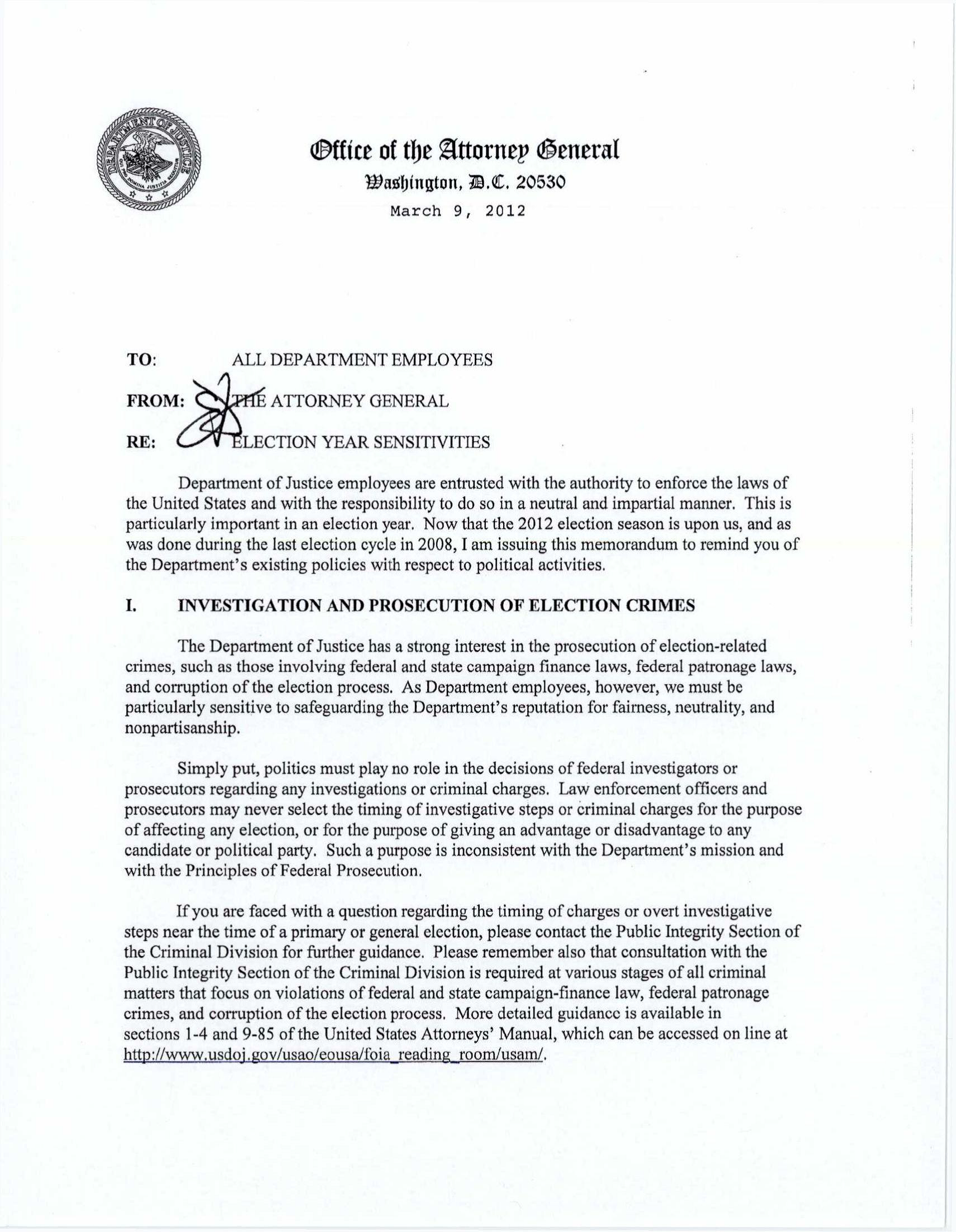
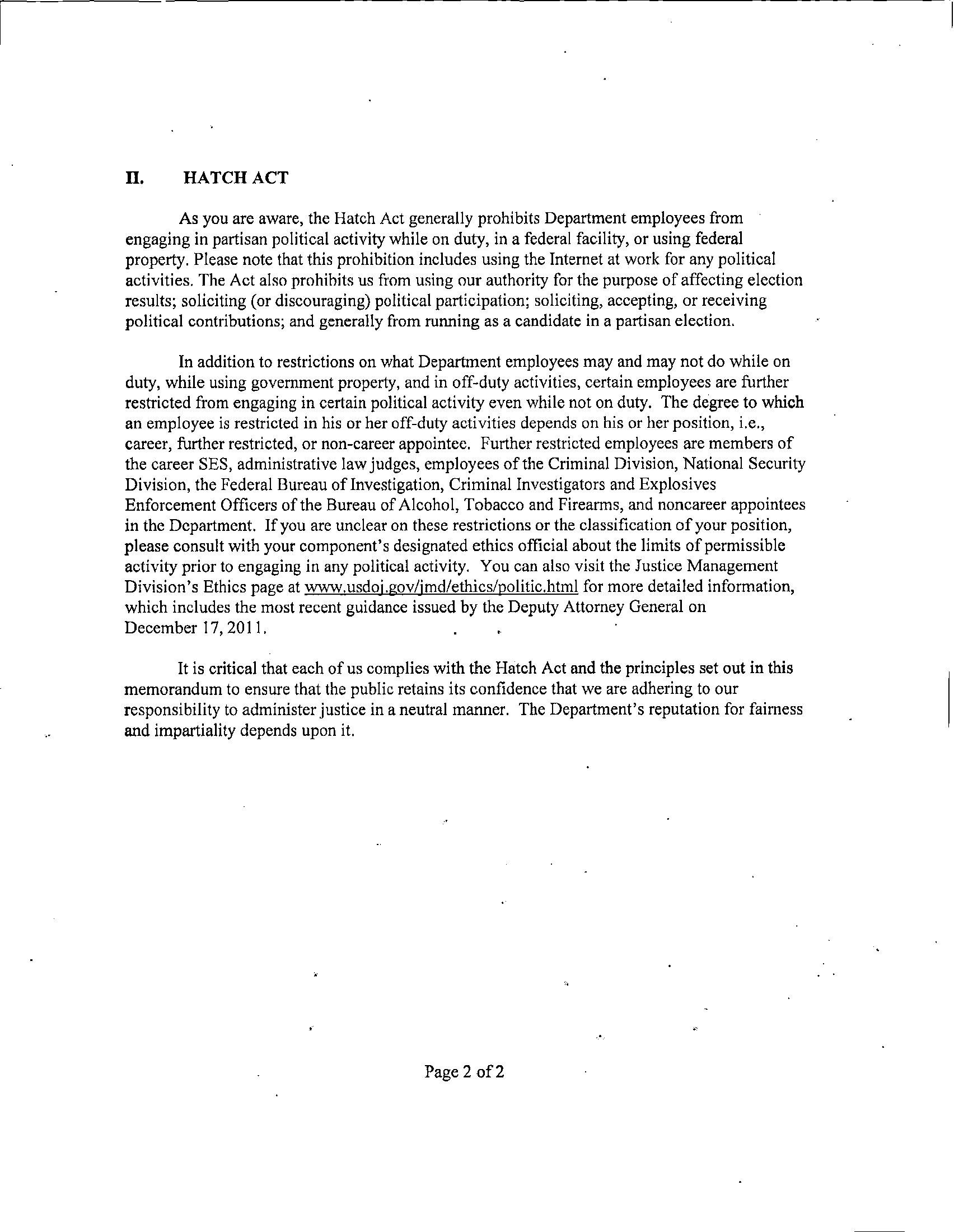 It should be noted that a company exists named the