An affordable price is probably the major benefit persuading people to buy drugs at www.americanbestpills.com. The cost of medications in Canadian drugstores is considerably lower than anywhere else simply because the medications here are oriented on international customers. In many cases, you will be able to cut your costs to a great extent and probably even save up a big fortune on your prescription drugs. What's more, pharmacies of Canada offer free-of-charge shipping, which is a convenient addition to all other benefits on offer. Cheap price is especially appealing to those users who are tight on a budget
Service Quality and Reputation
Although some believe that buying online is buying a pig in the poke, it is not. Canadian online pharmacies are excellent sources of information and are open for discussions. There one can read tons of users' feedback, where they share their experience of using a particular pharmacy, say what they like or do not like about the drugs and/or service. Reputable online pharmacy canadianrxon.com take this feedback into consideration and rely on it as a kind of expert advice, which helps them constantly improve they service and ensure that their clients buy safe and effective drugs. Last, but not least is their striving to attract professional doctors. As a result, users can directly contact a qualified doctor and ask whatever questions they have about a particular drug. Most likely, a doctor will ask several questions about the condition, for which the drug is going to be used. Based on this information, he or she will advise to use or not to use this medication.
Europe is trying to install and measure effectiveness of rehab programs for convicted and known terrorists. Such is the case in the United States with the DHS/WH program on Countering Violent Extremism, a euphemism to terrorist and such is the case for the failed programs in Europe. So, have these tests been modeled after those of Saudi Arabia? Let’s find out from a terrorist himself. Not sure, but memory tells us that the Guantanamo detainees actually did all of these activities during detention including having a soccer field.
NYPost: Counterterrorism experts have long suspected Saudi Arabia’s “rehabilitation” center for terrorists does a poor job of de-radicalizing jihadists. But a Saudi detainee at Guantanamo Bay now reveals it’s actually a recruiting and training factory for jihad.
According to recently declassified documents, senior al Qaeda operative Ghassan Abdullah al-Sharbi told a Gitmo parole board that the Saudi government has been encouraging previously released prisoners to rejoin the jihad at its terrorist reform school, officially known as the Prince Mohammed bin Naif Counseling and Care Center.
The Obama administration has praised the effectiveness of the Saudi rehab program — which uses “art therapy,” swimming, ping-pong, PlayStation and soccer to de-radicalize terrorists — and conditioned the release of dozens of Gitmo prisoners, including former Osama bin Laden bodyguards, on their enrollment in the controversial program.
To date, 134 Saudi detainees have been transferred to the Saudi reform camps in Riyadh and Jeddah. Last year, nine Yemeni detainees were sent there, as well, and more are expected to follow over the next two months, as President Obama strives to meet his campaign goal of closing Gitmo.
Photo: Kate Brooks/Redux
Al-Sharbi dropped a bombshell on the Gitmo parole board at his hearing earlier this year when he informed members that the Saudi kingdom was playing them for suckers. “You guys want to send me back to Saudi Arabia because you believe there is a de-radicalization program on the surface.
“True. You are 100 percent right, there is a strong — externally, a strong — de-radicalization program. But make no mistake, underneath there is a hidden radicalization program,” al-Sharbi added. “There is a very hidden strong — way stronger in magnitude — broader in financing, in all that.”
Al-Sharbi is one of the longest-serving, and most unrepentant, prisoners at Gitmo. A Saudi national with an electrical engineering degree from King Fahd University, he attended a US flight school associated with two of the 9/11 hijackers. He traveled to Afghanistan in the summer of 2001 and trained at an al Qaeda camp, building IEDs to use against allied forces.
Al-Sharbi was captured March 28, 2002, at an al Qaeda safehouse in Faisalabad, Pakistan, with senior al Qaeda leader Abu Zubaydah. According to his US intel dossier, he told interrogators that “the US got what it deserved from the terrorist attacks on 9/11.”
Given a chance at parole after 14 years, however, al-Sharbi was surprisingly frank with the board.
He explained that Riyadh is actively recruiting and training fighters to battle Iranian elements in neighboring Yemen and Syria. Saudi views Shiite-controlled Iran as a regional threat to its security.
“They’re launching more wars and the [United] States is backing off from the region,” he said. “They’re poking their nose here and here and there and they’re recruiting more jihadists, and they’ll tell you, ‘Okay, go fight in Yemen. Go fight in Syria.’ ”
Al-Sharbi said the Saudis also are “encouraging” former detainees “to fight their jihad in the States.”
Photo: Getty Images
“It’s not like a past history,” he said. “It’s increasing.”
A growing body of evidence backs up his claims. Last month, for example, a WikiLeaked email from Hillary Clinton revealed, citing US intelligence sources, that Saudi Arabia has provided “clandestine financial and logistic support to” ISIS and other Sunni terrorist groups in the region.
Al-Sharbi said the kingdom is playing a double game.
“They will proudly tell you they will fight terrorism,” he said. “That means they will support it.”
Al-Sharbi told the Gitmo board he doesn’t want to enroll in the Saudi rehab program, because he would be used to “fight under the Saudi royal cloak.”
“This is in the cause of a king. This is not a true jihad,” he said. “And I’m not going to Saudi unless I am sure they’re not gonna be using me.”
The Saudi rehab ruse has carried a lot of weight with the Gitmo parole board. Earlier this year, it released “Saudi al Qaeda recruiter and fighter” Muhammed Al Shumrani after his lawyers insisted that repatriating him to Saudi Arabia and enrolling him in its “well-established reintegration program” would cure his admittedly “problematic behavior.”
Last year, the defense team of longtime bin Laden bodyguard Abdul Rahman Shalabi insisted that the same Saudi rehab program would make sure he’s reformed. In approving his release, the board said that it was “confident about the efficacy of the Saudi program.”
In both cases, US intelligence warned the board that the hardened terrorists would more than likely “re-engage in terrorist activity.”
By Riyadh’s own numbers, some 20 percent of the terrorist enrollees at its rehab club — which features golf carts, palm trees and an Olympic-size pool — go back to the jihad, returning to the ranks of the Taliban or al Qaeda. US officials believe the recidivism rate is much higher, but Saudi Arabia does not disclose criteria for evaluation.
One high-profile failure was Said Ali al-Shihri. After his graduation from the Saudi program, he returned to Yemen, where he ran an al Qaeda branch and helped plan the deadly bombing of the US Embassy and mastermind the failed plot to blow up a 2009 Christmas flight over Detroit, before a drone-fired missile finally caught up to him.
The Saudi center is more holiday resort than halfway house for paroled inmates. Jihadists are rewarded with gourmet meals, video games, ping-pong, jacuzzis and newly furnished private apartments reserved for conjugal visits. They also are allowed unescorted visits to family members. In September, the center granted “beneficiaries” Eid al-Adha holiday vacation for 12 days.
Graduates are further rewarded with young brides and new cars.
Lending credence to al-Sharbi’s charges, the three-month program includes a few hours a day of lessons in Islam from Saudi clerics and “Shariah specialists.”
“Beneficiaries spend 15 hours a week in the Shariah program,” according to a local Jeddah press report, which is triple the amount of time devoted to psychological counseling.
Al-Sharbi’s parole was declined; he is still in Gitmo, along with 60 detainees — down from the 241 who were there when Obama started his term.
But with the administration rushing to reduce that number even further before the end of Obama’s term, how many more jihadists will be released into this highly suspect program?
Congress has an obligation to ask hard questions: Is this a pre-emptive campaign to prevent terror attacks or more likely an incubator for facilitating more attacks?
Read the full letter in the link above. It has 17 signatures noted on the last page. It is obvious there is an operation underway to interfere in the Trump administration from the outset and to continue to political division within Congress.
It should also be mentioned that Politico posted an item regarding Hillary political operative David Brock that is working to destroy Trump. With Jill Stein challenging the voting results in a few states, something else is afoot here. Could the money raised so far which is estimated above $6 million be the launch of early petty cash to recruit, cultivate and mentor a new bench of democrat political hit personnel?
Brock: The Nation has described Brock as a “conservative journalistic assassin turned progressive empire-builder”; National Review has called him a “right-wing assassin turned left-wing assassin” and Politico has profiled him as a “former right-wing journalist-turned-pro-Clinton crusader.” (Wikipedia)
The Clinton enforcer is launching Koch brothers-like donor network to rebuild liberal power.
Hillary Clinton’s attack dog David Brock is launching his own Koch-brothers-like donor network to finance attacks on President-elect Donald Trump and to rebuild the political left after Trump’s stunning victory over Clinton last week.
Brock on Thursday night emailed more than 200 of the biggest donors on the left — including finance titans George Soros, Tom Steyer and Donald Sussman — inviting them to a retreat in Palm Beach over inauguration weekend to assess what Democrats did wrong in 2016, figure out how to correct it and raise cash for those initiatives.
“This will be THE gathering for Democratic donors from across the country to hear from a broad and diverse group of leaders about the next steps for progressives under a Trump Administration,” Brock wrote to the donors in an email obtained by POLITICO.
The retreat, planned as the first in a series of regular gatherings, will feature appearances by an array of Democratic elected officials, operatives and liberal thinkers and group officials, Brock explained in an interview.
Though he said he had yet to extend invitations beyond those sent to donors Thursday night, he predicted there would be significant interest, noting that the keynote address at his last major donor conference, back in 2013, was delivered by former President Bill Clinton.
“What better way to spend inaugural weekend than talking about how to kick Donald Trump’s ass?” Brock said.
Brock — a self-described right-wing hitman-turned-Clinton enforcer — has used his relationships with some of the left’s deepest pockets to build an armada of aggressive political outfits that have become pillars of the institutional left and that raised a combined $65 million during the 2016 cycle.
Brock’s groups include the conservative media monitoring nonprofit Media Matters, the opposition research super PAC American Bridge and the legal watchdog Citizens for Responsibility and Ethics in Washington.
Other groups in his network include the liberal media-funding vehicle American Independent Institute, the media-training nonprofit Franklin Forum and the for-profit social media operation ShareBlue, which The New York Times described as “Hillary Clinton’s Outrage Machine.”
A seventh group, a super PAC called Correct the Record that was created to coordinate directly with Clinton’s campaign, is winding down, though Brock said that a number of its functions and personnel likely will be absorbed by his other groups.
While the entire political left is grappling with how to move on after Clinton’s devastating loss, it could be a particular challenge for Brock and his groups, since he was so closely associated with Clinton.
Brock acknowledged in the interview: “There is no question that we poured our heart and soul into this election for Hillary, but these institutions were built before her campaign and were intended to outlast it.”
And in his email to donors, he pointed out that he created Media Matters more than a decade ago to help the left push back during George W. Bush’s presidency.
“In 2005, we were part of a successful progressive effort to regroup, retool and recover,” he wrote. “While today’s situation is more dire, media matters more than ever.”
One of the areas where the left has been at a disadvantage is using the legal and regulatory system to call out Republican politicians and groups, Brock said. He cited the success of the conservative group Judicial Watch in using the Freedom of Information Act and legal system to pry free emails from Clinton’s State Department.
“Judicial Watch has a $30 million budget, and they had a significant impact on the election,” he said, comparing it to CREW’s $2-million budget. “And if we’re heading into an administration that looks like it could well be as corrupt as the gilded age, we need to significantly reinforce the capacities for an aggressive ethics watchdog.”
The Palm Beach retreat in some ways seems to be a challenge to the 12-year-old Democracy Alliance, a club of liberal financiers that was started by Soros and a handful of other major donors to fund the institutional left.
In fact, the club, which held its annual winter meeting this week in Washington, helped launch Media Matters, and many of Brock’s donors are included among its ranks.
Brock said he’s inviting the president of the DA, as the club is known, to his Palm Beach retreat.
But, while the Democracy Alliance at its winter meeting discussed ways to push back on the Trump administration, many of the group’s members have tried to train its focus on pressuring Democrats from the left on issues like fighting climate change, money in politics and drug laws.
Brock’s network, on the other hand, is more overtly and aggressively political, and has been largely agnostic on the philosophical divisions with which Democrats are grappling.
“We don’t think of this as representing a faction of the Democratic Party, but a cross-section of it, so we’re not going to precook things ideologically,” he said. “It is very politically minded, and there is an urgency to it.”
Snuggies, Shakespeare top annual government wasteful-spending list
WashingtonTimes: If Shakespeare is performed without the bard’s immortal words, is it really Shakespeare?
The National Education Association has committed $10,000 of taxpayers’ money to test that question — one of dozens of projects to make the wasteful spending list of Sen. James Lankford, an Oklahoma Republican who’s continuing the tradition of former Sen. Tom Coburn’s annual Wastebook.
The National Science Foundation again comes in for an outsized share of criticism for its research spending, including a $1.8 million grant to a university that spent some of the money on embroidered Snuggies, the robe-style blankets that are a staple of As-Seen-On-TV trinket advertising.
NSF officials also paid $315,000 to study whether Americans see the court system as fair, Mr. Lankford said in his second annual “Federal Fumbles” report.
“Our current spending habits are unsustainable and irresponsible,” Mr. Lankford said in releasing the report, which documented more than 100 areas where he said the federal government botched its spending decisions.
The silent Shakespeare grant Mr. Lankford highlighted is actually a repeat-performance. The senator’s first report in 2015 also cited the NEA for funding the Synetic Theater’s attempt to convert verbal witticisms into expressive gestures. This year’s production was “Twelfth Night.”
Mr. Lankford said the theater company may be doing good work, but it should stand on its own, not with taxpayer money.
He said Congress and the executive branch need to spend more time scouring spending. He said one step toward that would be to enact the Grant Reform and New Transparency (GRANT) Act, which would give the public more information about the grant process, which accounted for some $617 billion in federal spending in 2015.
****
Example:
X CONFERENCE: Spending
X TEAM: Immigration and Customs Enforcement
O FUMBLE: $6 million to repair a building that remains unsafe
O HOW TO RECOVER THE BALL: ICE should conduct a cost-benefit analysis and a feasibility
study before renovating an existing building, where the cost could exceed $1 million
Talk about a tale of woe! In San Pedro (essentially Los Angeles, CA), ICE used a former
Service Processing Center to house detainees until it had to close due to safety concerns. Then
ICE decided to move employees back into the building while it processed and held illegal
immigrants temporarily.
X CONFERENCE: Spending
X TEAM: National Institutes of Health
O FUMBLE: $2,658,929 weight-loss program for truck drivers
O RECOVERY: Congress should develop clearer expectations for areas of research for NIH
The American economy is powered in no small part by the thousands of trucks on the road
each day. It is certainly important for individuals behind the wheel of giant 18-wheelers to be healthy. But do taxpayers really need to spend more than $2.6 million on a trucker weight-loss intervention program?
In 2014: Fidel Castro has signed an international manifesto “supporting Palestine,” demanding that Israel respect UN resolutions and withdraw from Gaza, the West Bank and East Jerusalem.
By the time Castro arrived in New York City in September 1960, relations between the United States and Cuba were rapidly deteriorating. Since taking power in January 1959, Castro had infuriated the American government with his policies of nationalizing U.S. companies and investments in Cuba. Some American officials, such as Vice President Richard Nixon, believed that Castro was leaning perilously toward communism. (Castro did not publicly proclaim his adherence to communism until late-1961, when he declared that he was a “Marxist-Leninist”.) More here.
Forbes: Founded by their wealthy landowner father in 1915, Fidel and younger brother Raul Castro’s childhood home in Birán burnt down in 1954 but a replica was erected in its place in 1974.
Cuban President Fidel Castro examines photos of his relatives at his native house in Birán, Cuba. (Photo by Pablo Pildain/AFP/Getty Images)
A picture of Cuban leader Fidel Castro in his ancestral home which is now a museum. (Photo by Joe Raedle/Getty Images)
Fidel and Raul’s parents, Ángel Castro and Lina Ruz González, are laid to rest at the Birán plantation. Castro’s privileged background (although non-bourgeois) contradicted his message, so to give himself street cred, he touted his grandparent’s background as “exploited Galician peasants” from Spain.
The burial site of Cuban leaders Fidel and Raul Castro’s parents on the grounds of their childhood home in Birán, Cuba. (Photo by Joe Raedle/Getty Images)
Like JFK, Castro’s father sent him to boarding school where he received a quality education (despite mediocre grades). Baseball, reading, and politics were among his interests. At 14, he even penned a letter to President Franklin D. Roosevelt congratulating him on his re-election while brazenly asking for $10 American cash (sounds like a secret capitalist).
As a 14-year old, Fidel Castro congratulated FDR on his re-election in 1940. (National Archives document)
The Birán estate was more than a working sugar plantation. Prominent landowner Ángel Castro also established a primary school, hotel, pub, post office, a market store, and a ring for cockfighting (again, it sounds like a capitalist venture).
A building that served as a guest house on the Birán sugar plantation, founded by Fidel Castro’s father in 1915. (Photo by Joe Raedle/Getty Images)
Castro ruled Cuba for 49 paranoid years. He moved frequently due to an estimated 600 assassination attempts by the CIA and other foes. The failed plots are infamous—exploding cigars and poison milkshakes included. Castro eventually ceded power to his brother Raul and retired to the gated community “Punto Cero” (Point Zero), his top-secret 75-acre suburban Havana home which resembled a vast military compound.
Fidel Castro meets with Brazilian President Luiz Inacio Lula da Silva and his brother President Raul Castro at Punto Cero near Havana in 2010. (Photo by Ricardo Stuckert/AFP/Getty Images)
Fidel Castro, Cuba’s communist dictator, former president and divisive world figure, died on November 25 at 90 years old—53 years and three days after his nemesis U.S. President John F. Kennedy. Despite their adversarial status, both men were born into wealth via extremely ambitious fathers, both loved sports, both had a mistress weakness, and both fought for their country to oust dictators. That’s where the similarities end.
JFK died young and Castro lived a long, well-heeled life. Castro survived 10 U.S. presidents. Although he didn’t live in a palace and streets weren’t named for him, Castro still lived more extravagantly and hypocritically than he wanted the world to know. Cuba’s revolution leader wasn’t as modest as he led on. A decade ago, Forbes estimated Fidel Castro’s personal net worth at $900 million. That’s a lot of socialist rationing for one person. Luxurious living arrangements were especially appealing to Castro. But for security reasons (after hundreds of assassination attempts), Castro’s paranoid personal life and residences were top secret. Even Cuban citizens didn’t know where he resided.
Fidel Castro was born on his father Ángel Castro’s prosperous 25,000-acre, 400-employee sugar plantation (called Las Manacas farm) in small town Birán, Cuba—about 500 miles from Havana on the eastern end of the island. The property now serves as a Castro museum.
Punto Cero, a pre-revolution golf course property, was reportedly set up by Castro in the 1970s. According to Castro’s former bodyguard, the estate complex includes orange, lemon, mandarin, grapefruit and banana trees, as well as cows and six greenhouses to grow food.
Castro’s compound is reportedly on the former grounds of the Havana Biltmore Yacht and Country Club.
Punto Cero was far from the “fisherman’s cottage” Castro publicly claimed as his main asset. The luxurious complex in the Jaimanitas neighborhood (15 miles outside Havana proper) served as Castro’s summer residence near the capital city’s embassy district. According to Castro’s former bodyguard (as reported by InCuba Today), he also owned a residences in Cayo Piedra (a stones throw from the Bay of Pigs), La Caleta del Rosario, which featured a private marina; and La Deseada, a chalet in Pinar del Río—reportedly one of Castro’s favorite duck hunting spots.
Fidel Castro in Pinar del Río after the 1959 Cuban revolution. Castro frequently visited and took up residence in the area too.
Retired Fidel Castro met foreign leaders, dignitaries and Popes at Punto Cero, including Pope John Paul II in 1998, Pope Benedict in 2012, and Pope Francis in 2015. Despite his Jesuit background, Castro was an atheist. Yet he still reveled meeting Popes, even exchanging religious books with them.
Pope Francis meets Fidel Castro in Havana, Cuba in 2015. The Vatican described the meeting at Castro’s residence as informal and familial, with an exchange of books. (AP Photo/Alex Castro)
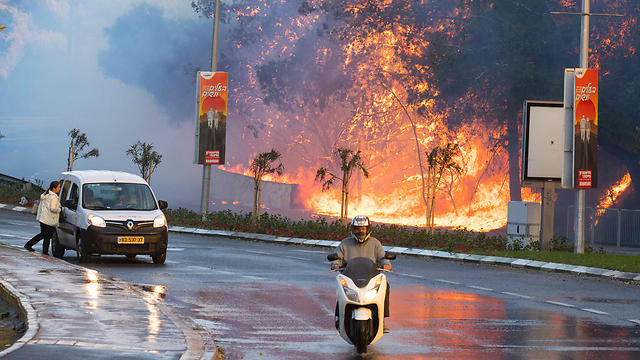
Faced for the past four days with blazes across the country fed by drought and high winds, Israel received airborne assistance from Russia, Turkey, Greece and Croatia.
The flames in many places appeared to be easing somewhat despite the persistent wind, but a new fire erupted close to Jerusalem on Friday afternoon that the emergency services said was apparently started deliberately.
“Things can change and develop as we speak,” police spokesman Micky Rosenfeld told AFP.
Support from France, Spain and others was due while a US Supertanker, considered the largest firefighting aircraft in the world, was expected to arrive Friday night. More here.
****
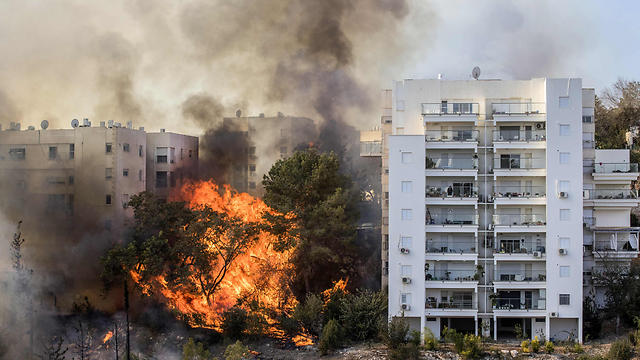
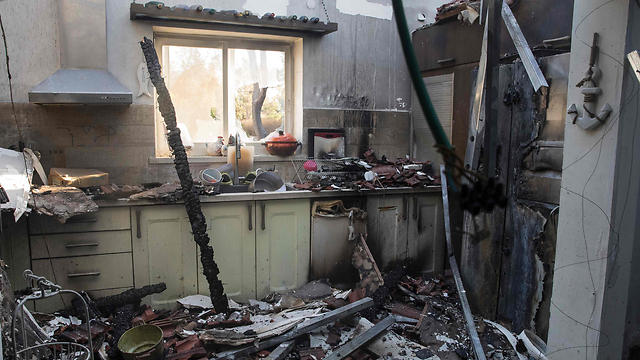
180 injured, 560 homes burnt after 5 days of raging fires
Some 2,500 firefighters marshalled, half a million tons of water and flame retardant unleashed in 480 missions to battle the flames which incinerated hundreds of homes, forced the evacuation of hundreds of thousands; after 5 days of blazes, authorities report that flames finally brought under control.
Overall, three people were moderately injured as a result of the conflagrations, one senior from Haifa, two from Ma’ale Adumim and another 129 who were left in light condition. According to estimates, another 50 people admitted themselves to hospital in light condition.
Over the weekend, 186 fresh fires lit up the country, marking a marginal decrease from an average of 200-250 daily fire incidents.
Photo: Gil Yohanan
As fire crews fought around the clock to quench the flames, last week saw the deployment of approximately 2,000 firefighters, along with 450 IDF Search and Rescue soldiers and 69 Cypriot soldiers.
The firefighting forces unleashed a total of half a million tons of water and flame retardant. Ten countries contributed to the effort while 14 Israeli firefighting planes took to the skies, with the number of combined missions reaching 480. Some of the buildings have infrastructural problems and have thus been declared as dangerous for residence. A total of 1,616 residents have been left homeless.

Photo: Kate Brooks/Redux
Photo: Getty Images