Iran, the Pivot Away

Nothing has changed in Iran, except Rouhani is now wealthier given the suspension by the United States of key sanctions. Iran is as strong today globally as it ever was. Europe is considering stronger sanctions and Iran is working diligently to get more sanctions lifted to buy at least 400 aircraft.

Just keep in mind that the Obama White House has been negotiating with Iran and using several mediators, but even more disturbing is what is below. We are earnestly working with a state sponsor of terror.


Iran terror


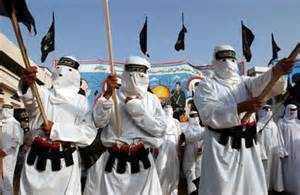
Designated as a State Sponsor of Terrorism in 1984, Iran continued its terrorist-related activity, including support for Palestinian terrorist groups in Gaza, and for Hizballah. It has also increased its presence in Africa and attempted to smuggle arms to Houthi separatists in Yemen and Shia oppositionists in Bahrain. Iran used the Islamic Revolutionary Guard Corps-Qods Force (IRGC-QF) and its regional proxy groups to implement foreign policy goals, provide cover for intelligence operations, and create instability in the Middle East. The IRGC-QF is the regime’s primary mechanism for cultivating and supporting terrorists abroad.

Iran views Syria as a crucial causeway in its weapons supply route to Hizballah, its primary beneficiary. In 2013, Iran continued to provide arms, financing, training, and the facilitation of Iraqi Shia fighters to the Asad regime’s brutal crackdown, a crackdown that has resulted in the death of more than 100,000 civilians in Syria. Iran has publicly admitted sending members of the IRGC to Syria in an advisory role. There are reports indicating some of these troops are IRGC-QF members and that they have taken part in direct combat operations. In February, senior IRGC-QF commander Brigadier General Hassan Shateri was killed in or near Zabadani, Syria.

Beyond terrorism, there is still the matter of the Iranian nuclear program and Iran is not cooperating with the IAEA.

The Iranian regime’s Atomic Energy Organization spokesman, Behrouz Kamalvandi, stated that “legally, they have no right to visit Parchin since we are not implementing the Additional Protocol (to the NPT) and even if we did, access needs to be managed” (State-run Fars news agency, May 3).

Iran and China are now strategic defense partners which the State Department seems to dismiss. Then there is Sudan.

Two Iranian warships docked for refuelling on Monday in Port Sudan, across the Red Sea from Iran’s regional rival Saudi Arabia.

Sudan’s army spokesman Sawarmi Khaled Saad said the warships, one of them a navy supply ship, had arrived in Port Sudan, where civilians could tour the vessels during their port call.

Naval vessels from Iran have periodically stopped in Port Sudan for what Khartoum describes as normal port calls.

The coastal city lies about 250 kilometres (155 miles) across the Red Sea from Saudi Arabia, which has long been wary of Iran’s regional ambitions.

In March, a Western diplomat said strained political relations between Riyadh and Khartoum over Iran could have been a factor in a decision by Saudi banks to stop dealing with Sudan.

Khartoum also has close ties with Qatar, which is perceived as supporting the Egypt-based Muslim Brotherhood, towards which Saudi Arabia and other Gulf monarchies have long been hostile.

Relations between Sudan and Saudi Arabia are “zero”, a senior Sudanese opposition politician told AFP last month.

But Ibrahim Ghandour, an aide to President Omar al-Bashir, said in a March interview that there is “nothing peculiar” in Sudan’s relations with Iran, insisting they had not affected ties with other countries, including Saudi Arabia, which remains a leading investor.

On Monday Sudan’s foreign ministry described relations with the Gulf as “stable” and said ties with Saudi Arabia are based on “mutual respect,” in a report to parliament, the official SUNA news agency said.

There are CIA political hacks and then the Others

I have nothing to add to this one except to say, there once was a time when the oath and sense of duty meant something.

The CIA that saved Dick Holm

WEST PALM BEACH, Florida, May 2, 2014 – Benghazi showed  us a difficult truth. Once upon a time, the CIA left no man behind. The Agency  took care of its own, even in the face of disapproval from the public or from  other government organizations. Right or wrong, the Agency did everything it  could to protect its employees.


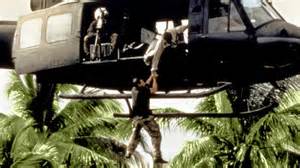
behind enemy lines

And the leaders in the United States Government backed those decisions,  anxious to protect Americans overseas.

That was the CIA that saved Dick Holm; that went into the Congo not once but  twice to rescue him.

In 1964, Dick Holm was a young CIA officer. After a two-year tour in Laos and  Thailand, Holm was assigned to the Congo, to collect intelligence and support  Belgian operations in the country.

One day in 1965, the chief of the air unit directed Holm to conduct an air  survey of the area to determine whether arms and ammunition were coming across  the border with Sudan. Holm was to ride with pilot Juan Peron in his T-28, a  two-seater plane where the passenger sits behind the pilot. The mission was to  gather intelligence but, even more importantly, to attack military targets

Holm tells how he and Peron spotted some trucks and a power plant, and Peron  attacked both targets.

After the attacks, the weather turned threatening, blowing the plane off  course. Lost and low on fuel, Peron decided to take the plane down before dark  while he still had the ability to land in a clearing. They crash-landed into the  jungle.

During the landing, Holm was splashed with flaming jet fuel on his face, his  hands and his legs. Juan was unhurt. The plane was on fire. Holm’s eyes were  seared shut from the fire and he had little use of his hands. He could smell  fire and hear Juan yelling at him to get out of the plane. He used his elbows to  release the harness and then crawled out of the plane, and Juan helped him get  away from the plane minutes before it exploded.

Holm was weak and barely able to move, and he and Juan were in enemy  territory with no support. Holm says he knew burns meant dehydration and  infection, and the jungle was an inhospitable place for someone hurt as badly as  he was. Holm says in his book, “Juan used his knife to cut charred skin hanging  from several of my fingers. There were already bugs on some of my burns.”

Holm and Juan were also in enemy territory. Simba rebels, the force the  Belgians and Americans opposed, were in the jungle and would not hesitate to  kill Holm and Juan if they found them. They were known to eat their enemies  after killing them, believing they gained strength from eating their vital  organs.

The next morning, Juan found a village. Village Chief Faustino agreed to help  Holm and Juan to safety, and to take care of Holm while Juan went for help. When  Juan and the villagers came back to Holm, he was covered in bees and barely  conscious.

The villagers made a litter and carried Holm back to the village. They cared  for his burns and dug out the worm-like bugs that had burrowed into his wounds.  They applied a salve that hardened and created a type of coating, which Holm  credits with saving his life. Juan and two villagers left Holm in the village to  go for help.


READ ALSO: How  America failed, and continues to fail, at Benghazi investigation


Eight days later, Juan and the villagers arrived at an air station in Paulis.  Within two hours, the Agency officers at Paulis received permission to use one  of the Belgian helicopters at the field to rescue Holm. They also sent a T-28,  piloted by Juan, and the air operations chief in Paulis had ordered a C130 to be  at Paulis to transport Holm as soon as he arrived.

When the helicopter crashed on landing to rescue Holm, the air operation  authorized a second helicopter to take its place.

That second helicopter saved Holm, and returned him to Paulis. He then  immediately was transferred to the C130 and sent to a hospital in what was then  Leopoldville, now Kinshasa.

Holm also reports that when CIA headquarters heard Holm was in Paulis, Dick  Helms, the Deputy Director for Plans, now the Directorate of Operations,  immediately went to Director of Central Intelligence John McCone and said the  only way to save Holm’s life was to get him to the National Burn Center in San  Antonio, Texas. The DCI called Secretary of Defense Robert McNamara, who  authorized the US Air force to deploy a 707 to carry a burn team to care for  Holm.

Holm survived, and after years of painful rehabilitation, returned to have an  extraordinary 35-year career at the CIA.

The U.S. government went in to rescue Holm, one man, and spared no expense to  give him the best care possible.

Where was that CIA on September 11, 2012?

On September 11, 2012, CIA-affiliated officers stood on a roof in Benghazi  for seven hours waiting for help from the U.S. government. None came.  Eventually, they could no longer hold back the terrorists, and they lost their  lives.

Charles Woods and Glen Doherty, part of a Global Response Staff that provides  security for CIA officers overseas held off hostile attackers at the US  Consulate in Benghazi for seven hours on September 11. For seven hours after  Ambassador Christopher Stevens and Sean Smith were attacked, they manned machine  guns on the roof of the CIA annex and defended US territory and personnel. They  called for help but were ignored.

While the public still does not know exactly what happened in Benghazi, we do  know that US government leaders did not deploy forces to rescue Americans  stranded on a rooftop taking enemy fire. We know that for seven hours, those men  called for assistance were ignored.

We don’t know where leaders were on September 11. We do know they were not on  a rooftop in Benghazi and they did not send help, despite seven hours of  requests.

We know they left those men behind.

Lisa M. Ruth started her career at the CIA, where she won  several distinguished awards for her service and analysis.  After leaving the  government, she joined a private intelligence firm in South Florida as  President, where she oversaw all research, analysis and reporting. Lisa joined  CDN as a journalist in 2009 and writes extensively on intelligence, world  affairs, and breaking news. She also provides CDN with investigative reporting  and news analysis. Lisa continues to write both for her own columns and as a  guest writer on a wide variety of subjects, and is now Executive Editor for CDN.  She is also a regular contributor to Newsmax and other publications.


The Terror Report has Omissions

Polls suggest that American is war weary and we are, but our enemy is not weary at all, so what is the solution? Diplomacy after twenty plus years in various sorts of approaches including money and political correctness has not been a viable solution even when we leave a war theater like Iraq. In fact in Iraq, we just dispatched many spies and CIA operatives there once again. So how bad is the terror report even if partially accurate? Well no better today at all while the White House tells us differently. Terror is not only in the Western Hemisphere, but attacks are growing and we cannot overlook the Homeland.

The State Department publishes a Global Terror Report from time to time and there are some omissions especially with respect to the Homeland. Terror is in America, with training camps, arms and money smuggling and governmental political collusion with Federal agencies. I read the whole report, yet to spare you, below is the State Department Summary.


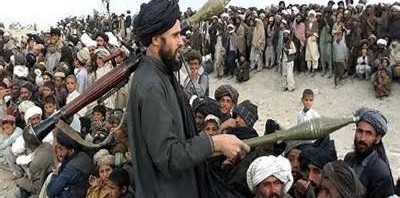
terror

Jamaat ul-Fuqra (a.k.a the Muslims of America, a.k.a. Muslims of the Americas, a.k.a. Quranic Open University) is an Islamic organization boasts dozens of rural compounds throughout the United States, Canada, and reportedly the Caribbean. It is headed by Sheikh Sayed Mubarik Ali Hasmi Shah Gilani, a Pakistani Sufi, who is persona non grata to the U.S. government and has been forbidden entry to the United States for several decades.  Most of the rank-and-file of Jamaat ul-Fuqra are African Americans, and many of them were recruited in the prison system. According to some accounts, the earliest membership of the organization was made up of defectors from the Nation of Islam who had become disenchanted with Louis Farrakhan and his reluctance to plan for an unconstrained violent jihad against the infidel society and government of the United States. Back in the 1980s and early ’90s, members of Jamaat ul-Fuqra committed a series of fire-bombings, murders, and other crimes, many of them targeting Hindus. Sheikh Gilani reportedly reined them in later in the 1990s, and most of their crimes since have been confined to non-violent offenses such as money-laundering, welfare fraud, product counterfeiting, and unauthorized trafficking in firearms. For a few years the State Department listed Muslims of America as a terrorist organization, but that designation was mysteriously withdrawn in the year 2000. More here.

Now on for the core of the report.

Al-Qa’ida (AQ) and its affiliates and adherents worldwide continue to present a serious threat to the United States, our allies, and our interests. While the international community has severely degraded AQ’s core leadership, the terrorist threat has evolved. Leadership losses in Pakistan, coupled with weak governance and instability in the Middle East and Northwest Africa, have accelerated the decentralization of the movement and led to the affiliates in the AQ network becoming more operationally autonomous from core AQ and increasingly focused on local and regional objectives. The past several years have seen the emergence of a more aggressive set of AQ affiliates and like-minded groups, most notably in Yemen, Syria, Iraq, Northwest Africa, and Somalia.

AQ leadership experienced difficulty in maintaining cohesion within the AQ network and in communicating guidance to its affiliated groups. AQ leader Ayman al-Zawahiri was rebuffed in his attempts to mediate a dispute among AQ affiliates operating in Syria – al-Nusrah Front and al-Qa’ida in Iraq (AQI), now calling itself the Islamic State of Iraq and the Levant (ISIL) – which resulted in the expulsion of ISIL from the AQ network in February 2014. In addition, guidance issued by Zawahiri in 2013 for AQ affiliates to avoid collateral damage was routinely disobeyed, notably in attacks by AQ affiliates against civilian religious pilgrims in Iraq, hospital staff and convalescing patients in Yemen, and families at a shopping mall in Kenya.

Terrorist violence in 2013 was fueled by sectarian motivations, marking a worrisome trend, in particular in Syria, Lebanon, and Pakistan, where victims of violence were primarily among the civilian populations. Thousands of extremist fighters entered Syria during the year, among those a large percentage reportedly motivated by a sectarian view of the conflict and a desire to protect the Sunni Muslim community from the Alawite-dominant Asad regime. On the other side of the conflict, Iran, Hizballah, and other Shia militia continued to provide critical support to the Asad regime, dramatically bolstering its capabilities and exacerbating the situation. Many of these fighters are also motivated by a sectarian view of the conflict and a desire to protect the Shia Muslim community from Sunni extremists.

The relationship between the AQ core and its affiliates plays out in the financial arena as well. As was the case for the last few years, the affiliates have increased their financial independence through kidnapping for ransom operations and other criminal activities such as extortion and credit card fraud. Al-Qa’ida in the Arabian Peninsula (AQAP) and al-Qa’ida in the Islamic Maghreb (AQIM) are particularly effective with kidnapping for ransom and are using ransom money to fund the range of their activities. Kidnapping targets are usually Western citizens from governments or third parties that have established a pattern of paying ransom for the release of individuals in custody.

Private donations from the Gulf also remained a major source of funding for Sunni terrorist groups, particularly for those operating in Syria.

In 2013, violent extremists increased their use of new media platforms and social media, with mixed results. Social media platforms allowed violent extremist groups to circulate messages more quickly, but confusion and contradictions among the various voices within the movement are growing more common. Increasingly, current and former violent extremists are engaging online with a variety of views on tactics and strategy, including admitting wrongdoing or recanting former beliefs and actions.

Key Terrorism Trends in 2013

–The terrorist threat continued to evolve rapidly in 2013, with an increasing number of groups around the world – including both AQ affiliates and other terrorist organizations – posing a threat to the United States, our allies, and our interests.

–As a result of both ongoing worldwide efforts against the organization and senior leadership losses, AQ core’s leadership has been degraded, limiting its ability to conduct attacks and direct its followers. Subsequently, 2013 saw the rise of increasingly aggressive and autonomous AQ affiliates and like-minded groups in the Middle East and Africa who took advantage of the weak governance and instability in the region to broaden and deepen their operations.

–AQ leader Ayman al-Zawahiri experienced difficulty in maintaining influence throughout the AQ organization and was rebuffed in his attempts to mediate a dispute among AQ affiliates operating in Syria, with ISIL publicly dissociating its group from AQ. Guidance issued by Zawahiri in 2013 for AQ affiliates to avoid collateral damage was routinely disobeyed, notably in increasingly violent attacks by these affiliates against civilian populations.

–Syria continued to be a major battleground for terrorism on both sides of the conflict and remains a key area of longer-term concern. Thousands of foreign fighters traveled to Syria to join the fight against the Asad regime – with some joining violent extremist groups – while Iran, Hizballah, and other Shia militias provided a broad range of critical support to the regime. The Syrian conflict also empowered ISIL to expand its cross-border operations in Syria, and dramatically increase attacks against Iraqi civilians and government targets in 2013.

–Terrorist violence in 2013 was increasingly fueled by sectarian motives, marking a worrisome trend, particularly in Syria, but also in Lebanon and Pakistan.

–Terrorist groups engaged in a range of criminal activity to raise needed funds, with kidnapping for ransom remaining the most frequent and profitable source of illicit financing. Private donations from the Gulf also remained a major source of funding for Sunni terrorist groups, particularly for those operating in Syria.

–“Lone offender” violent extremists also continued to pose a serious threat, as illustrated by the April 15, 2013, attacks near the Boston Marathon finish line, which killed three and injured approximately 264 others.

–Many other terrorist groups not tied to AQ were responsible for attacks in 2013, including the People’s Liberation Party/Front (DHKP/C), which carried out a number of high-profile attacks last year, including a February 1 suicide plot targeting the U.S. Embassy in Ankara, Turkey.

* * *

While AQ core leadership in Pakistan is much diminished, Ayman al-Zawahiri remains the recognized ideological leader of a jihadist movement that includes AQ-affiliated and allied groups worldwide. Along with AQ, the Afghan Taliban, the Haqqani Network, Tehrik-e Taliban Pakistan (TTP), and other like-minded groups continue to conduct operations against U.S., Coalition, Afghan, and Pakistani interests from safe havens on both sides of the Afghanistan/Pakistan border, and in Pakistan, terrorist groups and AQ allies, such as TTP, have executed armed assaults not only on police stations, judicial centers, border posts, and military convoys, but also on polio vaccination teams and aid workers. Other South Asian terrorist organizations, including Lashkar e-Tayyiba (LeT), cite U.S. interests as legitimate targets for attacks. LeT, the group responsible for the 2008 Mumbai attacks, continues to pose a threat to regional stability.

AQAP carried out approximately one hundred attacks throughout Yemen in 2013, including suicide bombings, car bombings, ambushes, kidnappings, and targeted assassinations, regaining the initiative it had lost through 2012 as a result of sustained Yemeni government counterterrorism efforts. Of the AQ affiliates, AQAP continues to pose the most significant threat to the United States and U.S. citizens and interests in Yemen. AQAP has demonstrated a persistent intent to strike the United States, beginning in December 2009 when it attempted to destroy an airliner bound for Detroit, and again the following year with a plot to destroy several U.S.-bound airplanes using bombs timed to detonate in the cargo holds. In 2013, AQAP’s leader, Nasir Wahishi, was designated by AQ leader Zawahiri as his deputy, and the group continued to maintain a focus on Western targets.

Some of the thousands of fighters from around the world who are traveling to Syria to do battle against the Asad regime – particularly from the Middle East and North Africa, Central Asia, and Eastern and Western Europe – are joining violent extremist groups, including al-Nusrah Front and ISIL. A number of key partner governments are becoming increasingly concerned that individuals with violent extremist ties and battlefield experience will return to their home countries or elsewhere to commit terrorist acts. The scale of this problem has raised a concern about the creation of a new generation of globally-committed terrorists, similar to what resulted from the influx of violent extremists to Afghanistan in the 1980s.

The violence and disorder in Syria extended to the various violent extremist groups operating amongst the Syrian opposition. In late 2013 and early 2014, violent infighting occurred between al-Nusrah Front and ISIL, resulting in the February death of Ayman al-Zawahiri’s envoy to Syria Abu Khalid

al-Soury, who was a member of Ahrar al Sham. Despite this infighting, ISIL is the strongest it has been since its peak in 2006; it has exploited political grievance among Iraq’s Sunni population, a weak security environment in Iraq, and the conflict in Syria to significantly increase the pace and complexity of its attacks. ISIL continues to routinely and indiscriminately target defenseless innocents, including religious pilgrims, and engages in violent repression of local inhabitants.

In 2013, AQIM remained focused on local and regional attack planning, and concentrates its efforts largely on kidnapping-for-ransom operations. While a successful French and African intervention countered efforts to overrun northern Mali by AQIM and several associate groups, these factions continued to pursue attacks against regional security forces, local government targets, and westerners in northern Mali, Niger, and the broader Sahel region in 2013.

Originally part of AQIM, the al-Mulathamun Battalion (AMB), also known as al-Murabitoun, became a separate organization in late 2012 after its leader, Mokhtar Belmokhtar, announced a split from AQIM. AMB claimed responsibility for the January 2013 attack against the Tiguentourine gas facility near In Amenas, in southeastern Algeria. Over 800 people were taken hostage during the four-day siege, which led to the deaths of 39 civilians, including three U.S. citizens. AMB was also involved in terrorist attacks committed in Niger in May 2013, targeting a Nigerien military base and a French uranium mine.

Groups calling themselves Ansar al-Shari’a in Tunisia and the Libyan cities of Benghazi and Darnah also operated in the North Africa space. The three share some aspects of AQ ideology, but are not formal affiliates and generally maintain a local focus. In Libya, the terrorist threat to Western and Libyan government interests remains strong, especially in the eastern part of the country. Libya’s porous borders, the weakness of Libya’s nascent security institutions, and large amounts of loose small arms create opportunities for violent extremists. In Tunisia, Ansar al-Shari’a in Tunisia attempted suicide attacks against two tourist sites in late October 2013 and killed a political oppositionist in July that same year, suggesting the group remains intent on attacking Western and Tunisian interests.

In East Africa, al-Shabaab continued to pose a significant regional threat despite coming under continued pressure by African forces operating under the African Union’s AMISOM command and steady progress in the establishment of Somali government capability. Perhaps because of these positive steps, al-Shabaab targeted its attacks on those participating in the effort to bring stability to Somalia. In September 2013, al-Shabaab struck outside of Somalia (its first external attack was in July 2010 in Kampala, Uganda), attacking the Westgate Mall in Nairobi, Kenya. The assault resulted in the death of at least 65 civilians, including foreign nationals from 13 countries outside of Kenya and six soldiers and police officers; hundreds more were injured. Al-Shabaab’s attacks within Somalia continued in 2013, and resulted in the deaths of hundreds of people, including innocent women and children.

Boko Haram (BH) maintained a high operational tempo in 2013 and carried out kidnappings, killings, bombings, and attacks on civilian and military targets in northern Nigeria, resulting in numerous deaths, injuries, and destruction of property in 2013. The number and sophistication of BH’s attacks are concerning, and while the group focuses principally on local Nigerian issues and actors, there continue to be reports that it has financial and training links with other violent extremists in the Sahel region. Boko Haram, along with a splinter group commonly known as Ansaru, has also increasingly crossed Nigerian borders to neighboring Cameroon, Chad, and Niger to evade pressure and conduct operations.

Palestinian terrorist organizations in the Hamas-controlled Gaza continued rocket and mortar attacks into Israeli territory. The number of rocket and mortar launchings on Israel from Gaza and the Sinai was the lowest in 2013 in more than a decade, with 74 launchings compared to 2,557 in 2012. According to Israeli authorities, 36 rocket hits were identified in Israeli territory in 2013, compared to 1,632 in 2012. Of the 74 launchings on southern Israel, 69 were launched from the Gaza and five from the Sinai Peninsula.

Sinai-based groups, such as Ansar-Beit al Maqdis, also continued to pose a serious threat, conducting attacks against both Israeli and Egyptian targets in 2013.

Since 2012, the United States has also seen a resurgence of activity by Iran’s Islamic Revolutionary Guard Corps’ Qods Force (IRGC-QF), the Iranian Ministry of Intelligence and Security (MOIS), and Tehran’s ally Hizballah. On January 23, 2013, the Yemeni Coast Guard interdicted an Iranian dhow carrying weapons and explosives likely destined for Houthi rebels. On February 5, 2013, the Bulgarian government publicly implicated Hizballah in the July 2012 Burgas bombing that killed five Israelis and one Bulgarian citizen, and injured 32 others. On March 21, 2013, a Cyprus court found a Hizballah operative guilty of charges stemming from his surveillance activities of Israeli tourist targets in 2012. On September 18, 2013, Thailand convicted Atris Hussein, a Hizballah operative detained by Thai authorities in January 2012. On December 30, 2013, the Bahraini Coast Guard interdicted a speedboat attempting to smuggle arms and Iranian explosives likely destined for armed Shia opposition groups in Bahrain. During an interrogation, the suspects admitted to receiving paramilitary training in Iran.

On June 22, 2013, the Gulf Cooperation Council (GCC) declared it would treat Hizballah as a terrorist organization. On July 22, 2013, the EU designated the “military wing” of Hizballah as a terrorist organization, sending a strong message to Hizballah that it cannot operate with impunity. Both Hizballah and Iran issued public statements to denounce the EU, demonstrating the impact of the designation. The EU designation will constrain Hizballah’s ability to operate freely in Europe by enabling European law enforcement agencies to crack down on Hizballah’s fundraising, logistical activity, and terrorist plotting on European soil.

Iran remained one of the chief external supporters of the Asad regime in Syria and continued to help ensure the regime’s survival. The IRGC-QF, Hizballah, and Iraqi Shia terrorist groups have all increased the number of their personnel in Syria since the start of the conflict. Iran also continued to send arms to Syria, often through Iraqi airspace, in violation of the UN Security Council prohibition against Iran selling or transferring arms and related materials.

While terrorism by non-state actors related to AQ and state-sponsored terrorism originating in Iran remained the predominant concern of the United States, other forms of terrorism undermined peace and security around the world. In Turkey, the DHKP/C was responsible for a number of high-profile attacks in 2013, including exploding a suicide vest inside the employee entrance to the U.S. Embassy in Ankara on February 1. Anarchists in Greece launched periodic attacks, targeting private businesses, foreign missions, and symbols of the state. In Colombia, there were still hundreds of terrorist incidents around the country. In Northern Ireland, dissident Republican groups continued their campaigns of violence. “Lone offender” violent extremists also remain a concern, as we saw on April 15, 2013, in the United States, when two violent extremists exploded two pressure cooker bombs near the Boston Marathon’s finish line, killing three people and injuring an estimated 264 others.

* * *

To meet the challenges described herein, our response to terrorism cannot depend on military or law enforcement alone. We are committed to a whole of government counterterrorism effort that focuses on countering violent extremism; building the capacity of partner nation security forces to address threats within their own borders and participate in regional counterterrorism operations; and strengthening relationships with U.S. partners around the world to make the rule of law a critical part of a broader, more comprehensive counterterrorism enterprise. See Chapter 5, Terrorist Safe Havens (7120 Report) in this report for further information on these initiatives, which also include designating foreign terrorist organizations and individuals, countering violent extremist narratives, strengthening efforts to counter the financing of terrorism, and furthering multilateral initiatives such as the Global Counterterrorism Forum.

Sequestration: Entitlements vs. National Security

Much has been mentioned in the last 18 months regarding the far and wide devastation of Sequestration that was the brain child of Barack Obama and Jack Lew in the White House. To further the support for the government cuts, this mission was meant to hurt as it was brought to Harry Reid to gain support and support Reid gave. This answers the question on why the Senate would not take up law and measures passed but the House as Harry Reid is ‘all-in’ with the White House, leaving the people’s work and voices both on the floor and silent.

A Super Committee was created to work through the process to avoid Sequestration where again the measure failed. The White House and the lobby groups have been on a loud and vocal quest to blame Republicans and the House of Representatives for what looms as Sequestration takes affect on March 1, 2013. The House has worked diligently to pass laws that stop the devastating cuts most especially those to defense while none of the measure by the House have been provided attention or vote by the Senate.

Lets take a look at what Sequester impacts on both sides. This is not a complete list and the depth of the cuts are not explained as that can be determined by a review of the associated links provided.

What gets cut:
TSA
FDA food inspectors
Head-Start
Defense
Parks Service
National Guard
Border Patrol
Immigration and Customs Enforcement
Secret Service
FEMA
Air Federal Marshalls
FAA
Special Education Teachers
Center for Disease Control
NASA
Security and Exchange Commission
Foreign aid with particular emphasis on Israel and Mexico (130 countries affected)
Oak Ridge National Laboratory (nuclear weapons)
What is exempt

Social Security
Railroad employees retirement
Veteran’s Administration benefits
Unemployment
Tribal and Indian Trust Accounts
Child nutrition
Children’s Heath Insurance
Pell Grants
Medicaid
SNAP, food stamps
Highway Safety Grants
Motor Carrier Safety Operations
Federal pay
Child Support Enforcement
FDIC
Farm Credits
Tennessee Valley Authority
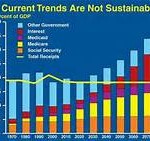
In a snapshot assessment of what stays and what goes, it is clear that programs related to National Security and Foreign Affairs are getting the wave off in Sequester while domestic programs geared to funding the indigent remain. In short, the dangerous world will be even more dangerous and education and healthcare remains protected. We have yet to understand the large numbers of those that will be unemployed and what our enemies will take advantage of regarding our homeland.

Analysis: Impact of sequestration on non-defense discretionary spending

http://www.fas.org/sgp/crs/misc/R42050.pdf

Black Panthers, Past, Present and Future, Holder Silent

Department of In-Justice and Selective Application of the Law


Eric Holder was sworn in as the 82nd United States Attorney General when he took the oath (provided below) with Vice President Joe Biden presiding.  The focus of this summary will speak to the segment of the oath that reads ‘against all enemies, foreign and domestic.’ The question is just who actually defines those enemies and on what criteria especially those of a domestic nature? Likely those decisions are a collaborative effort composed of a large group of people in Washington DC that include Eric Holder at Justice and Timothy Geither at Treasury to list a few.

“I (name), do solemnly swear (or affirm) that I will support and

defend the Constitution of the United States against all enemies,

foreign and domestic; that I will bear true faith and allegiance to

the same; that I take this obligation freely without any mental

reservation or purpose of evasion; and that I will well and faithfully

discharge the duties of the office on which I am about to enter. So

help me God.”

Congress Pete King held a hearing this month, (March 2012) on the domestic and international threat of Hezbollah and that summary is here.  The objective of this hearing was to publically place sunlight on Hezbollah and its operatives within the United States and to reassert their status as a terror network. The springboard of Hezbollah has bearing with regard to the deep ties to people within the Black Panthers Party and the New Black Panther Party and their later affiliation with terror organizations such as Hezbollah. It is important to understand that while there are two distinct names, the doctrine, and the mission and in many cases the same people have been carried over by name and relationships over the years.  The Black Panthers, like the New Black Panthers Party, have a Marxist doctrine and have merged much of the common objectives and like minded attitudes to Islam.

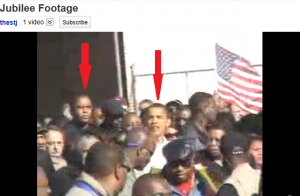
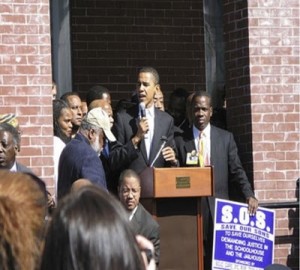
Not so long ago, the New Black Panthers on a handful of occasions have held rallies and those in attendance have very familiar faces as depicted below.


Among those appearing with Obama was Shabazz, the Panther leader who was one of the defendants in the voter intimidation case that Attorney General Eric Holder dismissed. Also present was the Panthers’ “Minister of War,” Najee Muhammed, who had called for murdering Dekalb County, Georgia, police officers with AK-47’s and then mocking their widows in this video.


Calls have been made to the White House to disclose which Malik Shabazz visited the private White House residence on July 25, 2009, two months after the DOJ voter intimidation case was dismissed. So far, the White House has refused to do so, leaving open the question of which “Malik Shabazz” appears in visitor logs released to the public.

Early in Hillary Clinton’s law and political career, she made it her charter to get involved in the protections of rights including those of the Black Panthers. While studying at Yale, see purposely attended a Black Panthers trial in New Haven to gauge the possibilities of legal abuse of rights during the trial. Hillary additionally worked with others in her circle to schedule monitors for this trial in her absence and later she wrote a summary report which was turned over to the ACLU.

Full of interest and intrigue, later that year, Hillary Clinton made her way to Oakland, California to work at a radical socialist law firm of Truehaft, Walker and Bernstein and they also took on a case to defend yet another trial of the Black Panthers.

A radical from Oakland named Abdul Alim Musa, an American, is first known as Clarence Reams.  Musa was raised in Oakland, California and maintained a deep friendship with Eldridge Cleaver and Pete O’Neal both of which sought a campaign and coordination with like minded radicals in Algeria where American forces are currently fighting al Qaeda operatives.  Musa is a supporter of the Islamic Republic and the Ayatollah Khomeini and has made several trips to Iran in the late 1970’s and early in 1980. There Musa created a steadfast relationship with Hezbollah and Hamas and Boko Harem as well as al Qaeda. Musa was a top leader of the Black Panthers and a force recruiter for radical Islam under the umbrella of the Nation of Islam in the United States. Musa has made it his charter to coordinate doctrines between domestic mosques and has an obscure public relations campaign designed inside hip-hop and rap music which has been most successful.

In 1970, the Federal Bureau of Investigation published that the Black Panther Party is the most dangerous and violent of all extremists groups. Eldridge Cleaver as a member of the BPP had very close ties to Al Fatah, Arab Guerillas in the 1970’s. Additionally, Cleaver met with the North Vietnamese as with the Premier of China Chou En Lai along with up to 60 additional members of the BPP. Later, Eldridge Cleaver developed a friendship with Professor Gates. We should remember recently Professor Gates from the ‘beer summit’ event held at the White House by Barack Obama.

Let’s take a look at some people and history of past and present Black Panthers. Khalid Abdul Muhammad, 53, former Nation of Islam activist and personal assistant to Louis Farrakhan; reportedly died from a brain hemorrhage; in Marietta, Ga. Farrakhan dismissed Muhammad in 1993 after the latter insulted Catholics, whites and gays, calling Jews “bloodsuckers” and the Pope “a no-good cracker.” As front man for the New Black Panthers in 1998, he led the contentious “Million Youth March” in New York City. [Time International, Feb 26, 2001 v157 i8 p15]


Another key subject to review is H. Rap Brown. In October of 1971, H. Rap Brown, converted to Islam and gave himself a new status and name of Imam Jamil Abdullah al Amin while serving time in Attica Prison.   Brown became known for his extremist beliefs after his book, Die Nigger Die! (1969) was published. He joined the Black Panther Party and was arrested for arson and inciting a riot. In 1970 he was shot, captured, and charged with armed robbery in New York City and sentenced to five to fifteen years.  He was released from prison in 1976 and became a leader of one of the largest Black Muslim groups in the U.S., called the National Ummah. He was also the owner of a grocery store in Atlanta’s West End, a poverty-stricken area that the National Ummah worked to revitalize.  In March 2000, two police officers went to Al-Amin’s grocery store to serve an arrest warrant on a minor theft charge. Al-Aman shot both officers, wounding both, and then shot one of the officers, Ricky Kinchen, three more times as the officer lay wounded in the street. Kinchen died from the gunshot wounds.  You are invited to look deeper into the Black Panthers by viewing the FBI file here.   In 1976, the FBI moved hard to take down the Black Panther Party.  A chronological and comprehensive history of the members of the BPP may be viewed here complete with listed videos and text.  A more recent summary of the Black Panthers, New Black Panthers and the Nation of Islam is illustrated in this link.

To be fair, the New Black Panthers in some cases have been denounced by Bobby Searle, the co-founder of the Black Panther Party due to cases where a rush to judgment was made. An example of this rush to judgment and taking matters into your own hands included the Duke Lacrosse rape scandal.

Under the leadership of both Khalid Abdul Muhammad, now dead, mentored by Louis Farrakhan of the Nation of Islam, and Malik Zulu Shabazz, the New Black Panthers have maintained an aggressive and militant pro-black agenda in addition to a full anti-Semitic mission throughout the United States. Khalid Muhammad with Louis Farrakhan reached out to Muammar el-Qaddafi of Libya for friendship and joint business ventures in the United States.  Qaddafi was a target by world leaders to step down from his dictatorship in Libya while opposition rebels for more than a year sought to find and kill Qaddafi and late in 2011 he was captured and died.

 “ Cases cause celèbre Islam prepares adherents for an inevitable violent revolution against the U.S. government: this revolutionary vision is at least as indebted to the ideas of men like Huey Newton, Bobby Seale, Eldridge Cleaver, and Malcolm X as it is to more typical advocates of Islamic revolution like Sayyid Qutb. Those who share this view tend to be suspicious of outsiders, and outside influences. H. Rap Brown aka Al-Amin … made the transition from black nationalist firebrand to nationally prominent Sunni imam. In the 1960s, he issued scathing indictments of America and called for violent revolution. After his conversion to Islam, al-Amin adopted a more measured tone in his societal criticism, but remained attached to the idea of revolution. Though he focused on a more inward-looking revolution, one that would transform his community morally, al-Amin continued to believe that the system writ large was sick and broken. Some analysts have questioned how far al-Amin truly progressed from the violent ideals that he once openly proclaimed. “  More here.

We have covered many members of both Panthers Parties and history thus far including Hillary Clinton, Barack Obama and Professor Gates. One last slick operator or rather lawyer to place in the mix is U.S. Attorney General Eric Holder and his role.

Unbeknownst to the public, Carlos Torres, FALN co-founder, and Marilyn Buck, a member of the Weather Underground and Black Liberation Army, were released from federal prison last year. Attorney General Eric Holder quitely implemented a policy of freedom for terrorists. More here and here.

J. Christian Adams, who worked for the Department of Justice in the Civil Rights Division under Eric Holder, writes more about Marilyn Buck and her deep roots to crimes and subversive activities while a member of the Black Panthers. Adams later resigned from the DoJ in complete protest and opposition of the New Black Panthers Voter Intimidation case due to the AG, Eric Holder refusing to sentence those found guilty.

Holder additionally gave a pass to the CAIR and Holyland conspirators by offering an explanation that has even confounded members of Congress.

Holder has offered key legal cases to his law buddies across the land to provide case council to Guantanamo Detainees and providing Constitutional rights to foreign terror agents in support of Muslim and radical Islam doctrine.

Today, the New Black Panthers have become a modern day lynching mob calling for the funds and bounty to arrest George Zimmerman of Sanford, Florida in the killing of a seventeen year old male.

Major Nadal Hassan, a radicalized Muslim, who randomly shot and killed U.S. troops at Ft. Hood, has not been brought to justice as the White House deemed this sad and tragic event as merely work place violence. What more is there to investigate on Major Hassan and why the delay in the prosecution? Could it be more selective prosecution and application of the law for Muslim sympathizers in the White House, the State Department and the Department of Justice? The answer here is evident for sure.

Back to the beginning as the question must be asked, who is defining the term domestic terrorist? What cases has Eric Holder argued for the protection and prosecution of those terrorists? It has clearly been proven that Eric Holder has been stone-walling on the Fast and Furious case where through the State Department waivers were issued to run weaponry to drug cartels that have fully integrated with Hezbollah south of our border with Mexico. Funds to pay for these weapons and investigations were from the Stimulus package of which Vice President Joe Biden oversees.

America today is full of domestic enemies and with the globe so easy to navigate without credentials and bona fide background checks, enemies are a dynamic threat to our way of life, be it by small incidents to our way of life, breaking the law and subverting the Constitution and by general fear. Confidence is gone when we look to the Department of Homeland Security, the Federal Bureau of Investigation and our Court system for protections of our homeland.

Lawmakers in Washington work to achieve more power over our respective lives in the name of legislation by way of lawfare, when in the end it tramples our freedoms. All the while domestic enemies continue to force recruit, act illegally, integrate with terror groups connected to defined organizations of terror worldwide and have no fear of prosecution as the history of Eric Holder speaks to a pass and looking the other way.

In closing, to confirm any doubts you may have with the historical connections between the Black Panthers and radical Islam to current terrorists, please view this video where Zawahiri quotes Malcolm X and is actually speaking to Black Americans that have been recruited via music, mosques and the American prison system.

Additional links in case you need more convincing are here, here and here.