Obama Library Scandal vs. the Trump Library Site Approval

Primer: A 2.6 acre parking lot designated by Governor DeSantis, formerly now part of Miami Dade College has to approved votes to proceed to build the Trump library adjacent to the Freedom Tower.

Meanwhile, there is this money scandal surrounding the Obama Library in Chicago….

NYP in part:Donations to the Obama Foundation, set up by the former president to build a 19-acre campus including a museum, athletic facility and fruit and vegetable gardens in Chicago, totaling $2 million were instead sent on to Tides Foundation in 2022 and 2023, according to its latest available federal tax filings.

The cash was earmarked to “support local organizations that are working to reduce violence in communities,” according to the nonprofit’s filings.

Tides Foundation — also funded by Democratic mega-donor George Soros — is a network that operates as a fiscal sponsor for groups that have not registered with the IRS as charities.

The third-party grant-making group is under scrutiny by the House Ways and Means Committee for handling donations for anti-Israel groups such as the Adalah Justice Project, Samidoun and the People’s Forum. Such groups helped set up pro-Palestinian demonstrations and college encampments after the October 7, 2023, Hamas attacks on Israel that left 1,200 Israelis dead.

After this story was published Friday, a spokeswoman for the Obama Foundation told The Post that the $2 million was granted to more than 50 organizations across the country to help reduce “surging summer violence” and provide “safe spaces”  for young people. More here.

FNC:

When the Obama Foundation snagged a sweetheart deal to build its beleaguered Obama Presidential Center in a Chicago public park, it pledged to create a $470 million reserve fund to spare taxpayers should the project ever go belly up.

But new tax filings show the foundation has only deposited $1 million into the fund and has not added to it in years, with critics saying the empty promise could potentially leave Chicagoans on the hook for hundreds of millions of dollars.

Under its agreement with the city, the foundation was required to create the fund, known as an endowment, to take control of a sprawling 19.3-acre section of Jackson Park — often described as Chicago’s Central Park equivalent — where the complex is now slowly rising.

The foundation ultimately secured the public land for just $10 in 2018 under a 99-year deal.

Barack Obama and the Obama Presidential Center construction site in Chicago.

Former President Barack Obama is pictured next to construction of the Obama Presidential Center in Chicago, a project facing delays, soaring costs and mounting scrutiny over its finances. (Scott Olson/Getty Images; Reuters/Vincent Alban)

OBAMA LIBRARY, BEGUN WITH LOFTY DEI GOALS, NOW PLAGUED BY $40M RACIALLY CHARGED SUIT, BALLOONING COSTS

But when former President Barack Obama and former First Lady Michelle Obama turned the sod at the site in September 2021, just $1 million — or 0.21% of the pledged funds — had been deposited into the endowment, and that figure has remained unchanged ever since.

With construction progressing at a snail’s pace and costs ballooning from an original estimate of $330 million to at least $850 million, the lack of progress on the promised endowment has fueled fears the Obama Presidential Center could leave taxpayers holding the can if finances spiral into the red.

It comes as the Obama Foundation’s latest tax return shows its finances under strain with revenue swinging wildly year to year, fundraising shortfalls and unfulfilled donor pledges.

On news that the endowment has largely remained unfunded, Illinois GOP Chair Kathy Salvi slammed the project as an “abomination” while blasting Democrats for potentially exposing taxpayers with the deal.

“It should come as no surprise that the Obama Center is potentially leaving Illinois taxpayers high and dry — it’s an Illinois Democrat tradition,” Salvi told Fox News Digital in a statement. “Democrats in this state, when not going to prison for corruption, treat taxpayers like a personal piggy bank giving sweetheart deals to their political benefactors.”

The Obama Presidential Center in July 2025.

The Obama Presidential Center under construction in July. (Fox News Digital)

Scholar sounds alarm

Richard Epstein, a University of Chicago law professor emeritus and a New York University law professor, has raised concerns about the endowment for years and advised the local nonprofit Protect Our Parks with legal challenges to try to stop the Obama Center’s construction.

Epstein argues the foundation’s failure to fund its endowment confirms his long-held view that the city never should have signed over the large section of Jackson Park.

“They put a million dollars into a $400 million endowment, so it’s endowed. That gets you in jail as a securities matter,” Epstein told Fox News Digital. “An endowment means that you have the money in hand. But they have nothing. They just have the same $1 million that they put in in 2021 as far as I can tell. So, I regard this as something of a public calamity.”

An endowment is a pot of money meant to earn enough interest each year to cover operating costs without touching the principle in order to avoid the taxpayer stepping in.

“Without an endowment, they’ll have to scramble every year to cover $30 million in operating costs,” Epstein said. “The whole point of an endowment is to avoid that volatility. They just haven’t endowed it. Of that I’m 100% sure.”

Epstein argues that if the foundation or center falters, the public could be saddled with traffic rerouting costs, environmental impacts or even the bill for an incomplete building.

“Nobody knows exactly who is responsible for what if the project is abandoned or incomplete,” Epstein said. “There is a risk that the public will then have to bear that loss because the foundation won’t have the money.”

Epstein said the city has effectively looked the other way, declaring the foundation “compliant” on the endowment despite only $1 million ever being deposited. It’s proof, he argues, that officials never intended to enforce the requirement.

The Obama Foundation told Fox News Digital that it will be making “significant investments in the endowment in the coming years” as it has been prioritizing fundraising for the center and leadership programs.

“The Obama Presidential Center is fully funded, and it will open in the spring of 2026,” a spokesperson for the foundation said.

CharityWatch, a nonprofit watchdog, told Fox News Digital that the foundation technically complied with its agreement by creating an endowment because the deal never set a dollar figure. The group also said that the foundation remains “well-funded” overall while also acknowledging the pledge risks, volatility and lack of a real endowment.

Aerial view of Obama Presidential Center construction in Jackson Park, Chicago.

An aerial view shows construction of the Obama Presidential Center in Jackson Park, Chicago, where costs have soared and questions remain about the project’s funding. (Scott Olson/Getty Images)

While the foundation’s agreement with the city required it to create an endowment, it did not specify an amount. The $470 million figure was being reported on as the city council deliberated on the deal, and the foundation committed to that sum in its 2020 annual report.

In 2021 documents, the foundation said that first-year operating costs would be as much as $40 million. By that math, the center would actually need an endowment of between $800 million to $1 billion to fund operations without tapping the principle.

It’s also unclear how much revenue the foundation expects to generate each year.

Epstein said the lack of funds has long been the project’s Achilles heel. Without the endowment it promised, the project’s financial underpinning remains shaky, he said.

CHICAGO RESIDENTS CALL OBAMA PRESIDENTIAL CENTER A ‘MONSTROSITY,’ FEAR THEY’LL BE DISPLACED: REPORT

Despite financial pressures, the Obama Foundation has already spent about $600 million constructing the center, which aims to honor former President Barack Obama’s political career and be a civic hub. It consists of a 225-foot-tall museum, a digital library, conference facilities, a gymnasium and a regulation-sized NBA court. It will also house the Obama Foundation.

The new tax filings show the foundation ended 2024 with $116.5 million in cash, down nearly $80 million from the year before, while still owing about $234 million in construction costs. Of the funding gap, $216 million comes from firm pledges — promises of future donations — while another $201 million is tied up in conditional pledges that may never materialize if benchmarks aren’t met.

Epstein said the foundation’s financial assurances ring hollow because a large chunk of the money it counts on is tied up in pledges and credit rather than cash in hand, leaving the center vulnerable to donor fatigue and year-to-year uncertainty.

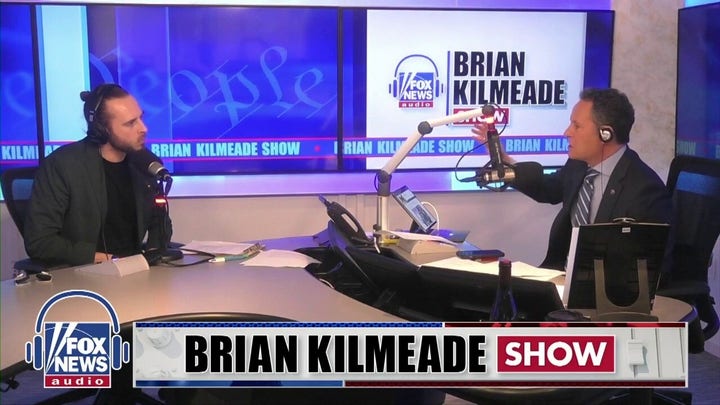
WATCH: The Brian Kilmeade Show: Obama Presidential Center rocked by $40M racial bias lawsuit
Public trust doctrine

In the Protect Our Parks lawsuit, Epstein argued that handing Jackson Park to the Obama Foundation violated the public trust doctrine, which bars cities from giving away public land without a clear public benefit. The plaintiffs said the city gave away land worth nearly $200 million without securing enforceable returns for taxpayers.

However, U.S. District Judge John Robert Blakey, an Obama appointee, dismissed the case in 2019, ruling that the Obama Center qualified as a public use and that courts should defer to the city’s determination. The Seventh Circuit upheld the dismissal in 2020 and various other challenges by the plaintiffs have also failed on the public trust doctrine argument.

Epstein now points to the foundation’s failure to fund its promised endowment as proof the project never truly met the public benefit test and that a core part of his argument was valid.

As well as not being able to fill the endowment, the foundation is also financing a $250 million revolving credit line that it has yet to draw down but is costing the foundation hundreds of thousands of dollars in annual fees, according to the tax filings.

Illinois Governor J.B. Pritzker (L) joins former U.S. President Barack Obama and former first lady Michelle Obama in a ceremonial groundbreaking

Illinois Gov.  JB Pritzker, left, joins former President Barack Obama and former first lady Michelle Obama in a ceremonial groundbreaking at the Obama Presidential Center in Jackson Park Sept. 28, 2021, in Chicago. At the time, around $1 million was in the endowment, and it has remained relatively the same since.  (Scott Olson/Getty Images)

Easing oversight

Epstein argues the endowment shortfall is just one example of how the project has skirted safeguards.

Its 99-year deal with the city was rebranded as a “use agreement,” instead of a land lease, a legal pivot that he said let the city sidestep public trust oversight and other regulatory checks.

The move grew out of an earlier fight over filmmaker George Lucas’s bid to build a Museum of Narrative Art on the lakefront. In 2016, a federal judge ruled the city’s plan to hand Lucas a 99-year lease of public parkland violated the public trust doctrine, sending Lucas packing for Los Angeles.

When the Obama Foundation arrived the following year, city officials adopted the new user agreement label. The terms were effectively the same — exclusive control for nearly a century in exchange for $10 — but by calling it a “use agreement,” the city claimed it no longer triggered the same scrutiny.

Epstein called it a textbook case of bending the rules.

“You can’t get out of a government regulatory relationship by changing the name on something,” he said.

Epstein said the foundation’s finances have never been fully scrutinized, and his team was never allowed to examine the center’s internal records — from construction contracts to day-to-day statements — leaving the true state of its fundraising and shrouded in secrecy.

“They’ve gotten a free pass on both the environmental side and the financial side,” Epstein said. “Unless somebody cracks open the books, nobody really knows if they can actually fund this project. And if they can’t, it’s the public that will be left holding the bag.”

The offices of Mayor Brandon Johnson, Gov. J.B. Pritzker, the Democratic National Committee and the Democratic Party of Illinois did not respond to requests for comment.

Operacion Probirka” — or “Operation Test Tube”

Primer: 2025 – Russian use of chemical weapons against Ukraine ‘widespread’, Dutch defence minister says

Add in the U.S. State Department report in 2024

***

Posted in full and a big hat tip to Organized Crime and Corruption Reporting Project (in full)

Key Findings
  • Maria Oleinikova and her children run businesses in Spain dedicated to Spanish cuisine, but they are also being investigated for supplying banned chemicals to Russia.
  • The investigation, called “Operation Test Tube,” has named nine suspects, including Oleinikova, her two children, and executives from a Spanish company called Scharlab. No charges have yet been brought in the case.
  • Separately, import data reviewed by reporters shows that a Russian company majority-owned by Oleinikova, Catrosa Reactiv, has received dozens of shipments of sanctioned chemicals from companies under investigation in Spain.
  • While it is not known what then happened to the chemicals, leaked transaction data shows Catrosa Reactiv’s clients include weapons developers, such as the state institute that created the nerve agent Novichok.
  • Customs systems struggle to deal with the EU’s broad sanctions on chemical exports to Russia, experts said, meaning that banned chemicals can easily slip out of the bloc and into Russia.

Operacion Probirka” — or “Operation Test Tube”

Cavina Vinoteca, a slick wine bar in Barcelona’s fashionable Poblenou neighborhood, has drawn rave reviews online since it opened its doors last year.

The restaurant is one of several gastronomic ventures run by the Oleinikova family, led by matriarch Maria, who was born in Russia but is now a Spanish citizen. Together with her son and daughter, she also runs a Spanish company that exports wine, beer, cider and liqueurs to Russia.

But OCCRP and partners have learned that this company did business beyond just beverages— it was also shipping chemicals to Russia in possible violation of European Union sanctions imposed following Russia’s full-scale invasion of Ukraine in 2022.

Last year, Maria and her children Irina and Vyacheslav were arrested in a Spanish police raid dubbed “Operacion Probirka” — or “Operation Test Tube” — in which 13,000 kilograms of chemicals were seized at the Port of Barcelona.

Operation Test Tube was part of a Spanish investigation into the illegal supply of chemicals to Russia, Spain’s Interior Ministry said in a statement at the time, but since then the government has provided almost no details about the case. Although the statement referred to a Russian company that was importing the chemicals, police did not publicly name it or provide details of the shipments.

Credit: Policia Nacional

Spanish authorities during the “Operacion Probirka” investigation

A Spanish police source involved in the investigation said authorities suspect Oleinikova was an “intermediary” who arranged the shipments. (The officer was authorized to speak to the press, but not to be identified by name.)

But drawing on Russian import data, reporters found that Oleinikova doesn’t just operate in Spain — she also majority-owns a Russian chemical company called Catrosa Reactiv that received at least 36 shipments of sanctioned chemicals from Spain between 2022 and 2024— including one that came directly from Complexe Sancu, the Spanish wine-and-beer export company run by Oleinkova and her children.

Most of the other shipments were made by a Spanish company called Scharlab S.L., which is headquartered in Barcelona with subsidiaries in Italy and the Philippines, import data shows. Scharlab is majority-owned by Werner Scharlau, a German living in Spain who was among those arrested in February.

On its website, Catrosa Reactiv — which was founded in 2006 and taken over by Oleinikova’s husband two years later —  says that it “successfully operates in the Russian chemical reagents market” and supplies products to laboratories and raw materials to industry. The Russian company register shows that Oleinikova, who has a background in academic scientific research, became the company’s majority shareholder in 2015 and still holds a controlling stake in the firm.

Credit: Screenshot/catrosa.ru

Catrosa Reactiv’s website.

It is not known how the chemicals imported from Spain to Catrosa Reactiv were ultimately used. However, leaked transaction data obtained by reporters showed Catrosa Reactiv’s clients in Russia since 2022 have included at least six sanctioned entities linked to weapons production, the defense sector, and the Russian military.

They included the State Scientific Research Institute of Organic Chemistry and Technology, also known as GosNIIOKhT. It has been sanctioned by the EU and U.S. for its involvement in the development and production of chemical weapons including the toxic nerve agent Novichok, which has been used by Russian operatives for stealth assassinations abroad.

Since 2022, Catrosa Reactiv has also received payments from:

  • The All-Russian Scientific Research Institute of Experimental Physics, an agency that developed weapons in the Soviet era, including the first Soviet atomic bomb, before shifting toward building and managing Russia’s most advanced supercomputers
  • The Scientific Research Institute of Applied Acoustics, which was sanctioned by the U.S. for allegedly “carrying out research and development of military products.” The U.S. also said it had been “involved in the procurement and inventory of chemicals that could be used in the production of chemical weapons agents.”
  • Explosives manufacturer SKTB Technolog, a contractor for the Russian Ministry of Defense
  • The 18th Central Research Institute, known as Military Unit 11135, which is part of Russia’s GRU military intelligence service

Reporters did not identify any chemicals specifically associated with chemical weapons in Catrosa Reactiv’s import data. However, Miguel Ángel Sierra, a professor of organic chemistry at the Complutense University of Madrid and former member of the scientific advisory board of the international Organization for the Prohibition of Chemical Weapons, said the chemicals it imported from Europe were sanctioned because they had multiple potential uses, including creating explosives.

“These have been banned by the European Union because they are industrial products,” he explained. “For example, there are many processes you can’t carry out, including the preparation of explosives, the preparation of pharmaceuticals, and the preparation of many other things, without having some of these products.”

Spain’s Audiencia Nacional — a court that deals with terrorism and major crimes — confirmed to OCCRP that Oleinikova and her two children are among nine suspects currently under investigation for “smuggling banned substances.” All nine suspects have been released while the investigation continues, and no one has been charged with a crime, the press department for the court said.

Oleinikova declined to comment for this story because the case is still under investigation by the Audiencia Nacional.  

How Reporters Identified Catrosa Reactiv’s Imports

Reporters reviewed extensive Russian import records for Catrosa Reactiv on the ImportGenius commercial database, filtering them to include only shipments received after Russia’s full-scale invasion of Ukraine, to detect possible sanctioned chemicals.

Some of the shipments from Spain included the “HS Codes” – international product identification categories under which genres of exports are grouped for customs.

In some cases, reporters discovered product descriptions for individual chemicals within the import data, but not always.

Where they could find descriptions of individual chemicals, they cross-referenced them with EU sanctions lists, which are updated every four months, to work out which chemicals were illegally being shipped out of Spain despite a ban.

While OCCRP and its partners were able to establish that Catrosa Reactiv had made 36 imports of at least 15 banned products from Spain since 2022, the actual figures may be higher as the commercial database may be incomplete and the product descriptions for some shipments were imprecise.

Russian Firm Imported Sanctioned Chemicals in Dozens of Shipments

Official press releases following the October 2024 raid on the Barcelona port didn’t name the specific chemicals that were confiscated, but police told OCCRP they had seized 13,000 kilograms of the solvent N-Methyl-2-pyrrolidone (NMP), which is widely used in electronics, pharmaceuticals, and coating. Investigators also found smaller amounts of other chemicals that could be used in weapons production.

Some shipments of chemicals — including nitric acid and acetone, both used in the manufacture of explosives, and diethylamine, a chemical involved in the manufacturing of the nerve agent VX — had already left Spain for Russia, police said.

In an effort to form a complete picture of the types of chemicals Catrosa Reactive had been importing from the EU, reporters reviewed Russian import records in a commercial database.

Credit: Policia Nacional

Spanish police at the Barcelona port during the seizure of 13,000 kilograms of the solvent N-Methyl-2-pyrrolidone (NMP).

The 32 shipments Catrosa Reactiv received from Scharlab contained 14 chemicals worth $15,000, all subject to EU export bans from April 2022 to June 2023 due to their potential contribution to the enhancement of Russia’s defence, security, and industrial sectors. They included $8,200 worth of NMP, the same solvent discovered at the Barcelona port, plus $5,800 worth of isopropanol and $2,550 of hydrogen peroxide.

The shipment made to Catrosa Reactiv from Complexe Sancu, the Spanish wine export company run by Maria Oleinikova’s children, contained around $3,650 worth of sodium hydrogen carbonate — also known as sodium bicarbonate, or baking soda. But despite its benign uses, the chemical was prohibited for export from the EU to Russia in April 2022 under the category of “goods which could contribute to the enhancement of Russian industrial capacities.”

‘Europeans Don’t Have the Infrastructure to Check’

Experts say that the EU’s customs systems are insufficient to deal with the bloc’s extremely broad sanctions on chemical exports to Russia, making it easy for shipments like the ones from Spain to slip through the net.

In international shipping, exporters label their goods using broad group identifiers known as HS Codes, which can cover a wide range of products including both banned and permitted substances. This means that it is possible to export a chemical under an HS Code that does not identify the presence of a specific banned substance.

Elina Ribakova, a senior fellow at the Peterson Institute for International Economics, a think tank based in Washington, D.C., said that HS Codes including sanctioned products are supposed to be flagged as high risk and checked more closely by customs officials.

But in practice, she said, this doesn’t always happen: “The question is whether the product is correctly classified under its appropriate HS Code and whether it is actually being checked.”

Even though the EU and Spain have created additional code numbers designed to add further detail to the international HS Code categories, Ribakova said it’s still “very hard to pin down a product” as they tend to be grouped.

“Europeans don’t have the infrastructure to check more holistically something that is not a nuclear or very specialized weapon,” she told OCCRP, adding that these limitations make it “relatively easy” to export sanctioned products.

In the case under investigation in Spain, exporters mixed batches of sanctioned chemicals inside larger shipments of legal substances, or listed false destinations on customs paperwork, such as Armenia and Kyrgyzstan, to disguise the fact that shipments were headed for Russia, investigators told OCCRP.

Credit: Policia Nacional

Chemicals seized by Spanish police during “Operacion Probirka.”

One of the investigators working on the case told OCCRP that evidence obtained so far shows the shipments did not in fact pass through those countries, and that the companies listed as recipients were fronts.

Instead they went overland to Russia via other countries, including Poland and Belarus, he claimed. It’s not clear which, if any, of the people or companies under investigation made use of these tactics. But import records for Catrosa Reactiv reviewed by OCCRP and its partners show that it received one shipment of the sanctioned chemical NMP in 2023 that originated in Spain, but was routed via a Kyrgyz company, NK Muras LLC.

The data shows that shipment was manufactured by one of the companies under investigation by Spanish authorities for illegally exporting sanctioned chemicals in the case involving Oleinikova.

According to the import records the supplier acting on the “order” of NK Muras was Vlate Logistik LLC, a Belarusian transport and storage company sanctioned by the EU in December 2024 for its proximity to the Moscow-aligned regime of President Aleksandr Lukashenko.

In 2024, Complexe Sancu, the Spanish export company managed by Maria Oleinikova’s children, sent at least one shipment of NMP to NK Muras. Available records do not show whether that shipment ultimately ended up with Catrosa Reactiv.

Separate transaction data obtained by reporters indicate that Catrosa Reactiv paid NK Muras more than $240,000 in 2023 for three shipments of unspecified pharmaceutical ingredients.

Neither NK Muras nor Vlate Logistik responded to requests for comment.

9/11 24 Years Later, New Details Emerge

One has to understand the FBI had serious domestic cases during the tenure of then Director Louis Freeh. No one was paying enough attention to counter-terrorism cases  and the same could be said for the CIA. This link from a Penn State investigator and summarized by Reuters takes us back to the cases that consumed the Bureau and hence Saudi operatives were not on the priority mission set.

The 9/11 survivors and families are still in the fight to resolve the matter of complicity of the Kingdom of Saudi Arabia. What does that look like yu ask? A big hat tip to investigative journalist Catherine Herridge for her work on interviews and documents, newly discovered that the 9/11 Commission either ignored or missed.

We are at a time where after 24 years, nothing should be redacted or embargoed.

Herridge reports: JUST IN: We have confirmed that the @FBI is aware of our new investigation that challenges the timeline of events surrounding the 9/11 attacks. We understand that our reporting today on the Saudi “Advance Team” will be reviewed for leads and the Bureau welcomes tips and information from 9/11 families.


The new information includes that some hijackers entered the United States as early as 13 months prior to 9/11 as advanced teams. Additionally, two other nodes of operations include Missouri and Oklahoma.

So many conspiracies continue to float about how GW Bush shares guilt and split loyalties. The information Herridge covers actually should place guilt and split loyalties with then President Clinton and then FBI Director Louis Freeh and his lack of leadership but one must also look at Congress because the FBI had gone through a time of a hiring freeze.

The 9/11 Commission Report: Final Report of the National Commission on ...

The consequences of unreleased documents, lack of re-examining the evidence of work of the 9/11 Commission and more interviews is still a requirement. While almost 3000 died due to the attacks of that horrible day…more have perished since due to illnesses caused by working ground zero.

9/11 Families United have the following on their website which remain open questions and unresolved today.

Little Sisters of the Poor Lose in Court Again

For 150 years, the Little Sisters of the Poor have been faithful to the religious doctrine, that is until the Obama administration sued them in 2014. The Obama Department of Justice forced the healthcare plan of the Little Sisters of the Poor to use subsidized drugs for contraception and abortion.

How the Little Sisters of the Poor Offer a Spiritual Haven in the ...

And so it goes even today…another appeal is underway…

A federal court has ruled against the Little Sisters of the Poor in their long-running legal dispute over government contraception mandates, dealing a blow to the religious order of sisters even after multiple court victories, including at the Supreme Court.

The legal advocacy group Becket said on Aug. 13 that the U.S. District Court for the Eastern District of Pennsylvania ruled in favor of both New Jersey and Pennsylvania in finding that the federal government had not followed protocol when issuing exemptions to contraceptive requirements, including for the Little Sisters.

The district court said that a set of religious exemptions granted by the federal government during the first Trump administration were “arbitrary [and] capricious” and failed to adhere to the requirements of the federal Administrative Procedure Act.

The court has vacated those exemptions “in their entirety,” the Aug. 13 ruling said.

Diana Thomson, a senior attorney with Becket, told CNA that the case is the same one that saw the Little Sisters win a victory at the U.S. Supreme Court in 2020 when a majority of the court’s justices said the exemptions to the contraceptive mandate were legal.

She described the procedural questions in the Aug. 13 ruling as “cutting-floor arguments” that the states had largely ignored several years ago.

“Instead of dropping the case, Pennsylvania and New Jersey revitalized their cutting-floor arguments that they chose not to pursue at the Supreme Court last time and brought them in the district court,” she said.

The district court accepted those arguments “even though the Supreme Court already blessed the rules,” Thomson said.

The court is “trying to find a loophole” to the 2020 Supreme Court ruling, she said.

New Jersey and Pennsylvania had brought the lawsuit against multiple federal agencies and officials, though the Little Sisters of the Poor were attached to the lawsuit as “defendant-intervenors.”

The sisters will appeal the ruling, Thomson said.

“I assume the Trump administration will appeal also,” she said. “But the Little Sisters’ appeal is already on file.”

“We will appeal all the way to the Supreme Court if we have to,” she said.

In a separate statement, Mark Rienzi, the president of Becket and the lead attorney for the Little Sisters, said it was “bad enough that the district court issued a nationwide ruling invalidating federal religious conscience rules.”

“But even worse is that the district court simply ducked the glaring constitutional issues in this case after waiting five years and not even holding a hearing,” he argued.

“It is absurd to think the Little Sisters might need yet another trip to the Supreme Court to end what has now been more than a dozen years of litigation over the same issue,” he said, adding: “We will fight as far as we need to fight to protect the Little Sisters’ right to care for the elderly in peace.”


United States on the Cartel Cleanup

Only recently did Mexico agree to extradite 26 cartel leaders to the United States which actually is the second time in just a few months. We often wonder why it takes so long to get Mexico to cooperate much less build cases in a court of law to ensure a win. Well, for some background, Associated Press has published the following, which is a good explanation…so read on.

It begins with a car accident two years ago in Tennessee….

In part from the AP:  The cases, as outlined in court documents, provide a glimpse into how drugs produced by violent cartels in large labs in Mexico flow across the U.S. border and reach American streets. They also highlight the violent fallout that drug trafficking leaves in its path from the mountains of Mexico to small U.S. towns.

Inside Jalisco Mexican 'young team' cartel primed for new wave of evil ... Credit DailyRecord 


“These cases in particular serve as a powerful reminder of the insidious impacts that global cartels can have on our local American communities,” Matthew Galeotti, acting assistant attorney general in charge of the Justice Department’s criminal division said in an interview with The Associated Press. “The chain started with a violent cartel in Mexico and it ended with law enforcement being shot at in a small town.”

United Cartels is an umbrella organization made up of smaller cartels that have worked for different groups over time. It holds a fierce grip over the western state of Michoacan, Mexico.

United Cartels is not as widely known as Jalisco New Generation, but given its role as a prolific methamphetamine producer, it has become a top tier target for U.S. law enforcement. It was one of eight groups recently named foreign terrorist organizations by the Trump administration.

A car crash and an abandoned protective case

The case goes back to 2019, when two dealers got into a car accident in a small town outside Knoxville, Tennessee, according to a search warrant affidavit filed in court. While fleeing the scene of the crash, they threw a hardened protective case filled with meth behind a building before being caught by police, according to court documents.

Authorities began investigating, using wiretaps, search warrants and surveillance to identify a man believed to be leading a major drug ring in the Atlanta area: Eladio Mendoza.

The investigation into Mendoza’s suspected drug operation led law enforcement in early 2020 to a hotel near Atlanta. During their surveillance, authorities spotted a man leaving with a large Doritos bag. Troopers tried to stop the man after he drove from Georgia into Tennessee but he fled and fired an AK-style rifle at officers, hitting one in the leg before another trooper shot him. Inside the bag, police found meth and heroin, and identified him as a low-level dealer for Mendoza’s drug ring, court records say.

Weeks later, authorities searched properties linked to Mendoza and seized phones. They discovered messages between Mendoza and a close associate of “El Abuelo,” the leader of United Cartels, that showed the drugs were coming from Mexico, according to the court records. On one of Mendoza’s properties, investigators found a tractor trailer that had crossed from Mexico days earlier. When they searched it, authorities seized 850 kilograms of meth hidden in the floor of the truck and discovered more drugs inside a bus and a home on the property, court papers say.

Mendoza fled the U.S. a short time later and returned to Mexico, where he was killed by cartels leaders angry that U.S. authorities had seized their cash and drugs, according to prosecutors.

Cartels are targeted with terrorist designations

The case represents the latest effort by the Republican administration to turn up the pressure on cartels through not only indictments of the groups’ leaders but sanctions. The Treasury Department is also bringing economic sanctions against the five defendants as well as the United Cartels as a group and another cartel, Los Viagras.

“We have to pursue these criminals up and down the chain to make sure that the end result doesn’t result in violence and narcotics distribution on our streets,” Galeotti said.

In addition to “El Abuelo,” those facing U.S. indictments are Alfonso Fernández Magallón, or Poncho, and Nicolás Sierra Santana or “El Gordo,” who authorities say lead smaller cartels under the United Cartels organization. The two other defendants are Edgar Orozco Cabadas or “El Kamoni,” who was communicating with Mendoza, and Luis Enrique Barragán Chavaz, or “Wicho,” who serves as Magallón second-in-command, according to authorities.

The Trump administration has seen major cooperation from Mexico in recent months in turning over cartel leaders wanted by U.S. authorities.

In February, Mexico sent the U.S. 29 drug cartel figures, including drug lord Rafael Caro Quintero, who was behind the killing of a U.S. DEA agent in 1985, to the U.S. And on Tuesday, the Mexican government transferred to American custody 26 additional cartel leaders and other high-ranking members, including a man charged in connection to the killing of a Los Angeles County sheriff’s deputy.

“We’re working with the Mexican authorities to pursue these individuals,” Galeotti said. “We continue to work proactively with them, and we expect that they’ll be helpful with us in securing the presence of these individuals in United States courtrooms.”