An affordable price is probably the major benefit persuading people to buy drugs at www.americanbestpills.com. The cost of medications in Canadian drugstores is considerably lower than anywhere else simply because the medications here are oriented on international customers. In many cases, you will be able to cut your costs to a great extent and probably even save up a big fortune on your prescription drugs. What's more, pharmacies of Canada offer free-of-charge shipping, which is a convenient addition to all other benefits on offer. Cheap price is especially appealing to those users who are tight on a budget
Service Quality and Reputation
Although some believe that buying online is buying a pig in the poke, it is not. Canadian online pharmacies are excellent sources of information and are open for discussions. There one can read tons of users' feedback, where they share their experience of using a particular pharmacy, say what they like or do not like about the drugs and/or service. Reputable online pharmacy canadianrxon.com take this feedback into consideration and rely on it as a kind of expert advice, which helps them constantly improve they service and ensure that their clients buy safe and effective drugs. Last, but not least is their striving to attract professional doctors. As a result, users can directly contact a qualified doctor and ask whatever questions they have about a particular drug. Most likely, a doctor will ask several questions about the condition, for which the drug is going to be used. Based on this information, he or she will advise to use or not to use this medication.
Imagine the conversations in meetings between respective military officers of these two countries. As the United States has very little in the way of remote espionage in China and due to the expulsion of U.S. diplomatic personnel from Russia, the U.S. has even less intelligence officers in and around Russia….so, what could be coming that we may soon miss?
CHINA’S EVOLVING OVERSEAS ACCESS
China is expanding its access to foreign ports to pre-position the necessary logistics support to regularize and sustain deployments in the “far seas,” waters as distant as the Indian Ocean, Mediterranean Sea, and Atlantic Ocean. In late November, China publicly confirmed its intention to build military supporting facilities in Djibouti “to help the navy and army further participate in United Nations peacekeeping operations (PKO), carry out escort missions in the waters near Somalia and the Gulf of Aden, and provide humanitarian assistance.” This Chinese initiative both reflects and amplifies China’s growing geopolitical clout, extending the reach of its influence and armed forces.
China’s expanding international economic interests are increasing demands for the PLAN to operate
in more distant seas to protect Chinese citizens, investments, and critical sea lines of communication
(SLOC).
China most likely will seek to establish additional naval logistics hubs in countries with which it has a
longstanding friendly relationship and similar strategic interests, such as Pakistan, and a precedent for hosting foreign militaries. China’s overseas naval logistics aspiration may be constrained
by the willingness of countries to support a PLAN presence in one of their ports.
So far, China has not constructed U.S. – style overseas military bases in the Indian Ocean. China’s leaders may judge instead that a mixture of preferred access to overseas commercial ports and a limited number of exclusive PLAN logistic facilities—probably collocated with commercial ports—
most closely aligns with China’s future overseas logistics needs to support its evolving naval requirements.
Preferred access would give the PLAN favored status in using a commercial port for resupply,
replenishment, and maintenance purposes. A logistics facility would represent an arrangement in
which China leases out portions of a commercial port solely for PLAN logistics operations.
Such a logistics presence may support both civilian and military operations. China’s current naval logistics footprint in the Indian Ocean is unable to support major combat operations in South Asia. A greater overseas naval logistics footprint would better position the PLAN to expand its participation in non-war military missions, such as non-combatant evacuation operations (NEO), search-and-rescue (SAR), humanitarian assistance/disaster relief (HA/DR), and sea lines of communication (SLOC) security. To some extent, a more robust overseas logistics presence may also enable China to expand its support to PKO, force protection missions, and counterterrorism initiatives.
For example, in 2015, the PLAN’s naval escort task forces performing counterpiracy escort duties in the Gulf of Aden were able to utilize Djibouti and Oman for basic resupply and replenishment. The 156 page report is here.
*** Electronic attack J-16 A dedicated electronic warfare (EW) version of the Shenyang J-16 fighter completed its maiden flight on December 18 last year. The first images of the aircraft — sometimes described as the J-16D or even J-16G — reveal several changes compared to the standard J-16 fighter-bomber: most obviously, two large EW pods on the wingtips that are very similar in appearance to the AN/ALQ-218 tactical jamming receivers used by the Boeing EA-18G Growler. The aircraft also features a new, shorter radome and the standard 30mm cannon and the optical sensor in front of the starboard side of the windshield have been removed. In addition, several conformal dielectric EW arrays can be seen around the fuselage, front section (behind the radome), and intakes. Photo
In the wake of Russia’s demonstrations of advanced electromagnetic spectrum and communications jamming capabilities, most recently displayed in their incursion into Ukraine, China also is upping its game in this space, demonstrating similar capabilities in the Pacific.
The U.S. Department of Defense, in an annual report to Congress on China’s military and security developments, assessed that the country is placing greater importance upon EW, on par with traditional domains of warfare such as air, ground and maritime.
“The [People’s Liberation Army] sees EW as an important force multiplier, and would likely employ it in support of all combat arms and services during a conflict,” the 2016 report asserts. “The PLA’s EW units have conducted jamming and anti-jamming operations, testing the military’s understanding of EW weapons, equipment, and performance. This helped improve the military’s confidence in conducting force-on-force, real-equipment confrontation operations in simulated EW environments.”
According to the report, China’s EW weapons include “jamming equipment against multiple communication and radar systems and GPS satellite systems. EW systems are also being deployed with other sea- and air-based platforms intended for both offensive and defensive operations.”More here.
***
Collaboration on Satellites
….uh huh…. Joint military operation locations:
Before Russia and China began their recent series of bilateral exercises, the key tie between Moscow and Beijing was arms sales and military technology cooperation — totaling about $26 billion from 1992 to 2006 — according to estimates cited in the report.
Russia and China are planning to merge their satellite tracking systems, RT.com is reporting.
The giant system will be able to cover most of an area including China, Kazakhstan, Kyrgyzstan, Russia, Tajikistan, Uzbekistan, India and Pakistan. according to RT, the Russian-funded news outlet.
The two nations will reportedly negotiate terms of the merger in May during a conference in China.
Russia and China will be able to share data on positions of navigation satellite groups and to improve efficiency in a real-time environment, RT reported.
The merger was initiated by Chinese officials.
“If the project is implemented, it will allow for an improvement in accuracy for both systems,” a spokesman for the Russian Federal Space Agency, Roscosmos was quoted.
Japan and India are getting set for their own regional navigation satellite systems, RT reported. The system is expected to be operational by the end of the year.
Remember, under the Obama administration, rogue nations such as Iran and Cuba were placed as among the world’s good actors. Hillary went to Russia with a ‘reset button’ and gave Moscow more authority and power in regions of major conflict. Yet it is Congressman Adam Schiff and his friendly democrat friends that are continuing to whine about Trump’s interactions with Russia or Russians.
So, Obama set the table on the friendly approach to Medvedev and Putin and Russian aggression around the world has more than threatened equilibrium, it is deadly.
Have you wondered why Bashir al Assad has not been brought before a global tribunal for war crimes?
UNITED NATIONS – Russia and China on Thursday vetoed a U.N. Security Council resolution referring the Syrian crisis to the International Criminal Court for investigation of possible war crimes, prompting angry responses from the proposal’s supporters who said the two countries should be ashamed.
This is the fourth time Russia and China have used their veto power as permanent council members to deflect action against the government of President Bashar Assad. The 13 other council members voted in favor of the resolution.
More than 60 countries signed on to support the French-drafted measure, in a dramatic demonstration of international backing for justice in the conflict which has sent millions fleeing and killed more than 160,000, according to activists. More here.
*** That is right, Russia has veto power and they have used it since at least 2014. Does it even make sense that Russia is part of the Security Council in the first place? Nope…
As the United States continues to fight against the Taliban in Afghanistan, who has been supplying the Taliban with weapons? Yup…Russia. You see, Russia has training operations with real fighting equipment and when the training is complete, they leave the high tech equipment behind and tell the Taliban to come get it.
Did Adam Schiff or Maxine Waters get on TV and demand impeachment over Obama’s relationship with Moscow? Nah….
While not a fan at all of MSNBC, Richard Engle however did an exceptional reporting piece on Putin including who else was to be assassinated by poison, including Christopher Steele of the Trump dossier.
So, in solidarity with Britain, the Trump administration took aggressive action in expelling several Russian diplomats (read spies) as did at least almost three dozen other countries. Trump also closed the Russian diplomatic post in Seattle. What was going on there was terrifying and it is questionable on why Obama did not order it closed in December of 2016. Read below for what the FBI knew and yet was unable to take action due to the Obama White House.
Among the 27 countries that have retaliated for what is believed to be a Kremlin-ordered chemical-weapon attack on an ex-Russian intelligence officer and his daughter in Britain earlier this month, the United States took by far the most dramatic steps: ousting 60 diplomats in total, including 15 suspected intelligence operatives based at Russia’s United Nations Mission alone—the most significant action of its type since the Reagan administration. (The move prompted Russia, on Thursday, to announce the expulsion of 60 U.S. diplomats and the closure of the U.S. consulate in Saint Petersburg.) But it was the Trump administration’s announcement of the shuttering of Russia’s consulate in Seattle that turned heads. Why Seattle? What was going on there? Would the closure matter?
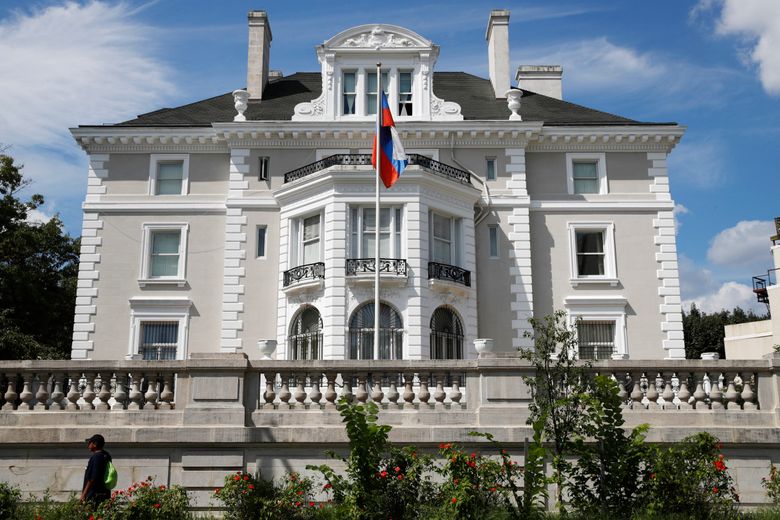
While Seattle is an important city for Russian intelligence collection efforts domestically, its consulate’s profile has generally been quieter than San Francisco’s or New York’s, according to twoformer U.S. intelligence officials who asked to remain anonymous but have knowledge of Russian activities in these areas. But the closure of the consulate is noteworthy nonetheless: Along with the administration’s shuttering of the San Francisco consulate in 2017, Russia will now lack a diplomatic facility west of Houston, or any diplomatic presence on the West Coast for the first time since 1971. Russian intelligence officers—at least those under diplomatic cover—will no longer operate in easy proximity to America’s two great tech capitals. Indeed, at least in Seattle, suspected Russia spies have already been caught attempting to infiltrate local tech companies.
“Certainly, there were enough issues that were important to the Russians in Seattle—the naval bases, Microsoft, Boeing, Amazon,” says John Sipher, a former CIA officer who worked closely with the FBI on counterespionage issues. “There was always nervousness within the national security agencies that the sheer number of ethnic Russians in these industries was something the Russians could take advantage of. I don’t know if closing Seattle was a strategic choice; nonetheless, the concentration of high-tech and military resources makes it a sensible target.”
After the closure of the Russian consulate in San Francisco, former senior U.S. intel officials told me that facility had, for decades, functioned as the primary hub for Russian intelligence-gathering in the Western United States. It featured key classified communications systems, and was a crucial collection center in Russia’s long-running effort to map out America’s fiber-optic cable network.
One of the two anonymous former intelligence officials I spoke with called Seattle a top-five U.S. city for Russian counterintelligence work, but a “smaller operation” than San Francisco. Seattle did not have the same type of communications facilities as San Francisco, the two former officials said. In fact, Russian diplomats used to regularly drive a van with protected diplomatic information from San Francisco to Seattle, said a second official, though the frequency of those trips decreased over time, when U.S. officials suspected the Russians had begun to move their communications to encrypted channels online.
Still, the Seattle area has some rich espionage targets. Firms like Boeing and Microsoft have long been of interest to Russian operatives, the former intel officials said. So have the many military bases in the area, including, pre-eminently, Naval Base Kitsap, located just across the Puget Sound from Seattle and home to eight nuclear-armed submarines. Administration officials have openly cited the Seattle consulate’s proximity to Boeing, and sensitive military bases, as reasons for its closure.
Because there is a seven-hour float from Kitsap to these nuclear-armed submarines’ dive point, the two former officials said, there are numerous opportunities to track the subs’ movements—a longstanding concern for U.S. intelligence and military officials. Knowing when a submarine is headed out to sea or how many submarines are running patrols at a given time, and potentially identifying new technologies on these vessels, are all valuable pieces of intelligence, these officials said. Moreover, U.S. intel officials have worried that in a worst-case-scenario—actual armed hostilities between the two countries—information gleaned from Russian operatives in the Pacific Northwest could be used to identify “choke points.” For instance, they might know the ideal places to fire a rocket-propelled grenade at a fishing boat in a narrow channel, which could prevent military vessels from deploying.
In the past, suspected intel operatives based at Russia’s Seattle consulate were observed engaging in the same sorts of behavior as their counterparts in San Francisco, the two formerintel officials said, including tracking down potential fiber-optic nodes (as part of Russia’s long-term effort to map where data were being transferred), or Cold War-era intelligence-collection sites, in Northwestern forests. U.S. officials also believed Russian operatives were traveling to remote beaches in the area in order to “signal,” or cryptically transmit and receive data, with interlocutors offshore. (There was a specific beach in Oregon these individuals would favor, the two former officials said.)
More recently, however, these activities appeared to die down, these individuals said, an event one of the former intel officials attributes to Edward Snowden’s 2013 disclosures, which some in the intelligence community believe led Russia to overhaul its strategies for domestic intelligence-gathering. Generally, this person said, Seattle seemed like a “proving ground” for junior Russian intelligence officers, a place to send less-experienced operatives to acclimate them to the United States. After Snowden, U.S. intel officials started seeing more “travelers” in the Seattle area—suspected intelligence operatives working under both diplomatic and nonofficial cover—flying in remotely to meet with individuals, thetwo former officials said.
The biggest Russia-related concern in Seattle was “cyber-related activities,” which were separate from the consulate, the two former officials said—including those of the local Kaspersky Labs affiliate. In July 2017, U.S. officials banned Moscow-based Kaspersky, which produces anti-virus software, from being used on any government computers, over fears about the company’s connections to Russian intelligence. U.S. counterintelligence officials were concerned that Kaspersky was being used as a tool for Russian covert communications, the two former officials said, and were also examining whether individuals affiliated with Kaspersky were actual engaging in cyber-espionage domestically. “As a private company, Kaspersky Lab does not have inappropriate ties to any government, including Russia, and the company has never helped, nor will help, any government in the world with its cyber espionage efforts,” a spokesperson for Kaspersky said. “The U.S. government actions against Kaspersky Lab lack sufficient basis, are unconstitutional, have been taken without any evidence of wrongdoing by the company, and rely upon subjective, non-technical public sources, such as uncorroborated and often anonymously sourced media reports, related claims, and rumors, which is why the company has challenged the validity of these actions in federal court.“
“Was Kaspersky looking at Microsoft or Boeing as opportunities to exploit? Was it just business development? Or were they actually engaged in trying to penetrate these enterprises?” asked one of the former officials. “The suspicions on Kaspersky have pretty much been borne out … when you look at the recent U.S. government decision, and what has been publicly reported on what the Israelis have been able to find out.” In 2017 the New York Times reported that Israeli intelligence had hacked into a Russian espionage operation, observing Russian operatives using back doors in Kaspersky software to scan for, and purloin, U.S. intelligence documents.
Russia’s interest in Microsoft is also well-documented. In 2010, U.S. officials deported Alexey Karetnikov, a 23-year-old Russian national, from the Seattle area, where he had been working at Microsoft as a software tester. U.S. officials believed he was actually a Russian intelligence officer, and linked him to the ring of 10 “illegals”—Russian deep-cover operatives who had been living in the United States—that U.S. officials had arrested and deported earlier that year. Two of those undercover operatives, Michael Zottoli and Patricia Mills (whose real names are Mikhail Kutsik and Natalia Pereverzeva), had lived in Seattle for years, even starting a family there. In Seattle, Kutsik worked at a telecommunications firm, and both operatives took finance classes at the University of Washington. In a 2017 article in Seattle Met Magazine, Kutsik and Pereverzeva’s former investments professor said he believed the Russians were interested in his class because many of his students went on to work for Amazon, Boeing or Microsoft. Kutsik, Pereverzeva and Karetnikov were not known to have been coordinating their activities with the Seattle consulate, one of the former officials said.
Even as Russian espionage continues to migrate outside consular facilities—to travelers, and individuals working locally under nonofficial cover—it is “no coincidence” that both shuttered diplomatic outposts were on the West Coast, said one of the former officials. No matter when—or if—these two consulates are reopened, Russian interest in the West Coast is likely to continue far into the foreseeable future.
“U.S. ambassador to Russia Jon Huntsman has been summoned to our ministry, where my deputy Sergei Ryabkov is briefing him on the tit-for-tat steps against the U.S.,” Lavrov said, according to the state-run Tass Russian News Agency.
“They include the expulsion of the same number of diplomats and our decision to withdraw consent to the work of the Consulate General in St. Petersburg.” More here.
The U.S. military isn’t alone in its plans to pour money into drones, ground robots, and artificially intelligent assistants for command and control. Russia, too, will be increasing investment in these areas, as well as space and information warfare, Russian Army Gen. Valery Gerasimov told members of the Russian Military Academy of the General Staff last Saturday. In the event of war, Russia would consider economic and non-military government targets fair game, he said.
The comments are yet another sign that the militaries of the United States and Russia are coming more and more to resemble one another in key ways — at least in terms of hyping future capabilities. The chief of the General Staff said the Russian military is already developing new drones that could perform strike as well as reconnaissance missions. On the defensive side, the military is investing in counter-drone tech and electromagnetic warfare kits for individual troops.
The Russians are building an “automated reconnaissance and strike system,” he said, describing an AI-drive system that sounds a bit like the Maven and Data to Decision projects that the United States Air Force is pursuing. The goal, according to Gerasimov, was to cut down on the time between reconnaissance for target collection and strike by a factor of 2.5, and to improve the accuracy of strike by a factor of two. The Russian government is developing new, high-precision strike weapons for the same purpose. “In the future, precision weapons, including advanced hypersonics, will allow for the transfer the fundamental parts of strategic deterrence to non-nuclear weapons,” he said.
Sam Bendett, a research analyst at the Center for Naval Analyses, says the moves signal that the Russian military is trying to push fighting further away from its borders, thus growing the area to which it can deny access, or at least appear to do so. “Russia’s current force composition is aiming at short-range, short-duration conflict where its forces can overwhelm the adversary close to Russian borders. The new technology Gerasimov discusses would allow Russia to conduct deep-strikes within enemy territory, thus ‘pushing’ the actual fighting far from Russian borders and Russian vulnerability to Western precision-guided weapons,” he said.
What would Gerasimov hit with those weapons? In his talk, the Russian general said that enemy economic and non-military aspects of government could be on the list of potential targets. “The objects of the economy and the state administration of the enemy will be subject to immediate destruction, in addition to the traditional spheres of armed struggle, the information sphere and space will be actively involved,” he told the audience.
Says Bendett, “the use of such technologies is especially important given the type of war Moscow intends to fight. Gerasimov stated that potential adversary’s economic targets, as well as government’s ability to govern, will be fair game. Striking deep into enemy territory can be accomplished more easily by unmanned systems—whether armed with EW, various sensors or strike components … All this also depends on the Russian military-industrial complex’s ability to properly marshal the needed resources in an organized fashion in order to field this technology.”
One other explanation for the tough talk: Russia is hardly an even match for the United States in terms of either military spending or capability. The recently announced $61 billion increase in the U.S. military budget over last year’s budget (bringing the total to $700 billion) is greater than the entire Russian military budget, which sits around $46 billion. That number represents about 2.86 percent of Russian GDP. In December, Putin said that the government would “reduce” future expenditures.
“Gerasimov is, like anyone in a senior military post, a lobbyist as much as a soldier, and at a time when the Russian defense budget is going to continue to shrink, he is doing what he can both to maintain it as high as possible and also to tilt procurement away from older-fashioned metalwork — which is really a way for the Kremlin to subsidise the defence industries rather than what the military want — and towards advanced communications, reconnaissance and targeting capabilities,” said Mark Galeotti, the head of the Center for European Security at UMV, the Institute of International Relations, Prague.
According to Bendett, Russian government leaders are “hedging against impending geopolitical and economic uncertainty by trying to keep their military budget within certain parameters. The [Ministry of Defense] has been talking repeatedly about the rising share of new military tech in service of the Russian military, slowly phasing out older systems in favor of new ones. So the high-tech approach that Gerasimov outlined — space-based weapons, ‘military robots’ — is the next evolutionary stage in Russian military’s evolution to a more high-tech, sophisticated forces capable of rapid strike.”
Gerasimov also took a moment to denounce what he claimed were Western attempts to destabilize the Russian government through information and influence warfare and other subtle tactics. The charge may strike Western audiences as brazenly hypocritical given the Kremlin’s on-going attempts to sow misinformation to global audiences through social media, email theft and propaganda campaigns. But it’s an old talking point for Gerasimov.
Said UMV’s Galeotti: “At a time when the Kremlin is demonstrably worried about what it sees as Western ‘gibridnaya voina‘ [or hybrid war] being waged against it — we don’t have to accept their premises to acknowledge that the Russians genuinely believe this — he is staking out the military’s claims to being relevant in this age. And his answer, as in his infamous 2013 article, and as played out in the first stage of Zapad [the major wargame Russia executed in Belarus last summer] is that the military will deploy massive firepower to smash any foreign incursions meant to instigate risings against Moscow.”
Okay, check this out. This is essentially a whole unique type of cyber war, this time it is the user vs. the tech companies.
That whole thing about presumed privacy and data protection is a myth…no it is a lie. Question is how long has this been going on and is it all explained in terms of service? Is privacy a human right? Nah, not when it comes to tech companies. Congress should also include Microsoft in this hearing. We just need facts to make independent decisions about how we interact on the internet and individuals must practice information hygiene when using a keyboard be it on a computer, a Mac or a smart phone. Facebook has already made some changes but are they real and effective?
The harvesting of our personal details goes far beyond what many of us could imagine. So I braced myself and had a look.
A slice of the data that Facebook keeps on the author: ‘This information has millions of nefarious uses.’ Photograph: Dylan Curran
Want to freak yourself out? I’m going to show just how much of your information the likes of Facebook and Google store about you without you even realising it.
Google knows where you’ve been
Google stores your location (if you have location tracking turned on) every time you turn on your phone. You can see a timeline of where you’ve been from the very first day you started using Google on your phone.
Here is every place I have been in the last 12 months in Ireland. You can see the time of day that I was in the location and how long it took me to get to that location from my previous one.
‘A Google map of every place I’ve been in Ireland this year.’ Photograph: Dylan Curran
Google knows everything you’ve ever searched – and deleted
Google stores search history across all your devices. That can mean that, even if you delete your search history and phone history on one device, it may still have data saved from other devices.
Google creates an advertisement profile based on your information, including your location, gender, age, hobbies, career, interests, relationship status, possible weight (need to lose 10lb in one day?) and income.
Google stores information on every app and extension you use. They know how often you use them, where you use them, and who you use them to interact with. That means they know who you talk to on Facebook, what countries are you speaking with, what time you go to sleep.
Google stores all of your YouTube history, so they probably know whether you’re going to be a parent soon, if you’re a conservative, if you’re a progressive, if you’re Jewish, Christian, or Muslim, if you’re feeling depressed or suicidal, if you’re anorexic …
The data Google has on you can fill millions of Word documents
Google offers an option to download all of the data it stores about you. I’ve requested to download it and the file is 5.5GB big, which is roughly 3m Word documents.
This link includes your bookmarks, emails, contacts, your Google Drive files, all of the above information, your YouTube videos, the photos you’ve taken on your phone, the businesses you’ve bought from, the products you’ve bought through Google …
They also have data from your calendar, your Google hangout sessions, your location history, the music you listen to, the Google books you’ve purchased, the Google groups you’re in, the websites you’ve created, the phones you’ve owned, the pages you’ve shared, how many steps you walk in a day …
Facebook offers a similar option to download all your information. Mine was roughly 600MB, which is roughly 400,000 Word documents.
This includes every message you’ve ever sent or been sent, every file you’ve ever sent or been sent, all the contacts in your phone, and all the audio messages you’ve ever sent or been sent.
‘A snapshot of the data Facebook has saved on me.’ Photograph: Dylan Curran
Facebook stores everything from your stickers to your login location
Facebook also stores what it thinks you might be interested in based off the things you’ve liked and what you and your friends talk about (I apparently like the topic “girl”).
Somewhat pointlessly, they also store all the stickers you’ve ever sent on Facebook (I have no idea why they do this. It’s just a joke at this stage).
They also store every time you log in to Facebook, where you logged in from, what time, and from what device.
And they store all the applications you’ve ever had connected to your Facebook account, so they can guess I’m interested in politics and web and graphic design, that I was single between X and Y period with the installation of Tinder, and I got a HTC phone in November.
(Side note, if you have Windows 10 installed, this is a picture of just the privacy options with 16 different sub-menus, which have all of the options enabled by default when you install Windows 10)
Privacy options in Facebook. Photograph: Dylan Curran
They can access your webcam and microphone
The data they collect includes tracking where you are, what applications you have installed, when you use them, what you use them for, access to your webcam and microphone at any time, your contacts, your emails, your calendar, your call history, the messages you send and receive, the files you download, the games you play, your photos and videos, your music, your search history, your browsing history, even what radio stations you listen to.
Here are some of the different ways Google gets your data
I got the Google Takeout document with all my information, and this is a breakdown of all the different ways they get your information.
‘My Google Takeout document.’ Photograph: Dylan Curran
Here’s the search history document, which has 90,000 different entries, even showing the images I downloaded and the websites I accessed (I showed the Pirate Bay section to show how much damage this information can do).
‘My search history document has 90,000 different entries.’ Photograph: Dylan Curran
Google knows which events you attended, and when
Here’s my Google Calendar broken down, showing all the events I’ve ever added, whether I actually attended them, and what time I attended them at (this part is when I went for an interview for a marketing job, and what time I arrived).
‘Here is my Google calendar showing a job interview I attended.’ Photograph: Dylan Curran
And Google has information you deleted
This is my Google Drive, which includes files I explicitly deleted including my résumé, my monthly budget, and all the code, files and websites I’ve ever made, and even my PGP private key, which I deleted, that I use to encrypt emails.
This is my Google Fit, which shows all of the steps I’ve ever taken, any time I walked anywhere, and all the times I’ve recorded any meditation/yoga/workouts I’ve done (I deleted this information and revoked Google Fit’s permissions).
I’ll just do a short summary of what’s in the thousands of files I received under my Google Activity.
First, every Google Ad I’ve ever viewed or clicked on, every app I’ve ever launched or used and when I did it, every website I’ve ever visited and what time I did it at, and every app I’ve ever installed or searched for.
‘They have every single Google search I’ve made since 2009.’
They also have every image I’ve ever searched for and saved, every location I’ve ever searched for or clicked on, every news article I’ve ever searched for or read, and every single Google search I’ve made since 2009. And then finally, every YouTube video I’ve ever searched for or viewed, since 2008.
This information has millions of nefarious uses. You say you’re not a terrorist. Then how come you were googling Isis? Work at Google and you’re suspicious of your wife? Perfect, just look up her location and search history for the last 10 years. Manage to gain access to someone’s Google account? Perfect, you have a chronological diary of everything that person has done for the last 10 years.
This is one of the craziest things about the modern age. We would never let the government or a corporation put cameras/microphones in our homes or location trackers on us. But we just went ahead and did it ourselves because – to hell with it! – I want to watch cute dog videos.
Dylan Curran is a data consultant and web developer, who does extensive research into spreading technical awareness and improving digital etiquette
Lauren Price has been on Facebook (FB) for eight years and claims she frequently saw political ads on the social network during the 2016 election. She is suing the companies on behalf of other US Facebook members whose information was also collected by Cambridge Analytica, a data firm that worked with the Trump campaign.
The proposed class-action lawsuit was filed Tuesday at the US District Court in San Jose, California. Price is seeking unspecified damages.
This is the first lawsuit brought by a Facebook user over the Cambridge Analytica news, but others are likely to follow. The lawsuit is part of a growing backlash against both companies.
On Tuesday, Facebook (FB) investor Fan Yuan filed a lawsuit against the company in federal court on behalf of other investors. The suit claims Facebook made “misleading statements” and neglected to disclose details about third-party access to data, which caused the company’s stock price to fall significantly.
Price’s complaint adds that the companies have violated the privacy of million of people in the U.S. alone, and that users now have a higher risk of identity theft as a result.
“There’s going to be a lot of litigation flowing from this,” said attorney Jay Edelson of Edelson PC in Chicago. He is not involved with either case, but his firm does plan on filing related lawsuits in the near future.
“The most direct liability is against Cambridge Analytica. We believe they have violated a host of city, state, and federal laws,” said Edelson. “The case against Facebook is less direct. On the surface, many believe that Facebook acted, perhaps, negligently. We believe we will be able to provide more context to how Cambridge Analytica fits Facebook’s overall business model.” More here from CNN.
Civil rights groups filed a federal lawsuit Tuesday against Facebook for enabling housing discrimination.
The housing rights activists, led by the National Fair Housing Alliance (NFHA), alleged that Facebook’s ad practices allow landlords and real estate agents to avoid serving housing ads to certain groups of people. The NFHA said landlords are able to avoid showing housing ads to women and families, for example.
“Amid growing public concern in the past weeks that Facebook has mishandled users’ data, our investigation shows that Facebook also allows and even encourages its paid advertisers to discriminate using its vast trove of personal data,” Lisa Rice, NFHA’s president and CEO, said in a statement.
“Facebook’s use and abuse of user data for discriminatory purposes needs to stop. It is already a challenge for women, families with children, people with disabilities and other under-served groups to find housing.”
Earlier this month, it was revealed that a political consultancy group was able to exploit Facebook user data on behalf of the 2016 presidential campaign for Donald Trump. Facebook chief executive Mark Zuckerberg personally apologized, but the social media giant has remained mired in controversy regarding how third parties can access user data.
Shares of Facebook dropped another 4.9 percent Tuesday to close at $152.22. Since the data breach was widely publicized on March 17, the stock has plummeted 18 percent.
The federal lawsuit filed by NFHA alleged that the way Facebook’s ad service is built allows for discrimination when it comes to housing. Landlords can choose not to show ads to certain groups of people based on gender, family status and a series of other qualities.
“Facebook’s platform that excludes these consumers from ever seeing certain ads to rent or buy housing must be changed immediately,” Rice continued.
“Facebook ought to be opening doors to housing opportunities instead of closing them.”
Facebook has not released any comments on the NFHA lawsuit.

 Electronic attack J-16
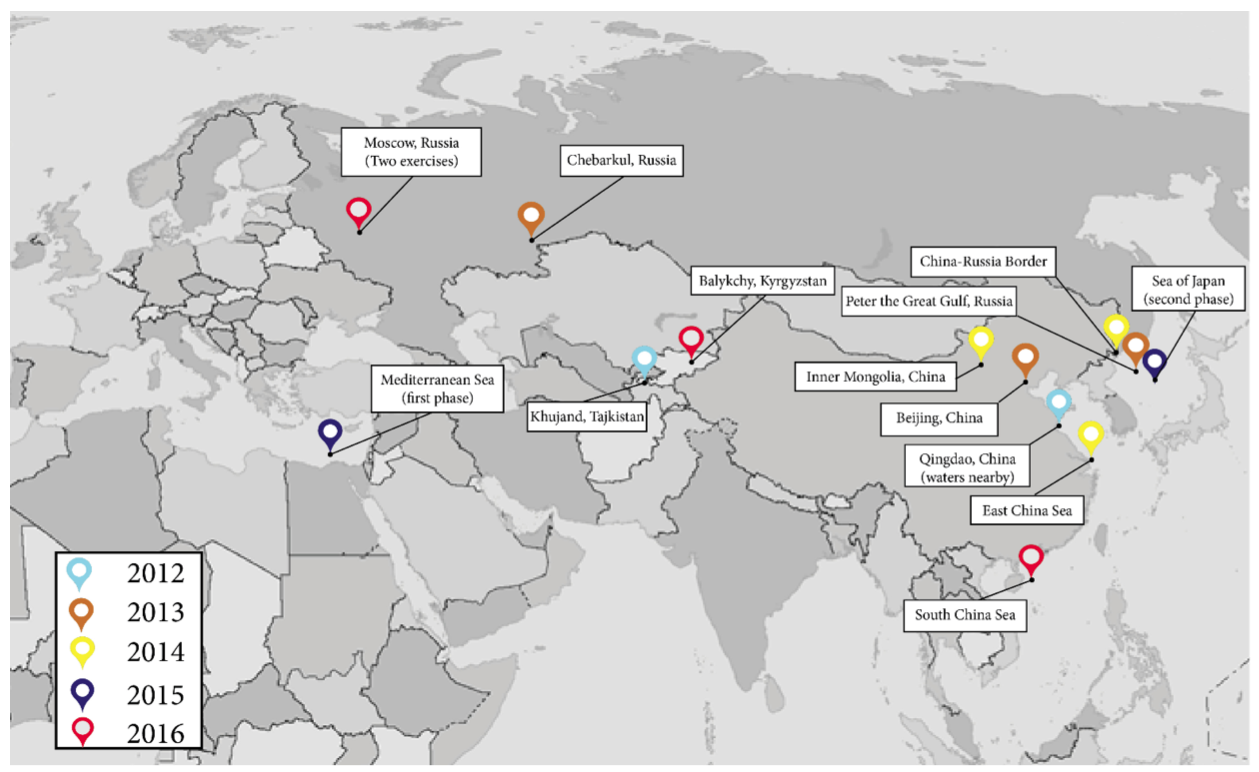 Before Russia and China began their recent series of bilateral exercises, the key tie between Moscow and Beijing was arms sales and military technology cooperation — totaling about $26 billion from 1992 to 2006 — according to estimates cited in the report.