An affordable price is probably the major benefit persuading people to buy drugs at www.americanbestpills.com. The cost of medications in Canadian drugstores is considerably lower than anywhere else simply because the medications here are oriented on international customers. In many cases, you will be able to cut your costs to a great extent and probably even save up a big fortune on your prescription drugs. What's more, pharmacies of Canada offer free-of-charge shipping, which is a convenient addition to all other benefits on offer. Cheap price is especially appealing to those users who are tight on a budget
Service Quality and Reputation Although some believe that buying online is buying a pig in the poke, it is not. Canadian online pharmacies are excellent sources of information and are open for discussions. There one can read tons of users' feedback, where they share their experience of using a particular pharmacy, say what they like or do not like about the drugs and/or service. Reputable online pharmacy canadianrxon.com take this feedback into consideration and rely on it as a kind of expert advice, which helps them constantly improve they service and ensure that their clients buy safe and effective drugs. Last, but not least is their striving to attract professional doctors. As a result, users can directly contact a qualified doctor and ask whatever questions they have about a particular drug. Most likely, a doctor will ask several questions about the condition, for which the drug is going to be used. Based on this information, he or she will advise to use or not to use this medication.

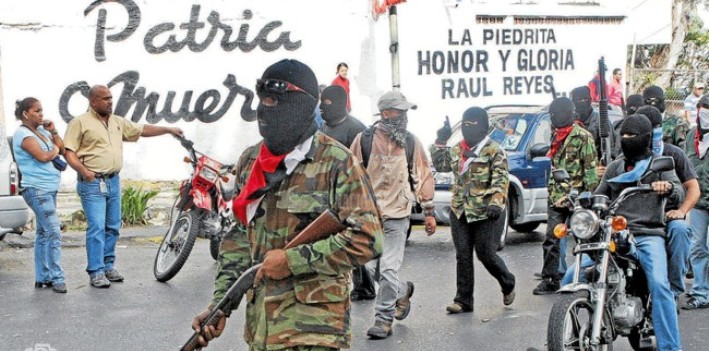
Meet Maduro’s Gang: the Colectivos

Not only does Maduro while struggling to hold on to power in Venezuela make full use of 25,000 Cuban military forces along with a security team provided by Putin known as the Wagner Group, but Maduro terrorizes his own citizens by deploying his ‘colectivos’.

¿Los llamamos colectivos armados? por @atilanolinares – El ...

Really?

Yes, they are rather like his own armada on motorcycles. And they too patrol the border between Venezuela and Columbia. The colectivos have been around for quite a while, in fact they were salaried going back to the Chavez regime. They have cell or branch operations in and around Caracas. They tell the media and citizens their job is to clean up corruption, enforce laws and to assist the police. Yeah….SURE.

It is likely that the colectivos also coordinate with the FAES, that is supposed to be the Venezuelan police but actually most of them come from the Bolivian government under orders. Nonetheless, all of these groups continue to believe in and carry on the Chavez revolution.

5 Realities Of Reporting The News In A Brutal Dictatorship ...

Negotiating with Maduro to get him to leave power and move to a sunny island as John Bolton suggested hardly means there will be peace after his departure given the marxist/communist operations that will remain. The interim president, Guido with the help of almost 80 countries will hardly have an easy transition to any new government.

The colectivos are not a gang but rather a Maduro/Chavez sanctioned paramilitary unit. They operate in every part of Venezuelan society, including schools, courts, retail stores and in hospitals. They control sports, provide food and humanitarian needs, television and radio and control community centers. Sounds rather like al Qaeda or Islamic State, doesn’t it? Many of the colectivos received training from FARC. That was/is the terror group that Obama and John Kerry negotiated with that was/is based in Columbia. (they still operate today, by the way)

The Venezuelan colectivo known as "La Piedrita" does not hide its admiration for the FARC or Raúl Reyes.

The colectivos have direct access to the government resources including intelligence, money and weapons and tear gas. Many of them work during various shifts for the Maduro and the Bolivian government. Under approval of Maduro, the colectivos deal in the sale and distribution of drugs, gambling and extort anyone they can.


The Creation of a Failed Venezuela due to Maduro

Last year, Lancet Infectious Diseases Journal published a major warning about malaria in Venezuela. In spite of 3 million people fleeing their home country since 2014, the economic condition in Venezuela continues in a financial tail-spin. Treatment of malaria, measles and diphtheria as well as dengue and Zika are just not being treated. Further, the infant mortality rate is skyrocketing. The most recent population with malaria is estimated to be 411, 586.

Maduro has called on Russia, Cuba and Bolivia to help with military action, police action and even his personal security. Cuba denies there are forces in Venezuela. Hold on Cuba….

Informal information published by Foresightcuba, which is dedicated to presenting statistics about the island, counts Cuba’s military presence in Venezuela as follows: 4,500 Cuban infantrymen organized in 8 battalions of 500 troops, plus a battalion stationed in Fuerte Tiuna; 2 Brigade Generals (Herminio Hernández Rodríguez and Alejandro Ronda Marrero, one stationed in Fuerte Tiuna, another in Barquisimeto); 4 colonels (Rodrigo Hernández Maite, Rufino Zabaleta Corvino, Jaime Freitas Sambrano, and Simon Guillermo Senior); 8 lieutenant colonels; 6 frigate captains, and 25 junior officers.

This information details who they are with name and surname, their functions, where they are based, the weapons they use, and notes that they wear Venezuelan military insignia.

A long-standing situation

According to an article published in February 2010 by journalist Leandro Dario, international assistant editor of the newspaper Dario Perfi, by that time the then president of Venezuela, Hugo Chávez, had incorporated the Cuban military into the Armed Forces of the country with the aim of inserting the high command of Cuba into Venezuelan military forces, to ensure their control in the barracks and project socialism. More here.

This certainly now speaks to the humanitarian aid several countries are working to get to the desperate Venezuelan people that Maduro has cut off completely. Just two days ago:

Grave situation developing right now inside of #Colombia. @freddysuperlano a member of the National Assembly of #Venezuela was poisoned this morning at breakfast inside of Colombia & is in serious condition at the hospital. His assistant Carlos Salinas has died from poisoning.

Enter Senator Marco Rubio, he has been right on top of the conditions for many months sounding all the alarms as VP Mike Pence is presently in Columbia meeting with the interim Venezuelan President Guido and The Lima Group.

There are 5 naturalized American citizens still being jailed in Venezuela. And China deployed a tech envoy to Caracas to in many cases terminate the internet and other telecom services.

Meanwhile, here is more.

In part:

Due to Russia’s support for President Bashar al-Assad in the Syrian civil war, the Kremlin has been given significant more control over Syria’s oil and gas industry. In 2017, Syria signed a deal giving Russia sole rights to its oil and gas production. In return for saving desperate regimes, Russia has gained significant control over global resource markets on top of its own large reserves.

But Assad has also given Russia a permanent air base and an expansion of Russian naval facilities in the country. The Kremlin is banking on mirroring such agreements in Venezuela. Joint Russian-Venezuelan naval exercises were held in 2008, while two nuclear-capable bombers flew to Venezuela’s La Orchila island in December 2018.

A instalação de uma base de bombardeiros russos na ...

Though Venezuelan law prohibits permanent foreign military bases, Russia and Venezuela announced the creation of a ‘temporary’ long-term Russian airbase on La Orchila soon after the flight demonstration. Together with Venezuela’s Russian weapons imports, the two militaries will find it easier to coordinate Russian power projection in the Caribbean.

Expanding a military presence in Venezuela will bring up uncomfortable memories from the Cuban Missile Crisis. In 2017, Igor Sechin held talks with Cuban President Raul Castro and agreed to expand oil and gas ties. The potential for a Russian base in Venezuela came after steady integration through natural resource industries, a formula that Cuba appears intent on replicating.

Stakes have risen in Venezuela since Russia allegedly sent hundreds of personnel from its most notorious private military company, Wagner, in January. Deploying Wagner will allow Russia to mask its presence in Venezuela, similar to recent conflicts.

Many of Wagner’s personnel are ex-Russian soldiers. They have worked with rebel elements in Ukraine and been granted partial control of re-captured oil and gas fields in Syria. Wagner has also been deployed across Africa to safeguard regimes under scrutiny from the West and international institutions, as well as protect their lucrative mining operations.

Wagner represents a privatization of security backed by the power of the Russian military. Rosneft and Gazprom, Russia’s other resource crown jewels, operate their own security forces, and together could be the force that takes over from the Russian military in Syria and potentially in Venezuela.

Russia’s ability to safeguard desperate regimes has made other ‘rogue states’ increasingly look to Russia as a guarantor of their security. Keeping Maduro in power represents part of a wider policy of assisting other states hostile to wider US foreign policy.

The Kremlin often offers diplomatic support to North Korea and relieved most of its debt obligations to Russia in 2014. In the years that followed, Korean rocket tests increased dramatically, drawing the attention of the U.S. More recently, not only has Russia aided the Syrian government in the civil war, it has done so in tandem with Iranian forces after decades of Iranian military isolation.

Backed by the U.S., Venezuelan opposition leader Juan Gaido declared himself acting president on January 23, ushering in the latest escalation of Venezuela’s political crisis. He was soon recognized as interim president by the U.S., Canada, the EU, and most Latin American countries. China, Russia, Turkey, Iran and others continue to recognize Maduro, who still has the broad support of the Venezuelan military.

The U.S. has imposed sanctions on Maduro and individuals associated with him, as well as PVSDA, which is now stacked with Maduro allies. But the ability of Maduro and the Venezuelan economy to withstand the pressure suggests that, though the sanctions may damage his administration, they may not be enough to force him out.

Chavez fought to gain control over Venezuela’s oil supply and push out the U.S. and the West, only to have Maduro establish a new reliance on Russia. With the Kremlin’s help, his administration may survive, in return for Russian control over Venezuela’s oil industry and the establishment of a military footprint in the United States’ backyard. For the full summary, go here.


U.S. is Presently Under 31 National Emergency Orders

Of particular note is during the peaceful transfer of power from Obama to Trump, Obama told Trump the number one threat to the United States and her interests is North Korea. Notice that Obama never made any declaration regarding North Korea. Notice too that under Obama, the Sinaola Cartel, the narco terror organization that killed thousands in Mexico and many in the United States was not part of any declaration. But….Obama did declare a national emergency due to the socialist revolution in Venezuela and hence that has caused 3 million Venezuelans to flee.

Oh yeah….nothing from Obama either regarding Islamic State and Syria or Iraq…..or Russia considering Moscow’s intrusion into our 2016 election systems…..
Image result for presidential emergency powers

***

According to the Federal Register, 58 national emergencies have been declared since the National Emergency Act of 1976 was signed into law by President Gerald Ford.

And 31 have been annually renewed and are currently still in effect, as listed in the Federal Register.

Here’s a list of the presidents who declared still ongoing national emergencies.

President Jimmy Carter


Nov 14, 1979: The National Emergency With Respect to Iran, in response to the Iran hostage crisis.

President Bill Clinton

Nov 14, 1994: The National Emergency With Respect to the Proliferation of Weapons of Mass Destruction, that combined two previous national emergencies focused on weapons of mass destruction.

Jan. 2, 1995: The National Emergency With Respect to Prohibiting Transactions with Terrorists Who Threaten to Disrupt the Middle East Peace Process placed economic sanctions in response to the Jerusalem bombing.

March 15, 1995: The National Emergency With Respect to Prohibiting Certain Transactions with Respect to the Development of Iranian Petroleum Resources was an effort to prevent potential deals between oil companies.

October 21, 1995: The National Emergency With Respect to Blocking Assets and Prohibiting Transactions with Significant Narcotics Traffickers Centered in Colombia was declared after increased reports of drug cartels laundering money through American companies.

March 1, 1996: The National Emergency With Respect to Regulations of the Anchorage and Movement of Vessels with Respect to Cuba was after civilian planes were shot down near Cuba

November 3, 1997: The National Emergency With Respect to Blocking Sudanese Government Property and Prohibiting Transactions with Sudan implemented economic and trade sanctions.

President George W. Bush


June 26, 2001: The National Emergency With Respect to Blocking Property of Persons Who Threaten International Stabilization Efforts in the Western Balkans imposed sanctions on those aiding Albanian insurgents in Macedonia

Aug 17, 2001: The National Emergency With Respect to Export Control Regulations renewed presidential power to control exports in a national emergency since the Export Administration Act of 1979 lapsed.

Sept 14, 2001: The National Emergency with Respect to Certain Terrorist Attacks was in response to the terrorist attacks of 9/11 and the continuing and immediate threat of further attacks on the United States.

Sept 23, 2001: The National Emergency With Respect to Persons who Commit, Threaten to Commit, or Support Terrorism was in response to the terrorist attacks of 9/11.

March 6, 2003: The National Emergency With Respect to Blocking Property of Persons Undermining Democratic Processes or Institutions in Zimbabwe was an effort to punish associates of Robert Mugabe.

May 22, 2003: The National Emergency With Respect to Protecting the Development Fund for Iraq and Certain Other Property in Which Iraq has an Interest was issued following the U.S. invasion of Iraq.

May 11, 2004: The National Emergency With Respect to Blocking Property of Certain Persons and Prohibiting the Export of Certain Goods to Syria was in response to Syria supporting terrorist activity in Iraq.

June 16, 2006: The National Emergency With Respect to Blocking Property of Certain Persons Undermining Democratic Processes or Institutions in Belarus was in response to charges of fraud in the Belarus presidential election.

Oct 27, 2006: The National Emergency With Respect to Blocking Property of Certain Persons Contributing to the Conflict in the Democratic Republic of the Congo was in response to violence around the Congolese presidential election runoff.

Aug 1, 2007: The National Emergency With Respect to Blocking Property of Persons Undermining the Sovereignty of Lebanon was in response to a breakdown of the rule of law in Lebanon.

June 26, 2008: The National Emergency With Respect to Continuing Certain Restrictions with Respect to North Korea cited the risk of proliferation of weapons-usable fissile material. President Trump renewed this June 22, 2018 citing the “existence and risk of proliferation of weapons-usable fissile material on the Korean Peninsula and the actions and policies of the Government of North Korea continue to pose an unusual and extraordinary threat.”

President Barack Obama

April 12, 2010: The National Emergency With Respect to Blocking Property of Certain Persons Contributing to the Conflict in Somalia was in respect to threats posed by Somali pirates.

February 25, 2011: The National Emergency With Respect to Blocking Property and Prohibiting Certain Transactions Related to Libya froze the assets of Libyan leader Muammar Gaddafi.

July 25, 2011: The National Emergency With Respect to Blocking Property of Transnational Criminals was in response to the rise in crime by specific organizations: Los Zetas (Mexico), The Brothers’ Circle (former Soviet Union countries), the Yakuza (Japan), and the Camorra (Italy).

May 16, 2012: The National Emergency With Respect to Blocking Property of Persons Threatening the Peace, Security, or Stability of Yemen addressed political unrest within the Yemen government.

March 16, 2014: The National Emergency With Respect to Blocking Property of Certain Persons Contributing to the Situation in Ukraine was in response to the Russian invasion of Crimea.

April 3, 2014: The National Emergency With Respect to Blocking Property of Certain Persons With Respect to South Sudan was in response to the ongoing civil war.

May 12, 2014: The National Emergency With Respect to Blocking Property of Certain Persons Contributing to the Conflict in the Central African Republic was in response to violence towards humanitarian aid workers.

March 8, 2015: The National Emergency With Respect to Blocking Property and Suspending Entry of Certain Persons Contributing to the Situation in Venezuela was in response to human rights violations.

April 1, 2015: The National Emergency With Respect to Blocking the Property of Certain Persons Engaging in Significant Malicious Cyber-Enabled Activities was in response to Chinese cyber attacks on the U.S.

Nov 23, 2015: The National Emergency With Respect to Blocking Property of Certain Persons Contributing to the Situation in Burundi was declared after a failed coup.

President Donald Trump


Dec 20, 2017: The National Emergency With Respect to Blocking the Property of Persons Involved in Serious Human Rights Abuse or Corruption imposed sanctions on the Myanmar general for his role persecuting Rohingya Muslims.

Sept 12, 2018: The National Emergency With Respect to Imposing Certain Sanctions in the Event of Foreign Interference in a United States Election attempted to prevent any meddling with the 2018 midterm elections amid the ongoing investigation into Russian interference in the 2016 presidential election.

Nov 27, 2018: The National Emergency With Respect to Blocking Property of Certain Persons Contributing to the Situation in Nicaragua was declared by President Trump in response to violence and the Ortega regime’s “systematic dismantling and undermining of democratic institutions and the rule of law” that constitutes an “unusual and extraordinary threat to the national security and foreign policy of the United States.”

The Lima Group vs. Maduro

It is a matter of time that Maduro flees somewhere and likely with stolen money of which it appears the U.S. Treasury and the Swift Banking System is watching carefully. The United States is listing those rogue companies and countries and people evade sanctions and are helping Maduro move money for various reasons, money that belongs to Venezuela and to her people. Keep a watchful eye of South Africa, Russia, Cuba, Turkey, Syria and Iran. More punitive sanctions may be bubbling to the surface.

Contrary to many democrats, it was not President Trump that began is Venezuelan revolution or the eventual ouster of Maduro. In fact, it was The Lima Group joined by the Organization of American States.

PressTV-Mexico urges Lima Group not to meddle in Venezuela ...


Back in January of 2019:

Thirteen members of the Lima Group of nations said they will not recognize Venezuelan President Nicolás Maduro as the legitimate leader of his nation when he takes office on Thursday for a new six-year term, threatening to ratchet up sanctions and international pressure.

Foreign ministers from the Lima Group said they will not recognize the presidency of Venezuela’s Nicolas Maduro when he begins a new six-year term on Jan. 10. Missing from Friday’s group statement was Mexico, a founding member of the bloc of 14 nations.

In a statement issued Friday in Peru, the foreign ministers of the bloc said that Venezuela’s snap presidential elections on May 20, which led to Maduro’s disputed victory, did not “provide the guarantees or meet the international standards necessary for a free, just and transparent process.”

The group also said it would bar Venezuelan officials from traveling to their nations and might impose financial sanctions — including barring those officials from using the local banking system.

The Lima Group said Maduro should hand over the reins of government to the opposition-controlled National Assembly, the only branch of government it recognizes as legitimate.

Maduro, who came to power in 2013 after the death of his mentor Hugo Chávez, is unlikely to be moved by the new round of condemnation. He often accuses Washington and its allies in the region — particularly Colombia — of trying to topple his “socialist revolution” and waging an “economic war” against the once wealthy but now struggling nation. In recent years, more than 3 million people have fled Venezuela due to hunger, violence and political turmoil.

The countries that signed Friday’s statement are: Argentina, Brazil, Canada, Chile, Colombia, Costa Rica, Guatemala, Guyana, Honduras, Panama, Paraguay, Peru and St. Lucia.

No one is more current or has a more cogent assessment of Venezuela that Senator Marco Rubio. The Heritage Foundation hosted the Senator for his view, facts and summary of events in Venezuela.

Yup, Iran/Hezbollah Really is in Venezuela

Primer:

WASHINGTON (Reuters) – The U.S. military is prepared to protect U.S. personnel and diplomatic facilities in Venezuela if needed, the U.S. admiral in charge of American forces in South America said on Thursday.

“We are prepared to protect U.S. personnel and diplomatic facilities if necessary,” Navy Admiral Craig Faller, the head of U.S. Southern Command, said during a Senate Armed Services Committee hearing.

He did not provide any details on how the U.S. military might respond.

Elliott Abrams, Washington’s special envoy on Venezuela, said the aid effort was being coordinated with Guaido’s team but that the aid would not be forced into Venezuela.

“Let it in, that’s what we’re asking, let it in,” Abrams told reporters at a State Department briefing, calling on members of Venezuela’s armed forces to persuade Maduro to step down or to disobey his orders.

He said the supplies would be delivered to Venezuelans when it was “logistically safe” to do so.

The Latest: Venezuelan man urges military to let in US aid ...

Meanwhile:

Ghazi Nasr Al-Din fundraisers for and with Hezbollah. He also is a player in operational issues which includes a Hizbollah community center and operations office in Venezuela. He speaks Arabic and Spanish. Born in Beirut, Lebanon, he has been on the FBI Most Wanted List for several years.

Al Din along with Fawzi Kan’an are based in Venezuela and have been since at least 2008.

GHAZI NASR AL DIN

Ghazi Nasr al Din is a Venezuela-based Hizballah supporter who has utilized his position as a Venezuelan diplomat and the president of a Caracas-based Shi’a Islamic Center to provide financial support to Hizballah. Nasr al Din served until recently as Charge d’ Affaires at the Venezuelan Embassy in Damascus, Syria, and was subsequently appointed the Director of Political Aspects at the Venezuelan Embassy in Lebanon.

Nasr al Din has counseled Hizballah donors on fundraising efforts and has provided donors with specific information on bank accounts where the donors’ deposits would go directly to Hizballah.

Ghazi Nasr al Din has met with senior Hizballah officials in Lebanon to discuss operational issues, as well as facilitated the travel of Hizballah members to and from Venezuela. In late January 2006, Nasr al Din facilitated the travel of two Hizballah representatives to the Lebanese Parliament to Caracas to solicit donations for Hizballah and to announce the opening of a Hizballah-sponsored community center and office in Venezuela. The previous year, Nasr al Din arranged the travel of Hizballah members to attend a training course in Iran.

AKAs: Haj Ghazi Nasseredine

Ghazi Nassereddine

Gazi Nasseridine

Gazi Nasser El-Din

Ghazil Nasser Al-Din

Haj Ghazzi Nassereddine

Ghassan Attef Salame Nasserddine

Ghassan Nasr El Din Ghassan

Ghazi Nasserddine

Ghazi `Atef Nasraldine

Atef Salameh Nasserdine Ghasan

Hajj Ghazi `Atif Nasr al-Din

Venezuelan Cedula: 18.190.527

Venezuelan Passport: B-0472561

DOB: 13DEC 1962

POB: Lebanon

FAWZI KAN’AN

Fawzi Kan’an is a Venezuela-based Hizballah supporter and a significant provider of financial support to Hizballah. Kan’an has facilitated travel for Hizballah members and sent money raised in Venezuela to Hizballah officials in Lebanon.

Kan’an has met with senior Hizballah officials in Lebanon to discuss operational issues, including possible kidnappings and terrorist attacks. Further, Kan’an has also traveled with other Hizballah members to Iran for training.


AKAs: Fazi Canaan

Faouzi Can’an

Fouzi Kanan

Fauzi Kanaan

Fawzi Kan’an

Fauzi Ganan

Maustaf Fawzi (Faouzi) Kanaan

DOB1: 7 June 1943
DOB 2: February 1943
DOB3: l June l943
POB 1: Lebanon
POB 2: Baalbeck, Lebanon
POB 3: Betechelida, Lebanon
Passport no: 0877677
Nationality: Venezuelan (Naturalized)
Naturalization no.: 2108, 16 December 1977
Identification no: V-6.919.272
Residence 1: Calle 2, Residencias Cosmos, Fifth Floor, Apartment 5D,
La Urbina Caracas, Venezuela
Residence 2: Esquina Bucare, Building 703, Second Floor, Apartment 20
Caracas, Venezuela

BIBLOS TRAVEL AGENCY

Biblos Travel Agency is a Venezuela-based travel agency owned and operated by Fawzi Kan’an, which he has used to courier funds to Lebanon.


AKAs: Biblios Travel
Biblos Travel CA
Biblos Travel, C.A.
Location: Avenida Baralt, Esquina Maderero, Edificio Santa Isabel II,
PB, Loc. 1 Caracas, Venezuela

HILAL TRAVEL AGENCY


Formed in April 2001, Hilal Travel Agency is a Venezuela-based travel agency owned and operated by Fawzi Kan’an.


AKAs: Hilal Travel C.A.
Address: Avenida Baralt, Esquina Maderero, Edificio Santa Isabel
Caracas, Venezuela
Business ID no.: 80074366

Shall we go back to 2011?

A recent New York Times front-page article (December 14, 2011) revealed the extensive and intricate connections between Hezbollah and South American cocaine trafficking. Far from being the passive beneficiaries of drug-trafficking expats and sympathizers, Hezbollah has high-level officials directly involved in the South American cocaine trade and its most violent cartels, including the Mexican gang Los Zetas. The “Party of God’s” increasing foothold in the cocaine trade is facilitated by an enormous Lebanese diaspora. As I wrote in my May 2011 e-note, in 2005, six million Muslims were estimated to inhabit Latin American cities. However, ungoverned areas, primarily in the Amazon regions of Suriname, Guyana, Venezuela, Colombia, Ecuador, Peru, Bolivia, and Brazil, present easily exploitable terrain over which to move people and material. The Free Trade Zones of Iquique, Chile; Maicao, Colombia; and Colón, Panama, can generate undetected financial and logistical support for terrorist groups. Colombia, Bolivia, and Peru offer cocaine as a lucrative source of income. In addition, Cuba and Venezuela have cooperative agreements with Syria, Libya, and Iran.

Some shocking revelations into the global interconnectedness of Latin American governments and Middle Eastern terrorist groups have come from Walid Makled, Venezuela’s latter-day Pablo Escobar, who was arrested on August 19, 2010 in Cúcuta, a town on the Venezuelan-Colombian border. A Venezuelan of Syrian descent known variously as “El Turco” (“The Turk”) or “El Arabe” (“The Arab”), he is allegedly responsible for smuggling 10 tons of cocaine a month into the US and Europe—a full 10 percent of the world’s supply and 60 percent of Europe’s supply. His massive infrastructure and distribution network make this entirely plausible, as well as entirely implausible the Venezuelan government did not know. Makled owned Venezuela’s biggest airline, Aeropostal, huge warehouses in Venezuela’s biggest port, Puerto Cabello, and bought enormous quantities of urea (used in cocaine processing) from a government-owned chemical company.

After his arrest and incarceration in the Colombian prison La Picota, Makled gave numerous interviews to various media outlets. When asked on camera by a Univisión television reporter whether he had any relation to the FARC, he answered: “That is what I would say to the American prosecutor.” Asked directly whether he knew of Hezbollah operations in Venezuela, he answered: “In Venezuela? Of course! That which I understand is that they work in Venezuela. [Hezbollah] make money and all of that money they send to the Middle East.” A prime example of the importance of the Lebanese diaspora in triangulating amongst South American cocaine and Middle Eastern terrorists, is Ayman Joumaa, a Sunni Muslim of the Medellín cartel with deep ties with Shiites in the Hezbollah strongholds of southern Lebanon. His indictment made public on Tuesday “charges him with coordinating shipments of Colombian cocaine to Los Zetas in Mexico for sale in the United States, and laundering the proceeds” (NY Times, Dec. 14, 2011).

The growing routes linking South American cocaine to Middle Eastern terrorists are primarily from Colombia through Venezuela. According to an April 2011 report by the United Nations Office on Drugs and Crime (UNODC) the Bolivarian Republic of Venezuela is the most prominent country of origin for direct cocaine shipments to Europe, with the cocaine coming mainly from Colombia, primarily the FARC and ELN terrorist groups. Shipments to Africa, mostly West Africa, gained in importance between 2004 and 2007, resulting in the emergence of a new key trans-shipment hub: centered on Guinea-Bissau and Guinea, stretching to Cape Verde, The Gambia and Senegal, thus complementing the already existing trafficking hub of the Bight of Benin, which spans from Ghana to Nigeria. As the cocaine is transported through Africa and into Europe, its safe passage is guaranteed (much as it was in Latin America) by terrorist groups—most prominently, Al Qaeda and Hezbollah. The cocaine can also travel from Latin America’s Tri‐Border Area (TBA)—bounded by Puerto Iguazu, Argentina; Ciudad del Este, Paraguay; and Foz do Iguaçu, Brazil—to West Africa (particularly Benin, Gambia and Guinea-Bissau, with its poor governance and vast archipelagos) and then north into Europe through Portugal and Spain or east via Syria and Lebanon.

Hezbollah’s traditional continental home has been the TBA, where a large, active Arab and Muslim community consisting of a Shi’a majority, a Sunni minority, and a small population of Christians who emigrated from Lebanon, Syria, Egypt and the Palestinian territories about 50 years ago. The TBA, South America’s busiest contraband and smuggling center, has long been an ideal breeding ground for terrorist groups, including Islamic Jihad, Hezbollah and Al Qaeda—the latter since 1995 when Osama bin Laden and Khalid Sheikh Mohammad first visited.

Hezbollah is still active in the TBA, according to Argentine officials. They maintain that with Iran’s assistance, Hezbollah carried out a car‐bomb attack on the main building of the Jewish Community Center (AMIA) in Buenos Aires on July 18, 1994, protesting the Israeli‐Jordanian peace agreement that year. Today, one of the masterminds of those attacks, the Iranian citizen and Shia Muslim teacher, Mohsen Rabbani, remains not only at large, but extremely active in recruiting young Brazilians, according to reports in Brazilian magazine Veja. This region, the third in the world for cash transactions (behind Hong Kong and Miami), continues to be an epicenter for the conversion and recruitment of a new generation of terrorists who then train in the Middle East and pursue their activities both there and in the Americas.

According to Lebanon’s drug enforcement chief, Col. Adel Mashmoushi, as cited in The New York Times, a main transportation route for terrorists, cash and drugs was aboard a flight commonly referred to as “Aeroterror,” about which I wrote in my May 2011 e-note for FPRI. According to my own secret sources within the Venezuelan government, the flight had the route Tehran-Damascus-Caracas-Madrid, where it would wait for 15 days, and flew under the direct orders of the Venezuelan Vice-President, according to the captain. The flight would leave Caracas seemingly empty (though now it appears it carried a cargo of cocaine) and returned full of Iranians, who boarded the flight in Damascus, where they arrived by bus from Tehran. The Iranian ambassador in Caracas would then distribute the new arrivals all over Venezuela.smilelaugh