Microfinancing the Caliphate: How the Islamic State is Unlocking the Assets of European Recruits


Author(s): Magnus Ranstorp
CTC/Abstract: Islamic State recruits from Europe are raising significant funds for the group through multiple microfinancing techniques within the European Union. Moneymaking schemes have included petty theft, fraudulent loan applications, social insurance fraud, and VAT fraud. A range of techniques are being employed by aspiring and active European Islamic State operatives to transfer money to the Islamic State in Syria and Iraq, including bringing money with them when they travel to join the group, withdrawing funds from money transfer businesses operating along the Turkey-Syria border, sending cash couriers, and using the hawala system. To shrink this funding pipeline, financial intelligence must be better integrated into EU counterterrorism efforts.
Much attention is focused on the Islamic State’s macro-level financial resources from within Syria and Iraq, where oil sales, plundering, and taxation as well as donations are the group’s primary funding sources. The Islamic State is also known to raise significant funds from exchange rate manipulation and transactions in Jordan and Iraq.[1] There has been, however, less focus on the range of foreign terrorist fighter (FTF) microfinancing schemes and transactions within Europe. This article explores the range of methods used by European Islamic State FTFs to raise and then transfer funds to Islamic State coffers. It is based in large part on a study conducted for the Swedish Financial Supervisory Authority focusing on FTFs from northern European countries as well as extensive interviews with law enforcement, financial investigators, and intelligence officials.[2]
A Caliphate Cashing In The Islamic State is encouraging each individual recruit to bring whatever assets are available to contribute to the group’s cause. The resulting efforts are often well-organized. As this article will outline, FTF microfinancing schemes range from sophisticated VAT (value-added tax) fraud schemes to benefit fraud. Money Service Businesses (MSBs) like Western Union, Moneygram, and a myriad of other companies operating along the Turkish-Syrian border are heavily used to transfer money, including to middlemen in Turkey and Syria.
The scale and scope of the travel of European FTFs to Syria and Iraq to join the Islamic State is unprecedented. It is estimated that around 5,000 European Union nationals have joined the Islamic State and to a lesser extent Jabhat al-Nusra since the onset of the Syrian civil war. While there are significant numbers of FTFs departing from France (1,700), Germany (800), and the United Kingdom (700-1,000), there are other smaller states with proportionately higher ratio of their Muslim population leaving for Syria. Belgium has 470 FTFs (including 50 women) who have joined the Islamic State. In Austria, there are over 300 FTFs (with a high proportion of individuals of Chechen descent), which is probably a spillover effect of its vicinity to the Western Balkans, an area from which several hundred FTFs have departed.[a] There are an estimated 210 FTFs from the Netherlands. Denmark has 135 FTFs, and Sweden has 299 FTFs, out of which at least 45 are women. In Scandinavia there is a cumulative total of 500 FTFs with almost 200 who have returned.
The large number of European FTFs have provided the Islamic State with significant incoming cash flows. Facilitators encourage aspiring fighters to raise as much money as possible before immigrating to the Islamic State. These facilitators help the recruits identify ways to unlock funds. Recruits with good credit histories and those well placed to defraud financial institutions, as well as those with a network of contacts willing to provide funds, are particularly prized.
Financial contributions vary according to the recruit’s individual financial position, ability, and situation. Often male recruits come from dysfunctional families or single-parent families (often without a father) and with multi-criminal backgrounds, having past convictions for drug offenses, theft, or violence. Many have operated together with territorial criminal gangs. Acquiring available funding provides FTFs with enhanced status and position upon their arrival in Syria with the Islamic State, providing significant incentives for them to raise as much cash as possible.
Consequently, there are a number of indicators that may allow law enforcement to identify FTFs before travel. FTFs often make sudden asset sales or transfers ahead of their departure. They often quit their jobs if they have one, and they commonly make unusually large withdrawals from their accounts. A red flag is unusually high activity in combination with many different loans and cash withdrawals. In terms of company financial activity, recruits often generate very large revenue in short periods. Credit is accumulated, and business purchases are at high levels to maximize credit limits with orders placed within a short period, with purchases often of IT or mobile phones. Bills are never paid. This means that by the time recruit has traveled, unpaid invoices accumulate.
FTFs travel to and from the principal conflict regions in Syria or Iraq through direct or indirect air travel routes (they often break up travel patterns to disguise destination) or through various land routes to staging points in Turkey, Jordan, and Lebanon. Turkey is a key hub for FTFs and for funding sources, particularly because of its long, porous land border with Syria. Often FTFs fly into Istanbul and then proceed to fly to Hatay or other airports closer to the Turkish-Syrian border. Some are turned back in Istanbul but then travel via boats through the Greek archipelago to gain entry to Turkey. Many FTFs now avoid Istanbul altogether because they are regularly refused entry. Instead they travel to charter destinations close to Syria. There have been cases of travel through several detour destinations.
There are a range of options used by European FTFs to transfer funds to the Islamic State. Some bring cash on their person across the border in to Syria even though there is a risk the funds will be confiscated by border security agents along the route. This has led others to withdraw funds from Money Service Businesses (MSBs) stationed in the Turkey-Syria border area. Groups of Europeans on their way to join the Islamic State sometime use fixers in the border region to withdraw funds from MSBs, as do Europeans who have already joined the group.[3]
All this has made Turkey a key hub for the flow of funds to Syria for terrorist use, especially its border towns with Syria. Intelligence suggests that foreign fighters engaged in fighting in Syria withdraw cash from ATMs on the border of Turkey and Syria and that the facilitators who bring them back and forth across the border play a key role in aiding this monetary activity.[4] Periodic withdrawals occur over prolonged periods along the border areas through MSBs. Small amounts of EUR €500–EUR €1,000 are typically withdrawn to avoid suspicions.
This article will now explore in detail how European FTFs are (1) raising funds for the Islamic State and then (2) transferring this money to the group in Syria and Iraq.
Part 1: Raising Funds It is important to recognize that there are many legal fundraising activities that are exploited by FTFs, particularly the large charitable sector. The complexity of the crisis in Syria and huge need for humanitarian assistance make the issue of detection of terror finance extremely sensitive and difficult. A few aid agencies operate under strict Islamic State supervision (by the Islamic State Department of Relief) and no international staff is present.[5] Both charities that are genuinely seeking to provide humanitarian assistance and fake charities that have been set up to channel funds to the Islamic State operate under these conditions. A 2014 Financial Action Task Force (FATF) report found that well-intentioned non-profit organizations (NPOs) most at risk of having funds requisitioned by the terrorist groups were “those engaged in ‘service’ activities … operating in close proximity to an active terrorist threat” and those “that send funds to counterpart or ‘correspondent’ NPOs located in or close to where terrorists operate.”[6]
Another common method of individual Muslim contribution is through Tajheez Al-Ghazi, which roughly translates as waging jihad by proxy by those unable themselves to travel.[7] This typically involves a complex web of sponsorship with no central hub or connector, which makes this type of effort difficult to pinpoint and counter. Funds can be distributed via humanitarian channels, or it may be as simple as buying someone’s airline ticket or sponsoring a piece of equipment. For FTFs from Middle Eastern countries, this contribution is often collected through online crowdfunding from sources in the Gulf States, and there is concern such activity is also going on in Europe.[8]
Theft and Petty Crime European FTFs have funded their travel to Syria through a range of illicit streams including thefts and petty crime. The fact that a significant number of FTFs have past criminal convictions means they already have experience in raising funds this way. Extremist preachers have justified such criminal fundraising on religious grounds. A prime example was Khalid Zerkani, a Moroccan veteran of the Afghan Jihad who recruited dozens of Belgians to fight jihad in Syria between 2013 and 2014, including the team leader of the Paris attacks Abdelhamid Abaaoud. Zerkani was known as “Papa Noel” by his acolytes in and around the Brussels district of Molenbeek because he encouraged them to rob people in the street and steal the luggage of tourists and then distributed the proceeds to fund their travel to Syria. One Brussels-based FTF received €5000 ($5700) from Zerkani to make the trip.[9]
Bank Fraud Many FTFs have taken out loans from banks[b] without any intention of paying them back. Amedy Coulibaly, who attacked a kosher grocery store in Paris in January 2015, took out a €6,000 ($6,700) bank loan in Lille using a fake payslip shortly before the terrorist attack.[10] Some FTFs have applied for the funds via internet applications. In Sweden there are several cases of FTFs taking out unsecured bank loans in combination with other types of fraud such as quick loans (SMS loans) and the leasing of SUVs and other cars with no intention of paying them off and every intention of reselling the vehicles.[11]
There are also other types of banking fraud. In the United Kingdom, the Metropolitan Police unravelled a large-scale fraud by British FTFs in March 2015 who had pretended to be police officers and were targeting elderly citizens for their bank details. After telling them their bank accounts had been compromised, the FTFs instructed their victims to transfer money to an account under the control of the fraudsters.[12] In May 2016, eight individuals were jailed for defrauding U.K. pensioners out of more than £1 million ($1.44 million). Around 140 frauds or attempted frauds were discovered by the investigation; the group had used “16 telephone lines to make 5,695 calls to 3,774 different numbers.”[13]
VAT and Business Fraud The issue of withholding VAT payment is a very common and lucrative method for terror financing. Very large sums can be generated quickly via consumer goods that are easily resold. In Sweden, a 30-year-old salafi preacher, influential among FTFs, was charged with VAT fraud amounting to SEK6 million ($740,000) in a scheme lasting four months during the first quarter of 2013. He purchased mobile phones and tablets for SEK29.7 million ($3.6 million) in the United Kingdom and sent the order to his company in Finland. He then resold the shipment to a 23-year-old Swedish FTF and his company in Bergsjön. SEK5 million is believed to be missing still and is thought to be in the Middle East or North Africa.[14]
Another Swedish case involves the combined VAT fraud of the 20-year-old son of the late Islamic State of Iraq leader in Mosul (Mohammed Moumou who was killed in 2008 by U.S. forces in Iraq) and a 25-year-old man who worked as case officer for the Swedish Tax Authority.[15] The pair established a company with no employees and began importing iPhones from Lithuania for SEK28 million ($3.4 million), which they resold to retail outlets at a bargain price, withholding payment of any VAT to the Tax Authority. Owing SEK7.1 million ($870,000) in VAT payments, the company had no assets. Simultaneously, the 25-year-old had taken out several loans from SEB, Swedbank, Bank Norwegian, and dozens of other credit institutes amounting to SEK1 million ($120,000).[16] Criminal proceedings were transferred to Turkey and other countries in the region. There are indications these two individuals were part of a much broader financial, criminal enterprise led by Soheil Raffieé Bakhtiarzadeh and Shahin Raffieé Bakhtiarzadeh, two brothers wanted by Europol, on request by Sweden, and involving dozens of companies.[17]
These kinds of VAT carousels where phones are sold and resold to different companies create profitable criminal proceeds. In business jargon, these so-called “missing traders” receive a VAT number and then trade quickly before dissolving their companies.[18]
Another case of VAT fraud was perpetrated by Abdessamad Fateh in Denmark. Also known as Abu Hamza, he was officially designated by the United States as a foreign terrorist fighter and “a member of a Scandinavia-based network of extremists allegedly linked to al-Qa’ida, [who] has traveled to Syria.”[19] [c] Abu Hamza had been arrested previously as a suspect in a terror plot against the cartoonist Kurt Westergaard at Jyllands-Posten in 2008. He owned a company importing large quantities of chicken and cheese from Germany to Denmark and failed to pay DKK3 million ($460,000) VAT in a scheme in which accountants acted as facilitators through a series of shell companies—including a travel agency—that were created and then dissolved.[20]
VAT fraud can assume massive proportions. In 2014 Italian authorities discovered that so-called carbon credit and VAT fraud had occurred between 38 middlemen who sold carbon-credit between Italian SF Energy and a series of companies in Denmark, Germany, the Netherlands, and the United Kingdom. This €1.15 billion ($1.3 billion) tax scam resulted in significant funds being channeled to the Taliban via bank transactions in Cyprus, Hong Kong, and the UAE.[21]
Often these VAT fraud schemes involve fake addresses or designated “fall guys” who assume the legal and financial consequences. This enables the real culprits to continue the scheme elsewhere.
Lease/Loans of SUVs and Cars One of the most common fraudulent practices is to secure a car loan or leasing option with no intention of paying back the debt. This provides Islamic State sympathizers with opportunities to send cars to the Islamic State in Syria. Often these cars are larger SUVs. For example, Toyota Hilux pickups and Toyota Land Cruisers retrofitted with heavy weapons frequently appear in Islamic State propaganda videos in Iraq, Syria, and Libya.
Toyota Hilux models, for example, whether stolen or purchased, are shipped from around the world to Turkey. There are numerous reported cases of the vehicles coming from as far away as Canada and Australia.[22] Vehicles are also often driven from Europe to Turkey and then into Syria by FTFs. Turkish border authorities require coupling a driver with a foreign-registered vehicle for each entry/exit into Turkey. These transfers have become more difficult.
Social Insurance Fraud The issue of social insurance or benefit fraud has been flagged as a method exploited by FTFs in Syria and Iraq. Much of this problem stems from inadequate control systems requiring unemployed individuals to report regularly to authorities. In some EU states the problem has been exposed by inquiries by authorities. For example, investigation in Denmark revealed that 32 FTFs had received social insurance benefits amounting to DKK379,000 ($58,000) while they were in Syria fighting for the Islamic State.[23]
In Britain a probe has been launched to examine the extent to which British FTFs are abusing the taxpayer social insurance system through false claims, online fraud, and student loans. Police officials have confirmed that women were being used to smuggle out cash derived from benefit fraud as they aroused less suspicion.[24] In July 2015, the Department of Work and Pensions (DWP) Fraud and Error Service launched a wide probe into the extent of this benefit fraud. Investigations were prioritized after three women from Bradford with nine children between them claimed benefits and had allegedly left for Syria.[25]
In Belgium in August 2013, the cities of Antwerp and Vilvoorde stopped welfare payments to 29 FTFs as they did not live at their registered address. These FTFs had managed to access their bank accounts via ATMs across the border in Turkey and withdraw money.[26] The Dutch authorities took steps to freeze the payment of social benefits to 85 FTFs.[27] In France, authorities decided to cut welfare benefits last year for 290 persons identified as jihadis.[28]
Social Media Crowdfunding As mentioned above, intelligence officials have flagged crowdfunding as an emerging source of funding for the Islamic State and its terror activity.[29] Crowdfunding for specific projects combines clever social media and emotional telethons with the fundraising power of a multitude of individuals. Establishing charitable NPOs for this purpose can attract funding through diverse social media sites. According to FATF reports, there are plenty of cases where the appeals for supply and equipment were quickly matched and specific instructions were given over encrypted platforms about where to direct the funds.[30]
Part 2: Transfer of Funds Interviews the authors conducted with Western intelligence and law enforcement officials provide a picture of how European FTFs are transferring funds to the Islamic State. It is important to note the Islamic State still relies on access to banking services in Syria and Iraq and in neighboring areas contested by the group. According to one report, “in Iraq alone, approximately ninety such international bank branches continue to operate in contested areas of Ninawa, Salah al-Din, Anbar, and Kirkuk provinces.”[31] One of its most important access points to the international financial system are bank branches situated in the border region between Turkey and Syria. The Islamic State was also for a period accessing the government funding of workers, which was provided every month in Mosul. The Iraqi government stopped paying these salaries in Mosul last August.[32]
Money Service Businesses (MSBs) Money remittance and currency exchange providers have been exploited for money laundering purposes and terrorism finance. Like money laundering, terrorists use sequencing or the breaking down of amounts into multiple/sequential transactions below the threshold, thereby circumventing mandatory reporting. They also may employ smurfing[d] or proxy techniques to avoid detection.
MSBs are widely used in Turkey to transfer FTF funds coming from Europe to recipients within the Islamic State using MSB offices and ATMs along border towns straddling the Syrian-Turkish border. Gazientep, Akcakale, Adiaman, Hacipasa, Reyhanli, and Sanliurfa are just some of the places where arriving and departing FTFs can access financial services. After receiving instructions from recruiters and facilitators, FTFs arrive in pre-determined destinations where they take out funds from MSBs through their home country bank accounts or via wired cash.
Regular withdrawals of smaller amounts along the border is common. As noted by U.K. authorities in a 2015 report, “funds are typically broken down in to smaller amounts to avoid the need to provide identification and to avoid detection. Intelligence also indicates that employees have been known to facilitate funds to terrorists through their position within MSBs.”[33] [e]
To avoid detection, the Islamic State regularly changes the playbook it provides European FTFs and their facilitators on how to move money. For example, after Western Union and a number of other MSBs began watching more closely for Islamic State linked transactions in the Syria-Turkey border area, the Islamic State urged aspiring European FTFs to transfer sums under €5,000 ($5,700). For a period of time, they also encouraged them to transfer funds through MSBs to recipients in Bosnia, particularly in the Brcko district, because it was seen as a safer option. Islamic State operatives provided contact details for these recipients.[f]
Pre-paid debit cards Another way FTFs and terrorists conceal their tracks have been through pre-paid debit cards. These can be recharged without identity checks as long as the total amount does not exceed €2,500 ($2,800) per year. They were used to rent hotel rooms outside Paris the night before the November 13, 2015, attacks.[34]
Informal Money Transfer Systems (Hawala) The traditional system of hawala is in operation around the world. In many cases Islamic State financial transactions are conducted through an underground hawaladar network established throughout Iraq, Syria, and beyond. As the Islamic State consolidates control over its provinces, such as in Libya, it is clear the group is relying increasingly on hawala networks for transferring funds.[35] This mechanism will increase in importance as the Islamic State expands in operational areas with infrequent or no access to international financial institutions.
In Europe it has been easier to detect and disrupt hawala networks being used for terrorist purposes. The most prominent case was the 2015 roll-up of a massive, secret hawala network composed of 300 hawaladars with clandestine offices in Spanish cities through 250 butcher shops, grocery stores, and telephone call centers. They managed “the savings of over 150,000 Muslims, many of whom were believed to be receiving social welfare payments from the Spanish state, without any legal oversight. The network allegedly paid the salaries of Spanish jihadis in Syria: They received about $800 if they were single and $1,200 if they were married.”[36]
Cash Couriers The Islamic State uses cash couriers to circumvent multi-layered barriers placed on the group by Western financial institutions. These cash couriers provide essential services for the Islamic State inside Syria and Iraq as well as across the border in Turkey where the money is distributed to trusted networks and used to buy essential equipment.
The system of cash couriers also works the opposite direction with European FTFs and support networks concealing and transporting cash to the Islamic State and their fighters. In one such case, Amal el-Wahabi, a British mother-of-two, was arrested and convicted in the U.K. for trying to smuggle €20,000 ($23,000) to her husband in Syria.[37]
Conclusion FTF microfinancing schemes are important to focus on for a number of reasons. They reveal a disturbing pattern of the Islamic State’s wider and deeper efforts to find funding from a diverse range of sources. For the Islamic State, every recruit holds the potential to unlock financial assets. Focusing on FTF financial sources also provides important insights into the web of the Islamic State’s transnational networks and local recruitment/facilitation focal points. There is a greater need to tackle the Islamic State’s network in Europe using financial enforcement agencies and tools. This requires a more concerted effort by governments to integrate financial intelligence into counterterrorism machinery within and across EU states. This is increasingly urgent as intelligence officials point out that money flows are not just going in one direction—from recruits to the Islamic State in Syria and Iraq. Intelligence now suggests that money is sent from Islamic State sources to recruits and supporters in Europe as ways to fund terror operations.[38]
Dr. Magnus Ranstorp is Research Director (CATS) at Swedish Defence University and Quality Manager at the EU Radicalisation Awareness Centre of Excellence. He has worked on terrorism and counterterrorism issues for over 25 years around the world. Follow @MagnusRanstorp
Substantive Notes [a] This information was collected by Linus Gustafsson at Swedish Defence University throughout 2015-2016 and is based on officially available figures by national authorities or media reports. These figures have been collected from open sources by Swedish Defence University on behalf of the Swedish National Countering Violent Extremism Coordinator every month since mid-2015.
[b] In the 2000s multiple British al-Qa`ida plotters funded their operations through bank fraud. For example, three of those involved in the 2006 transatlantic airline plot successfully applied for loans totaling GBP26,000 ($37,600). See Paul Cruickshank, “The 2006 Airline Plot,” in Bruce Hoffman and Fernando Reinares eds., The Evolution of the Global Terrorist Threat, (New York, NY: Columbia University Press, October 2014).
[c] Abu Hamza returned to Denmark after traveling to Syria and later died of natural causes there.
[d] Smurfing involves the process of making numerous cash deposits into several bank accounts.
[e] It is also important to recognize that FTF facilitators use the MSBs for a variety of purposes. They receive payment for facilitation of travel of fighters on behalf of the Islamic State but have also received funds through them from worried parents who want to extract radicalized children from the clutches of the Islamic State. This information is based on testimony from relatives of FTFs in both The Hague (September 2014) and Stockholm (November 2014).
[f] This area is a well-known jihadist hotspot. The village of Gornja Maoca, for example, contains a high concentration of jihadis. See Gordon N. Bardos, “Jihad in the Balkans: The Next Generation,” World Affairs, September/October 2014.
Citations [1] U.S. Department of State, Bureau of Economic and Business Affairs, “Fact Sheet: Taking Stock of the Counter-ISIL Finance Group’s Achievements in its First Year,” April 12, 2016. For example, see UK Foreign Affairs Sub-committee, ISIL financing inquiry, Oral and Written Evidence.
[2] Magnus Normark and Magnus Ranstorp, Understanding Terrorist Finance Modus Operandi and National CTF Regimes, March 2016. The law enforcement and intelligence officials were interviewed between June-December 2015 in a number of countries: in the U.K., the Metropolitan Police (SO15); in the Netherlands, the National Coordinator for Counterterrorism (NCTV); in the United States, the Department of the Treasury, Financial Crimes Enforcement Network, Department of Justice, and Department of State Office of Counterterrorism; in Canada, the Canada Security and Intelligence Service, Royal Canadian Mountain Police (RCMP), Public Safety Canada, and FINTRAC Canada; in Sweden, the Swedish Security Service (SÄPO) and the Swedish Finance Police (FIPO); and in Denmark, the Danish Security & Intelligence Service (PET). The authors also interviewed officials at Europol, Counter Terrorism and Financial Intelligence in The Hague.
[3] Personal interviews, several European intelligence officials, 2015-2016.
[4] Personal interviews, several European intelligence officials and Swedish banks, 2015-2016.
[5] Eva Svoboda and Louise Redvers, “Aid and the Islamic State,” IRIN/HPG Crisis Brief, December 2014.
[6] Financial Action Task Force (FATF), “Emerging Terrorist Financing Risks,” October 2015, p. 14.
[7] Aimen Dean, Edwina Thompson, and Tom Keatinge, “Draining the Ocean to Catch one Type of Fish: Evaluating the Effectiveness of the Global Counter-Terrorism Financing Regime,” Perspectives on Terrorism 7:4 (2013).
[8] Personal interviews, European law enforcement and intelligence officials, 2015; Normark and Ranstorp.
[9] Jugement contre Khalid Zerkani et al., Tribunal de Premiere Instance Francophone de Bruxelles, July 29, 2015, pp. 44-65.
[10] ”Paris attacks: Investigators turn up new leads,” BBC News, January 19, 2015.
[11] “Lån och bedrägerier finansierar terrorresor,” Sveriges Radio, June 22, 2015.
[12] Jonathan Owen, “British pensioners targeted in scam by extremists raising funds for Isis,” Independent, March 5, 2015.
[13] “Gang jailed over pensioner phone scam,” BBC, May 4, 2016.
[14] “Momsfiffel finansierade jihadister I Syrien,” November 28, 2004.
[15] For an earlier article on circumstances surrounding the 25-year-old, see Magnus Ranstorp, “The Foreign Policy Essay: Scandinavian Foreign Fighters—Trends and Lessons,” Lawfare, December 7, 2014.
[16] Lasse Wierup, ”Tjänsteman åtalas för svindel,” Dagens Nyheter, April 11, 2016.
[17] Soheil Raffieé Bakhtiarzadeh and Shahin Raffieé Bakhtiarzadeh, ”Momsfusk ger nätverk miljoner,” Dagens Nyheter, April 12, 2016.
[18] “Julhandeln högtid för kriminellas momsfiffel,” Dagens Nyheter, December 3, 2014.
[19] U.S. Department of State, “Designation of Foreign Terrorist Fighters,” September 24, 2014.
[20] Personal interview, journalist Troels Kingo Larsen at DR, May 2015; “Terrormistænkte indblandet i fødevarefusk i København,” DR, January 24, 2016.
[21] “Milliardsvindel med dansk kvoteregister er mistænkt for at finansiere terror,” DR, October 1, 2014; “Italy tax scam ‘may have funded terrorism,’” Local, September 24, 2014.
[22] Stewart Bell, “Ontario extortion racket has ties to Hezbollah,” National Post, July 21, 2011.
[23] ”Syrienkrigere har fået 378.000 kroner i velfærdsydelser,” Ritzau, May 18, 2015.
[24] Peter Dominiczak, Tom Whitehead, and Christopher Hope, “Jihadists funded by welfare benefits, senior police officer warns,” Daily Telegraph, November 26, 2014.
[25] Imogen Calderwood, “ISIS jihadis in Syria and Iraq are funding their evil war by milking Britain’s benefits system through false claims, online fraud and student loans,” DailyMail, June 7, 2015.
[26] “Belgian jihadists in Syria stripped of welfare benefits,” France 24, August 19, 2013.
[27] FATF.
[28] “France cut welfare benefits for 290 jihadists last year,” France 24, March 18, 2015.
[29] “Islamic State using social media as crowdfunding platform for terrorist activities, expert warns,” ABC News, November 17, 2015.
[30] FATF.
[31] Matthew Levitt, “Here’s how ISIS still has access to the global financial system,” Business Insider, March 24, 2015.
[32] Aymenn al-Tamimi, “A Caliphate under Strain: The Documentary Evidence,” CTC Sentinel 9:4 (2016).
[33] HM Treasury/HM Home Office, “UK national risk assessment of money laundering and terrorist financing,” October 2015.
[34] “France targets prepaid debit cards in fight against terror finance,” Agence France-Presse, November 23, 2015; “Prepaid cards: help for financially excluded or finance for terrorists?” Express Tribune, November 29, 2015.
[35] Personal interviews, European intelligence and law enforcement officials, 2015.
[36] Jose Maria Irujo, “Una extensa red de 250 locutorios y carnicerias financia la yihad en Siria,” El Pais, February 2, 2015.
[37] Sandra Laville and Duncan Gardham, “Two unlikely jihadis: the ‘weed-smoking kaffir’ and the ignorant dupe,” Guardian, August 13, 2015.
[38] Personal interview, intelligence source, spring 2016.



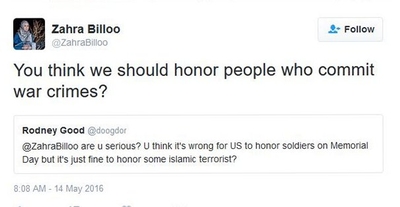 Two weeks ago, Billoo made it clear her views about American troops have not changed, questioning the holiday’s value: “You think we should honor people who commit war crimes?” she asked an incredulous questioner. She “proudly stands by” her opinion, she also wrote.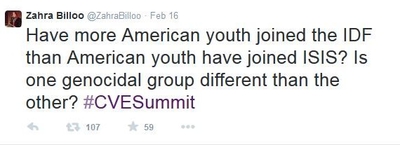
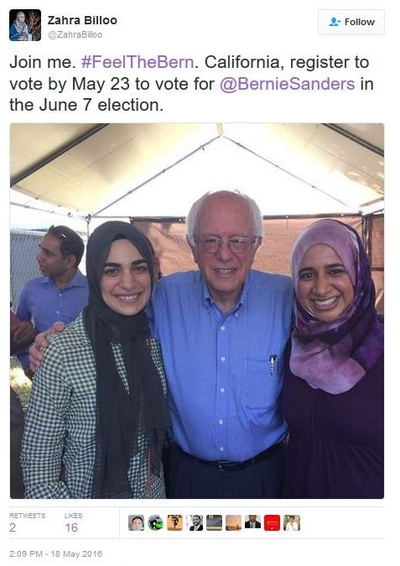 Zahra Billoo is at Sanders’ left, dressed in purple.