
Blame for NoKo Nuclear Program Goes Beyond China

Photo.2012

Stop just blaming China for being the sole enabler for North Korea’s nuclear and missile program. It is beyond dispute that the moment of reckoning is here for Donald Trump, for he is having a Kennedy/Cuban Missile crisis point in history. But there are other countries that should be blamed and they include Pakistan, Iran and Russia.
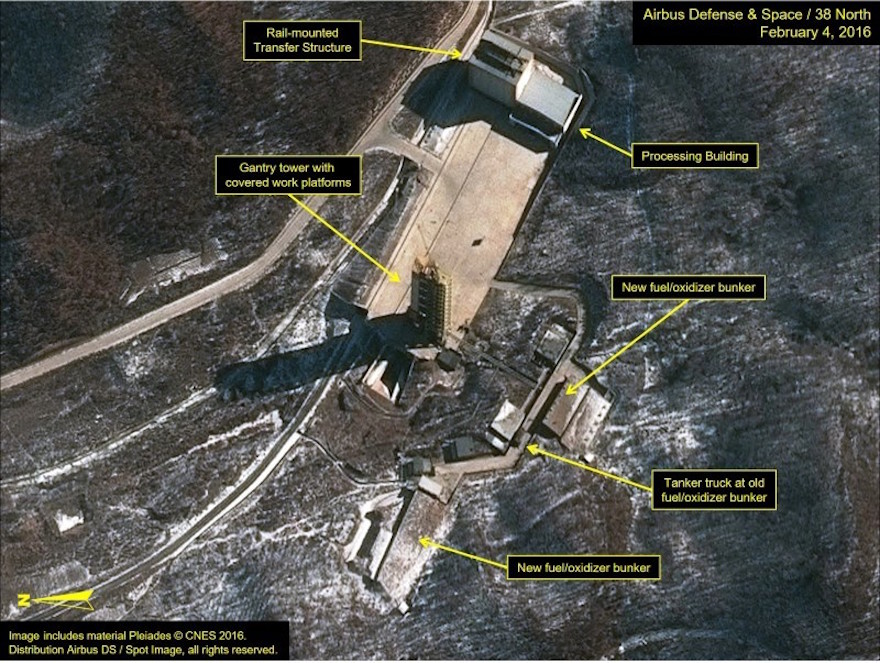
When Putin traveled to North Korea for talks with Kim:

Interfax news agency quoted Putin as saying Kim had assured him Pyongyang’s rocket program was entirely peaceful.

Asked if Russia was prepared to offer its rockets for Korean space exploration, Putin said, “Why should only Russia pay? One should expect other countries, if they assert that the DPRK [North Korea] poses a threat for them, would support this project,” Interfax reported.

“One can minimize the threat by supplying the DPRK with its rocket boosters,” it quoted him as saying.

He also said Russia was prepared to do its utmost to improve the situation on the Korean peninsula, and expected other countries to do their part.

“We suggest that the efforts of the Russian Federation alone are not sufficient. We should all — the DPRK, South Korea, as well as the United States, China and Japan — support that process.”

***

Historically, Iran has bought a lot with its money. Mohsen Fakhrizadeh, thought to be Tehran’s chief nuclear scientist, was almost certainly in North Korea at Punggye-ri in February 2013 to witness Pyongyang’s third atomic test. Reports put Iranian technicians on hand at the site for the first two detonations as well.

Then there was a remarkable confession of Dr A Q Khan, Pakistan’s infamous ‘nuclear’ scientist. It was on 4 February 2004 when Khan appeared on the television and confessed to having supplied nuclear technology and components to North Korea, Iran and Libya. Khan accepted his crimes in English and not in Urdu, which is the language understood by most Pakistanis.

That telecast was actually for the international audience, especially the United States and the European intelligence agencies. Khan explicitly mentioned that this proliferation network was entirely his own and the Pakistani government or authorities were never involved. North Korea’s nuclear ambition started in the late 1950s and early 1960s. Erstwhile Union of Soviet Socialist Republics (USSR) agreed to set up their first plutonium-based nuclear reactor at Yongbyon-Kun for peaceful use of nuclear technology. Later, North Korea set up more reactors, signed Non-Proliferation Treaty (NPT) to get access to the latest technology and allowed International Atomic Energy Agency (IAEA) inspectors to inspect its nuclear facilities, but never gave up its desire to have ‘the bomb’.

Apart from China, Pakistan was the only major country in the world who not only maintained diplomatic relations with North Korea but received weaponry from them.

But the cooperation in nuclear and missile field started in the late 1980s. More here.

***

North Korea’s unprecedented level of testing and displays of strategic weapons in 2016 indicate that Kim is intent on proving he has the capability to strike the U.S. mainland with nuclear weapons. In 2016, the regime conducted two nuclear tests—including one that was claimed to be of a standardized warhead design—and an unprecedented number of missile launches, including a space launch that put a satellite into orbit. These ballistic missile tests probably shortened North Korea’s pathway toward a reliable ICBM, which largely uses the same technology. Kim was also photographed beside a nuclear warhead design and missile airframes to show that North Korea has warheads small enough to fit on a missile, examining a reentry-vehicle nose cone after a simulated reentry, and overseeing launches from a submarine and from mobile launchers in the field, purportedly simulating nuclear use in warfighting scenarios. North Korea is poised to conduct its first ICBM flight test in 2017 based on public comments that preparations to do so are almost complete and would serve as a milestone toward a more reliable threat to the U.S. mainland. Pyongyang’s enshrinement of the possession of nuclear weapons in its constitution, while repeatedly stating that nuclear weapons are the basis for its survival, suggests that Kim does not intend to negotiate them away at any price.

David Albright—a widely respected expert on proliferation and president and founder of the Institute for Science and International Security—estimated at the end of 2016 that North Korea’s nuclear programs had reached the following status:

• 33 kilograms of separated plutonium (median value of a distribution).

• 175-645 kilograms of weapon-grade uranium, where 175 kilograms corresponds to a median estimate for the case of one centrifuge plant and 645 kilograms corresponds to the median estimate for the case of two centrifuge plants.

• 13 to 30 nuclear weapons, where these values reflect the utilization of 70 percent of the available, estimated stocks of plutonium and weapon-grade uranium. The limits correspond to the median values for the cases of one or two centrifuge plants and each weapon contains either plutonium or weapon-grade uranium.

• Based on this cumulative estimate, North Korea is currently expanding its nuclear weapons at a rate of about three-five weapons per year.

• 30 percent of North Korea’s total stocks of plutonium and weapon-grade uranium are assessed as in production pipelines, lost during processing, or held in a reserve. More here.

***

Tillerson has pointed the finger of blame at Beijing and Moscow.

“As the principal economic enablers of North Korea’s nuclear weapon and ballistic missile development program, China and Russia bear unique and special responsibility for this growing threat to regional and global stability,” he said in a statement.

Tillerson’s comments are sure to anger Russia and China. Earlier this month Beijing rejected claims from US president Donald Trump that it had a responsibility to do more to rein in its ally. “I think this either shows lack of a full, correct knowledge of the issue, or there are ulterior motives for it, trying to shift responsibility,” Geng Shuang, a foreign ministry spokesman, told reporters.

***

Certain weapons, however, stand in stark contrast to the rest of North Korea’s aging weapons collection. One is what appears to be a copy of the Russian Kh-35 antiship cruise missile. Known in Russia as the Kh-35 Uran and to NATO as the SS-N-25 “Switchblade,” the Kh-35 has a range of seventy nautical miles and a 320-pound high-explosive warhead, flying above the wavetops to stay undetected as long as possible. Guided by active radar, the subsonic missile is roughly comparable to the American Harpoon antiship missile, earning it the nickname “Harpoonski.”

Although the Uran’s development predated the end of the Cold War, the missile never entered Soviet service, joining the Russian Navy only in 2003. The missile first surfaced in North Korea in June 2014, when it briefly appeared in a North Korean propaganda video. The missile, which appeared to be launched from a ship, was identical to the Uran, although the shipboard mounting hardware appeared different from Russian hardware. North Korea launched a volley of four Kh-35s on June 7 from the vicinity of Wonsan into the Sea of Japan.

A new rocket artillery system recently emerged in North Korea. Known as the KN-09 multiple-rocket launcher, the system consists of eight three-hundred-millimeter rocket-launcher tubes on a 6×6 HOWO 6×6 All-wheel Drive Cargo Truck chassis. The presence of fins on the rocket’s nose suggests each rocket is precision-guided, using either China’s Baidu or Russia’s GLONASS satellite-based global positioning systems. More here.
NoKo Crossed the Nuclear Power Threshold, 60?

The best defense is to take them out before they are fired…..we can and we know where they are.

We Know the Locations of N Korea Nuclear Sites

Primer: North Korean delegation wraps up Iran visit

Trip included opening of new embassy and meetings with foreign representatives
 

North Korea’s newly built embassy in Tehran opened Wednesday, according to the North’s state-run KCNA news agency. It said the new embassy was “built to boost exchanges, contacts and cooperation between the two countries for world peace and security and international justice.”

After the second ICBM test last month, defense experts said it appeared North Korea’s long-range ballistic missile had the range to reach half, if not most, of the continental United States. Iran could have an ICBM capability similar to North Korea within a few years, as just last week it successfully launched a satellite-carrying rocket that some see as a precursor to long-range ballistic missile weapon capability.

‘Extensive’ missile cooperation

“There’s been fairly extensive cooperation on missiles,” said Bunn. “And in fact, early generations of Iranian missiles were thought to be basically modestly adapted North Korean missiles.” More here.

North Korea now making missile-ready nuclear weapons, U.S. analysts say

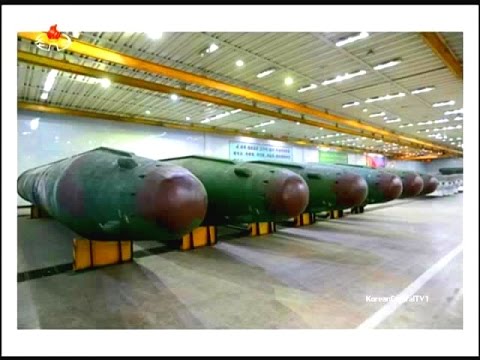
North Korea has successfully produced a miniaturized nuclear warhead that can fit inside its missiles, crossing a key threshold on the path to becoming a full-fledged nuclear power, U.S. intelligence officials have concluded in a confidential assessment.

The new analysis completed last month by the Defense Intelligence Agency comes on the heels of another intelligence assessment that sharply raises the official estimate for the total number of bombs in the communist country’s atomic arsenal. The U.S. calculated last month that up to 60 nuclear weapons are now controlled by North Korean leader Kim Jong Un. Some independent experts believe the number of bombs is much smaller.

The findings are likely to deepen concerns about an evolving North Korean military threat that appears to be advancing far more rapidly than many experts had predicted. U.S. officials last month concluded that Pyongyang is also outpacing expectations in its effort to build an intercontinental ballistic missile capable of striking cities on the American mainland.

While more than a decade has passed since North Korea’s first nuclear detonation, many analysts believed it would be years before the country’s weapons scientists could design a compact warhead that could be delivered by missile to distant targets. But the new assessment, a summary document dated July 28, concludes that this critical milestone has already been reached.

“The IC [intelligence community] assesses North Korea has produced nuclear weapons for ballistic missile delivery, to include delivery by ICBM-class missiles,” the assessment states, in an excerpt read to The Washington Post. The assessment’s broad conclusions were verified by two U.S. officials familiar with the document. It is not yet known whether the reclusive regime has successfully tested the smaller design, although North Korean officially last year claimed to have done so.

The DIA and the Office of the Director of National Intelligence declined to comment.

An assessment this week by the Japanese Ministry of Defense also concludes there is evidence to suggest that North Korea has achieved miniaturization.

Kim Jong Un is becoming increasingly confident in the reliability of his nuclear arsenal, analysts have concluded, explaining perhaps the dictator’s willingness to engage in defiant behavior, including missile tests that have drawn criticism even from North Korea’s closest ally, China. On Saturday, both China and Russia joined other members of the U.N. Security Council in approving punishing new economic sanctions, including a ban on exports that supply up to a third of North Korea’s annual $3 billion earnings.

The nuclear progress further raises the stakes for President Trump, who has vowed that North Korea will never be allowed to threaten the United States with nuclear weapons. In an interview broadcast Saturday on MSNBC’s Hugh Hewitt Show, national security adviser H.R. McMaster said the prospect of a North Korea armed with nuclear-tipped ICBMs would be “intolerable, from the president’s perspective.”

“We have to provide all options . . . and that includes a military option,” he said. But McMaster said the administration would do everything short of war to “pressure Kim Jong Un and those around him, such that they conclude it is in their interest to denuclearize.” The options said to be under discussion ranged from new multilateral negotiations to reintroducing U.S. battlefield nuclear weapons to the Korean Peninsula, officials familiar with internal discussions said.

Determining the precise makeup of North Korea’s nuclear arsenal has long been a difficult challenge for intelligence professionals because of the regime’s culture of extreme secrecy and insularity. The country’s weapons scientists have conducted five nuclear tests since 2006, the latest being a 20- to 30-kiloton detonation on Sept. 9, 2016, that produced a blast estimated to be up to twice that of the bomb dropped on Hiroshima, Japan, in 1945.

But producing a compact nuclear warhead that can fit inside a missile is a technically demanding feat, one that many analysts believed was still beyond North Korea’s grasp. Last year, state-run media in Pyongyang displayed a spherical device that government spokesmen described as a miniaturized nuclear warhead, but whether it was a real bomb remained unclear. North Korean officials described the September detonation as a successful test of a small warhead designed to fit on a missile, though many experts were skeptical of the claim.

Kim has repeatedly proclaimed his intention to field a fleet of nuclear-tipped ICBMs as a guarantor of his regime’s survival. His regime took a major step toward that goal last month with the first successful tests of a missile with intercontinental range. Video analysis of the latest test revealed that the missile caught fire and apparently disintegrated as it plunged back toward Earth’s surface, suggesting North Korea’s engineers are not yet capable of building a reentry vehicle that can carry the warhead safely through the upper atmosphere. But U.S. analysts and many independent experts believe that this hurdle will be overcome by late next year.

“What initially looked like a slow-motion Cuban missile crisis is now looking more like the Manhattan Project, just barreling along,” said Robert Litwak, a nonproliferation expert at the Woodrow Wilson International Center for Scholars and author of “Preventing North Korea’s Nuclear Breakout,” published by the center this year. “There’s a sense of urgency behind the program that is new to the Kim Jong Un era.”

While few discount North Korea’s progress, some prominent U.S. experts warned against the danger of overestimating the threat. Siegfried Hecker, director emeritus of the Los Alamos National Laboratory and the last known U.S. official to personally inspect North Korea’s nuclear facilities, has calculated the size of North Korea’s arsenal at no more than 20 to 25 bombs. Hecker warned of potential risks that can come from making Kim into a bigger menace than he actually is.

“Overselling is particularly dangerous,” said Hecker, who visited North Korea seven times between 2004 and 2010 and met with key leaders of the country’s weapons programs. “Some like to depict Kim as being crazy – a madman – and that makes the public believe that the guy is undeterrable. He’s not crazy and he’s not suicidal. And he’s not even unpredictable.”

“The real threat,” Hecker said, “is we’re going to stumble into a nuclear war on the Korean Peninsula.”

In the past, U.S. intelligence agencies have occasionally overestimated the North Korean threat. In the early 2000s, the George W. Bush administration assessed that Pyongyang was close to developing an ICBM that could strike the U.S. mainland – a prediction that missed the mark by more than a decade. More recently, however, analysts and policymakers have been taken repeatedly by surprise as North Korea achieved key milestones months or years ahead of schedule, noted Jeffrey Lewis, director of the Center for Nonproliferation Studies’ East Asia Nonproliferation Program. There was similar skepticism about China’s capabilities in the early 1960s, said Lewis, who has studied that country’s pathway to a successful nuclear test in 1964.

“There is no reason to think that the North Koreans aren’t making the same progress after so many successful nuclear explosions,” Lewis said. “The big question is why do we hold the North Koreans to a different standard than we held [Joseph] Stalin’s Soviet Union or Mao Zedong’s China? North Korea is testing underground, so we’re always going to lack a lot of details. But it seems to me a lot of people are insisting on impossible levels of proof because they simply don’t want to accept what should be pretty obvious.”


Maduro is Taking Venezuela Where Castro Tells Him

The rogue countries across the globe are Russia, Iran, North Korea, China and Cuba. What is in common here is they have each other and they work their foreign policy agendas in locations that threaten the West at every turn including militarily.

Iran, China and Russia are running the influence operations in North Korea. Russia is running the influence operation in Cuba, Nicaragua, Bolivia and Syria. China and Pakistan is the enabler to North Korea. China is in Africa, Russia is in Africa, Iran is in Iraq and Afghanistan….they are all policy, money and oil opportunists….crazy right?

The Star

A video showing more than a dozen men dressed in military fatigues, some carrying rifles, began circulating widely on social media around that time. In the recording, a man who identified himself as Capt. Juan Caguaripano said the men were members of the military who oppose Maduro’s socialist government and called on military units to declare themselves in open rebellion.

“This is not a coup d’etat,” the man said. “This is a civic and military action to re-establish the constitutional order.” More from the Associated Press.

So, while Venezuela is in a full blown tailspin….who owns the chaos there via Maduro? Cuba…

2004, the agreement was signed.

To further help, the University of Miami has an archived summary here.

So, it goes like this and the burden belongs to Obama and John Kerry for the plight of Venezuelans.

Photo

The Guns of Venezuela

Castro is calling the shots in Caracas. Sanctions have to be aimed at him.

WSJ: In a video posted on the internet Sunday morning, former Venezuelan National Guard captain Juan Caguaripano, along with some 20 others, announced an uprising against the government of Nicolás Maduro to restore constitutional order. The rebels reportedly appropriated some 120 rifles, ammunition and grenades from the armory at Fort Paramacay in Valencia, the capital of Carabobo state. There were unconfirmed claims of similar raids at several other military installations including in Táchira.

The Cuba-controlled military regime put tanks in the streets and unleashed a hunt for the fleeing soldiers. It claims it put down the rebellion and it instructed all television to broadcast only news of calm. But Venezuelans were stirred by the rebels’ message. There were reports of civilians gathering in the streets to sing the national anthem in support of the uprising.

Note to Secretary of State Rex Tillerson: Venezuelans want to throw off the yoke of Cuban repression. They need your help.

Unfortunately Mr. Tillerson so far seems to be taking the bad advice of his State Department “experts.”

The same bureaucrats, it should be noted, ran Barack Obama’s Latin America policy. Those years gave us a rapprochement with Havana that culminated with the 44th president doing “the wave” with Raúl Castro at a baseball game in 2016. Team Obama also pushed for Colombia’s surrender to the drug-trafficking terrorist group FARC in a so-called peace deal last year. And it supported “dialogue” last year to restore free, fair and transparent elections in Venezuela. The result, in every case, was disaster.

Any U.S.-led international strategy to liberate Venezuela must begin with the explicit recognition that Cuba is calling the shots in Caracas, and that Havana’s control of the oil nation is part of its wider regional strategy.

Slapping Mr. Maduro’s wrist with sanctions, as the Trump administration did last week, won’t change Castro’s behavior. He cares only about his cut-rate Venezuelan oil and his take of profits from drug trafficking. To affect things in Venezuela, the U.S. has to press Cuba.

Burning Cuban flags, when they can be had, is now practically a national pastime in Venezuela because Venezuelans understand the link between their suffering and Havana. The Castro infiltration began over a decade ago when Fidel sent thousands of Cuban agents, designated as teachers and medical personnel, to spread propaganda and establish communist cells in the barrios.

As I noted in this column last week, since 2005 Cuba has controlled Venezuela’s citizen-identification and passport offices, keeping files on every “enemy” of the state—a k a political opponents. The Venezuelan military and National Guard answer to Cuban generals. The Venezuelan armed forces are part of a giant drug-trafficking operation working with the FARC, which is the hemisphere’s largest cartel and also has longstanding ties to Cuba.

These are the tactical realities of the Cuba-Venezuela-Colombia nexus. The broader strategic threat to U.S. interests, including Cuba’s cozy relationship with Middle East terrorists, cannot be ignored.

Elisabeth Burgos is the Venezuelan ex-wife of the French Marxist Regis Debray. She was born in Valencia, joined the Castro cause as a young woman, and worked for its ideals on the South American continent.

Ms. Burgos eventually broke free of the intellectual bonds of communism and has lived in Paris for many years. In a recent telephone interview—posted on the Venezuelan website Prodavinci—she warned of the risks of the “Cuban project” for the region. “Wherever the Cubans have been, everything ends in tragedy,” she told Venezuelan journalist Hugo Prieto. “Surely we have no idea what forces we face,” Mr. Prieto observed—reflecting as a Venezuelan on the words of Ms. Burgos—because, as she said, there is “a lot of naiveté, a lot of ignorance, about the apparatus that has fallen on [Venezuelans]: Castroism.”

Cuban control of citizens is as important as control of the military. In Cuba this is the job of the Interior Ministry. For that level of control in Venezuela, Ms. Burgos said, Mr. Maduro must rely on an “elite of exceptional experts” Castro grooms at home.

Cuba, Ms. Burgos said, is not “simply a dictatorship.” For the regime it is a “historical political project” aiming for “the establishment of a Cuban-type regime throughout Latin America.” She noted that along with Venezuela the Cubans have taken Nicaragua, Bolivia, Ecuador, and are now going after Colombia. “The FARC, turned into a political party and with all the money of [the narcotics business], in an election can buy all the votes that it wants.”

Mr. Tillerson is forewarned. Castro won’t stop until someone stops him. To get results, any U.S.-led sanctions have to hit the resources that Havana relies on to maintain the repression.

2 Congressmen Watched Voting Machines Being Hacked

Primer

33 states accepted DHS aid to secure elections

The Department of Homeland Security (DHS) provided cybersecurity assistance to 33 state election offices and 36 local election offices leading up to the 2016 presidential election, according to information released by Democratic congressional staff.

During the final weeks of the Obama administration, the DHS announced that it would designate election infrastructure as critical, following revelations about Russian interference in the 2016 election.

Since January, two states and six local governments have requested cyber hygiene scanning from the DHS, according to a memo and DHS correspondence disclosed Wednesday by the Democratic staff of the Senate Homeland Security and Governmental Affairs Committee.

The information is related to the committee’s ongoing oversight of the DHS decision to designate election infrastructure.

The intelligence community said back in January that in addition to directing cyberattacks on the Democratic National Committee and top Democratic officials, Russia also targeted state and local electoral systems not involved in vote tabulating.

In June, DHS officials told senators investigating Russian interference that there was evidence that Russia targeted election-related systems in 21 states, none of them involved in vote tallying.

Officials have previously confirmed breaches in Arizona and Illinois, though it remains unclear whether other systems were successfully breached. Lawmakers such as Sen. Mark Warner (D-Va.) have demanded more information on the specific states targeted.

Homeland Security and Government Affairs ranking member Claire McCaskill (D-Mo.) wrote then-Secretary of Homeland Security John Kelly back in March, asking for more information on his plans for the critical infrastructure designation. The information released Wednesday is drawn from his response on June 13. Kelly has since left his post to serve as President Trump’s chief of staff.

“Prior to the election, DHS offered voluntary, no-cost cybersecurity services and assistance to election officials across all 50 states. By Election Day, 33 state election offices and 36 local election offices requested and received these cyber hygiene assessments of their internet-facing infrastructure,” Kelly wrote.

“In addition, one state election office requested and received a more in-depth risk and vulnerability assessment of their election infrastructure.”

Given the critical infrastructure designation, the DHS is providing cyber hygiene assessments, which include vulnerability scanning of election-related systems excluding voting machines and tallying systems, which the department recommends being disconnected from the internet.

The department also offers risk and vulnerability assessments, which include penetration testing, social engineering, wireless discovery and identification, and database and operating systems scanning. The DHS is also responsible for sharing threat information with owners and operators of critical infrastructure, which now include state and local election officials.

“Following the establishment of election infrastructure as critical infrastructure, several state and local governments requested new or expanded cybersecurity services from DHS,” Kelly disclosed in June, according to the letter. “Specifically, an additional two states and six local governments requested to begin cyber hygiene scanning (one state has, however, ended its service agreement). DHS also received one request for the risk and vulnerability assessment service.”

Many state and local election officials have opposed the designation, saying that the DHS has not offered enough information about what it means. The department has insisted that assistance will be given only to states that request it.

In the letter, Kelly, who has acknowledged objections, said there are “no plans to make any changes to the designation of election infrastructure as a critical infrastructure subsector.”

All of the Democratic members of the Senate Homeland Security and Governmental Affairs Committee have called for a full investigation into Russian election interference. The matter is already under investigation by the House and Senate Intelligence committees. The memo issued by Democratic staff on Wednesday was sent to the full committee.

Background at a Las Vegas Convention:

LAS VEGAS—For the first time in the 25 years of the world’s largest hacker convention, DefCon, two sitting U.S. Congressmen trekked here from Washington, D.C., to discuss their cybersecurity expertise on stage.

Rep. Will Hurd, a Texas Republican, and Rep. Jim Langevin, a Rhode Island Democrat, visited hacking villages investigating vulnerabilities in cars, medical devices, and voting machines; learned about how security researchers plan to defend quantum computers from hacks; and met children learning how to hack for good.

On Sunday, the last day of the conference, Hurd and Langevin delivered their own message: We come in peace. Please help us.

During a fireside chat-style conversation moderated by Joshua Corman, director of the Cyber Statecraft Initiative at the Atlantic Council, Hurd, chairman of the House Subcommittee on Information Technology, and Langevin, co-founder and co-chair of the Congressional Cybersecurity Caucus, called for the more than 2,000 hackers in the audience to “develop a dialogue” with their local representative in Congress.

“Never underestimate the value that you can bring to the table in helping to educate members and staff of what the best policies are, what’s going to work, and what’s not going to work,” Langevin said, pointing to Luta Security CEO and bug bounty expert Katie Moussouris’ ongoing advocacy for changes to the Wassenaar Arrangement, a decades-old international accord on how countries can transport “intrusion software” and other weapons across international borders.

Moussouris and Iain Mulholland of VMware have effectively convinced Wassenaar member countries to delay their adoption of proposed revisions to the agreement, as they’ve pushed for new language to better protect security researchers’ work.

The conversation between hackers and Congress has never been monosyllabic. But it has been frosty for decades, as federal prosecutors have used American antihacking laws such as the Computer Fraud and Abuse Act and Electronic Communication Privacy Act to punish people conducting legitimate security research.

As many security researchers continue to worry about how these laws might affect them, some have begun to use their expertise to influence the laws—and the lawmakers behind them.

Langevin and Hurd’s plea for hacker-legislator collaboration follows calls by hackers at last year’s DefCon for greater government regulation of software security.

“We don’t have voluntary minimum safety standards for cars; we have a mandatory minimum,” Corman told The Parallax at the time. “What tips the equation [for software] is the Internet of Things, because we now have bits and bytes meeting flesh and blood.”

Hurd said security researchers could play an important role in addressing increasingly alarming vulnerabilities in the nation’s voting apparatus. DefCon’s first voting machine-hacking village this weekend hosted a voting machine from Shelby County, Tenn., that unexpectedly contained personal information related to more than 600,000 voters. Village visitors managed to hack the machine, along with 29 others.

“We have to ensure that the American people can trust the vote-tabulating process,” Hurd said, acknowledging that DefCon attendees were able to hack each machine in the village. “The work that has been done out here is important in educating the secretaries of state all around the country, as well as the election administrators,” about secure technologies and practices.

Langevin and Hurd’s comments seemed to strike the right notes with hackers in attendance. Following Edward Snowden’s leaking of NSA documents and Apple’s refusal to create an encryption backdoor for law enforcement to the iPhone, relations between the hacking community and Washington have been strained at best, notes Herb Lin, a computer security policy expert and research fellow at Stanford University’s Center for International Security and Cooperation. But markedly improving the relationship will require more than a plea for collaboration, he warns.

“It’s better than what’s happened in the past, which is both nothing and active hostility,” he says. “One act by itself is not a game changer.”

The chat ended with assurances of more action from both sides. Corman said he’d like to see members of Congress attend more hacker conferences, such as ShmooCon in Washington, and Hurd promised that he wouldn’t let his experiences this past weekend go to waste.

“These conversations are going to lead me to hold hearings on many of these topics in the subcommittee that I chair,” Hurd said.

***  More details that were recorded at the convention:

DEF CON 2017 –  Are voting systems secure? In August 2016, the FBI issued a “flash” alert to election officials across the country confirming that foreign hackers have compromised state election systems in two states.

Although the US largely invested in electronic voting systems their level of security appears still not sufficient against a wide range of cyber attacks.

During an interesting session at the DEF CON hacking conference in Las Vegas, experts set up 30 computer-powered ballot boxes used in American elections simulating the Presidential election.  Welcome in the DEF CON Voting Village!

At the 1st ever Voting Village at , attendees tinker w/ election systems to find vulnerabilities. I’m told they found some new flaws

The organization asked the participant to physically compromise the system and hack into them, and the results were disconcerting.

“We encourage you to do stuff that if you did on election day they would probably arrest you.” John Hopkins computer scientist Matt Blaze said,

Most of the voting machines in the DEF CON Voting Village were purchased via eBay (Diebold, Sequoia and Winvote equipment), others were bought from government auctions.

voting machines hacking

In less than 90 minutes hackers succeeded in compromising the voting machines, one of them was hacker wirelessly.

“Without question, our voting systems are weak and susceptible. Thanks to the contributions of the hacker community today, we’ve uncovered even more about exactly how,” said Jake Braun, cybersecurity lecturer at the University of Chicago.

The analysis of the voting machines revealed that some of them were running outdated OS like Windows XP and Windows CE and flawed software such as unpatched versions of OpenSSL.

Some of them had physical ports open that could be used by attackers to install malicious applications to tamper with votes.

Even if physical attacks are easy to spot and stop, some voting machines were using poorly secured Wi-Fi connectivity.

The experts Carsten Schurmann at the DEF CON Voting Village hacked a WinVote system used in previous county elections via Wi-Fi, he exploited the MS03-026 vulnerability in Windows XP to access the voting machine using RDP.

Greetings from the Defcon voting village where it took 1:40 for Carsten Schurmann to get remote access to this WinVote machine.

Another system could be potentially cracked remotely via OpenSSL bug CVE-2011-4109, it is claimed.

huge cheer just went up in @votingvilllagedc as hackers managed to load Rick Astley video onto a voting machine

The good news is that most of the hacked equipment is no longer used in today’s election.


The 2 New AF1’s for POTUS are Coming From the Boneyard

Transaero was owned primarily by Aleksandr Pleshakov and his wife Olga Pleshakova, who was the CEO of the airline for most of its existence. In 2105, Dmitry Medvedev gave the green light to begin bankruptcy proceedings for Transaero airlines, according to sources cited by online newspaper Gazeta.ru. Negotiations on a takeover of Russia’s second-biggest carrier by Aeroflot have been deadlocked. According to sources, Aeroflot took a hard line refusing the Transaero consolidation. Later that same year,

Aeroflot said it intended to acquire a 75 percent stake in Transaero, which has about a $4 billion debt. Aeroflot’s main shareholder is the Russian state, which owns 51 percent stake in the carrier.

With the hundreds of millions of dollars the Obama gave to Iran due to a resolving outstanding issues with Iran, many of those dollars have done to bolster Iran’s aircraft industry where Boeing is part of the contractor list.

Further for Boeing and Iran, at list prices, the order is worth in the neighborhood of $17.6 billion, and even applying a standard discount of 45%, Boeing is still walking away with $9.5-10 billion in actual revenue. This represents by far the largest deal between Iran and a U.S. company, and it was inevitable as a result of the relaxed restrictions on Iran’s economy. The Islamic country is certainly aware that its position amongst U.S. politicians, particularly Republicans, is precarious. Accordingly, this order was almost a certainty — as it immensely increases the cost and pain of resuscitating sanctions were the Republicans to attempt such a gambit. Still, a win is a win, and Boeing has won more orders to fill its production gap on the current generation 777 (especially powerful given the rate cut), as well as more orders for the 737 MAX, 777-9X, and critically for the 747-8 (adding a few months of additional production to the backlog).

There are still some outstanding questions, including how Iran Air will finance these aircraft (export financing has been an issue even in Europe), and whether the 747-8 orders are new build or those planned for Transaero. But irrespective of some uncertainty, this is nothing but a win for Boeing.

Trump Wanted a Cheaper Air Force One. So the USAF Is Buying a Bankrupt Russian Firm’s Undelivered 747s

The service is reportedly getting a good deal on the jets, which list for around $390 million and are now sitting in the Mojave Desert.

President Donald Trump said the projected cost of new Air Force One aircraft was too high, so the U.S. Air Force found a way to lower it: by buying a pair of Boeing 747 jetliners abandoned by a bankrupt Russian airline.

Air Force officials are now finalizing a contract with Boeing for the two planes, according to three defense officials with knowledge of the deal. The Pentagon could publicly announce the deal as soon as this week.

We’re working through the final stages of coordination to purchase two commercial 747-8 aircraft and expect to award a contract soon,” Air Force spokeswoman Ann Stefanek said in a statement.

The Air Force is not expected to disclose the specific value of the contract, but officials said that the military is getting a good deal on the planes. Boeing lists the average sticker price of a 747-8 as $386.8 million; the actual amount paid by airlines and other customers varies with quantities, configurations, and so forth.

“We’re still working toward a deal to provide two 747-8s to the Air Force — this deal is focused on providing a great value for the Air Force and the best price for the taxpayer,” Boeing spokeswoman Caroline Hutcheson said in a statement.

The 747s that will be transformed for Presidential transport were originally ordered in 2013 by Transaero, which was Russia’s second-largest airline until it went bankrupt in 2015. Boeing built two of the four jets in the order, but the airline never took ownership of them.

Typically, an airline makes a 1 percent down payment when it orders a plane, then pays the balance in installments. Transaero did not fulfill its scheduled payments, according to an industry source.

“Aeroflot absorbed most of Transaero’s existing fleet, but declined to pick up Transaero’s 747-8I orders worth $1.5 billion at list prices,” FlightGlobalreported last month.

So Boeing flight-tested the two completed jets and put them in storage. Flight tracking data shows that the aircraft, numbered N894BA and N895BA, were last flown in February, to the Southern California Logistics Airport in Victorville, a sprawling facility in the Mojave Desert whose hot, dry air prevents corrosion. This “boneyard” is largely occupied by retired commercial jets that still bear the liveries of Delta, FedEx, British Airways, and Cathay Pacific. Other planes, unmarked, sit with their engines shrinkwrapped in anticipation of one day returning to flight.

Boeing has been paying to store the two 747s in new condition while searching for a buyer, which allowed the Air Force to negotiate a good deal for them, sources said. It’s similar to the way car dealers discount new vehicles from the previous year when new models hit the lot.

Turning a standard 747 into a flying White House requires more than a blue-and-white paint job. After the Air Force takes ownership of the planes, contractors will give them a state-of-the-art communications system, defensive countermeasures, and hardening to withstand an electromagnetic pulse caused by a nuclear explosion. New custom interiors will have conference rooms, offices and seating for White House staff, guests and journalists.

The Pentagon’s 2018 budget request, sent to Congress in February, shows that the Air Force plans to spend nearly $3.2 billion between 2018 and 2022 on two new Air Force One jets. Trump would likely fly on the new planes if he is elected to a second term.

The 747s currently flown as Air Force One are 747-200s, older models that started flying presidents in the early 1990s.

Nicknamed the “Queen of the Skies,” the four-engined 747 has been a tough sell in recent years. Airlines instead have opted for cheaper-to-fly two-engine planes like the 777. Boeing has likely built the last passenger 747; any future orders are likely to be for cargo versions.

United and Delta, the last two American carriers to fly older models of the 747, plan to retire the plane from service by year’s end. Just last week, the iconic aircraft made its last planned domestic revenue flight, a United trip from Chicago to San Francisco.