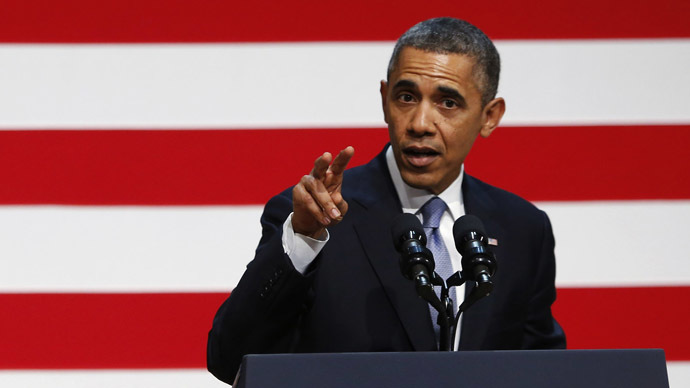
Groups Behind Closing Gitmo

A few years ago, Marc Thiessen wrote a book titled Courting Disaster. The spirit of the book delivers proven evidence that interrogation of enemy combatants kept America safe and offered up more actionable knowledge in the terror networks globally. Thiessen provides names, organizations and lobby groups in full opposition of black sites and Guantanamo. One needs to understand all the moving parts before they offer criticism of decisions by the Bush administration.

So as Barack Obama entered the White House, his first move was to close Gitmo while almost 7 years later there are 140 detainees still there. The question is why? The team known to be the go-to operation to close Gitmo has also proven some success in getting terrorists released from the ‘other’ Gitmo, the prison(s) in Colorado that actually has more detainees than Gitmo.

These wars across the globe against terror networks involves hundreds of thousands of fighters, hence in begs the question, who no capture and interrogate? Is killing the via drone since all ground hostilities have been terminated effective? Terror cells have grown exponentially including al Nusra, Daesh, AQAP, Boko Harem and more. Their operating territory has expanded in the last 6 years as well.

Here are some facts that cannot be disputed.

If you knew who was behind “Close-Gitmo” push, you’d be shocked

On Saturday, January 11, a coalition of “Close-Gitmo” forces is expected to march on Washington to commemorate the 12th anniversary of detention and interrogation operations.

Though the march from the White House to the National Museum of American History is purportedly about advancing “human rights” and “stopping torture,” a closer look at the key participants reveals a more troubling, some might say hidden, agenda.

If more Americans knew who is behind this campaign, there would be nationwide outrage.

While everyone is for “human rights” and “stopping torture,” Americans should not be fooled by these false flags meant to damage U.S. power and prestige.

Dig a little deeper into who has been driving the anti-Gitmo disinformation campaign these past 12 years, and you will discover an international, fervently anti-American, far-left coalition attacking the nation through a savvy propaganda effort.

Just dig a little deeper into who has been driving the anti-Gitmo disinformation campaign these past 12 years, and we discover an international, fervently anti-American, far-left coalition attacking the nation through a savvy propaganda effort.

This includes those linked to Al Qaeda financiers, communist groups, anarchist movements – backed by sympathetic press and politicians.

Regrettably, it’s a coalition President Barack Obama has sided with in his priority to release as many Al Qaeda, Taliban and “affiliates” as humanly possible.

Let’s take a look at the key players:

Amnesty International. Along with Human Rights Watch, Amnesty International was revealed as partner organization to Al Karama, a human rights non-profit run by Qatar’s Abdul Rahman Omeir Al-Naimi.

Al-Naimi was recently exposed by the U.S. Treasury Department in December 2013 as a long-term major financier of Al Qaeda.  According to an expose by Eli Lake in the Daily Beast, “Terrorists for Human Rights,” the Treasury Department’s designation said he, “oversaw the transfer of hundreds of thousands of dollars to Al Qaeda and its affiliates in Iraq, Somalia, Syria, and Yemen over the last 11 years.”

Center for Constitutional Rights. CCR was founded by far-left civil rights lawyer William Kunstler in the 1960s, a man who told the press his goal was to “destroy society from within.”

Kunstler represented the “Chicago 7,” a group that was charged with conspiracy to start a riot at the 1968 Democratic National Convention, and later he defended domestic militant/terror groups like the Black Panthers, Weather Underground, and Attica Prison Rioters.

CCR is currently funded by groups like the “1848 Foundation,” named after the year Karl Marx’s Communist Manifesto was published and revolutions swept through Europe.

Kunstler would be proud of CCR’s signature work over the past decade in coordinating the “Gitmo Bar Association” of 500 lawyers representing detainees.

Reprieve. A British organization led by blogger Andy Worthington, it pressures release of British citizens and residents.  Ethiopia’s Binyam Mohammed, a British resident, allegedly plotted to blow up high rise apartment buildings in the U.S. with a dirty bomb; Ruhal Ahmed, Asif Iqbal, and Shafiq Rasul, a.k.a., the Tipton Three, ethnic Pakistanis went to fight for jihad in Afghanistan but were caught by the Northern Alliance in Nov. 2001; and Shaker Aamer, a Saudi citizen with British residence, alleged to have led a unit of Al Qaeda fighters in Tora Bora, and reportedly a former close associate of Usama Bin Laden, shoe-bomber Richard Reid and 20th hijacker, Zacharias Moussaoui.

World Can’t Wait. This organization is believed to have been founded by members and supporters of the Revolutionary Communist Party & Anarchists. It organized at least 24,000 supporters during Iraq War, including actor Sean Penn and anti-war activist Cindy Sheehan.

Jason Leopold. Leopold is a former Los Angeles Times investigative journalist with a checkered past.  According to Fox News media critic Howard Kurtz, writing in a 2005 Washington Post feature, “Leopold says he engaged in ‘lying, cheating and backstabbing,’ is a former cocaine addict, served time for grand larceny, repeatedly tried to kill himself and has battled mental illness his whole life.”

So these are the folks Mr. Obama and Democrats in Congress are trying to appease by releasing more Gitmo detainees?

Nearly half the current population of 155 may be freed under the National Defense Authorization Act of 2014.

It would be comical if the stakes weren’t so high.

We’ve already seen Al Qaeda re-take Fallujah, site of the Iraq War’s bloodiest battles, just two years after Mr. Obama’s ordered withdrawal.  And Al Qaeda and/or “affiliates” killed our Ambassador and three other Americans in Benghazi.

Speaking of which, a Fox News report this week by Catherine Herridge reveals that the State Dept. will finally designate ex-Gitmo detainee, Libya’s Sufian Bin Qumu, and his group, Ansar Al-Sharia as “foreign terrorist entities” for their roles in the Benghazi Consulate attack.

Does Mr. Obama really think it’s in America’s security interests to free more terrorists from Gitmo, nearly one-third of whom have already returned to terrorism?

The silent majority must take this opportunity to speak up. Preventing the next Al Qaeda attack may depend on it.

J.D. Gordon is a retired Navy Commander who served as a Pentagon spokesman in the Office of the Secretary of Defense from 2005-09. He serves as senior adviser to several Washington-based think tanks.

***

Military tribunals have proved excruciatingly slow and imprisonment at Guantánamo hugely costly — $800,000 per inmate a year, compared with $25,000 in federal prison.

The criminal justice system, meanwhile, has absorbed the surge of terrorism cases since 2001 without calamity, and without the international criticism that Guantánamo has attracted for holding prisoners without trial. A decade after the Sept. 11 attacks, an examination of how the prisons have handled the challenge of extremist violence reveals some striking facts:

Lengthy sentences. Terrorists who plotted to massacre Americans are likely to die in prison. Faisal Shahzad, who tried to set off a car bomb in Times Square in 2010, is serving a sentence of life without parole at the Supermax, as are Zacarias Moussaoui, a Qaeda operative arrested in 2001, and Mr. Reid, the shoe bomber, among others. But many inmates whose conduct fell far short of outright terrorism are serving sentences of a decade or more, the result of a calculated prevention strategy to sideline radicals well before they could initiate deadly plots.

¶ Special units. Since 2006, the Bureau of Prisons has moved many of those convicted in terrorism cases to two special units that severely restrict visits and phone calls. But in creating what are Muslim-dominated units, prison officials have inadvertently fostered a sense of solidarity and defiance, and set off a long-running legal dispute over limits on group prayer. Officials have warned in court filings about the danger of radicalization, but the Bureau of Prisons has nothing comparable to the deradicalization programs instituted in many countries.

¶ Quiet releases. More than 300 prisoners have completed their sentences and been freed since 2001. Their convictions involved not outright violence but “material support” for a terrorist group; financial or document fraud; weapons violations; and a range of other crimes. About half are foreign citizens and were deported; the Americans have blended into communities around the country, refusing news media interviews and avoiding attention.

About 40 percent of terrorism cases since the Sept. 11 attacks have relied on informants, by the count of the Center on Law and Security at New York University, which Ms. Greenberg headed until earlier this year. In such cases, the F.B.I. has trolled for radicals and then tested whether they were willing to plot mayhem — again, a pre-emptive strategy intended to ferret out potential terrorists. But in some cases prosecutors have been accused of overreaching.

Do we really want to close Gitmo? Do we really want to keep these terrorists in prisons around the homeland? They are quietly being released by the Justice Department while being radicalized still during their prison terms. Do you know where they are now?

FBI, Shameful Treatment

INTERIM REPORT ON THE DEPARTMENT OF JUSTICE’S HANDLING OF KNOWN OR SUSPECTED TERRORISTS ADMITTED INTO THE FEDERAL WITNESS SECURITY PROGRAM

So why is that important? The Justice Department is protecting terrorists while they have lost others around the country. But when it comes to our own citizens that are part of the free press, doing their jobs in foreign countries and they get taken hostage then escape, the Justice Department offers no protections.

Below is a shameful display of a government agency known as the FBI. The FBI is worse than al Qaeda? You be the judge.

Former al-Qaida hostage recounts nightmare of dealing with FBI after his return

By Nancy A. Youssef

WASHINGTON — The only thing as bad as being tortured for months as a captive of jihadists in Syria was dealing with the U.S. government afterward, according to one former American hostage.

Matt Schrier, 36, a freelance photographer held by extremists for seven months in 2013 until he escaped, has told McClatchy that the bureaucracy he endured upon his return home was a second kind of nightmare following the months of abuse he suffered while he was a hostage.

“I never thought it would get this bad,” Schrier said.

The FBI never told his father that he had been kidnapped. It waited six months into his capture to produce a wanted poster, and only after his mother prodded. It allowed jihadist forces to empty his bank account — $17,000 — with purchases on eBay, even as the government warned hostage families not to pay ransom so as not to run afoul of anti-terrorism laws.

After his escape, the government made him reimburse the State Department $1,605 for his ticket home just weeks after he arrived in the United States. The psychiatrist assigned to help him readjust canceled five appointments in the first two months. And when he had no means to rent an apartment, FBI victims services recommended New York City homeless shelters.

The FBI declined to comment on the specifics of Schrier’s complaints but said in a statement that “When an American is detained illegally overseas, the FBI’s top priority is ensuring the safe return of that individual.”

“To that end,” the statement said, “the FBI provides support services to victims and their families, to include help in meeting short-term exigent needs, and shares information about their loved ones that is timely and appropriate.”

There is no way to independently confirm Schrier’s version of events, and emails he shared with McClatchy make it clear that his relationship with his FBI handlers was, at best, acrimonious. But his telling of his experience is consistent with the anger relatives of other hostages have expressed in interviews with McClatchy when speaking of their interactions with U.S. government officials.

“The next time the FBI calls me will be the first time,” said Schrier’s father, Jeffrey, 67, who lives in Coconut Creek, outside Fort Lauderdale, Fla. “I thank God my son was able to escape, because if he was waiting for the government to spring him he would still be waiting in that hellhole.”

Spurred by the recent beheadings of three Americans who had been held hostage in Syria by the Islamic State, the Obama administration earlier this month said it is reviewing the way government agencies handle hostages and their families.

But none of the families of those who have been killed or are still missing have been asked to be a part of the review, which White House spokesman Josh Earnest said last week had begun in August. Schrier and another American who was released told McClatchy that they too have not been contacted. Some families said the administration has yet to reply to a weeklong request to give their input to the review.

“How can you change a policy where there is not one?” Jeffrey Schrier asked. “If there had been a policy, on what planet would you not notify the kidnapped person’s father?”

National Security Council spokesman Alistair Baskey said the White House would have no comment.

Schrier’s complaints are a symptom of a bigger problem, the families say — a government approach to retrieving hostages that gets lost among several government agencies, none of which is tasked with doing everything possible to bring an American home.

The FBI generally is a family’s main point of contact because it is charged with investigating overseas crimes against Americans, but the State Department, intelligence community and the National Security Council all have roles. Often, the agencies don’t share what they learn with one another — or the families.

How aggressively a family pushes for a loved one often shapes the U.S. government’s approach, several families have told McClatchy. Many alleged that the government’s approach appeared to be to do the minimum possible to secure an American’s return and that a hostage’s release appeared to depend primarily on the goodwill of whoever is holding him.

Often families said they feared that their loved ones’ cases were seen more as a way for the U.S. to gather intelligence on the groups holding American citizens than on actually finding and freeing the hostages.

Schrier is among those making the accusation. “They use us,” he said. “They use journalists as chum to bring sharks to the surface.”

Such handling not only hurts the chances of getting hostages home but the subsequent investigation into the effects of the kidnapping, Schrier said.

In his case, his kidnappers used his debit card to buy things overseas. They also paid off his Discover card, he said, leading the FBI to suspect he had joined the extremists. Then they created a clone of the card, which someone used as recently as this summer in Garden City, N.Y. Schrier fears that portends an extremist sleeper cell in the United States, funded in part by a card in his name.

But he’s never received a call from the FBI, though he has called them repeatedly to report the misuse. “I am the victim and I have been shut out of the investigation,” Schrier said.

Schrier was entering Syria for the second time in December 2012 seeking to become a news photographer when he went missing. At the time, there was little indication in news accounts that al Qaida-affiliated rebels were a significant presence in northern Syria, making it appear relatively safe for Westerners to cover the war there, and so Schrier went. Instead, a group of kidnappers surrounded his taxi and snatched him. He eventually would fall under the control of the Nusra Front, al-Qaida’s affiliate in Syria.

Back home, his mother called the authorities and reported her son missing. When the FBI arrived, she told them not to call his father as she was estranged from him and Schrier had not talked to him for years. They followed her wishes during the entire time he was a hostage, Schrier said.

Schrier’s mother did not realize at first that he was just one of several Americans being held hostage in Syria. When she realized there were other victims, she noticed that the FBI had created missing-person posters for the others, but not for her son. When she asked why, the FBI hurriedly posted one online, six months after her son’s disappearance, he said.

His mother also deferred to the FBI on how to get her son home. Every time she sought answers, however, the FBI gave her vague responses, Schrier said. They said, for example, that the government could not get into his email, but when she called AOL and explained the situation AOL gave her a temporary password. FBI agents made no mention of jihadists’ spending her son’s money.

She received poorly worded emails from her son’s account during his capture telling her he was all right. The agents told her they could not say whether he was writing the emails or still being held, Schrier said.

During his captivity, Schrier’s captors tortured him, whipping his feet repeatedly until he could not walk, giving him electric shocks and holding him in a dark room for extended periods, making it difficult for him to know how many days had passed.

He escaped through a window on July 29, 2013. Hours later, he met with American officials across the border in Turkey in what he thought would be a warm welcome home. Instead, the next day officials had him sign a document vowing to reimburse the State Department for his airfare back to the United States. He complied, as he said they told him it was only a formality. Less than a month later, officials said they would not help him get a new passport unless he paid.

The FBI’s Office of Victim Assistance is supposed to help American hostages who return home, but Schrier said that in his case it ignored his requests for help and valued him only as an intelligence source on jihadists in Syria. He briefed the office for weeks.

“I am the one who told the government that the (rebel) groups are fighting each other,” Schrier said. “I regret doing anything for them.”

With an al Qaida-affiliated group using his identity to make purchases, Schrier needed to get a new ID and Social Security number. It took five months for him to get a new identification card — and that was only after he cursed the agent who was supposed to help. He so far has not received a new Social Security number.

The FBI put him up in a hotel when he returned to the United States. But one month into his return, with his lack of valid identification contributing to his difficulty finding an apartment, the FBI suggested he move to a homeless shelter.

“I hear they are not that bad,” he said the victims assistance agent told him.

Schrier said his experience is a case study in how not to treat a hostage who’s returning to the United States.

“It is like a scam. I don’t understand what they do, victims services,” Schrier said. “The FBI has made it impossible for me to recover.”


UPDATE: No Access to 2,500 Documents IRS to WH

Update:  12/3/14 It seems that Treasury Secretary Jack Lew has intervened with the court’s decision forcing release of these documents. The White House is also working over-time to ensure the Judge’s ruling is impeded. This is more law-FARE.

Here is the link for more on this developing matter. Collusion and obstruction are being realized.

http://www.washingtonexaminer.com/feds-balk-at-releasing-docs-showing-irs-sharing-tax-returns-with-white-house/article/2556890#.VH9yMn7mYv0.twitter


It begins with a FOIA lawsuit, then comes a ruling, then comes the Inspector General. It should be noted that those guilty is actually per document, per count. Congressional hearings are scheduled.

September 30, 2014                                                Mary Beth Hutchins, 202-400-2721

Cause of Action Defeats Treasury IG Tax Office in FOIA Lawsuit

Court Rules that TIGTA Must Process FOIA Request Regarding Investigations Into

Tax Records Improperly Shared with the President

WASHINGTON –The U.S. District Court for the District of Columbia ruled Monday that the Treasury Inspector General for Tax Administration (TIGTA) must process an October 9, 2012 Cause of Action Freedom of Information Act (FOIA) request seeking documents about investigations into unauthorized disclosures of taxpayer information to the Executive Office of the President.

Cause of Action’s Executive Director Dan Epstein said:

The court has ruled that the federal government cannot hide behind confidentiality laws to prevent Americans from knowing if our President has gained unauthorized access to their tax information. This is a decisive win for all Americans and for government transparency and accountability. The public already knows the President uses FOIA to shield his targeting of the press and this ruling prevents the President from using FOIA to shield his targeting of taxpayers.

Revealed: 2,500 new documents in IRS / W.H. harassment cases

In a shocking revelation, the Treasury Inspector General has identified some 2,500 documents that “potentially” show taxpayer information held by the Internal Revenue Service being shared with President Obama’s White House.

The discovery was revealed to the group Cause of Action, which has sued for access to any of the documents. It charges that the IRS and White House have harassed taxpayers.

In an email from the Justice Department’s tax office, an official revealed the high number of documents, suggesting that the White House was hip deep in probes of taxpayers, likely including conservatives and Tea Party groups associated with the IRS scandal.

In requesting a delay in the delivery date of the documents, Justice told Cause of Action, “The agency [Treasury Inspector General for Tax Administration] has located 2,500 potentially responsive documents and anticipates being able to finish processing 2,000 of these pages by the December 1 date. It needs the additional two weeks to deal with the last 500 pages to determine if they are responsive and make any necessary withholdings.”

Cause of Action, which calls itself “Advocates for Government Accountability,” wasn’t surprised by the number of documents. It had filed suit to win access to them and a federal judge shot down Treasury’s earlier bid to hide the documents.

“This disclosure, coming only after Cause of Action sued TIGTA over its refusal to acknowledge whether such investigations took place, and after the court ordered TIGTA to reveal whether or not documents existed, signals that the White House may have made significant efforts to obtain taxpayers’ personal information,” it said in a statement to Secrets.

The disclosure follows the agency’s recovery of 30,000 “lost” emails from former IRS executive Lois Lerner, the central figure in the IRS-Tea Party scandal.

Cause of Action said the latest finding renews their “concerns about the decaying professionalism of, and apparent slip into partisanship by, IRS’s senior leadership.”

Below is the full email from Treasury:

My client wants to know if you would consent to a motion pushing back (in part) TIGTA’s response date by two weeks to December 15, 2014. The agency has located 2,500 potentially responsive documents and anticipates being able to finish processing 2,000 of these pages by the December 1 date. It needs the additional two weeks to deal with the last 500 pages to determine if they are responsive and make any necessary withholdings. We would therefore like to ask the court to permit the agency to issue a response (including production) on December 1 as to any documents it has completed processing by that date, and do the same as to the remaining documents by December 15. I note that the court’s remand was for a “determin[ation],” which the D.C. Circuit has recently explained can precede actual production by “days or a few weeks,” but we would prefer to simply agree on a date for turning over any of the remaining 500 documents that may be responsive.

18 page lawsuit is here in full text.

Money, People, Bribes, Politicians and Islamic State

The U.S. Treasury maintains a sophisticated global banking network that tracks money for laundering, destinations, use, recipients and interim banks. But why is the top person in charge of tracking dark money not using the tools when it comes to the increasing wealth of Islamic State? The answer is chilling.

Corruption Currents: Islamic State Receives Millions in Ransom Payments

Bribery:

Brazil’s bribery probe of Petrobras SA is threatening the firm’s debt financing. A suspect in the scandal turned himself in. (Bloomberg, AP)

The former chief executive of a Virginia defense contractor pleaded guilty to providing gratuities to a federal contracting official, and the company agreed to pay a $300,000 fine. (Washington Post)

Fewer Filipinos are giving bribes, according to a survey, but opposition politicians doubted the findings. (Philippine Star, Philippine Daily Inquirer, ABS-CBN News, Manila Standard-Today)

Tom Fox navigates resource reductions, spots the Chamber of Commerce defending the FCPA and discusses doing business in India. The FCPA Blog notes a purge of ad men in China and reports on recent remarks from the SFO director. The FCPAProfessor runs a guest post about challenges in pursuing bribe-takers.

Fraud:

A grand jury found that fraud persists in programs meant to bring New York contracts to businesses owned by women and minorities. (NY Times)

Money Laundering:

An Indian regulator tightened regulations targeting money laundering. (Economic Times)

The founder and former president of a community bank was sentenced to two years in federal prison for bank fraud and money laundering. (AP)

A senior executive FIFA’s ticketing and hospitality partner could be jailed if he returns to Brazil to await trial for charges including money laundering, racketeering and illegally selling World Cup tickets. The executive denies the charges. (Bloomberg)

Iran and China agreed to fight money laundering together, Iranian media reported. (FARS)

A Thai court extended detention for family members accused of helping their “big brother,” a former top police official, launder bribes. The two denied the allegations. Thai police say the “big brother” confessed to the charges, including soliciting bribes for job appointments and allowing illegal gambling and oil smuggling. (Bangkok Post, AP)

Sanctions:

Republicans are fuming about the Iran nuclear talks extension. Both sides are racing to sign a deal before the new, Republican-controlled Congress takes office. Oman has played a low-key but important role in the negotiations. (National Journal, NY Times, Guardian, ABC News, BuzzFeed)

The extension in talks leaves a U.N. atomic agency probe in limbo; it needs more money to continue the investigation. (Reuters, Reuters)

A European court awarded damages, for the first time, in a sanctions case. (European Sanctions)

Terrorism Finance:

The Islamic State has received between $35 million and $45 million in ransom payments in the past year, a U.N. report said. (AP)

How can a bank know if it’s holding money for a terrorist? (Top Broker)

General Anti-Corruption:

China’s corruption watchdog launched a series of inspections of state-owned enterprises and government bodies, state media reported. (Reuters)

FIFA’s general secretary said the body will need years to repair its reputation. (NY Daily News, AP, Reuters)

The first tennis official to be banned for life from the sport for corruption said he’s innocent and is being used as a scapegoat. (Bloomberg)

What do you do when corruption is treated as part of the business process? (HR Reporter)

Corrupt politicians only suffer when there are local media organizations to report on it. (Nieman Lab)

***

No Blacklist Yet for Islamic State Banks

Why the United States isn’t using its biggest financial weapon against banks in the Islamist militant group’s territory.

In June, the Islamic State of Iraq and al-Sham (ISIS) militants inspired fear and awe when they swept into Iraq’s second-biggest city, Mosul, and reports spread that they looted the city’s banks and walked away with more than $400 million.

Those claims were later contested, but the group’s reputation for being not only savagely violent, but also incredibly wealthy, was already set. In July, the Financial Times reported that armed guards from the Islamic State, as the group later renamed itself, were stationed outside the banks, but that the banks’ coffers had not been pillaged.

Over the summer, the United States continued blacklisting members of the group and its supporters, but not the financial institutions in territory under Islamic State control. The Treasury Department traces its efforts against the group and its predecessor, al Qaeda in Iraq, back to 2004. In August, the United States froze the assets of three key terrorist financiers, one of whom allegedly helped funnel money through Kuwait to ISIL, as the U.S. government calls the group.

In September, 11 more names of individuals were added to the list for allegedly helping move funds and fighters to facilitate terrorist organizations from Iraq to Indonesia. Still, the banks that were so brazenly overrun in Mosul and those in the rest of Islamic State-controlled territory were never named. The reasoning behind that decision illustrates how fraught the U.S. fight to disrupt the Islamic State’s funding has been, as even the best U.S. tools for fighting terrorist financing are ill-suited to the task.

The Islamic State evolved out of earlier extremist groups in the region and improved upon their financial models as it grew. Instead of relying mostly on outside donations, the Islamic State earns most of its money through criminal activity — from oil smuggling to kidnapping — within the territory it controls, which makes it less reliant on the formal financial system. The group’s ability to make money in the illegal financial sector using cash for dealings in stolen oil and antiquities means it is less vulnerable to the biggest weapon the United States uses to go after its enemies’ finances: shutting down the banks, accountants, and middlemen that keep the money flowing.

On Thursday the Obama administration will face questions from Republican lawmakers about U.S. attempts to undercut the Islamic State’s funding. Treasury Department anti-terrorism finance chief David Cohen is set to testify before the House Financial Services Committee.

Texas Republican Jeb Hensarling, the committee chairman, said the hearing would “examine the adequacy of international banking policies to combat the new challenges that the Islamic State and groups like it present.”

In remarks prepared for Thursday’s hearing, Cohen states that the United States is working with “Iraqi authorities, Iraqi bank headquarters, and the international financial community to prevent ISIL from using the scores of bank branches located in territories where it operates.

“The results of this work have begun to show,” Cohen’s remarks state. “We’ve seen a decline in financial activity in areas where ISIL operates, and banks under ISIL influence are losing their access to the international financial system.”

Cohen is also expected to say that U.S.-led airstrikes are taking a toll on the Islamic State’s oil smuggling operations. Since mid-June, the group reportedly has been taking in $1 million a day in illicit oil revenue, but Cohen says that the bombing has lessened the haul to “several million dollars a week” — an imprecise figure, to be sure.

According to Cohen, the United States is also trying to improve its ability to track the extremist group’s money: “We are working with our counterparts in the intelligence community to ramp up collection on ISIL’s finances.”

In addition, the United States is combing through financial data for potential connections to the Islamic State. The Financial Crimes Enforcement Network is assisting in the effort by looking at the data the agency collects in the United States and through the agency’s connections with international financial intelligence-gathering institutions, a spokesman for the agency said Tuesday.

The risk of the Islamic State using the banks to move money internationally has to be weighed against the possible effect on the local population if Treasury tries to cut off those institutions. In a speech last month, Cohen acknowledged that the United States was not using its biggest weapon — shutting banks out of the financial system — against the institutions that had fallen into the hands of the extremists for exactly that reason.

“Our interest is not in shutting down all the economic activity in the areas where ISIL normally operates,” Cohen said. “They are subjugating huge swaths of the population, millions of people, who are still trying to live their lives. And banks, as everybody knows, are important lubricants for the economy.”

Vanda Felbab-Brown, an expert on illicit money at the Brookings Institution, said there are more than humanitarian factors to consider; the United States also doesn’t want to anger locals and push them closer to the extremists.

“At the end of the day what will make a difference in debilitating ISIL will be how much the local population turns against the group,” Felbab-Brown said. “This very tempting desire to shut down the financial system will tremendously worsen the lives of people that are already living in desperation.”

Felbab-Brown said that Somalia taught the United States that lesson. The United States sanctioned al-Shabab in 2010 as a terrorist group, but the move also scared humanitarian organizations out of the country just as a devastating famine was bearing down. Although many blamed the resulting suffering and starvation on al-Shabab, concerns grew that the anger and frustration would push more people toward the militant group.

Felbab-Brown praised the Treasury Department’s careful approach.

“The good thing about Shabab and ISIL is that they’re very heavy-handed and tend to really overplay their hand in terms of violence to the local population,” Felbab-Brown said. Without interference, that violence often becomes intolerable and eats away at the group’s local political support.

“One has to judge very carefully the likelihood of making a difference,” Felbab-Brown said. “And what are the political effects of any policy.”

Dennis Lormel, who led the FBI’s terrorism-financing investigations after the Sept. 11, 2001, terrorist attacks, said the United States doesn’t want to give the extremists an opening to demonstrate leadership.

“If they come out because they have the money to fund social programs that help the local economy and help the people, then they’re going to tout that and they’re going to demonstrate that they care and that the West doesn’t care,” Lormel said. “And they’ll use that as a recruitment tool.”

Perhaps acknowledging the importance of keeping the local economy going, if only so the group can continue extorting money from it, the Islamic State reportedly reopened the banks in Mosul in September, three months after it took control of them. Local reports said the Sunni militants allowed certain account holders to take out money, subject to the approval of an Islamic State committee and a hefty fee off the top.

Some analysts speculate that Treasury could also be keeping the banks open in order to glean intelligence that could help paint a clearer financial picture of the group.

“It’s considered to be more useful to try to watch what’s going on rather than to take some hard, punitive action right away and disrupt the process before you understand how it works and leverage your understanding,” said Patrick Johnston, a counterterrorism expert with the Rand Corp.

Even if the banks were blacklisted, though, it’s not clear that would keep the group from using them.

“They actually could be quite useful for ISIL without even having any real ability to transact with any foreign entity,” Johnston said.

Johnston said the conundrum for the United States is that even if they were to be cut off from the international financial system, the banks could be used to store and transfer money within the group’s territory for much the same reasons of efficiency and security that make banks a preferable way to move money in other countries.

“It really shows the challenge ahead of Treasury as much as anything else,” Johnston said.


Islamic State No Threat to the West? Think Again

In America, we cannot know just in fact how many are under the influence is Islam or where they are across the country. We may never know how many travel to the Middle East to join Boko Harem, al Shabaab, al Qaeda, al Nusra or Daesh. We also cannot be confident that these self proclaimed jihadist have not traveled back to their home base in the United States. Relying on media, the State Department, the FBI or DHS to warn us is a fool’s errand.

In the event you are still not convinced, to examine this particular person in Great Britain who was a banker in the City of London, which is no different than New York City.

RT exclusive: From London banker to ISIS militant – one man’s terror trail

“I look forward to death with a smile.”

These words come from a British militant in western Iraq who is fighting for the Islamic State (ISIS) under the nom de guerre Abu A’ntaar.

But one thing separates him from the majority of his comrades; Before his life as a jihadist, A’ntaar claims to have been a business analyst working in the City of London.

For the past month, RT UK has been speaking exclusively to A’ntaar via an encrypted instant messenger popular amongst the social media savvy Western fighters in the region. A’ntaar’s penchant for propaganda made him no different than most western fighters ostentatiously trumpeting their messages via social media. But behind the standard ISIS rhetoric, he does provide glimpses into his daily life, what was expected of him as a fighter, and whether he would consider returning home in the future.

RT did request a video or audio interview with A’ntaar. He refused after the ISIS media department and his higher ranking Emirs (regional leaders) nixed the idea outright.

Reuters/Stringer

A’ntaar is among approximately 500-1000 other Britons currently fighting in the region, according to the British governments’ official estimates. Most Britons enter through the Turkish border into Syria and Iraq, where border guards are willing to ‘turn a blind eye’ for a small fee. In June this year, British intelligence service MI5 said that tracking British jihadis waging war in Syria was now its ‘top priority’ following a recruitment video released by ISIS in which British fighters urged Muslims to come join the fight.

More recently, British foreign fighters made headlines after slickly produced videos were published online, showing the beheading of US journalists James Foley and Steven Sotloff. In both videos, a man dubbed ‘Jihadi John’ by the British media threatens Britain and the United States in what analysts believe is a distinctive London accent. The idea of relatively privileged American and European Muslims leaving home to fight and die under the ISIS flag in a foreign land has captivated the media and public alike. The question is always the same: what makes them do it?

Democracy, Palestine & tyranny

A’ntaar does not reveal too much about his personal life, cagily avoiding any revelatory comments which could have pointed towards his true identity. Answering to why he chose to join the Islamic State, he says he hated “being ruled by laws other than Allah’s” and that the territories currently controlled by ISIS are “the only place where the shari’a of Allah is applied fully.”

“I hate democracy and the self- indulgence of the rich….I hate inequality…I hate the corporations who are trying to destroy this world because of tyranny,” he tells us.

A’ntaar is derisive towards the notion of using the British democratic process to protest against injustices in the Muslim world. For him, peaceful protest is not an option. “I hate that Palestine was never freed for 70+ years whilst we ‘peacefully’ held placards on the street”. But now, according to A’ntaar’s sacred belief, “IS are leading the way as how we should have acted from the beginning.”

Reuters/Thaier Al-Sudani

A’ntaar refused to say whether he had been on any operations, but he did say that as well as being a “soldier,” he is a “suicide bomber” and could ‘destroy’ enemies “at will”.

“I am a walking device,” he told us.

As far as his experiences with combat, few details were forthcoming, apart from the fact that he was constantly armed, “even when in sleep.”

‘They’re not disposable’

Earlier this year, British born Abdul Waheed Majeed made headlines for apparently blowing himself up in an Aleppo Prison, allowing hundreds of detainees- many of whom were high ranking Al-Qaeda operatives, to flee. And while no Britons have been linked to further suicide bombings as of yet, the social media accounts of other suspected Britons such as ‘Usama-al-Britani’ indicate that more are willing to sacrifice their lives if ordered to do so.

The designation “suicide bomber,” however, could in fact be a means of establishing the pecking order of fighters.

“Britons don’t tend to be used on frontlines as suicide bombers” Mark Stephens, deputy director of the Royal United Services Institute (RUSI) in Qatar told RT.

“They’re not disposable. They are mainly being used to do menial tasks [as] most of them don’t speak Arabic,” he said.

Stephens adds that foreign fighters may also be used to provide intelligence and infrastructure to ISIS, which has been as adamant about logistical structures and providing public services as it has been about conducting military operations.

“If one is educated for example and has an engineering degree, then he is not being used as a suicide bomber. You need educated people to run your organization. ISIS isn’t just a terrorist group, it runs cities in the area it controls.”

As more Brits heading to Syria, politicians are currently discussing how to deal with the fighters and the risks they pose to their home countries. In June, Prime Minister David Cameron said that foreign fighters posed ‘the biggest threat’ to Britain’s’ national security, warning that ISIS militants could conduct terror operations on home soil.

Other politicians are calling for jihadis to be offered amnesty like that offered in Denmark, or be subject to ‘deradicalization programs’. The British Home Office, however, has opted instead to take the most hard line approaches in all of Europe. It includes stripping suspected ISIS recruits of their passports, an all out travel ban, and freezing their assets and bank accounts if necessary.

“People seeking to travel to engage in terrorist activity in Syria or Iraq should be in no doubt we will take the strongest possible action to protect our national security, including prosecuting those who break the law,” a Home Office spokesperson told RT.

To A’ntaar, however, the warnings are meaningless. “I do not care for a passport of citizenship or living in the UK. I do not want it at all and the only way I’ll return to the UK is when they get into fight with us, and my leader sends me on a mission to cause destruction from within the enemy,” he says, adding that he would attack Britain only if commanded to do so.

“I want to fight for the khilafah (caliphate) and want to die protecting it so long as it is ruling by Allahs laws. Britain right now is the enemy but its not up to me when to strike them.

“It is up to our leaders how to decide when and how. But we are ready,” he warned.

A’ntaars attitude is similar to that of other ISIS fighters, who, despite pleas from their parents and relatives, express no desire to return home.

“Most fighters don’t want to go back,” Stephens says.

“Family pressure doesn’t do anything to change that. Foreign fighters will never be sent back. The moment he comes back into the country, he [A’ntaar] will be spotted in a second.”

Stephens also tells us that even if there are fighters who want to return home, they would find problems in doing so; “It is difficult to get out of Syria, to get across the border, so it’s unlikely that foreign fighters would go back,” he says.

‘More ruthless than Al-Qaeda’

ISIS is so hardline that it was expelled by al Qaeda’s leader Ayman al-Zawahiri in February this year. Led by an Iraqi called Abu Bakr al-Baghdadi, ISIS was originally an al-Qaeda group in Iraq. Within just a few months, ISIS launched an aggressive expansion campaign, seized key territory, gained thousands of followers and spread fear and terror across Iraq and Syria, so that now experts argue that ISIS eclipsed al Qaeda and made it seem virtually irrelevant.

A’ntaar for his part believes that ISIS is now the global leader in Jihad and that “nothing, absolutely nothing can get rid of it.” He argues that ISIS is stronger than Al Qaeda, because it managed to achieve something the latter never could – establishing a ‘caliphate’.

Reuters/Stringer

“The Islamic State is more advanced, more sufficient in self-finance and more ruthless on enemies than AQ,” he says. While praising the group formerly led by Osama bin Laden, he argues that the group have ‘run out of ideas’ without their leader.

While the skill in which ISIS disseminate their propaganda through videos and social networks is well documented, foreign fighters also assist in spreading it, especially to potential new recruits. Most of the English speaking fighters tend to be active on social media sites including Twitter and ask.fm, where they praise the ‘just actions’ taken by militants, whom they refer to as ‘mujahideen’.

Fighters, both men and women, praise ISIS, citing examples in which it has allegedly rebuilt bridges and schools, and stopped activities including drinking and gambling, that they see as ‘Haraam’ or impermissible.

A’ntaar assures us that he has support from local Iraqis and Syrians, saying that “They hate the Americans, and have long been afraid of the Shi’a government” under former Prime Minister Nouri al-Maliki. He also rejects reports of forced conversions of Yazidis and other minorities, dismissing them as ‘lies’. According to A’ntaar, Yazidis converted out of “their own will,” despite claims made by the United Nations and a number of human rights NGOs.

“It is unquestionably the case that English speakers have a great amount of propaganda potential,” says Tom Keatinge, an associate fellow at RUSI.

Keatinge emphasises how effective English speaking is to Islamist ideology, citing the example of radical preacher Anwar al-Awlaki, who was killed by US drone strikes in 2011. By using familiar terminology and phrases, the English language “can be manipulated to make Jihad appear more appealing than it in reality is,” Keatinge suggests.

This tendency was clear throughout our interview with A’ntaar.

In our attempts to garner insight into his actual life as an ISIS fighter, much of what he imparted concealed in the all too familiar veil of propaganda.

Indeed, the extent to which ISIS is obsessively on point regarding its media message may also be evident in the videos depicting the murder of western hostages, such as James Foley and most recently, David Haines, by suspected British ISIS militant ‘Jihadi John’.

Stephens told us that despite claims that the individual killed the hostages, “Jihadi John was just put out for propaganda purposes, as a direct message to Obama”

“Islam breeds lions…..the West breeds rabbits”

As President Obama announces a new bombing campaign against ISIS fighters in Syria, A’ntaar seemed unfazed when asked whether such action could eliminate the organization. “No problem,” he said. “They can kill 95 percent of us if they are capable but this movement will breed new leaders every time and our enemy will never be [as] relentless as us in pursuing our goals.”

Reuters/Jason Reed

A’ntaar provided no answer when asked how ISIS would go about fighting American-led forces in the event of a strike.

Although few details were forthcoming regarding the groups ability to counter aerial assaults, he implied the militants were undergoing training to manage airstrikes.

Our conversation with A’antaar ended soon thereafter, following “orders” that he was no longer allowed to talk to journalists. Whether he was taking orders from the IS media department or in fact an integral part of it is a matter of pure speculation.

One thing, however, remains certain. Authorized to speak to us or not, he did not miss a beat in communicating a well formulated message- a message, incidentally, which foreign fighters like him have proved indispensable in providing.

In one of the last messages A’antaar sent to us, he says: “Islam breeds lions who can never be defeated in the fields, while the West breeds rabbits.”

“We want American and west to come to Syria and fight us. We want to strike the jugular vein of the kuffar (infidel) and the jugular vien [sic] of the kuffar is America.”