GW Bush’s Nitro Zeus to Stop Iran, Obama?

Due to the Iran nuclear talks and eventual deal, this whole story while accurate it appears, may be an actual leak for the sake of legitimizing Iran.

 David Sanger and Mark Mazzetti report on the February 16, 2016 New York Times website that “in the early years of the Obama administration, the United States developed an elaborate plan for a cyber attack on Iran, in case the diplomatic effort to limit its nuclear program failed; and, led to a military conflict, according to a upcoming documentary film, and interviews with military and intelligence officials involved in the effort.”

 
     “The plan, code-named NITRO ZEUS, was devised to disable Iran’s air defenses, communications systems; and, crucial parts of the power grid,” the Times noted; but, was shelved when the nuclear deal with Iran was concluded.  The Times adds that “NITRO ZEUS was part of an effort to assure POTUS Obama that he had alternatives, short of a full-scale war — if Iran lashed out at the United States, or its allies in the region.  At its height, officials say, the planning for NITRO ZEUS involved thousands of American military and intelligence personnel, spending tens of millions of dollars; and, placing electronic implants in Iranian computer networks to “prepare the battlefield,” in the parlance of the Pentagon.” 
 
    FC:  The White House was no doubt hoping to dissuade Israel from conducting a pre-emptive military strike against Iran’s nuclear infrastructure, while the nuclear negotiations with Iran were nearing a conclusion.  Left unanswered in the Times article was any mention of Israel’s cooperation and/or participation in the NITRO ZEUS planning and ultimate execution.  Was Israel made aware of the plan?; but, not invited to participate?  Were they a full partner and expected to contribute to the operation if it had occurred?  Or, did the White House attempt to keep Israel out of any knowledge or participation in the effort?
     Mr. Sanger and Mr. Mazzetti note that in addition to NITRO ZEUS, “American intelligence agencies developed a separate, far more narrowly focused cyber plan to disable Iran’s Fordo nuclear enrichment site, which Iran built deep inside a mountain near the [religious] city of Qom.  The attack [on Fordo] would have been a covert operation,” which would have required POTUS approval.
 
 
   “Fordo has long been considered one of the hardest targets in Iran, buried too deep for all but the most powerful bunker-buster [bombs] in the American military arsenal,” Mr. Sanger and Mr. Mazzetti write.  “Thev proposed [covert] intelligence operation called for the insertion of a computer “worm” into the facility — with the aim of frying Fordo’s computer systems — effectively delaying, or destroying the ability of Iranian centrifuges to enrich uranium at the enrichment site.  It was intended as a follow-up to “OLYMPIC GAMES,” the code-name of a cyber attack [never acknowledged] by the United States and Israel that destroyed 1,000 Iranian nuclear centrifuges; and [at least], temporarily disrupt [nuclear fuel] production at Natanz, a far larger; but, less protected enrichment site.”  This operation involved the use of the STUXNET cyber worm; and is considered by many the first military use of a cyber weapon of mass disruption.
 
     Mr. Sanger and Mr. Mazzetti note that “the existence of NITRO ZEUS was uncovered in the course of reporting for “Zero Days,” a documentary that will be shown Wednesday [today] at the Berlin Film Festival.  Directed by Alex Gibney, who is known for other documentaries, including the Oscar-winning, “Taxi To The Dark Side,” about the [alleged] use of torture by American interrogators; and, “We Steal Secrets: The Story Of Wikileaks.”
     “Zero Days,” describes the escalating conflict between Iran and the West, in the years leading up to the agreement, and discovery of the cyber attack on the Natanz enrichment plant; and, the debates inside the Pentagon over whether the United States has [had] a workable [cyber] doctrine for the use of a new form of weaponry — whose ultimate effects are [still] only vaguely understood,” the Times noted.
    “For the seven-year old United States Cyber Command, which is still building its cyber “special forces,” and deploying them throughout the world, the Iran project [which involved infusing electronic implants at key digital ‘choke-points] was perhaps its most challenging program yet,” Mr. Sanger and Mr. Mazzetti write.  “This was enormous, and [an] enormously complex program [operation],” said one participant who requested anonymity because the program is still [highly] classified.  “Before it was developed, the U.S. had never assembled a combined cyber, kinetic attack plan on this scale,” the official added.
     “While U.S. Cyber Command would have executed NITRO ZEUS, the National Security Agency’s (NSA) Tailorerd Access Operations Unit (TAO) was responsible for penetrating the adversary’s [Iran’s] networks, which would have required piercing, and maintaining a presence in a vast number of Iranian networks, including the country’s air defenses and its transportation and command control centers,” The Times noted.
     “It is a tricky business, the war planners say, because their knowledge of how networks are connected in Iran, or any other hard target, is sketchy, and collateral damage is always hard to predict.  It is easier to turn off power grids, for example, than to start them up again.”  And, there is the critical and fundamental issue of restoring trust in the system by the people — something which is often difficult to do — just ask Target.  They have managed; but, it took a while.
     The covert operation to sabotage Fordo was challenging to say the least, since this was a clandestine Iranian nuclear enrichment facility, buried inside a mountain and no doubt heavily guarded and very difficult to breach.  Very difficult, but not impossible.  As The Times noted, some of the stolen NSA documents purloined by fugitive Edward Snowden allegedly demonstrate how computer worms and cyber viruses can be secretly inserted — remotely — into a targeted network — even if disconnected from the Internet.  I commented on article yesterday on how to steal secret keylogger data from a disconnected/stand-alone computer in another room.  Needless to say, Mr. Snowden greatly aided our adversaries and the Islamic State and al Qaeda, others with his reckless and destructive leaks.  CIA Director john Brennan admitted in a CBS 60 Minutes interview on Sunday that the Paris attackers used encrypted communications to plan, orchestrate, and launch their attack, an operational technique that allowed them to ‘remain dark’ thus prevent or undermine our ability to ferret out and hopefully prevent their operations.  In the aftermath of the Snowden leaks, these groups substantially enhanced their encryption software; as evidenced in both Paris and San Bernardino.
     For the life of me, I cannot figure out why some within the U.S. government thought disclosing this alleged operation was in our national security interests and beneficial for everyone to know.  If the report is true, it betrays extremely sensitive tactics, techniques, and procedures.  As the age old saying goes, “one cannot vanquish one’s enemies, by telegraphing one’s punches.”  Okay, nukes aside.  There are those who argue that a deterrent capability only works, if the opponent believes you can actually do what you say you can.  But, the cyber world is vastly different from the kinetic, military weaponry world, as revealing an offensive cyber capability is likely to render the digital weapon useless beyond the initial public disclosure and use.  Hackers, malcontents, others will take pleasure in being the first to reverse engineer the cyber weapon and post their findings on the open net for all to see — and, take appropriate counter-measures.  One also has to assume that North Korea, among others, is now aware of how their own networked nuclear infrastructure could be vulnerable and take pre-emptive steps to remedy their vulnerabilities. More details from the NYT’s here.

Deadly explosion in Turkish capital Ankara

PM cancels visit to Brussels following blast in capital Ankara. All security agencies and personal put on high alert in Ankara as intelligence warns of more explosions. Turkish officials have put a Broadcast ban  on the explosion in Ankara, only official statements allowed are allowed to be broadcast.

CBS: ANKARA, Turkey A large explosion, believed to have been caused by a bomb, injured several people in the Turkish capital on Wednesday, according to media reports.

The governor of Ankara said at least five people have been killed and 10 others injured in the explosion. Mehmet Kilicer said Wednesday officials believe the explosion was caused by a car bomb.

Private NTV said the explosion occurred during rush hour in an area close to where military headquarters are located as a bus carrying military personnel was passing by. Several cars caught fire, the report said. Ambulances were seen rushing toward the scene.

The explosion caused a large fire and dark smoke could be seen billowing from a distance.

Police told The Associated Press they are investigating the cause of the explosion.

The Turkish capital has been targeted with bombings often in recent months as the government finds itself wrapped up in the conflict in neighboring Syria, all while battling the ISIS threat as well as an ongoing insurgency from Kurdish militants.

In December of last year, a bomb left above a subway station in the capital injured five. Officials blamed Kurdish separatists.

In October of last year, a bomb at a peace rally in the capital killed dozens. Officials blamed ISIS for the blast.

Saudi Arabia to deploy jets to Turkey’s Incirlik Air Base

Saudi Arabia is locked in two other proxy wars with Iran in Yemen and Bahrain.

“I believe Iran and Saudi Arabia can have shared interests in Syria”.

Saudi Arabia’s relations with Iran hit a new low in January after the Saudis executed a prominent Shiite cleric, Sheikh Nimr al-Nimr, leading Iranian protesters to ransack and set fire to the Saudi embassy in Tehran. Reengagement means to the Saudi leader, aggressive USA support for the kingdom’s efforts to shape the Middle East and North Africa in its image.

Syria has been gripped by foreign-backed militancy since March 2011.

Saudi intervention in Syria would, in contrast to Yemen, which the kingdom sees as a proxy war, bring Saudi troops in closer proximity to Russian forces and Iran’s Revolutionary Guard.

It’s a high-stakes gamble that would create the ideal powder keg, from which the U.S. would be unable to stand aside.

The agreement was signed on Friday following a meeting of the International Syria Support Group (ISSG) in the German city of Munich.

But doubts have emerged over its viability, especially because it did not include IS or Al-Qaeda’s local branch, which is fighting alongside other rebel groups in several areas.

In many ways, the Saudi offer, whether implemented or not, constitutes a master stroke.

US Secretary of State John Kerry complained that the vast majority of Russia’s attacks in Syria were against “legitimate opposition groups” rather than IS jihadists. U.S. officials have repeatedly insisted that any ground force would have to be Arab-led.

He criticised Saudi Arabia for trying to exclude Iran from peace talks.

The Saudi gamble ironically fits neatly with the strategy of the Russian and Iranian-backed regime of Syrian President Bashar al-Assad.

Saudi Arabia is said to be furious that their main regional rival, Iran, has been allowed to consolidate its power bases in both Iraq and Syria because of the civil wars in both countries and under the cover of an global air campaign supposedly targeting ISIL.

“Turkey and Saudi Arabia may launch an operation (against IS) from the land”, he added, the paper said.

The Saudi offer of ground troops exploits an increasingly untenable situation.

Turkey hosts more than 2.5 million Syrian refugees and tens of thousands more have massed at its borders after a fierce government offensive around Aleppo.

Cavusoglu spoke to the Yeni Şafak newspaper after addressing a security conference in Munich, Germany, where the Syrian crisis was one of the top issues on the agenda.

Saudi Arabia is to deploy military jets and personnel to Turkey’s Incirlik Air Base in the south of the country, Ankara said.

Syria President Bashar Assad and Russian President Vladimir Putin. To turn the tide, it needs a United States that is engaged and willing to do its bit. Saudi Arabia subsequently cut all ties with Iran.

“Iran is our neighbor”, he said.

Stolen: Fears of ISIS ‘Dirty Bomb’

‘Highly dangerous’ radioactive material stolen, sparking fears of Isis ‘dirty bomb’

Independent: Iraq is searching for “highly dangerous” radioactive material stolen last year amid fears it could have fallen the hands of Isis jihadis.

The material, stored in a protective case the size of a laptop, went missing from a US-owned storage facility in Basra last November, according to leaked environment ministry documents.

An unnamed senior security official with knowledge of the theft said: “We are afraid the radioactive element will fall into the hands of Daesh (Isis).

“They could simply attach it to explosives to make a dirty bomb”.

Click here for a photo essay 74 photos.

The document, dated 30 November and addressed to the ministry’s Centre for Prevention of Radiation, describes “the theft of a highly dangerous radioactive source of Ir-192 with highly radioactive activity belonging to SGS from a depot…in the Rafidhia area of Basra province”.

An anonymous senior environment ministry official based in the city told Reuters the device contained up to 10 grams (0.35 ounces) of Ir-192 “capsules”, a radioactive isotope of iridium also used to treat cancer.

The material is classed as a Category 2 radioactive by the International Atomic Energy Agency – meaning it can be fatal to anyone in close proximity to it in a matter of days or even hours.

So far there is no indication that the material has fallen into the hands of Isis – who do not control this part of southern Iraq – but they have begun using chemical weapons.

The terror group attacked Kurdish forces with mustard gas during a battle near Erbil – capital of the Kurds’ autonomous region in Iraq last August.

It is believed to be the first time chemical weapons have been used in the country since the fall of Saddam Hussein in 2003.

A “dirty bomb” combines nuclear material with conventional explosives to contaminate an area with radiation, in contrast to a nuclear weapon, which uses nuclear fission to trigger a vastly more powerful blast.

A security official said the initial investigation suggested the perpetrators had specific knowledge of how to handle the material and how to gain access to the facility.

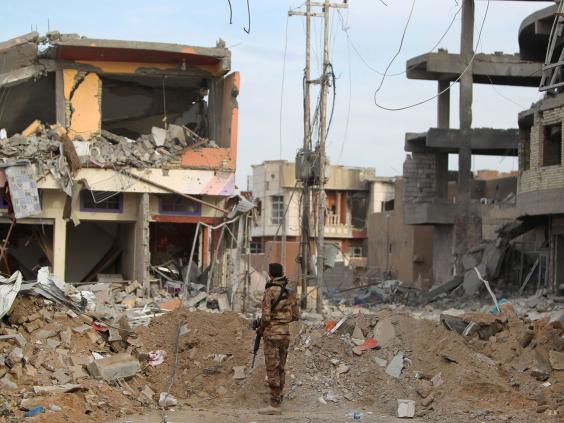
Ramadi.jpg

An Iraqi pro-government soldier standing in the ruins of Ramadi. Isis currently only controlled territory in the north and west of the country

There were “No broken locks, no smashed doors and no evidence of forced entry”.

An operations manager for Iraqi security firm Taiz, which was contracted to protect the facility, declined to comment, citing instructions from Iraqi security authorities.

A spokesman for Basra operations command, responsible for security in Basra province, said army, police and intelligence forces were working “day and night” to locate the material.

Two Basra provincial government officials said they were told to work with local hospitals to identify possible victims on 25 November.

One said: “We instructed hospitals in Basra to be alert to any burn cases caused by radioactivity and inform security forces immediately”.

Additional reading here.

Drugs, money and violence: The toll in Mexico

(CNN)Mexico is home to world-class museums, archaeological sites and cultural events — but in the past decade, drug cartel violence is often the first thing that comes to mind. The illegal drug trade has had an enormous cost on Mexico in lives lost.

Here are some statistics to put the drug war in context:

Killings in Mexico are trending up after a decline

The number of homicides in Mexico peaked in 2011 and then declined for three years. But the latest statistics show the trend reversed in 2015. Estimating how many homicides are related to drug violence is an imprecise science, but leading newspapers in Mexico estimate that since 2006, organized crime-style homicides account for 40% to 50%.

Mexico is NOT the deadliest country in the Americas

The grisliness of some of the drug cartel violence in Mexico — beheadings, mass killings, torture — gets a lot of attention. While there are some hot spots of violent activity, Mexico’s homicide rate is actually closer to the middle of the pack than the top, compared with other nations in the hemisphere.

Many kingpins have fallen, but the smuggling industry survives

The Mexican government points to evidence of its successes in the war on drugs: The leadership of the biggest cartels has been captured or killed (or recaptured, as in the case of serial escapee Joaquin “El Chapo” Guzman). Critics of the so-called “kingpin strategy” say the focus on the bosses has only created more factions of traffickers.  Go here to see all graphs.

****

‘Narconomics’: How The Drug Cartels Operate Like Wal-Mart And McDonald’s

On how the Mexican gang ‘The Zetas’ franchise

In part, NPR: The Zetas are one of Mexico’s biggest drug cartels, and they’ve got a reputation for being one of the nastiest ones, so when you see pictures of people who’ve been beheaded or hung up from bridges, these are often the guys who are responsible. And while I was in Mexico, the Zetas expanded more quickly than any other cartel. It was extraordinary. Originally they came from the northeast of Mexico, but within a very short space of time, they spread across all of Mexico and in fact down into Central America as well. So I got to thinking about how they’d done this, and when you look at the way that they spread, it seems that what they do is that they go to local areas and they find out who the local criminals are, people who do the drug dealing and extortion and all the other kinds of crime, and they offer them a crime, they say, “OK, you can use our brand, you can call yourself the Zetas, just like us,” and they give them, believe it or not, baseball caps with embroidered logos and they give them T-shirts with their logo on and they train them in how to use weapons sometimes, and in return the local criminals give the Zetas a share of all of the money that they get from their criminal activity. In other words: It’s exactly like the kind of franchising model that many other well-known companies use.

And it comes with all the same advantages and disadvantages [of franchising]. One of the big advantages is that it has allowed the Zetas to grow much more quickly. One of the disadvantages though, and this is something you often see in the legitimate franchising business, is that the franchisees often start to quarrel among each other, and the trouble is that the interest of these franchisees, the local criminals, aren’t very well-aligned with the interests of the main company. Because as far as the main company is concerned — and this applies whether it’s the Zetas or McDonald’s — if you’ve got more branches, more franchises in a local area, that means more income for the main company, because they take their money as a slice of the income of the local franchisees. But the local franchisees have totally different motives. They want to be, if possible, the only ones in the area. They want as few branches as possible. And so you’ve had very often cases of franchisees suing the main brand over what they call “encroachment” — in other words, when the main brand has too many branches in the same area.

The Feds Borrowing Your Retirement

Here’s Why (And How) The Government Will “Borrow” Your Retirement Savings

Submitted by Simon Black via SovereignMan.com,

Zerohedge: According to financial research firm ICI, total retirement assets in the Land of the Free now exceed $23 trillion.

$7.3 trillion of that is held in Individual Retirement Accounts (IRAs).

That’s an appetizing figure, especially for a government that just passed $19 trillion in debt and is in pressing need of new funding sources.

Even when you account for all federal assets (like national parks and aircraft carriers), the government’s “net financial position” according to its own accounting is negative $17.7 trillion.

And that number doesn’t include unfunded Social Security entitlements, which the government estimates is another $42 trillion.

The US national debt has increased by roughly $1 trillion annually over the past several years.

The Federal Reserve has conjured an astonishing amount of money out of thin air in order to buy a big chunk of that debt.

But even the Fed has limitations. According to its own weekly financial statement, the Fed’s solvency is at precariously low levels (with a capital base of just 0.8% of assets).

And on a mark-to-market basis, the Fed is already insolvent. So it’s foolish to think they can continue to print money forever and bail out the government without consequence.

The Chinese (and other foreigners) own a big slice of US debt as well.

But it’s just as foolish to expect them to continue bailing out America, especially when they have such large economic problems at home.

US taxpayers own the largest share of the debt, mostly through various trust funds of Social Security and Medicare.

But again, given the $42 trillion funding gap in these programs, it’s mathematically impossible for Social Security to continue funding the national debt.

This reality puts the US government in rough spot.

It’s not like government spending is going down anytime soon; it already takes nearly 100% of tax revenue just to pay mandatory entitlements like Social Security, and interest on the debt.

Plus the government itself estimates that the national debt will hit $30 trillion within ten years.

Bottom line, they need more money. Lots of it. And there is perhaps no easier pool of cash to ‘borrow’ than Americans’ retirement savings.

$7.3 trillion in US IRA accounts is too large for them to ignore.

And if you think it’s inconceivable for the government to borrow your retirement savings, just consider the following:

1) Borrowing retirement funds is becoming a popular tactic.


Forced loans have been a common tactic of bankrupt governments throughout history.


Plus there’s recent precedent all over the world; Hungary, France, Ireland, and Poland are among many governments that have resorted to ‘borrowing’ public and private pension funds.


2) The US government has already done this with federal pension funds.


During the multiple debt ceiling fiascos since 2011, the Treasury Department resorted to “extraordinary measures” at least twice in order to continue funding the government.


What exactly were these extraordinary measures?


They dipped into federal retirement funds and borrowed what they needed to tide them over.


In fact, the debt ceiling debacles were only resolved because the Treasury Department had fully depleted available retirement funds.


3) They’ve been paving the way to borrow your retirement savings for a long time.


Two years ago the government launched a new initiative to ‘help Americans save for retirement.’


It’s called MyRA. And the idea is for people to invest retirement savings ‘in the safety and security of US government bonds’.


Since then they’ve gone on a marketing offensive involving the President, Treasury Secretary, and other prominent politicians.


(Most recently Nancy Pelosi published an Op-Ed in the San Francisco Chronicle a few days ago promoting the program.)


They’ve also proposed a number of legislative reforms to ‘encourage’ American businesses to sign their employees up for MyRA.


Just last week, Congress introduced the “Making Your Retirement Accessible”, or MyRA Act, which would charge a penalty to employers whose workers don’t have a retirement account.


The proposed penalty is $100. Per worker. Per day.


Imagine a small business with, say, 10 employees who don’t have retirement accounts. The penalty to Uncle Sam would be a whopping $30,000 PER MONTH.


There’s a word for this. It’s called extortion.


Obviously when facing a $30,000 monthly penalty, an employer will pick the easiest option.


Given the absurd amount of government regulation on the rest of the financial industry, MyRA is the fastest choice.

This isn’t about fear or paranoia. It’s about facts.

And the reality is that the government in the Land of the Free is moving in the direction of borrowing more and more of your retirement savings.

If you still remain skeptical, remember that last year the government stole more from its citizens through Civil Asset Forfeiture than thieves in the private sector.

Or that just 45-days ago a new law went into effect authorizing the government to strip you of your passport if they believe in their sole discretion that you owe them too much tax.

No judge. No jury. No trial. They just confiscate your passport.

*** Getting arrested for non-payment of student loans:

US Marshals are arresting people who haven’t paid back student loans

US Marshals in Houston are arresting residents who are behind on their student loans. 

Paul Aker told Fox 26 Houston that he was arrested by seven deputies with automatic weapons—for a $1500 outstanding student loan he recieved back in 1987. 

“I was wondering, ‘Why are you here? I’m home and I haven’t done anything… Why are the Marshals knocking on my door?’ It’s amazing,” he said.

Mr Aker says he was arrested, placed in shackles and taken to the downtown federal courthouse where he was placed in a holding cell for several hours.

Later, he was taken to court for a payment agreement surround by “70 Marshals.” Mr Aker said that he was never read his rights.

“I just couldn’t believe it,” he said.

Representative Gene Green said that it’s troubling to see private debt collectors use US Marshals to go after people who owe student loans.

“There’s bound to be a better way to collect on a student loan debt that is so old,” Mr Green told Fox. “The federal government is now using private debt collectors to go after those who owe student loans.”

A source familiar with the US Marshals in Houston told the news station that anywhere from 1200 to 1500 warrants would be served to those who’ve failed to keep up with their loans.

The average student loan debt for 2015 graduates in the US reached $35,000, according to an analysis by Edvisors, the Wall Street Journal reports.