So, That Cyber Caliphate is Not ISIS, it is Russian!

Cyber Caliphate or Kremlin False-Flag?

The so-called Cyber Caliphate, the supposed cyber army of jihadist organization ISIS, has featured prominently in the news in recent years with a string of high profile attacks on significant targets. The Cyber Caliphate defaced US government websites, hacked into Department of Defence databases and released personal information of 1,400 US military affiliates, hijacked several feeds belonging to French TV channel TV5Monde and defacing its websites with the tagline “Je suis ISIS,” and more, much more.

As the Cyber Caliphate threat grew, western intelligence agencies took note and devoted significant resources to exposing and fighting the organisation. These efforts increased with the recent announcement that the various ISIS hackers were merging under a new umbrella organisation, the United Cyber Caliphate, which could constitute a major threat online.

In late February, the Pentagon announced the beginning of a full-scale cyber-war against ISIS, including activity by the US Cyber Command and a drone strike which killed Junaid Hussain, British jihadist of Pakistani origin who was the Caliphate’s best-known hacker.

However, not all is at it seems in the land of jihadi cyber warfare. Following the TV5Monde attack, French intelligence services scrutinised the group’s activity and concluded that the hackers involved had, in fact, no ties to ISIS, but a rather better established organisation famous for its deceptive spying practices. French investigators traced the attacks back to Moscow, and in particular APT 28, a group well-known as the Kremlin’s secret cyber-arm.


Similar conclusions were reached following analysis in other countries, too. The US State Department said in a mid-2015 report that although the “Cyber Caliphate declares to support [ISIS], there are no indications—technical or otherwise—that the groups are tied.” According to Der Spiegel, German intelligence also believes the Cyber Caliphate to be a Russian false-flag operation, part of Moscow’s 4,000-strong hacking staff.

To those versed in the practices of the clandestine world of spies, none of this should come as a surprise. The Kremlin has had over 100 years to perfect its false-flag practices, with the only innovation being that these sort of operations now take place in the cyber-world. For Moscow, this is just another tool in their arsenal, but it does indicate that ISIS is not nearly as formidable as it once seemed.

Yes, there is more bad news. If you are going to the Olympics, beware:

Officials warn that U.S. travelers to Rio Olympics face hack risk

USAToday: WASHINGTON — If Zika, political instability and contaminated water weren’t enough, U.S. intelligence officials are warning Americans traveling to the August Olympic Games in Rio and other destinations abroad that proprietary information stored on electronic devices is at high risk for theft by spies and cyber criminals who are increasingly targeting global events as troughs rich in valuable intelligence.

Bill Evanina, the nation’s chief counter-intelligence executive, is urging travelers to carry “clean’’ devices, free of potentially valuable archives that could be tapped for economic advantage, personal data or security information.

Just as the Olympics draw the world’s most talented athletes, Evanina said the games and other international events represent a “great playground’’ for government intelligence services and criminals, if only because of the “sheer number of devices.’’

A little more than a month before the Rio games and in the midst of the summer travel season, the U.S. government is launching a multimedia campaign Wednesday to advise travelers of the increasing threat. The program, “Know the Risk; Raise Your Shield,” warns in part that foreign security services and criminals are tracking visitors’ movements through their mobile phones and are able to control such things as internal microphones remotely, often without the users’ knowledge.

“When you travel abroad, assume that your personal information will be breached,’’ Evanina said.

Though the campaign is aimed at all U.S. travelers abroad, the approaching Olympics, which traditionally draws thousands of U.S. visitors, offer a specific focus of concern for authorities.

As part of the U.S. government’s awareness campaign, Evanina, through the National Counterintelligence and Security Center, is advising Americans traveling abroad, regardless of their destination and purpose, to take a variety of precautions.

Among them:

• Leave unnecessary devices at home.
• Back up data on devices in use and leave those copies in secure locations at home.
• Change passwords at regular intervals during travel and on return.
• Avoid prolonged sessions on local Wi-Fi networks.
• Submit company devices for examination on return for presence of malware.

National security agencies raised similar concerns in advance of the 2008 games in China and the 2014 Winter Olympics in Russia, as both countries represent the U.S.’s most aggressive cyber adversaries. Prior to the 2014 Sochi games, for example, the Department of Homeland Security warned that “all communications and files” stored on personal electronic devices were vulnerable to interception.

Brazil, while not considered such an adversary, nevertheless will likely draw intelligence units from other countries and outside criminal elements all seeking to mine the global event that attracts top government leaders and a constellation of Wall Street and corporate executives, Evanina said.

Ray Mey, a former FBI official who has managed security operations at Olympics in Salt Lake City and Torino, Italy, said that businesses may be more inclined to bolster their cyber defenses in places like China and Russia, even though Rio is expected to be used as an information collection and recruitment opportunity. More from USAToday


Cruz Led Senate Hearing on Militant Islam, Who Refused to Show?

Willful Blindness

Code Pink Confronts Cruz at Senate Hearing on Islamic Terror, Says He Has a ‘Serious Case’ of Islamophobia

Washington, D.C. – Code Pink was in attendance for Sen. Ted Cruz’s (R-TX) hearing to address to White House’s downplaying of Islamic terror on Tuesday – and they immediately made their presence known. Standing in their infamous bright pink shirts with signs that read “Islamophobia is un-American,” they began by asking the room if anyone was “suffering from Islamophobia.”

When Cruz walked in, they asked him the same thing. 

The senator kept his cool, slammed down the gavel and began the hearing. He opened his remarks by referencing the terror attack at Fort Hood in 2009 waged by Nidal Hasan. Cruz noted the innocent people Hasan had slaughtered and how he chanted “allahu akbar” during his rampage. When Cruz accidentally mispronounced “allahu Akbar,” Code Pink and other attendees laughed out loud. More from TownHall

Obama Admin Refuses to Inform Congress of ‘Islamic Terrorism’ in U.S.

Officials ignore congressional call to testify about radicalism

FreeBeacon: Senior Obama administration officials refused to appear before Congress on Tuesday to explain the recent decision to purge all references to “Islamic terrorism” and radicalism from public documents, according to disclosures made Tuesday on Capitol Hill.

Top officials from the Justice Department and FBI declined to appear on Capitol Hill to answer questions from lawmakers about domestic terror attacks and an administration policy of scrubbing references to Islamic terrorism and similar terms from government materials, lawmakers said.

The policy has thwarted attempts by federal authorities to stop an increasing series of terror attacks from taking place on United States soil, according to Sen. Ted Cruz (R., Texas), chair of the Senate Judiciary subcommittee on oversight.

In the past year the Obama administration has twice ordered that mentions of the terror group ISIS and “Islamic terrorism” be purged “from highly significant public records,” Cruz said.

One such effort took place in the aftermath of the recent terrorist shooting in Orlando in which the administration censored 911 transcripts of calls made by the shooter.

These efforts came amid other campaigns by the Department of Homeland Security to force its personnel to remove references to “jihad,” “sharia,” and other similar terms from material focused on methods to counter violent extremism, Cruz said.

“I would like nothing more than to speak with a government official about these bizarre decisions and omissions, especially in light of the most recent terrorist attack in Orlando by a radicalized man who had been interviewed three times by the FBI,” Cruz said.

“Indeed, this subcommittee invited two such witnesses: John P. Carlin, an assistant attorney general for the Department of Justice’s National Security Division, and Michael B. Steinbach, the executive assistant director for the FBI’s National Security Branch,” he said. “Both have refused to appear.”

Cruz blamed the administration’s policy for contributing to recent terror attacks in Orlando, San Bernardino, and Boston.

There has been a “consistent effort by this administration to scrub any reference to radical Islamic terrorism, to pretend the threat does not exist, and tragically as a consequence of that, over and over again, we have instances where the administration has ample evidence of radical Islamic terrorists,” Cruz said.

“The consequence of a willful blindness, of a policy that is a matter of administration policy, refusal to acknowledge the threat, means over and over again this administration has allowed the threats to go forward,” he added.

The administration “had declined to appear and explain” this policy and rationale behind it despite multiple requests from Congress.

“Are government officials prohibited from debating anything about Islam?” Cruz asked. “We would like to hear an explanation for that.”

The efforts to avoid using these terms have been longstanding in the Obama administration.

Muslim advocacy groups forced the FBI to purge some 876 documents from its training materials because they were deemed “offensive” in March 2012, Cruz explained.

“One article was purged because it was ‘highly inflammatory’ and ‘inaccurately argues the Muslim Brotherhood is a terrorist organization,’” he added.

In lieu of the Obama administration officials, the subcommittee heard from a range of outside terrorism experts and the government whistleblower who disclosed attempts by the Obama administration to purge many names from the U.S. terror watch list.

The Obama administration has come under further criticism for failing to properly combat ISIS abroad, a strategy that some lawmakers say could enable the terror group to carry out attacks inside the United States.

“I fear that in spite of continued attacks on our homeland, our military response to ISIS does not adequately reflect the direct nature of this threat to the United States,” Sen. Bob Corker (R., Tenn.), chair of the Senate Foreign Relations Committee, said during a separate Tuesday hearing on the U.S. strategy to combat ISIS.

“I think many of us grow frustrated when the administration’s optimistic rhetoric often does not match the results,” Corker said.

ISIS Kill List Targets American Civilians, But do They Know?

Is anyone telling the civilians they are targets of Islamic State? Nope…Anyone explain why? The military? the FBI? The police? Is anyone collaborating, coordinating and protecting citizens?


ISIS ‘Kill Lists’ Increasingly Target U.S. Civilians

Report: Calls for random attacks by hacking groups illuminate ‘evolving terror threat’

FreeBeacon: Pro-ISIS hacking groups have started including American civilians along with military, government, and law enforcement personnel on “kill lists,” consistent with the terror group’s effort to expand attacks to random targets and instill fear in the public, according to a new report.

The SITE Intelligence Group, an organization that monitors jihadist propaganda, examined eight lists recently circulated online by pro-ISIS hacking groups, including some that name random civilian targets.

“These lists, with targets spanning drone operators to random civilians, appear to have achieved at least part of their presumed intentions: heightened alert by government workers, FBI visits to startled civilians, and significant media attention,” SITE wrote in its report.

Eight lists released over the course of two months this year have targeted federal government employees, military personnel, state and local government officials, and random residents of New York and Texas. While most of the kill lists have not been pushed through official ISIS channels, fighters and supporters of the terror group have promoted the targets through social media.

“This embrace of random targets, though new within the context of hackers’ kill lists, is nonetheless consistent with IS’ methodology, and demonstrates application of attack instructions from IS’ leadership and affiliates,” the report explained, using another name for the Islamic State, or ISIS.

ISIS has inspired self-radicalized terrorists who have launched attacks inside the United States. Omar Mateen, a U.S. citizen, pledged allegiance to the terror group during conversations with 911 operators during a gun attack that killed 49 victims at an Orlando gay club earlier this month. The couple who opened fire on a San Bernardino, California, holiday party last December are also believed to have pledged support to ISIS.

The FBI declined to comment specifically on investigative matters related to the kill lists but said that the agency routinely notifies people and organizations of information collected during investigations that could be “perceived as potentially threatening in nature.”

“Potential threats may relate to individuals, institutions, or organizations, and are shared in order to sensitize potential victims to the observed threat, and to assist them in taking proper steps to ensure their safety,” Matthew Bertron, a representative for the FBI’s National Press Office, told the Washington Free Beacon.

Kill lists from pro-ISIS hacking groups have become increasingly abundant since the so-called Islamic State Hacking Division called for attacks on 100 military personnel in March of last year, and later released lists targeting 10 Italian Army officers and over 1,000 military and government personnel. While this particular hacking group—once headed by ISIS fighter Junaid Hussain before he was killed in an airstrike—has focused on military and government personnel, others have emerged to target civilians and local officials.

A pro-ISIS group called the United Cyber Caliphate, for example, released five different target lists between March and May of this year. The lists publicized personal information about 11 Tennessee state county board members; 3,600 New York citizens; and 1,543 Texas residents, according to SITE’s report. Two lists each separately included information about 50 federal government employees, including workers from the Departments of State, Defense, and Navy.

While the list of New York residents was removed from the hosting site where it was posted, the lists with information on individuals in Tennessee and Texas remained online.

Another group named the Caliphate Cyber Army also released two lists, one of which called for attacks on 56 New Jersey state police staff and another that targeted 36 Minnesota state police officers.

While inactive between September 2015 and May of this year, the Islamic State Hacking Division also recently released names and personal information of 76 U.S. military personnel who work with drones.

“In just over a year, kill lists from pro-IS hacking groups have not only become more abundant, but have also expanded in terms of target selection,” the SITE report stated. “Between March and May of this year, kill lists by these groups have expanded beyond conventional criteria to random civilian targets, instructing to ‘shoot them down.’”

The lists are consistent with ISIS ideology supporting attacks on all non-Muslims living in countries at war with the terror group, according to SITE.

“This shift in target selection shows a new method in serving a long-standing function of IS and other jihadi groups: instill widespread fear into governments and the public,” the report stated. “As IS spokesman Abu Muhammad al-‘Adnani stated in a September 2014 speech, Muslims should kill any non-Muslim living in countries warring with the group, with no distinction of ‘whether he is a civilian or military.’”

The promotion of the lists also highlights ISIS militants’ exploitation of social media to recruit and inspire attacks, regardless of the fact that the pro-ISIS hacking groups do not appear to be publicly coordinating with one another.

“Given the power and ease of social media, along with the increasing ubiquity of Internet access and smart phones, every IS supporter can act as their own online media group, recruitment office, or fundraising organization. Likewise, every IS-supporting hacker can use their skills to serve the group’s goals, whether they be a fighter or a supporter in non-combat zones,” the report stated.

The SITE Intelligence Group could not confirm that the groups obtained the information by hacking into government or other private systems but said that it was both possible and plausible. The report noted that some of the information on the lists is available through public channels though they “appear to be compiled via non-public sources, especially when factoring what would be immense labor and difficulty required to manually compile the information via those public sources.”

The Islamic State Hacking Division is believed to have obtained data for its list targeting over 1,000 U.S. military personnel from Ardit Ferizi, a Kosovo citizen who hacked into a U.S.-based company’s servers to harvest the information. The Justice Department charged Ferizi with computer hacking, identity theft, and providing material support to ISIS last October.

Benghazi: GOP Report 100+ Witnesses, No Video to Blame

The full 800 page report is here.

During the first attack, the only focus the White House and the State Department was to concoct a blame, no one cared at the terrifying moments about a response or rescue while Panetta delivered the orders for a military response. Exactly how many lives were at risk at the time is still somewhat unknown, but rather estimated…simply put all their lives were in peril.

It shows that the State Department assessment of the situation in Benghazi in 2011 and 2012 noted rising crime levels, rampant firearm ownership, and a high risk of militia violence in the security vacuum left by the toppling of Libyan dictator Moammar Gaddafi. The precarious security situation, according to the report, was exacerbated by inadequate security at the Benghazi outpost, which was plagued by equipment failures, a lack of manpower and relied on an often-disorganized local militia for protection. Read more here from CNN and their summary.

*****

The claim that the fatal 2012 Benghazi terrorist attacks were sparked by an anti-Muslim video was crafted in Washington by Obama administration appointees and reflected neither eyewitness nor real-time reports from the Americans under siege, according to the final report of the GOP-led Benghazi Select Committee.

The GOP report, released Tuesday, followed by less than a day a report by the Democrats on the panel saying that security at the Benghazi, Libya facility was “woefully inadequate” but former Secretary of State Hillary Clinton never personally denied any requests from diplomats for additional protection. More from FNC.

House Republicans’ Report Sheds New Light on Benghazi Attack

NBC: After a more than two-year investigation into the 2012 terrorist attack in Benghazi, House Republicans are set to release a lengthy report Tuesday recounting the events that led to the deaths of four American diplomats.

It sheds new light on the breakdown in the U.S. military’s response to the attack and offers new details about why U.S. Ambassador Christopher Stevens was at the compound in the Libyan city with only two State Department bodyguards, months after the British and others had evacuated the area.

NBC News obtained the first 175-page section of the full 800-page House Select Committee on Benghazi report that will be released later Tuesday. The Democratic minority released its own report Monday.

One section of the report seems to allege that U.S. officials fundamentally misunderstood who their allies were at the time. The Republican majority’s report found that 35 Americans were saved not by a “quasi-governmental militia” as previous reports concluded, or even a group the U.S. saw as allies. Instead, the report determines that the Americans were saved by the “Libyan Military Intelligence,” a group composed of military officers under the Moammar Khaddafy regime, the Libyan dictator who the U.S. helped topple just one year earlier.

The February 17 Martyr Brigade, “recommended by the Libyan Government and contractually obligated to provide security to the Mission Compound,” had fled, the report found. “In other words, some of the very individuals the United States helped remove from power during the Libyan revolution were the only Libyans that came to the assistance of the United States on the night of the Benghazi attacks,” the report states.

Last fall, former Secretary of State Hillary Clinton testified before the Benghazi committee that Stevens had originally chosen to serve in Benghazi because “he understood America had to be represented there at that pivotal time.”

In previously unreported details, the Republican majority of the committee found that Stevens traveled to the U.S. mission that week to both fill a temporary staffing gap and to spearhead an effort to make Benghazi a permanent diplomatic post.

Witnesses told the committee Stevens was laying the groundwork for a visit by Secretary Clinton just one month later and “the hope was to establish a permanent consulate in Benghazi for the Secretary to present to the Libyan government during her trip.”

Discussions were already underway in Washington for how to fund the upgrades, and one month before the end of the fiscal year there was pressure to assemble a package before available funds were lost.

The report highlights the military’s failure to carry out Defense Secretary Leon Panetta’s order to deploy forces to Benghazi and the lengthy delay that prevented the military assets from arriving at the embassy in Tripoli until 2 p.m. the day after the Benghazi attack.

“What was disturbing from the evidence the Committee found was that at the time of the final lethal attack at the Annex, no asset ordered deployed by the Secretary had even left the ground,” the report states.

Previous accounts blamed the “tyranny of time and distance” plus the failure to have airplanes ready for the significant delay in moving military assets. But the report states conflicting orders from State Department and Pentagon officials over whether Marines should wear military uniforms or civilian attire also played a role.

In a newly revealed two-hour secure video conference on the night of the attacks led by White House Chief of Staff Denis McDonough and attended by Clinton and others, State Department officials raised concerns about the diplomatic sensitivities of the attire to be worn by assets launched.

In an interview with the Committee, Patrick Kennedy, the under secretary or Management at State, described the department’s sensitivity as wanting to “make sure that the steps we were taking would enhance the security of our personnel, not potentially diminish the security of our personnel.”

According to one commander, the report states, as forces prepared to deploy, “during the course of three hours, he and his Marines changed in and out of their uniforms four times.”

Further, several witnesses told the committee that despite Panetta’s orders, the operating plan was not to insert any asset into Benghazi. “Their understanding was that the assets needed to be sent to Tripoli to augment security at the Embassy, and that the State Department was working to move the State Department personnel from Benghazi to Tripoli.”

Republicans on the committee were critical of high-level officials in Washington for mistakenly thinking that the attacks were over and the crisis had passed by the time the emergency video conference convened, which the report alleges contributed to the confusion.

The report also finds that then-Vice Chairman of the Joint Chiefs of Staff Admiral James Winnefeld, did not participate in the secure call because “he had left to return to his residence to host a dinner party for foreign dignitaries.” He received one update during the dinner on the attacks.

The section of the report devoted to the Benghazi assault concludes “the response to the attacks suffered from confusion and miscommunication circulating between agencies.”

A total of 107 witnesses were interviewed for the report, including 81 never before questioned by Congress and 9 eyewitnesses to the attacks, Republicans on the committee told NBC News. The committee also received and reviewed more than 75,000 new pages of documents.

Democrats on the House Select Committee on Benghazi had a sharply different view even before seeing the Republicans’ report. The minority version released Monday concludes that “the U.S. military could not have done anything differently on the night of the attacks that would have saved the lives of the four brave Americans killed in Benghazi.”

Ranking Member Elijah Cummings early Tuesday called the Republican report “partisan” but could offer no additional comment because “we haven’t read it because Republicans didn’t want us to check it against the evidence we obtained.”‎

Democrats also attacked Republicans over the committee’s process, including what they describe as “grave abuses,” such as excluding Democrats from interviews, concealing exculpatory evidence, withholding interview transcripts, leaking inaccurate information, issuing unilateral subpoenas, sending armed Marshals to the home of a cooperative witness, and even conducting political fundraising “by exploiting the deaths of four Americans.”

The Democrats chastised committee chairman Trey Gowdy who they said “personally and publicly accused Secretary Clinton of compromising a highly classified intelligence source.”

Democrats did acknowledge, as had been previously determined, that “security measures in Benghazi were woefully inadequate as a result of decisions made by officials in the Bureau of Diplomatic Security.” But their report concluded, “Secretary Clinton never personally denied any requests for additional security in Benghazi.”

Reacting to the GOP report early Tuesday, State Department deputy spokesman Mark Toner said: “We have made great progress towards making our posts safer since 2012. We have been working to respond to the extensive findings and recommendations of the independent Accountability Review Board, closing out 26 out of its 29 recommendations.”

A Select Committee spokesman dismissed the Democrats’ report as “rehashed, partisan talking points” aimed at defending Hillary Clinton.

NBC News was awaiting comment from the White House on the report released by the Republican majority on the committee.


Clinton, for her part, has repeatedly denounced the committee’s purpose. “There have been seven investigations led mostly by Republicans in the Congress and they were non-partisan and they reached conclusions that, first of all, I and nobody did anything wrong but there were changes we could make,” Clinton said during a TODAY town hall on Oct. 5, 2015. “This committee was set up, as they have admitted, for the purpose of making a partisan political issue out of the deaths of four Americans. I would have never done that.”

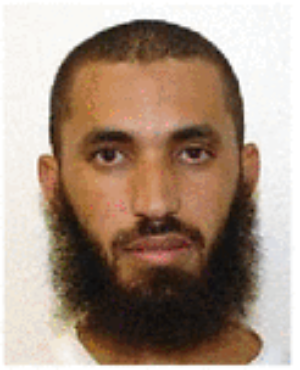
Pentagon Releases bin Ladin’s Bodyguard to Montenegro

Pentagon transfer Abdel Malik Ahmed Abdel Wahab Al Rahabi ( 1979) from Guantanamo Bay to .

The transfer of Abdel Malik Ahmed Abdel Wahab al-Rahabi leaves 79 detainees remaining at the U.S. naval base in Guantanamo. Al-Rahabi, 37, who was brought to Guantanamo in January 2002, had been accused of being a bodyguard for the late al Qaeda leader Osama bin Laden in Afghanistan, according to Pentagon documents. More from Reuters.

Related reading: al Qaeda, The Baltics, includes Montenegro

Related reading: Baltics, Montenegro and NATO

In part from LWJ: US officials repeatedly warned that Rahabi was a threat. Joint Task Force Guantanamo (JTF-GTMO), President Obama’s Guantanamo Review Task Force, and a Periodic Review Board (PRB) all deemed Rahabi too dangerous to transfer. Curiously, another PRB approved Rahabi’s transfer in late 2014, just months after the same body said his continued detention remained necessary to mitigate the threat he posed.

Screen Shot 2016-06-23 at 1.18.06 AM

According to a leaked threat assessment, dated Apr. 28, 2008, Joint Task Force Guantanamo (JTF-GTMO) concluded Rahabi was a “high” risk who is “likely to pose a threat to the US, its interests, and allies.”

JTF-GTMO found that Rahabi was a bodyguard for Osama bin Laden and was also related to the al Qaeda founder by marriage.

Rahabi “swore bayat (oath of allegiance)” to Bin Laden and “received specialized close combat training for his role as a suicide operative in an aborted component” of the 9/11 hijackings, according to JTF-GTMO’s threat assessment.

US officials concluded that Rahabi was one of several al Qaeda members “designated as suicide operatives in a plot to hijack US air carriers traveling across Southeast Asia and destroy them in midair.” The hijackings were initially intended to coincide with al Qaeda’s attacks on the East Coast of the US, but bin Laden reportedly canceled them because he feared the two parts of the operation would be too difficult to synchronize.

JTF-GTMO’s analysts concluded that Rahabi “participated in hostilities against US and Coalition forces and was captured with a group referred to as the ‘Dirty 30,’ which included [bin Laden] bodyguards and “a jihadist “assessed” to be the would-be 20th hijacker on 9/11. The latter individual is Mohammed al Qahtani, who is still detained at Guantanamo. Qahtani was denied entry into the US in August 2001 and eventually returned to South Asia. Qahtani was captured by Pakistani forces in December 2001 as he and more than two dozen others, including Rahabi, attempted to flee the Battle of Tora Bora.

For these reasons and more, JTF-GTMO recommended that Rahabi be retained in US custody.

President Obama’s Guantanamo Review Task Force also determined that Rahabi was too dangerous to transfer.

The task force, which concluded its work in January 2010, recommended that Rahabi be held in “[c]ontinued detention pursuant to the [2001] Authorization for Use of Military Force.”

A Periodic Review Board (PRB) established by the Obama administration reevaluated Rahabi’s case in early 2014. The PRB determined on Mar. 5, 2014 that “continued law of war detention of” Rahabi remained “necessary to protect against a continuing significant threat to the security of the United States.”

That is, the PRB concluded that Rahabi was too much of a risk to transfer as well, just as JTF-GTMO and President Obama’s task force had before hand. [See LWJ report, Review board rules against Guantanamo detainee.]