CIA, John Brennan, Gus Hall and that Polygraph Test

This is the same guy who defended Jihad as ‘Legitimate Tenet of Islam’.

John Brennan: The President’s strategy is absolutely clear about the threat we face. Our enemy is not “terrorism” because terrorism is but a tactic. Our enemy is not “terror” because terror is a state of mind, and as Americans we refuse to live in fear. Nor do we describe our enemy as “jihadists” or “Islamists” because jihad is a holy struggle, a legitimate tenet of Islam, meaning to purify oneself or one’s community, and there is nothing holy or legitimate or Islamic about murdering innocent men, women, and children. More here.

CIA director fretted his vote for communist

CNN:John Brennan on Thursday recalled being asked a standard question for a top security clearance at his early CIA lie detector test: Have you ever worked with or for a group that was dedicated to overthrowing the US?
“I froze,” Brennan said during a panel discussion about diversity in the intelligence community at the Congressional Black Caucus Foundation’s annual conference. “This was back in 1980, and I thought back to a previous election where I voted, and I voted for the Communist Party candidate,”
Brennan was responding to a question about barriers to recruiting diverse candidates for the intelligence fields, including whether past records of activism could hurt someone applying for a clearance later in life.
The CIA director said the agency’s mission is to protect the values of the Constitution — which include free speech.
“We’ve all had indiscretions in our past,” he said, adding neither some drug experimentation nor activism was a non-starter. “I would not be up here if that was disqualifying.”
He proceeded to tell the story of his test.
“I froze, because I was getting so close to coming into CIA and said, ‘OK, here’s the choice, John. You can deny that, and the machine is probably going to go, you know, wacko, or I can acknowledge it and see what happens,'” Brennan said.
He said he chose to be forthcoming.
“I said I was neither Democratic or Republican, but it was my way, as I was going to college, of signaling my unhappiness with the system, and the need for change. I said I’m not a member of the Communist Party, so the polygrapher looked at me and said, ‘OK,’ and when I was finished with the polygraph and I left and said, ‘Well, I’m screwed.'”
But he soon got his admission notice to the CIA and was relieved, he said, saying that though the agency still had long strides to make in accepting gay recruits and minorities, even then it recognized the importance of freedom.

“So if back in 1980, John Brennan was allowed to say, ‘I voted for the Communist Party with Gus Hall’ … and still got through, rest assured that your rights and your expressions and your freedom of speech as Americans is something that’s not going to be disqualifying of you as you pursue a career in government.”
So, who was Gus?
Well he died in circa 2000 in New York and did run for president of the United States more than once.

By the end of his life he had become a lonely Communist stalwart in a post-Communist world. Those who sought him out for interviews at party headquarters on West 23rd Street in Manhattan found a genial white-haired man presiding over ”a museum of history,” as he put it. Pictures of his family shared space with a portrait of Lenin (a gift from Leonid I. Brezhnev); a wood sculpture from Fidel Castro and a tapestry of Karl Marx, courtesy of Erich Honecker, the former leader of East Germany.

”The struggle between those who own the wealth and those whose labor produces the wealth is one flaw in capitalism that will lead to socialism,” Mr. Hall said in 1996, repeating the familiar Marxist formulation.

ISIS moving into Tunisia and the Indo-Asia-Pacific

This is precisely how the civil war in Syria began, with a protest. And so much for that Obama Asia pivot.

Escalating Protests Threaten Instability in Tunisia

AEI: Key Takeaway: Economic protests resembling those that sparked the 2010 Jasmine Revolution are spreading throughout Tunisia and may grow into nationwide civil unrest. The protests may escalate if security forces respond with violence or officials prove unwilling or unable to meet protestors’ demands. Widespread civil unrest provides an opportunity for Salafi-jihadi groups, including the Islamic State of Iraq and al Sham (ISIS) and al Qaeda, to attack government or economic targets and further destabilize the Tunisian state.

The Situation as of September 15, 2016

Major economic protests began in two Tunisian cities on September 5 and September 7.

  • Protestors blocked roads and burned a business in the town of Ben Guerdane on September 5 after Tunisian security forces shot dead a suspected smuggler. Ben Guerdane is located on the Mediterranean coastline near the Libyan border. Its economy depends on smuggling. Trade unions plan to strike in Ben Guerdane on September 21 to protest administrative gridlock.
  • A café owner set himself on fire in Fernana, a town in northwestern Tunisia, on September 7 after being denied a request to negotiate a fine. Protestors responded by burning tires, closing a major road, striking, calling for the resignation of local officials, and attempting to disrupt the water supply to Tunisia’s capital. Demonstrations intensified on September 11 after the café owner succumbed to his injuries. Additional security forces deployed to Fernana on September 12. Protestors released a series of demands, including calls for anti-corruption measures, an industrial zone, and improved public health and energy infrastructure on September 13. Demonstrations quieted on September 15, but government buildings and schools remain closed.

Protests are spreading to other cities in Tunisia in a manner that resembles the beginning of the 2010 Jasmine Revolution in Tunisia that overthrew the Zine el Abidine Ben Ali regime.

  • Labor union members marched in Makthar, western Tunisia on September 13 to protest overdue development projects. Demonstrators demanded the removal of a corrupt official in El Mida, a town on Tunisia’s northeastern coast, on September 14. National Guard officers intervened to protect the official. Teachers and professors marched in Beja, north central Tunisia and Tozeur, southwestern Tunisia on September 14 to demand the implementation of a labor agreement and development plans. A farm worker in Reguib, central Tunisia attempted to self-immolate after a dispute with a local official on September 15.
  • These protests resemble the wave of civil unrest triggered by the self-immolation of Tunisian street vendor Mohammed Bouazizi in late 2010 that ousted longtime Tunisian President Zine el Abidine Ben Ali. The Jasmine Revolution sparked the Arab Spring.

The Tunisian government is attempting to respond to protestors’ demands, but its response may be insufficient.

  • Tunisian authorities had promised on September 12 to send a ministerial delegation to Fernana to hear protestors’ grievances. Local activists reported on September 14 that the promised delegation never arrived. A regional council is now set to convene to discuss Fernana’s development on September 18. The Tunisian Ministry of Industry and Trade announced plans to develop a free-trade zone in Ben Guerdane on September 13, possibly in an effort to placate protestors.
  • The Tunisian public’s expectations that life would improve after the 2010 Jasmine Revolution have not been met. Continued economic failure and successive corruption scandals underpin widespread discontent with the government, especially in marginalized regions, where the unemployment rate hovers around 30 percent. Clashes between security forces and local residents, as well as corruption, drive popular resentment against the police.


Context

Tunisia’s new unity government is vulnerable to economic and political backlash.

  • Newly appointed Prime Minister Youssef Chahed is preparing to announce austerity measures that will include new taxes and limits on public sector jobs. Parliament ousted former Prime Minister Habib Essid for his failure to resolve the country’s economic and security challenges. Chahed’s government faces the same challenges, as well as allegations of nepotism.

Tunisian security forces have violently repressed popular protests in the post-revolution period.

  • Protestors demonstrated nationwide in January 2016 after an unemployed young man electrocuted himself. Tunisian police responded with violent crackdowns.
  • Tunisian security forces may crack down on protestors. Tunisia’s security sector, including key leadership, has not changed since it responded violently to demonstrations in January 2016. Security forces have used states of emergency and unlawful force to break up peaceful demonstrations and detain suspects multiple times in recent years.

Tunisia is surrounded by unstable neighbors.

Tunisia is a target for global Salafi-jihadi groups.

  • Thousands of Tunisian militants are fighting for ISIS in Iraq and Syria. Waves of returning foreign fighters will attempt to re-enter their country, bringing with them plans to break the Tunisian state.
  • The al Qaeda network, composed of a core group and an array of associates and affiliates that pursue al Qaeda’s objectives, has grown stronger since 2011. This network includes Ansar al Sharia Tunisia and the Tunisian Uqba Ibn Nafa’a Brigade.


Complications

Salafi-jihadi groups may be positioned to infiltrate or attack Tunisia in the event of unrest.

  • Tunisian has limited security resources. The government would probably re-allocate these resources from counter-terrorism operations to quell unrest should there be widespread protests.
  • Tunisian ISIS militants operating in Libya may be preparing to return to Tunisia. ISIS could exploit unrest to penetrate Tunisia’s border at Ben Guerdane, where it attacked in March 2016. ISIS militants moving westward from the group’s former stronghold in Sirte, Libya are a growing threat on Tunisia’s eastern border.
  • Al Qaeda’s strategy includes embedding itself within and co-opting movements. Al Qaeda in the Islamic Maghreb (AQIM) and the Uqba Ibn Nafa’a Brigade, an AQIM affiliate, may be positioned to infiltrate a movement against the Tunisian state.

A crackdown by security forces would strengthen the Salafi-jihadi base in Tunisia.

  • A violent crackdown would exacerbate existing popular grievances and reinforce a Salafi-jihadi popular support base in Tunisia. This base will remain a source of strength for local and global Salafi-jihadi groups.


Implications

Instability in Tunisia could greatly exacerbate regional instability and threaten U.S. interests in the region.

  • The destabilization of Tunisia would remove one of the few remaining semi-stable states in North Africa.
  • The U.S. relies on Tunisia as the host of diplomatic efforts for neighboring Libya. U.S. Africa Command works closely with Tunisian security forces in counterterrorism operations and may seek to base from Tunisia for future operations.

A stronger Salafi-jihadi base in Tunisia would threaten the security of the U.S. and its allies in the long term.

  • Salafi-jihadi groups with global objectives, including ISIS and al Qaeda, will continue to draw on a Tunisian support base for resiliency and strength.
  • This base will continue to threaten Tunisia and provide foreign fighters to regional conflicts. It will support Salafi-jihadi groups with the intent and capability to attack the American and European homelands.

Popular protests in Tunisia may spread throughout the country. In the most dangerous scenario, the Tunisian state will weaken or collapse and the country’s Salafi-jihadi base will grow stronger.  

*****

SanDiegoUnionTribune: The commander of American military forces across Asia, Adm. Harry Harris, said the jihadist group — commonly called ISIS — is seeking new territory as it gets squeezed out of Iraq and Syria.

“It’s clear to me that [ISIS] is also “rebalancing” to the Indo-Asia-Pacific,” said Harris, speaking during a meeting of the San Diego Military Advisory Council on Wednesday in Point Loma.

Using a cancer analogy, the four-star leader of U.S. Pacific Command added: “Through multinational cooperation, we can eradicate this [ISIS] disease before it metastasizes.”

But the U.S. alliance with the Philippines hit choppy waters recently after comments by President Rodrigo Duterte — something that Harris also addressed Wednesday with lightly veiled criticism of Duterte’s statements.

“We have been allied with the Philippines for a long time. We have shed our blood with them. … We fought side by side during World War II. I consider our alliance with the Philippines to be iron-clad,” Harris said. He also mentioned U.S. aid to the Philippines, budgeted at $120 million this year, and the dispatch of American troops to help after Typhoon Haiyan in 2013.

“So when the leader said, ‘Only China supports us,’ I don’t know what he means,” Harris said, answering a reporter’s question toward the end of his presentation.

Duterte started making headlines last week when, speaking in Tagalog, he called President Barack Obama a son of a bitch.

Since then the Philippines president has said his government would shop for weapons in China and Russia and would halt joint U.S.-Philippines patrols in the South China Sea to avoid appearing hostile to China.

He also called for the departure of U.S. special-operations troops from the southern Philippines, saying their presence could complicate the fight against the ISIS-linked terrorist group Abu Sayyaf.

One analyst said it appears that nationalism and a desire for “outsider” status are driving the Filipino president’s current tone.

“I don’t really think this is as much about the U.S. as it is about domestic politics — and just his personality. We are a very useful whipping boy,” said Thomas Sanderson, director of the transnational threats project at the Center for Strategic and International Studies in Washington, D.C. “I think this is largely about someone who is a rebel … he’s an outsider and he’s broken through into an area that outsiders typically didn’t get to.”

Sanderson said the Philippines would do an about-face if Islamic terrorism becomes a more widespread problem for Filipinos.

“[Duterte] comes right back to us, there’s no doubt about it,” he said. “Because the center of gravity for counter-terrorism knowledge and skill is the United States.”

Harris outlined the signposts of the ISIS advance on new turf in the Pacific Command theater, an area that’s home to 700 million Muslims. That means more Muslims live in the Asia-Pacific region than in the Middle East.

“Population numbers alone have forced [Pacific Command] to think ahead about what’s next in the fight against [ISIS],” Harris said. “The vast majority of these people are peaceful citizens who seek to live lives free from the scourge of terrorism, but we know that a small band of fanatics can produce deadly results.”

He pointed to ISIS-inspired terrorism in Bangladesh, Indonesia, Malaysia and the Philippines so far in 2016. Those events include the July 2 attack on a Bangladeshi restaurant by ISIS-aligned militants. In May and June, Abu Sayyaf in the Philippines released video showing the beheadings of two Canadians after their families didn’t pay ransoms.

Hundreds of jihadists have traveled from Asia to the main ISIS battlegrounds of Iraq and Syria to join in the group’s violent vision of creating an Islamic caliphate, according to published accounts.

The tally is about 700 from Indonesia, 100 from Malaysia, 100 from the Philippines, 200 from the Maldives, 300 from China and 120 from Australia, according to a December report by The Soufan Group. These recruits make up a small portion of the estimated 30,000 to 40,000 fighters ISIS can claim or has been credited with over time.

But as they tire of warfare, the danger is that they may return home and try to continue the fight — and recruit others.

Sanderson said Indonesia has the highest vulnerability to ISIS despite its strong security forces, because of the number of ISIS fighters already hailing from there and because of Indonesia being a string of islands with lots of places to hide.

All of this comes as the United States is finishing its own “rebalance,” with the Navy shifting 60 percent of its fleet to the Pacific by 2020. That move, announced late in Barack Obama’s first term, was seen as a hedge against North Korean saber-rattling and the growing economic and military might of China.

Academics differ on how big the ISIS threat is becoming in the Pacific and Asia.

Eli Berman, a UC San Diego economics professor, said he thinks “rebalancing” is too strong a term for the jihadist group’s foothold in Asia. ISIS isn’t on the verge of controlling territory anywhere in the Pacific Rim, said Berman, who is a research director at the university’s Institute on Global Conflict and Cooperation.

Asia expert Denny Roy at the East-West Center in Honolulu agrees with Harris that the basic ideas represented by ISIS won’t die if the Islamic State is geographically erased.

“The purveyors of those ideas are already trying to transplant them into other regions and are finding some interest,” Roy said.

But several observers pointed out that Asia has major differences that may hinder ISIS if it tries to expand there.

Governments there are generally more intact than in the Middle East.

“What’s missing is the ultra-weak states in which locals are ready and chomping at the bit to sign up for something to do,” said Sanderson at the Center for Strategic and International Studies. “There are far fewer people who would want to sign up for a battle inside of Indonesia, as opposed to those who would want to sign up to battle inside Libya, Tunisia, Yemen or Syria — where the majority of young men would say, ‘Give me a gun and let’s go.’ They have nothing to lose.”

Roy sees South Asia, which includes Bangladesh, as fertile ground for extremism.

“Southeast Asia is less so, because the sense of grievance and the (routine practice) of mass political violence are less strong than in the Middle East or South Asia,” he said.

 

Sheik Anwar and Yaafghankid78, the NY/NJ Bomber

The full criminal complaint by the FBI on Federal charges for Ahmad Khan Rahami is here.

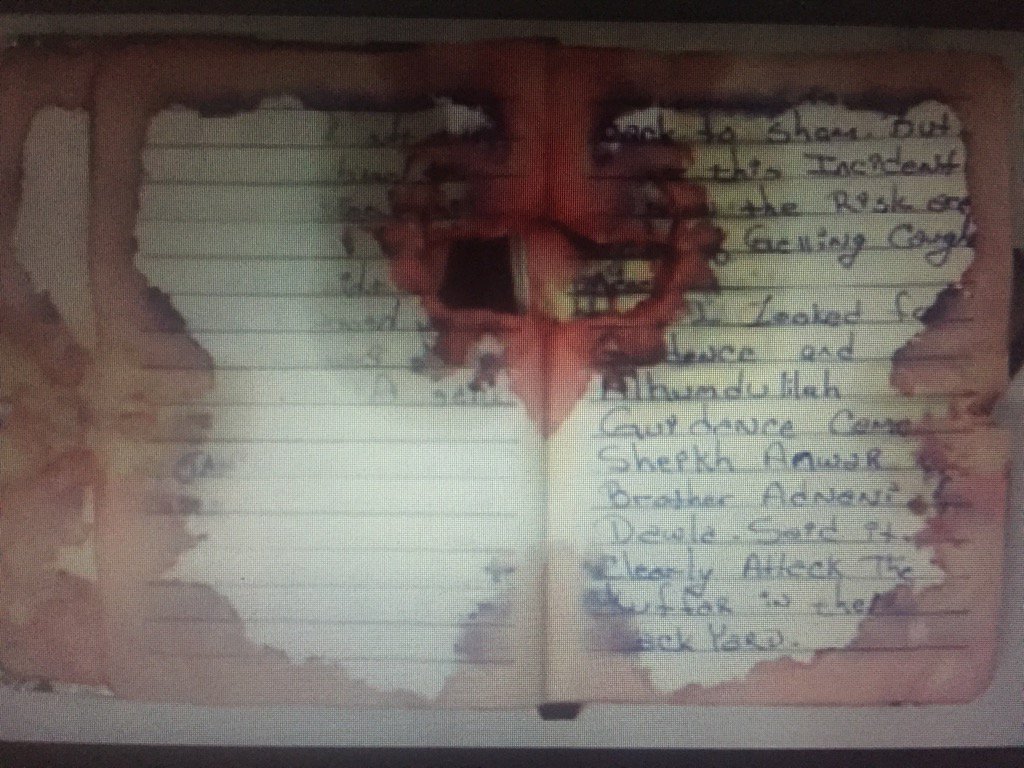
Ahmad kept a journal and it was on his body when he was wounded in a shooting exchange with police near his home.

Much of the references in this journal are to Anwar al Alawki who was an American born cleric and major target for the Obama administration to begin the defeat of al Qaeda. He was in fact killed in a drone strike in Yemen. Major Nadal Hassan, the Ft. Hood killer was also a devoted follower of al Alawki.

This journal does have a very small reference to Islamic State, however Rahami was radicalized during one of his last trips to Afghanistan and Pakistan where the Taliban and al Qaeda maintain a foothold of power. Islamic State on the days of the bombings in New York and New Jersey did not claim any connection however they did to the knife attack in St. Cloud, Minnesota.

 There was immediate chatter and concern that there was a functioning terror cell in that does appear to be the case in some form. Rahami did not act alone. The FBI has published a wanted poster for 2 other individuals.
Rahami’s father brought the family to the United States under asylum conditions and there have been several legal cases with members of the family with law enforcement. Ahmad has a first wife (Dominican) and a daughter and he is known to have married a second wife in Afghanistan and has a child with her. The second wife was returning to the United States and was detained by the FBI in the United Arab Emrites. Ahmad’s father wanted his 8 children to remain loyal to their heritage and such has been the case at least for some. One son moved back to the border region between Afghanistan and Pakistan and the father in fact himself was part of the mujahedeen as a fighter against the Soviets as did Usama bin Ladin.

Not only has the father travel back to Afghanistan but the son, Ahmad did so more than once.

Rahami, 28, spent several weeks in Kandahar, Afghanistan, and Quetta, Pakistan, in 2011, according to a law enforcement official who reviewed his travel and immigration record.

Two years later, in April 2013, he went to Pakistan and remained there until March 2014 before returning to the US, official said.


So, how did the FBI and DHS miss all the signals?

In part from Vocativ: The [FBI] should have launched a formal surveillance investigation as Rahami clearly followed a path towards radicalization and mobilization over the past two years,” said Nicholas Glavin, a senior research associate at the U.S. Naval War College.

Tracking all potential terror threats, however, is not easy. The FBI claims it already has more than 1,000 active Islamic State probes alone, which does not include investigations related to other Islamist groups. And Rahami is by no means the only terror suspect to avoid detection. Analysts who spoke with Vocativ noted that Mohammad Youssef Abdulazeez, the man who killed four marines at a pair of Tennessee military sites in July 2015, had not been monitored by the FBI. Neither had Syed Farook and Tashfeen Malik, the husband and wife who carried out the ISIS-inspired slaughter in San Bernardino, California, last year.

Even those known to law enforcement as would-be jihadists manage to conduct horrific attacks. The FBI had investigated Omar Mateen on two separate occasions before the Florida man executed 49 people and wounded 53 others during a shooting massacre at the Pulse Nightclub in Orlando this summer.

“The U.S. has the most robust counterterrorism apparatus [in the world], yet it is already stretched thin,” Glavin said. FBI Director James Comey previously admitted that his agency has struggled to keep up with surveillance demands.

Experts also concede that there’s no predictable path toward radicalization, making it a persistent challenge to suss out extremists. Some studies have argued that a uniform profile of a “lone-wolf” terrorist does not exist. Peter Bergen, who has researched more than 300 jihadist terrorism cases in the U.S. since 9/11, told Vocativ that they lead largely normal lives.

Bergen’s data shows that four-fifths of these homegrown jihadists are U.S. citizens. They are no more likely to have criminal backgrounds than other Americans and are less likely to suffer from mental illness. Many of them attended college and are married.

“The big takeaway is that they’re ordinary Americans,” Bergen, who published the book The United States of Jihad: Investigating America’s Homegrown Terrorist earlier this year, told Vocativ. Like most, Rahami was not a foreigner, a refugee or a recent immigrant.

Which presents a daunting challenge of its own. 

“We’ve created political culture where we want 100 percent success in stopping them,” Bergen said. “Unfortunately, that is not a realistic expectation.” 


U.S SOF are Back in Al-Rai, Accompanied by FSA units

Operation Noble Lance: Barack Obama has authorized up to 300 Special Operations Forces to be deployed to Syria. It was not clear if the Americans accompanying the Turkish military had been re-assigned from other locations in northern Syria or were part of a new contingent. More here.

***  Getty Images

        Getty Images

State Department Daily Briefing Secretary of State John Kerry made brief remarks to reporters on the agreement between the U.S. and Russia to bring about a ceasefire in Syria. Spokesman John Kirby then continued the daily briefing. Secretary Kerry said that if Syria did not comply with the cease-fire agreement, then the arrangement would “not go forward.” He acknowledged the doubts that still existed regarding the agreement and said he expected challenges in the days to come. He also said the plan had a chance to work. He later said that Syria was one of the “most complicated places in the world” and responded to a news report that said the U.S.-Russia plan was “flawed and full of caveats.” He concluded his statement saying he had “never seen a more complicated or entangled political, and military, sectarian, somewhat religiously over-toned issue than what exists in Syria today.

****

Fighting steadily escalating in Syria – reports of heavy combat around Damascus, Hama and  Aleppo. Aid still being blocked by regime too. US Special Ops forces in Tell Abyad Syria put up US flag to show identity as they came under fire.

NYT/WASHINGTON — American Special Operations forces have arrived in northern Syria to work alongside Turkish troops fighting the Islamic State, the Pentagon said on Friday, stressing that the approximately three dozen Americans would serve in an “advise and assist” capacity.

Capt. Jeff Davis, a Pentagon spokesman, said in an email that the American Special Operations forces “are accompanying Turkish and vetted Syrian opposition forces as they continue to clear territory” from the Islamic State near Jarabulus and al-Rai.

The decision to send the American forces into northern Syria with the Turkish military came last week, one American official said, shortly after a meeting between Turkey’s president, Recep Tayyip Erdogan, and President Obama during the G-20 summit meeting in China.

American officials described details of the deployment on the condition of anonymity because of the diplomatic and national security sensitivities of the mission.

****

Bloomberg: “Denying ISIL access to this critical border cuts off critical supply routes in and out of Iraq and Syria,” Major Adrian Rankine-Galloway, a Defense Department spokesman, said in a statement, using an alternate acronym for Islamic State. There are about 40 special operations troops in the operation, said a U.S. official who asked to remain anonymous because the details aren’t public.

Earlier Friday, U.S. Secretary of State John Kerry warned his Russian counterpart that the U.S. was prepared to walk away from plans to coordinate strikes unless delays in aid deliveries are resolved. The United Nations is ready to deliver the aid but says it hasn’t received the necessary permission from the Syrian government to proceed.

“Secretary Kerry expressed concerns about the repeated and unacceptable delays of humanitarian aid,” State Department spokesman John Kirby said in a statement Friday after Kerry and Foreign Minister Sergei Lavrov spoke by phone. Russia must “use its influence on the Assad regime to allow UN humanitarian convoys to reach Aleppo and other areas in need,” Kirby said.

“The Secretary made clear that the United States will not establish the Joint Implementation Center with Russia unless and until the agreed terms for humanitarian access are met,” he added.

****

CBS: The fighting has stopped in Aleppo, but Syrian troops are still holding up on humanitarian aid that the city desperately needs, said United Nations officials.

Samantha Power, United States ambassador to the United Nations, blamed the Syrian regime.

But she also added that Russians had a “significant” influence and that it was “incumbent” on Moscow to deliver on Syria. The war-torn country is now in its fourth day of the U.S.-Russian cease-fire, which Secretary of State John Kerry called “a last chance to be able to hold Syria together.” Power emphasized the significance and potential impact of the deal — one she said was the first of its kind –with “this level of granularity and specificity.”

“It can be a very important deal because it can prevent the regime from flying over opposition areas, it can prevent barrel bombing, chemical attacks, the kinds of things we’ve seen the regime do for so long. It can also turn the Russians to doing what they were supposed to do all along, which was actually fight terrorists instead of civilians,” Power said.

“Don’t you believe that’s what’s happening again today in Syria?” O’Donnell asked. “Well, Syria is a very complex picture,” Power answered. “There are thousands of armed groups. The question again of what military intervention would achieve, where you would do it, how you would do it in a way where the terrorists wouldn’t be the ones to take advantage of it — this has been extremely challenging. But the idea that we have not been doing quote anything in Syria seems absurd. We’ve done everything short of waging war against the Assad regime and we are – I should note – having significant success against ISIL on the ground.”

For my Military Friends: General Mattis -‘Everyone Fills Sand Bags’


Art of War Papers

Hat-tip to Michael L. ValentiMajor, USMC

Mattis believed in delegating responsibility to the lowest capable level. He stated, “Most Marine units and most Marines can do more than they are asked to do. It’s how you unleash that, delegate the decision making to the lowest capable level so that units can maneuver swiftly and aggressively based on exercising initiative. A sense of co-equal ownership of the mission between generals and 18 year olds.”

Mattis asserted that “by reading, you learn through others’ experiences—generally a better way to do business—especially in our line of work where the consequences of incompetence are so final for young men.”36 This alluded to a responsibility that is inherent to commanders and leaders: honest and detailed preparation for the task. It went far beyond just concentrating study on tactics, techniques, and procedures, for that will never be enough for “those who must adapt to overcoming an independent enemy’s will are not allowed the luxury of ignorance of their profession.”37

Mattis gave guidance on the construction of his staff. He wanted “a small staff comprised of aggressive officers who were able to act with initiative, make rapid decisions and recommendations, and exercise good judgment.”14 Due to the small size of the staff and few enlisted Marines to support it, General Mattis made it clear that everyone had to “fill sandbags.”15 The initial tempo of planning was intense and as new members arrived to fill positions, they had to be caught up to speed quickly and start working quickly. In order to expedite this process the creation of a “Brain Book” was implemented. The book consisted of various references and orders that were needed to get new members ready to operate quickly. The Brain Book by itself would not be enough. Instead, professionalism, willingness, and doctrinal foundation of the new members of the staff would carry them the rest of the way.16

General Mattis’s personal feelings:

War is a human endeavor and as such, warriors must be comfortable operating on and within the scopes of human terrain.38 An object in war is to impose our will upon the enemy.39 It is critical in professional study to include the study of the human dimension that is the study of decision-making, group interaction, leadership, etc. When the enemy votes, a study of these topics will enable the warrior to beat him to the polls.

warrior

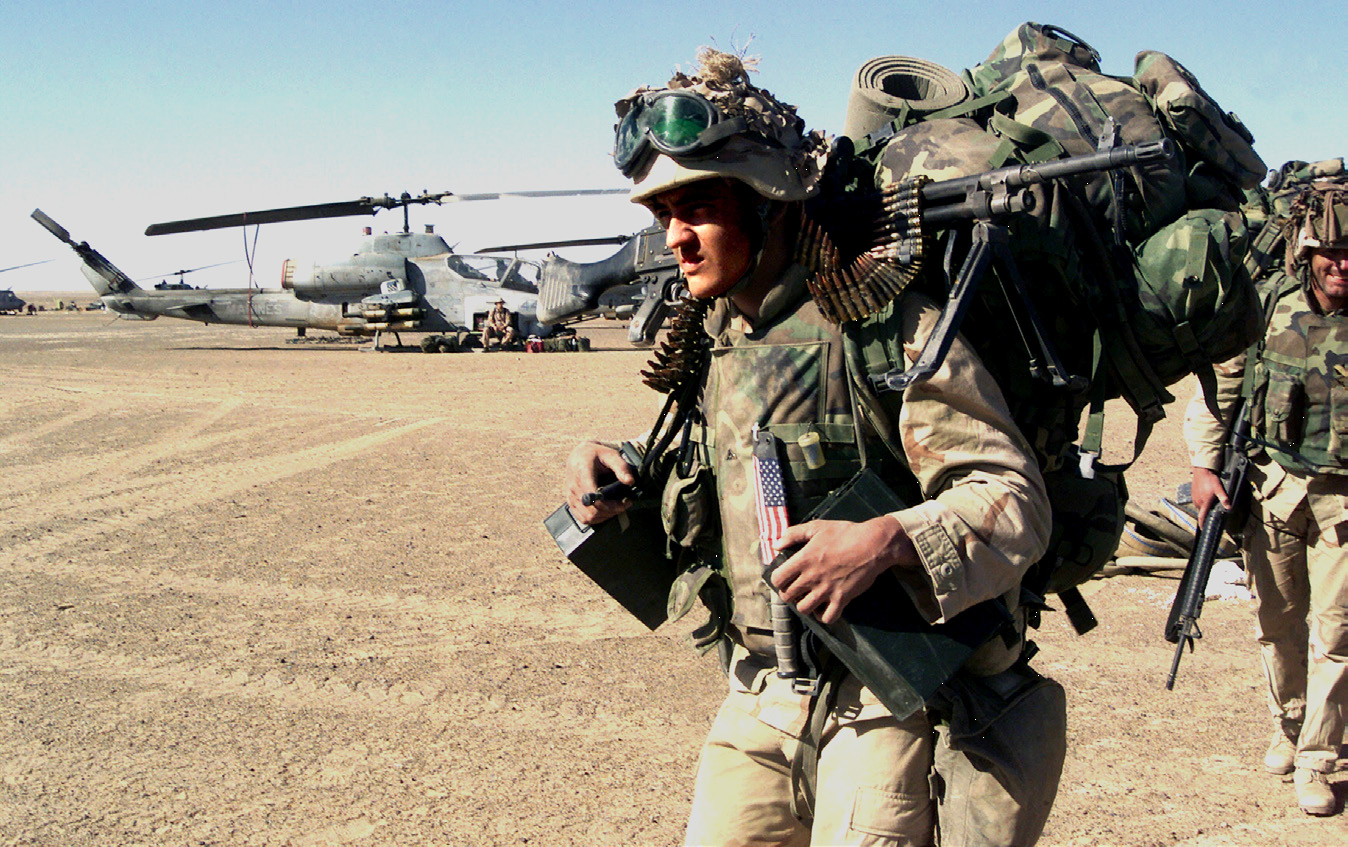
A Marine from the 15th Marine Expeditionary Unit moves to a security position at Forward Operating Base Rhino, Afghanistan, 25 November 2001. Photo by Sgt. Joseph R. Chenelly. (DVIC DM-SD-06-03033).

Mattis asserts that a commander must “be ready to embrace allied elements without necessarily having TACON/OPCON over them—use HANDCON.”54 Bringing allied elements into the planning process early with an emphasis on information sharing a commander can gain battlefield harmony through trust building.55 His bottom line is that “you will have little formal authority yet expectations for tactical achievements will not be diminished just because you lack formal command authority.”56

The greatest attribute a field grade officer can have according to Mattis is anticipation.57 General Mattis anticipated his lack of resources, capabilities, and authorities and actively sought measures to correct them by forming relationships and exchanging liaison officers.

For a full read and inspiring summary, go here.

Image result for task force 58 afghanistan 2001

Related reading: Task Force 58: A Higher Level of Naval Operation